Lavender
Author: Elliott Garber, DVM · Published
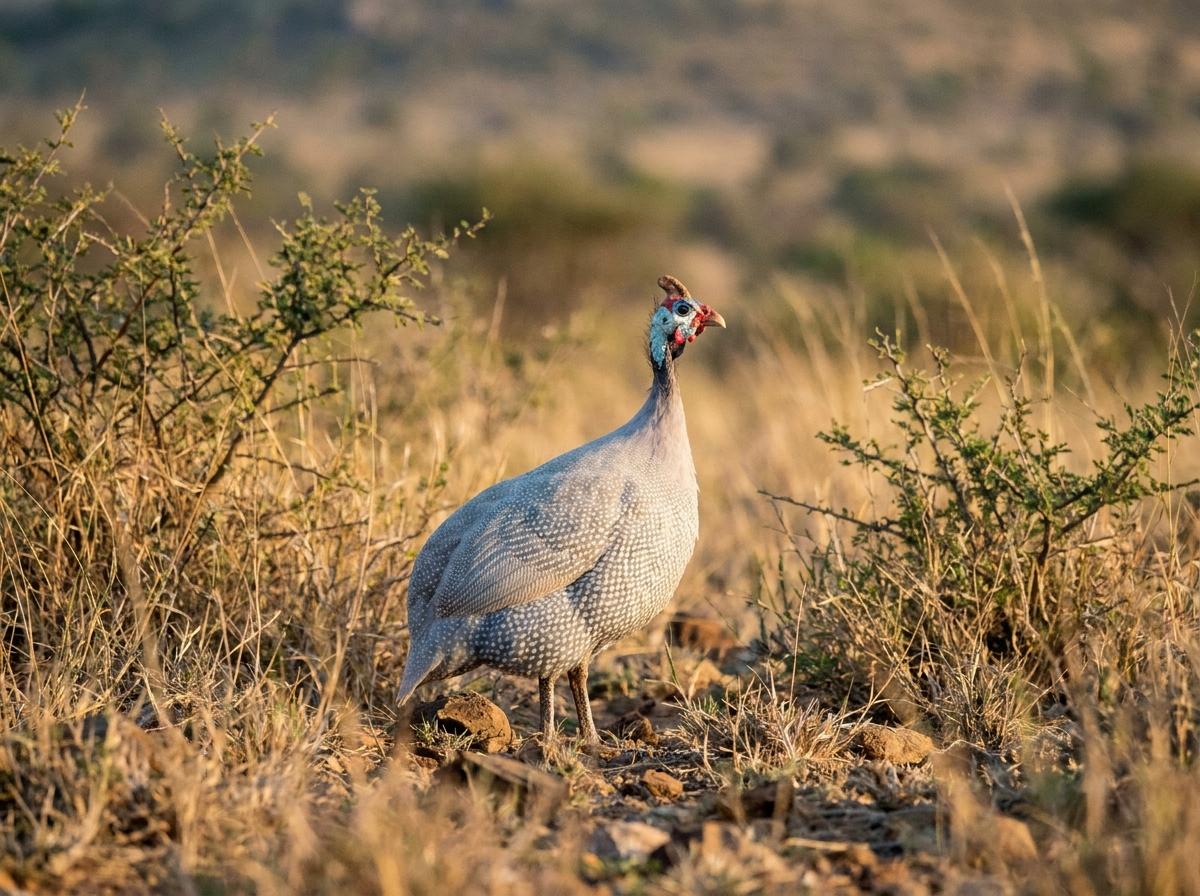
A lavender guinea fowl is a helmeted guineafowl (Numida meleagris) in a pale coat: light gray or lavender plumage dotted all over with the same white spots as the familiar pearl guinea. It is a color variety, not a breed or a species, and it is one of only three guinea varieties on the American Poultry Association’s list of accepted breeds and varieties, alongside Pearl and White. Under the soft color it is the same bird as any other guinea: loud, far-ranging, always hunting insects, about 3 to 3.5 pounds in either sex, and fragile only as a damp young keet.
Lavender keets are hatched and shipped mainly in summer, and the Creatures marketplace has no lavender guinea listings as we write, so the easiest way to hear about birds near you is to set a free lavender guinea listing alert (no account needed to start). You can also contact the farms listed among the lavender guinea fowl breeders in the Creatures directory, three of them in October 2026, in Maryland, Kansas and Wisconsin.

| What it is | A color variety of the helmeted guineafowl (Numida meleagris), not a separate breed or species |
|---|---|
| Plumage | Light gray or lavender, dotted with white pearl spots over the whole body, the same pattern as a pearl guinea |
| Show status | One of three guinea varieties the American Poultry Association accepts, with Pearl and White |
| Genetics | The hobby’s working model treats it as recessive to pearl gray; no gene has been identified in guinea fowl |
| Adult weight | About 3.0 to 3.5 lb (about 1.5 kg), cocks and hens alike |
| Eggs | Seasonal, roughly March or April to October; 100 or more a year from a well-managed hen |
| Incubation | 26 to 28 days |
| Sexing | By the hen’s two-syllable call and the cock’s larger helmet and wattles; keets cannot be sexed by looks |
Browse listings, public profiles, breeders, or add your animal.
What a lavender guinea fowl is
Three species of guinea fowl turn up in poultry references: the vulturine, the crested and the helmeted. The domestic guinea on North American farms is the helmeted guineafowl, named for the bony helmet on its crown, according to the University of Kentucky’s extension guide, Raising Guinea Fowl (ASC-209). Every domestic color, from the wild-type pearl to white to lavender, is that one species. The colors differ in plumage, and the few studies that compare them find little else that changes how you keep them.
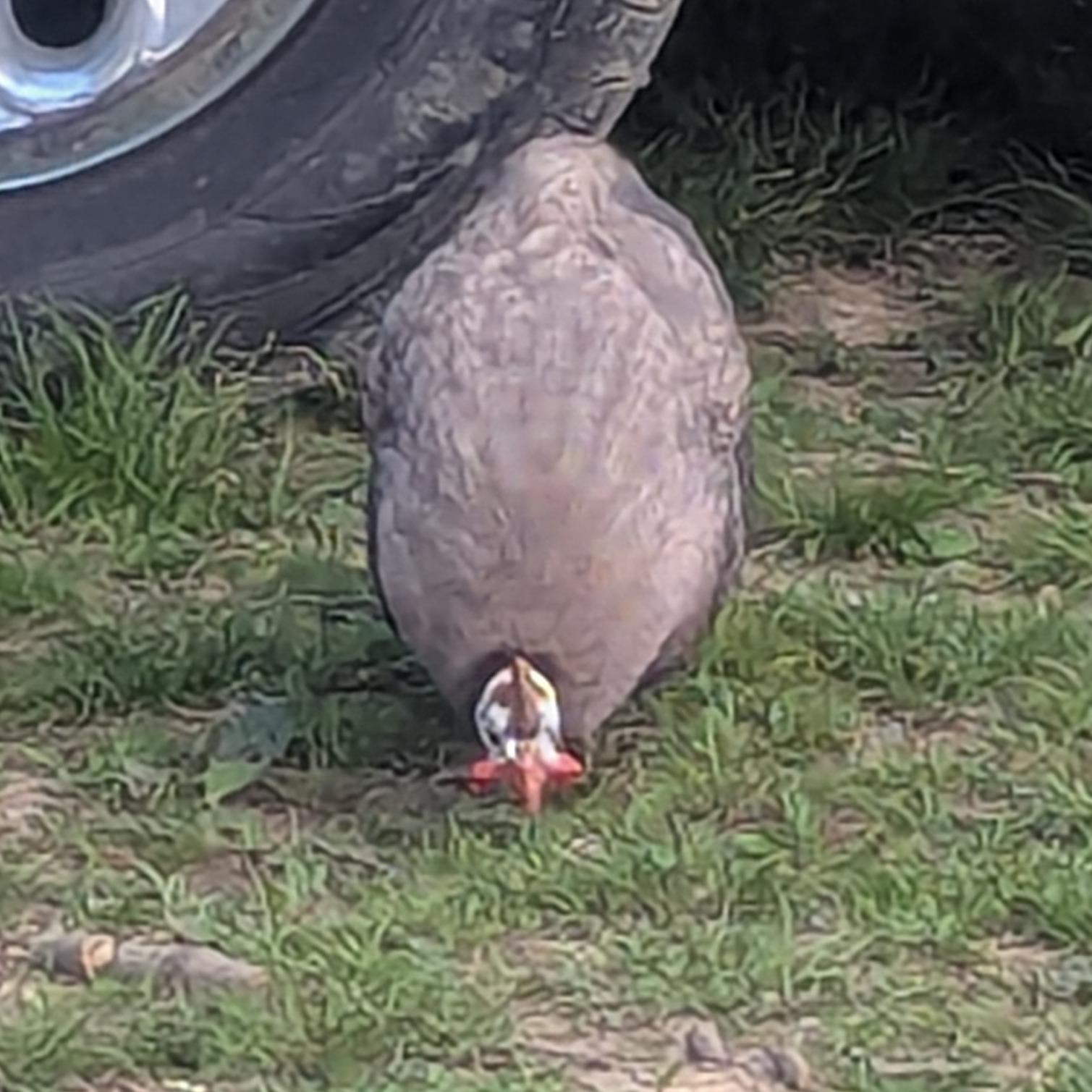
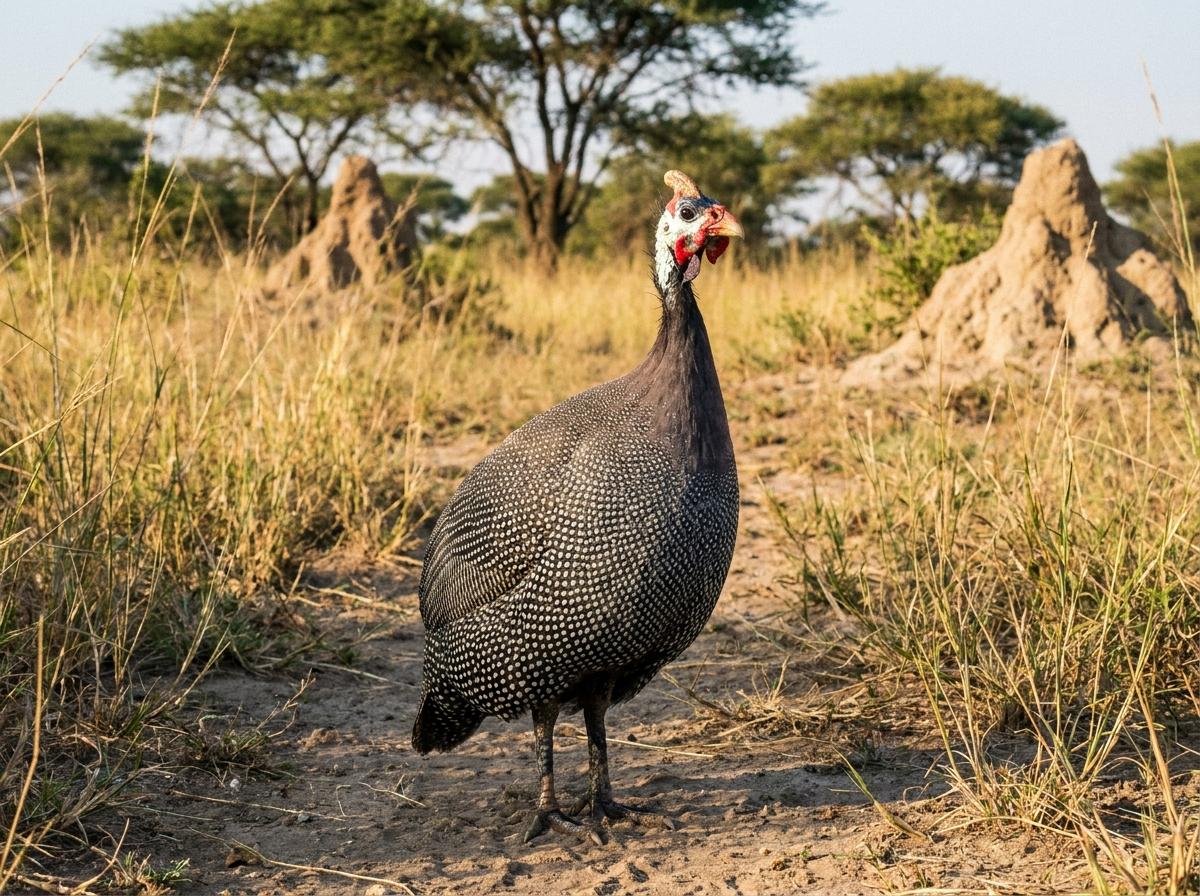
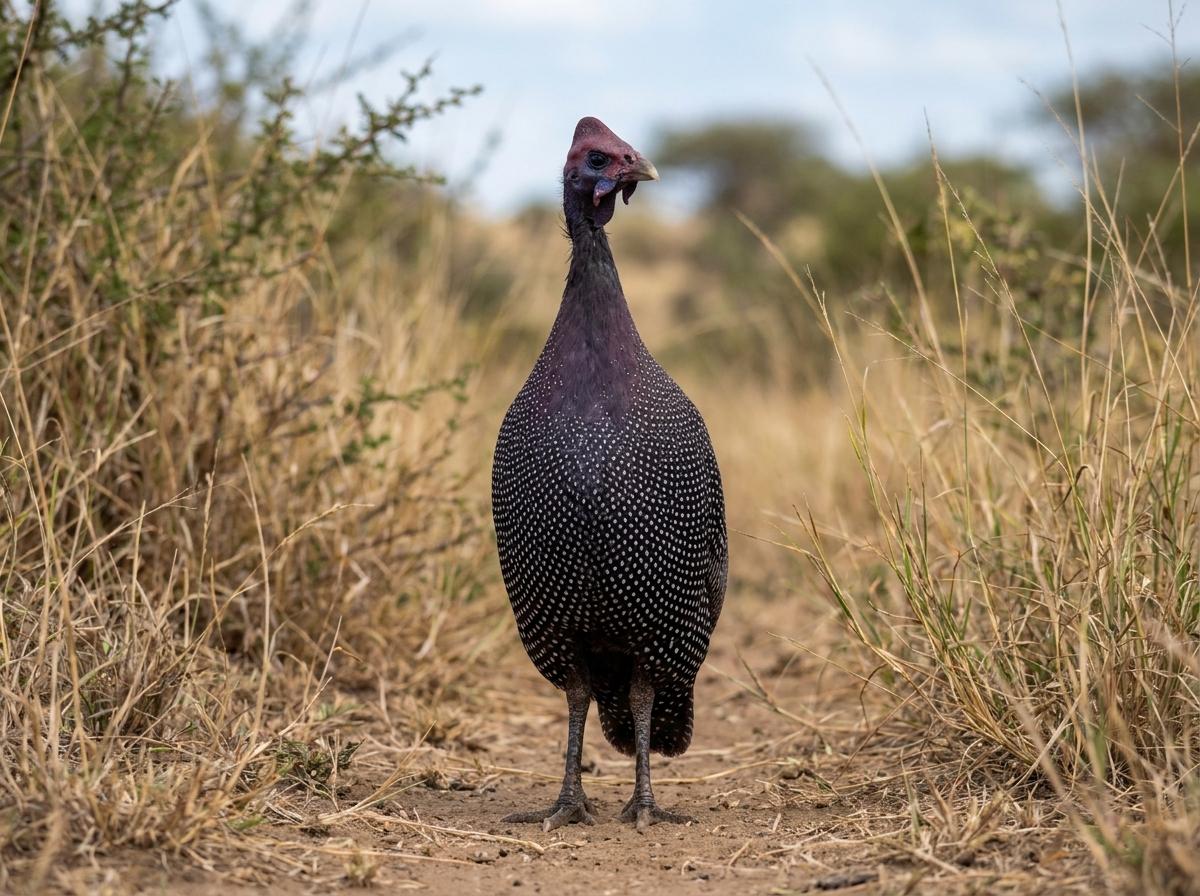
The pearl guinea fowl is the reference point. Its dark, purplish-gray body is covered head to tail in fine white dots. A lavender carries the same full pattern of dots on a paler ground. The Kentucky guide puts it in one line: lavender guineas are similar to the pearl, but their plumage is light gray or lavender dotted with white spots.
The color also has official show standing, which few guinea colors do. The American Poultry Association’s list of accepted breeds and varieties names exactly three varieties of helmeted guinea: Lavender, Pearl and White. The Kentucky guide and the national Cooperative Extension article on raising guinea fowl in small and backyard flocks both name the same three as the main varieties raised in the United States. At least one large mail-order hatchery marks its lavender guineas “APA: No” in its catalog. That is out of date or simply wrong: if you plan to show under APA rules, the APA’s own list is the one that counts.
Everything else on a guinea color chart is a hobby name rather than a recognized variety, and the chart kept by Guinea Fowl International, a breeder community, names more than two dozen of them. That includes the dark Royal Purple, the pale blues, and the pied birds covered below.
Nor is lavender only a North American hatchery color. A 2022 genetic diversity study of village guinea fowl in northern Togo, published in PeerJ, sampled lavender as one of seven plumage types in local flocks, and Indian poultry researchers keep lavender lines alongside pearl and white (two of their studies are summarized below). For the species as a whole, including the other varieties and how guineas compare with chickens, start at the Creatures guinea fowl page.
How to recognize a lavender guinea
The test is two questions: is the bird fully dotted, and is the ground color pale? A lavender answers yes to both.

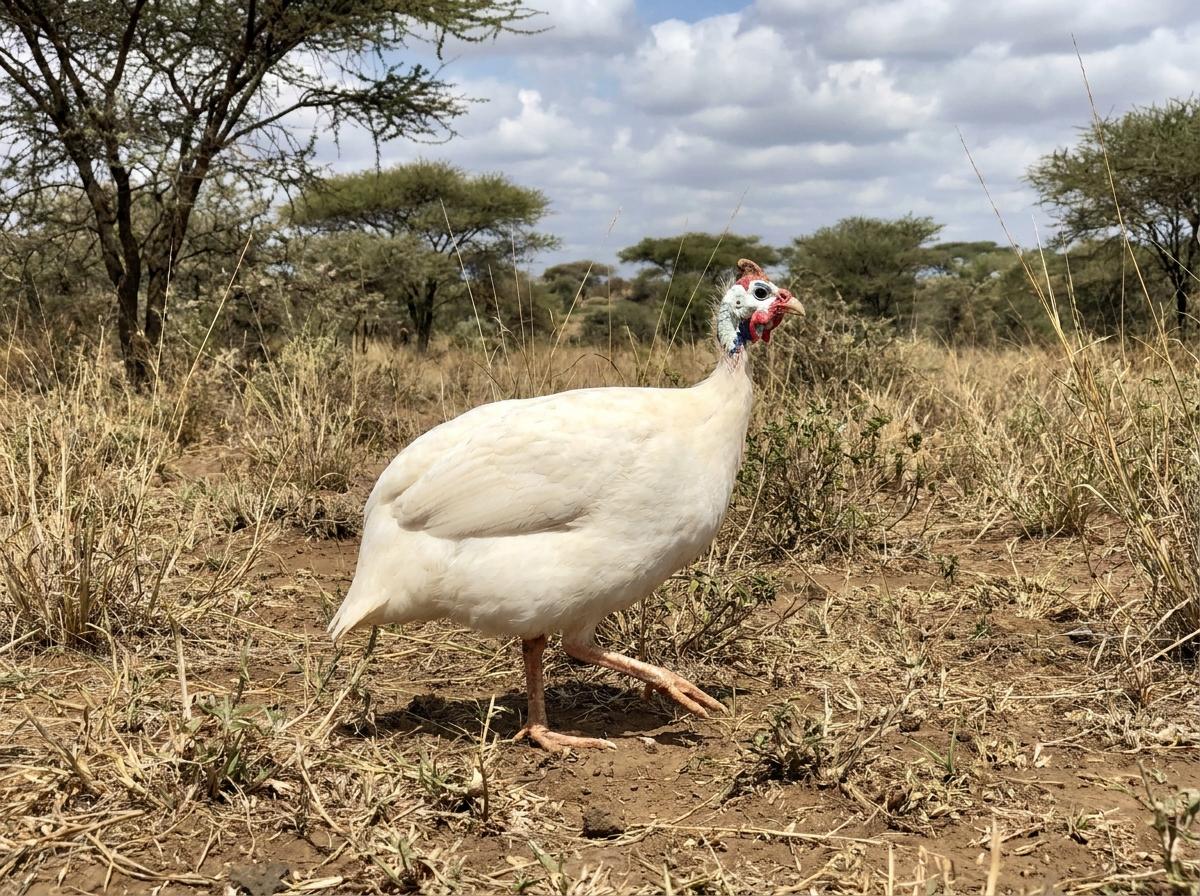
The body. Guinea Fowl International’s color chart describes lavender as steel gray or lavender with pearling over the entire body, as in pearl gray. The dots should cover the back, breast, wings and flanks, not just the lower wings. Compare a lavender with a pearl in the same light and the difference is obvious: the pearl’s ground is a dark, purplish gray, and the lavender’s is a much paler steel gray to lavender. One bird on its own in bright sun is harder to call, so ask a seller for photos of adults standing next to a pearl, or at least in open shade.
The head and legs. These are the same in every color. The guinea fowl standard summarized in the Kentucky guide describes a short, wedge-shaped head covered in white skin, with a line of very fine, hairlike feathers down the back of the head; a hard, waxy helmet that is blackish in young keets and brown in adults; flat, coral red wattles; and large, dark brown eyes. The shanks are bright orange in keets, turn mottled orange and brown as the birds age, and are black in older adults. Cocks carry much larger helmets and wattles than hens.
Look-alikes. The Guinea Fowl International chart lists several pale or bluish colors that get mistaken for lavender, or sold as it:
- Pearl gray: the same full dotting on a dark gray ground. If the bird looks charcoal next to a lavender, it is a pearl.
- Slate: steel gray with cream highlights over the shoulders and back, and only faint pearling.
- Coral blue: a soft blue with an airbrushed blue edge to each feather, and dots only on parts of the body (semi-pearled).
- Powder blue and sky blue: light blue with faint dots, and soft blue with no dots at all.
- Lite lavender and porcelain: paler versions of lavender. The chart puts lite lavender between lavender and porcelain, still fully dotted, and describes porcelain as a very pale pastel blue with white pearling over most of the body.
- Opaline: near white with a pale icy blue cast and very faint dots on the wings and flanks.
Lavender keets. Keet color is hard to call. Guinea Fowl International suggests letting newly hatched keets dry and fluff, then looking at the top of the head: keets of fully pearled colors such as pearl and lavender show one broad stripe with two smaller stripes on each side, while semi-pearled colors show irregular lines and solid colors show no stripes. That sorts keets by pattern, not by shade. One large mail-order hatchery tells customers that guinea keets of different colors look similar until about 12 weeks of age, so a mixed box of pearl and lavender keets may not sort itself out until the birds feather.
Lavender color genetics: what is known and what is not
Guinea fowl color genetics has a short scientific literature and a long hobby literature, and they say different things with different confidence.
What the science says. The PeerJ study from Togo summarizes the classical work (Ghigi in 1924 and 1966, Somes in 1996) this way: guinea fowl have four known loci that influence plumage color, all autosomal, three of them recessive and the fourth incompletely dominant, and the domestic color varieties were developed from those four mutations and their combinations. The same summary does not say which locus is which color. No study we found has identified the gene behind guinea lavender. The University of Sydney’s Online Mendelian Inheritance in Animals database lists only one guinea fowl plumage trait with a known gene, extended black, linked to MC1R.
Chicken lavender is a separate question. In chickens, lavender is an autosomal recessive dilution, and a 2008 study in BMC Genetics traced it to a single point mutation in the melanophilin (MLPH) gene. It is tempting to assume guineas share it. They may, but nobody has shown it, and the shared name is not evidence: it describes a look, not a gene.
The breeder model. The clearest statement of the hobby’s working model is a color genetics essay hosted by Guinea Fowl International. It treats lavender as a “blue” ground color that is recessive to pearl gray. The author is candid that guinea color genetics had not been researched thoroughly enough for definite statements and that parts of the model are educated guesses, so treat what follows as the hobby’s best working rule, not settled genetics. If it holds, simple Punnett squares give these results for the ground color:
- Lavender x pearl gray (not carrying lavender): every keet looks pearl, and every keet carries one lavender copy.
- Carrier x carrier: on average one keet in four is lavender, one in four is pearl with no lavender, and two in four look pearl but carry it.
- Lavender x carrier: on average half the keets are lavender and half look pearl but carry it.
- Lavender x lavender: every keet has a lavender ground. Other genes can still show, so a pair of lavenders can throw pied or paler birds if both happen to carry those genes.
Two practical things follow. First, carriers look exactly like pearls, so a lavender can appear out of a flock of pearls after years of pearl-only hatches, and the only way to learn whether a pearl carries lavender is a test mating. Second, if you want predictable lavender keets, the birds have to be penned by color in the breeding season. A pen that mixes pearl, lavender and royal purple will hatch a mix.
Keeping track of which pen produced which colors, season after season, is what turns a mixed flock into a breeding program. Each breeder’s line can go on a free three-generation chart from the Creatures pedigree chart maker, which includes guinea fowl in its species list.
Lavender pied, porcelain and the “lavender white” question
A guinea sold as “lavender white” or “lavender pied” could be one of two quite different birds: a lavender with white patches, or one of the very pale lavender shades.

Pied. Guinea Fowl International’s chart treats pied as a pattern that can sit on top of any color: white feathers in varying amounts, from a few on the chest to a fully white chest and wings. A lavender pied is therefore a lavender with white patches on the breast and, in more heavily pied birds, the wings, and the most common pied sold by hatcheries is pied pearl gray. How pied is inherited is still argued. The essay hosted by Guinea Fowl International walks through one popular theory (one white gene makes a pied bird and two make a white one) and then explains why its author doubts it. The PeerJ summary’s one incompletely dominant locus is not named either. Do not trust a seller who promises exact pied ratios.
Pale lavenders. Lite lavender and porcelain are paler variances of lavender on the same chart, and opaline is paler still. The chart describes porcelain as a very pale pastel blue, but it still carries white dots over most of the body.
White. A true white guinea has pure white feathers and lighter skin than the other varieties, and the Kentucky guide notes that white guineas are not albino and hatch white rather than yellow. It is its own APA variety; see the white guinea fowl page.
Only plain Lavender, Pearl and White are on the APA list. The pied and pale shades (lavender pied, porcelain, lite lavender, opaline) are hobby names, which is fine for a flock and matters only if you plan to show. Whatever the label, ask for photos of the adult bird, because a keet sold as “lavender white” could grow into any of these.
Does lavender change size, laying or meat?
Two Indian studies have compared lavender with pearl directly, and neither found a large difference.
- Laying and fertility. A 2011 study in the Indian Journal of Poultry Science (record on FAO’s AGRIS) followed small groups of lavender, pearl and white guineas from the same hatch. It found no significant difference in body weight, an age at sexual maturity of 278, 272 and 274 days for lavender, pearl and white, and nearly the same egg count by 62 weeks of age (72 to 75 eggs per bird). Lavender and pearl hens produced about 10 to 12 percent more fertile eggs than white hens, hatchability looked similar, and egg quality did not differ. The authors call it a preliminary study.
- Growth and meat. A 2017 study in the Indian Journal of Veterinary and Animal Sciences Research (abstract) raised pearl and lavender keets to 14 weeks in Chhattisgarh. At one day old the lavender keets were heavier, but by 14 weeks there was no significant difference in body weight or gain. Lavenders ate more feed per unit of gain over the whole period, and dressing percentage, carcass traits and a taste panel showed no difference.
Both are small trials in Indian research flocks and a tropical climate, not North American hatchery strains, so read them as “no sign of a big difference” rather than as numbers to plan around. We found no study comparing temperament or noise by color. Choose lavender because you like the color, and plan for an ordinary guinea.
Noise, range and ticks
Every guinea, whatever its color, is a semi-wild, opinionated farm bird, and those habits decide whether guineas suit your place.
Noise. Guineas sound an alarm whenever something unusual happens, and the Kentucky guide notes that some keepers find the noise a nuisance while others value it as protection for the rest of the farm. The University of Maine Cooperative Extension’s guinea fowl page adds that they do not crow every morning like a rooster but will announce people, predators and strangers with a shrill call. Check your zoning before you buy, both guides say, because guineas range across the boundaries of a small lot and complaints follow.
Range and flight. Guineas prefer to run, including from predators, but they fly well, often 400 to 500 feet at a time, and fly from an early age. Left to themselves, adults prefer to stay out at night and roost in trees 20 feet up or higher, according to the Maine page, which suggests a starter flock of two to six birds. A single guinea is a poor idea: the Kentucky guide notes that guineas hate to be alone.
Ticks and insects. Guineas eat ticks, grasshoppers, crickets, flies, beetles and slugs, and the best-known controlled field study of tick control, by Duffy, Downer and Brinkley in the Wilson Bulletin in 1992 (full text), found free-ranging guineas reduced adult deer ticks on lawns at two Long Island sites. The authors also wrote that nymphal ticks, the stage most responsible for Lyme disease, may not be captured as easily, and that guineas should be one of a suite of methods rather than the whole plan. Our Royal Purple guinea fowl guide goes through that study in detail. Guineas also eat honey bees, sometimes waiting at a hive entrance, so they mix poorly with an apiary.
Housing, training them home, and predators
A lavender needs exactly what a pearl needs: a dry shelter, high perches, a routine that brings the flock in at night, and a coop that a raccoon or an owl cannot get into.

The shelter. The Kentucky guide recommends a shelter against wind, rain, cold, sun and predators, either a purpose-built house or a room in an existing barn. Cover the floor with absorbent bedding such as hay, straw or wood shavings and keep it dry. Provide perches, because guineas like to roost high. If the barn is unheated, do not insulate it: insulation keeps moisture in more than it keeps cold out, and damp air leads to respiratory trouble. If you confine guineas for any length of time, give at least 2 to 3 square feet of indoor floor space per bird, and more is better, since crowded guineas are stressed guineas. To keep guineas in one area outdoors, the run has to be covered, because an open fence does not stop a bird that flies hundreds of feet.
Training them home. New adults disappear if they are turned loose on day one. The Kentucky guide’s method is to keep them in a pen where they can see their new home for a week or two, then let one bird out. A lone guinea will not go far from its flock, so it learns the area. A few days later, let a second bird join it, and if both stay near, release the rest. The national Extension article on predator management for small and backyard flocks notes that most poultry can be trained into a house at night by feeding or watering them indoors at dusk, and the Maine page recommends millet as the bait. The Maine page adds that keets raised on your place are easier to train than bought-in adults.
Predators. The Maine page is plain about the risk: ground and air predators threaten keets, and air predators go after adult guineas mainly while they roost. The Extension predator article names the great horned owl as the owl that most often takes poultry, at night, and describes raccoons pulling birds’ heads through enclosure wire and least weasels squeezing through holes a quarter inch across, which means they can typically get through chicken wire. So shut the flock in at night, use welded wire or hardware cloth rather than chicken wire wherever a predator can reach, cover the run, and bury hardware cloth at least 12 inches into the ground to stop diggers. Hawks and owls are federally protected, so you cannot shoot or trap them; the answer is keeping them out, with night housing and a covered run. Our flock predator guide is written for chickens, but its advice on hardware cloth, aprons and latches applies to a guinea coop just the same.
Lavender’s pale coat is sometimes said to make the birds easier for hawks to spot. We found no study comparing predation by guinea color, so plan the same protection for a lavender as for a pearl. If your guineas share ground with sheep or goats you may also be weighing a guard donkey for the flock; our Standard donkey guide covers the guard-donkey evidence for sheep and goats and why it recommends keeping at least two donkeys together rather than one donkey alone with a flock. None of the guard-donkey guidance covers poultry, so plan your guineas’ protection around the coop and a covered run, not a donkey.
With chickens. Guineas and chickens can range together by day and share a barn at night. The one firm rule from the Kentucky guide: do not confine guinea cocks with chicken roosters full time, because the guineas will chase the roosters away from feed and water.
Raising lavender keets
The Kentucky guide recommends starting with day-old keets from a local breeder, a feed mill or a mail-order hatchery (or buying adults if you want tick control right away). Mail-order hatcheries set minimum orders because keets rely on each other’s body heat in the shipping box, and newly hatched keets can go about 48 hours without food or water while they absorb the last of the yolk.
Dry, then hardy. Guinea keets are very susceptible to dampness in their first two weeks, and the Kentucky guide notes they can die from following their mother through dewy grass. After two weeks the same guide calls them probably the hardiest of all domestic land fowl. Keep the brooder litter dry and the waterer out of the bedding.
Heat. Start the brooder at 95°F for the first two weeks, then lower it by 5°F a week until the keets are feathered. The Extension article on raising guinea fowl adds practical lamp rules: use porcelain sockets rated for heat lamps, hang the lamp by chain or wire and never by its cord, secure it so it cannot fall into the litter, set the bottom of the lamp 18 to 24 inches above the litter, and consider a second lamp in cold weather in case a bulb fails. Read the keets rather than the thermometer: piled under the heat means too cold, crowded at the edges means too hot, and evenly spread means right. Our baby chick brooder guide covers brooder setup in more detail, but feed keets by the guinea rules below, not the chick rules.
Feed. Keets need a 24 to 26 percent protein unmedicated starter for the first four weeks, 18 to 20 percent for weeks five to eight, and then a 16 percent layer ration, fed as mash or crumbles rather than pellets. Do not feed medicated poultry feed: the Kentucky guide warns that some coccidiostats used in chicken feed are toxic to guinea fowl, so read the tag and ask your feed mill or veterinarian if you are unsure. Ranging adults also need grit and do well with oyster shell available free choice.
Eggs, breeding and hatching lavender keets
Guinea hens are seasonal layers. The Extension article puts the season at roughly March or April through October, with a hen laying an egg a day during the season and a carefully managed hen producing 100 or more eggs a year. The Maine page says hens begin laying at about 12 months of age. Guinea eggs weigh about 1.4 ounces against about 2 ounces for a chicken egg, with thick shells.
Finding the eggs. Free-ranging hens hide their nests and usually do not go broody until a nest holds about 30 eggs. The Kentucky guide’s fix is to keep hens in the house until noon so the day’s egg is laid inside, and when you find an outdoor nest, to leave four to six eggs so the hen keeps using it.
Mating. Wild guineas pair off, but in a domestic flock one cock for every four or five hens is enough. For lavender, the mating plan matters more than the ratio: under the breeder model above, only lavender cocks over lavender hens give all-lavender keets, so pen your lavenders apart from other colors before the season starts. The Kentucky guide lists size and uniform color as the traits to select for when you choose breeders, and the Extension article says breeders generally produce well for two or three years.
Incubation. Guinea eggs hatch in 26 to 28 days. Their thick shells make candling for fertility close to impossible before about day 10. If your incubator has no guinea setting, the Kentucky guide says to follow its settings for pheasants or turkeys, and our incubator guide covers temperature, humidity and turning. Its day counts are for 21-day chicken eggs, so take the timing from those pheasant or turkey settings instead. A broody chicken hen will also hatch guinea eggs, and the Extension article notes chicken hens tend to be better mothers than guinea hens; see our broody hen guide for setting her up.
Records. Write down every hatch while it is fresh: which pen the eggs came from, how many were set, how many hatched and what colors appeared. On Creatures you can record a hatch with the counts of keets hatched and eggs that failed, and you can track a flock by count without giving every bird its own profile. Our guides to hatch records and flock counts are written for chickens and work the same way for a guinea flock.
Sexing lavender guineas
Color does not help here, because cocks and hens of every variety wear the same plumage. Young guineas look exactly alike, and the Kentucky guide and the Extension article give two ways to sex older birds:
- The call. A hen makes a two-syllable call that sounds like “buckwheat, buckwheat,” “put-rock, put-rock” or “qua-track, qua-track.” Cocks never make it. Both sexes give the one-syllable alarm cry. The Kentucky guide says most young birds start calling at 6 to 8 weeks, but some hens do not start until much later, so a quiet bird is not proof of a cock.
- The helmet and wattles. A cock’s helmet and wattles are much larger than a hen’s. This is easiest to judge with several birds of the same age side by side.
Mail-order hatcheries, including the two priced below, sell guinea keets unsexed (straight run). If you need hens, buy adults that a breeder has sexed by call, or buy extra keets and plan to rehome surplus cocks.
Showing lavender guineas
Because Lavender is an accepted APA variety, a lavender can be entered in the guinea class at an APA show. The Kentucky guide describes two kinds of guinea class: breeding classes, judged against a Standard of Perfection, and market classes, judged on body conformation for meat. Birds are shown as cock (a male a year or older), hen (a female a year or older), cockerel or pullet (under a year). Judges rarely handle guineas until the final placings, disqualify any bird with duck foot, and are told that a hen in heavy production may show faded leg color. For a lavender breeder, the practical target is an even ground color with full dotting, which matches the uniform color the Kentucky guide recommends selecting for when you choose breeders.
What lavender guinea fowl cost
There is no published market index for guinea fowl, and Creatures has no guinea auction price guide, so the best price evidence is what hatcheries list. On October 8, 2026, two large US mail-order hatcheries listed these per-keet prices for straight-run lavender keets:
- A large Missouri hatchery: $7.99 each for 1 to 9 keets, falling to $5.97 each for 120 or more, minimum order 5, shipped June through mid-August. Its pearl gray keets were $7.49 to $5.60.
- A large Iowa hatchery: $9.02 each for 1 to 29, falling to $7.30 each for 90 or more, with a 30-keet minimum on the lavender listing. Its pearl keets were $7.97 to $6.47 at the same 30-keet minimum.
Both lavender listings were marked unavailable or sold out that day. At those two hatcheries lavender ran about 40 cents to a dollar more per keet than pearl. Check shipping charges and order minimums before you compare, and expect next season’s prices to move.
Started juveniles usually cost more than keets, because someone has already done the brooding, and adult hens sexed by call cost the most, because sexing is the hard part. We could not find a reliable published price for adult lavenders. The bigger costs usually sit around the birds: a brooder and heat for the first weeks, a coop and covered run, and starter and grower feed for the first eight weeks before range takes over most of the feeding.
Buying lavender guineas
- Ask for adult photos in daylight. Lavender, slate, porcelain and coral blue are easy to confuse in a keet or a dim photo. Ask to see the parents, ideally next to a pearl.
- Ask how the breeding pens are set up. If lavenders run with pearls and royal purples, their keets will be mixed. A breeder who pens lavenders separately can tell you what last season’s hatch produced.
- Expect straight run. Treat any promise of hens from young keets with skepticism unless the seller sexed adults by call.
- Ask about testing. Many hatcheries and breeders take part in the National Poultry Improvement Plan, the cooperative industry, state and federal program that tests flocks for pullorum, fowl typhoid, mycoplasma and avian influenza. Our guide to buying chicks and checking the source explains NPIP paperwork and the buying channels, which work the same way for keets.
- Plan the first month. Budget the one-to-two-week confinement and the gradual release before the birds arrive, and check zoning and your neighbors’ tolerance for noise.
Frequently asked questions
Is lavender a breed of guinea fowl?
No. It is a color variety of the helmeted guineafowl, the same species as the pearl and white guinea. It is one of the three guinea varieties the American Poultry Association accepts, with Pearl and White.
What does a lavender guinea fowl look like?
A light gray or lavender body covered in white dots, the same full pattern as a pearl guinea on a paler ground, with the usual bare white-skinned head, brown helmet and red wattles.
Can two pearl guineas hatch a lavender keet?
Under the hobby’s working model, yes, if both carry lavender: it treats lavender as recessive to pearl gray, so two carriers would be expected to hatch about one lavender in four, and carriers look exactly like ordinary pearls.
Do lavender guineas breed true?
Under the breeder model, two lavenders give keets with a lavender ground color. They can still throw pied or paler variants if both carry those genes, and no gene for guinea lavender has been identified yet.
What is a lavender pied guinea fowl?
A lavender with white patches on the breast and, in more heavily pied birds, the wings. Pied can appear on any guinea color. It is a hobby name, not an APA variety.
Are lavender guineas quieter or calmer than pearls?
We found no evidence that color affects temperament or noise. Plan for a loud, far-ranging guinea whatever its color.
How much do lavender keets cost?
In October 2026 two large mail-order hatcheries listed straight-run lavender keets at about $6 to $9 each, depending on quantity, roughly 40 cents to a dollar more than pearl keets.
Do this next on Creatures
Whether you are hunting for your first lavender keets or already hatching your own, Creatures keeps the search, the flock records and your farm listing in one place.
Get alerted. Listings for lavender guineas are rare, so set a free lavender guinea listing alert and we will email you when birds are posted. No account needed to start. See saving searches and using your watchlist for how alerts work.
Find breeders. Contact the lavender guinea fowl breeders listed by state or browse the full Creatures breeder directory, and check lavender guinea fowl on the Creatures marketplace for new listings.
Add your flock. Already keep lavenders? Create a free profile for a breeding bird with its hatch date, parents and photos, no account needed to start. The walkthrough is in adding an animal to Creatures.
Record hatches and health. Add a hatch, health or feed record. The record sheet opens for any visitor to look around, and a free account saves what you enter. See adding a record for the full how-to.
List your farm. Hatch lavender keets or sell started birds? Create a free farm or breeder profile so buyers searching for lavender guineas can find you, no account needed to start. Read getting listed in the breeder directory and creating an organization and adding your team.
Compare and plan. Compare lavender with the pearl, white and Royal Purple varieties on the guinea fowl species page, and chart your breeding birds with the free pedigree chart maker.