Standard American
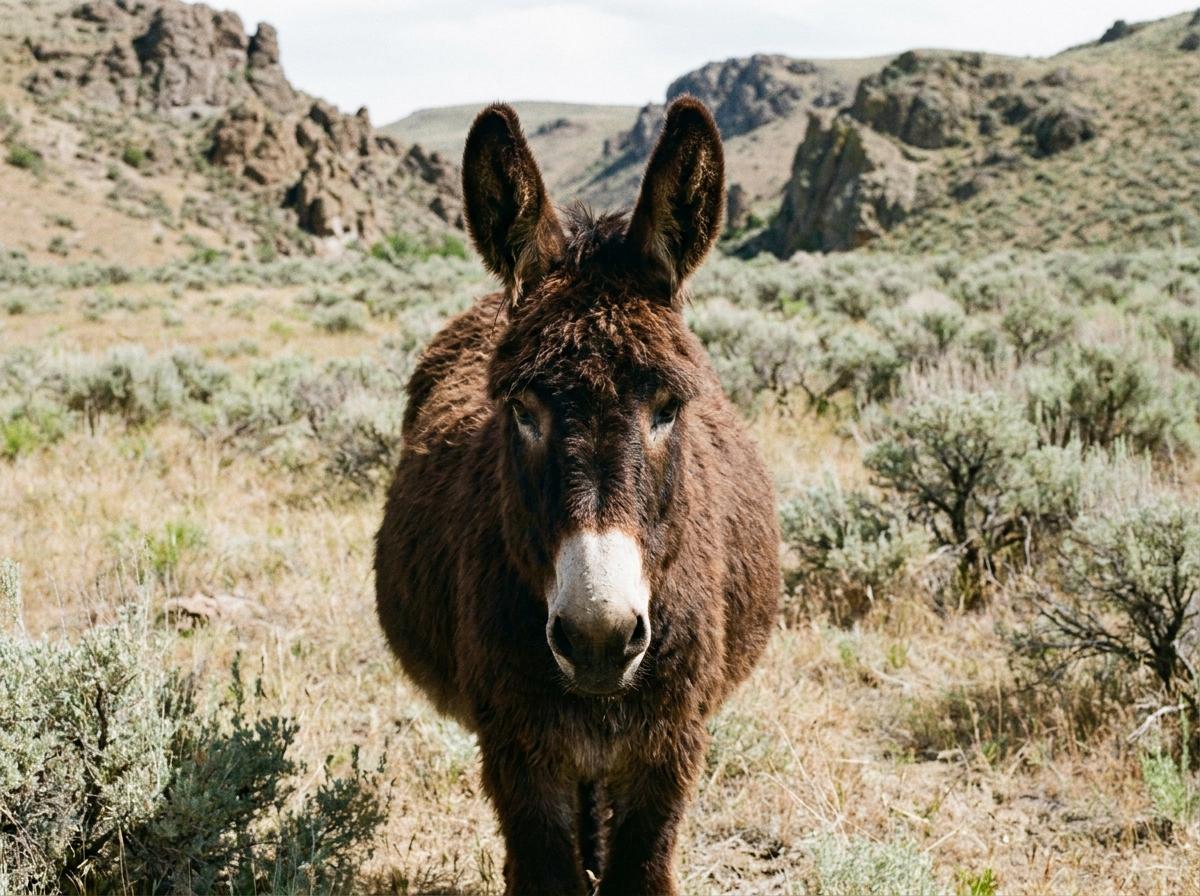
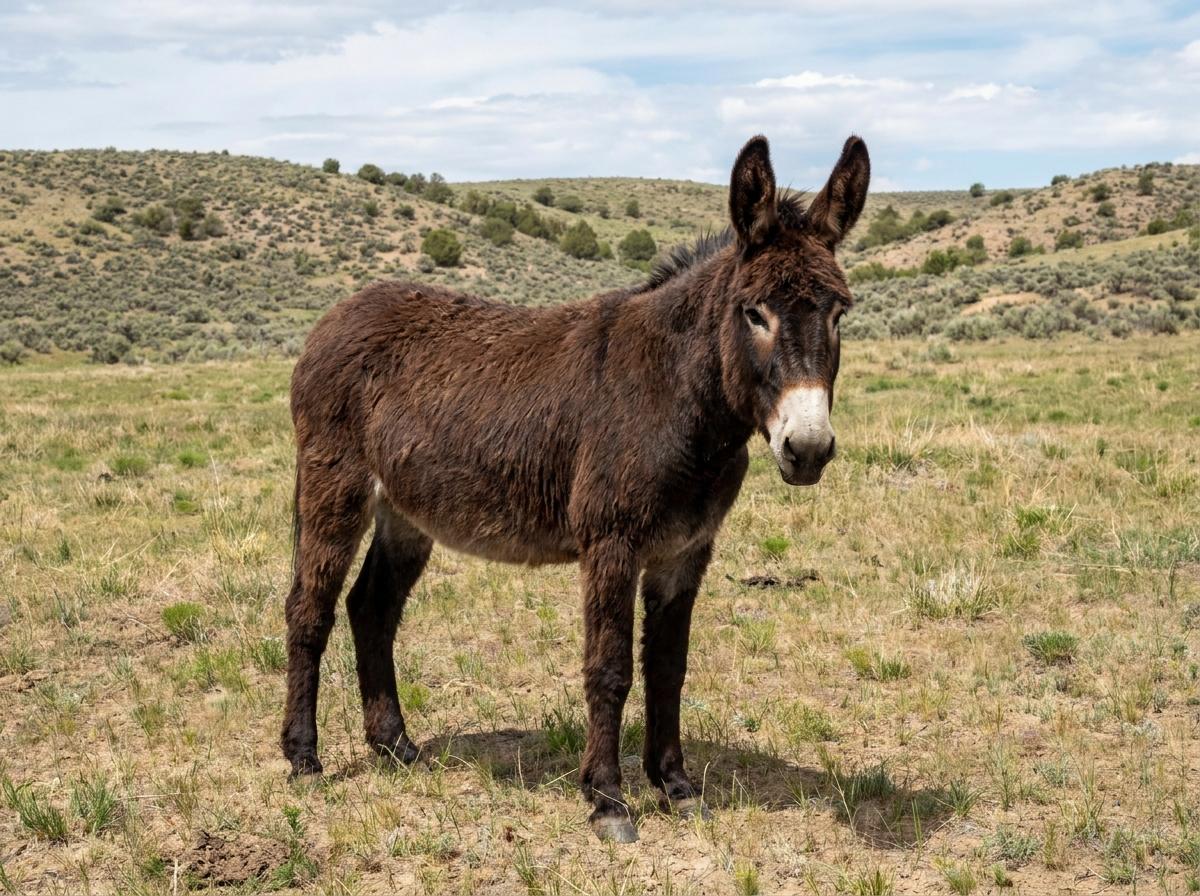
An American standard donkey is not a breed. It is the middle size class of the domestic donkey. The American Donkey and Mule Society (ADMS), the main US registry for donkeys of every size, classes a donkey that matures at more than 36 inches and up to 48 inches at the withers as a Standard, and calls taller animals, up to 54 inches for jennets and 56 inches for jacks, Large Standards. It is the everyday full-size donkey, and it includes the wild burros of the West, which the Bureau of Land Management says average 44 inches and about 500 pounds. On Creatures the class is listed as Standard American.
Standards are kept as companions, driving and packing donkeys and mule sires, and some farms use them to guard sheep and goats. Whatever the job, they need what every donkey needs, starting with another donkey for company. Standard donkey listings on Creatures are few, so the easiest way to hear about one is to set a free standard donkey listing alert (no account needed to start). In the meantime you can browse standard donkey breeders listed in the Creatures directory.

| What it is | A size class of domestic donkey, not a breed |
|---|---|
| Height (ADMS) | Over 36 up to 48 inches at the withers; small standards 36.01 to 40 inches |
| Large standard (ADMS) | 48.01 to 54 inches for jennets, 48.01 to 56 inches for jacks |
| Typical size | Wild burros average 44 inches and about 500 pounds (BLM) |
| Registry | ADMS American Donkey Registry, founded 1967 |
| Colors | Gray-dun is the familiar color; also brown, black, red, roan, ivory and spotted |
| Gestation | About 12 months |
| Lifespan | Often 30 to 40 years with good care |
Browse listings, public profiles, breeders, or add your animal.
What is a standard donkey?
Donkey, burro, ass, jackass, jennet, Mexican burro and standard are all terms for donkeys, as the ADMS puts it, and every one of them is the same species, Equus asinus. “Standard” tells you how tall a donkey is, not where its ancestors came from. Two standards of the same height can have nothing else in common.
That is because American donkeys are not sorted into the old European breeds. The ADMS’s own guide to donkeys says a modern donkey can strongly resemble a Catalonian, Majorcan or Andalusian in type but is not classed as that breed unless it has a traceable purebred pedigree to those lines. So when a seller describes a donkey as an “American standard,” read it as “a full-size donkey bred in North America,” and judge the animal in front of you.
Two names cause most of the confusion:
- “Standard American” is a label, not a registry. The ADMS keeps standard donkeys in its American Donkey Registry (ADR), alongside large standards, mammoths and unpedigreed donkeys. Creatures uses “Standard American” as the breed field for the same group.
- The Standard Jack and Jennet Registry is a Mammoth registry. According to The Livestock Conservancy, two earlier registries merged in 1923 as the Standard Jack and Jennet Registry, which continues today as the American Mammoth Jackstock Registry. Despite the word “Standard” in its old name, it registers the big American breed, not standard-size donkeys.
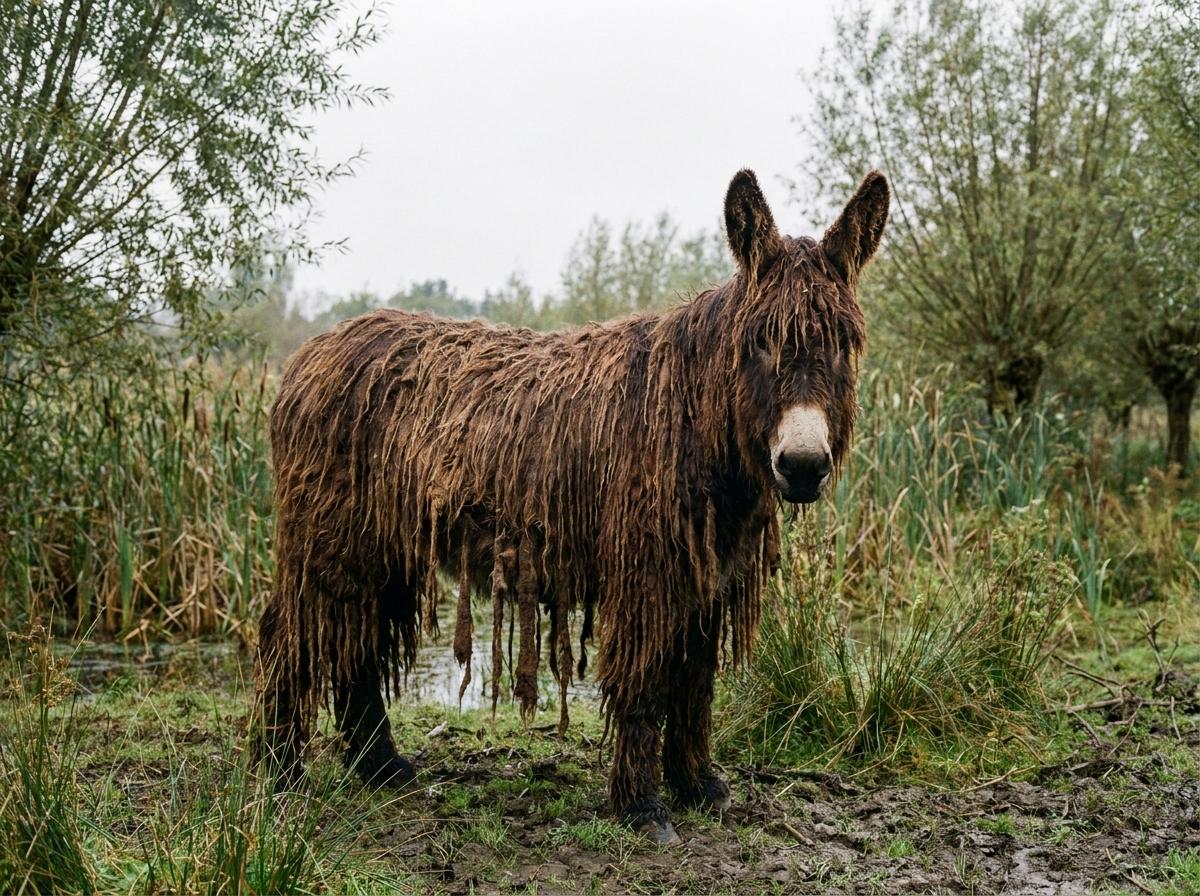
The genuinely distinct breeds you will meet in North America sit at either end of the size range: the American Mammoth Jackstock at the top, and the Miniature Mediterranean donkey at the bottom. The French Poitou is a rare breed of its own, and the American Spotted Ass is a coat-pattern registry that accepts donkeys of any size. For the species as a whole, start with the Creatures donkey guide.
How tall is a standard donkey?
The ADMS sorts every donkey by its mature height at the withers, the top of the shoulder, and that one number decides whether a donkey is a miniature, a standard, a large standard or a mammoth. Standard is the broad middle of the scale, a span of a full foot, and the registry splits it once more at 40 inches.

These are the classes on the ADMS All About Donkeys page:
- Miniature Mediterranean: 36 inches and under.
- Small standard: 36.01 to 40 inches.
- Standard: 40.01 to 48 inches. (The ADMS groups small standards and standards together as standard donkeys, so in everyday use a standard is anything over 36 and up to 48 inches.)
- Large standard: 48.01 to 54 inches for jennets, 48.01 to 56 inches for jacks.
- Mammoth: over 54 inches for jennets and over 56 inches for jacks.
The University of Florida’s 2026 extension publication on donkey care and management gives the same 36 to 48 inch range for standards. In hands, the unit horse people use, a hand is 4 inches, so a standard runs from 9 hands to 12 hands, and the wild burro average of 44 inches is 11 hands.
When to measure. Donkeys keep growing for a while. The ADMS asks owners to update a donkey’s papers with its mature height after age 3 (age 4 or 5 for Mammoths), and its breeding guidance notes that most equines are not fully mature until somewhere between 3 and 5. A yearling’s height is a forecast, not a class.
How to measure. The ADMS measuring guide is specific about method, because a sloppy reading can move a donkey into the wrong class:
- Use a measuring stick with a crossbar and, ideally, a level. A flexible tape over the shoulder can add anywhere from a fraction of an inch to more than 2 inches.
- Stand the donkey on hard, level ground, such as a driveway, barn aisle or sheet of plywood, never in a muddy field.
- Measure at the top of the withers, where the mane ends on most equines. If you are unsure, drop a treat on the ground and see which part of the shoulder sticks up highest when the head goes down.
- Take three readings and average them, with the hooves freshly trimmed. Long toes, shoes and a thick winter coat all add height.
Weight. No registry sets a weight for standard donkeys. The best public benchmark is the Bureau of Land Management’s description of wild burros, which average 11 hands and weigh about 500 pounds. To estimate your own donkey’s weight, the free donkey weight calculator works from heart girth and body length. A number is only half the picture, though. The University of Georgia Extension’s guide to why donkeys are not just another horse explains that donkeys store fat differently from horses, so they are condition scored on a 1 to 5 scale, with 3 as the ideal, by feeling the neck, ribs and rump rather than by looking.
Standard vs the other sizes. The University of Florida describes miniatures as often kept as pets, standards as versatile work animals and mammoths as the ones valued for strength and heavy loads. A standard needs more room and more hay than a mini, and less than a mammoth. Our side-by-side guide to mini donkeys vs standard donkeys walks through space, feed and handling for both.
Where North American donkeys came from
Donkeys are not native to the Americas. The University of Florida dates their domestication to about 6,000 years ago in Africa, and their efficiency on poor food and little water comes from that origin. The Bureau of Land Management says most wild horses and burros living today descend from animals that were released or escaped from Spanish explorers, ranchers, miners, the U.S. Cavalry and Native Americans. Wild burros still roam rangeland in California, Nevada, Arizona, Utah and Oregon, protected under the Wild Free-Roaming Horses and Burros Act of 1971, and at an average of 44 inches they sit squarely in the standard class.
The other thread is the mule. The Livestock Conservancy’s history of the American Mammoth Jackstock records that in 1785 the King of Spain gave George Washington an Andalusian jack named Royal Gift and two jennets, and that by 1800 large asses were found in Kentucky, Tennessee and the Missouri territory, the main mule-breeding areas of the day. Those big jacks became the Mammoth Jackstock. Standard donkeys were never organized into a breed of their own; they are the everyday working and companion donkeys that fill the middle of the height range.
Registration came later. The ADMS lists its American Donkey Registry, originally the American Donkey and Jackstock Registry, as founded in 1967 by Paul and Betsy Hutchins. It was open to donkeys of all sizes until the 1990s, when miniatures moved to their own book, and it still takes donkeys of any size with no pedigree. Jacks and jennets of unknown parentage are accepted after an inspection for basic conformation; geldings do not need one.
Standard donkey colors and markings
Coat color has nothing to do with the standard class, so a standard can come in any donkey color. The ADMS describes the following range:
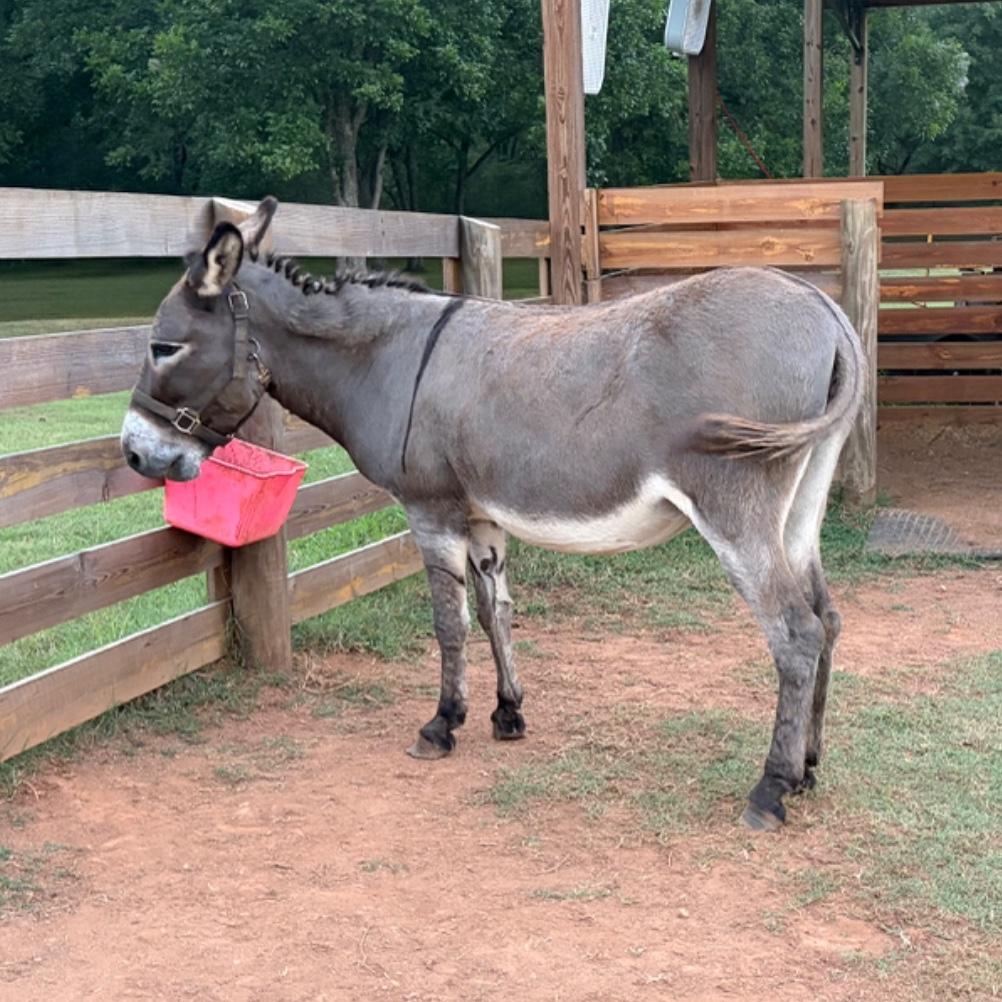
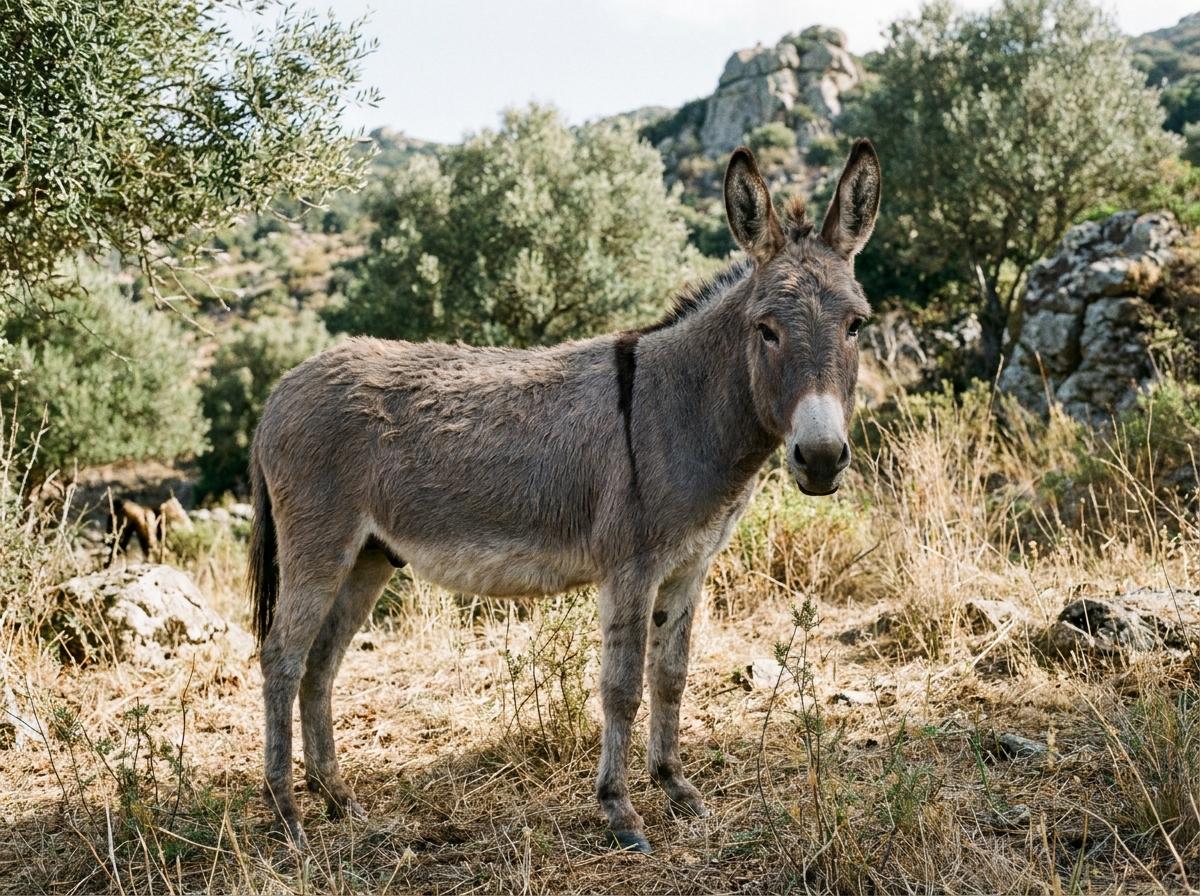
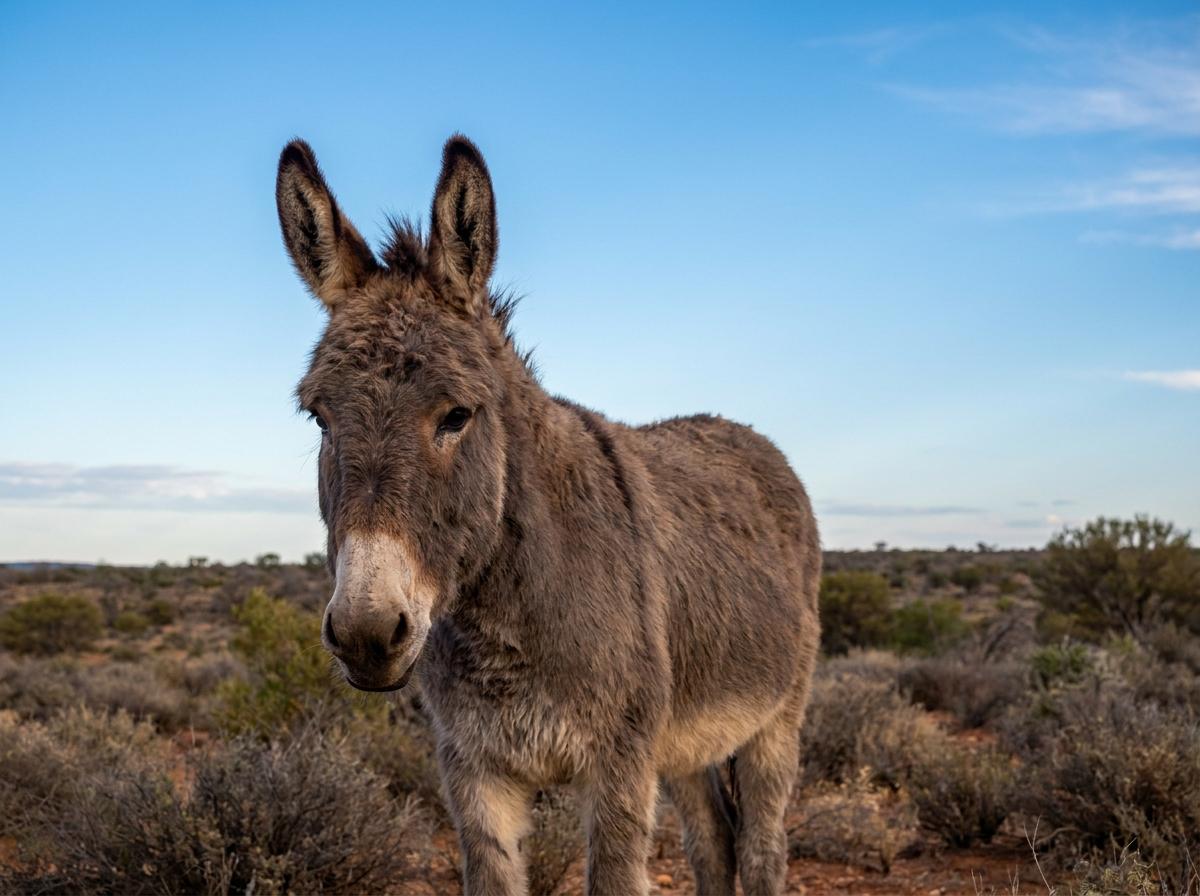
- Gray-dun in many shades is the familiar donkey color. Most donkeys, whatever the color, carry a dark dorsal stripe and shoulder cross, dark marks on the ears, and “light points”: a white or pale muzzle, pale eye rings, and a pale belly and inner legs. Some show leg barring, and a few have small dark “collar button” spots at the throatlatch.
- Brown and black, plus a rare bay that is less red than a bay horse.
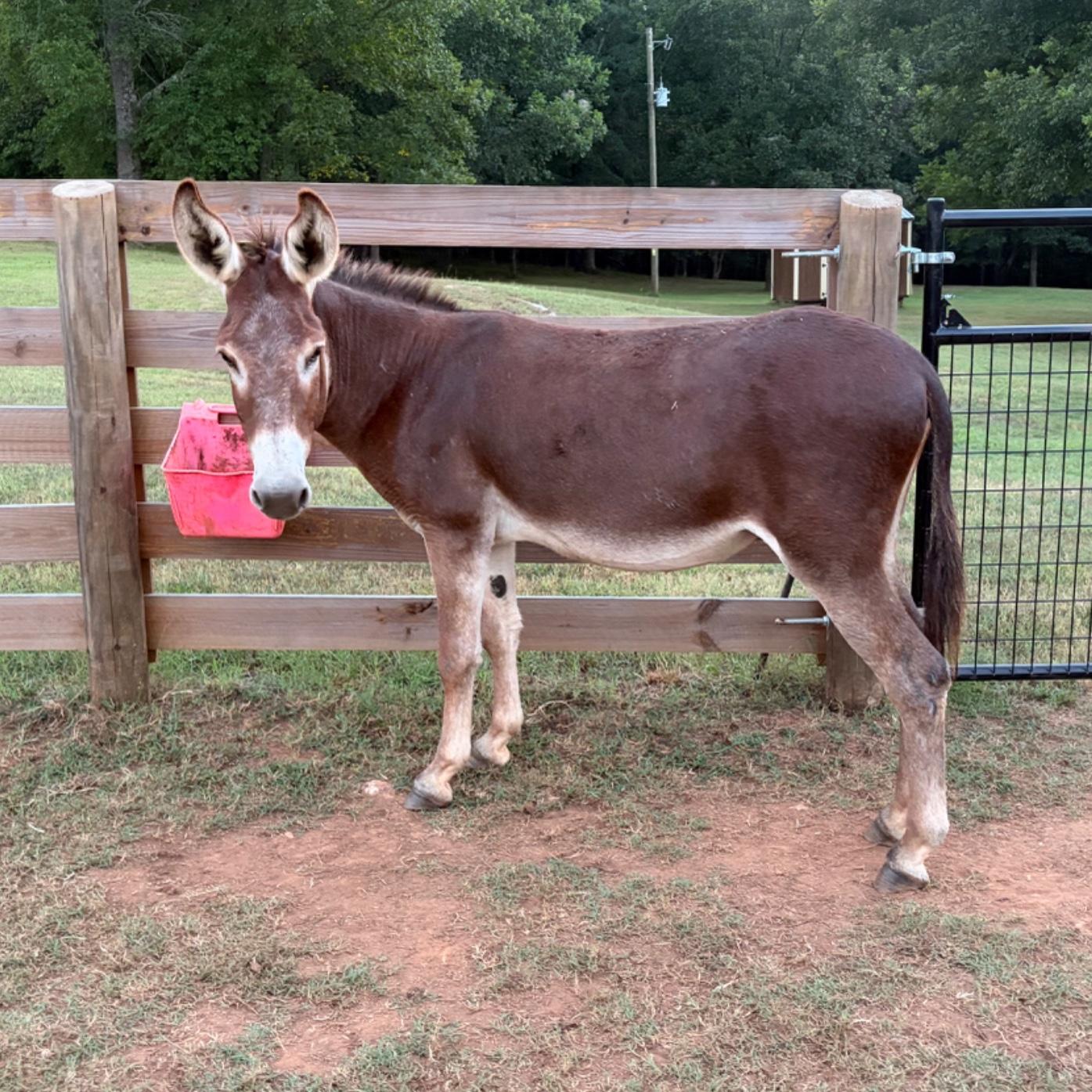
- Red, the registry term for sorrel. Red donkeys often have some roaning on the face and legs.
- Roan, both red and gray, usually with a light face.
- Ivory, the blue-eyed cream or white donkey with true pink skin.
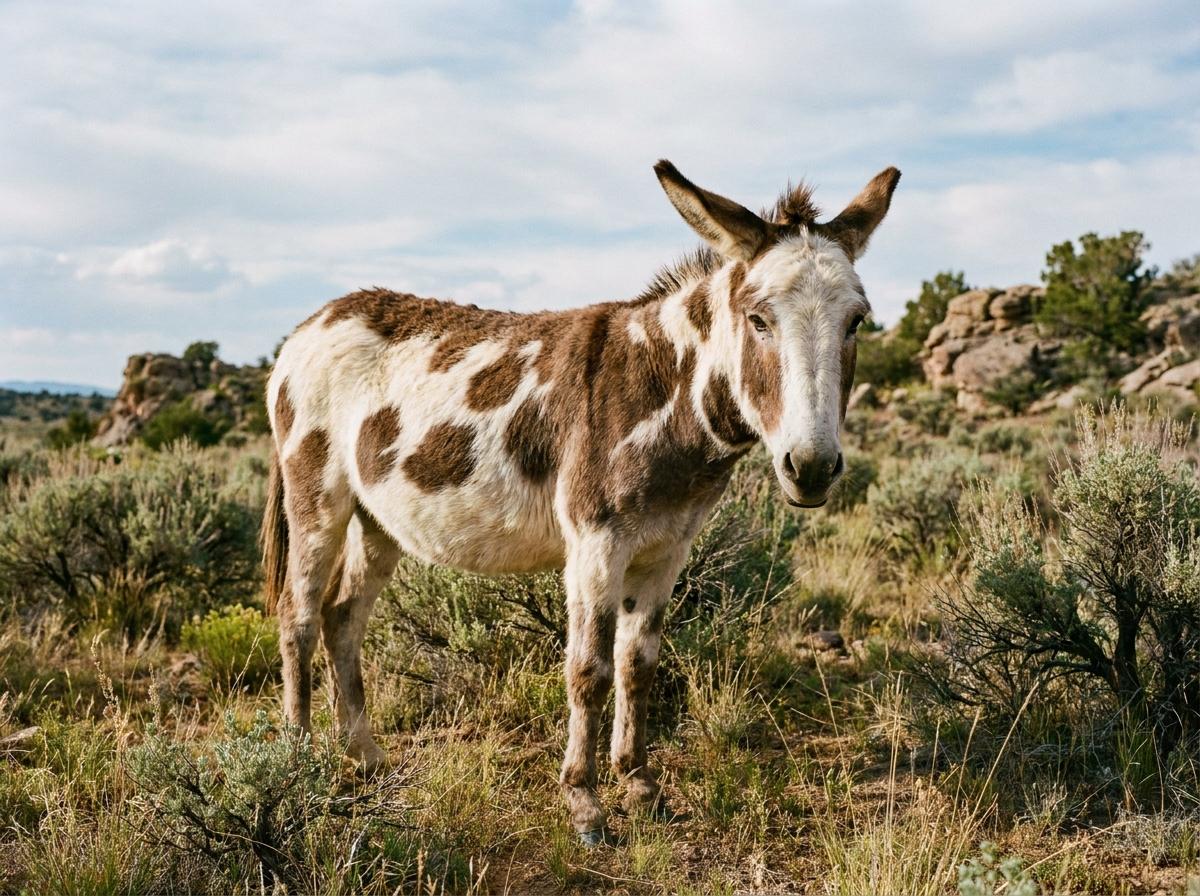
- Spotted, a white-patterned coat, and frosted spotted white, a spotted donkey whose patches have roaned or grayed out. Unlike ivory, it has dark eyes, dark “eyeliner” and dark spots on the skin.
The ADMS also lists colors that do not occur in donkeys at all: true horse pinto, horse-style aging gray, appaloosa, palomino, buckskin, champagne, pearl and silver. A seller who describes a “palomino donkey” is using a horse word for something else.
Two of these colors have known genetics:
- No light points (NLP). Some donkeys lack the pale muzzle, eye rings and belly. A 2015 study in Genetics Selection Evolution traced the pattern to a recessive variant of the ASIP gene, and noted that the pattern is more frequent, and officially recognized, in American miniature donkeys. Because it is recessive, two donkeys with normal light points can both carry it and produce an NLP foal.
- Red. The UC Davis Veterinary Genetics Laboratory describes donkey red as autosomal recessive and caused by a variant of the MC1R gene, the same gene behind chestnut in horses but a different variant. The lab’s practical warning is that the horse red test does not work on donkeys, so a breeder testing for red has to order the donkey test.
Spotting is a different system again, inherited as a dominant trait and linked to the KIT gene; our American Spotted Ass guide explains it, including why two heavily spotted donkeys should be tested before they are paired.
What standard donkeys are used for
The ADMS points out that donkeys can be used like horses under saddle and in harness, at their own, more self-preserving pace. Common jobs for a standard include:
- Companionship. The University of Florida highlights donkeys’ sociability, which is also why they are used in donkey-assisted therapy programs.
- Driving. Pulling a light cart is a popular show and pleasure use, judged on presentation, movement and responsiveness.
- Packing and trail work. Donkeys are sure-footed on steep, rocky ground, with small cupped hooves suited to it.
- Siring mules. A jack bred to a horse mare produces a mule; a horse stallion bred to a jenny produces the rarer hinny. Mules and hinnies are usually sterile.
- Guarding sheep and goats, covered in its own section below, because it comes with real caveats.
Riding. Standard donkeys can be ridden, but there is no research-based weight limit for how much they should carry. A commonly quoted figure is The Donkey Sanctuary’s UK guidance of 50 kilograms (about 110 pounds) as the maximum load for a fit donkey with a well-balanced load. A 2022 study in Frontiers in Veterinary Science points out that this figure is not evidence-based and was set for UK donkeys, which are typically in good condition and larger than working donkeys elsewhere. Treat 110 pounds as a cautious ceiling for a fit, mature donkey, not a target, and have your veterinarian or an experienced donkey trainer assess the individual. The ADMS advises keeping training sessions short for 2-year-olds, since most equines are not fully mature in body or mind until 3 to 5.
Standard donkeys as livestock guardians
Guard donkeys have become popular with sheep and goat keepers, and the results are mixed. The University of Florida explains why the idea can work: wild donkeys defend territory around water, they rely on freeze-and-fight responses rather than flight, and a donkey that is naturally aggressive toward canine predators and bonded to a flock can help protect sheep, goats or cattle from wolves and coyotes.
Detailed public guidance comes from the Ontario Ministry of Agriculture, Food and Rural Affairs, whose guidelines for using donkeys as guard animals with sheep report that in a 1995 Ontario study about 70 percent of guard donkeys were rated excellent or good, and that results ranged from wiping out predation entirely to having no effect at all. Many failures came from management, such as too many sheep or scattered pastures, as much as from the donkey. Its practical points:
- Size. Standards and large standards give the best mix of predator control and ease of handling (the Ontario sheet calls the whole 36 to 48 inch class “small standard”). Most miniatures are likely too small to fend off predators, and the largest donkeys are harder to handle. Alberta’s guidance, quoted in the same sheet, recommends a guard donkey at least 2 years old and at least 44 inches at the shoulder.
- Sex. A jenny, with or without a foal, or a gelding. Jacks tend to be overly aggressive with both sheep and people.
- Flock size. Best with flocks of fewer than 100 ewes, and up to about 200 only on flat, open ground with the sheep in one pasture. Brushy, rolling land hides coyotes from the donkey.
- Bonding. Introduce the donkey to the sheep as early as possible. A donkey not raised with sheep can be housed next to the flock for 1 to 2 weeks before turnout, then watched closely.
- Testing. A donkey’s reaction to canines can be checked by putting a dog into a small pen with it. Warn neighbors with dogs, and supervise the donkey with your own farm dog.
- Lambing. Some donkeys treat newborn lambs as intruders, or stop the ram from breeding. Pen the donkey separately during breeding and lambing until the lambs are steady on their feet.
- One donkey per group. The sheet’s setup puts one donkey with each group or pasture, with adjacent pastures well separated so each donkey stays with its sheep rather than with the other donkey. That leaves a donkey without donkey company, which this guide does not recommend (see below).
- Feed. Donkeys can eat the flock’s grass hay, but never let them into cattle or lamb rations containing the ionophores monensin or lasalocid, or the feed additive decoquinate, which the sheet warns can be fatal to donkeys and other equines.
Not everyone agrees the job is fair to the donkey. The Donkey Sanctuary of Canada strongly advises against using donkeys as guardians. Its reasons: donkeys thrive with their own kind and can become stressed and unwell when isolated from other donkeys, two donkeys placed together may bond with each other and ignore the flock, and some turn aggressive toward the livestock they are meant to protect. It notes that the first donkey it ever rescued was a failed guard donkey.
Both positions come from serious sources, but this guide follows one rule throughout: a donkey needs another donkey. So we cannot recommend a lone guard donkey, even though the Ontario setup is one donkey per group. If donkeys share your farm with sheep or goats, keep at least two donkeys together, and do not count on the pair to protect the flock, since the Donkey Sanctuary of Canada warns that two donkeys may bond with each other and ignore it.

The guidance above is written for sheep, goats and cattle, and none of it covers poultry, so free-ranging birds such as Lavender guinea fowl need their own secure coop and predator plan. Our guides to whether miniature donkeys keep coyotes away and whether mini donkeys are protective explain why the small size class is not the answer either.
Temperament and handling
The “stubborn donkey” is mostly a misreading. The University of Georgia Extension describes donkeys as cautious and self-preserving: where a horse may run first and think later, a donkey stops, looks and then decides. The University of Florida adds that donkeys are stoic, so pain and illness can be hard to spot, and that they form long-lasting pair bonds whose separation can cause extreme stress and loss of appetite. Know what normal looks like for your donkey, because a change in it is often the first sign of trouble.
Donkeys usually do best with another donkey. The University of Georgia notes they can live with horses but prefer a donkey companion, and The Donkey Sanctuary warns that donkeys often end up at the bottom of the pecking order when kept with horses, ponies or mules. Introduce newcomers gradually.
The bigger handling question is the jack. The ADMS is blunt that jacks are not pets: they are intact breeding animals that at some point will act on hormones, and children should never be around an intact jack unsupervised. Its advice is to geld any male that will not be a breeding jack and to avoid selling ungelded colts to first-time owners or as guard donkeys. The Livestock Conservancy agrees that the best pet donkey is a jenny or a gentle gelding. Most donkeys are docile and gentle with people, the Ontario guidance notes, while keeping a strong dislike of dogs.
Caring for a standard donkey
A donkey is not a small horse, and many of the health problems standard donkeys run into come from being fed and housed like one. Care centers on plain, high-fiber food, a dry place to stand, regular hoof work, a companion and close watching.

Feed less than you think. The University of Georgia Extension says donkeys usually need only 50 to 70 percent of the energy of a similar-sized horse, that most do best on low-quality, high-fiber forage such as straw or coarse hay, that pasture should be limited, and that grain is rarely needed. The ADMS adds that donkeys can founder on rich feed such as alfalfa and lush spring grass, and that the fat rolls a fat donkey grows on its neck and over its hips usually stay for life. The University of Florida lists obesity, laminitis, colic and hyperlipemia as the risks of too much sugar and starch from pasture, hay, grain and treats, and recommends free access to clean water plus salt to encourage drinking. Our guide to the best hay for mini donkeys covers hay types; the principles apply to standards, with larger amounts.
Never let a donkey stop eating. Hyperlipaemia is the condition every donkey owner needs to know. The Donkey Sanctuary explains that when a donkey stops eating, or eats much less, fat floods into its blood faster than its body can handle, which can lead to organ failure and carries a high risk of death even when treated promptly. Triggers include pain, the loss of a companion, sudden diet changes, transport, mixing with new animals, bad weather and rapid weight loss, and pregnant or nursing jennets and overweight donkeys are at higher risk. Its rule is short: a dull donkey is a veterinary emergency. Slim an overweight donkey slowly, never with a crash diet, and call your vet the day your donkey goes off its food.
Give it a dry shelter. The University of Georgia notes that donkeys lack the thick, water-shedding coat of a horse, which makes access to dry shelter essential, and the University of Florida found donkey winter coats are thinner than horses’, so wind, wet and cold hit them harder. Heat plus humidity is a problem too: provide shade and constant water, and consider fly masks. As a benchmark for facilities, the Bureau of Land Management’s adoption requirements for a wild burro call for at least 400 square feet of corral per animal, a facility at least 4.5 feet high, materials such as pipe panels, planks or V-mesh or 2 by 4 inch square horse fence (no barbed wire or electric fencing), and shelter matched to the climate, from shade in the South to a three-sided roofed shelter in the northern states.
Trim hooves every 6 to 10 weeks. Both the University of Florida and the University of Georgia give that interval, depending on how much natural wear the donkey gets. Donkey hooves are small, upright and absorb moisture easily, so wet ground invites thrush, white line disease and abscesses. Use a farrier or trimmer who knows donkeys; overgrown hooves are a common sign of neglect.
Check teeth and plan routine care with a vet. Dental problems become more common with age, so schedule regular dental checks. The ADMS advises giving donkeys the same hoof care, deworming and vaccinations horses receive, and also notes that those products were developed and tested in horses. That is a good reason to plan vaccines and parasite control with a veterinarian who sees donkeys, rather than copying a horse program.
Keep records. Hoof trims, dental checks, weights, body condition scores and vaccinations are easy to lose track of over a donkey’s long life. On Creatures you can add each one to your donkey’s profile, and a vaccination or medication record with a follow-up date creates a linked reminder, as described in reminders and upcoming care.
Breeding standard donkeys
Gestation is about a year. The ADMS gives a donkey’s pregnancy as 12 months, with reports of up to 13 and a half, and its foaling guide notes that individual jennets can foal up to two weeks either side of the date. The free donkey gestation calculator adds 365 days to the breeding date and shows a planning band, and it notes that The Donkey Sanctuary reports gestations from 11 to 14.5 months, so a foal outside the band is not automatically a problem. On Creatures you can record the breeding on the jennet’s profile and get the projected foaling date and window.
Do not breed too young. The ADMS asks owners not to breed jennets before 24 months at the very least, and says three years is best for a first breeding. Jack colts become fertile early: the ADMS says 8 to 10 months is usually the earliest a jack can sire a foal, with rare cases younger, which is why it recommends weaning and separating jack colts by about that age. Foals should not be weaned before 4 months unless there is a medical reason, and should be weaned by 9 months.
Think hard about owning a jack. The ADMS recommends having at least three jennets before buying a jack, because a jack needs separate housing and escape-proof fencing, some jacks will savage newborn foals, and a jack is a stallion whatever his size. For one or two pet jennets, you do not need one.
Watch the pregnant jennet. Pregnant and nursing jennets are at higher risk of hyperlipaemia, so keep feeding steady and avoid stress. If a jennet in foal starts to look ill or drops weight quickly, the ADMS advises having your vet confirm the foal is still alive. Our guide to how long mini donkeys are pregnant covers the signs of approaching foaling.
Buying a standard donkey
Where to look. Standard donkeys come from three main places: breeders, rescues and the Bureau of Land Management. The Creatures directory lists standard donkey breeders by state; our guides to finding donkey breeders near you and to donkey rescue cover how to evaluate a seller or a rescue.
Adopting a BLM burro. Wild burros average standard size, and the Bureau of Land Management places them in private homes. Its adoption FAQ sets the base fee at $125, with competitive bidding at some events pushing it higher, and requires an adopter at least 18 with no animal-cruelty convictions, the facility minimums described in the care section, and a covered stock-type trailer. The BLM vaccinates, deworms and freeze-marks every animal and supplies a negative Coggins test. The burro remains federal property for at least a year; title passes only after a veterinarian, extension agent or humane official confirms it has been well cared for. The BLM’s adoption incentive payments ended on March 3, 2025, so older articles that mention cash incentives are out of date. A BLM burro arrives untrained, so plan on patient gentling before it is a companion or a guard.
What to check on any donkey. The ADMS buyer’s checklist is a good script:
- Height. Measure it yourself with a stick on level ground, rather than trusting the ad.
- Teeth and conformation. For breeding stock, the ADMS says not to buy a donkey with more than a 1/4 inch overbite or underbite, and not to buy a jack over 20 months old as a breeding animal unless both testicles are present.
- Sex. Is the male a gelding? Is a jennet bred, and if so, when, how was it confirmed, and could she have been exposed to more than one jack?
- Health. A current negative Coggins test (less than 12 months old), health papers under 30 days old at delivery, a record of deworming and vaccinations, and a pre-purchase exam by your own vet.
- Condition. Eyes, nostrils, coat and hooves, and whether the donkey is too thin or too fat.
- Paperwork. A written sales contract and bill of sale. If the donkey is sold as registered, the papers are part of the price.
Registration costs. On the ADMS’s 2026 fee schedule, registering a never-registered jack or jenny costs $20 under age 3 and $30 over age 3, and a gelding of any age $8, and you must be a current member ($35 a year in the US). The ADMS warns buyers not to pay hundreds of dollars extra “to get the papers.” If you want a printable record of the pedigree, the free pedigree chart maker includes donkeys.
Price. We could not find a reliable published price range for standard donkeys, and asking prices vary widely with training, sex, registration and region. The BLM’s $125 base fee is the low end for an untrained burro. Budget for the running costs as well: hay, hoof trims every 6 to 10 weeks, dental and veterinary care, and a second donkey. Our miniature donkey cost guide lays out those yearly categories for the small size class; a standard eats more hay but needs the same services.
How long do standard donkeys live?
The University of Georgia Extension says donkeys often live 30 to 40 years or more, and the ADMS gives the same 30 to 40 year average for donkeys, with verified cases past 40. A standard donkey bought as a young animal may well outlive the fence it came home to. Plan for decades of hay, hoof trims and dental care, and for a companion donkey over that whole span, since losing a bonded partner is itself a hyperlipaemia risk. Our guide to miniature donkey lifespan covers aging and senior care that applies to every size.
Frequently asked questions
Is the American standard donkey a breed?
No. “Standard” is a size class, not a breed. The American Donkey and Mule Society registers donkeys over 36 inches and up to 48 inches at the withers as standards in its American Donkey Registry, whatever their ancestry.
How tall is a standard donkey?
More than 36 inches and up to 48 inches at the withers under the ADMS classes, with small standards at 36.01 to 40 inches. Wild burros, a typical standard-size population, average 44 inches.
What is a large standard donkey?
A donkey taller than a standard but short of mammoth size: 48.01 to 54 inches for jennets and 48.01 to 56 inches for jacks, under the ADMS classes.
How much does a standard donkey weigh?
No registry sets a weight. The Bureau of Land Management says wild burros average 44 inches and about 500 pounds. Track your own donkey with a weight tape or calculator and by condition scoring on the 1 to 5 donkey scale.
Can a standard donkey live alone?
Donkeys do best with another donkey. They form strong pair bonds, and stress from isolation or the loss of a companion can put a donkey off its food, which risks hyperlipaemia. Some farms keep a single guard donkey with sheep on purpose, and the guidance disagrees about it. This guide does not recommend it: keep at least two donkeys together.
Are donkeys native to North America?
No. Donkeys were domesticated in Africa about 6,000 years ago. North American donkeys descend from imported animals, and the wild burros of the West descend from donkeys that were released or escaped from Spanish explorers, ranchers, miners and others.
How much does a standard donkey cost?
Prices vary with training, sex, registration and region, and we found no reliable published range. Adopting a wild burro from the Bureau of Land Management starts at a $125 base fee, plus the cost of meeting its facility and trailer requirements.
Do this next on Creatures
Whether you are still looking for your first standard donkeys or already keeping a pair, Creatures keeps the search, the records and your farm profile in one place.
Get alerted. Standard donkey listings are thin, so set a free standard donkey listing alert and we will email you when one is posted. No account needed to start. See saving searches and using your watchlist for how alerts work.
Find breeders and listings. Search the standard donkey breeders listed by state or the full Creatures breeder directory of trusted breeders and farms, and check standard donkeys on the Creatures marketplace for what is listed now.
Add your donkey. Already have a standard? Create a free standard donkey profile with its height, color, registration and photos, no account needed to start. The walkthrough is in adding an animal to Creatures.
Keep its records. Add a hoof trim, dental check, weight or vaccination record. The record sheet opens for any visitor to look around, and a free account saves what you enter. See adding a record and health and medical records.
List your farm. Breed or sell standard donkeys? Create a free farm or breeder profile so buyers looking for standards can find you, no account needed to start. Read getting listed in the breeder directory and creating an organization and adding your team.
Plan, weigh and name. Work out a foaling date with the donkey gestation calculator, estimate weight with the donkey weight calculator, and find a name with the donkey name generator.