
Royal Purple
Author: Elliott Garber, DVM · Published
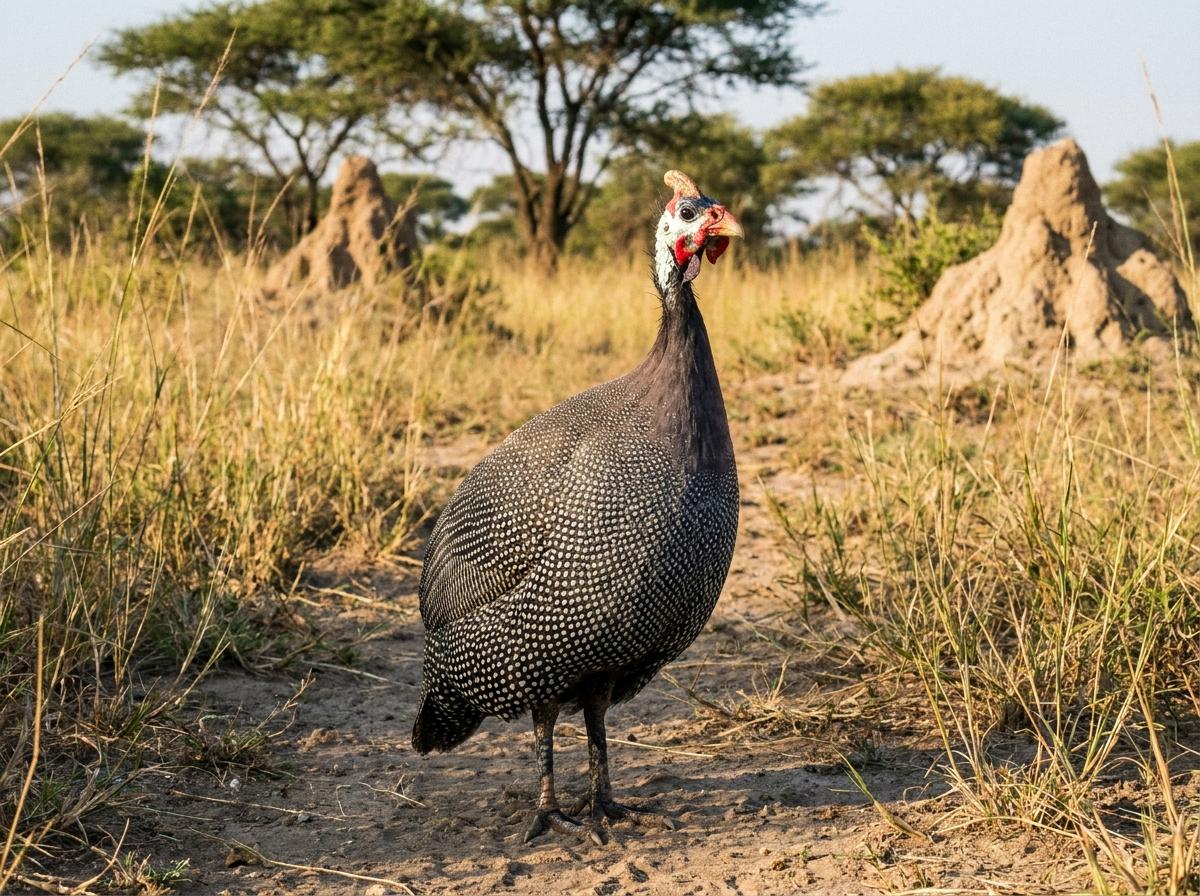
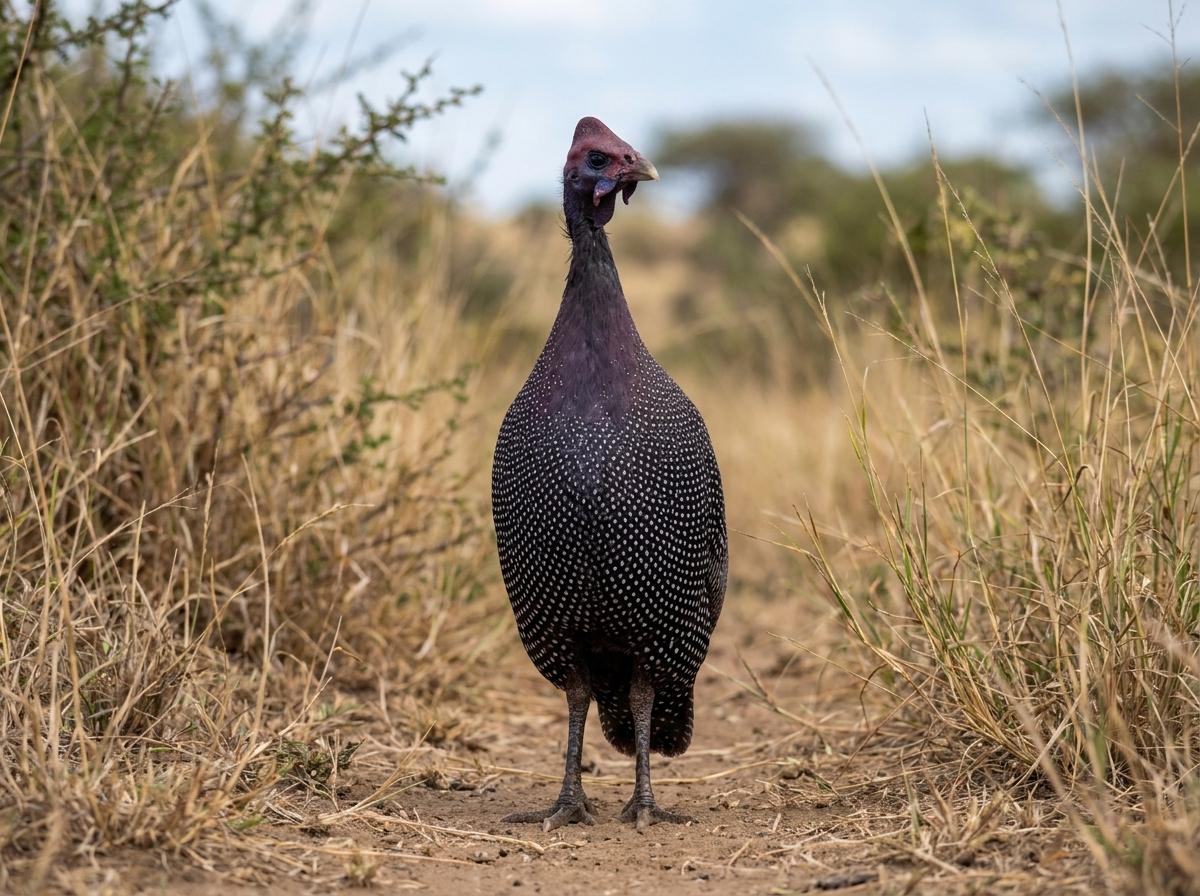
Royal Purple is a color variety of the helmeted guineafowl (Numida meleagris), not a separate breed or species. Underneath the plumage it is the same loud, hardy, half-wild farm bird as the familiar white-spotted pearl guinea: a seasonal layer, a tireless insect forager, and one of the best alarm systems a barnyard can have. What sets a Royal Purple apart is the coat, deep purple-black with an iridescent sheen, carrying only a light sprinkling of pearling low on the wings and flanks instead of the head-to-tail white dotting of the standard pearl. This page covers what the variety actually is, how its color works genetically, how to tell hens from cocks, what the tick-control evidence really shows, and what to expect when you hatch, raise, and buy them. If you are still comparing guinea varieties side by side, the Creatures guinea fowl species page is the place to start.

| What it is | A color variety of the helmeted guineafowl (Numida meleagris), not a separate breed or species |
|---|---|
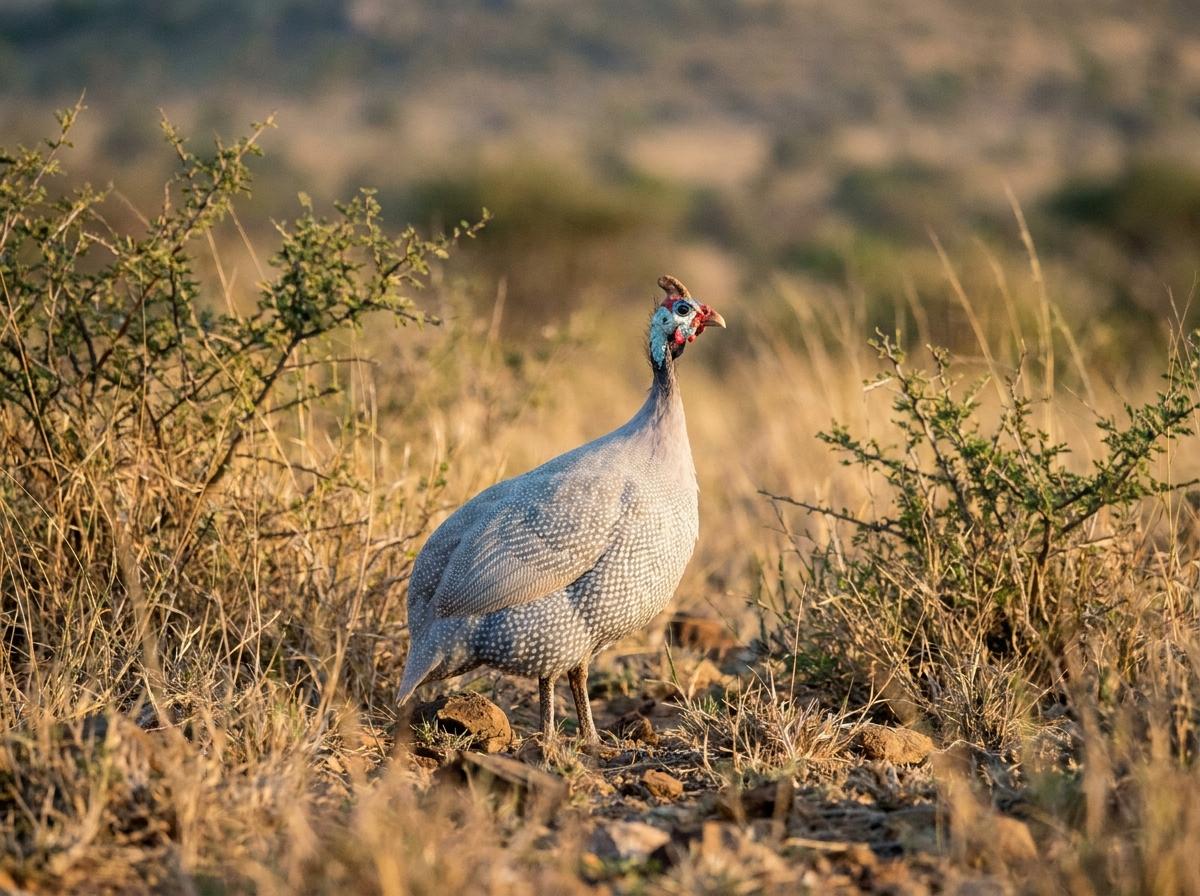
| Plumage | Deep purple-black with an iridescent sheen; pearling limited to the lower wings and flanks; small white wing or breast flashes vary bird to bird |
| Show status | Not an American Poultry Association variety; only Pearl, White, and Lavender are recognized for exhibition |
| Adult weight | About 3.0 to 3.5 lb (roughly 1.5 kg), both sexes |
| Eggs | Seasonal layer, roughly spring through early fall; an egg a day in season and 100 or more per year in a managed flock |
| Incubation | 26 to 28 days; thick-shelled eggs that are hard to candle before day 10 |
| Noise | Loud, persistent alarm calls; check zoning and think about neighbors before buying |
| Best known for | Insect and tick patrol on pasture, watch-bird alarms, and very low-input free ranging |
Browse listings, public profiles, breeders, or add your animal.
Royal Purple is a color, not a breed
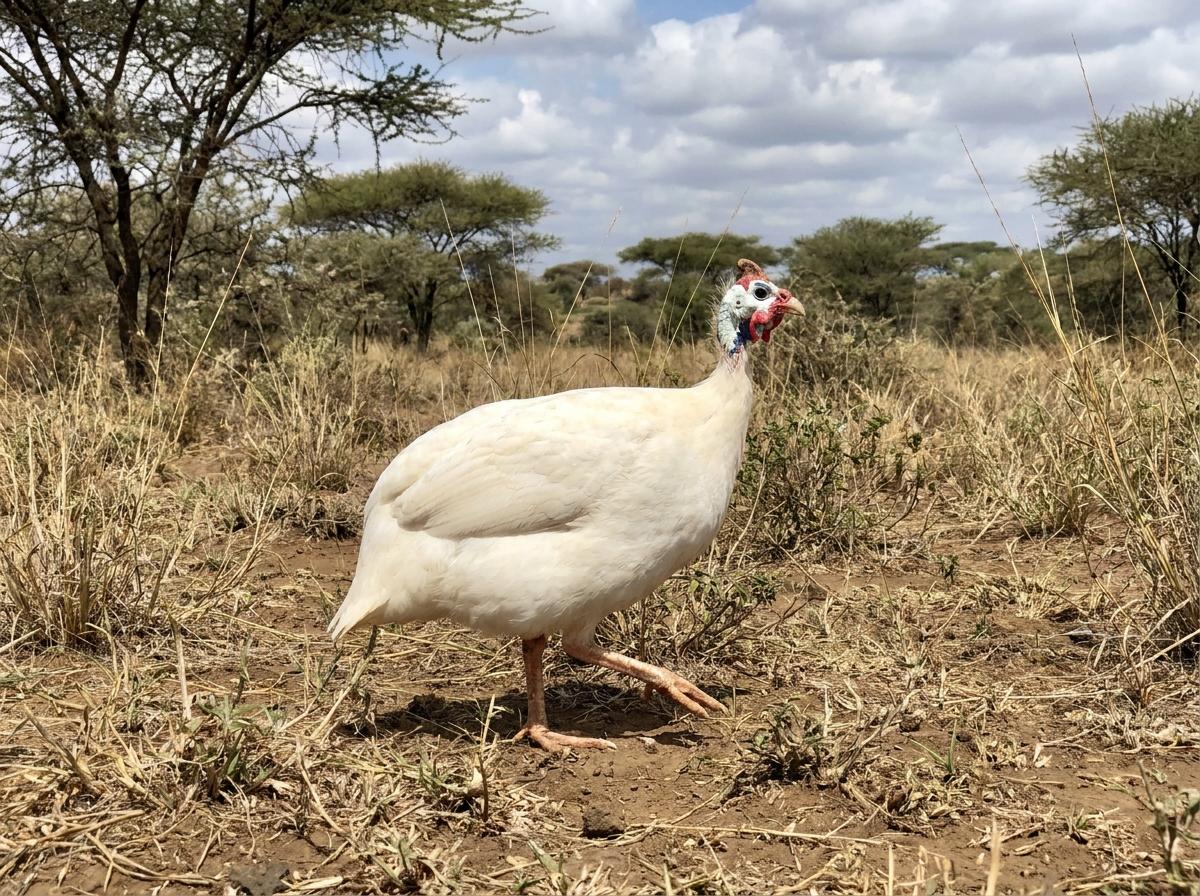
Guinea fowl keepers use the word “variety” the way chicken keepers use “color”: it describes plumage, not a separate line with its own conformation standard. There are three species of guinea fowl commonly described in poultry references, the vulturine, the crested, and the helmeted, and essentially all domestic guineas in North America are helmeted guinea fowl, named for the bony casque on the crown of the head, according to the University of Kentucky Cooperative Extension guide to raising guinea fowl. Every domestic color, from pearl to white to Royal Purple, is the same bird underneath.
The wild bird, and the classic barnyard guinea, wears the fully pearled pattern: a dark gray body covered head to tail in fine white dots. That is the pearl guinea fowl, and it is the reference point every other variety is described against. The American Poultry Association recognizes exactly three guinea varieties for exhibition, Pearl, White, and Lavender, per the same University of Kentucky publication. Royal Purple is not one of them. It is a well-established hatchery and breeder variety, catalogued by Guinea Fowl International’s color chart among the roughly forty colors kept in North American flocks, but you cannot show it as a recognized variety at an APA-sanctioned poultry show, and no registry maintains a Royal Purple herdbook. That chart does list Royal Purple among three colors it says are recognized in a Standard of Perfection, with Pearl Gray and Slate, without naming the body behind that standard, so the two sources are not saying the same thing; the American Poultry Association’s Standard of Perfection, the one an APA show judges to, recognizes only Pearl, White, and Lavender. If a seller presents Royal Purple as a rare breed with papers, that is a red flag rather than a premium.
The name itself needs one footnote. Guinea Fowl International, the breeder community that maintains the most widely used color chart, defines Royal Purple as a semi-pearled variety: a very dark bird with a purplish look in the sun and pearling confined to the lower wings and flanks. The same chart lists the fully solid version, with no pearling at all, as violet. In practice, hatcheries and small breeders do not use the two labels consistently, and birds sold as Royal Purple range from lightly penciled on the flanks to almost completely solid. That is normal for a color variety without an APA standard. What matters when you buy is the bird in front of you, not the label on the box.
What a Royal Purple guinea fowl looks like
From ten feet away a Royal Purple reads as a black guinea. Up close, and especially in direct sun, the black breaks into a deep purple iridescence over the back, breast, and tail, which is where the variety gets its name. The remaining pearling sits low on the folded wing and along the flank, fine and sparse rather than the bold all-over dotting of a pearl. Many birds carry a small clean white flash at the front edge of the wing or a few white feathers on the breast, and the amount varies noticeably from bird to bird, which is part of why photos of the variety online do not all match.

Everything above the shoulders is standard helmeted guineafowl. The head and upper neck are bare skinned, the crown carries the hard, horn-colored casque that gives the species its name, and red wattles hang at each side of the beak. Adults of both sexes weigh about 3.0 to 3.5 lb, around 1.5 kg, per the University of Kentucky guide. The body is the species’ unmistakable silhouette: a rounded, hump-backed oval carried low, with a short tail pointing down and a gait somewhere between a trot and a jog. Guineas are strong runners and prefer running to flying, though they fly well when they choose to, commonly covering 400 to 500 feet at a stretch.
One thing the plumage will not tell you is sex. Royal Purple cocks and hens are colored alike, which brings us to the question every new guinea keeper asks.
Sound, not feathers: how to sex guinea fowl
Guinea fowl are hard to sex, and anyone selling “guaranteed hens” from a straight-run brooder deserves skepticism. Keets look identical, and even grown birds carry the same plumage in every color variety, Royal Purple included. The University of Kentucky extension guide is blunt that young guineas cannot be reliably sexed by appearance and gives the two practical tools for adults:
- The call. A guinea hen makes a two-syllable call that keepers render as “buckwheat, buckwheat” or “put-rock, put-rock.” Cocks never make it. Both sexes make the one-syllable alarm chatter, so only the two-syllable call is diagnostic. Most young birds that will call start doing so at 6 to 8 weeks of age, but some hens stay quiet for months, so the absence of the call proves nothing.
- The helmet and wattles. Cocks grow a noticeably larger casque and larger, more cupped wattles than hens. This is a comparative judgment, easiest with several birds of the same age side by side, and it firms up with maturity.
If you need a specific number of hens, the workable approaches are to buy adults sexed by call from a breeder you trust, or to buy extra straight-run keets and expect to rehome surplus cocks. A flock heavy with cocks is workable on range but noisier and harder on the hens in season.
The color genetics
Guinea fowl color genetics is a real, sourceable subject, and it is simpler than the number of variety names suggests. A peer-reviewed study of village guinea fowl diversity in northern Togo, published in the journal PeerJ and available through PubMed Central, summarizes the classical genetics this way: four known loci influence guinea fowl plumage color, all autosomal, three of them recessive and the fourth incompletely dominant, and the domestic color varieties have been developed from those four mutations and their combinations. That study, incidentally, sampled Royal Purple as one of seven plumage phenotypes walking around West African villages, a good reminder that this “designer” color is an ordinary part of the species’ domestic variation worldwide.
Breeders organize the resulting varieties along two practical axes. One is the base color, running from the wild dark gray through dilutions and modifications like lavender, buff, and chocolate. The other is the degree of pearling: fully pearled birds like the pearl and lavender, semi-pearled birds like Royal Purple with pearling reduced to the wings and flanks, and solid birds with no pearling at all. Genomic work on the species’ domestication, published in Genome Biology and Evolution, found a selection signature at the tyrosinase (TYR) pigmentation gene in the cream-white Italian Camosciata breed, where one TYR variant is fixed, consistent with domestic flocks losing and rearranging the wild pattern over time.
Two caveats belong here. First, no published study maps the Royal Purple phenotype to a specific locus by name; the four-locus summary is the state of the classical literature, and the variety charts are breeder observation layered on top of it. Second, because pairings matter and many small flocks run mixed colors, Royal Purple parents do not automatically mean Royal Purple keets. If the color is the point for you, buy from a breeder who pens the variety separately and can tell you what their pairings actually produce, and expect some spread in pearling and white flashes even then. Keeping track of which pairings threw which colors is exactly the kind of thing a hatch record solves; you can log hatches and parentage on Creatures against each breeding bird’s profile.
Noise, neighbors, and free ranging
Guinea fowl are semi-domesticated at best, and the things that make them useful are the same things that make them a poor fit for small lots. This is the section to read twice before you order keets.

They are loud. The two-syllable hen call carries a long way, and the whole flock joins the one-syllable alarm chatter whenever anything unusual happens: a hawk, a delivery van, a plastic bag. The researchers who ran the best-known guinea tick study wrote plainly that the birds “are noisy and may be objectionable to human neighbors,” and the University of Kentucky guide tells prospective keepers to check zoning before buying, precisely because guineas range across property lines and complaints follow. As a watch animal that noise is the product: guineas will announce raptors and ground predators to the whole barnyard before anything else knows. As a neighbor relations matter, it is the main reason guineas get rehomed.
They range, and they roost high. Left to themselves, guineas will patrol far beyond a backyard, and the University of Maine Cooperative Extension notes that adults often prefer to stay out at night, flying up to tree roosts 20 feet or higher. Birds that roost in trees are exposed to owls and weather, so most keepers train guineas to a coop by confining new birds for one to two weeks, then releasing them gradually, one bird first, because a lone guinea will not stray far from the flock it can hear. Truly containing guineas takes a covered run; an open fence is a suggestion to a bird that flies hundreds of feet at a time.
They are cheap to feed and hard on almost nothing. Ranging guineas feed themselves most of the year on insects, seeds, and greens, eat very little supplemental feed in summer, and unlike chickens they barely scratch, so established gardens usually survive them. The two exceptions: they will dust-bathe where they please, and they will eat honey bees, sometimes standing at a hive entrance to pick off workers, so guineas and apiaries mix badly.
If your acreage, zoning, and neighbors can absorb the noise, few birds give more per dollar of feed. If any of those three is shaky, a quieter species is the better call, and the where to buy chickens guide covers the tamer route to a working flock.
Tick control: what the evidence actually shows
Tick patrol is the single most repeated claim about guinea fowl, so it deserves a precise answer rather than a slogan. The claim is real, and it is also narrower than the marketing version.

The foundation is a small controlled field study, Duffy, Downer, and Brinkley, published in the Wilson Bulletin in 1992 and available in full text. Working at two suburban Long Island sites during the fall questing season for adult deer ticks, the authors ran paired exclosure and enclosure experiments on lawns. Where free-ranging guineas worked a mowed meadow, drag sampling found ticks in eight of 50 samples inside cages the birds could not enter, against one of 50 on the open lawn beside them. Where four guineas were penned over fresh lawn each day, no ticks were found in any enclosure afterward, against single ticks in five of 18 control patches. Combined, the pattern was highly significant, and the same enclosures also showed large reductions in leafhoppers and beetles. Guineas eating ticks is also not a folk invention: the species gleans ticks from warthogs in Africa, and ticks have been found in the stomachs of free-ranging guineas in Nantucket, both documented in the same paper.
Now the limits, which come from the authors themselves rather than from skeptics. The study measured adult deer ticks only, and the authors flag that nymphal deer ticks, the stage responsible for most Lyme disease transmission to people, are far smaller and “may not be captured as easily by guineafowl.” It measured lawns, and most deer ticks live in woods and wood edges, habitat guineas work much less. It did not establish how many birds a property needs. And the authors’ own conclusion is the sentence every guinea listing should quote in full: guineafowl alone should not be relied on for complete control of deer ticks, but used as one of a suite of methods alongside repellents, careful acaricide use, and habitat modification.
So the case for a Royal Purple flock is this: they will measurably thin adult ticks and other arthropods on the mowed, high-traffic parts of a property, they are a low-input way to do it, and they are not a Lyme disease shield. Keep doing tick checks.
Keets: hatching, brooding, and the dewy grass rule
Guinea keets are hardy birds bracketed by two fragile windows, and most losses trace to the same few mistakes.
Eggs hatch in 26 to 28 days, a week longer than chicken eggs, and the shells are thick enough that candling before day 10 is close to pointless, per the University of Kentucky guide. Fresh-hatched keets absorb the last of the yolk and need no feed or water for the first 48 hours, which is what makes mail-order shipping of day-olds workable; hatcheries impose minimum order counts because the keets keep each other warm in transit.
The single most important fact in guinea rearing is what extension agents call the dampness problem: keets are native to dry African savanna and are dangerously susceptible to wet chill in their first two weeks. The University of Kentucky guide puts it memorably, noting keets can die from following their mother through dewy grass. Brood them dry, on absorbent litter, starting at 95 degrees F for the first two weeks and dropping 5 degrees per week as they feather out. Past those two weeks the same publication calls guineas probably the hardiest of all domestic land fowl, and adults tolerate heat and cold that stress chickens.
Feed is the other trap, because the safe path runs against chicken-keeper habit:
- Starter, weeks 1 to 4: a 24 to 26 percent protein turkey or game bird starter. Ordinary chick starter is too low in protein for keets.
- Grower, weeks 5 to 8: step down to 18 to 20 percent.
- Adults: a standard 16 percent layer ration for breeding season, plus free-choice grit and oyster shell for ranging hens.
- Unmedicated only. The University of Kentucky guide warns against feeding medicated poultry diets to guineas because some coccidiostats used in chicken feed are toxic to guinea fowl. Read the tag, and when in doubt ask your feed mill and your veterinarian.
- Mash or crumbles, not pellets, which the same guide recommends against for guineas.
Set brooder reminders the same way you would vaccination dates; the reminders and upcoming care walkthrough shows how keepers schedule temperature step-downs and feed transitions on Creatures so a busy week does not cook or chill a brooder.
Eggs and breeding
Guinea hens are seasonal layers. Extension guidance puts the season at roughly March or April through October, with hens laying an egg a day at peak and a well-managed hen producing 100 or more eggs in a year. Pullets generally come into lay around a year old. The eggs are small, about 1.4 oz against a 2 oz chicken egg, with hard shells and rich yolks, and they cook like any other egg.
The catch is that free-ranging hens hide their nests, and a guinea hen does not go broody until a shared nest holds a large clutch, often around 30 eggs. The extension playbook for actually getting those eggs: keep hens shut in the coop until about noon so the day’s egg is laid inside, and when you do find an outdoor nest, take eggs while leaving four to six behind so the hen keeps using the spot instead of hiding the next nest better. Guinea pairs bond strongly, and in wild flocks birds mate in pairs, but under domestic management one cock covers four to five hens, so you do not need anywhere near a one-to-one flock.
For hatching, choose either natural incubation late in the season, a broody chicken hen, which will faithfully hatch guinea eggs, or an incubator run on turkey or pheasant settings for 26 to 28 days. However you hatch, write it down while it is fresh: clutch size, hatch rate, which pen the eggs came from, and what colors hatched. Those four numbers, kept over two or three seasons, are what turn a mixed flock into a deliberate Royal Purple breeding program.
Housing and daily care
Guineas need less than chickens, but not nothing. The working minimum is a dry, predator-proof shelter with perches, because guineas insist on roosting high, and absorbent litter kept dry. If birds must be confined, the University of Kentucky guide calls for at least 2 to 3 square feet of floor space per bird indoors, and more is always better for a species this active; fully confined guineas need a covered run. Do not insulate an unheated guinea house, the same guide advises, because trapped moisture causes more respiratory trouble than cold does. Fresh water daily, feeders under cover, and nest boxes for the laying season complete the list.
Mixed flocks mostly work, with one firm rule from the extension literature: do not house guinea cocks with chicken roosters full time, because the guineas will run the roosters off feed and water. Free-ranging together by day and sharing a barn at night is fine, and many keepers run guineas alongside a laying flock this way; if you are building the chicken side of that barnyard, the cold-hardy, calm Russian Orloff is a good fit for the same climates guineas handle.
Health care is refreshingly short. Guineas are subject to the same diseases and parasites as other poultry and respond to the same treatments, but they carry a deserved reputation as vigorous, largely disease-free birds when ranged. The practical program is the boring one: clean water, dry litter, unmedicated feed, a parasite plan suited to your region, and a veterinarian for anything beyond routine, since medical decisions belong with someone who can see the bird. Keepers commonly report guineas living a decade or more with good care, though there is no authoritative published lifespan figure for backyard conditions, so treat long-lived birds as the reward of management rather than a promise. A health record on each bird’s profile keeps treatments, weights, and losses in one place, which matters more than it sounds once a flock passes a dozen look-alike birds.
What does a Royal Purple guinea fowl cost?
There is no published market index for guinea fowl, so treat any confident national price chart with suspicion. The picture from hatchery catalogs and breeder listings: day-old keets generally cost a few dollars each, with color varieties like Royal Purple carrying a modest premium over pearl, and minimum order counts applying to shipped birds. Started juveniles cost more, reflecting the brooding labor already done, and proven adult hens sexed by call cost the most, precisely because sexing is the hard part. Beyond the birds, the real startup costs are the brooder, the coop and covered run if you need containment, and feed for the first eight weeks before range takes over most of the feeding.
Prices move with season, region, and hatch availability, so check live listings rather than year-old forum numbers. You can browse current Royal Purple guinea fowl listings on the Creatures marketplace and search breeders and farms in the Creatures directory; because color-variety hatches are seasonal and sell out, a saved-search alert (below) is the practical way to catch a local hatch when it lands.
Buying considerations
- Buy the bird, not the label. Royal Purple has no APA standard, so ask what the seller means by the name: how much pearling, how much white flashing, and photos of the actual parents. A seller who explains their line’s spread is a better bet than one promising uniformity.
- Ask what the pairings produce. Mixed-color flocks throw mixed keets. If you want Royal Purple offspring, buy from separately penned matings and ask what percentage of last season’s hatch came out purple.
- Be realistic about sexing. Straight-run keets are the norm. Treat any hen guarantee on young birds skeptically unless the seller sexed adults by call.
- Ask about testing. Many hatcheries and breeders sell under the USDA’s National Poultry Improvement Plan; asking whether a seller participates is a reasonable baseline before birds join an existing flock, and the where to buy chickens guide walks through NPIP paperwork and the chick-buying channels, which work the same way for keets.
- Plan the homecoming before the birds arrive. New guineas that are turned loose on day one disappear. Budget the one-to-two-week confinement period and the gradual release into your first month.
- Check your ground. Zoning, neighbors within earshot, road exposure, and night predators kill more guinea projects than disease does. The noise section above is the real pre-purchase checklist.
Frequently asked questions
Is Royal Purple a breed of guinea fowl?
No. It is a color variety of the helmeted guineafowl. All domestic guinea colors are the same species and differ only in plumage genetics. The APA recognizes just three varieties for exhibition, Pearl, White, and Lavender, and Royal Purple is not one of them.
What is the difference between Royal Purple and violet guinea fowl?
By the breeder color chart, Royal Purple is semi-pearled, dark purple-black with pearling confined to the lower wings and flanks, while violet is the same dark color with no pearling at all. Sellers use the labels loosely, so judge the bird in front of you.
Do guinea fowl really control ticks?
Partly. A 1992 controlled study on Long Island found free-ranging guineas significantly reduced adult deer ticks on lawns, and they demonstrably eat ticks. The same authors cautioned that the study did not cover nymphal ticks, the stage that transmits most Lyme disease, and said guineas should be one layer of tick defense, not the whole plan.
How do I tell a male from a female?
By ear, mostly. Only hens make the two-syllable “buckwheat” call, starting around 6 to 8 weeks at the earliest; cocks develop larger helmets and wattles. Keets cannot be reliably sexed by appearance.
Are Royal Purples louder or calmer than pearl guineas?
There is no evidence that color affects temperament or volume. Every guinea variety is a loud, alert, far-ranging bird; buy the color you like and plan for standard guinea behavior.
Can I keep guinea fowl with chickens?
Generally yes, ranging together by day and sharing housing at night, with one exception: do not confine guinea cocks with roosters full time, because the guineas will bully them away from feed and water.
How many eggs will a Royal Purple hen lay?
Guinea hens of any color lay seasonally, roughly spring through early fall, an egg a day at peak and 100 or more per year in a managed flock. The eggs are small, thick-shelled, and excellent eating.
Do this next on Creatures
Whether you are researching the variety, hunting a local hatch, or already running a purple flock, Creatures is the records, marketplace, and directory layer to do it in one place.
Find birds. Browse Royal Purple guinea fowl on the marketplace and search trusted breeders and farms in the Creatures directory. New to the marketplace? See saving searches and using your watchlist.
Get alerted. Color-variety hatches are seasonal and go fast, so set a free Royal Purple listing alert and we will tell you when birds are posted. No account needed to start.
Add your flock. Already keeping guineas? Create a free animal profile in a few minutes, no account needed to start. The walkthrough is in adding an animal to Creatures.
Track hatches and health. Record hatches, treatments, and losses on Creatures. The record sheet opens for any visitor to look around, and you will need a free account to save what you enter. See adding a record for the full how-to.
List your farm. Hatch keets or sell started birds? Create a free breeder or farm profile, then get listed in the breeder directory so buyers searching for this variety can reach you. If you run the operation with family or a partner, read creating an organization and adding your team.
Compare varieties. Still deciding between colors? Start at the guinea fowl species page, then compare the pearl, lavender, and white varieties side by side.
If you hatch keets or sell started birds, you can also list your operation in the Creatures directory so buyers searching for this variety can reach you.