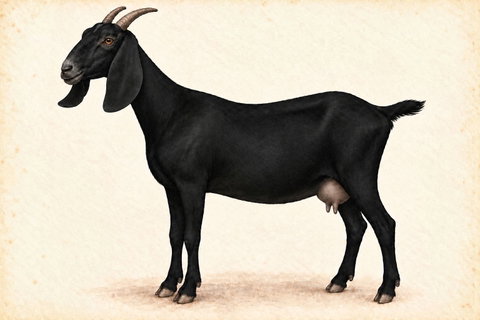
Black
A solid coat. Look for any tan before calling a goat black; brown coats have brown in place of black.
ADGA: no single term
Bred to a black goat: Black 100%

Find Nubian color names and markings, with pictures, descriptive words and the features to check. Mini Nubians can use this guide too.
Updated · How it works and sources
A solid coat. Look for any tan before calling a goat black; brown coats have brown in place of black.
ADGA: no single term
Bred to a black goat: Black 100%
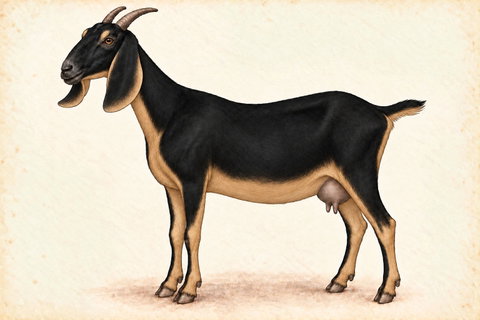
A dark body with tan on the belly, throat, face and legs.
ADGA: no single term
Bred to a black goat: Black and tan 50% to 100%; may also give Black up to 50% (up to 50% in total)
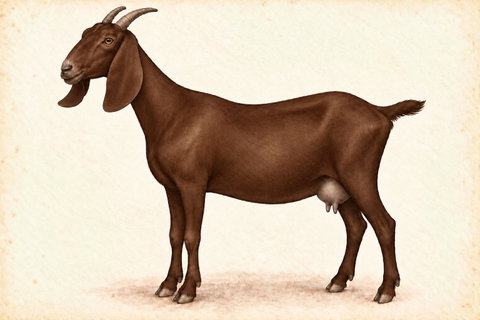
A solid coat. Look for any tan before calling a goat black; brown coats have brown in place of black.
ADGA: no single term
Bred to a black goat: Brown 50% to 100%; may also give Black up to 50% (up to 50% in total)
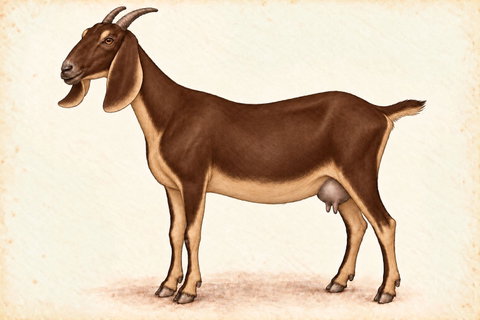
A dark body with tan on the belly, throat, face and legs.
ADGA: no single term
Bred to a black goat: Brown black and tan 25% to 100%; may also give Black and tan up to 50%, Brown up to 50%, Black up to 25% (up to 75% in total)
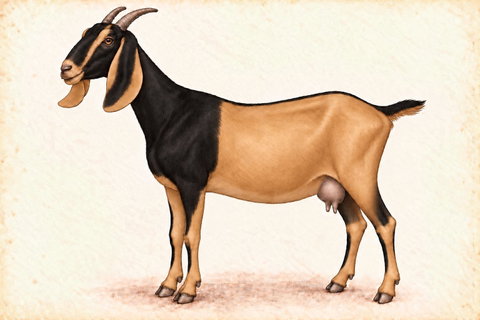
Check the dark cape, a usually light belly and light lower legs with dark front marks; white can hide the belly. Rare in Nubians (2 of 101 records).
ADGA: no single term
Is this my goat?Pattern and genetics
Bred to a black goat: Buckskin 50% to 100%; may also give Black up to 50% (up to 50% in total)
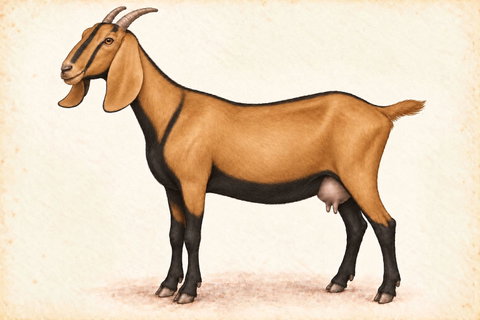
Check the dark belly, lower legs and dorsal stripe.
ADGA: no single term
Is this my goat?Pattern and genetics
Bred to a black goat: Chamoisee 50% to 100%; may also give Black up to 50% (up to 50% in total)
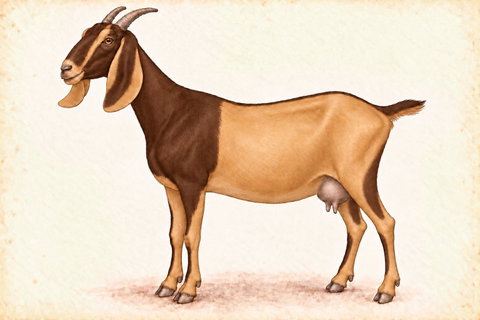
Check the dark cape, a usually light belly and light lower legs with dark front marks; white can hide the belly. Rare in Nubians (2 of 101 records).
ADGA: no single term
Bred to a black goat: Brown buckskin 25% to 100%; may also give Buckskin up to 50%, Brown up to 50%, Black up to 25% (up to 75% in total)
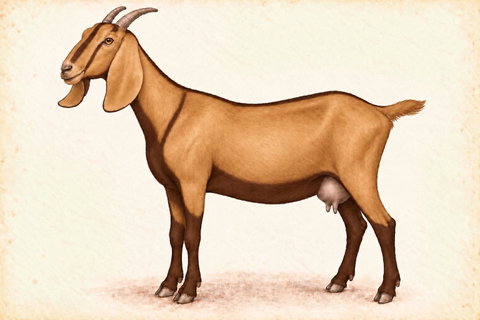
Check the dark belly, lower legs and dorsal stripe.
ADGA: no single term
Bred to a black goat: Brown chamoisee 25% to 100%; may also give Chamoisee up to 50%, Brown up to 50%, Black up to 25% (up to 75% in total)
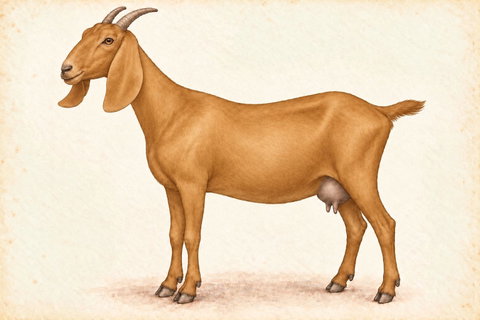
Tan across the whole goat, from pale cream to deeper red. Shade alone does not establish what pattern a goat can hide.
ADGA: no single term
Bred to a black goat: Red, tan or gold 50% to 100%; may also give Black up to 50%, Black and tan up to 50%, Brown black and tan up to 50%, Buckskin up to 50%, Chamoisee up to 50%, Brown up to 50%, Brown buckskin up to 50%, Brown chamoisee up to 50%, Brown swiss up to 50%, Swiss up to 50% (up to 50% in total)
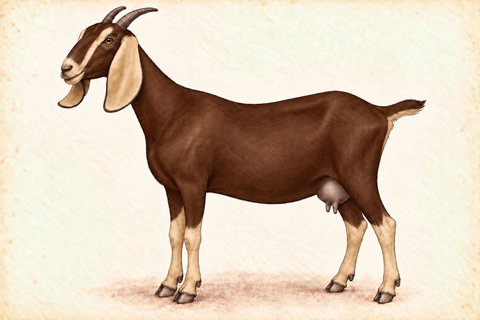
Check the dark belly and light muzzle, with pale facial stripes and lower legs; a pale belly suggests sundgau. Rare in Nubians (2 of 101 records).
ADGA: no single term
Bred to a black goat: Brown swiss 25% to 100%; may also give Brown up to 50%, Swiss up to 50%, Black up to 25% (up to 75% in total)
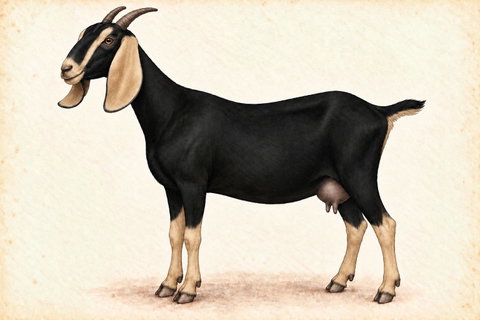
Check the dark belly and light muzzle, with pale facial stripes and lower legs; a pale belly suggests sundgau. Rare in Nubians (2 of 101 records).
ADGA: no single term
Is this my goat?Pattern and genetics
Bred to a black goat: Swiss 50% to 100%; may also give Black up to 50% (up to 50% in total)
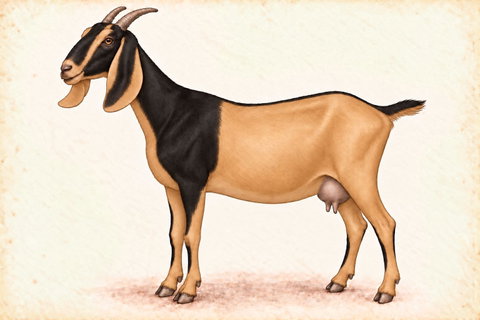
The named patterns combine their tan regions. A Swiss partner adds pale trim rather than replacing the other body pattern; gold covers Swiss.
ADGA: no single term
Bred to a black goat: Black and tan 50%; Buckskin 50%
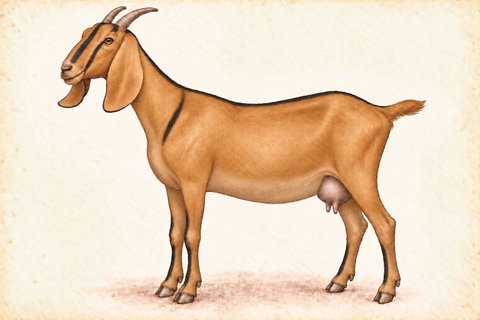
The named patterns combine their tan regions. A Swiss partner adds pale trim rather than replacing the other body pattern; gold covers Swiss.
ADGA: no single term
Bred to a black goat: Black and tan 50%; Chamoisee 50%
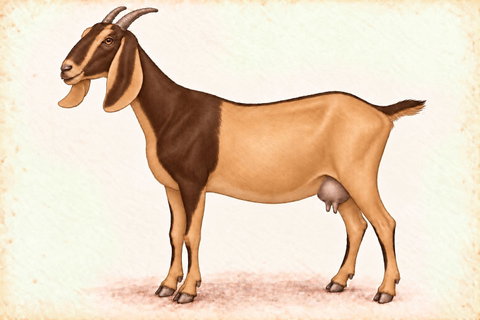
The named patterns combine their tan regions. A Swiss partner adds pale trim rather than replacing the other body pattern; gold covers Swiss.
ADGA: no single term
Bred to a black goat: Brown black and tan 25% to 50%; Brown buckskin 25% to 50%; may also give Black and tan up to 25%, Buckskin up to 25% (up to 50% in total)
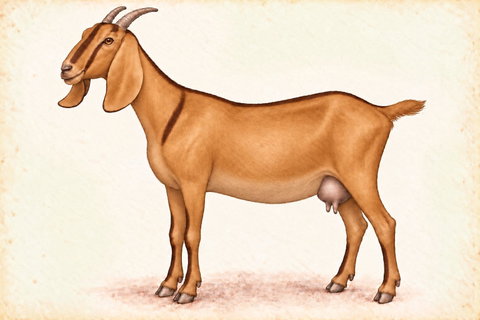
The named patterns combine their tan regions. A Swiss partner adds pale trim rather than replacing the other body pattern; gold covers Swiss.
ADGA: no single term
Bred to a black goat: Brown black and tan 25% to 50%; Brown chamoisee 25% to 50%; may also give Black and tan up to 25%, Chamoisee up to 25% (up to 50% in total)
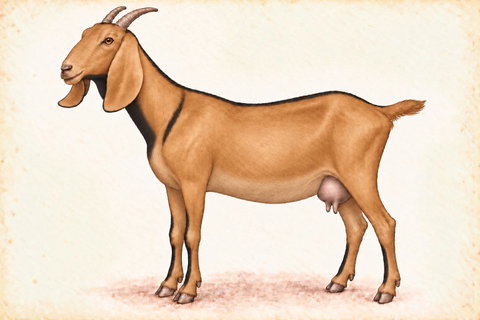
The named patterns combine their tan regions. A Swiss partner adds pale trim rather than replacing the other body pattern; gold covers Swiss.
ADGA: no single term
Bred to a black goat: Buckskin 50%; Chamoisee 50%
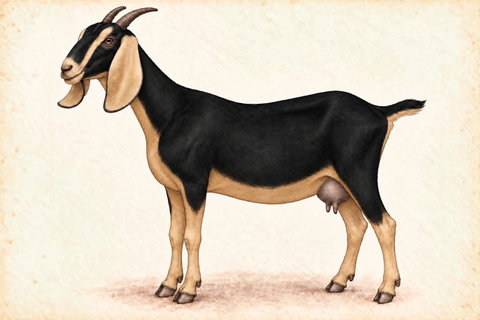
The named patterns combine their tan regions. A Swiss partner adds pale trim rather than replacing the other body pattern; gold covers Swiss.
ADGA: no single term
Bred to a black goat: Black and tan 50%; Swiss 50%
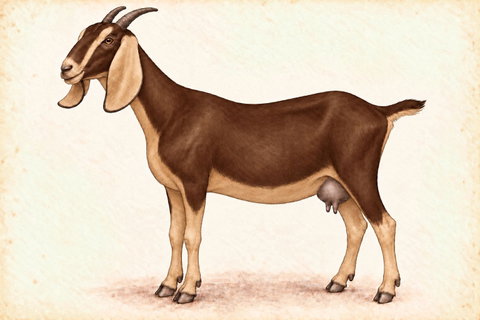
The named patterns combine their tan regions. A Swiss partner adds pale trim rather than replacing the other body pattern; gold covers Swiss.
ADGA: no single term
Bred to a black goat: Brown black and tan 25% to 50%; Brown swiss 25% to 50%; may also give Black and tan up to 25%, Swiss up to 25% (up to 50% in total)
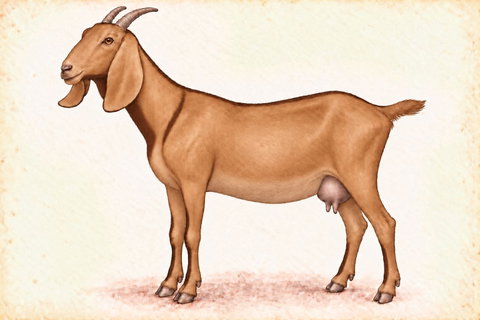
The named patterns combine their tan regions. A Swiss partner adds pale trim rather than replacing the other body pattern; gold covers Swiss.
ADGA: no single term
Bred to a black goat: Brown buckskin 25% to 50%; Brown chamoisee 25% to 50%; may also give Buckskin up to 25%, Chamoisee up to 25% (up to 50% in total)
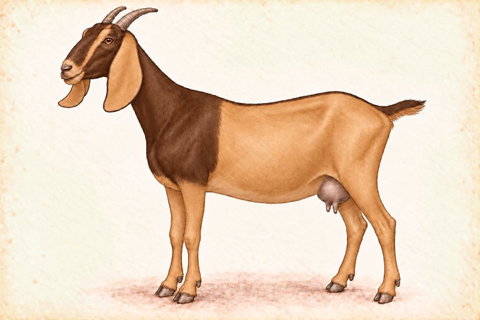
The named patterns combine their tan regions. A Swiss partner adds pale trim rather than replacing the other body pattern; gold covers Swiss.
ADGA: no single term
Bred to a black goat: Brown buckskin 25% to 50%; Brown swiss 25% to 50%; may also give Buckskin up to 25%, Swiss up to 25% (up to 50% in total)
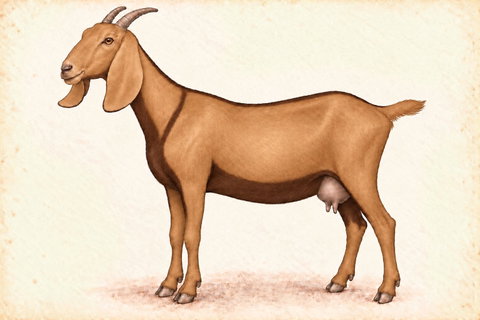
The named patterns combine their tan regions. A Swiss partner adds pale trim rather than replacing the other body pattern; gold covers Swiss.
ADGA: no single term
Bred to a black goat: Brown chamoisee 25% to 50%; Brown swiss 25% to 50%; may also give Chamoisee up to 25%, Swiss up to 25% (up to 50% in total)
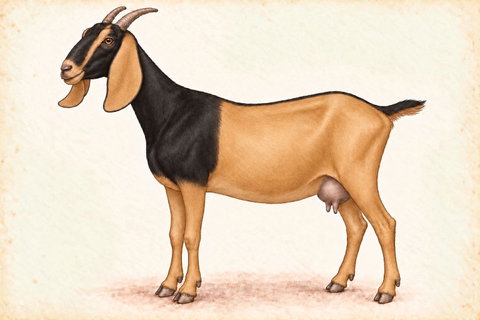
The named patterns combine their tan regions. A Swiss partner adds pale trim rather than replacing the other body pattern; gold covers Swiss.
ADGA: no single term
Bred to a black goat: Buckskin 50%; Swiss 50%
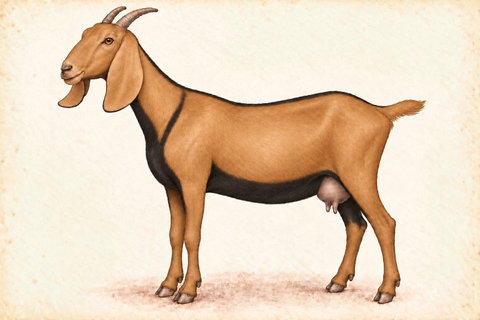
The named patterns combine their tan regions. A Swiss partner adds pale trim rather than replacing the other body pattern; gold covers Swiss.
ADGA: no single term
Bred to a black goat: Chamoisee 50%; Swiss 50%
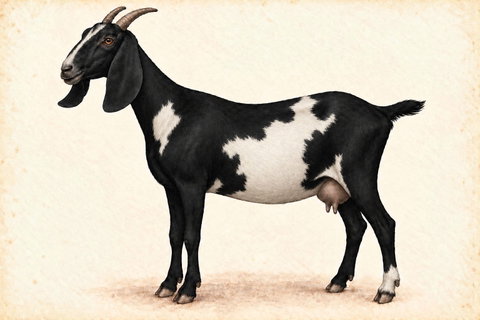
Random white patches over the base. White can hide the belly and other features; its amount is not predicted.
ADGA: no single term
White amount is not calculated. Choose the base color under the white to see kid colors.
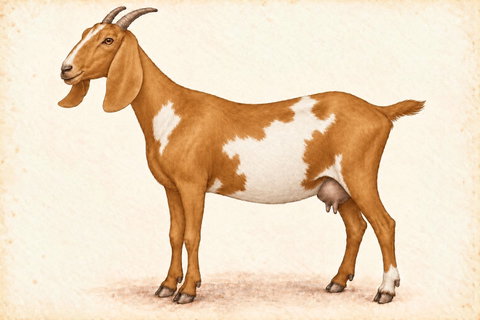
Random white patches over the base. White can hide the belly and other features; its amount is not predicted.
ADGA: no single term
White amount is not calculated. Choose the base color under the white to see kid colors.
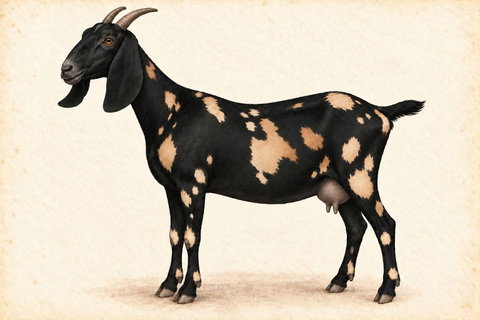
Look for pale or tan spots rather than white; adult spots can fade and tiny ones get missed. Moonspots do not show inside a white patch.
ADGA: no single term
Is this my goat?Pattern and genetics
Choose the base coat in the calculator to see kid colors and the available marking or trait odds.
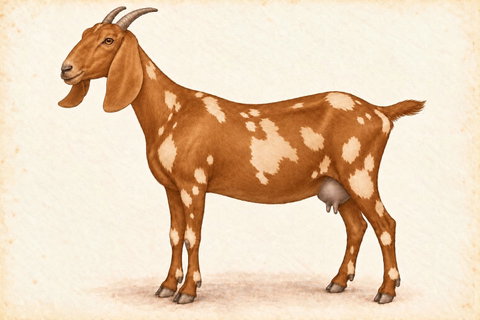
Look for pale or tan spots rather than white; adult spots can fade and tiny ones get missed. Moonspots do not show inside a white patch.
ADGA: no single term
Choose the base coat in the calculator to see kid colors and the available marking or trait odds.
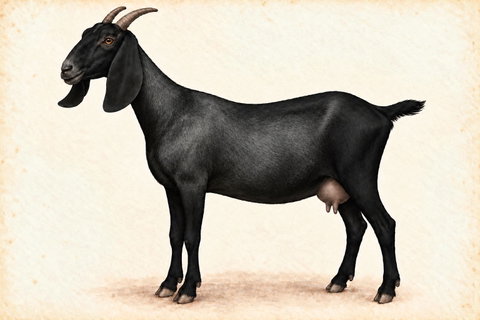
Look for white hairs mixed through the body, usually fewer on the face and lower legs; frosting is on the ears and muzzle.
ADGA: no single term
Is this my goat?Pattern and genetics
Choose the base coat in the calculator to see kid colors and the available marking or trait odds.
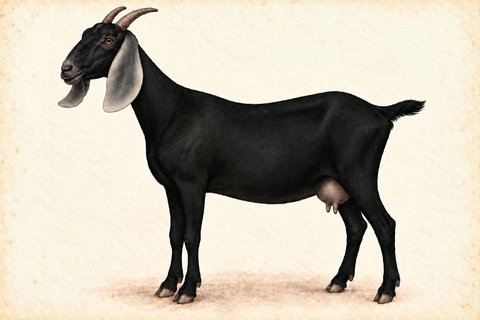
Check the ears and muzzle for white hairs; frosting can be only a few easily missed hairs.
ADGA: no single term
Choose the base coat in the calculator to see kid colors and the available marking or trait odds.
Illustrations of a typical Nubian with each color, not photos of DNA-tested goats; the closest picture is not proof of a goat's color.
Color illustration shown with natural horns. Horn status is entered separately.
A buckskin usually has a light belly and light lower legs with dark marks down the front; a chamoisee usually has a dark belly and dark lower legs. White markings, chocolate, a coat that darkens with age, combination colors and lighting can hide the difference.
A very dark buckskin vs black: any tan, such as a lighter rump behind the dark cape, means a pattern goat, not black. The cape can darken over the first months; check again at about 6 months.
Cou clair vs buckskin: a light front with a black rear is cou clair; a dark front cape with a light rump is buckskin.
Combination looks: with chamoisee, buckskin or cou clair, a Swiss partner adds pale trim (generally cream to tan) rather than replacing the partner's body pattern; a chamoisee Swiss reads as a chamoisee with light lower legs and light face stripes. Gold covers Swiss.
A bezoar-looking Nigerian Dwarf: Closest: chamoisee buckskin (or buckskin). Bezoar itself has no ND records. Closest describes the look, not a measured likelihood.
Swiss vs sundgau: check the belly first (dark = Swiss, pale = sundgau), then the muzzle (a Swiss has a light muzzle).
White patches can hide the belly and legs. Check the colored areas and keep Not sure when the feature is covered.
Moonspots can be darker or more strongly colored on kids and fade as they mature; on adults they can look like white spots, and tiny ones get missed. They are pale or tan, not white, and they don't show inside a white patch.
A buckskin's cape can darken over the first months; check again at about 6 months.
Chocolate on gold: chocolate doesn't show on a gold coat, except in any black shading, which turns brown; a gold hiding chocolate can show it through her kids. Black can fade toward brown with sun, age or nutrition. Chocolate can also be hard to recognize in a young kid: some are born nearly black and become clearly brown over the first months.
Eyes: marbled or partly blue eyes count as blue. A light gold-brown eye is still brown; some brown-coated goats have somewhat lighter eyes.
A young kid's eye color can still change; check again when the kid is older (breeders report).
Pied, broken, mostly white and tri-colored describe white over a base color. The amount and placement of white are not predicted. A belt describes a white band; tools use dominance as a stated breeder and expert assumption, not a promise about its size. Schwartzal is an AGS name for a mostly white goat with a dark head.
Breeder and expert experience: moonspots are pale or tan, not white. They can be stronger on kids and fade, and tiny ones can be missed in adults. The gene is not mapped and no DNA test exists.
Roan is white hairs mixed through the body, usually fewer on the face and lower legs. Frosted means white hairs on the ears and muzzle and can be a few easily missed hairs. Frosted has a small Nigerian Dwarf breeding study; roan has weaker evidence.
Breeder and expert experience: blue eyes are described as dominant, with no published breeding counts. The gene is not mapped and no DNA test exists. Marbled or partly blue eyes count as blue; a light gold-brown eye is still brown. A young kid's eye color can change, breeders report.
Polled buck × polled doe. If the buck has one copy of polled, about 1 in 8 kids is expected to be an intersex goat: genetically female and infertile, and it can look like a doeling, a buckling or something in between. If he has two copies, about 1 in 4. If you don't know which he has, plan for 1 in 4. This assumes the polled doe is fertile (she has kidded, or a test shows one copy). Breeders usually pair a polled goat with a horned one: half the kids are polled (all of them if the polled buck has two copies), and none have polled intersex syndrome. A polled DNA test is offered in Europe (Giessen, Bern).
G6S: neither parent has a result. About 1 in 4 Nubians tested at TVMDL carried it; two carriers give about 1 in 4 affected kids. Test before breeding.
Polled and intersex syndrome G6S deficiency Scrapie resistance (PRNP) Alpha-S1 casein
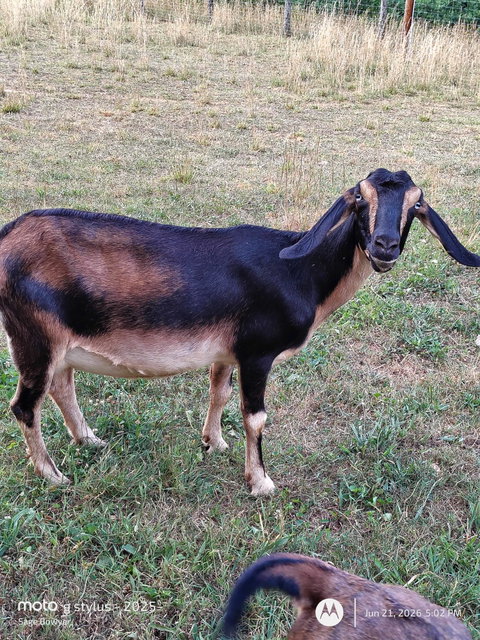 Storybook's Mocha
Recorded as 'buckskin'
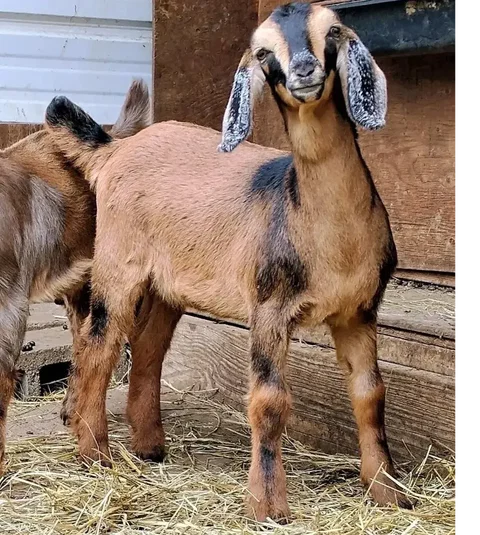 Sugar
Recorded as 'buckskin'
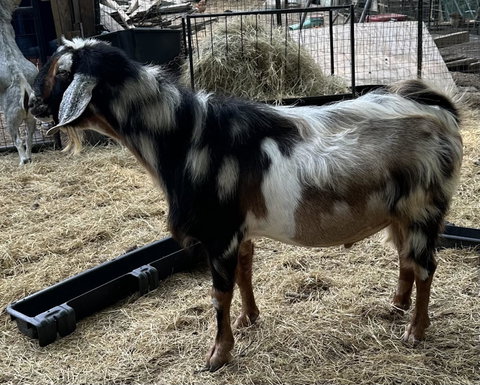 Mad H Acres Farm Sebastian
Recorded as 'buckskin'
 Delta Dawn
Recorded as 'chamoisee'
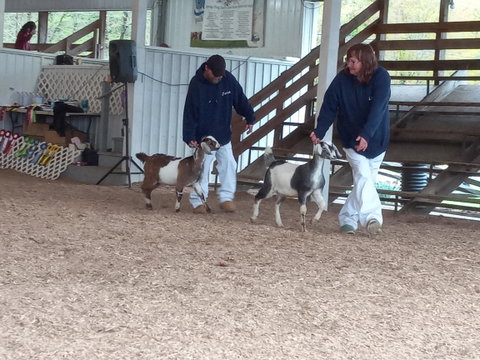 Love's Blueridge KKT Stiletto
Recorded as 'chamoisee'
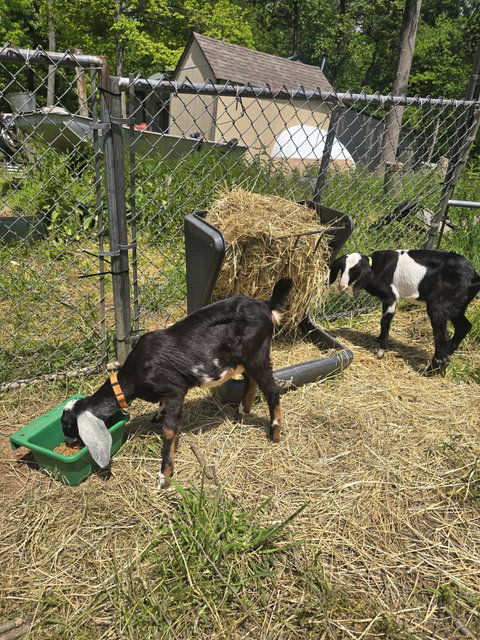 Abadon
Recorded as 'swiss marked'
Yes. Buckskin and Swiss are included in the Nubian color pool, although they were rare in the reviewed records (2 of 101 records). They are not removed merely because another color is seen more often.
Mini Nubians can use the Nubian names and also show colors from Nigerian Dwarf ancestry. A closest picture is a naming aid, not proof of a genotype. Their own recorded color words stay with the goat.
Brown or chocolate describes the appearance. Studied goat browns include dominant and recessive forms, and a name alone does not establish which a line has. A gold coat can hide brown without showing it.