





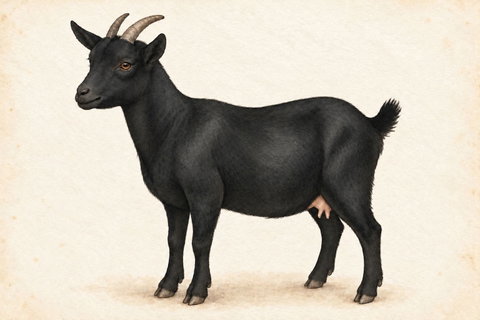
Black
Look for any tan, such as a lighter rump behind a dark cape, before calling the coat solid black.
AGS: Black · ADGA: no single term
Bred to a black goat: Black 100%

Find the closest look, learn the name and check the features that can hide or change with age.
Updated · How it works and sources
Look for any tan, such as a lighter rump behind a dark cape, before calling the coat solid black.
AGS: Black · ADGA: no single term
Bred to a black goat: Black 100%
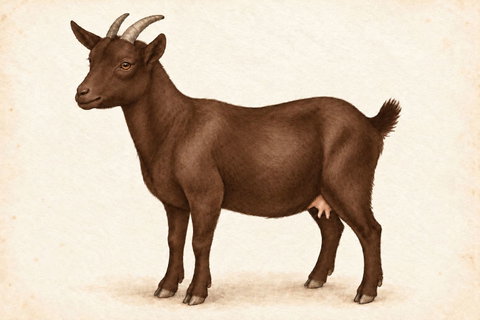
Check that the dark pigment is brown throughout; black can fade toward brown with sun, age or nutrition.
AGS: Brown · ADGA: no single term
Bred to a black goat: Chocolate 50% to 100%; may also give Black up to 50% (up to 50% in total)
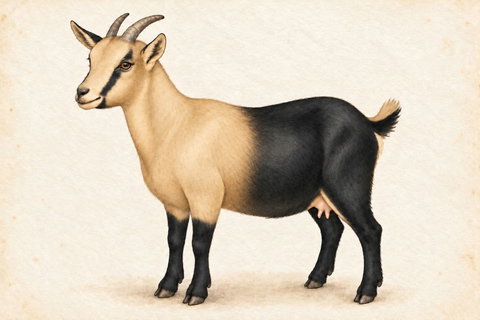
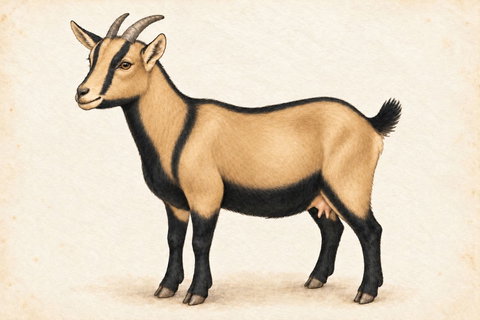
Check for a tan front and dark rear; a dark front cape with a light rump is buckskin.
AGS: no single term · ADGA: no single term
Is this my goat?Pattern and genetics
Bred to a black goat: Cou clair 50% to 100%; may also give Black up to 50% (up to 50% in total)
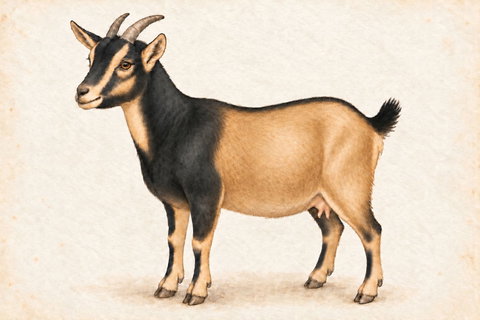
A dark front cape and lighter rump. Breeders' name; which allele it is has not been tested.
AGS: Buckskin · ADGA: no single term
Is this my goat?Pattern and genetics
Bred to a black goat: Buckskin 50% to 100%; may also give Black up to 50% (up to 50% in total)
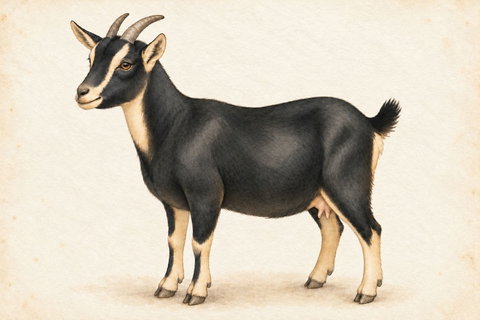
Check the dark belly, lower legs and dorsal stripe.
AGS: Chamoisee · ADGA: no single term
Is this my goat?Pattern and genetics
Bred to a black goat: Chamoisee 50% to 100%; may also give Black up to 50% (up to 50% in total)
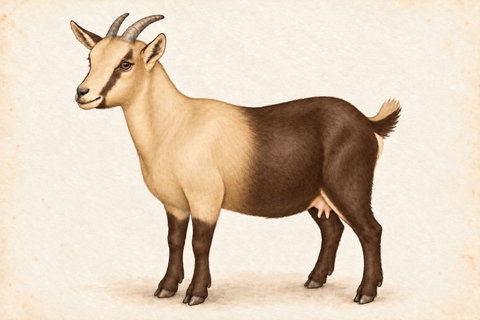
Check the dark belly and light muzzle, with pale facial stripes and lower legs; a pale belly suggests sundgau.
AGS: no single term · ADGA: no single term
Is this my goat?Pattern and genetics
Bred to a black goat: Swiss 50% to 100%; may also give Black up to 50% (up to 50% in total)
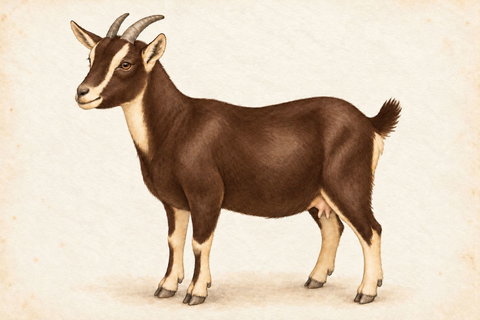
Check for a tan front and brown rear; a brown front cape with a light rump is buckskin.
AGS: no single term · ADGA: no single term
Bred to a black goat: Chocolate cou clair 25% to 100%; may also give Chocolate up to 50%, Cou clair up to 50%, Black up to 25% (up to 75% in total)
Check the brown belly and light muzzle, with pale facial stripes and lower legs; a pale belly suggests sundgau.
AGS: no single term · ADGA: no single term
Bred to a black goat: Chocolate Swiss 25% to 100%; may also give Chocolate up to 50%, Swiss up to 50%, Black up to 25% (up to 75% in total)
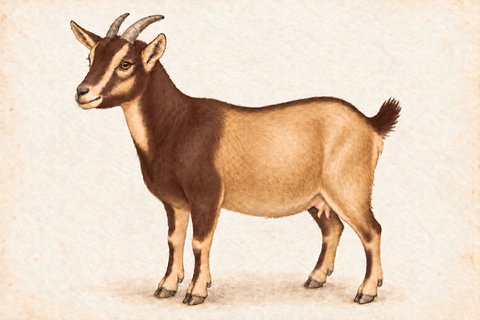
Check the brown cape, a usually light belly and light lower legs with brown front marks; white can hide the belly.
AGS: Buckskin · ADGA: no single term
Bred to a black goat: Chocolate buckskin 25% to 100%; may also give Buckskin up to 50%, Chocolate up to 50%, Black up to 25% (up to 75% in total)
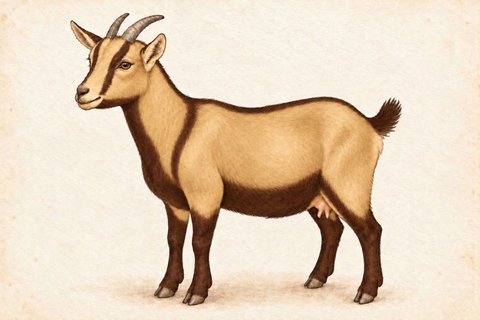
Check the brown belly, lower legs and dorsal stripe.
AGS: Chamoisee · ADGA: no single term
Bred to a black goat: Chocolate chamoisee 25% to 100%; may also give Chamoisee up to 50%, Chocolate up to 50%, Black up to 25% (up to 75% in total)
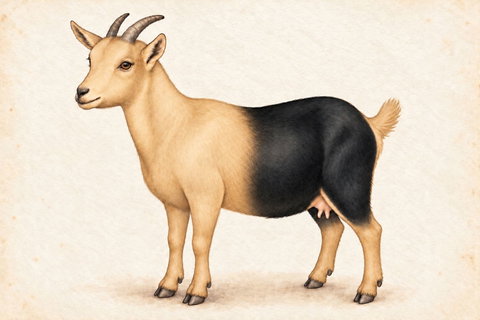
Check the light front and dark rear, with added pale facial stripes and lower-leg trim.
AGS: no single term · ADGA: no single term
Bred to a black goat: Cou clair 50%; Swiss 50%
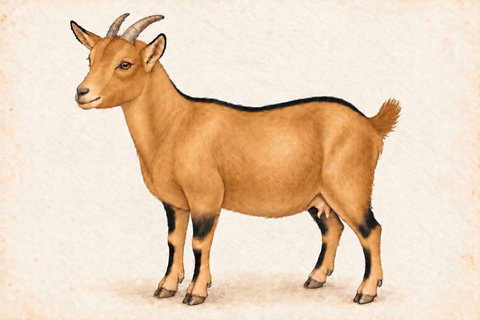
Check for a light front and rump around the dark cape and rear markings; white can hide their boundaries.
AGS: no single term · ADGA: no single term
Bred to a black goat: Buckskin 50%; Cou clair 50%
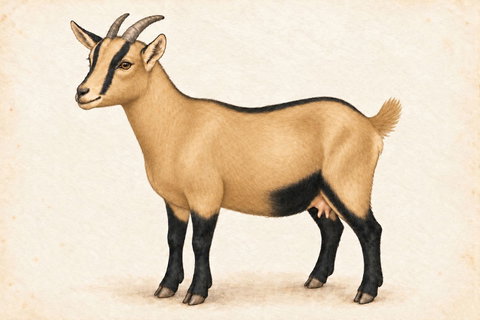
Check the light front and dark rear together with chamoisee dark belly, lower legs and back stripe.
AGS: no single term · ADGA: no single term
Bred to a black goat: Chamoisee 50%; Cou clair 50%
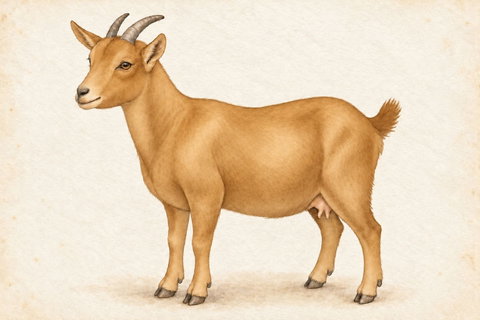
Check for a darker pattern under the pale coat; a gold goat can hide another pattern and black.
AGS: Gold · ADGA: no single term
Bred to a black goat: Gold 50% to 100%; may also give Black up to 50%, Buckskin up to 50%, Chamoisee up to 50%, Chocolate up to 50%, Chocolate buckskin up to 50%, Chocolate chamoisee up to 50%, Chocolate cou clair up to 50%, Chocolate Swiss up to 50%, Cou clair up to 50%, Swiss up to 50% (up to 50% in total)
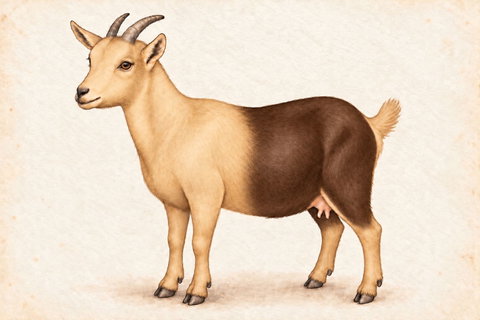
Check the light front and brown rear, with added pale facial stripes and lower-leg trim.
AGS: no single term · ADGA: no single term
Bred to a black goat: Chocolate cou clair 25% to 50%; Chocolate Swiss 25% to 50%; may also give Cou clair up to 25%, Swiss up to 25% (up to 50% in total)
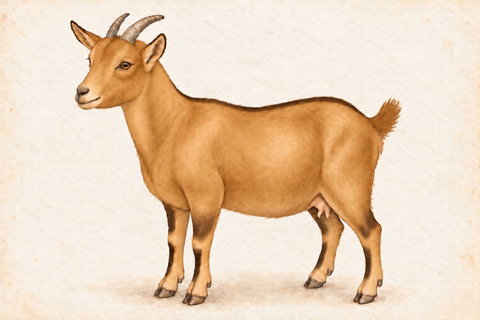
Check for a light front and rump around the brown cape and rear markings; white can hide their boundaries.
AGS: no single term · ADGA: no single term
Bred to a black goat: Chocolate buckskin 25% to 50%; Chocolate cou clair 25% to 50%; may also give Buckskin up to 25%, Cou clair up to 25% (up to 50% in total)
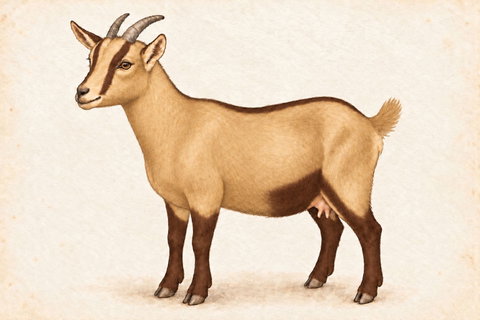
Check the light front and brown rear together with chamoisee brown belly, lower legs and back stripe.
AGS: no single term · ADGA: no single term
Bred to a black goat: Chocolate chamoisee 25% to 50%; Chocolate cou clair 25% to 50%; may also give Chamoisee up to 25%, Cou clair up to 25% (up to 50% in total)
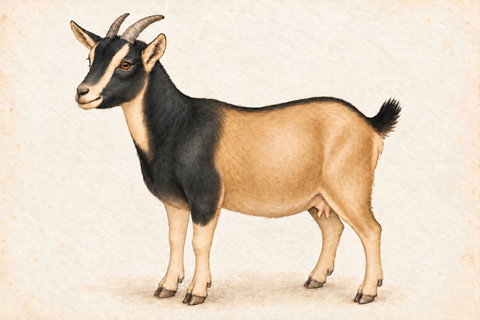
Check the dark cape and light rump with added pale face stripes and lower-leg trim.
AGS: no single term · ADGA: no single term
Bred to a black goat: Buckskin 50%; Swiss 50%
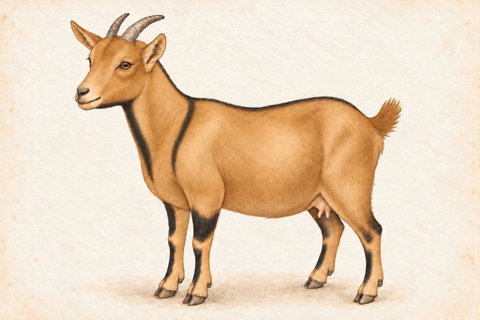
Check the dark cape with chamoisee dark belly, lower legs and back stripe; white can hide the belly.
AGS: no single term · ADGA: no single term
Bred to a black goat: Buckskin 50%; Chamoisee 50%
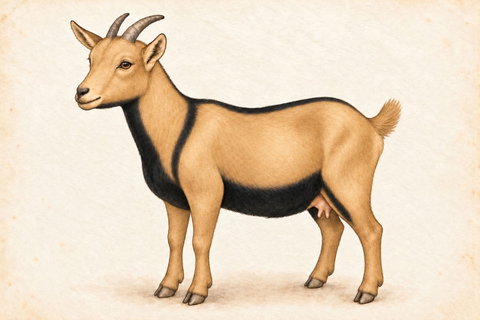
Check the chamoisee body pattern with light lower legs and light face stripes added by Swiss.
AGS: no single term · ADGA: no single term
Bred to a black goat: Chamoisee 50%; Swiss 50%
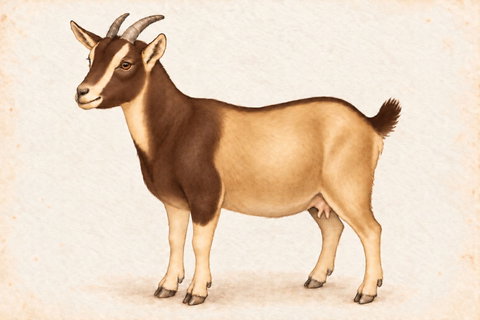
Check the brown cape and light rump with added pale face stripes and lower-leg trim.
AGS: no single term · ADGA: no single term
Bred to a black goat: Chocolate buckskin 25% to 50%; Chocolate Swiss 25% to 50%; may also give Buckskin up to 25%, Swiss up to 25% (up to 50% in total)
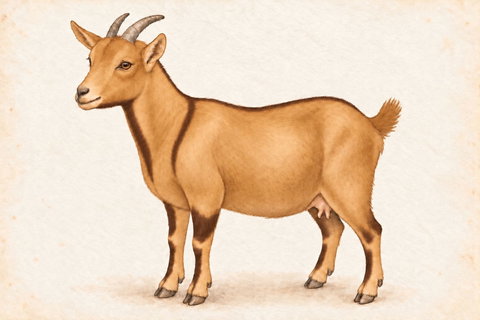
Check the brown cape with chamoisee brown belly, lower legs and back stripe; white can hide the belly.
AGS: no single term · ADGA: no single term
Bred to a black goat: Chocolate buckskin 25% to 50%; Chocolate chamoisee 25% to 50%; may also give Buckskin up to 25%, Chamoisee up to 25% (up to 50% in total)
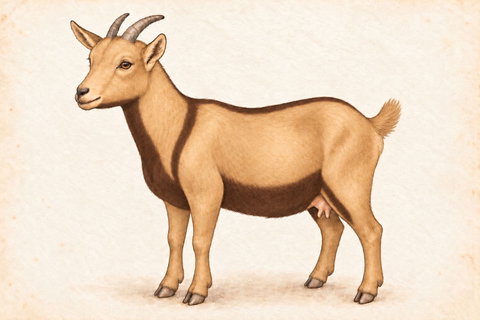
Check the chamoisee body pattern in brown, with light lower legs and light face stripes added by Swiss.
AGS: no single term · ADGA: no single term
Bred to a black goat: Chocolate chamoisee 25% to 50%; Chocolate Swiss 25% to 50%; may also give Chamoisee up to 25%, Swiss up to 25% (up to 50% in total)
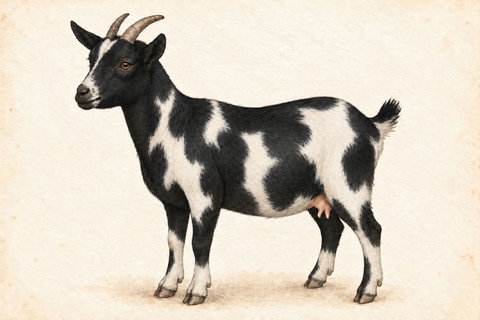
Check the colored areas between the white patches; white can hide the underlying pattern.
AGS: Random Markings · ADGA: no single term
Is this my goat?Pattern and genetics
White amount is not calculated. Choose the base color under the white to see kid colors.
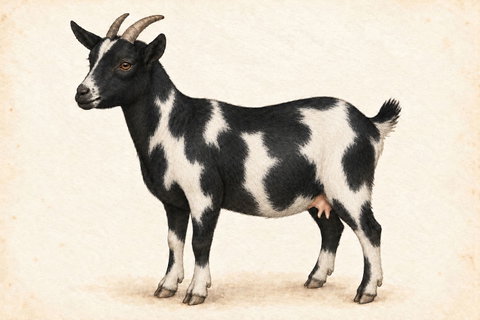
Check any colored area for tan or a dark cape before treating it as solid black; white can hide the pattern.
AGS: Pinto · ADGA: no single term
White amount is not calculated. Choose the base color under the white to see kid colors.
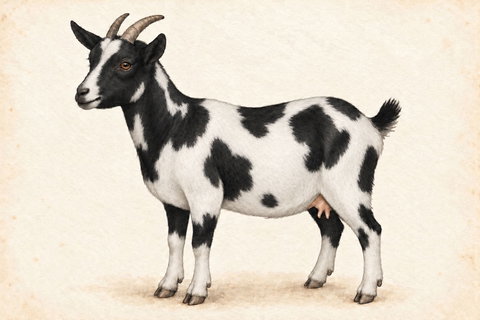
Check each remaining dark patch for tan patterning; a mostly white coat can hide the base look.
AGS: Random Markings · ADGA: no single term
White amount is not calculated. Choose the base color under the white to see kid colors.
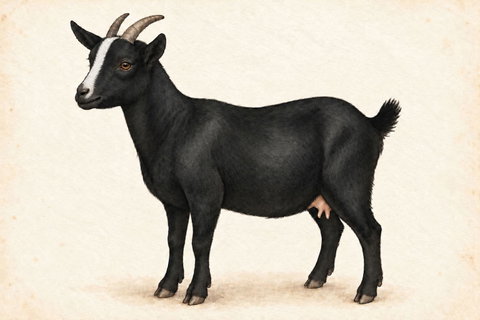
Check the black coat for tan markings and note the small white blaze or poll separately.
AGS: Random Markings · ADGA: no single term
White amount is not calculated. Choose the base color under the white to see kid colors.
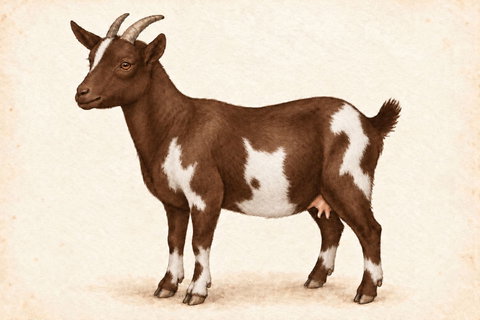
Check the colored patches for brown pigment and any tan pattern; white hides parts of the base coat.
AGS: Random Markings · ADGA: no single term
White amount is not calculated. Choose the base color under the white to see kid colors.
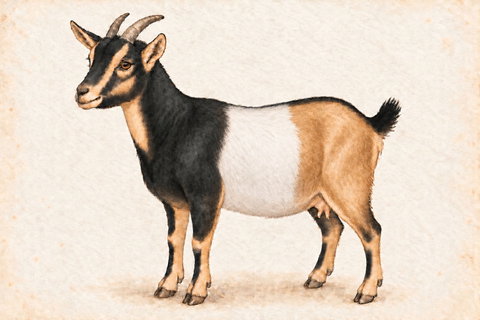
Check the black and tan body pattern on each side of the white belt; the belt can hide its boundaries.
AGS: Random Markings · ADGA: no single term
White amount is not calculated. Choose the base color under the white to see kid colors.
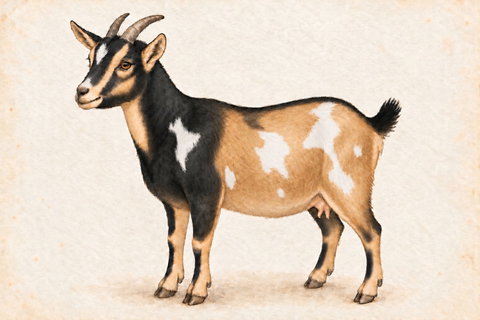
Check the black and tan pattern between irregular white patches; white can hide the belly and legs.
AGS: Random Markings · ADGA: no single term
White amount is not calculated. Choose the base color under the white to see kid colors.
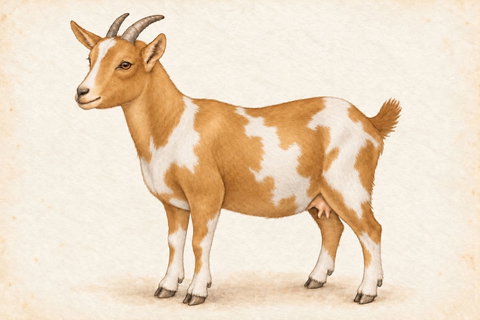
Check the gold areas beside the white patches; white and cream can look similar and the gold can hide another pattern.
AGS: Random Markings · ADGA: no single term
White amount is not calculated. Choose the base color under the white to see kid colors.
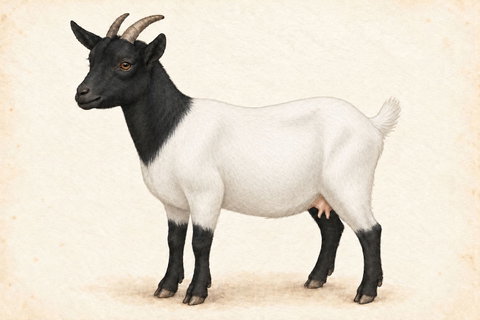
Check for a dark head against a mostly white body; this white pattern does not identify the underlying coat allele.
AGS: Schwartzal · ADGA: no single term
White amount is not calculated. Choose the base color under the white to see kid colors.
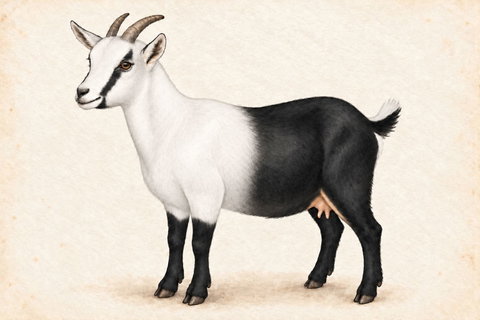
Check for a white front and dark rear; pale tan can resemble white.
AGS: no single term · ADGA: no single term
Is this my goat?Pattern and genetics
Bred to a black goat: Cou clair 50% to 100%; may also give Black up to 50% (up to 50% in total)
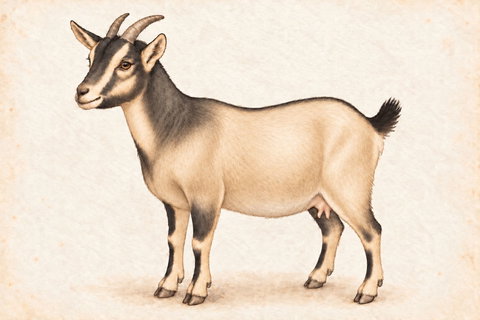
Look for a pale cream-tan body and a small, soft dark cape over the upper neck and shoulders. Check the usually light belly and light lower legs with dark front marks; white can hide the belly.
AGS: Buckskin · ADGA: no single term
Bred to a black goat: Buckskin 50% to 100%; may also give Black up to 50% (up to 50% in total)
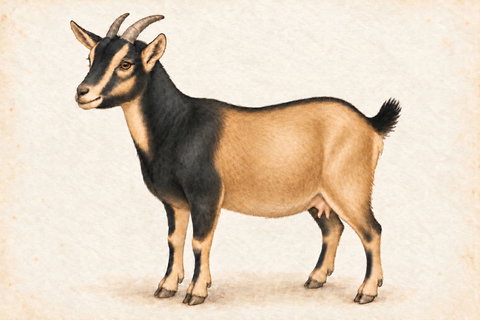
Look for a distinct dark cape over the head, neck and shoulders against a tan body and rump. Check the usually light belly and light lower legs with dark front marks; white can hide the belly.
AGS: Buckskin · ADGA: no single term
Bred to a black goat: Buckskin 50% to 100%; may also give Black up to 50% (up to 50% in total)
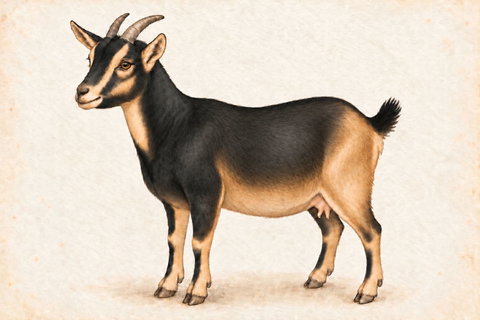
Look for a dark cape extending over most of the upper body, with lighter lower sides and rump still visible. Check the usually light belly and light lower legs with dark front marks; white can hide the belly.
AGS: Buckskin · ADGA: no single term
Bred to a black goat: Buckskin 50% to 100%; may also give Black up to 50% (up to 50% in total)
Check the pale belly first, then the muzzle; Swiss has a dark belly and a light muzzle. The name alone does not establish an allele.
AGS: no single term · ADGA: no single term
Is this my goat?Pattern and genetics
This appearance does not give enough information for color odds. Choose the underlying color in the calculator.
Illustrations of a typical Nigerian Dwarf with each color, not photos of DNA-tested goats; the closest picture is not proof of a goat's color.
Color illustration shown with natural horns. Horn status is entered separately.
A buckskin usually has a light belly and light lower legs with dark marks down the front; a chamoisee usually has a dark belly and dark lower legs. White markings, chocolate, a coat that darkens with age, combination colors and lighting can hide the difference.
A very dark buckskin vs black: any tan, such as a lighter rump behind the dark cape, means a pattern goat, not black. The cape can darken over the first months; check again at about 6 months.
Cou clair vs buckskin: a light front with a black rear is cou clair; a dark front cape with a light rump is buckskin.
Combination looks: with chamoisee, buckskin or cou clair, a Swiss partner adds pale trim (generally cream to tan) rather than replacing the partner's body pattern; a chamoisee Swiss reads as a chamoisee with light lower legs and light face stripes. Gold covers Swiss.
A bezoar-looking Nigerian Dwarf: Closest: chamoisee buckskin (or buckskin). Bezoar itself has no ND records. Closest describes the look, not a measured likelihood.
Swiss vs sundgau: check the belly first (dark = Swiss, pale = sundgau), then the muzzle (a Swiss has a light muzzle).
White patches can hide the belly and legs. Check the colored areas and keep Not sure when the feature is covered.
Moonspots can be darker or more strongly colored on kids and fade as they mature; on adults they can look like white spots, and tiny ones get missed. They are pale or tan, not white, and they don't show inside a white patch.
A buckskin's cape can darken over the first months; check again at about 6 months.
Chocolate on gold: chocolate doesn't show on a gold coat, except in any black shading, which turns brown; a gold hiding chocolate can show it through her kids. Black can fade toward brown with sun, age or nutrition. Chocolate can also be hard to recognize in a young kid: some are born nearly black and become clearly brown over the first months.
Eyes: marbled or partly blue eyes count as blue. A light gold-brown eye is still brown; some brown-coated goats have somewhat lighter eyes.
A young kid's eye color can still change; check again when the kid is older (breeders report).
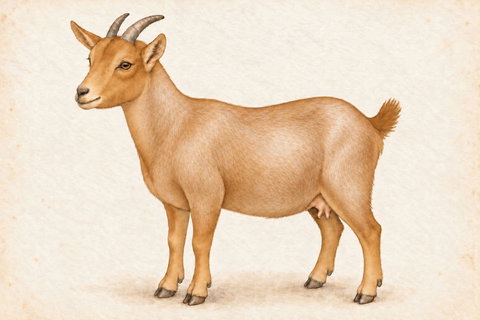
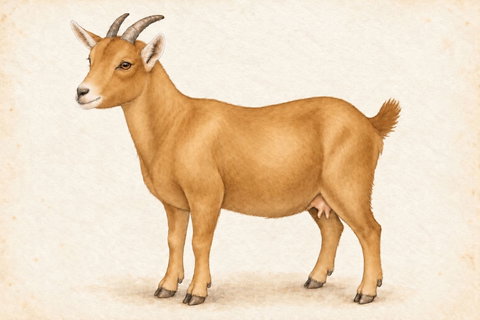
Roan: White hairs mixed through the coat. The amount varies a lot, and the face and lower legs usually have fewer.
Frosted: White hairs on the ears and muzzle.
Frosting can be a few easily missed hairs.
Heavy moonspots (breeders report): Many pale spots can make a coat look gray.
Gray Agouti pattern (other breeds): An even mix of dark and white hairs over the whole goat.
Silver (breeders' word): Some Nigerian Dwarf breeders call a silvery-gray coat "silver", and they describe it differently. Appearance alone doesn't show which of these, if any, a silver goat is, and we haven't found a study showing what causes it.
Assuming this line's chocolate is dominant, SCIGBA's buckskin reading, no family answers, and neither parent carries dominant black or Angora white.
| Buck ↓ · Doe → | Gold | Buckskin | Chamoisee | Swiss | Cou clair | Black |
|---|---|---|---|---|---|---|
| Gold |
The alternative buckskin reading adds no new colors; the chances change. Open it to see both readings. May also give up to 25% in total
|
The alternative buckskin reading adds no new colors; the chances change. Open it to see both readings. May also give up to 50% in total
|
This pairing can also give Buckskin Swiss, Chocolate buckskin Swiss, Chocolate cou clair buckskin, Cou clair buckskin under the alternative buckskin reading; open it to see both readings. May also give up to 50% in total
|
May also give up to 50% in total
May also: H04; up to 50% total
|
May also give up to 50% in total
May also: H05; up to 50% total
|
May also give up to 50% in total
May also: H06; up to 50% total
|
| Buckskin |
The alternative buckskin reading adds no new colors; the chances change. Open it to see both readings. May also give up to 50% in total
|
May also give up to 25% in total
May also: H07; up to 25% total
|
The alternative buckskin reading adds no new colors; the chances change. Open it to see both readings. May also give up to 75% in total
|
May also give up to 75% in total
May also: H09; up to 75% total
|
May also give up to 75% in total
May also: H10; up to 75% total
|
May also give up to 50% in total
May also: H11; up to 50% total
|
| Chamoisee |
This pairing can also give Buckskin Swiss, Chocolate buckskin Swiss, Chocolate cou clair buckskin, Cou clair buckskin under the alternative buckskin reading; open it to see both readings. May also give up to 50% in total
|
The alternative buckskin reading adds no new colors; the chances change. Open it to see both readings. May also give up to 75% in total
|
This pairing can also give Buckskin under the alternative buckskin reading; open it to see both readings. May also give up to 25% in total
|
This pairing can also give Buckskin Swiss, Buckskin under the alternative buckskin reading; open it to see both readings. May also give up to 75% in total
|
This pairing can also give Cou clair buckskin, Buckskin under the alternative buckskin reading; open it to see both readings. May also give up to 75% in total
|
This pairing can also give Buckskin under the alternative buckskin reading; open it to see both readings. May also give up to 50% in total
|
| Swiss |
May also give up to 50% in total
May also: H04; up to 50% total
|
May also give up to 75% in total
May also: H09; up to 75% total
|
This pairing can also give Buckskin Swiss, Buckskin under the alternative buckskin reading; open it to see both readings. May also give up to 75% in total
|
May also give up to 25% in total
May also: H07; up to 25% total
|
May also give up to 75% in total
May also: H14; up to 75% total
|
May also give up to 50% in total
May also: H11; up to 50% total
|
| Cou clair |
May also give up to 50% in total
May also: H05; up to 50% total
|
May also give up to 75% in total
May also: H10; up to 75% total
|
This pairing can also give Cou clair buckskin, Buckskin under the alternative buckskin reading; open it to see both readings. May also give up to 75% in total
|
May also give up to 75% in total
May also: H14; up to 75% total
|
May also give up to 25% in total
May also: H07; up to 25% total
|
May also give up to 50% in total
May also: H11; up to 50% total
|
| Black |
May also give up to 50% in total
May also: H06; up to 50% total
|
May also give up to 50% in total
May also: H11; up to 50% total
|
This pairing can also give Buckskin under the alternative buckskin reading; open it to see both readings. May also give up to 50% in total
|
May also give up to 50% in total
May also: H11; up to 50% total
|
May also give up to 50% in total
May also: H11; up to 50% total
|
|
Print key. C names a color. H lists every hidden outcome; each range applies to each listed color, not their total. The total is in the cell. A names what the alternative buckskin reading adds; open the pairing to see both readings.
* If a chamoisee can hide buckskin, as some member records suggest, the marked pairings show what that alternative reading adds; open one to see both readings.
https://creatures.com/species/goat/nigerian-dwarf/colors
Pied, broken, mostly white and tri-colored describe white over a base color. The amount and placement of white are not predicted. A belt describes a white band; tools use dominance as a stated breeder and expert assumption, not a promise about its size. Schwartzal is an AGS name for a mostly white goat with a dark head.
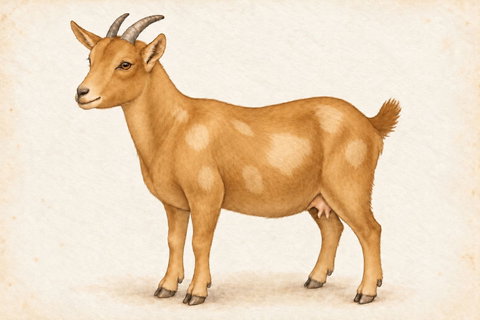
Breeder and expert experience: moonspots are pale or tan, not white. They can be stronger on kids and fade, and tiny ones can be missed in adults. The gene is not mapped and no DNA test exists.
Roan is white hairs mixed through the body, usually fewer on the face and lower legs. Frosted means white hairs on the ears and muzzle and can be a few easily missed hairs. Frosted has a small Nigerian Dwarf breeding study; roan has weaker evidence.
Not worked out yet
Silver. Some Nigerian Dwarf breeders call a silvery-gray coat "silver" and treat it as different from roan. Breeders describe it differently: some say the whole goat goes gray, face and legs included, others that the tan parts turn white, and an older Nigerian Dwarf standard used "silver agouti" for a roan-like marking. Appearance alone doesn't show whether a silver goat is a heavy roan, the gray Agouti pattern or something else, and we haven't found a study showing what causes it, so we describe it without odds or an illustration.
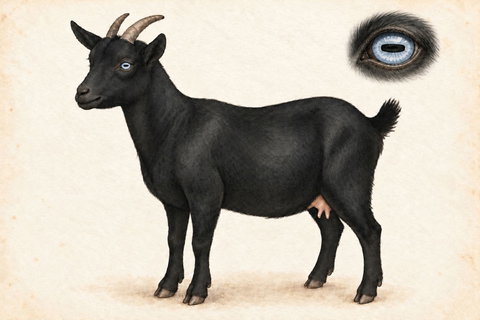
Breeder and expert experience: blue eyes are described as dominant, with no published breeding counts. The gene is not mapped and no DNA test exists. Marbled or partly blue eyes count as blue; a light gold-brown eye is still brown. A young kid's eye color can change, breeders report.
Polled buck × polled doe. If the buck has one copy of polled, about 1 in 8 kids is expected to be an intersex goat: genetically female and infertile, and it can look like a doeling, a buckling or something in between. If he has two copies, about 1 in 4. If you don't know which he has, plan for 1 in 4. This assumes the polled doe is fertile (she has kidded, or a test shows one copy). Breeders usually pair a polled goat with a horned one: half the kids are polled (all of them if the polled buck has two copies), and none have polled intersex syndrome. A polled DNA test is offered in Europe (Giessen, Bern).
Myotonia: UC Davis VGL lists Nigerian Dwarfs for testing. VGL and ADGA treat it as recessive, while OMIA lists it as dominant. Sources disagree, and a goat breeding study has not settled the inheritance. A lab result should be read using that lab's guidance.
Polled and intersex syndrome Myotonia congenita G6S deficiency Scrapie resistance (PRNP) Alpha-S1 casein
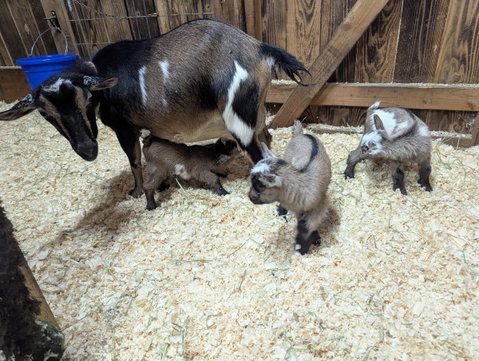 Chamomile (Millie)
Recorded as 'buckskin'
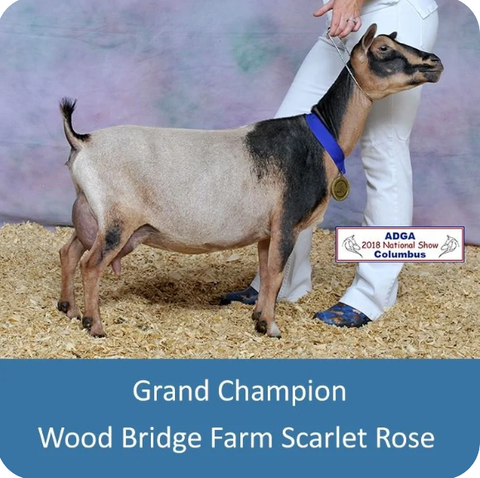 GCH Wood Bridge Farm Scarlet Rose 1*M
Recorded as 'buckskin'
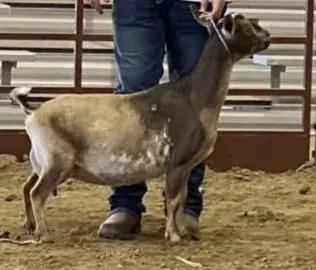 Cade's Lil Farm KMD Spellbound 3*M
Recorded as 'buckskin'
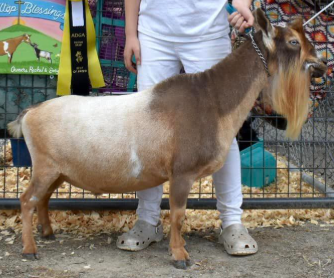 CH Cade's Lil Farm Ax Charmer *B
Recorded as 'buckskin'
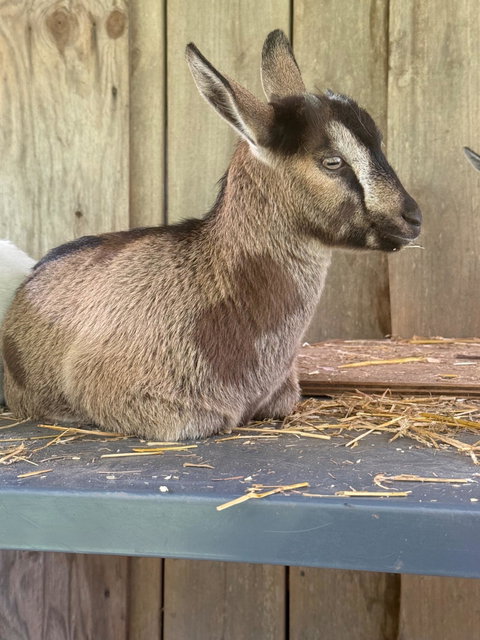 Lavender
Recorded as 'chamoisee'
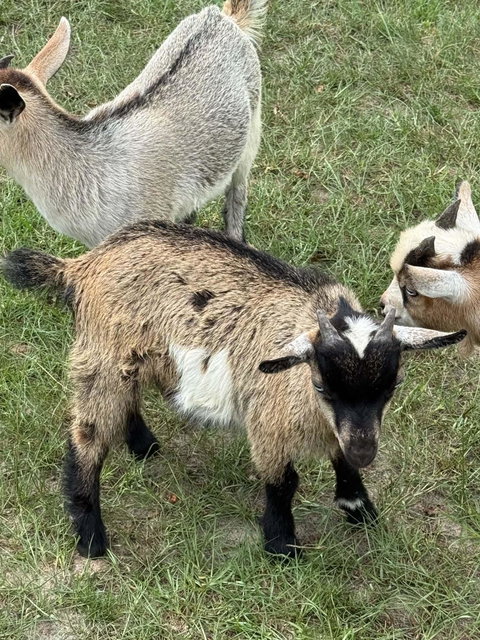 Rip
Recorded as 'chamoisee'
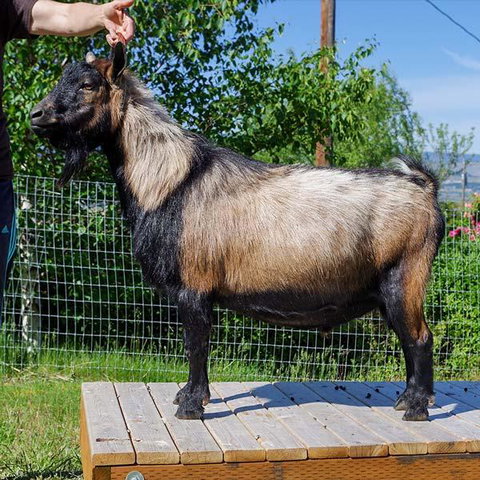 Old Mountain Farm Stag Party ++*B
Recorded as 'chamoisee'
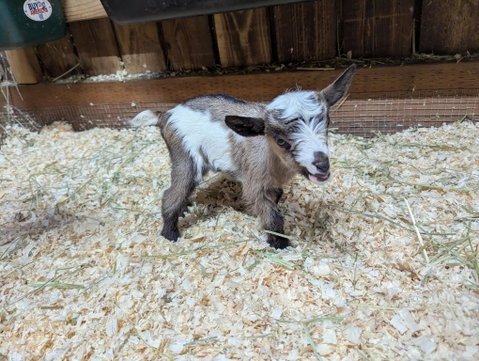 Mocha
Recorded as 'chamoisee'
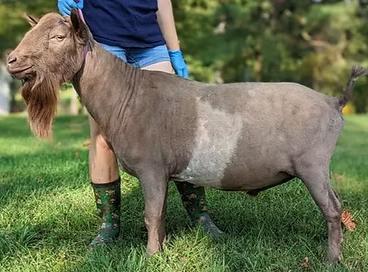 Agape's Prize Weir's My Diamon +*B
Recorded as 'Chocolate Buckskin'
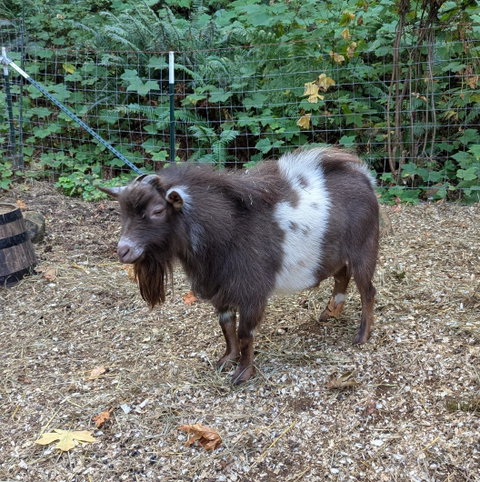 Rio Grande (Rio)
Recorded as 'Chocolate buckskin'
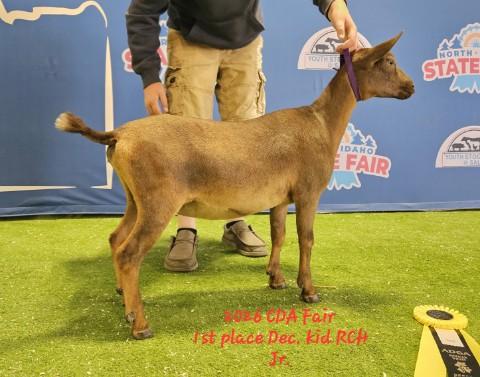 Stonecreek C Ume
Recorded as 'Chocolate buckskin'
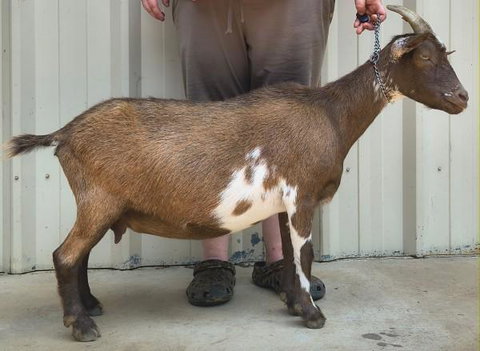 CFO-G's Hailey
Recorded as 'Chocolate Chamoisee'
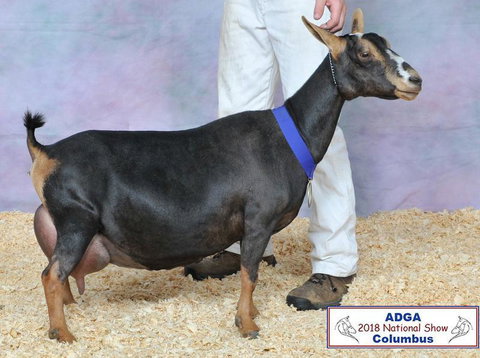 SGCH Old Mountain Farm Shy Elk 5*M EEEE92
Recorded as 'swiss marked'
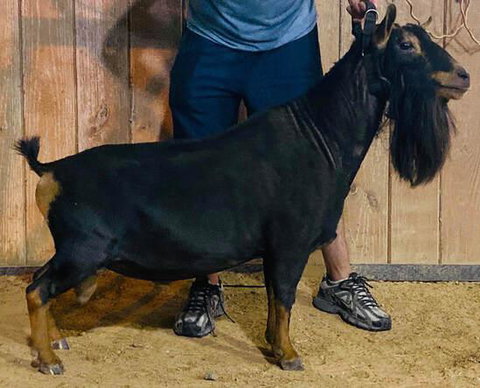 GCH Old Mountain Farm Bold Hart +*B
Recorded as 'swiss marked'
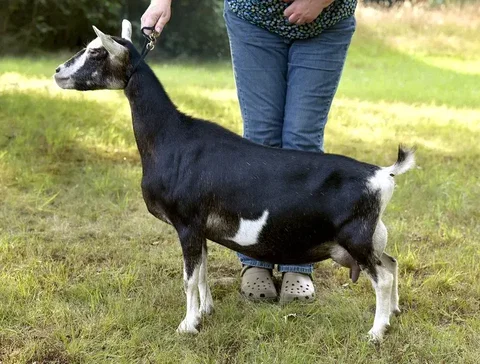 Old Mountain Farm Fat Tuesday 3*M AR (EEEE) 91
Recorded as 'swiss'
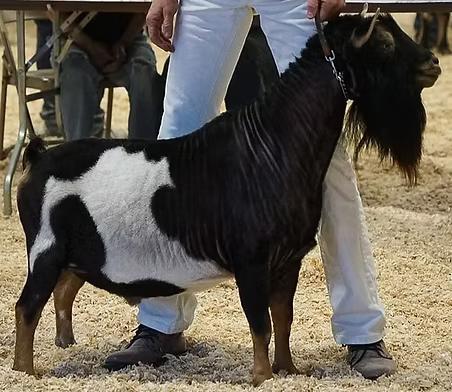 GCH Old Mountain Farm Shrove 2ZDAY +*B
Recorded as 'swiss marked'
A picture can help you choose a name for an appearance, but it cannot prove which alleles a goat has or hides. White markings, age, chocolate and lighting can hide the feature you need to check.
A buckskin has a dark front cape and a lighter rump. A chamoisee has a tan body with a dark belly and lower legs. These are qualified appearance hints, and combination colors or white can hide the difference.
Breeders describe silver in different ways. Appearance alone does not show whether a silver goat is heavy roan, the gray Agouti pattern or something else. We have not found a study showing what causes the Nigerian Dwarf breeders' word silver.
Use a descriptive color and markings line rather than relying on a pattern nickname. ADGA's color field holds 69 letters and spaces. Your own description should match the goat you are registering.





