MDGA Registration: Miniature Dairy Goat Generations and the 70/30 Rule
Author: Elliott Garber, DVM · Published
To classify an MDGA kid, trace the registered parents, calculate the foundation breed percentages and check the breed standard. In goat records on Creatures, link sire and dam to keep the generations visible and save the resulting registration and herdbook category on the animal.
MDGA herdbook rules checked November 27, 2026.
| First cross | Eligible registered Nigerian Dwarf and standard dairy goat produce F1 Experimental |
|---|---|
| American | F3 through F5 when standards and 70/30 rule are met |
| Purebred | F6 and higher when standards and 70/30 rule are met |
| Percentage | American and Purebred require 30 to 70 percent of each foundation breed |
| Any herdbook | $10 member and $20 nonmember. |
|---|---|
| Transfer | $6 member and $12 nonmember. |
| Herd name with tattoo | $15. |
| UC Davis parent verification | $38. The kit is valid for 60 days. |
Follow the lower generation and check the foundation
The MDGA herdbook rules put a kid one generation above its lower-generation parent. F3 × F1 is F2. F6 × F1 is also F2. Two F1 parents of the same miniature breed produce an F2. A registered standard goat or Nigerian Dwarf counts as generation zero when bred back into a line, giving an F1 Experimental kid.
Before choosing parents, apply the registration guidelines. The foundation parents need American or Purebred registrations through the recognized route. The guidelines list TMGR, ADGA, AGS, BGS, NDGA and CGS. Eligible breeds are Alpine, LaMancha, Nubian, Oberhasli, Saanen, Sable, Toggenburg, Guernsey and Nigerian Dwarf. Pygmy, Boer and Angora do not qualify. Neither an unregistered or grade Nigerian Dwarf nor offspring of a grade Nigerian meets the foundation rule.
Send legible parent certificates where required. A stamped ADGA registration receipt does not substitute for the certificate. The copy rules specifically list ADGA, AGS, NDGA, TMGR, IDGR and CGS; TMGR and IDGR records also need the required pedigree back to MDGA, AGS, ADGA, CGS, BGGOA, BGS or NDGA animals, or six generations. Grade herdbook animals are generation zero. Keep the offspring in Grade until the unknown share falls to 10 percent or less. Then they can move to Experimental as F1.
Calculate percentages before you promise a category
Average each foundation share across both parents. If one parent is 50 percent Nigerian and the other is 62.5 percent Nigerian, the kid is 56.25 percent Nigerian and 43.75 percent standard. MDGA writes that 43.75/56.25, standard first. Track generation separately from that calculation. Being within the percentages alone leaves the generation and breed standard still to check.
American status is for qualifying F3 to F5 animals. Purebred starts at F6. For either designation the kid must meet the relevant breed standard and carry 30 to 70 percent of each foundation breed. An advanced-generation animal that misses the standard stays Experimental, marked with an asterisk after its number. Keep the written percentage and generation with the same animal ID so another breeder can reproduce the calculation.
Match the breed standard to the application
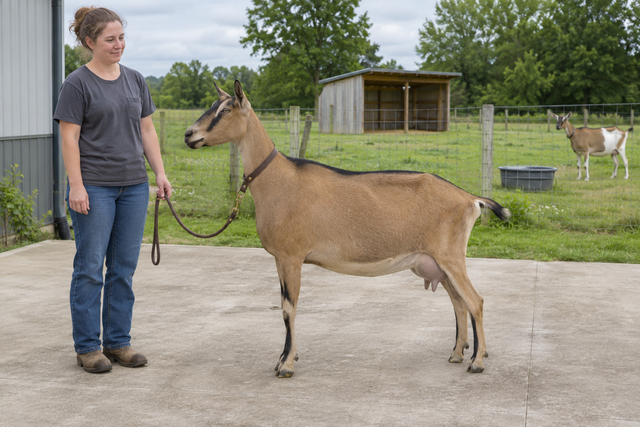
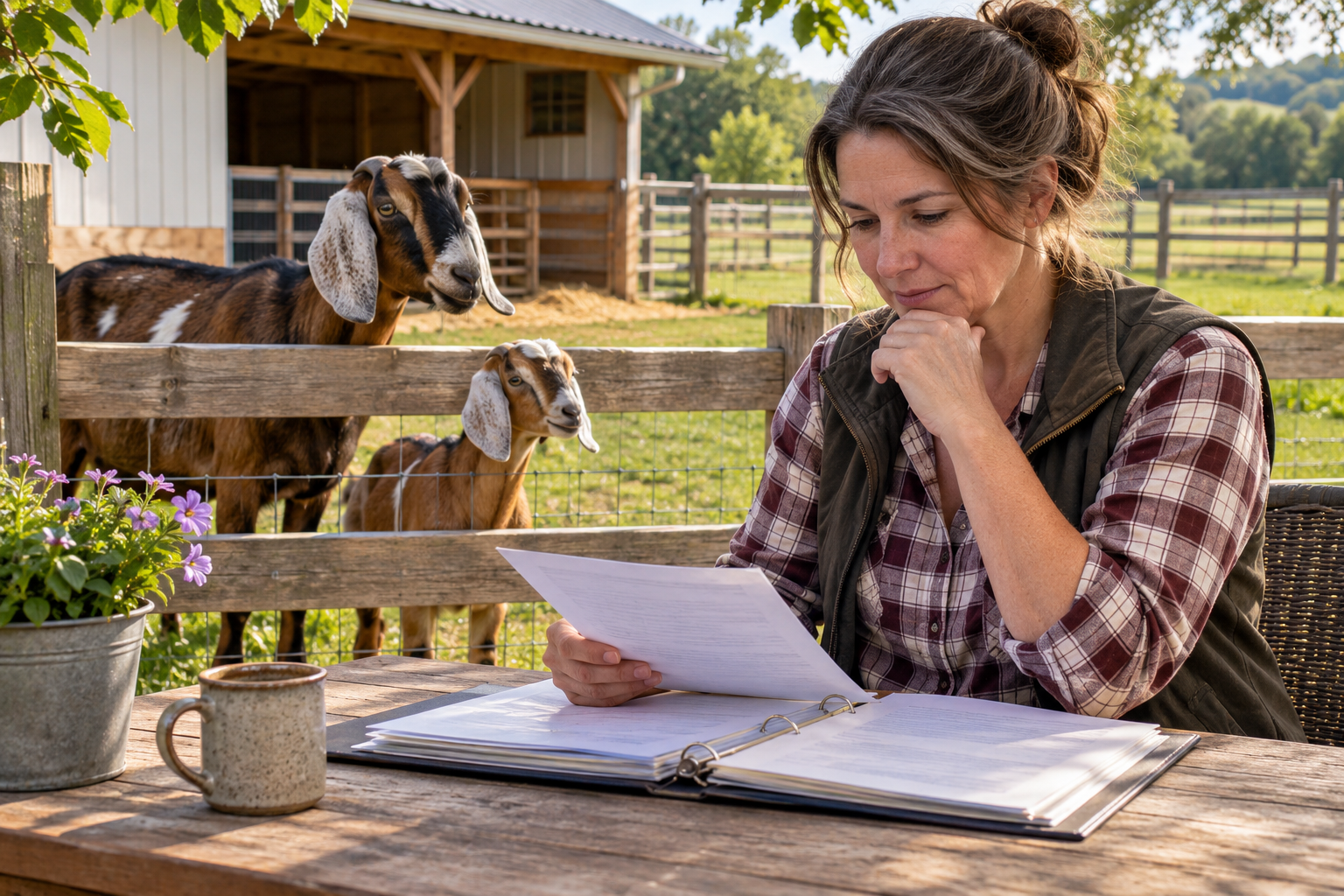
File through MyMDGA or use the forms on the official guidelines page. Keep names to 35 letters and spaces, counting the herd name. Photograph the face from the front so ear set is visible, the face from the side and the full animal in profile; include the required face profile for Mini Nubians. Use photos taken within 90 days of filing. Forms that require signatures need wet ink, even if sent digitally. A digital signature does not meet the rule.
The kid takes the herd name of the doe’s owner at breeding and the herd tattoo of the owner of the property where the kid was born. Put that herd tattoo in the right ear and the individual ID in the left. MDGA’s 2026 year letter is V. EID is secondary to the required tattoo. Get a Service Memo when you did not own the sire and the AI memo for frozen semen. If several bucks could be the sire, test every kid. When there are two possible sires, test at least one of the bucks. The UC Davis parent verification kit is $38 and is valid for 60 days.
For dual registration, provide a copy of the original certificate from the approved issuer. When an existing MDGA goat changes hands, transfer it with the original MDGA certificate even if the owner has been updated in another registry. Use MDGA’s transfers page to file.
Keep the records on Creatures
Link the known sire and dam, then record the MDGA registration number and note the generation, herdbook and declared percentages. If another registry issued a certificate, keep that as its own entry.
The care, growth and identity records guide explains where these records sit. Browse other goat guides. See also Goat registry comparison and goat pedigree records.
Registry directory: Miniature Dairy Goat Association.
Do this next on Creatures
- Add an animal from this group so its identification and records stay together. See the profile setup guide.
- Add a record from your paperwork. A free account saves it. See adding a record.
- Set up your breeder profile if you want a public farm listing. See getting listed in the breeder directory.
- Get a listing alert for this search.
- Browse listings and ask for the records that matter to your purchase.
- Find a breeder and discuss the paperwork before you put down a deposit.