





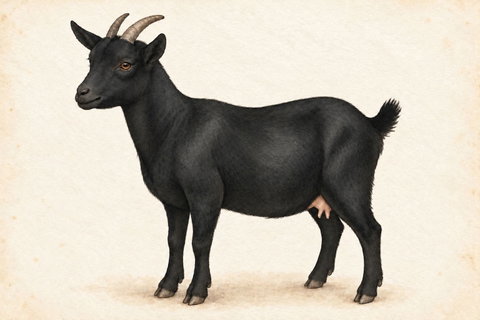
Black
Look for any tan, such as a lighter rump behind a dark cape, before calling the coat solid black.
AGS: Black · ADGA: no single term
Bred to a black goat: Black 100%

Start with a breed guide or a pattern. Names describe appearances, and a similar picture does not prove the genetics.
Updated · How it works and sources
Look for any tan, such as a lighter rump behind a dark cape, before calling the coat solid black.
AGS: Black · ADGA: no single term
Bred to a black goat: Black 100%
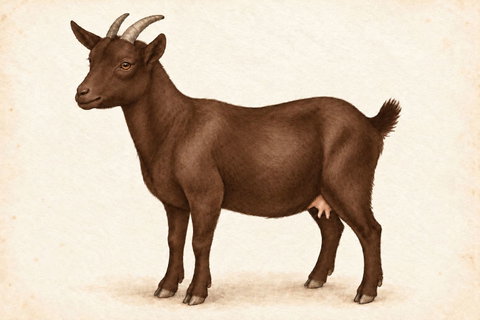
Check that the dark pigment is brown throughout; black can fade toward brown with sun, age or nutrition.
AGS: Brown · ADGA: no single term
Bred to a black goat: Chocolate 50% to 100%; may also give Black up to 50% (up to 50% in total)
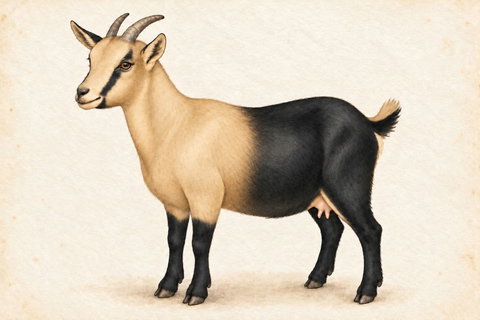
Check for a tan front and dark rear; a dark front cape with a light rump is buckskin.
AGS: no single term · ADGA: no single term
Is this my goat?Pattern and genetics
Bred to a black goat: Cou clair 50% to 100%; may also give Black up to 50% (up to 50% in total)
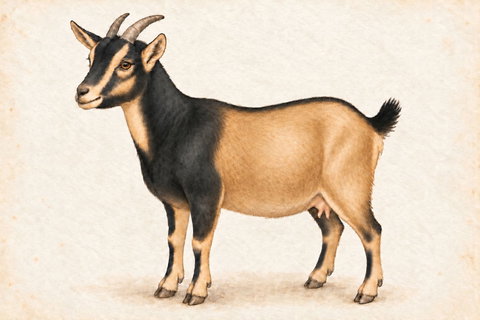
A dark front cape and lighter rump. Breeders' name; which allele it is has not been tested.
AGS: Buckskin · ADGA: no single term
Is this my goat?Pattern and genetics
Bred to a black goat: Buckskin 50% to 100%; may also give Black up to 50% (up to 50% in total)
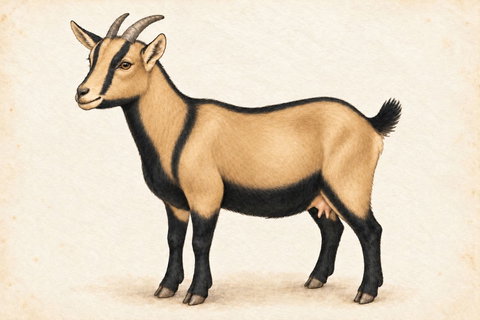
Check the dark belly, lower legs and dorsal stripe.
AGS: Chamoisee · ADGA: no single term
Is this my goat?Pattern and genetics
Bred to a black goat: Chamoisee 50% to 100%; may also give Black up to 50% (up to 50% in total)
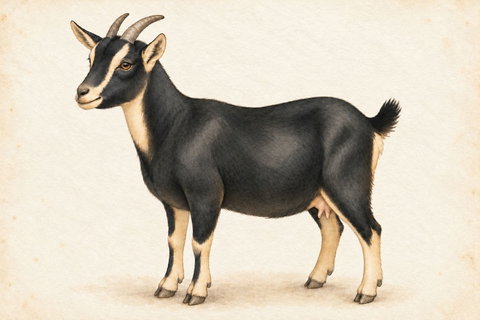
Check the dark belly and light muzzle, with pale facial stripes and lower legs; a pale belly suggests sundgau.
AGS: no single term · ADGA: no single term
Is this my goat?Pattern and genetics
Bred to a black goat: Swiss 50% to 100%; may also give Black up to 50% (up to 50% in total)
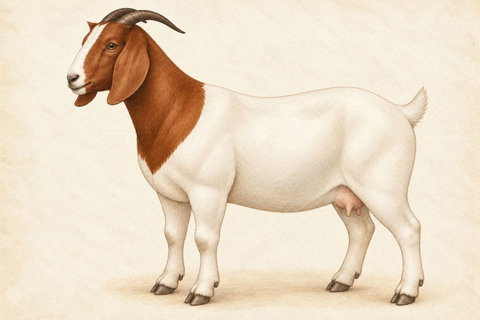
A white body with a red head and neck. Head shade varies; the appearance does not establish which white-body form the goat carries.
ABGA: free-text color
Bred to a black goat: White-bodied (traditional or paint) 50% to 100%; may also give Solid body up to 50% (up to 50% in total)
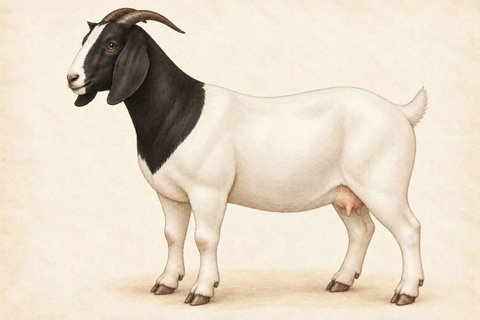
A white body with a black head and neck. Head shade varies; the appearance does not establish which white-body form the goat carries.
ABGA: free-text color
Bred to a black goat: White-bodied (traditional or paint) 50% to 100%; may also give Solid body up to 50% (up to 50% in total)
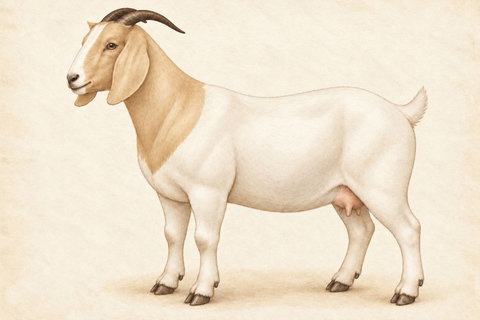
A white body with a cream head and neck. Head shade varies; the appearance does not establish which white-body form the goat carries.
ABGA: free-text color
Bred to a black goat: White-bodied (traditional or paint) 50% to 100%; may also give Solid body up to 50% (up to 50% in total)
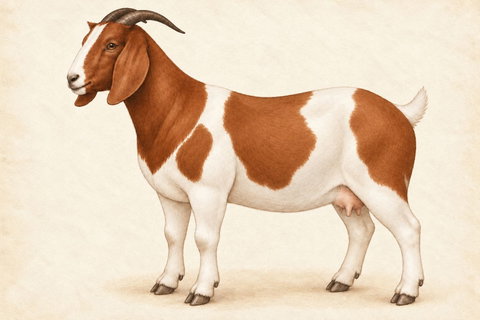
Large colored patches over white. Paint describes the appearance; the amount and placement of color are not predicted.
ABGA: free-text color
Bred to a black goat: White-bodied (traditional or paint) 50% to 100%; may also give Solid body up to 50% (up to 50% in total)
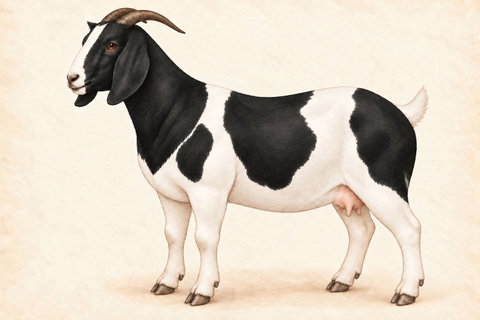
Large colored patches over white. Paint describes the appearance; the amount and placement of color are not predicted.
ABGA: free-text color
Bred to a black goat: White-bodied (traditional or paint) 50% to 100%; may also give Solid body up to 50% (up to 50% in total)
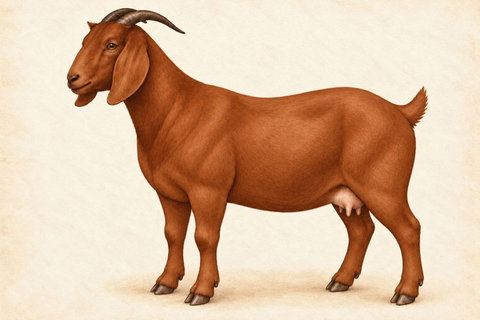
A red-brown coat across the whole goat. The exact shade is described without predicting a head color.
ABGA: free-text color
Bred to a black goat: Solid body 100%
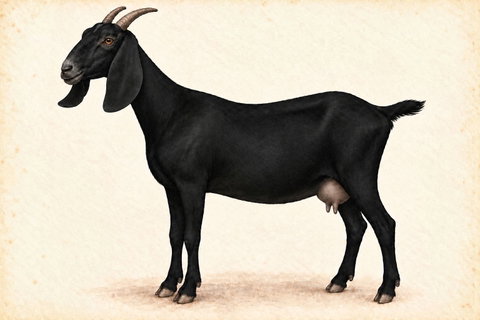
A solid coat. Look for any tan before calling a goat black; brown coats have brown in place of black.
ADGA: no single term
Bred to a black goat: Black 100%
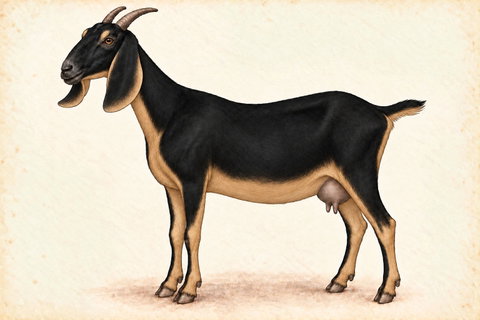
A dark body with tan on the belly, throat, face and legs.
ADGA: no single term
Bred to a black goat: Black and tan 50% to 100%; may also give Black up to 50% (up to 50% in total)
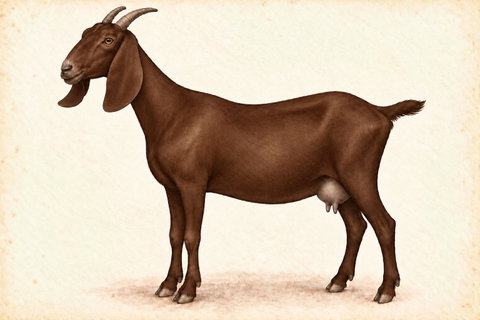
A solid coat. Look for any tan before calling a goat black; brown coats have brown in place of black.
ADGA: no single term
Bred to a black goat: Brown 50% to 100%; may also give Black up to 50% (up to 50% in total)
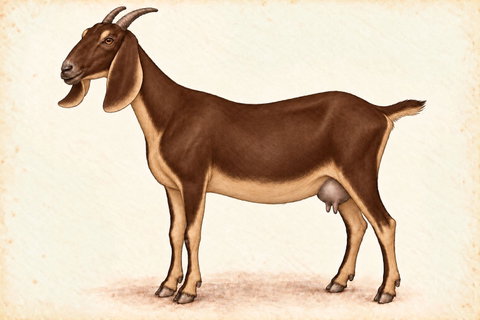
A dark body with tan on the belly, throat, face and legs.
ADGA: no single term
Bred to a black goat: Brown black and tan 25% to 100%; may also give Black and tan up to 50%, Brown up to 50%, Black up to 25% (up to 75% in total)
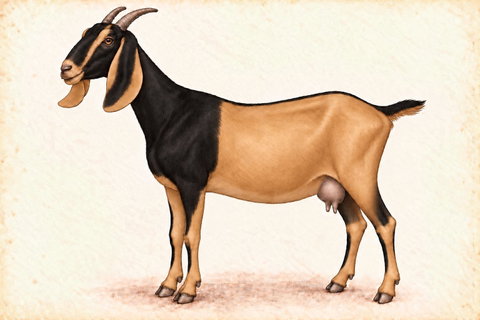
Check the dark cape, a usually light belly and light lower legs with dark front marks; white can hide the belly. Rare in Nubians (2 of 101 records).
ADGA: no single term
Is this my goat?Pattern and genetics
Bred to a black goat: Buckskin 50% to 100%; may also give Black up to 50% (up to 50% in total)
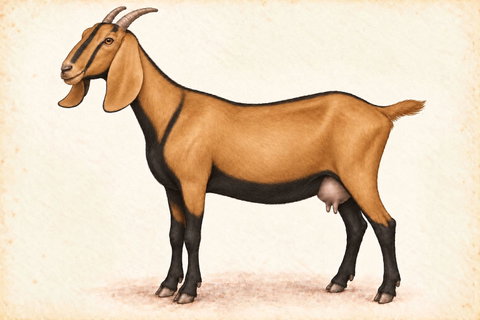
Check the dark belly, lower legs and dorsal stripe.
ADGA: no single term
Is this my goat?Pattern and genetics
Bred to a black goat: Chamoisee 50% to 100%; may also give Black up to 50% (up to 50% in total)
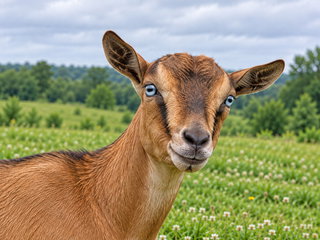 Blue Eyes
Blue eyes in goats, including marbled or partly blue eyes, are described as dominant to the usual brown, so a blue-eyed kid is expected to have at least one blue-eyed parent. No gene has been mapped and there is no DNA test. The Nigerian Dwarf breed standard notes it is the only dairy breed known to have blue eyes occasionally.
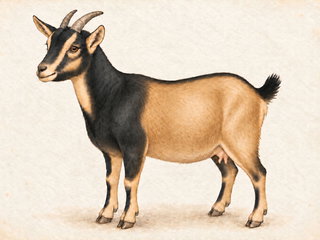 Buckskin
A dark cape over the shoulders and neck with lighter sides. The belly and legs help distinguish it from chamoisee, but white patches and age can hide those features.
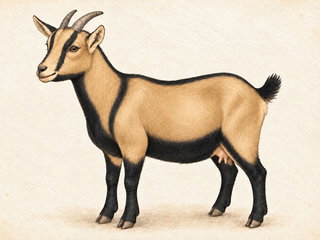 Chamoisee
A tan body with a dark belly, dark lower legs and a dark stripe along the back. Breeders also write chamoise or chamois.
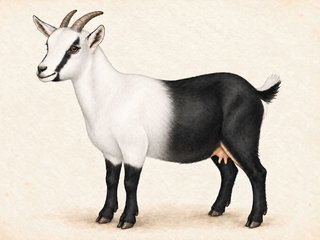 Cou Blanc
A pale front and dark rear. Cou clair has a tan front; cou blanc has a white front. Both are breeder looks within the peacock pattern.
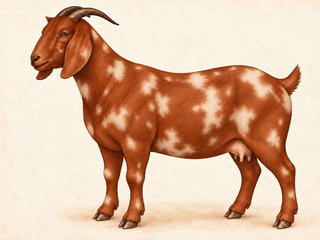 Dapple
 describes patches of lighter and darker color. Record the breeder's wording without assigning an allele.
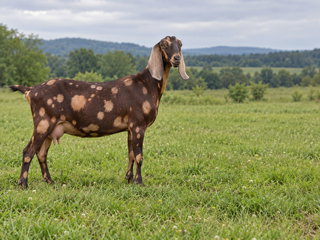 Moonspots
 are round or oval spots, usually pale or tan, scattered over any base coat color in goats; they are most common in Anglo-Nubian and Nubian goats and also seen in Nigerian Dwarfs. A goat color geneticist describes them as likely dominant, but no gene has been mapped and no two-copy form is documented. Spots vary from a few hairs to much of the coat and can change with age, so they are easy to miss.
 Roan
Roan is an intermixture of white and colored hairs. A look is not a tested allele and does not predict the amount in a kid.
 Spotted
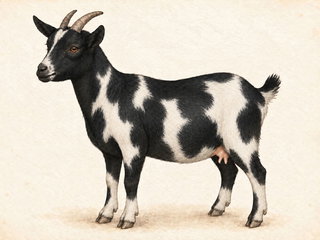
White spotting covers colored areas with white. Piebald, pinto, broken and random white are look words; they do not prove one shared allele.
Sundgau describes a dark goat with pale markings. The name can overlap other breeder words and does not by itself identify an Agouti allele.
 Swiss Markings
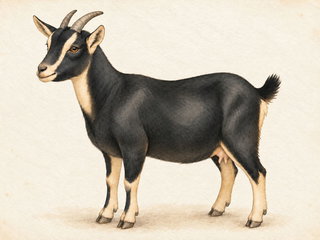
A dark body with pale facial stripes and lower legs. Nigerian Dwarf breeders call this Swiss or Swiss marked.
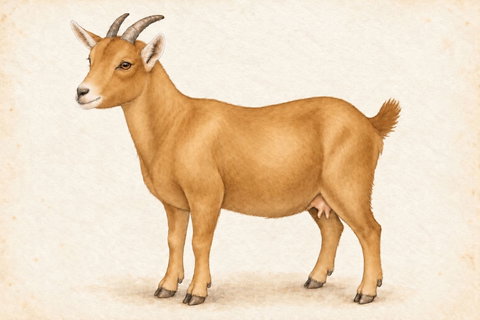
Illustrations of a typical goat with each color, not photos of DNA-tested goats; the closest picture is not proof of a goat's color.
Color illustration shown with natural horns. Horn status is entered separately.
A buckskin usually has a light belly and light lower legs with dark marks down the front; a chamoisee usually has a dark belly and dark lower legs. White markings, chocolate, a coat that darkens with age, combination colors and lighting can hide the difference.
A very dark buckskin vs black: any tan, such as a lighter rump behind the dark cape, means a pattern goat, not black. The cape can darken over the first months; check again at about 6 months.
Cou clair vs buckskin: a light front with a black rear is cou clair; a dark front cape with a light rump is buckskin.
Combination looks: with chamoisee, buckskin or cou clair, a Swiss partner adds pale trim (generally cream to tan) rather than replacing the partner's body pattern; a chamoisee Swiss reads as a chamoisee with light lower legs and light face stripes. Gold covers Swiss.
A bezoar-looking Nigerian Dwarf: Closest: chamoisee buckskin (or buckskin). Bezoar itself has no ND records. Closest describes the look, not a measured likelihood.
Swiss vs sundgau: check the belly first (dark = Swiss, pale = sundgau), then the muzzle (a Swiss has a light muzzle).
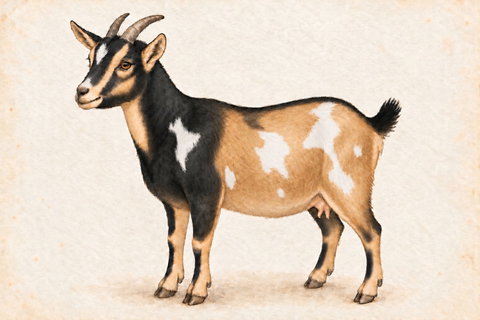
White patches can hide the belly and legs. Check the colored areas and keep Not sure when the feature is covered.
Moonspots can be darker or more strongly colored on kids and fade as they mature; on adults they can look like white spots, and tiny ones get missed. They are pale or tan, not white, and they don't show inside a white patch.
A buckskin's cape can darken over the first months; check again at about 6 months.
Chocolate on gold: chocolate doesn't show on a gold coat, except in any black shading, which turns brown; a gold hiding chocolate can show it through her kids. Black can fade toward brown with sun, age or nutrition. Chocolate can also be hard to recognize in a young kid: some are born nearly black and become clearly brown over the first months.
Eyes: marbled or partly blue eyes count as blue. A light gold-brown eye is still brown; some brown-coated goats have somewhat lighter eyes.
A young kid's eye color can still change; check again when the kid is older (breeders report).
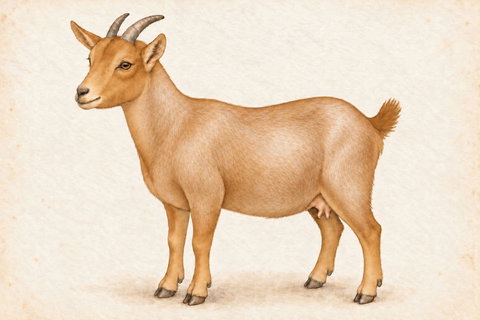
Roan: White hairs mixed through the coat. The amount varies a lot, and the face and lower legs usually have fewer.
Frosted: White hairs on the ears and muzzle.
Frosting can be a few easily missed hairs.
Heavy moonspots (breeders report): Many pale spots can make a coat look gray.
Gray Agouti pattern (other breeds): An even mix of dark and white hairs over the whole goat.
Silver (breeders' word): Some Nigerian Dwarf breeders call a silvery-gray coat "silver", and they describe it differently. Appearance alone doesn't show which of these, if any, a silver goat is, and we haven't found a study showing what causes it.
For white markings and breed-specific color words, read the Nigerian Dwarf guide.
Color names and registry words vary by breed. Start with the breed guide, then compare the visible features rather than treating a similar name as proof of the same genetics.
Use the known breeds as a starting point for the words and features to check. A reference illustration does not establish which pattern a crossbred goat has or which alleles it carries.
White markings can cover the features used to distinguish patterns. The amount and placement of white are not predicted, and a partly hidden pattern can remain uncertain from appearance.
The named color pictures are reference illustrations. They show typical appearances, not photographs of DNA-tested goats, and the closest picture is a starting point for checking a name.





