

Zerdava
The Zerdava is a rare Turkish spitz from the Eastern Black Sea coast, a compact liver-brown working dog that villagers around Trabzon and Giresun have kept for generations as a hunter and a gate guard. It is not a giant livestock guardian like the Kangal or the Anatolian Shepherd, and it is not a household name outside its home region. It is a medium, athletic, sharp-eyed dog, distrustful of strangers, deeply bonded to its own people, and only in the last decade the subject of any real conservation or scientific attention. If you have landed here trying to work out what a Zerdava actually is, whether it would suit your life, and whether you could ever realistically own one, this page lays out what is documented, what is anecdotal, and what you should be honest with yourself about before you go looking.
Browse listings, public profiles, breeders, or add your animal.
What is a Zerdava?
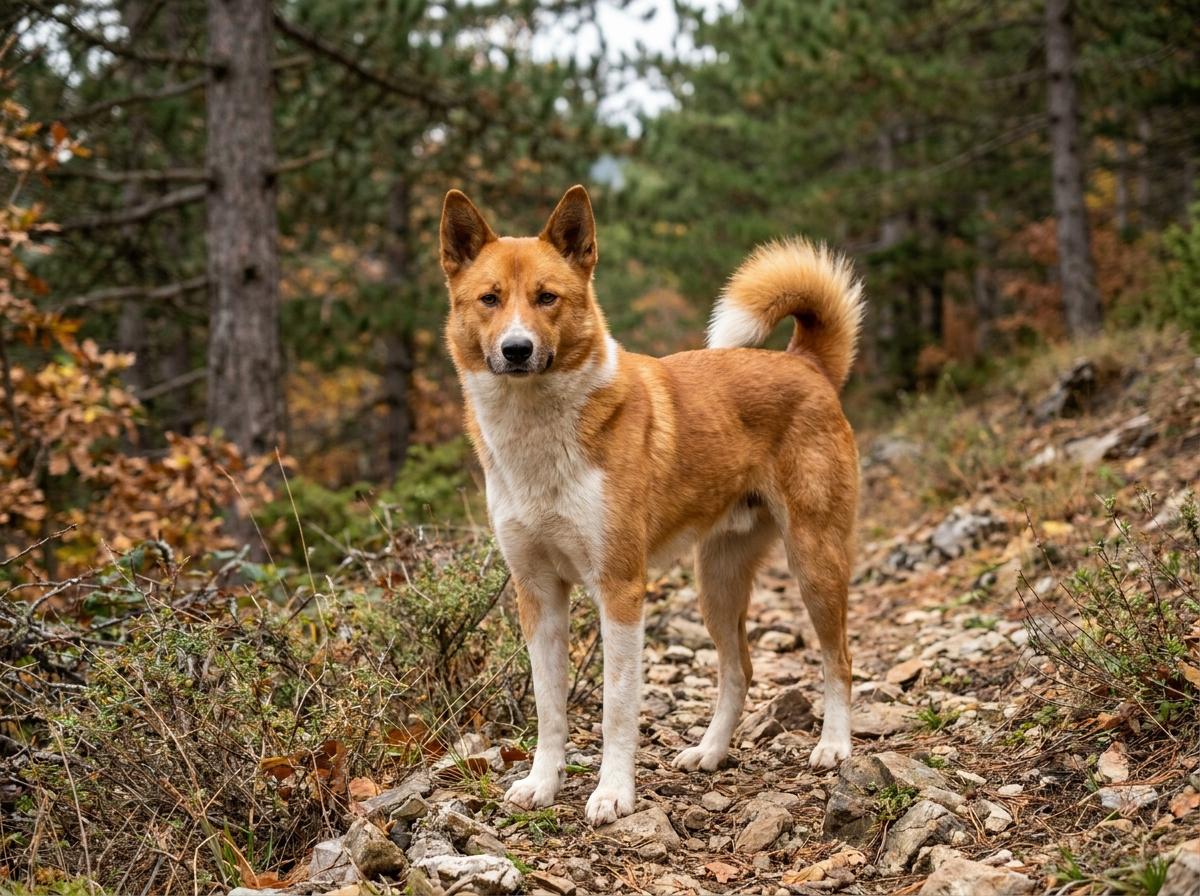
The Zerdava is an indigenous dog of the Eastern Black Sea coast of Turkey, concentrated historically in the provinces of Trabzon and Giresun and found more thinly across Rize, Artvin, and Samsun, with a related population over the border in Georgia. In build it is a spitz: a compact, well-muscled medium dog with pricked triangular ears, a wedge-shaped head, and a tail that curves up over the back. Turkish researchers who have studied the population describe it as a southern spitz type, and some have argued it belongs alongside the northern laika hunting dogs of Russia and the Baltic (a research paper even floated the label “Turkish Laika”).
The name itself is a clue to the dog’s job. “Zerdava” comes from a Slavic word for a mustelid, the family that includes martens and weasels, most likely a reference either to the dog’s marten-brown coat or to the way it trees small game the way it would corner a marten. Locally it also goes by the plainer nickname “kapi kopegi,” which means gate dog, and that is the honest one-line summary of the breed’s everyday role: the dog that sits at the gate and decides who gets in.
For most of its history the Zerdava was a village animal rather than a registered breed, kept for work and passed along informally. That matters for everything below, because it means the breed has very little old written record, no long-standing kennel-club standard, and only a recent, still-thin body of formal study. If you want to see where it sits among other dogs, the broader Creatures dog species page is a good place to compare it against more familiar breeds.
Origin and history
There is no tidy founding story for the Zerdava, and anyone who gives you a confident one is guessing. What is reasonably established is that the type has existed in the Eastern Black Sea hills for at least a century, doing the same two jobs it does now: hunting and guarding. The rest of the origin story is speculative. Because the Black Sea ports were a major route for the Russian fur trade into Asia through the medieval period, one plausible theory is that laika-type hunting dogs came south along those trade lines and settled into the local dog population. That would fit the spitz build and the marten-hunting name, but it is a reasoned hypothesis rather than a proven pedigree.
What is better documented is the modern chapter. For a long time the Zerdava was quietly declining as village life changed, imported dogs were crossed in, and the pure old type thinned out. In 2013 a group of enthusiasts in Trabzon founded a breed association (the Trabzon Zerdava Kopegi Dernegi) under Serdar Ergun specifically to rescue the breed, breed pure lines, and push for it to be recognized as an official Turkish breed. As of 2017 that association was working with a stock of roughly 30 breeding dogs and had partnered with Ankara University on genetic analysis. This is a breed being deliberately pulled back from the edge, not one sitting comfortably in kennels around the world.
What a Zerdava looks like
The Zerdava is a moderate dog in almost every dimension, which is part of what makes it a practical worker rather than a specialist. The most useful measurements come from a formal Ankara University study of a real Zerdava population rather than from breed-promo copy.
- Size. In that measured group, the average height at the withers was about 48 cm (roughly 19 inches), with a mean body length near 51 cm and an average live weight around 16 kg (about 35 pounds). Males tend to run a little heavier, near 17 kg, with females lighter. This is a genuinely medium dog, athletic and balanced, not a heavyweight.
- Liver-brown coat. The signature trait is color. The coat is liver brown, ranging from light chestnut to a deep dark liver, and appears either solid, as liver and white, or as liver roan, with white markings such as ticking, a piebald pattern, or white on the legs and tail tip. That brown pigment (rather than the black most dogs carry) is the breed’s calling card, and conservation breeders treat off-color dogs as outside the type.
- Double coat. It carries a dense double coat, a soft insulating undercoat under longer, stiffer guard hairs, with a fuller ruff around the neck and shoulders. This is a weatherproof coat built for a wet, cool coastal climate, and it sheds, seasonally and noticeably.
- Spitz outline. Triangular ears carried upright, a fairly foxy head, and a sickle or curled tail set over the back give it the classic spitz silhouette. Tails are frequently white-tipped.

The genetics behind the type
One reason the Zerdava is taken seriously as a distinct breed rather than just a regional mongrel is the DNA work. In genetic analysis run through Ankara University, samples showed that the population traces largely to two maternal lines, and that both the physical and genetic variation across the dogs was low. The dogs are uniform, in other words, which is what you would expect from an isolated population local people bred true for generations rather than a random village mix. Researchers read that as evidence the Zerdava is a genuinely separate, protectable breed, and the 2016 analysis is a large part of what gave the conservation effort its credibility. It is a rare landrace with actual laboratory backing for its distinctiveness.
Temperament and trainability
Every honest description of the Zerdava lands on the same handful of words: brave, loyal, independent, and stubborn. This is a dog bred to make its own decisions at the gate and in the field, and that independence is baked in. Toward its own family it is devoted and closely bonded. Toward strangers it is naturally aloof and suspicious, which is exactly why it earned the gate-dog reputation and why it is an effective watchdog with very little training required to be wary.
That same wiring is the thing a prospective owner has to respect. A confident, protective, strong-willed dog is a liability rather than an asset without early, consistent socialization. Keepers and the breed association emphasize exposing a Zerdava young and often to people, other animals, and normal life so its natural guarding instinct stays discerning instead of curdling into fearfulness or indiscriminate reactivity. This is not a dog that raises itself well in a vacuum. It reads as clever and capable in the studies that have looked at it, but “trainable” here means it will work with a handler it respects, not that it will offer blind obedience like a biddable gundog.
A note on a claim you will see repeated online: that the Zerdava has such a powerful homing instinct and owner-bond that it is nearly impossible to rehome and will run off to find its original person. That fits the breed’s intense loyalty and its pastoral roots, and keepers do report a strong attachment, but it is a keeper observation and a bit of breed lore rather than a measured trait, so treat it as a reason to take placement seriously rather than a guarantee about any individual dog.
Working heritage: hunter, guard, and now military dog
The Zerdava has always been a two-job dog. In the field its historical specialty is boar, which it hunts by tracking and cornering rather than by brute force, using speed, nerve, and a willingness to hold dangerous game at bay. That same fearlessness translates directly to guarding: at home it is the gate dog, alert to anything that does not belong and quick to raise the alarm. For a smallholder on a Black Sea hillside, one dog covering both roles is enormously practical, and that dual utility is a large part of why the type survived.
The most striking modern development is military interest. Since around 2016 the Turkish Armed Forces have been training Zerdavas for detection and service work, including explosives and narcotics detection, search and rescue, and personnel apprehension. That is not a marketing line, it grew out of research: a Turkish academic study of the breed’s characteristics concluded that its brave, fearless, and driven temperament made it a credible candidate for the country’s military and police dog needs. For a dog that was almost overlooked into extinction, being singled out for that kind of work is a genuine second chapter.

Care and ownership needs
The Zerdava was shaped by a working village life, and its needs follow from that rather than from any pampered-companion template. Nothing here is exotic, but it is demanding in the ways a driven working dog always is.
Exercise and mental work
This is an athletic hunting and guarding breed with real stamina, and it needs a job or the substitute for one. Long daily exercise, room to move, and mental engagement (training, scent games, structured work) are not optional extras for a Zerdava. Under-exercised and under-stimulated, a smart, independent dog like this will find its own occupation, usually one you will not like. It is far better suited to an active rural or semi-rural home with space and a purpose than to a small apartment.
Grooming and coat
The double coat is low-fuss day to day but sheds, with heavier seasonal blowouts of the undercoat. Regular brushing keeps it manageable and cuts down on the loose hair, stepped up when the coat is blowing out. Beyond that the coat is weatherproof and does not need clipping or elaborate maintenance. Keep to the routine basics of nails, teeth, and ears alongside the coat.
Socialization and training
As covered above, early and ongoing socialization is the single most important thing you can do with a Zerdava, and it is worth treating as a care requirement, not a nicety. Pair it with calm, consistent, respect-based training from puppyhood. This breed rewards an owner who is patient and clear and punishes one who is inconsistent or heavy-handed.
Health
There is no large body of breed-specific veterinary research on the Zerdava, and no published breed-wide screening program, which is itself a fact worth knowing: you are dealing with a landrace whose health picture is not fully mapped. Resist the comforting inference here, because this page would be contradicting itself if it made it. It is tempting to say a working landrace bred for function rather than extreme features is genetically diverse and therefore healthier than a show breed, but the primary study on the Zerdava reports low phenotypic and genotypic variation in this population, which is the opposite of the premise, and no health study supports the advantage in any case. What is fair to say is narrower: the breed has not been selected for the exaggerated conformation that causes known problems elsewhere, breed-specific health evidence simply does not exist, and the low variation the study documents is a reason to take screening of breeding stock more seriously rather than less. There is no authoritative published lifespan figure for the breed; medium, moderately built double-coated dogs of this kind commonly live into their early or mid teens, but treat that as a general expectation, not a breed guarantee. Keep core vaccinations, parasite control, and dental and joint care on a schedule your veterinarian sets, and keep clear records so you can spot changes early. Defer any medical decision to a veterinarian who can examine the animal.
Rarity, conservation, and getting one
This is the section to read slowly, because the acquisition reality is the single most important thing about the Zerdava for anyone outside Turkey.
The Zerdava is genuinely rare. It is a recovering landrace, not a stocked breed. The Turkish conservation effort was working with a breeding population measured in the low dozens as of the late 2010s, and the related Georgian population has been described as critically endangered, with only an estimated 15 to 20 purebred dogs. It is not recognized by the major international registries such as the FCI or the AKC, and the active push has been to have it registered first as an official native breed of Turkey. There is no established international pipeline of Zerdava puppies, no meaningful market price to quote, and effectively no realistic route to buy one as a pet abroad. Anyone advertising ready availability of “Zerdava puppies” outside the breed’s home region should be treated with heavy skepticism, both for the animal’s sake and yours.
If you are in or near the breed’s home region and serious about it, the credible path runs through the Turkish breed association and conservation breeders working to preserve pure lines, not through general classifieds. Approach it as joining a preservation effort for a fragile landrace, which means questions about temperament, socialization suitability, and the working role you can offer, not a quick transaction. If you are drawn to the type but the Zerdava itself is out of reach, more accessible Turkish and regional working breeds exist. The related Anatolian Shepherd is a well-known Turkish guardian, and elsewhere in this series the Carpathian Shepherd (Ciobanesc Romanesc Carpatin) and the rare Korean Jeju dog are worth reading as comparable regional landraces.
If you do find or already keep a Zerdava, using a records platform matters more than usual for a breed this undocumented. You can browse any Zerdava listings on the Creatures marketplace and look for regional breed specialists in the Creatures breeder directory, though for a breed this rare a saved listing alert is usually the practical way to catch one if it ever surfaces.
Frequently asked questions
Is the Zerdava a recognized breed?
Not by the major international bodies. The FCI and AKC do not recognize it. The main effort so far has been to establish it as an official native breed within Turkey, backed by a conservation association and university genetic work. It is best understood as a documented landrace on the road to formal recognition rather than an established registered breed.
How big does a Zerdava get?
It is a medium dog. In a measured Turkish population the average height at the withers was about 48 cm (roughly 19 inches) and the average weight about 16 kg (around 35 pounds), with males a little heavier than females. It is athletic and compact rather than large.
Is a Zerdava a good family pet?
It can be devoted to its own family, but it is a demanding choice: independent, strong-willed, protective, and naturally suspicious of strangers, needing serious early socialization and real daily exercise and mental work. It suits an experienced, active owner with space and a purpose far better than a first-time owner in a small home.
What were Zerdavas bred to do?
Two things. Hunting, with a specialty in boar, and guarding, especially as a village gate dog watching over the home. Since 2016 the Turkish Armed Forces have also trained the breed for detection, search and rescue, and apprehension work.
Why is the Zerdava so hard to find?
Because it nearly disappeared and is only now being deliberately preserved from a small breeding population, with a critically endangered pocket in Georgia. There is no international supply of puppies and no meaningful market abroad. Genuine stock is concentrated among conservation breeders in its home region.
What does the name Zerdava mean?
It comes from a Slavic word for a mustelid (the marten and weasel family), likely referring either to the dog’s marten-brown coat or to its habit of treeing small game the way it would corner a marten. Locally it is also called “kapi kopegi,” the gate dog.
Do this next on Creatures
Whether you are researching the Zerdava out of curiosity, hoping to connect with a conservation breeder, or already lucky enough to keep one, Creatures is the records, marketplace, and directory layer to do it in one place.
Compare the breed. See where the Zerdava sits among other breeds on the Creatures dog species page, and read the related Carpathian Shepherd and Jeju dog guides for other rare regional landraces.
Watch for one. Genuine Zerdavas almost never appear outside Turkey, so set a free Zerdava listing alert and we will tell you if one is ever posted. No account needed to start. You can also browse any current Zerdava listings on the marketplace and see saving searches and using your watchlist for how alerts work.
Find breeders. Search trusted breeders and preservation programs in the Creatures directory.
Add your dog. Already keep a Zerdava? Create a free animal profile in a few minutes. The walkthrough is in adding an animal to Creatures.
Track health and training. Log vaccinations, socialization milestones, and behavior notes. The record sheet opens for any visitor to look around, and a free account saves what you enter. See adding a record and health and medical records for the how-to, and reminders and upcoming care to stay on top of vaccinations and training schedules.
List a preservation program. Run a conservation or breeding program for rare Turkish dogs? List your operation in the Creatures directory so people searching for this breed can reach you.