

Jeju
The Jeju dog (제주개) is a rare native hunting dog from Jeju Island, the volcanic island off the southern coast of South Korea. It is a medium, tawny-brown, spitz-type dog with a wide pointed forehead, erect ears, and a plumed tail carried high over the back, and it was very nearly lost for good. In 1986 only three purebred Jeju dogs could be found on the whole island, and almost every animal alive today descends from a single provincial breeding program built to save the line. If you have landed here hoping to buy a Jeju dog the way you might a Shiba or a Jindo, the honest answer up front is that you almost certainly cannot, and this page explains why, what the breed actually is, how to tell it apart from the Korean Jindo it is so often confused with, and what the real ownership path looks like.
| Also called | Jeju gae, Jeju Island dog (Korean: 제주개) |
|---|---|
| Origin | Jeju Island, South Korea |
| Type | Native spitz-type hunting and guard dog |
| Size | Commonly cited at about 49 to 55 cm and 12 to 16 kg (roughly 26 to 35 lb) |
| Coat | Short to medium tawny-brown double coat |
| Signature traits | Wide pointed forehead, erect ears, plumed tail held high; males more wolf-like, females more fox-like |
| Traditional role | Hunting pheasant, badger, and small deer; farm and home guarding |
| Population | Recovered from three dogs in 1986 into the low hundreds per 2010-era material; no current public census was located |
| Managed by | Jeju Livestock Promotion Institute (provincial government) |
| Availability | Placement has run through a controlled provincial program (2017-era reporting); no current public export channel was located |
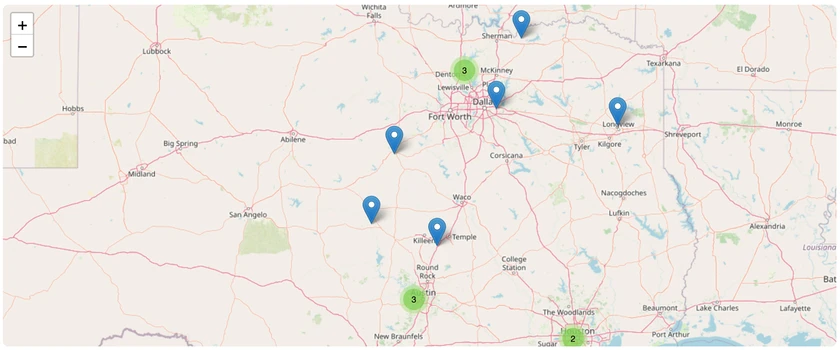
Browse listings, public profiles, breeders, or add your animal.
What is a Jeju dog?
The Jeju dog is one of a handful of native Korean dog breeds, alongside the far better known Jindo, the Sapsaree, the Donggyeong, and the northern Poongsan. It takes its name from Jeju Island (Jejudo), a volcanic island south of the Korean mainland, where it developed over a long period of relative isolation as a working hunter and watchdog rather than a companion breed.
Genetic work supports treating the Jeju dog as a distinct native lineage rather than a local color variety of the Jindo, and it is worth citing the right study for that. A 2019 study examined 139 dogs across seven breeds and included the Jeju dog directly, placing it closest to the Sapsal rather than to the Jindo, despite the superficial resemblance that leads people to assume the opposite. A frequently cited 2017 genome-wide PLOS ONE study of Korean dogs is useful for broader context and lists the Jeju among Korea’s native breeds, but it did not genotype Jeju dogs at all, so it cannot be the basis for any claim about where this dog sits genetically.
What makes the Jeju dog unusual is not just its looks but its story. Few breeds anywhere have come this close to disappearing and then been rebuilt so deliberately, and that near-extinction explains everything else about it, from why it is so rare to why you cannot simply go and buy one. If you are comparing native and heritage dogs more broadly, the Creatures dog species page is a useful place to line the Jeju dog up against other breeds.
The near-extinction, and the program that saved the breed
The most important fact about the Jeju dog is that it almost ceased to exist. By the mid-1980s the island’s native dog had been pushed to the very edge, and in 1986 a survey could locate only three animals judged to be purebred Jeju dogs on the entire island.
Several pressures combined to get the breed there. Korean native dogs suffered heavily during the twentieth century, including large-scale culling of indigenous dogs during the Japanese colonial period. On Jeju specifically, the native dog had also been diluted by crossbreeding with imported and mainland dogs, so even where dogs survived, purebred Jeju stock had become scarce. By the time anyone counted, the line was nearly gone.
The recovery has been an institutional effort, not a hobby-breeder revival. The Jeju Livestock Promotion Institute, a provincial government body established in 1986, took on the job of rebuilding the breed from that tiny founding group and preserving what remained of its bloodline. From three dogs, careful managed breeding grew the population back into the low hundreds over the following decades. The purebred core, though, has stayed genuinely small. A widely cited figure put the purebred population at roughly 69 as of September 2010, which tells you how narrow the base has remained even as the wider count climbed.
That narrow founding base is the quiet challenge behind the good-news headline. Rebuilding a breed from three individuals means the surviving gene pool is extremely limited, and keeping it healthy while avoiding excessive inbreeding is an ongoing, deliberate task rather than a solved problem. It is why the institute controls breeding and placement so tightly, and why the Jeju dog is managed more like a conservation population than a pet breed.
Is the Jeju dog a protected heritage breed?
You will see the Jeju dog described online as a designated national heritage animal, often dated to 2010. Treat that claim with some care, because the reality is messier and more interesting than a clean designation date.
Several of Korea’s native dogs hold formal protected status. The Jindo has been a designated Natural Monument (No. 53) since 1962, and the Sapsaree and Donggyeong dogs carry Natural Monument designations as well. The Jeju dog’s path to comparable national status has been harder. Reporting around the breed has described efforts by the provincial institute to register the Jeju dog as a national heritage animal, and animal-welfare groups in 2017 referred to that registration drive as still in progress rather than complete. Coverage has also noted that the bid for natural-monument status ran into difficulty because of a shortage of documented historical evidence for the breed, which is exactly the kind of paper trail a founding population of three dogs would struggle to supply.
The honest summary is this: the Jeju dog is protected and actively managed by the Jeju provincial government through its livestock institute, and it is treated locally as a heritage animal of the island. Whether it holds the same formal national-monument standing as the Jindo is less certain in English-language sources, and I would not state a firm designation year as settled fact. If a formal national designation matters to you, verify the current status through Korean government or heritage-service sources rather than trusting a single date repeated across breed blogs.
What a Jeju dog looks like
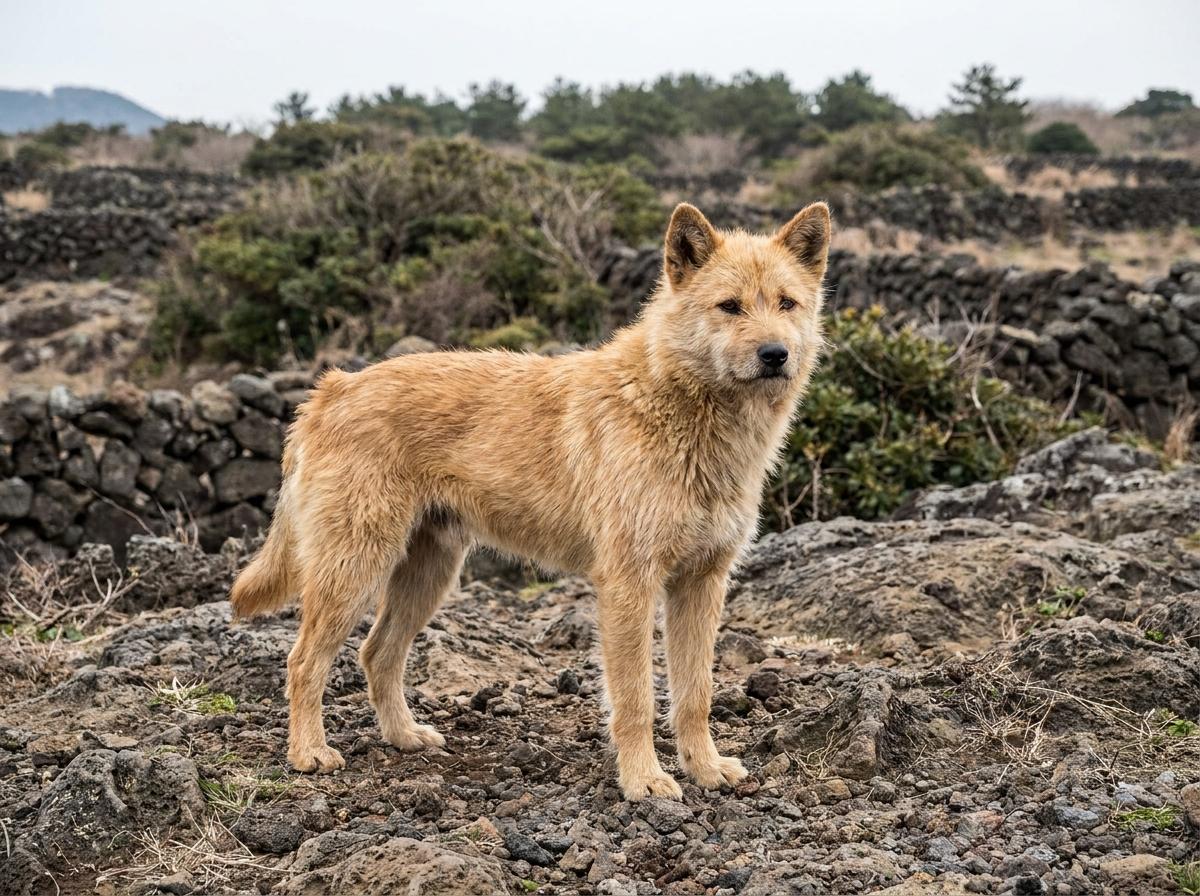
The Jeju dog is a medium, athletic, spitz-type dog. It reads clearly as an East Asian native breed: erect triangular ears, a wedge-shaped head, a double coat, and a high-set tail. A few features are worth knowing as diagnostic markers, and I have checked these against the breed’s general description rather than any single blog.

- A wide, pointed forehead. The breed is repeatedly described as having a broad, pointed forehead and a somewhat reverse-triangular head shape, which gives it an alert, sharp expression that keepers use to tell it from rounder-headed dogs.
- Erect ears and a straight muzzle. Like most spitz-type hunters, the Jeju dog carries pricked ears and a straight muzzle built for scent work. Its sense of smell and hearing are described as acute, consistent with its hunting past.
- A plumed tail carried high. This is the trait people lean on most to separate the Jeju dog from the Jindo. The tail is set high and carried up over the back, sometimes described as broom-like, rather than the more variable carriage seen in some other native dogs.
- A tawny-brown coat. The Jeju dog’s coat is consistently reported as tawny brown. It is a double coat suited to the island’s weather, and the breed is not known for the range of colors you see in the Jindo.
- Marked differences between the sexes. A quirk that comes up often in descriptions of the breed is that males and females can look noticeably different, with males described as more wolf-like in build and heavier through the head and chest, and females as lighter and more fox-like. Treat this as a general observation about the breed’s appearance rather than a precise measured standard.
On size, the figures most often quoted put the breed at roughly 49 to 55 cm and around 12 to 16 kg (about 26 to 35 lb), with an average lifespan cited near 15 years. I would flag those numbers as commonly repeated rather than tightly standardized. The Jeju dog does not have a widely published, internationally recognized written breed standard the way FCI breeds do, and the measurement basis behind the length figure is not always clear in the sources, so use these as a general guide to a medium-sized dog rather than exact specifications.
Jeju dog versus Korean Jindo
Because the two breeds share a country, a body type, and a similar coloring, the Jeju dog is very often mistaken for the Korean Jindo. If you only remember one distinction, make it the tail and the color, but here is the fuller picture.
The Jindo is Korea’s celebrated national dog. It is a Natural Monument (No. 53) protected since 1962, it is internationally recognized (the Fédération Cynologique Internationale granted the breed full status in 2005), and it comes in a range of accepted colors including white, red or fawn, black and tan, brindle, and gray. It is generally the larger and more standardized of the two, with a large registered population and a written standard.
The Jeju dog is smaller, rarer, and effectively confined to its home island under a conservation program. Its coat is consistently tawny brown rather than the Jindo’s color range, its tail is carried high and plumed over the back, and it lacks the Jindo’s international recognition and large registry. Where the Jindo is a national icon you can find across Korea and increasingly abroad, the Jeju dog is a narrowly managed island breed most people will never meet in person. So if someone offers you a “Jeju dog” outside Korea, the far more likely explanation is a Jindo, a Jindo mix, or another tawny spitz-type dog, not a genuine Jeju animal.
Temperament and working role
The Jeju dog was bred to hunt and to guard, and its described temperament fits that history. Accounts of the breed present it as a loyal, alert watchdog with strong senses and a real prey drive, capable of pursuing game such as pheasant, badger, and small deer, and switching into a focused, driven state when working. Owners of native Korean hunting spitz breeds generally describe independent, territorial, one-family dogs that are reserved with strangers, and the Jeju dog is usually described along those same lines.
I want to be careful here rather than overclaim. Almost the entire living population sits inside a single, tightly managed provincial program, so there is very little independent, large-sample documentation of how Jeju dogs behave as ordinary household pets across many different homes. A lot of the temperament language that circulates online, including confident statements about separation anxiety or suitability for beginners, is extrapolated from the breed’s hunting background and from related Korean breeds rather than drawn from a broad body of pet-ownership experience. The reasonable, honest read is that this is a driven, wary, independent working breed, and that anyone taking one on should expect a dog with strong instincts, a strong bond to its own people, and a real need for exercise, structure, and early socialization. As with any breed, individual temperament varies with genetics, handling, and how the dog is raised.
Can you actually own a Jeju dog?
For almost everyone reading this, the practical answer is no, and it is worth being direct about why.
The Jeju dog is not a breed you buy from a breeder or import through the pet trade, though the details below rest on 2010-era and 2017-era material rather than a current published policy, so treat them as the last clear picture rather than today’s rules. Its numbers are small, its bloodline is managed as a conservation asset by the provincial government, and placement has been controlled by the Jeju Livestock Promotion Institute rather than an open market. No current public export channel was located in researching this page; if you are seriously pursuing one, the institute itself is the only sensible place to start. Periodically the institute has made a limited number of puppies available to carefully screened homes, but this is closer to a supervised adoption program than a sale. In one widely reported 2017 auction, the institute offered 20 puppies to the public, priced at only about 50,000 Korean won (on the order of 40 to 45 US dollars at the time), and drew more than 500 applicants. Owners were chosen by lottery, their living conditions were inspected, they were interviewed, and the dogs were checked monthly after placement. Reporting also noted the institute had placed on the order of a hundred-plus puppies through such controlled channels over the preceding years.
That low headline price is not a market value; it is a nominal fee attached to a screening process designed to protect the breed, not to sell it. Two things follow for a prospective owner outside Korea. First, no current public export channel for Jeju dogs was located in researching this page, and the documented placement route runs through the provincial program rather than any international pipeline; standard international dog importation is separately governed by animal-health rules (in the United States, for example, dog entry is regulated by the Centers for Disease Control and Prevention and the USDA). Second, any listing that claims to sell you a purebred Jeju dog internationally deserves deep skepticism; the far more probable reality is a different breed or a mix being sold under a rare and appealing name.

If your interest is in the type of dog rather than this specific protected population, the more realistic route is a Korean Jindo or another native Korean spitz breed from a responsible source, keeping in mind that even the Jindo can be uncommon outside Korea. You can search available dogs on the Creatures marketplace and look for programs and rescues in the Creatures breeder and rescue directory. Genuine Jeju dogs are essentially never going to appear there, so the honest use of these tools for this breed is to explore related native dogs and to set an alert (below) in the rare event that anything credibly matching turns up.
Care basics, if you keep a native Korean spitz
Because so few Jeju dogs live as ordinary pets, there is no breed-specific care manual with the depth you would find for a popular registered breed. What follows is the sensible baseline for a medium, double-coated, high-drive spitz-type dog, and none of it substitutes for hands-on advice from your own veterinarian.
- Exercise and mental work. A hunting-bred dog needs real daily physical exercise and something to think about. Scent games, secure off-lead running where it is safe and legal, and structured training all help channel a strong prey drive. A bored, under-exercised working dog is where most behavior problems start.
- Secure containment and recall. High prey drive plus independence means reliable fencing and a realistic attitude to recall. Do not assume a driven native hunter will ignore wildlife on command, especially early on.
- Coat and general health. A double coat needs regular brushing, more during seasonal sheds. Keep routine care current: vaccinations and parasite prevention on a schedule your veterinarian sets, dental care, and prompt attention to ears and skin. For any rare or narrowly bred population, keeping clear health and lineage records matters even more than usual, because it is how a small gene pool is managed responsibly over time.
- Socialization. A reserved, one-family dog benefits from early, positive exposure to people, other animals, and situations, so that natural wariness does not tip into fearfulness or reactivity.
Whatever native or heritage dog you keep, good records are the through-line: vaccinations, health events, weight, and breeding history. You can keep all of that in one place on Creatures, and the help articles linked in the hub below walk through exactly how.
Frequently asked questions
How rare is the Jeju dog?
Very rare, though the public numbers are old. The breed was rebuilt from just three purebred dogs found in 1986, and managed breeding grew the wider population into the low hundreds, with the purebred core cited at around 69 as of September 2010. That 2010 figure is the most specific one available here and no current census was located, so treat it as historical rather than as today’s count. It exists almost entirely within a single provincial conservation program on Jeju Island.
Can I buy a Jeju dog in the United States or Europe?
Realistically, no. No current public export channel was located for this breed. Placement has been run by the Jeju Livestock Promotion Institute through a screened, lottery-style adoption program according to 2017-era reporting, and that remains the only documented route. Any international listing claiming to sell a purebred Jeju dog should be treated with strong skepticism: it is far more likely to be a Jindo, a mix, or another tawny spitz-type dog. If the rules have changed since that reporting, the institute is the place to confirm it.
What is the difference between a Jeju dog and a Jindo?
The Jindo is Korea’s larger, internationally recognized national dog (a Natural Monument since 1962, FCI-recognized since 2005) and comes in several colors. The Jeju dog is smaller, rarer, consistently tawny brown, carries a high plumed tail, and is confined to a conservation program on Jeju Island. The tail carriage and single coat color are the quickest tells.
Is the Jeju dog a good family pet?
It is a driven, wary, independent working breed with strong hunting instincts, and there is very little large-sample documentation of it living as a typical household pet. For most families, a related native breed from a responsible source is a more realistic choice than trying to obtain this protected island breed.
How big do Jeju dogs get?
They are medium-sized. Commonly quoted figures are around 49 to 55 cm and roughly 12 to 16 kg (about 26 to 35 lb), with males tending larger and more wolf-like and females lighter and more fox-like. Because the breed lacks a widely published international standard, treat those as general guidance rather than exact specifications.
Why did the Jeju dog nearly go extinct?
A combination of twentieth-century pressures on Korean native dogs, including colonial-era culling of indigenous dogs, plus heavy crossbreeding with imported and mainland dogs on Jeju, left almost no purebred stock by the 1980s.
Do this next on Creatures
Whether you are researching the Jeju dog out of curiosity, comparing native Korean breeds, or keeping a rare or heritage dog of your own, Creatures is the records, marketplace, and directory layer to do it in one place.
Compare native breeds. Line the Jeju dog up against other heritage and rare dogs on the Creatures dog species page, and read our companion guides to two other rare hunting and guardian breeds, the Podenco Valenciano and the Sarabi.
Explore related dogs. Genuine Jeju dogs are essentially never sold, so use the marketplace and the Creatures directory of trusted breeders and rescues to look at related native breeds from responsible sources.
Get alerted. If you want to be told the moment anything credibly matching is posted, set a free Jeju dog listing alert. No account needed to start, and it doubles as a watch for related Korean breeds. See saving searches and using your watchlist.
Add your dog. Keep a Jeju dog or another native breed? Create a free animal profile in a few minutes. The walkthrough is in adding an animal to Creatures.
Track health and lineage. For a rare or narrowly bred dog, records matter more than usual. Add a health or care record to log vaccinations, weight, and events. The record sheet opens for any visitor to look around, and a free account saves what you enter. See adding a record and health and medical records.
Stay on top of care. A high-drive working dog needs a routine. Use reminders and upcoming care to schedule vaccinations, parasite prevention, and enrichment so nothing slips.
Run a program. Involved in native-breed conservation or breeding? List your organization and get listed in the breeder directory so people searching for heritage breeds can find you.