

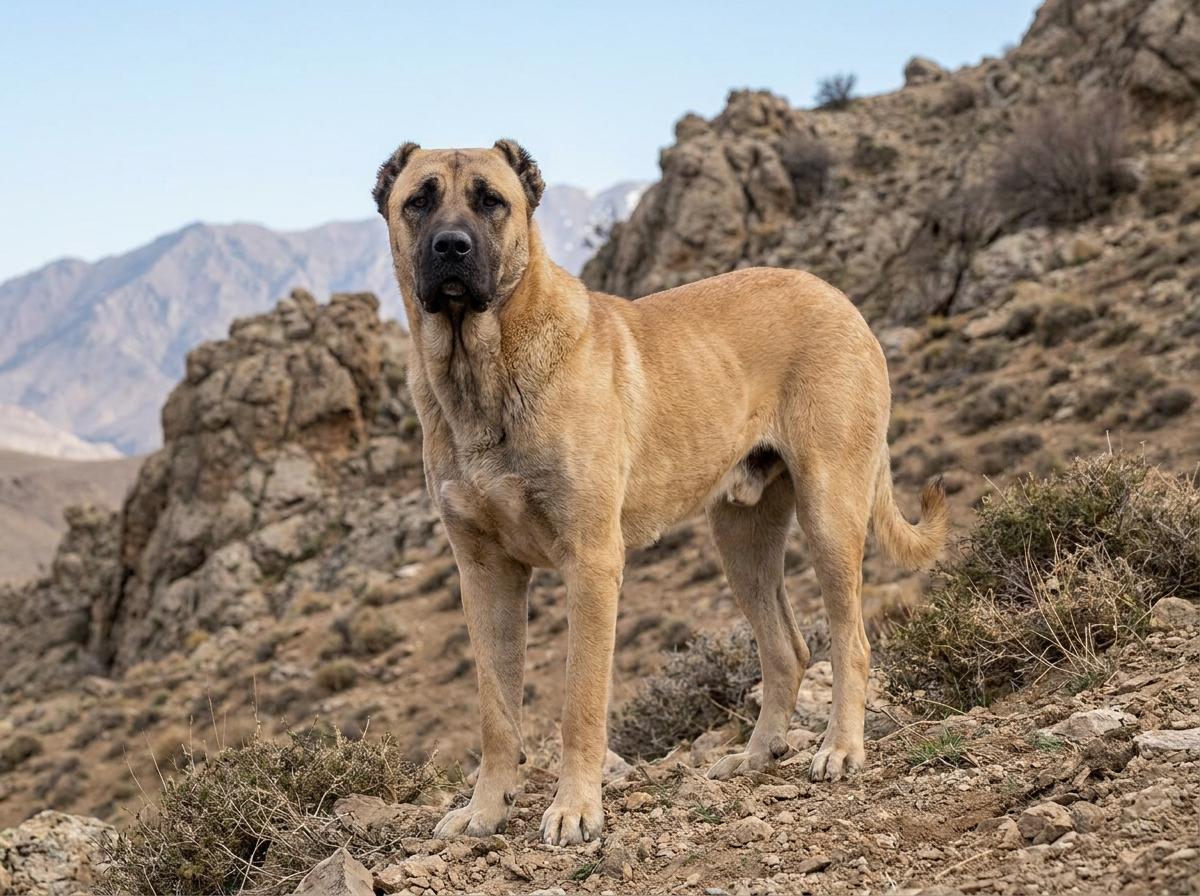
Sarabi
The Sarabi is a large livestock guardian dog from Sarab County in East Azerbaijan Province, in the mountainous northwest of Iran. In Persian it is the sag-e Sarabi (سگ سرابی), named after the district, and it is a working flock protector rather than a companion breed. It lives out with sheep and goats, treats them as its own, and makes its own decisions about what counts as a threat. That last part is the whole personality of the animal and the reason most people who want one should not get one.
Almost everything else you will read about this dog is less certain than it sounds. There is no published breed standard anywhere in the world, and the peer-reviewed literature runs to a handful of papers, most of them out of one facility and several sharing authors and animals, so no figure quoted for the breed rests on more than a few dozen dogs. The heights and weights that circulate in English come from breed listings rather than from anyone with a measuring stick, and in a market where a heavier dog fetches a higher price the incentive runs one way. This page separates what can be sourced from what merely gets repeated.
One disambiguation first, because it derails searches. Sarabi is also an Iranian cattle breed from the same district, described in the genetics literature as a unique Iranian taurine breed, and almost all published animal science with “Sarabi” in the title is about the cattle. If you want to know when a Sarabi dog comes up for sale, set a free listing alert; genuine ones surface rarely.

| Also called | Iranian mastiff, Persian mastiff. In Persian, sag-e Sarabi (سگ سرابی) |
|---|---|
| Origin | Sarab County, East Azerbaijan Province, northwestern Iran |
| Kept for | Guarding flocks on open range, and guarding property. It is not a herding dog |
| Registry status | No FCI breed standard as of July 2026. Iran’s FCI contract partner said in February 2025 that it intends to file for one |
| Measured weight | 50 to 70 kg (110 to 154 lb) in a published veterinary sample of twelve males aged two to three years |
| Measured height | A mean of 67.88 cm at the withers in an unindexed 2023 conference paper on eighteen males, the only height measurement on record |
| Coat | Short to medium and dense over an undercoat. Usually fawn or sable, commonly with a dark mask |
| Suits | Experienced guardian keepers with acreage and stockproof fencing. Not a first dog, and not a suburban one |
Browse listings, public profiles, breeders, or add your animal.
The names, and which of them are real
The endonym is straightforward. Sarab (سراب) is a real county with a real town in East Azerbaijan Province, and Sarabi means “of Sarab”. The dog is named after the district the way the Kangal is named after a town in Sivas province. That is the only one of its names with a place behind it.
Persian mastiff and Iranian mastiff are English trade names. Nobody in Sarab calls the dog a mastiff in Persian. The labels file it under a category English speakers already have a picture of, which sells dogs, and they have travelled far enough that a 2025 veterinary paper introduces its animals as “Sarabi dogs or Persian mastiffs”. The terms are in real circulation. They are still translations of a marketing idea rather than the animal’s own name, so when one turns up in a sale listing it is worth asking what the seller actually has.
“Iranian shepherd” appears too, and that one collides with a separate category. Iran has several distinct native working dogs, the Pezhdari of the Kurdish borderlands among them, and a generic “Iranian shepherd” label flattens them into one animal. That is how a listing for a Sarabi ends up describing a different dog entirely.
The scientific literature avoids the word breed. A microsatellite study of Iranian native dogs in the Journal of Livestock Science and Technologies sampled twenty Sarabi dogs and called the population an ecotype, “one of the oldest and powerful indigenous dogs in Iran which is used for guarding and fighting”. That is the most accurate sentence anyone has written about this animal, and it carries a detail most breed pages leave out.
Is the Sarabi a recognised breed?
No, and the detail here is more interesting than the headline.
Search the FCI breeds nomenclature for “sarabi” and it returns nothing. Search it for “kangal” and it returns Kangal Çoban Köpeği. As of the end of July 2026 the FCI lists no breed at all whose country of origin is Iran, on either its definitive or its provisional list, and the provisional list was last added to in February 2026.
Iran does have a national canine organisation inside the FCI system. The Iran Kennel Club, based in Qazvin, appears in the FCI’s own member directory as a contract partner, the FCI’s most limited tier of affiliation. Writing standards for native Iranian dogs is stated on its site as part of its mission, and in February 2025 the club posted that it intended to file with the FCI “soon” for the international registration of Iranian breeds including the Sarabi, framing it as protecting a national genetic resource. Announcing an intention is not filing, and no standard has appeared since. Older claims that the breed was registered internationally in 2018 refer to a non-FCI federation and are a much weaker fact than they sound. The breed is absent from the American Kennel Club’s Foundation Stock Service too, which is where the AKC parks breeds it does not yet recognise.
So there is no ruler. Every number quoted for this dog describes individual animals somebody saw, not a measurement against an agreed standard, and no registry anywhere is checking the paperwork on a puppy sold as a Sarabi.
How big is a Sarabi, honestly
What has actually been measured. Khatami and colleagues, in BMC Veterinary Research in 2025, ran a feed trial on twelve male Sarabi dogs aged two to three years and record their weights as 50 to 70 kg, roughly 110 to 154 lb. Twelve dogs from one facility says nothing about females and was never designed as a survey of the breed. It is still the only weight figure for this animal with a citation behind it.
What the standardised neighbours ask for. Two guardians in the same FCI section do have published standards, and they are the honest yardstick. The Kangal Shepherd Dog standard (FCI 331, Turkey, official valid standard published 15 June 2018) asks for males of 72 to 78 cm at the withers weighing 48 to 60 kg, and females of 65 to 73 cm weighing 40 to 50 kg, all with a stated tolerance of plus or minus 2 cm. The Central Asia Shepherd Dog standard (FCI 335) sets only floors: males a minimum of 70 cm and 50 kg, females a minimum of 65 cm and 40 kg, with the note that “large size desirable, but proportional constitution must remain”.
What is not on this page. English Wikipedia gives Sarabi males as 80 to 100 cm tall and 65 to 100 kg. Persian Wikipedia goes to 110 cm and 110 kg. Breed listings commonly say 32 to 35 inches and 140 to 200 lb. Not one of those figures traces to a sample anyone counted, so none of them is carried here as fact.
The one height measurement that does exist. It is not in PubMed, Europe PMC or OpenAlex, but it is not folklore either. Urošević, Matejević, Štastna and Drobnjak measured eighteen Sarabi males across seven body parameters and reported a mean height at the withers of 67.88 cm, in a paper given at a Russian scientific and practical conference in Moscow in April 2023. That is grey literature: a named author team, a stated sample, a stated method, published outside the indexed journals and cited onward in later shepherd-dog morphometric work. Treat it as one small unrefereed sample rather than a standard. What it is not is inflated. An eighteen-dog sample at 67.88 cm and a twelve-dog veterinary sample at 50 to 70 kg put this animal in the same size class as a Kangal, and nowhere near a metre at the shoulder.
The useful summary: a Sarabi is a big heavy-boned mastiff type in the class of a Kangal or a Central Asian shepherd, an adult male is likely between 50 and 70 kg, the only measured withers height on record is under 70 cm, and the true upper bound is unknown. Judge the animal in front of you.

The job it was bred for, and what the field evidence shows
A guardian is not a herder. A herding dog gathers and moves stock on instruction. A livestock guardian is put with the flock as a puppy, bonds to the animals rather than to a handler, and stays with them, driving off whatever it decides is dangerous. Everything difficult about the Sarabi follows from that.
The threat is real. In Hamadan province in western Iran, researchers collared three wolves and analysed 142 kill sites; livestock made up 74.6 per cent of the prey and dogs another 3.5 per cent. Wolves there are eating flocks and occasionally eating the dogs guarding them. Leopards, brown bears, hyenas and jackals all occur on Iranian range as well.
Here is the part breed marketing leaves out. Having a guardian breed does not mean having a guardian. A field study of leopard attacks in north-eastern Iran, published in PeerJ in 2017, examined 39 attacks across 17 villages and recorded who was present. Shepherds were there for 92.5 per cent of the sheep and goats lost, and dogs for 77.6 per cent. So the dogs were present for most of it and the animals died anyway, and about a fifth of the losses had no dog at all. The authors put the failures down to rearing: the local dogs were “not trained to deter leopards or other large carnivores”, and some responded by “running away, barking from afar, retreating and not reacting”. As people settled, they let their Central Asian shepherd dogs “mix with other dogs and thus diminish their original disposition for guarding”, and those dogs “show a stronger bond with people than with livestock”. That last line is one author’s field observation of Central Asian shepherds rather than a measurement of Sarabis, but it names the failure mode exactly.
The bond does the work, not the pedigree. Texas A&M AgriLife’s guidance on bonding livestock guardian puppies puts the window plainly: start at about eight weeks, because “puppies more than 16 weeks old typically do not form permanent bonds to livestock”. A pup that stalks or bites stock is corrected immediately, and human contact is capped deliberately low, on the order of five minutes two or three times a week, to stop the dog bonding to people instead. If you are buying a Sarabi to guard animals, that window matters more than its parents.

Temperament, and what protective actually means
The FCI standards for the two nearest relatives describe this temperament better than any Sarabi page can, because they were written by people who have judged thousands of these dogs. The Central Asia Shepherd Dog standard asks for a dog that is “self assured, balanced quiet, proud and independent”, with “a natural instinct of territory”. The Kangal standard asks for one that is “steady and bold without aggression, naturally independent”, and “loyal and affectionate to owners, but wary of strangers when on duty”. Its summary of the whole animal is four words long and worth memorising before you buy anything in this group: “Not aggressive but good guardian.”
What that means to live with:
- Independence reads as disobedience. These dogs were selected to act without instruction. A Sarabi that ignores a recall is doing the thing it was bred for. Training is calm boundaries and management, not snappy obedience.
- Territory is the default setting. A guardian decides who belongs. Delivery drivers, farriers, visiting children and the neighbour’s dog all have to be actively introduced, and that work never stops.
- Slow maturity. The Central Asian standard puts full maturity at three years. Expect a long adolescence in a body that is already dangerous before the brain catches up.
- Bored is worse than tired. A dog developed to patrol open country and left in a small yard is a problem waiting to happen, and at this size it is not a chewed sofa.
“Protective” is a mild word for it. A 60 kg dog that decides someone is a threat cannot be pulled off by an average adult. That is not a defect. It is the specification.
Living with one: containment, cropping, and the rules that apply to you
Fencing is the first budget line, not the last. Stockproof fence on solid posts, at a height and gauge that respects the animal’s size and strength, with gates that latch properly and a plan for who opens them. Keep troughs, kennels and anything else climbable well back from the fence line. A guardian that gets out is not wandering, it is extending its territory, and other people’s dogs and stock are inside the new one.
Space and shelter. Room to move, dry shade, clean water, and a bed that is genuinely dry in winter. This is a dog bred for hard winters and hot summers, and it handles both if it can get out of the weather.

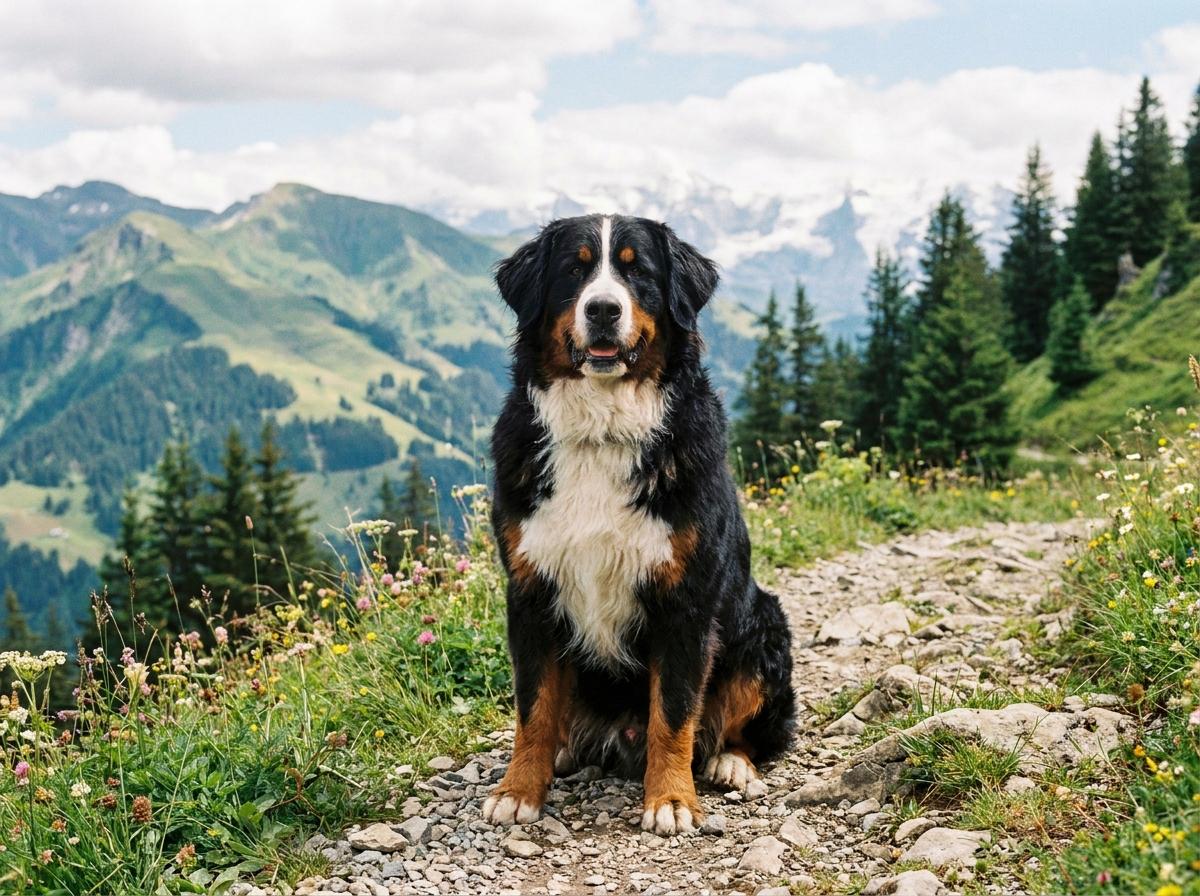
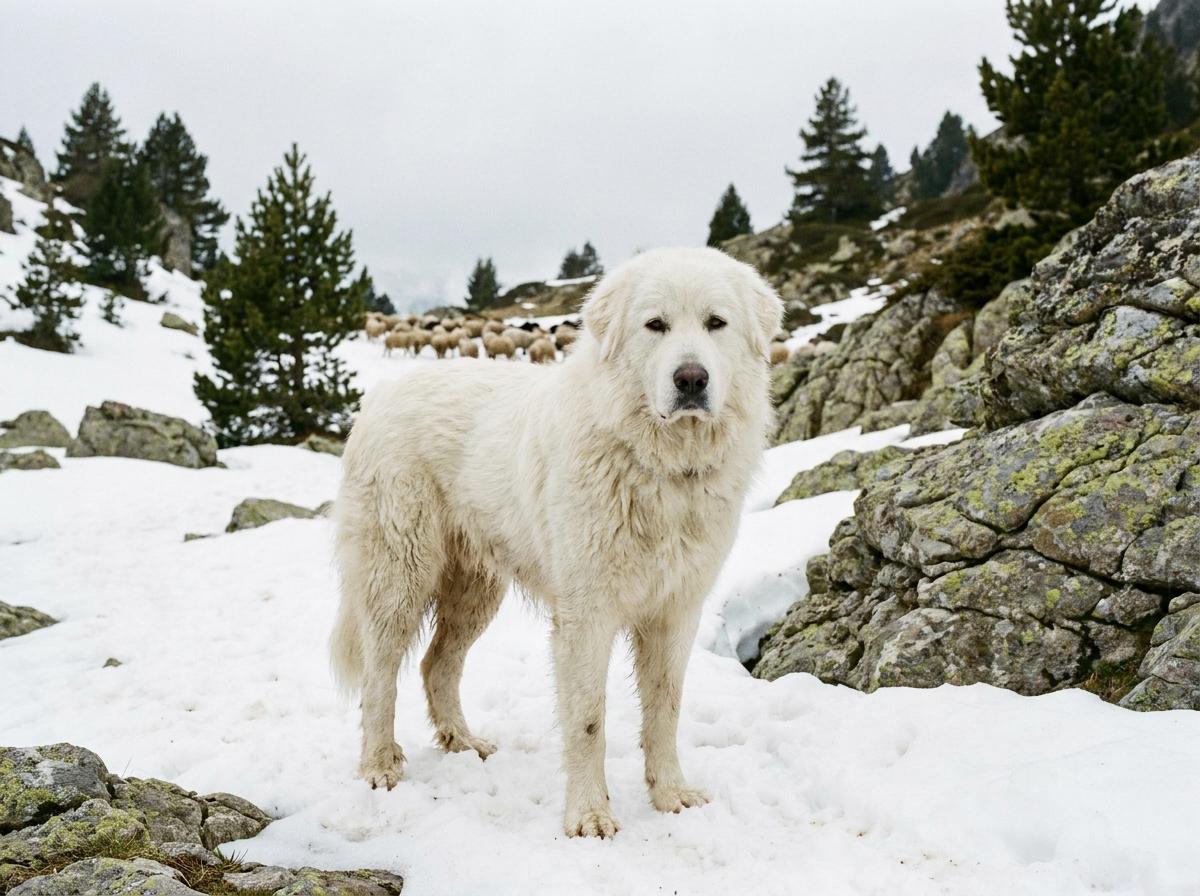
Ears. Many photographs of Sarabis show cropped ears, because cropping is traditional across this whole group. The FCI’s Central Asia Shepherd standard says so outright: “traditional ear-cropping … is still practiced in country of origin and in countries where it is not prohibited by law”. The AVMA opposes ear cropping and tail docking of dogs done for cosmetic or nontherapeutic purposes and wants both removed from breed standards. The natural ear is a long pendant drop ear, as every dog pictured on this page has. A natural-eared dog is not a lesser dog, and in much of Europe cropping is illegal.
Law and insurance, which you have to check yourself. Some states, cities and counties restrict or regulate large guardian and mastiff-type dogs, and some homeowner and liability insurers keep their own breed lists that have nothing to do with any statute. This page does not name a jurisdiction, because those rules change constantly and naming the wrong one does real damage. Check your municipal code, your county, your state and your insurer, in writing, before you commit to a dog. The AVMA supports dangerous animal legislation only where it “does not refer to specific breeds or classes of animals”, which tells you both the veterinary profession’s view of breed lists and that such lists exist.
Not a first dog. Anyone selling you a Sarabi as a family pet without raising any of the above is either inexperienced or not being straight with you.
Fighting lines, and why to walk away
The peer-reviewed description of this population says the Sarabi ecotype is used “for guarding and fighting”. That is a scholarly source rather than gossip, and pretending otherwise would be dishonest about a breed people are actively buying.
Organised dog fighting is cruel and it is criminal: United States federal law reaches sponsoring, attending, and buying, selling, possessing, training or transporting an animal for an animal fighting venture, and the AVMA condemns such events.
The buyer’s version is the part that matters here. If a seller advertises fighting lines, a fighting record, or an ancestor’s performance in the pit, that is not a pedigree. Walk away, and read the marketing language as a signal about everything else in that kennel. Ask instead about the dog’s stock, its parents’ temperaments around strangers, and how the puppies were raised.
Health, growth and lifespan
There is no breed-specific health study of the Sarabi, so what follows is giant-breed medicine rather than Sarabi medicine. The fuller version lives with the other big breeds on the Creatures dog species page, and every medical decision belongs with a veterinarian who has examined your animal.
Bloat and joints. Gastric dilatation and volvulus is the emergency that kills big deep-chested dogs, and the Merck Veterinary Manual puts overall mortality at roughly 25 to 30 per cent. Learn the signs, a swelling abdomen, unproductive retching and obvious distress, and treat them as an immediate emergency. Merck notes that a preventive gastropexy should prevent the twist, which is the part that kills, so ask your vet about it. Hip and elbow dysplasia are the other giant-breed tax, and fast growth and excess weight in a puppy make both worse.
Lifespan. Be sceptical of the twelve to fifteen years quoted online. A study of more than thirteen million dogs published in Frontiers in Veterinary Science in 2023 built life expectancy tables by body size and found life expectancy at birth of 9.51 years for giant breeds, meaning an adult bodyweight of 45 kg or more, against 13.53 years for small dogs. In the same tables obese dogs averaged 11.71 years against 13.18 for dogs in ideal condition, a gap of nearly a year and a half, though that is an observed association rather than a demonstrated cause. A 50 to 70 kg dog sits squarely in the giant category, so plan for closer to a decade than to fifteen years.
Getting one, and what importing really involves
Genuine Sarabis are uncommon in Iran and rare everywhere else. There is no registry to check a claim against, no established breeder network in North America or Europe, and no paperwork that proves anything, which is exactly the combination in which mislabelled animals change hands.
Importing from Iran is a serious project. The CDC lists Iran as a country at high risk for dog rabies, which puts a foreign-vaccinated dog into the full high-risk requirement set: government-endorsed veterinary paperwork, a rabies serology titre from a CDC-approved laboratory, a booked slot at a CDC-registered animal care facility with a 28-day quarantine if the titre is missing, a flight routed to that facility’s airport, a microchip implanted before the vaccine, and a minimum age of six months. USDA rules apply on top, and all of it changes, so read both CDC pages and confirm the current requirements before spending anything.
If you do find a dog, buy on evidence. See it in person and see its parents. Ask how the puppies were raised and around what animals, and ask about temperament with strangers rather than about record weights. A seller who keeps written records of litters, health events and placements is telling you something useful about the rest of the operation.
How it compares to guardians you can actually buy
If the guardian temperament is what appeals rather than the Iranian origin, the Kangal and the Central Asian Shepherd Dog do the same job, have published standards, and are obtainable without an import project. The Caucasian Shepherd Dog is a third option in the same FCI section. All three carry the same handling requirements, so treat them as the same decision rather than an easier one.
For contrast, the Laconian hound is a light, fast Greek scent hound bred to cover ground rather than hold it, about as far from a guardian as a working dog gets, and the Kurdish horse comes out of the same Iranian highlands and the same herding economy.
Frequently asked questions
Is the Sarabi the biggest dog breed in the world?
No, and the claim rests on numbers nobody published. The two measured samples that exist put adult males at 50 to 70 kg and a mean withers height of 67.88 cm, which is Kangal territory, not record territory.
What is the difference between a Sarabi and a Kangal?
Separate regional guardians from neighbouring countries doing the same job. The Kangal is Turkish, has an FCI standard published in 2018 with defined heights, weights and a required black mask, and is straightforward to buy. The Sarabi is Iranian, has no standard anywhere, and is hard to obtain outside Iran. Neither is a variety of the other.
Are Sarabi ears naturally cropped?
No. The natural ear is a pendant drop ear. Cropping is a traditional practice done to the dog, and the AVMA opposes it when the reason is cosmetic.
Do this next on Creatures
Whether you are researching the breed, keeping a guardian dog on a working property, or waiting for the rare chance to find one, Creatures is the records, marketplace and directory layer to do it in one place.
Add your dog. Keeping a Sarabi or another guardian breed? Create a free animal profile and log its weight, microchip, bloodline notes and socialisation milestones. No account needed to start. The walkthrough is in adding an animal to Creatures.
Track the long growth. A guardian breed is not mature until about three, and weight through that period is the number your vet will ask for. Add a record for each weigh-in, vaccination and health event. A free account saves what you enter. See adding a record, health and medical records, and reminders and upcoming care.
Get told when one appears. Sarabis surface rarely, so set a free Sarabi listing alert and Creatures will tell you when one is posted. No account needed to start. See saving searches and using your watchlist.
Browse what is listed now. Check Sarabi dogs on the marketplace and search trusted breeders, farms and rescues in the Creatures breeder directory.
List your kennel or farm. Raising or placing guardian dogs? Create a free breeder or farm profile so people searching for a hard-to-find breed can reach you. No account needed to start. Read getting listed in the breeder directory.