Old English Sheepdog
Author: Elliott Garber, DVM · Published
An Old English Sheepdog has a striking outline, but the coat is only the beginning of the commitment. Beneath it is a substantial working dog that needs practical training, comfortable movement and a household ready to maintain that hair throughout ordinary, muddy life.
Start with the Creatures breeder directory to ask about adult dogs, grooming and health documentation. A useful first conversation should help you picture a normal week with the breed, including the work behind the photograph. You can also save an Old English Sheepdog listing alert to get an email when a matching animal is listed.

AI-generated illustration.
| Heritage | British herding and droving; AKC Herding Group |
|---|---|
| AKC minimum height | Males 22 in; females 21 in |
| Coat | Profuse shaggy double coat |
| Colors | Gray, grizzle, blue or blue merle, with or without white |
| Tail | Natural or shortened; check registry context |
| Health questions | Hips, eyes, thyroid, EIC and BAER hearing |
Browse listings, public profiles, breeders, or add your animal.
A working dog under the shaggy coat
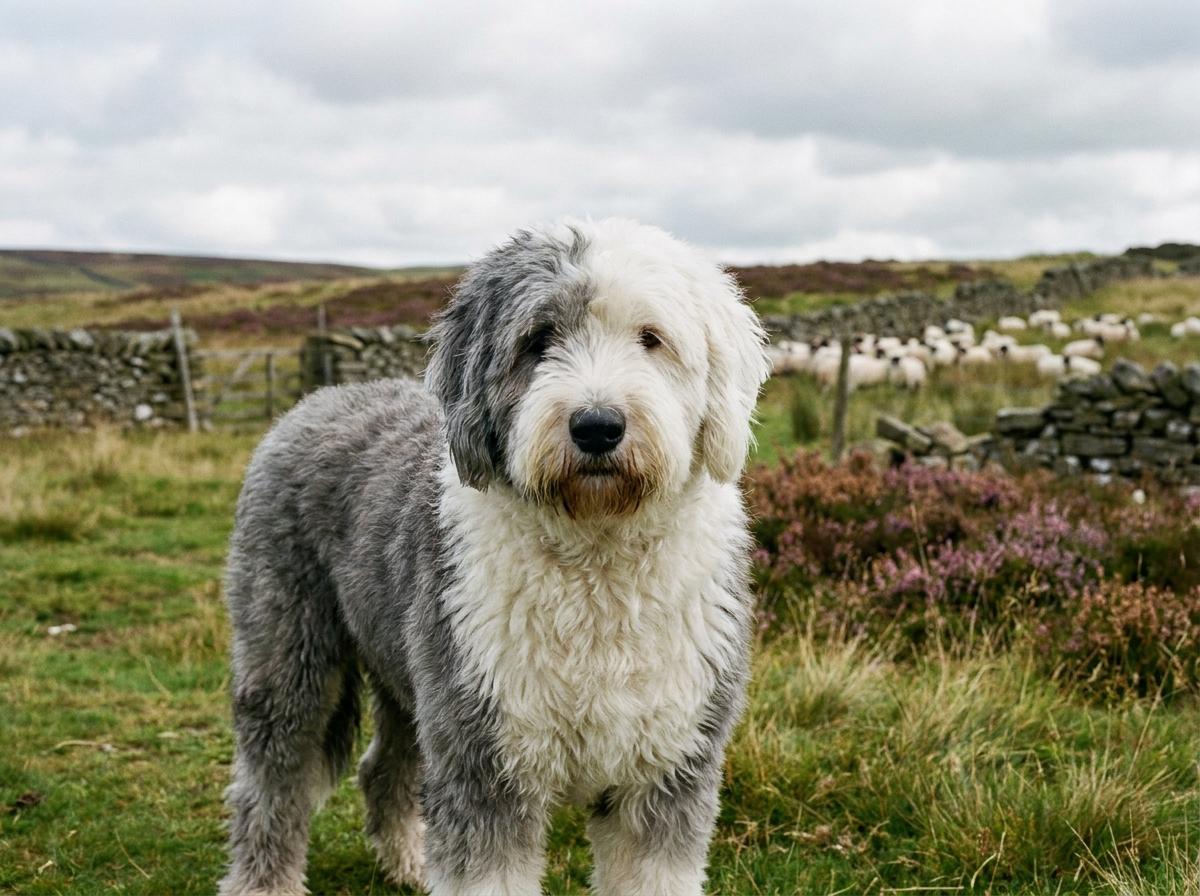
The UKC standard describes a dog developed in England for herding and droving. Its body is strong, compact and muscular, with a distinctive rise from the withers toward the loin. The coat is abundant and shaggy, with gray and blue shades combined with white.
Coat volume can hide the outline. When meeting an adult, ask the breeder to explain its structure and let you watch it move comfortably. A heavily styled photograph cannot tell you how an individual walks, rests or manages the home.
The familiar appearance also creates confusion with crosses. If a puppy is advertised as a purebred Old English Sheepdog, ask for its registered identity and parentage. A Sheepdog cross may be a good companion, but the description and paperwork should accurately explain what is known.
The AKC standard starts males at 22 inches and females at 21 inches at the withers, while prioritizing balance over size. Colors include gray, grizzle, blue and blue merle, with or without white markings. Brown, blue or one of each eye color can occur. A large white head and shaggy coat should not hide a dog whose structure you have never seen in motion.
The nickname Bobtail reflects a tradition of shortened tails, but a full tail does not make an Old English Sheepdog a cross. The UKC standard accepts a natural bob, a docked tail or a natural tail; the AKC standard describes a docked or naturally bobbed tail. Ask how the individual was born and what is recorded; a photograph alone cannot establish whether shortening was natural or surgical. Do not seek a cosmetic change for a companion simply to match an old illustration.
For a coat comparison, the Bergamasco Sheepdog guide explains deliberately formed flocks. An OES coat is not meant to be left to form those flocks. Use the free dog pedigree chart maker to organize known parentage when a shaggy puppy is advertised under a vague sheepdog label.
Make grooming a real appointment
The Old English Sheepdog Club of America describes a thorough weekly grooming as a basis for keeping the coat relatively free of mats. An unmaintained coat can trap moisture, urine and fecal material, so this is a hygiene obligation as well as cosmetic work. Before committing, arrange a demonstration with an adult dog. Watching someone work through the coat is more informative than hearing that it needs “a brush.”
Ask to see how the groomer checks close to the skin and handles the areas you find difficult. Explain your experience honestly. Identify what you can maintain at home, what requires professional help and how often your particular dog should be seen.
Decide where the work will happen. You need a comfortable, safe setup for the dog and a position that you can sustain. A household plan that depends on one person finding several spare hours at an unspecified time is easily displaced by work or travel.

AI-generated illustration.
Choose a coat routine you can keep
Discuss a practical pet trim with an experienced groomer if maintaining a long coat is unrealistic. The goal is a comfortable, manageable dog. A show presentation is not the only acceptable way to care for a companion.
Keep the dog’s sight, mouth area, feet and toileting hygiene in the conversation. Ask what changes during coat transitions and how to recognize a problem before it becomes a painful grooming session. Tight mats or sore skin deserve professional assessment, not forceful pulling.
Plan shade, cool rest and weather-appropriate outings. Discuss coat length with your groomer and veterinarian rather than assuming that a full coat or a very short clip solves hot weather. Include grooming in the care instructions for holidays. Your substitute carer should know what has been done, what is due and which groomer understands the dog. Confirm this before you book a trip, especially if the stay overlaps a scheduled appointment.
Teach the skills a large companion needs
Think beyond formal obedience. Calmly entering a vehicle, waiting at a doorway, standing for examination and settling away from visitors all have everyday value. Ask how the puppy or adult has been introduced to these situations.
For a puppy, find a qualified instructor who uses rewards and can help the household stay consistent. For an adult, learn the cues already in use before replacing them. Plan around its current skills rather than expecting a change of home to reset its habits.
Supervise interactions with children and give the dog a place to rest undisturbed. Its shaggy appearance is not permission for climbing, grabbing hair or startling it awake. Adults should manage the interaction and show children how to invite contact gently.
Exercise should fit the actual dog
A working background gives you a reason to investigate activity needs; it does not provide a safe mileage target. Discuss age, fitness, orthopedic history and your intended activities with the veterinarian and breeder.
Walk through a weekday with the current keeper. How much time is spent walking, playing, learning and resting? What happens when the weather disrupts plans? Which activities settle the dog, and which leave it more excited?
If you are comparing substantial coated companions, the Samoyed guide explains a different working background and coat commitment. For a smaller herding comparison, the Cardigan Welsh Corgi guide helps separate size from training responsibility. Explore the wider dog hub before choosing by appearance alone.
Ask for named health reports
The AKC’s parent-club screening recommendations list hip and ophthalmologist evaluations, thyroid testing and exercise-induced collapse DNA testing for Old English Sheepdogs. Ask the breeder to show the reports relevant to the parents and explain the results.
The Old English Sheepdog Club of America also asks that breeding dogs have BAER hearing testing. Ask for that report as well. Check identity and dates: saying the parents were vet checked does not establish that the named screening evaluations were completed. Likewise, a laboratory report should be read for the condition it actually assesses.
Screening does not replace the individual’s own veterinary care or promise lifelong health. For an adult placement, ask about medication, past surgery, mobility and any monitoring already recommended. Have your veterinarian interpret unclear paperwork before you commit.

AI-generated illustration.
Budget for the coat as well as the puppy
Ask for a current written quote from the seller and a separate estimate from a local groomer. Explain the likely coat, size and condition honestly so the estimate is useful. Include equipment, veterinary care, instruction and travel care in your household budget.
Use the dog boarding cost guide to prepare questions about coat maintenance during a stay. Confirm which services are included, who carries them out and how the provider responds if the dog finds handling difficult.
Read the sale or adoption agreement before paying. Clarify registration, transport, any deposit, support after placement and what happens if the match fails. For an adult rehome, practical knowledge of the dog’s routine may be especially valuable.
Keep the transition understandable
Request current food details, grooming instructions, veterinary records and the cues the dog knows. For a puppy, take the paperwork to your veterinarian and use the puppy vaccination guide to organize your questions.
Record observations in specific terms. “Comfortable with brushing on the left side; needs a pause for the hind leg” helps the next handler. “Good for grooming” is much less informative when the routine changes.
Check that all carers know the same contact details and care priorities. A shared account of what the dog accepts is useful long after the first week.
Old English Sheepdog questions
Is the breed only for people who want a show coat?
No. Discuss an appropriate pet trim and maintenance routine with a knowledgeable groomer. Comfort and consistent care come first.
Does a big yard replace planned activity?
No. Ask how the individual uses its day and make room for suitable exercise, training and company.
Can I judge body condition from a fluffy photograph?
Not reliably. Ask your veterinarian to show you how to assess this particular dog beneath its coat.
What should I request before choosing a puppy?
Identifiable parent screening, the puppy’s own care records, a written agreement and a realistic grooming demonstration are useful starting points.
Do this next on Creatures
Still looking? Get an alert when an Old English Sheepdog is listed, browse Old English Sheepdog breeders, or check current Old English Sheepdog listings. The Help Center explains saved searches and email alerts.
Already caring for one? Add a record when you have a dated document or useful observation. The form opens for visitors; a free account is needed to save. The Help Center explains adding an animal and adding a record.
Breeders and organizations can create an organization profile for their work. The organization and team guide explains the setup.