

Samoyed
A Samoyed brings more than a pale coat and the familiar upturned mouth. This northern working breed asks for time, company and a grooming routine that survives shedding season. Choosing one works best when you evaluate the household routine alongside the individual dog.
Use the Creatures breeder directory to ask about adult temperament, health reports and the work of maintaining the coat. A thoughtful seller should be able to explain the challenges as clearly as the appeal. You can also save a Samoyed listing alert to get an email when a matching animal is listed.

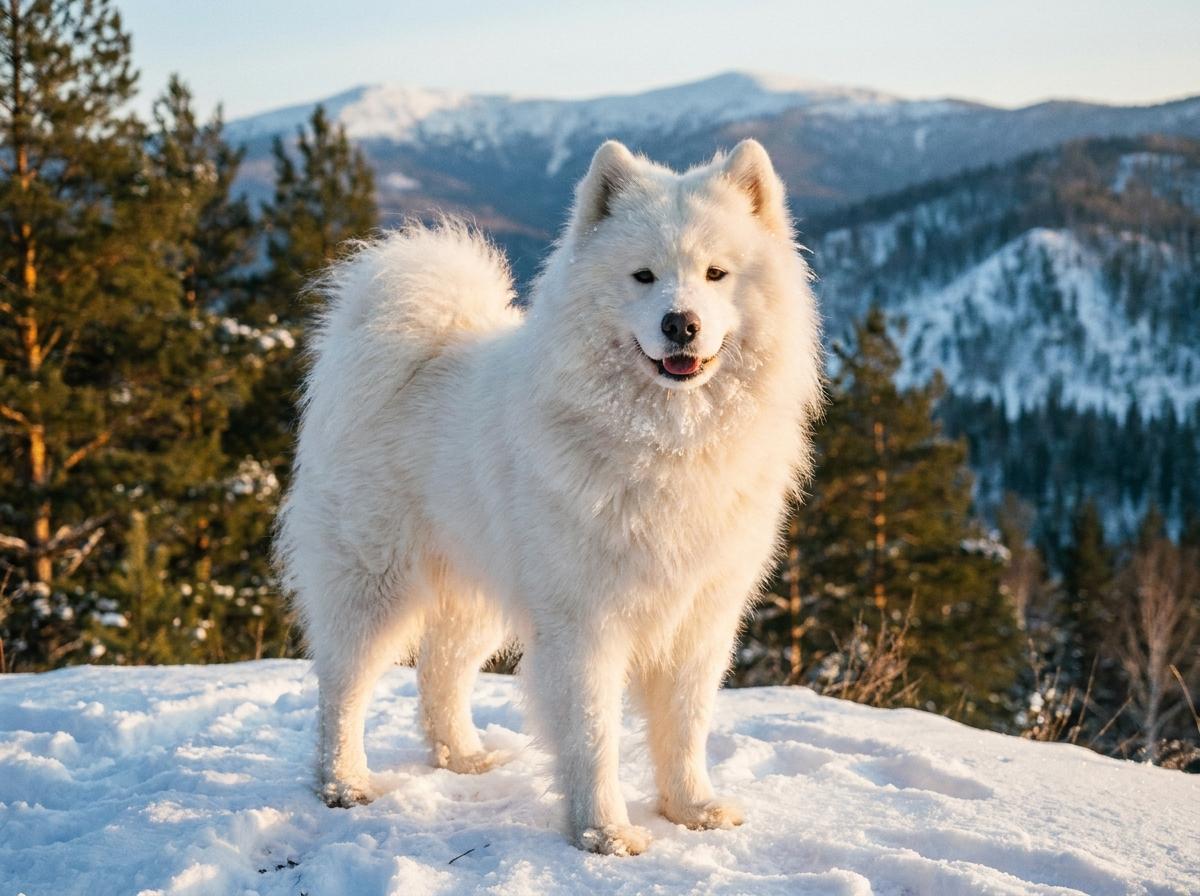
AI-generated illustration.
| Heritage | Siberian herding and hauling; AKC Working Group |
|---|---|
| AKC height | Males 21 to 23.5 in; females 19 to 21 in |
| Coat | Dense double coat with substantial shedding |
| Colors | White, cream, biscuit or white with biscuit |
| Screening | Hips, eyes, cardiac, XLPRA1 and RD/OSD |
| Daily needs | Company, activity and coat maintenance |
Browse listings, public profiles, breeders, or add your animal.
A northern working background
The UKC standard connects the Samoyed with northern Siberian communities and work that included herding reindeer and hauling. Its appearance combines upright ears, a substantial double coat and a well-furred tail carried over the back or side.
White is familiar, but the standard also includes cream, biscuit, and white with biscuit. A small variation in shade is not by itself evidence of a different breed or poor quality. Look at identity, overall structure and the registry being used.
The expression often called a “smile” comes from facial shape. It should not be treated as a reading of the dog’s emotions in every photograph. Ask what the animal does when relaxed, uncertain or tired, and learn its own communication.
Under the AKC standard, males measure 21 to 23.5 inches at the withers and females 19 to 21 inches. The body should have working substance without looking clumsy. The weather-resistant coat combines a soft dense underlayer with longer, harsher outer hair, and males often have a more pronounced ruff.
That two-layer coat is why a photograph can mislead about size and why surface brushing is not the whole job. Ask to meet an adult in normal coat, see its movement and learn what body condition feels like beneath the fur. Do not judge a female or a dog in lighter seasonal coat against a fully coated male portrait.
The Sakhalin Husky history guide covers another northern sled-dog story, but the breed names and evidence are distinct. A white spitz appearance does not prove either ancestry. Organize known parents in the free dog pedigree chart maker, retaining the registry and registered names.
Decide how the dog will share your day
Ask the current keeper for an ordinary weekday account. Who is home, what activities happen, and what happens when the people leave? This gives you something to compare with your schedule.
A puppy’s ability to cope alone cannot be guaranteed by a breed label. Plan time to teach the routine gradually and arrange help when your commitments exceed the dog’s current experience. For an adult, ask what is already established and what remains difficult.
Think about noise and neighbors too. Discuss the individual dog’s vocal behavior and the situations that prompt it. If you share walls, a frank conversation before placement is more useful than discovering a mismatch after the move.

AI-generated illustration.
Training belongs in everyday life
Make a list of the skills that would make your home workable: walking with you, waiting at the gate, returning attention when something interesting passes and relaxing while visitors arrive. Show that list to a reward-based instructor.
Avoid treating northern-breed independence as a reason to stop teaching or to use force. Break tasks into manageable steps and arrange the environment so you can practice successfully. A securely enclosed space is useful while you learn what the dog can reliably do.
Bring all regular carers into the plan. Consistent cues and expectations are particularly useful when an appealing, sociable dog receives a different response from every person. The aim is a routine the dog can understand.
The coat will need your time
The Samoyed Club of America’s grooming page directly challenges the idea that Samoyeds never shed, get dirty or need bathing. Plan regular grooming and expect to remove loose coat.
Ask for a hands-on demonstration before bringing the dog home. Learn how to work through the coat comfortably, how to check whether you have reached the undercoat and when to stop for professional help. A smooth surface can conceal areas that still need attention.
Budget for the equipment and appointments you will actually use. If a groomer will do much of the work, discuss the dog’s coat and handling experience before booking. If you will do it yourself, make the time and workspace real parts of the weekly plan.
Match activity to age, fitness and weather
The working history is not a prescription for strenuous exercise at every age. Tell your veterinarian what you hope to do, whether that is long walks, hiking or organized dog sport, and ask how to build an appropriate routine.
Include mental activity and rest alongside movement. Practice useful skills, provide suitable play and give the dog somewhere quiet to withdraw. Do not use perpetual activity as the only answer to a dog that has not learned to settle.
Discuss local weather with the breeder and veterinarian. A northern coat does not remove the need for a sensible plan in warm conditions. Arrange a comfortable indoor retreat and adjust outings to the dog and conditions. Ask a knowledgeable groomer and your veterinarian before clipping the double coat for summer; do not assume a haircut replaces a cooling and activity plan.
For comparison, the Alaskan Klee Kai guide covers a smaller northern companion, while the Old English Sheepdog guide examines another substantial grooming commitment. Browse the dog hub to compare more than coat color.
Read the results behind health claims
The Samoyed Club of America’s buyer guidance discusses hip evaluation, regular ophthalmologist examinations and cardiac screening. AKC’s parent-club testing list names the DNA tests: X-linked progressive retinal atrophy (XLPRA1) and retinal dysplasia/oculoskeletal dysplasia (RD/OSD, also listed as OSD2). Ask the breeder which current recommendations apply and request the actual parent results.
The same guidance explains that a CHIC number does not necessarily mean every result was normal. Use the number to investigate the records, not as a one-word health guarantee. Check identities and dates with your veterinarian.
Keep parent screening separate from the puppy’s own care. Ask about examination findings, preventive care and anything needing follow-up. With an adult dog, obtain its medical history and current treatment instructions directly, with the appropriate permission.

AI-generated illustration.
Evaluate the seller and the match
Ask why a particular puppy or adult suits your home. The answer should refer to behavior and needs the keeper has observed. Coat brightness, photographic appeal or a claimed rare shade are not enough.
See the setting in which the dog is raised or kept when practical, and ask about everyday experiences. How is grooming introduced? What happens around household sounds? What support is available after placement?
Read the agreement before paying and clarify deposits, registration, transport and return arrangements. Be prepared to wait or choose a different match if the evidence does not answer your questions.
To compare a very different coat commitment, read the Chinese Crested guide, which separates Hairless and Powderpuff care. Use the comparison to decide which daily maintenance you can sustain.
Price and costs
Request a current itemized quote rather than relying on an old online average. Then separately estimate grooming, food, veterinary care, equipment, instruction and care when you travel.
Start with a useful record
Keep the original pedigree, health reports and agreement together. Add the current food, grooming routine and known training cues, with dates and the person who supplied each detail.
For a puppy, use the vaccination guide to prepare for reviewing the paperwork with your veterinarian. Record the veterinarian’s plan rather than inferring future dates from a seller’s shorthand.
As you learn the dog, note specific observations: which handling it accepts, what helps it settle and how it responds to new situations. This makes the record helpful to the next carer.
Samoyed questions
Do Samoyeds shed?
Yes. The breed club explicitly warns against claims that they do not shed or need grooming.
Are all Samoyeds pure white?
No. Registry standards include other pale shades and combinations, including cream and biscuit.
Does the smiling expression mean a dog is comfortable?
Not necessarily. Read the whole dog’s behavior and the situation rather than its mouth shape alone.
Does a health-screening number replace the reports?
No. Read the individual results, their dates and their limitations.
Do this next on Creatures
Still looking? Get an alert when a Samoyed is listed, browse Samoyed breeders, or check current Samoyed listings. The Help Center explains saved searches and email alerts.
Already caring for one? Add a record when you have a dated document or useful observation. The form opens for visitors; a free account is needed to save. The Help Center explains adding an animal and adding a record.
Breeders and organizations can create an organization profile for their work. The organization and team guide explains the setup.