Cardigan Welsh Corgi
Author: Elliott Garber, DVM · Published
The Cardigan Welsh Corgi is a sturdy, low-set herding dog with a long body and a full brush tail. Its size can be misleading: this is a working-breed companion, not simply a lap dog with short legs. A good match depends on the daily life you can offer and the individual dog’s behavior.
Start with the Creatures breeder directory and ask about adult Cardigans, not only puppies. Seeing how they move, interact and settle helps you look beyond the familiar corgi silhouette. You can also save a Cardigan Welsh Corgi listing alert to get an email when a matching animal is listed.

AI-generated illustration.
| Origin | Wales; cattle-herding dog |
|---|---|
| AKC height | 10.5 to 12.5 in at the withers |
| Ideal weight | Males 30 to 38 lb; females 25 to 34 lb |
| Colors | Red, sable, brindle, black or blue merle |
| Tail | Long, low-set brush tail |
| Health discussion | Hip and DNA reports; back health |
Browse listings, public profiles, breeders, or add your animal.
Cardigan and Pembroke are different breeds
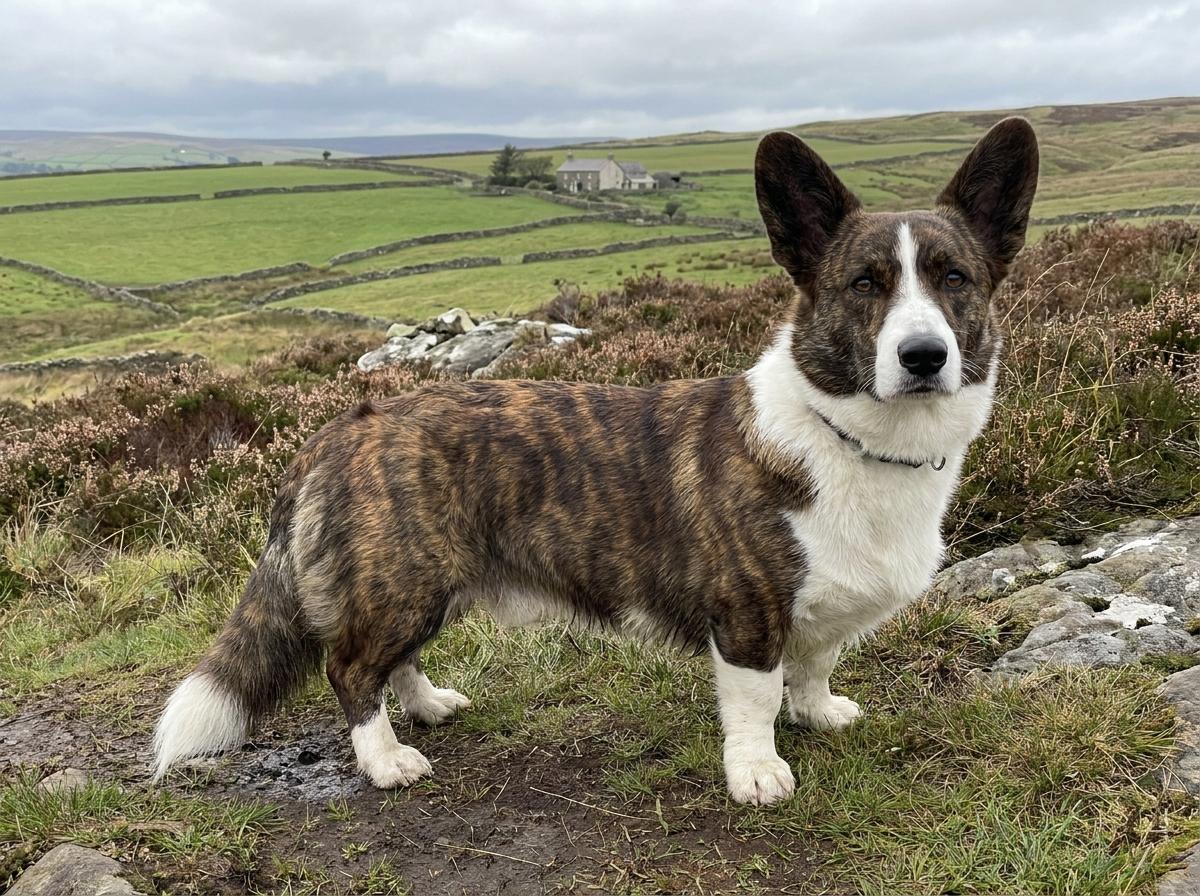
The UKC Cardigan standard identifies the Cardigan as one of two Welsh Corgi breeds and describes its history driving cattle. Its long, sturdy outline, brush tail and large ears with rounded tips are useful features to recognize.
Tail appearance alone is not a complete identity test. Ask for the registered breed, registry and pedigree when a seller advertises a purebred dog. Do not assume every dog described simply as a “corgi” has the same ancestry or standard.
If you are exploring herding dogs more broadly, compare the Belgian Tervuren for a very different outline and daily commitment. The dog hub can help you build a shortlist from practical needs rather than one favorite photograph.
The AKC standard specifies 10.5 to 12.5 inches at the withers and ideal weights of 30 to 38 pounds for males and 25 to 34 for females. This is a substantial dog on short legs. Use those figures for planning transport and equipment; your veterinarian should set the individual body-condition goal.
The standard permits red, sable, brindle, black with or without tan or brindle points, and blue merle. If you are offered a merle puppy, ask the colors and identities of both parents. The Cardigan Welsh Corgi Club of America’s code of ethics permits blue merles to be bred only to blacks, with or without red or brindle points. A rare-color sales pitch should never replace that discussion.
Put documented parents in the free dog pedigree chart maker and compare the chart with the reports. The coefficient of inbreeding guide explains what a pedigree calculation can and cannot tell you about relatedness.
Short legs do not answer the activity question
Ask the keeper to describe an ordinary day: walks, play, training, rest and time alone. Then compare that routine with yours. A dog whose needs are met by one household may be difficult to accommodate in another even when the homes have similar floor space.
Look at the routes the dog will actually use. Entry steps, a vehicle, slippery floors and raised sleeping places all deserve consideration. The parent club’s health guidance identifies the Cardigan as a chondrodysplastic breed and discusses Type I intervertebral disc disease. Keep the dog lean and ask your veterinarian about jumping, stairs and vehicle access for this individual. Sudden back pain, reluctance to move or weak, wobbly hind legs need urgent veterinary advice.
Plan a place to rest away from household traffic. In a busy family, the dog should not have to negotiate every passing child or visiting animal to get quiet time. Make supervision and a retreat part of the layout before arrival.

AI-generated illustration.
Teach the household routine deliberately
Choose a few clear behaviors everyone wants: waiting at a door, moving to a resting area, walking with a manageable lead and accepting routine handling. Agree on the cues. Consistency is easier when the rules are written down and realistic.
AVSAB recommends reward-based training. Ask prospective instructors how they teach and how they respond when the dog is worried or distracted. A herding background does not justify harsh handling.
Describe children, visiting dogs and other animals accurately during the placement discussion. Ask what the individual has experienced and what requires management. Do not test compatibility by suddenly putting unfamiliar animals together or encouraging children to run past a dog to see what happens.
Coat, condition and comfortable care
Ask for a demonstration of the grooming routine, including how the keeper checks through the coat and handles feet. Choose equipment you can use calmly. If coat maintenance will partly be professional, get a local quote and ask what is included.
Feeding should be based on the individual rather than a desired photograph. Ask the veterinary team to show you how to assess body condition and to review the current ration. Keep a clear record of food and treats so different household members do not each add an unrecorded extra meal.
Notice changes in movement and willingness to participate. A reluctance to use a familiar step or a new sensitivity during handling deserves attention. Record what changed and contact your veterinarian; do not assume a short-legged dog is simply supposed to move that way.
Health reports: know what each one answers
The AKC’s published parent-club recommendations list hip evaluation and DNA tests for the common degenerative myelopathy variant and PRA-rcd3 for Cardigan Welsh Corgis. Ask the breeder for results linked to the parents’ registered identities.
These are different assessments. A hip evaluation is not replaced by a DNA panel. A genetic result needs interpretation in the context of the specific condition and mating. Ask your veterinarian to explain anything unclear rather than treating “clear” as a general promise of lifelong health.
For the puppy or adult itself, request the veterinary history, current care instructions and any known concerns. Original documents are preferable to a cropped image without the animal’s name. Ask whether there are further family-history issues worth discussing.
Price and costs
Get the current price and terms in writing. Clarify transport, registration, deposit conditions and the process if the placement cannot continue. If the seller makes a health promise, read its exact conditions and discuss what practical support it offers.

AI-generated illustration.
Keep a useful Cardigan care history
Save the pedigree and screening documents with the right identities attached. Record the dog’s current routine in concrete terms: food amounts, equipment, cues, travel arrangements and the situations that need support.
For a new puppy, use the vaccination guide to organize a veterinary discussion. Keep planned care separate from completed care. Date observations of changes so your clinic has a usable history if you need advice later.
Cardigan Welsh Corgi questions
Is a Cardigan just a Pembroke with a tail?
No. They are distinct breeds. Confirm the pedigree rather than assigning identity from the tail alone.
Does its small height make it a low-activity dog?
Height does not settle daily needs. Ask about the individual’s routine and plan appropriate activity with professional guidance.
Can a DNA panel replace hip evaluation?
No. Different screening methods answer different questions. Request the relevant reports rather than a single blanket assurance.
Are adults worth considering?
Yes. A candid history can make an adult’s fit easier to assess, provided you also plan for the transition.
Do this next on Creatures
Still looking? Get an alert when a Cardigan Welsh Corgi is listed, browse Cardigan Welsh Corgi breeders, or check current Cardigan Welsh Corgi listings. The Help Center explains saved searches and email alerts.
Already caring for one? Add a record when you have a dated document or useful observation. The form opens for visitors; a free account is needed to save. The Help Center explains adding an animal and adding a record.
Breeders and organizations can create an organization profile for their work. The organization and team guide explains the setup.