


Laconian
“Laconian dog” and “Laconian hound” are two names for the same thing, and the word that matters is Laconia: a region in the southern Peloponnese whose dominant city was Sparta. The name tells you where a hunting dog came from, the way Cretan and Molossian did. It is not the name of a modern breed. No Laconian entry appears in the breed nomenclature of the Fédération Cynologique Internationale, and the Kennel Club of Greece, the FCI’s member body for Greece, does not list one among the seven Greek breeds it maintains standards for. What actually survives is a handful of ancient descriptions, a very large ancient reputation, and a separate, documented modern Greek scenthound called the Hellenic Hound.
This page sets out what the classical record supports, what it does not, and what to ask if you meet the name attached to a living dog. If you are working through Greek and Mediterranean hunting types more broadly, the Creatures dog species page is the wider map.

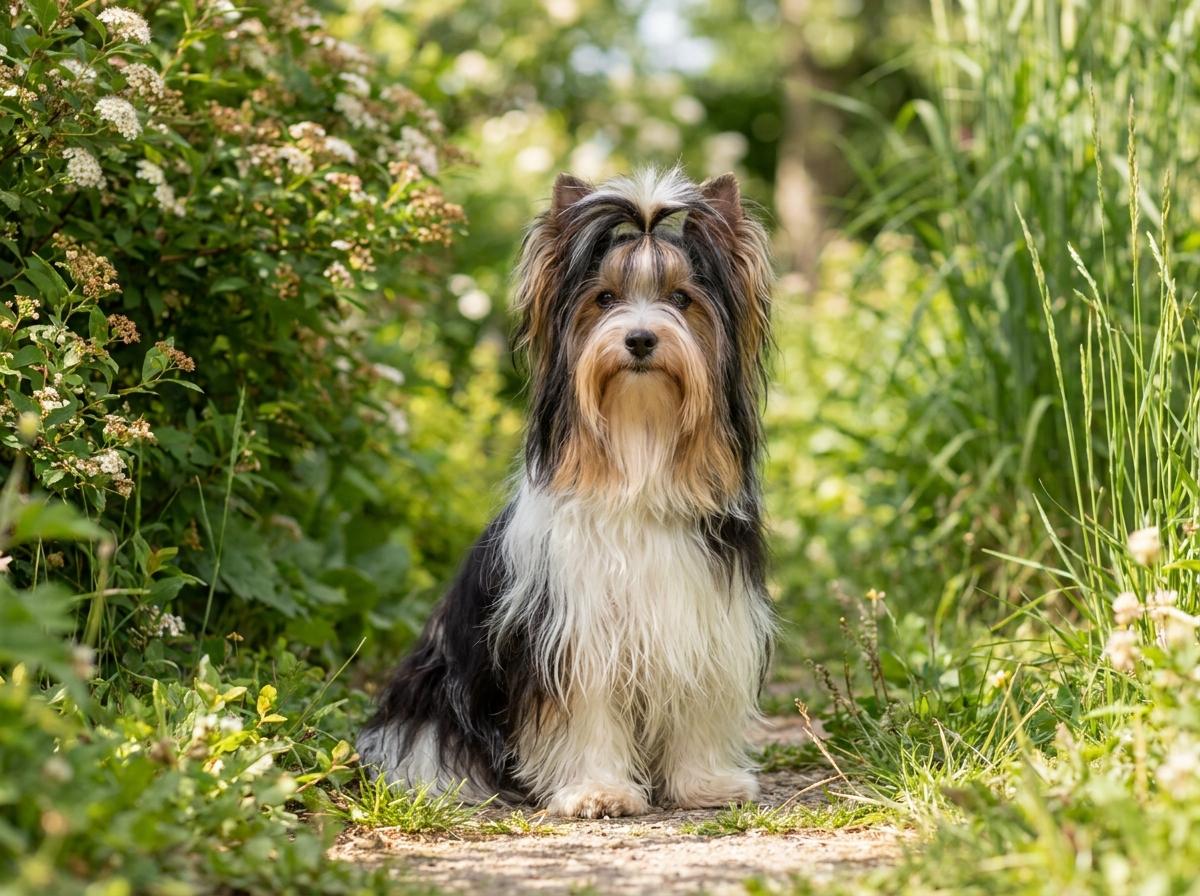
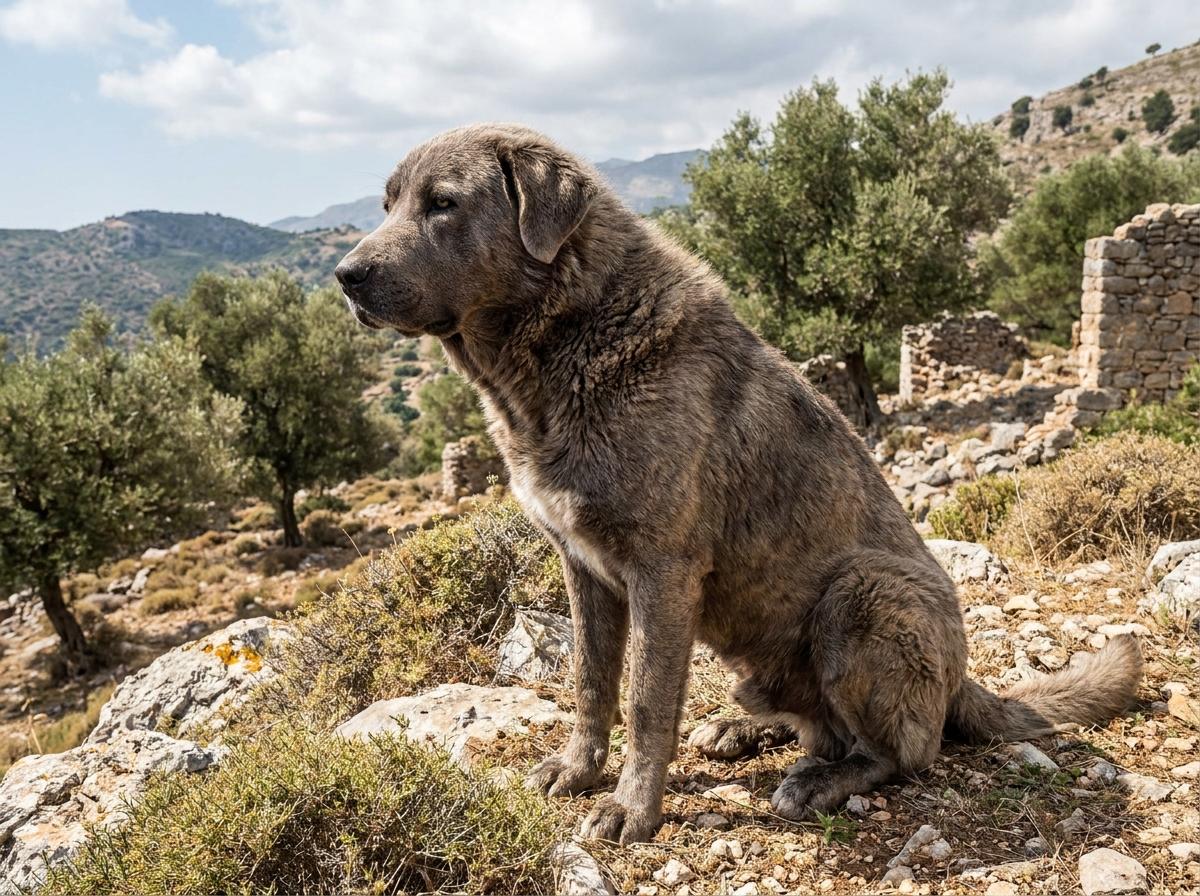
A Hellenic Hound (Hellinikos Ichnilatis), the modern Greek scenthound recognized by the FCI. It is not a Laconian hound, and no photograph of a Laconian hound exists.
| What the name means | Of Laconia, the region of the southern Peloponnese whose main city was Sparta |
|---|---|
| Also written | Laconian dog, Lakonian dog, Laconian (Spartan) hound |
| What it is | A historical and regional name for ancient Greek hunting dogs, not a standardized modern breed |
| Main ancient sources | Xenophon, Cynegeticus (4th century BC), and Aristotle, Historia Animalium |
| Registry status today | No entry in the FCI breed nomenclature, and not among the seven Greek breeds listed by the Kennel Club of Greece |
| Nearest documented breed | Hellenic Hound (Hellinikos Ichnilatis), FCI No. 214, Group 6 scenthounds |
| Hellenic Hound size | Males 47 to 55 cm, females 45 to 53 cm at the withers; 17 to 20 kg |
| Descent from the ancient type | Not established by any source we were able to verify |
| Where you meet the name | Classical literature, museum collections, and occasionally a seller using it loosely |
Browse listings, public profiles, breeders, or add your animal.
Laconian dog, Laconian hound, Spartan hound: one subject, several labels
People look this animal up under two names in almost equal numbers, “laconian dog” and “laconian hound,” and a steady trickle also search for “laconian (spartan) hound” and “lakonian dog.” That spread is not a sign of two different animals. It is a sign that nobody is sure what category the thing belongs to.
All four point at the same subject. Laconia is the region; Sparta was its dominant city, so “Spartan hound” is a looser way of saying the same thing. “Lakonian” and “Lakonikos” are transliteration choices, not distinct types. Of the English options, “hound” is the more accurate word, because every ancient description we could verify concerns hunting dogs and their work.
The label behaves like the other regional labels the Greeks used for hunting dogs. Xenophon’s Cynegeticus recommends four of them together for boar: “Indian, Cretan, Locrian and Laconian hounds.” That is a list of places, on the same footing as a modern hunter naming stock by where it was bred rather than by a written standard.
What the ancient sources actually say
Two texts do most of the work. Xenophon’s Cynegeticus, or On Hunting, was written in the 4th century BC by a man who hunted, and Aristotle’s Historia Animalium records what he had been told about how dogs bred and lived.
The Xenophon evidence is thinner than it is usually made to look, and it is not quite where people say it is. In the whole of the Cynegeticus, the word Laconian appears twice, both times in the boar-hunting chapter. The first is the list of four quoted above. The second comes a few lines later and is the more useful of the two: of the four kinds he has just named, it is a Laconian that the party slips first, loose and alone, while every other hound stays leashed, and the hunters walk with her until she picks up the boar’s tracks, follows them into cover and bays at the lair. The rest of the pack is released only much later, after the nets are set. That is a job description, and it is the one concrete thing the primary record says a Laconian did: it found the animal.
The famous passage that opens the treatise’s account of hounds says something else entirely: “The hounds used are of two kinds, the Castorian and the Vulpine.” Chapter four then lists what a good hound should have, including a light, flat, muscular head, prominent dark eyes, small thin ears, a broad chest and a long straight thin tail. Chapter seven advises short names so a hunter can call them easily, and gives a long list of examples, all of them one or two syllables in the Greek.
You will very often read that Xenophon described two types of Laconian hound, the Castorian and the vulpine. He did not. The Greek of that sentence names the two kinds and says nothing about Laconia, and the word Laconian does not occur anywhere in that chapter. What happened is that an editor’s note migrated into the text. The Loeb Classical Library edition, which is the version most often quoted in English, attaches a footnote to that line explaining that both kinds are Laconian varieties, and writers have been repeating the footnote as though Xenophon wrote it. Once you notice that, you notice how much modern writing about the Laconian rests on it.

Artist’s reconstruction in the style of ancient Greek red figure vase painting, generated for this article. It is not a photograph, not an artifact, and not a documented likeness of any individual dog.
Aristotle is more specific, and he treats “Laconian” as a real, nameable kind. In Historia Animalium he records that the Laconian hound of either sex is fit for breeding at eight months, that the bitch carries her young about sixty days, that she comes into milk thirty days after mating, and that she “generally bears eight.” He adds one observation that sounds like it came from someone who worked dogs: the Laconian hound “is found to be more vigorous in commerce with the female after being hard-worked than when allowed to live idle.”
Read those together and you get a clear but narrow picture. Somebody in classical Greece could say “Laconian hound” and be understood. The dogs were valued, they were worked hard, they were the ones a hunting party trusted to go out first and find a boar, and they bred well. What the primary record never gives you is a described animal: no height, no weight, no coat, no colour, no temperament.
What the sources do not say
They do not describe a breed in the modern sense. There was no written standard, no register of parentage, no club, and no mechanism to keep a Laconian dog Laconian across generations except the ordinary practice of local hunters.
They also do not give measurements. Where you see a confident height and weight for the Laconian in modern breed writing, it is a scholarly reconstruction assembled from textual descriptions and from dogs in Greek art, not a figure any ancient writer recorded. That work is legitimate and interesting, but it is inference, and printing it as a breed specification turns a reasoned guess into a fact.
There is a further problem specific to this subject, and it is worth naming. Sparta generated an enormous amount of admiring literature written mostly by people who did not live there, a phenomenon classicists call the Spartan mirage. Writing on Laconian hounds in Studies on Ancient Sparta (Gdańsk University Press, 2020), Sebastian Rajewicz argues that the mirage reached past the people of Sparta and into its animals. Some of the ancient praise for Laconian dogs is praise for Sparta wearing a collar.
The name certainly outlived whatever stock it once described. Two thousand years after Xenophon, Shakespeare gives Theseus the line “My hounds are bred out of the Spartan kind” in A Midsummer Night’s Dream. By then it was a literary compliment about quality, not a claim about pedigree.
Finally, nothing we could verify establishes an unbroken line from the classical dogs of Laconia to any living population. Be precise about what that means. Continuity has not been disproved. It simply has not been demonstrated, and those are different situations. The second is where the evidence currently sits, so a page like this one should say “not shown” rather than either “extinct” or “survives.”
Is the Laconian a recognized breed today?
No, and the answer is checkable rather than a matter of opinion.
The FCI breed nomenclature has no entry under Laconian, Lakonikos, Lacedaemonian or Spartan. The only Greek breed we found listed there is the Hellinikos Ichnilatis, the Hellenic Hound, at FCI No. 214.
The Kennel Club of Greece, which is the FCI’s member body for the country and the organization that would define a Greek breed if anyone did, lists seven Greek breeds:
- Ellinikos Ichnilatis, the Hellenic Hound
- Ellinikos Poimenikos, the Hellenic Shepherd
- Kokoni, the small Greek domestic dog
- Kritikos Lagonikos, the Cretan Hound
- Lefko Elliniko Tsopanoskylo, the White Greek Sheepdog
- Molossos tis Ipirou, the Molossus of Epirus
- Roditiko Lagoniko, the Rhodian Hound
There is no Laconian on that list. So there is no breed standard to compare a dog against, no herdbook, no breed club, and no recognized name. This is not a rare breed, a landrace under threat, or a breed that lost recognition. It was never a kennel-club breed at all, and treating it as one is where most of the confusion starts.
The Hellenic Hound, the Greek scenthound that does exist
If you came here wanting a real Greek hunting hound you can research, register and buy, this is the one to read about.
The Hellenic Hound carries FCI standard No. 214, sits in Group 6 (scenthounds and related breeds), Section 1.2 for medium-sized hounds, and is subject to a working trial. The standard puts males at 47 to 55 cm at the withers and females at 45 to 53 cm, with a tolerance of 2 cm either way, and gives a weight of 17 to 20 kg. The coat is short, dense and close-fitting. Color is black and tan, a small white patch on the chest is tolerated, and any other color is a disqualifying fault, which makes this one of the easier hounds to identify on sight.
The standard describes a dog built to work: a fine nose, great endurance, hunting alone or in a pack, suited to flat, mountainous and rocky ground, with a voice it calls resonant and harmonious. Anyone considering one should read that as a job description rather than a personality profile.

A Hellenic Hound, the modern Greek scenthound. Black and tan with the two tan spots above the eyes is what the FCI standard describes. No likeness of a Laconian hound survives.
One detail is worth flagging because of how often the two dogs get linked. The FCI standard for the Hellenic Hound contains no historical section and makes no claim of descent from ancient Laconian dogs. The registry that defines the breed is silent on the question. Geography connects the two. Evidence, as far as we could establish, does not.
Lagonikos: why the modern Greek word looks like “Laconian”
Two of those seven Greek breeds are the Kritikos Lagonikos and the Roditiko Lagoniko. Lagonikos is simply the modern Greek word for a hound, which is why it turns up in more than one breed name.
It also looks a great deal like Lakonikos, “Laconian,” and popular breed writing treats that resemblance as proof the Spartan dog survived under a new label. Hold that at arm’s length. Etymologists have not settled where lagonikos comes from, and a settled derivation would still be a fact about a word rather than about a population of dogs. Words travel between languages and centuries far more easily than breeding stock does. This is a common route by which the Laconian gets overstated online, so it is worth recognizing when you see it.
If someone offers you a dog called a Laconian
There is no registry to check the claim against, which puts the whole burden on the questions you ask. None of what follows is a judgment about any particular seller. It is what you would want to establish about any dog sold under a name that has no standard behind it.
Ask what the seller means by the word. The answers people actually intend are quite different from each other: a Greek working hound from a hunting line, a Hellenic Hound without papers, a village dog from the Peloponnese, a deliberate cross, a reconstruction project, or a name chosen because it sounds impressive. Each of those is a different purchase.
Ask for the paperwork that does exist. If the dog is a registered Hellenic Hound, it can have a pedigree from the Kennel Club of Greece. If it has no papers, that is a fact to record rather than a deal-breaker, but it should be said out loud instead of covered by a historical name.
Assume a working hound’s needs until you have evidence otherwise. Every ancient description we could verify is of a hunting dog, and the modern Greek hounds are working scenthounds with an FCI working-trial requirement attached. Plan for secure high fencing in good repair, real daily exercise, shade and clean water, and serious recall work on a long line before any off-lead freedom, because a hound following a scent is not listening to you. Give it something to track.
Do not accept a temperament description that has no source. There is no behavioral data for a “Laconian,” because there is no defined population to have studied. Anyone confidently describing the breed’s character with children or other dogs is describing an individual animal at best. Meet the dog, meet its parents if you can, and take a veterinarian’s advice on health screening for whatever the dog actually turns out to be.

A Hellenic Hound in secure housing of the kind any working scenthound needs. It is not a Laconian hound; no dog can be shown as one.
Whatever the dog in front of you turns out to be, the practical answer is the same: write down what you can actually verify. Parentage where it is known, the seller and the date, health checks, vaccinations, and the name the dog was sold under. A profile on Creatures keeps that in one place, and it is worth far more later than a label nobody can check. Two other pages in this series deal with the same problem from different directions: the Sarabi dog and the Kurdish horse are both regional types whose modern paperwork lags a long way behind their reputation.
Frequently asked questions
Is the Laconian dog extinct?
The question assumes a defined breed that could go extinct. No standardized Laconian breed exists now and none is documented in the past, so the honest answer is that the classical hunting dogs of Laconia are gone as an identifiable group, and no living population has been shown to descend from them.
Is the Laconian the same as the Hellenic Hound?
They are not the same, and the connection between them is unproven. The Hellenic Hound is a real, FCI-recognized Greek scenthound with a published standard. The Laconian is a name from classical texts. The FCI standard for the Hellenic Hound makes no ancestry claim at all.
What did a Laconian hound look like?
No ancient writer left measurements. Xenophon’s general description of a good hound gives a light flat head, prominent dark eyes, small thin ears, a broad chest and a long straight thin tail, and Greek art shows lean, deep-chested, long-legged hunting dogs. Heights and weights quoted online are modern reconstructions from that material, not recorded figures.
Can I buy a Laconian dog?
You can be sold a dog under that name, but there is no registry that can confirm the description. Establish what the seller means, ask for whatever pedigree does exist, and expect the needs of an active working hound.
Were Laconian hounds Spartan war dogs?
The sources we checked describe hunting. Xenophon lists them among hounds for boar, and Aristotle records their breeding. Neither describes them as battlefield animals.
Why do “laconian dog” and “laconian hound” both lead here?
Because they are the same subject and neither is a registered breed name, so nothing settles which word is correct. “Hound” fits the evidence better, since every verified ancient reference is to hunting dogs.
Do this next on Creatures
This page has no breed standard behind it, so records do more work here than usual. Creatures is the records, marketplace and directory layer for exactly that situation.
Record the dog you actually have. If a dog came to you under a name no registry can confirm, the profile is where the verifiable part lives. Create a free dog profile and enter the breed as the evidence supports it, not as the seller framed it. No account needed to start, and the walkthrough is in adding an animal to Creatures.
Write down what you can verify. Seller, date, parentage where it is known, and every health check. Add a record opens for any visitor to look around, and a free account saves what you enter. See adding a record, then health and medical records for vaccinations, screening and vet visits.
Watch for the name. The Laconian filter on the marketplace is usually empty, which is itself informative. Set a free listing alert and you will hear if anything is ever posted under it, which puts you in a position to ask the seller what they mean. No account needed to start, and saving searches and using your watchlist explains how alerts work.
Find people who work these dogs. Search trusted breeders and rescues in the Creatures directory, and compare Greek and Mediterranean types from the dog species page.
Breeding or importing Greek hounds? Add your kennel or program so buyers looking for documented Greek stock can find you, and read getting listed in the breeder directory first.
Working through several hunting types at once? The Creatures tools include a dog name generator and a gestation calculator, which is a fitting place to end given that Xenophon’s advice on naming hounds still holds up: keep it short so you can call the dog easily. Every name on his own list runs to one or two syllables in the Greek.