

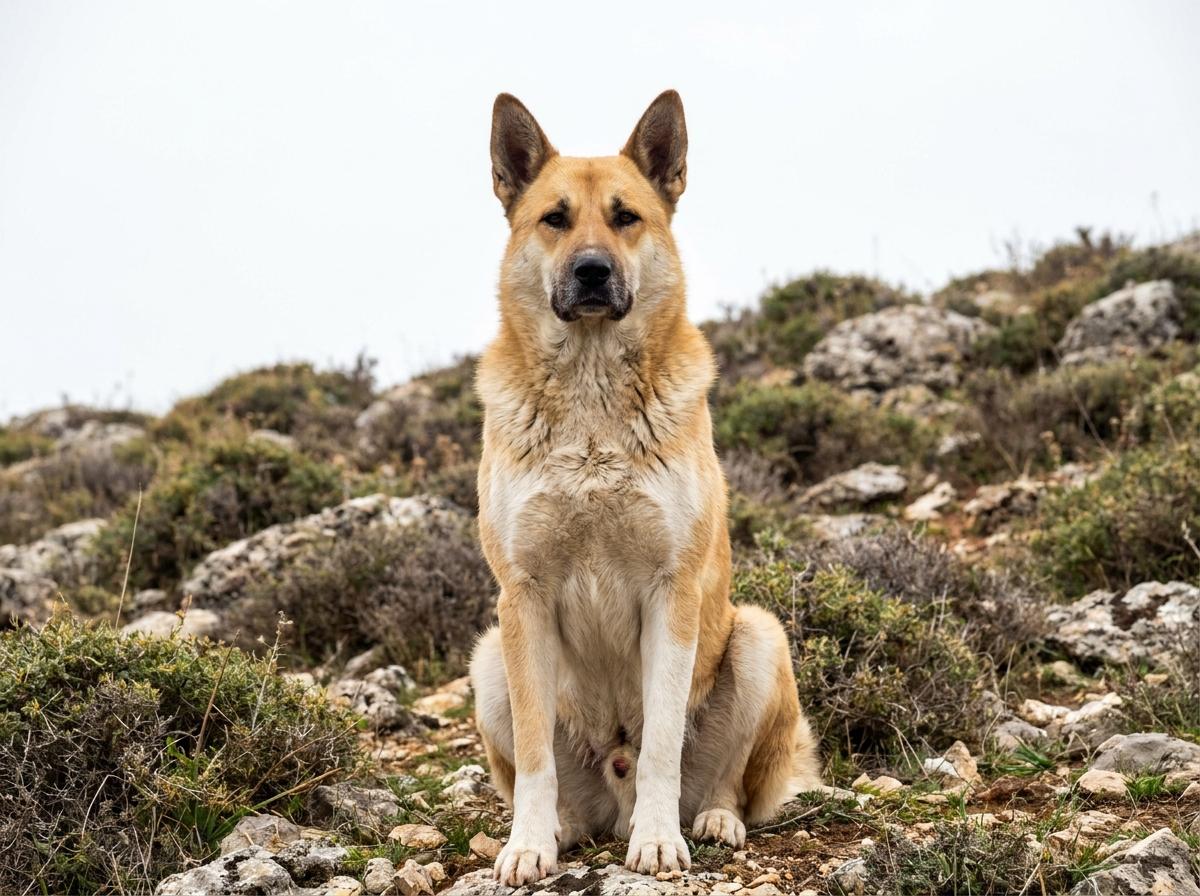
Dikkulak
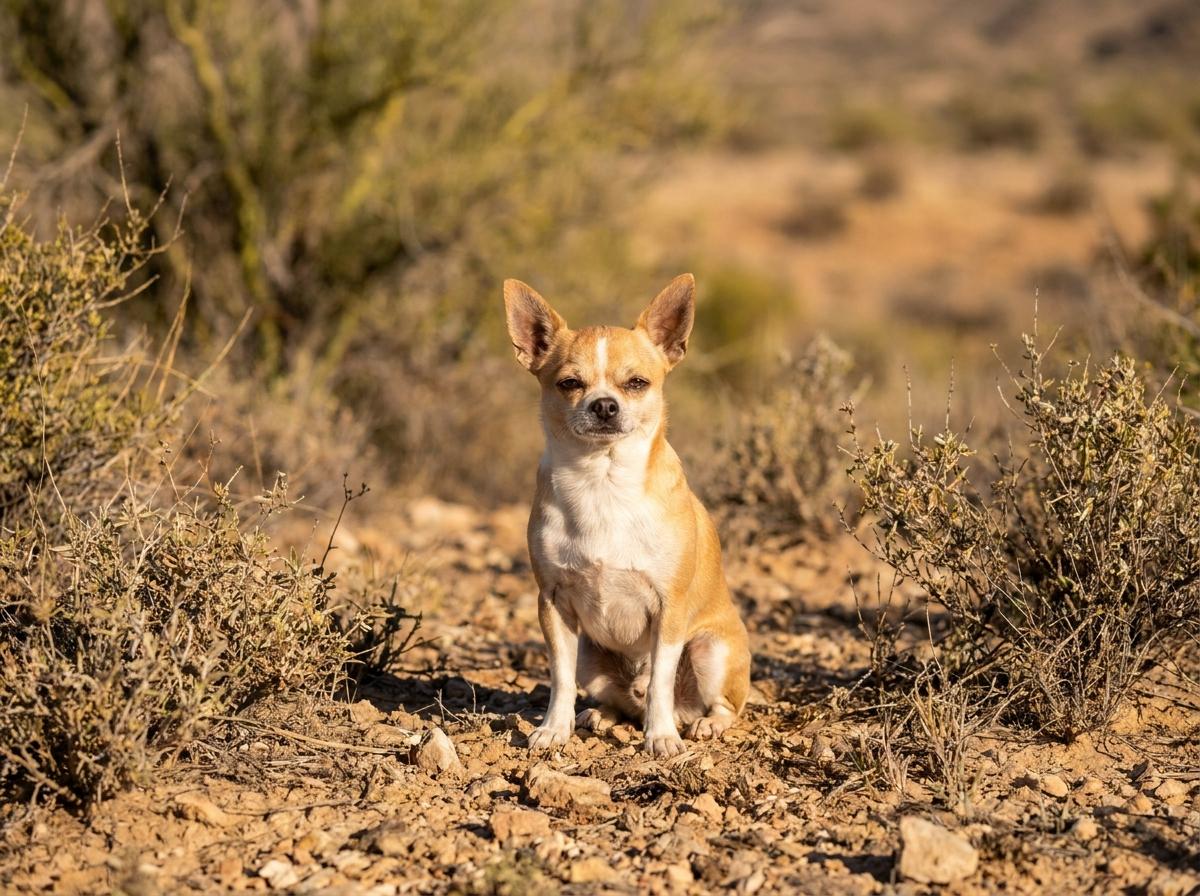
The Dikkulak is a small, erect-eared spitz dog from the northeastern corner of Turkey, kept for generations as a compact watch dog rather than a house pet. The name is literally descriptive: in Turkish, dik kulak means “erect ear,” and those sharp, upright ears sitting on a low, short-legged, corgi-shaped body are the first thing anyone notices. It is a genuine native landrace, documented in Turkish and international livestock surveys, but it has never been standardized by a kennel club, it is rarely seen outside its home provinces, and its numbers are reported to be falling. This page covers what the breed actually is, where it comes from, how to recognize one, what it was bred to do, and the honest reality of trying to find or keep one, with realistic guidance rather than the glossy invented detail that fills most breed pages for obscure dogs like this one.
| Also called | Dikkulak (“erect ear”), Çivikulak (“nail ear”); “Zagar” is sometimes applied to it but also names a separate registered scent-hound, so the term is ambiguous |
|---|---|
| Origin | Northeastern Turkey: the Ağrı, Ardahan, Erzurum, Iğdır, and Kars provinces |
| Type | Small, compact spitz with erect ears and short legs |
| Traditional role | Small watch dog guarding home and yard, not a livestock guardian or attack dog |
| Adult weight | About 10.6 kg on average (roughly 23 lb) |
| Shoulder height | About 28 cm (roughly 11 in) |
| Coat | Short; white, black, brown, brown and white, or tan |
| Registry status | Not recognized by the FCI or major kennel clubs; a documented native landrace |
| Availability | Very rare, concentrated in its home region, and reported to be declining |
Browse listings, public profiles, breeders, or add your animal.
What is a Dikkulak?
The Dikkulak is a local Turkish dog type native to a cluster of provinces in the far northeast of the country: Ağrı, Ardahan, Erzurum, Iğdır, and Kars. It is small, compact, and unmistakably spitz in build, with the upright pricked ears the name refers to and short legs that give it a low, stocky outline. Turkish animal scientists who have surveyed the country’s native dogs describe it as a small spitz whose proportions call to mind the short-legged herding spitzes of Europe, the Swedish Vallhund and the Pembroke Welsh Corgi, though the resemblance is one of silhouette rather than close relationship.
It is important to be clear about what the Dikkulak is not. It is not an internationally recognized breed with a written standard, a stud book, and a show ring. It is a landrace, a population that developed through local use and local selection over a long time in one region, and its documentation comes almost entirely from academic livestock-resource surveys rather than from a breed club. The most substantial published account sits inside broader inventories of Turkey’s native dogs, including work by the Turkish researcher Orhan Yılmaz and colleagues and a domestic-livestock-resources review of the country’s guard and hunting dogs. That academic footing is exactly why this page can describe the breed honestly and why it avoids the confident, invented specifics you will often see elsewhere. If you want to see where it sits among other dogs on Creatures, the dog species page is the place to browse and compare.
You will also see the dog called Çivikulak, meaning “nail ear,” another descriptive local term for the same pointed-ear shape. That one is straightforward.
Zagar needs more care, because the name is genuinely ambiguous and is often presented as a clean synonym when it is not. Turkish literature does sometimes apply “zagar” to the Dikkulak, which is why the two names get equated. But the same word also names a separate, registered population, the Türk İzci Köpeği Zagar, a hunting and pointing scent-hound that is not this small northeastern spitz. So “Zagar” cannot be treated as an unambiguous alias for Dikkulak, and it does not mean “erect ear.” When you meet the word in a source, work out which dog that source is actually describing rather than assuming it means this one.
Where the breed comes from
The Dikkulak’s home is a high, cold, continental pocket of Turkey near the borders with Armenia, Georgia, and Iran, the basin around Kars, Ardahan, and Iğdır. This is a region with a long pastoral tradition, and the same academic work that documented the Dikkulak also documented other overlooked local genetic resources of the same basin, such as a regional piebald horse. These are the animals of a specific rural landscape, not products of a national or international breeding program.
Spitz-type dogs of this general shape were, across their wider history, often working cattle and herding dogs. In its own home region, though, the Dikkulak settled into a narrower and more domestic job. It became the small dog of the household and yard, the one that lived close to people and buildings and raised the alarm, rather than a dog sent out to move stock or hold off large predators. That distinction matters when you read about the breed, because its size and temperament only make sense once you understand it was kept as a compact alarm dog and not as a livestock guardian.
Because it never entered the international registry system, the Dikkulak has no formal foundation date, no recognized founding kennel, and no breed standard to measure an individual against. What exists instead is a description of a living regional population: a set of typical traits, average measurements, and common coat colors recorded by the researchers who went and surveyed the dogs where they live.
What a Dikkulak looks like
The diagnostic look is easy to summarize and hard to mistake once you have seen it. This is a small, low-slung, short-coated spitz with large erect ears and an alert, foxy expression.

- Erect, pointed ears. The upright pricked ear is the breed’s signature and its name. It is the classic spitz ear, carried high and turned forward, and it dominates the dog’s whole expression.
- Small, compact body on short legs. Surveyed dogs average around 10.6 kg in live weight, roughly 23 lb, and stand only about 28 cm at the shoulder, close to 11 in. Recorded figures for males and females are very similar, in the range of about 10 to 11 kg and about 28 cm either way. The legs are noticeably short relative to the body, which is what drives the corgi and Vallhund comparison.
- Short coat. Unlike many spitzes with a long, profuse double coat, the Dikkulak carries a short coat. That fits its harsh but working, rather than ornamental, background.
- Variable color, often piebald. Survey data recorded a spread of colors: roughly 30 percent white, 23 percent black, about 20 percent brown and white, 18 percent brown, and 10 percent tan. In plain terms, solid white, solid black, solid brown, tan, and pied brown-and-white are all normal, and no single color defines the breed.
The result is a sturdy little dog built like a scaled, short-legged spitz, plainly coated, in almost any color, with the whole design pointing upward to those ears.
The corgi comparison, and why it is only skin deep
The resemblance to corgis and the Swedish Vallhund is the comparison everyone reaches for, and it can mislead. The Dikkulak shares the short-legged, long-bodied, prick-eared outline of those European herding spitzes, which is why the comparison helps you picture the dog. But a shared silhouette is not evidence of shared ancestry or shared purpose. The Vallhund and the Pembroke were developed as cattle-driving dogs in their own regions, while the Dikkulak settled into life as a small household watch dog in northeastern Anatolia. Treat the corgi comparison as a way to imagine the shape, not as a claim about where the dog came from or how it will behave.
For a documented herding breed with a similarly low outline, the Cardigan Welsh Corgi guide explains its separate Welsh history, size standard and health checks.
Temperament and what the breed is actually for
The Dikkulak was kept for one main job: to notice things and say so. It is a watch dog in the literal, old sense. Owners keep it around the home and yard, either tethered or loose inside an enclosed area, and its value is that it is alert and vocal. A stranger approaching gets announced with a loud, insistent bark. What it does not do is act as a guard dog that physically confronts or restrains an intruder. It is small, and it was never bred to bite and hold. It raises the alarm and leaves the response to its people.
Temperament follows from that job. This is not a soft, indiscriminately friendly companion breed. Descriptions of the dogs consistently note that they are wary of strangers and not naturally sociable with unfamiliar people. That wariness is the trait its keepers wanted, and it is baked into the working type rather than being a fault to train out. A Dikkulak bonds to its household and treats outsiders with suspicion, which is exactly what you would expect from a dog selected for generations to be a sentinel.
None of this is formal behavioral science. There is no large temperament study of the breed, and any individual dog’s disposition depends heavily on how it was raised, socialized, housed, and handled, as it does in every breed. What the record supports is a consistent working picture: alert, vocal, territorial, attached to its own people, and reserved with everyone else.
Living with a Dikkulak: exercise, space, and handling

The people who know the breed do not generally present it as a house pet. The Dikkulak is described as a working dog that needs a lot of activity and room to move, and it is not a natural fit for a small home or an owner looking for an easygoing companion. If you are drawn to the appealing corgi-like shape and imagine an apartment lapdog, this is the wrong breed to build that plan around.
A few practical points follow from that.
- Exercise and space. Plan for a dog that genuinely wants to move and to patrol. The sources describe a need for substantial exercise and space rather than a specific prescribed number of minutes, so treat “plenty of daily activity and room to roam safely” as the standard rather than any exact figure. A securely fenced area it can watch over suits the breed far better than confinement.
- The barking is the point. A dog bred to announce every arrival will announce every arrival. In a dense neighborhood that alertness becomes noise complaints. In a rural home with land to guard it is doing its job. Match the dog to the setting.
- Socialization for a wary breed. Because reserve toward strangers is part of the type, early and ongoing positive exposure to people, other animals, and situations matters more, not less, if you want a dog that is manageable in a modern setting. You are working with the grain of a naturally suspicious dog.
- Handling and containment. Traditionally these dogs are kept tethered or in an enclosure. However you keep one, secure containment and consistent, patient handling are basic requirements, not extras.
For any owner, the everyday work of ownership is the same as for any dog: a good relationship with a veterinarian, a sensible routine, and kept records. Setting reminders for the recurring parts of care, from vaccinations to parasite prevention to checkups, is the unglamorous habit that keeps a working dog sound, and the reminders and upcoming care help article walks through doing that on Creatures.
Health and lifespan
There is no breed-specific health literature for the Dikkulak, no published lifespan figure, and no documented list of hereditary conditions, because the population has never been studied that way. Anyone quoting a precise life expectancy or a tidy roster of breed diseases for this dog is inventing it. What can be said responsibly is general and grounded in what the dog is: a small, moderately built, short-coated dog without the exaggerated features that cause trouble in some pedigree breeds. Small dogs as a group tend to be relatively long-lived compared with giant breeds, but that is a statement about small dogs in general, not a promise about this one.
The sensible approach is the same one that serves any dog of unknown or unstudied background. Keep core vaccinations and parasite control current on a schedule your veterinarian sets for your area, watch weight and dental health closely as you would with any small dog, and address problems early. All medical decisions, and any drug or dosing question, belong with a veterinarian who can examine the animal. Keeping clear health records helps that veterinarian make good decisions over the dog’s life, and the health and medical records guide covers how to keep them in one place.
How rare is the Dikkulak, and can you get one?
This is the part where expectations need resetting. The Dikkulak is genuinely rare, it is concentrated almost entirely in its home region of northeastern Turkey, and the people who documented it report that the number of dogs is decreasing. It is not a breed with a global network of breeders, an export pipeline, or waiting lists. For practical purposes there is no established market for Dikkulaks outside Turkey at all.
That has a few honest implications for anyone outside the breed’s home region who is interested in one.
- Availability is the real constraint. You are far more likely to encounter this dog through the research literature or a photograph than through a seller. Inside its home provinces it exists as a working local dog rather than as a commercially bred one, and outside them it is effectively absent.
- Importing a dog internationally is a serious undertaking. Moving any dog across borders means complying with the destination country’s animal-import rules, which typically involve microchipping, rabies vaccination and sometimes titer testing, health certification, and defined timelines. In the United States, dog import is regulated by the Centers for Disease Control and Prevention, and its rules have tightened in recent years. Requirements vary by country and change over time, so treat international import as a regulated, document-heavy process to research thoroughly with the official authorities before making any plan, not as a casual purchase.
- Be skeptical of anyone selling certainty. Because the breed is obscure and undocumented commercially, any listing or website offering pedigreed Dikkulak puppies with confident health guarantees deserves caution. There is no registry to verify a pedigree against. If you ever do evaluate a specific dog presented as a Dikkulak, judge the animal in front of you against the documented type described here, and get an independent veterinary examination.
If you are drawn to the Dikkulak for its look and its guardian-spitz character but cannot realistically obtain one, it is worth looking at other regional working dogs that are better documented and, in some cases, more attainable. Two useful comparisons from the same broad part of the world are the Zerdava, another native Turkish working dog, and the Ciobănesc Românesc Carpatin, or Romanian Carpathian Shepherd, a Carpathian livestock guardian. Both scratch a similar itch for authentic regional working breeds while being far easier to learn about and, in the Carpathian’s case, to actually find.
Realistically, if you want to be told when anything matching this breed ever surfaces, a saved listing alert is the only low-effort way to do it, and you can browse the dog marketplace to see what is actually available among better-represented breeds in the meantime.
If you keep guardian or spitz dogs
Even if a Dikkulak itself stays out of reach, the practices that keep a small working dog healthy and well managed apply to whatever guardian or spitz breed you do keep. A working dog earns its keep over years, and the difference between guessing and knowing usually comes down to whether anyone wrote things down.
That is the mundane case for keeping proper records: a profile with the dog’s identity and history, vaccination and parasite-control dates, weights over time, and a note of every health event and treatment. For a wary, high-alert breed it also helps to log training and socialization progress, because a naturally suspicious dog is a project you manage deliberately rather than a temperament you set and forget. Good records make your veterinarian’s job easier, make responsible breeding decisions possible where a breed is being conserved, and mean nothing important lives only in your memory.
Frequently asked questions
What does the name Dikkulak mean?
It is Turkish for “erect ear,” from dik (upright) and kulak (ear). The name describes the breed’s most obvious feature, its large upright pricked ears. The same dog is also called Çivikulak, meaning “nail ear.” You will additionally see “Zagar” used for it, but that word is ambiguous: it also names the Türk İzci Köpeği Zagar, a separate registered hunting and pointing scent-hound, and it does not mean “erect ear.” Check which dog a given source means before relying on it.
Is the Dikkulak a recognized breed?
No. It is a documented native landrace from northeastern Turkey, recorded in academic livestock-resource surveys, but it is not recognized by the FCI or the major national kennel clubs and has no written breed standard or stud book.
Is a Dikkulak the same as a corgi?
No. It shares the short-legged, long-bodied, prick-eared silhouette of corgis and the Swedish Vallhund, which is why people compare them, but it is a separate regional dog with its own history as a Turkish watch dog. The likeness is in shape, not ancestry.
Does the Dikkulak make a good pet?
The people who know the breed generally do not present it as a pet. It is a working watch dog that is wary of strangers, vocal, and described as needing a lot of exercise and space. It can suit an experienced owner with the right rural setting, but it is a poor match for someone wanting an easygoing, apartment-friendly companion.
Is the Dikkulak a guard dog?
It is a watch dog rather than a guard dog. It is alert and barks loudly to announce strangers, but it is small and was not bred to physically confront or restrain an intruder. Its role is to raise the alarm.
Can I buy a Dikkulak outside Turkey?
Realistically, no. The breed is rare, concentrated in its home provinces, and reported to be declining, with no established market abroad. Importing any dog internationally is a regulated, document-heavy process governed by the destination country’s authorities, so anyone considering it should research those official rules carefully first.
How big does a Dikkulak get?
Small. Surveyed dogs average around 10.6 kg (about 23 lb) and stand roughly 28 cm (about 11 in) at the shoulder, on short legs.
Do this next on Creatures
Whether you are researching the Dikkulak out of curiosity, comparing regional working dogs, or already keeping a small guardian or spitz breed, Creatures is the records, marketplace, and directory layer to do it in one place.
Compare regional working dogs. Browse the dog species page and look at better-documented relatives like the Zerdava and the Ciobănesc Românesc Carpatin if a true Dikkulak is out of reach.
Find dogs. Because the Dikkulak almost never appears for sale, check the marketplace for the breed mostly to confirm how rare it is, and search working and guardian breeders and rescues in the Creatures directory. New to searching? See saving searches and using your watchlist.
Get alerted. A Dikkulak surfacing outside its home region is unlikely, so a free Dikkulak listing alert is the only low-effort way to be told if one ever is. No account needed to start.
Add your dog. Keeping a Dikkulak, or any small guardian or spitz breed? Create a free animal profile in a few minutes. The walkthrough is in adding an animal to Creatures.
Track health and training. Start a health and training record. The record sheet opens for any visitor to look around, and you will need a free account to save what you enter. See adding a record for the full how-to.
List your kennel. Breed or conserve regional working dogs? List your operation on Creatures and read creating an organization and adding your team so people looking for rare regional breeds can find you.