Chinese Crested
Author: Elliott Garber, DVM · Published
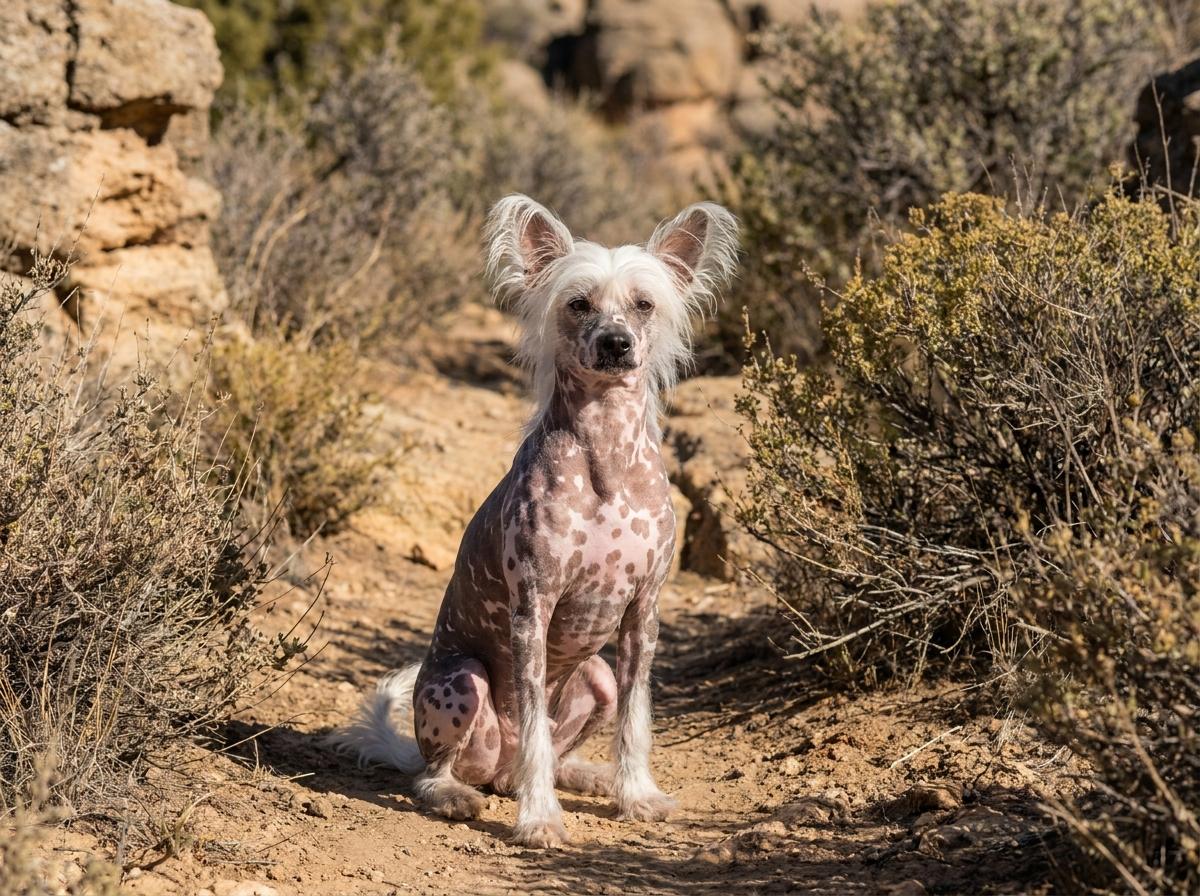
Chinese Cresteds come in two varieties: Hairless, with characteristic hair on the head, feet and tail, and Powderpuff, with a soft coat over the body. They are the same breed, but choosing between them changes your grooming routine. It does not remove the need for training, companionship or veterinary care.
When you browse the Creatures breeder directory, ask to meet both varieties if you are undecided. A useful visit includes a care demonstration and a conversation about the individual dog, not only a comparison of appearance. You can also save a Chinese Crested listing alert to get an email when a matching animal is listed.

AI-generated illustration.
| Type | Fine-boned toy companion |
|---|---|
| Varieties | Hairless and Powderpuff |
| AKC ideal height | 11 to 13 in |
| Colors | Any color or combination |
| Hairless traits | Crest, socks, plume and variable dentition |
| Screening | Eyes, cardiac, patella and named eye DNA tests |
Browse listings, public profiles, breeders, or add your animal.
One breed, two coat varieties
The UKC Chinese Crested standard describes a small, fine-boned companion with Hairless and Powderpuff varieties. Both can occur in a litter. A Powderpuff is not a separate crossbreed or an accidental version that needs an excuse.
A Hairless dog’s furnishings are often called its crest, socks and plume. A Powderpuff’s coat creates a different outline, so photographs alone can make the two seem less related than they are. Ask whether an image shows a natural coat, a show trim or a recent grooming style.
An unfamiliar hairstyle is not a health finding. Conversely, a fashionable appearance is not evidence that the dog is comfortable. Ask how its coat or skin is maintained and what the routine requires between professional appointments.
The AKC standard gives an ideal height of 11 to 13 inches and permits any color or combination. The difference between varieties is much more than a haircut: Hairless dogs carry a genetic change affecting both coat and teeth.
Research identifies a FOXI3 variant in Chinese Crested hairlessness. UC Davis explains that this dominant form is lethal in two copies, so a living Hairless dog also carries a normal, coated copy. Two Powderpuffs produce Powderpuffs; a Hairless parent can pass the coated copy, which explains coated puppies in a Hairless family. This is background for reading a pedigree, not a recommendation to plan a mating without specialist guidance.
Missing or irregular teeth can accompany the Hairless phenotype. AKC does not penalize incomplete dentition in Hairless dogs, but show acceptance is not dental clearance. Ask your veterinarian to assess the mouth and plan ongoing care. The Argentine Pila guide provides a related discussion of hairless genetics, teeth and sun protection.
Use the free dog pedigree chart maker for known ancestors and label each variety accurately. A Powderpuff ancestor is consistent with Chinese Crested identity.
Hairless does not mean care-free
The American Chinese Crested Club’s care guidance discusses sun sensitivity, skin problems, regular grooming and dental care. For a Hairless dog, the practical question is how you will protect and maintain exposed skin in your climate.
Discuss suitable products and sun protection with your veterinarian. Do not assume human sunscreen, acne treatments or fragranced cosmetics are appropriate for a dog. If the skin is sore, inflamed or repeatedly breaking out, seek assessment before adding more products.
Ask the keeper what is currently used, how often and why. Write down product names and the dog’s response. Clothing should be checked for fit and rubbing, and kept clean. Plan for warmth and comfort in cool weather without treating dress-up as a substitute for observing the dog.

AI-generated illustration.
Powderpuff grooming needs its own plan
If you prefer a Powderpuff, ask to see the coat being combed through, including areas that are easy to overlook. Find out whether the keeper maintains a full coat or uses a practical trim and what outside help is involved. A photograph immediately after grooming tells you little about the work between appointments.
Choose a routine that you can repeat gently. Keep sessions manageable, reward cooperation and ask for help with tight mats rather than pulling or cutting close to skin. Agree on the desired result with a groomer before the appointment; “tidy” can mean different things to different people.
For either variety, include tooth care, nails and handling in the demonstration. A dog that is small enough to lift still benefits from learning to participate in care. Ask the veterinary team to show you an appropriate dental routine and to assess any mouth discomfort.
A small dog with a full social life
Consider the everyday places this dog will go: the pavement outside your building, a lift, a friend’s home, the car and the veterinary clinic. Ask what experiences the puppy or adult has already had and what situations need more careful introduction.
Do not let small size become a reason to carry the dog through every interaction. Give it safe chances to explore and choose distance. At the same time, manage contact with larger animals and supervise children so the dog is not trapped, chased or treated as a toy.
The breed club describes Chinese Cresteds as alert companions that can enjoy activity and training. Decide what you want to do together, then choose instruction suited to the dog’s age and confidence. An apartment can be part of that life, but the floor plan does not answer how the dog will receive company, exercise and care.
Allergy claims need a separate decision
A Hairless Chinese Crested is not a guaranteed solution for a person with pet allergies. ACAAI notes that no dog breed is truly allergy-free. Discuss the human medical question with an allergy clinician before making a commitment.
A seller should not promise that a particular coat variety cannot cause a reaction. If allergy concerns are central to your decision, take the time to investigate them before paying a deposit. Do not plan on resolving an avoidable mismatch after the dog moves home.
Questions that reveal the quality of a placement
The American Chinese Crested Club’s health statement recommends an ophthalmologist eye examination, cardiac evaluation and patella examination for breeding parents, plus DNA testing for prcd-PRA, primary lens luxation and the rcd3 PRA subtype. Request named results for both parents, with their identities and dates. A DNA result does not replace a clinical eye examination. Ask separately for the puppy’s or adult’s own veterinary history.
For a puppy, discuss household experiences and the planned departure date. For an adult, ask about toileting, time alone, handling and the reason for rehoming. Ask what the keeper finds challenging. A frank answer is more useful than a claim that the breed never has difficulties.
If you are comparing the full range of coat workloads, the Samoyed guide describes a much larger, heavily double-coated companion. Its undercoat maintenance is a different commitment from either Crested variety. For choices across size and activity, the dog hub provides a broader starting point. Your final shortlist should reflect the routine you want to maintain.
Price and costs
Get a current written quote and ask whether it includes registration, transport or any equipment. Clarify deposit and cancellation terms before payment. A low advertised price can be hard to compare with a different offer unless the contents and obligations are clear.

AI-generated illustration.
Prepare an accurate handover
Save the food routine, product list, veterinary records and registration information together. Note which details are documented and which are the keeper’s observations. If the dog has reacted to a product, record that clearly for your veterinarian and future carers.
Arrange the first veterinary visit with those records available. Use the puppy vaccination guide to organize questions if you are bringing home a puppy. The clinic should tailor the plan to the individual.
Chinese Crested questions
Can a Powderpuff be a purebred Chinese Crested?
Yes. Powderpuff is one of the breed’s two varieties, and both varieties can occur in a litter.
Does a Hairless dog need grooming?
Yes. Skin, furnishings, nails and teeth still need care. Ask for a practical demonstration before choosing one.
Is a Chinese Crested hypoallergenic?
There is no guarantee that it will suit a person with pet allergies. Get human medical advice rather than relying on a coat label.
Do pet ears need cosmetic taping?
A pet’s comfort and health come first. Do not undertake cosmetic manipulation merely to copy a show photograph; discuss concerns with your veterinarian.
Do this next on Creatures
Still looking? Get an alert when a Chinese Crested is listed, browse Chinese Crested breeders, or check current Chinese Crested listings. The Help Center explains saved searches and email alerts.
Already caring for one? Add a record when you have a dated document or useful observation. The form opens for visitors; a free account is needed to save. The Help Center explains adding an animal and adding a record.
Breeders and organizations can create an organization profile for their work. The organization and team guide explains the setup.