Lavender
Gene
Author: Elliott Garber, DVM · Published
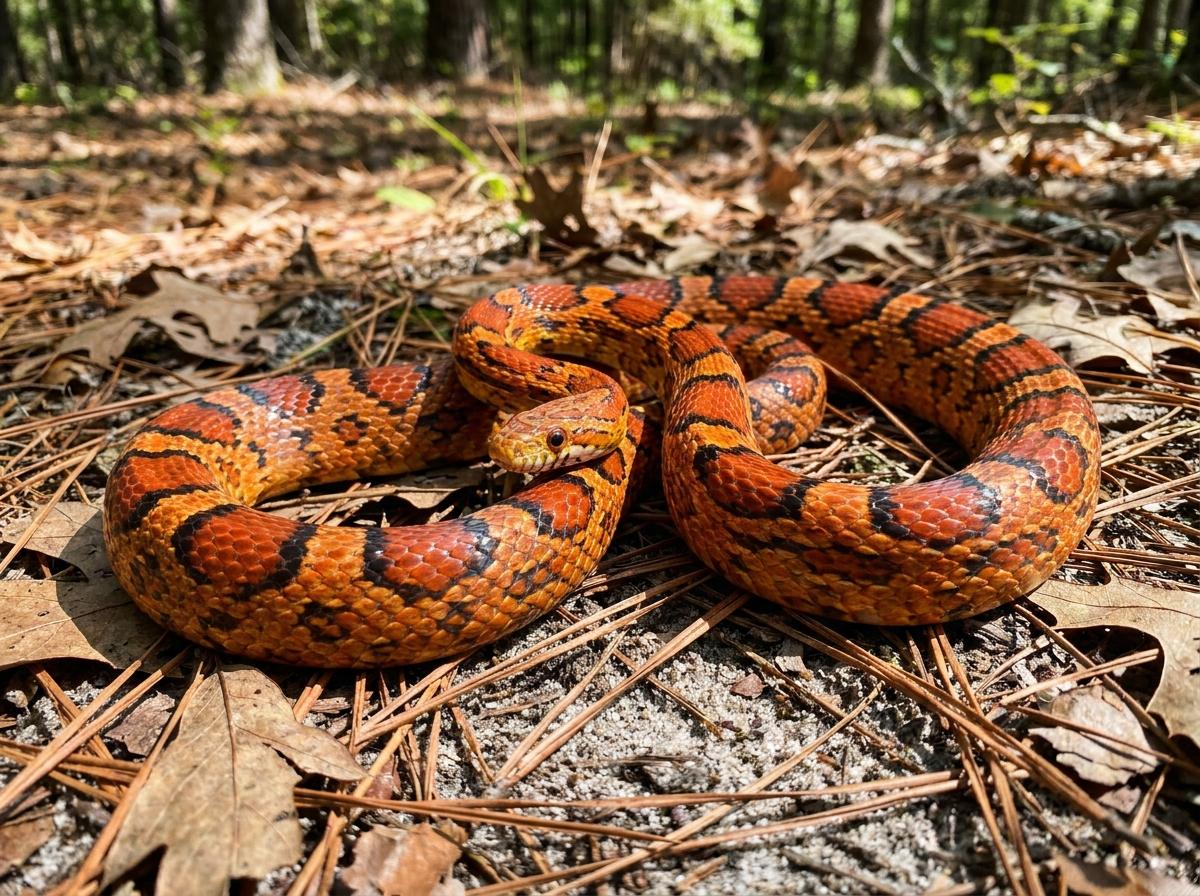
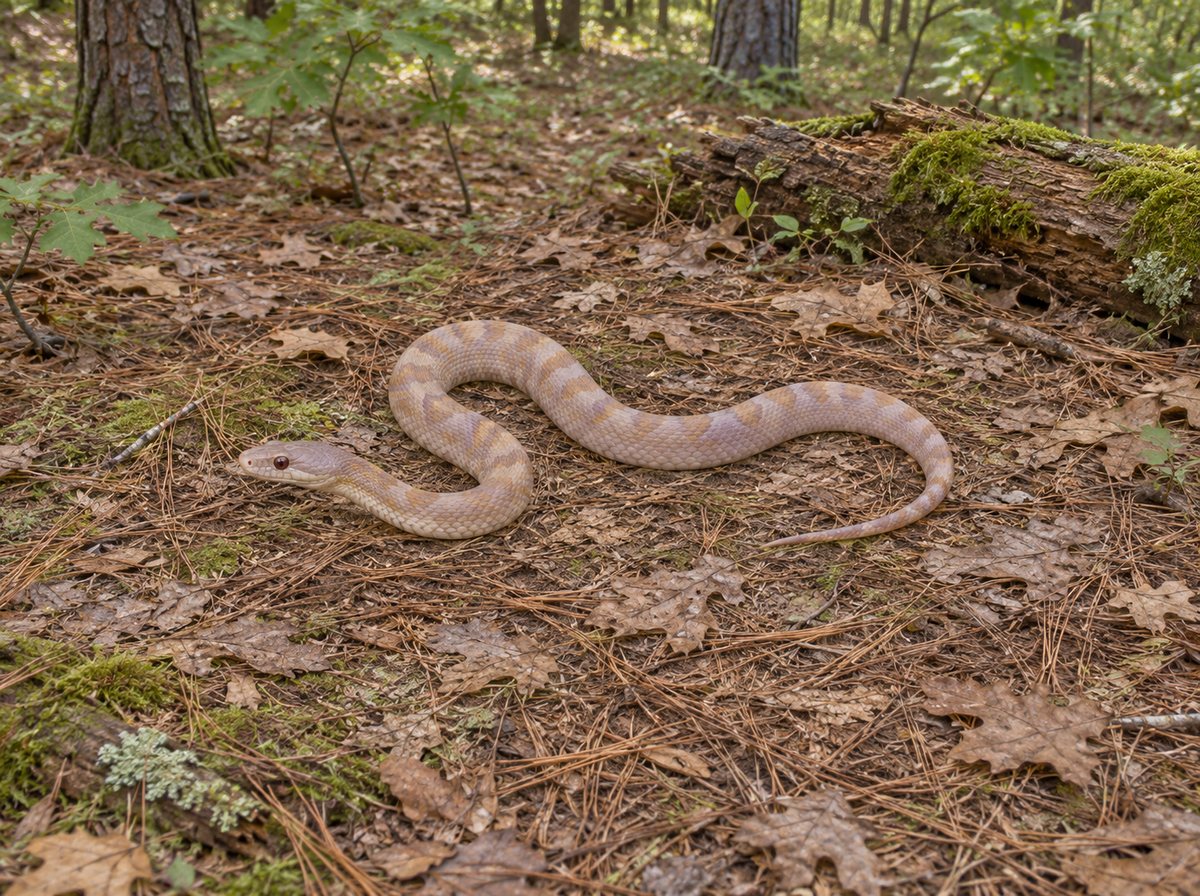
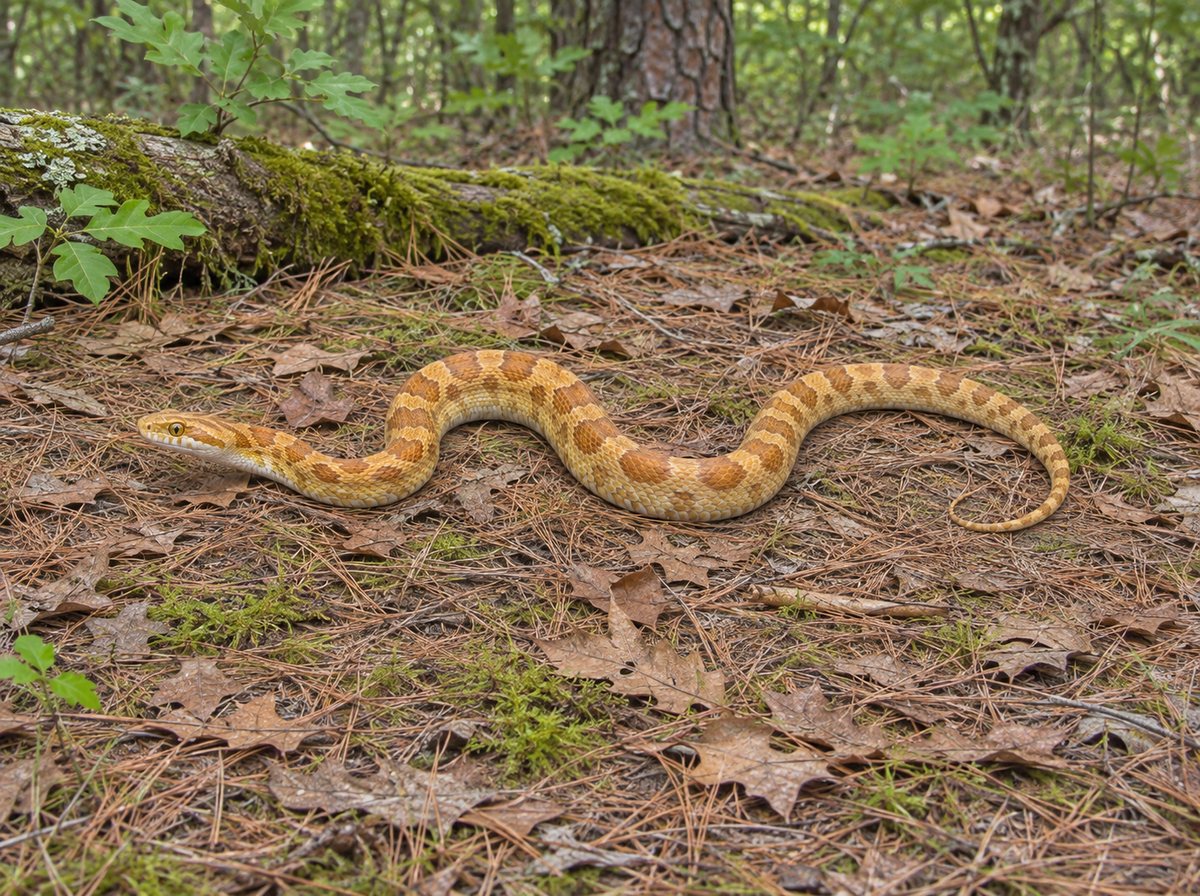
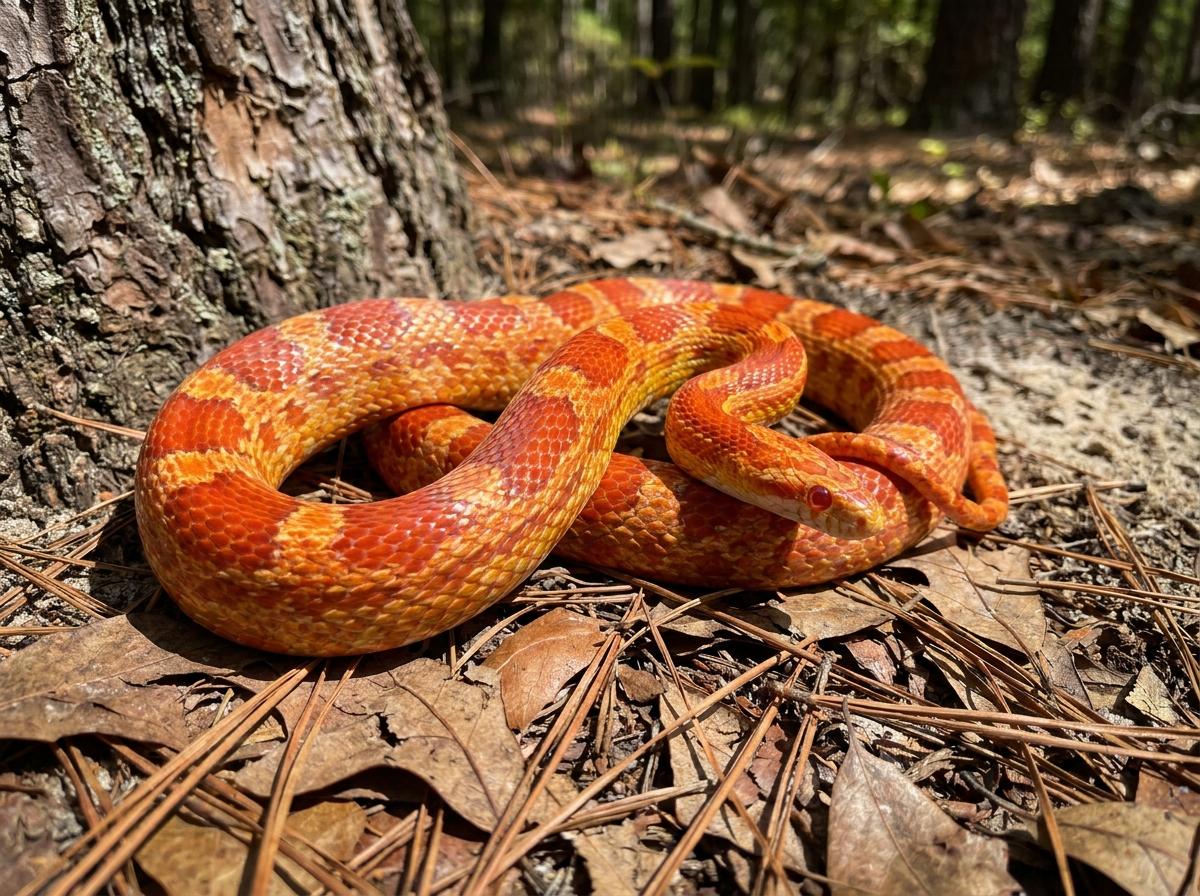
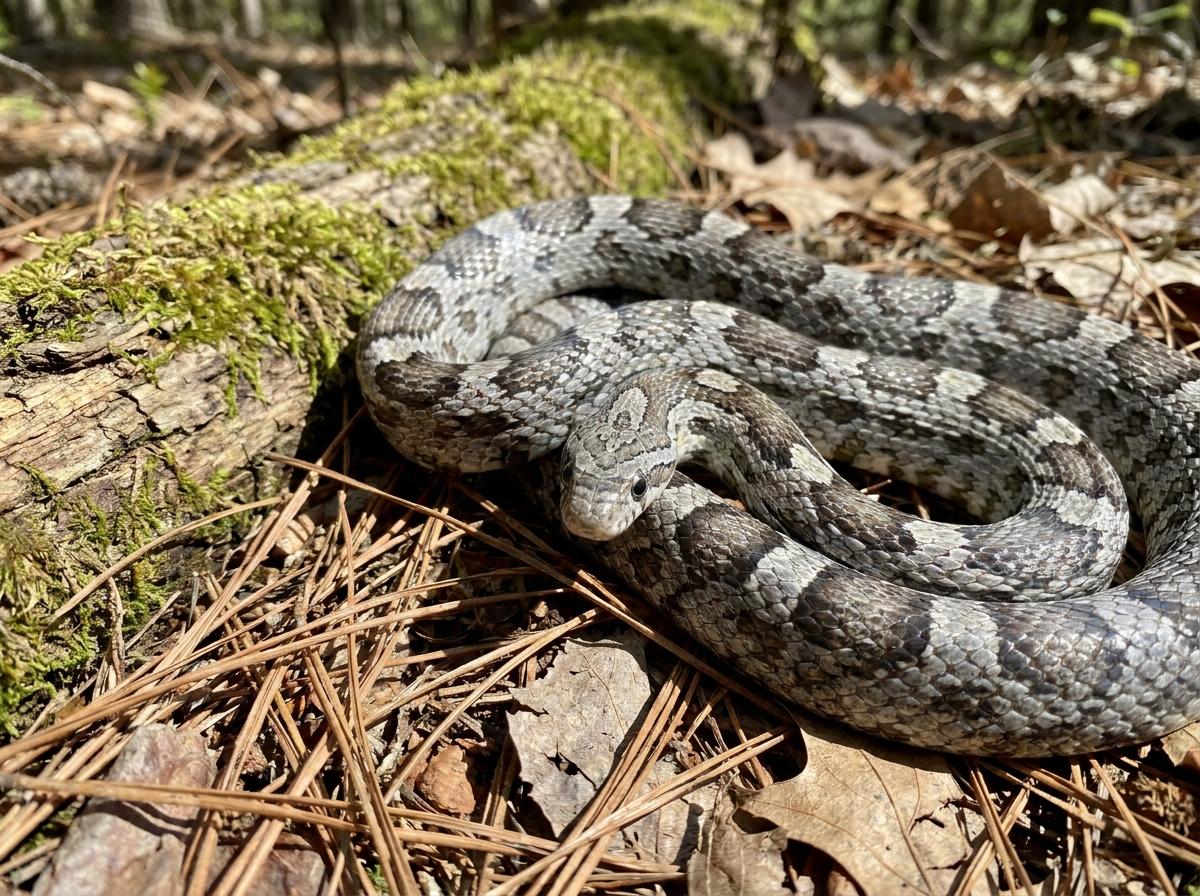
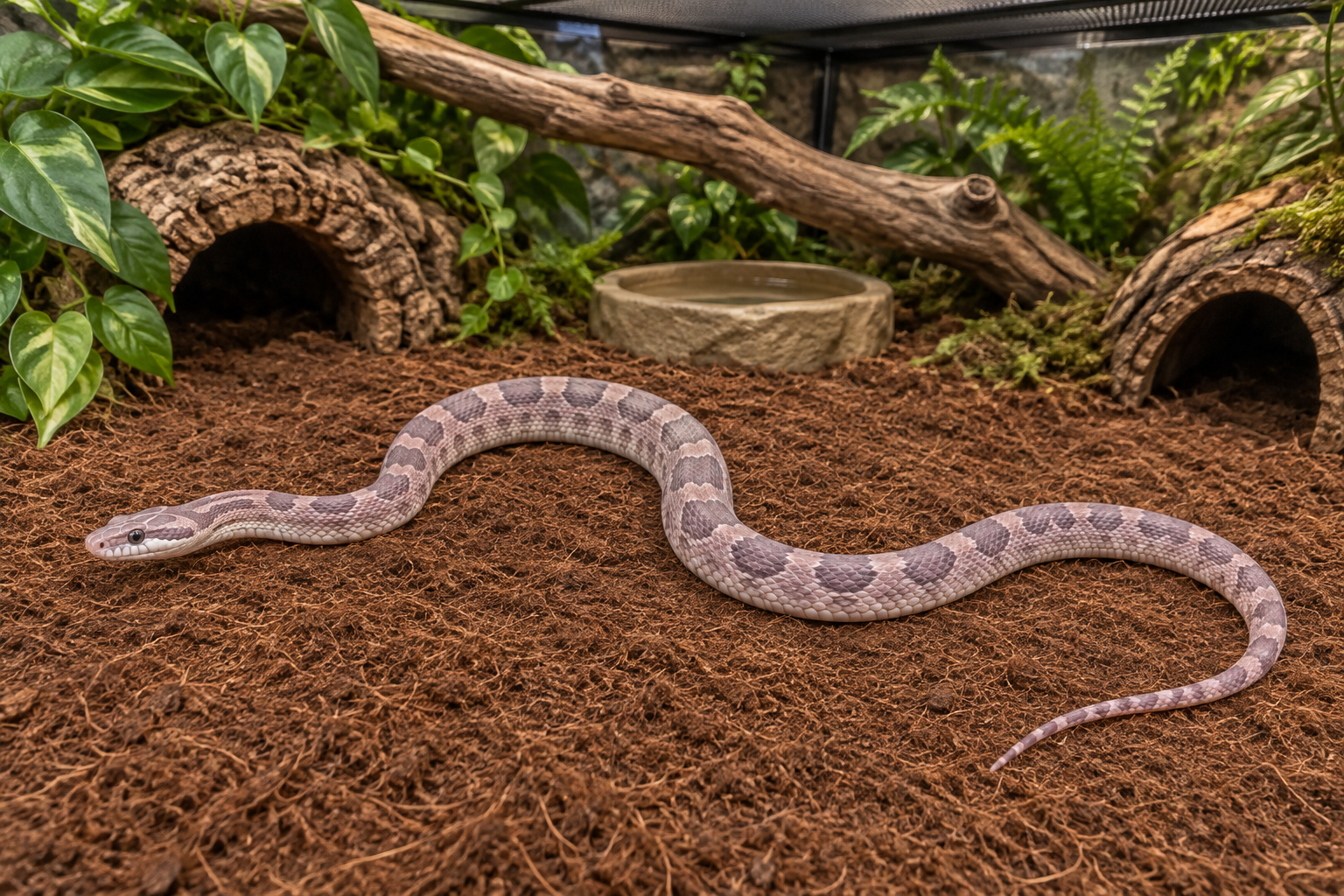
A Lavender corn snake is a recessive color morph of Pantherophis guttatus, with gray to mauve blotches over a muted pink or grayish background. It is a corn snake, not a separate species or a breed, and it is not necessarily bright purple. Keep the individual’s identity, origin and feeding history together: you can start a Lavender corn snake profile on Creatures without an account, then use a free account to keep its records.
| Species | Pantherophis guttatus, corn snake |
|---|---|
| Type | Recessive color morph |
| Appearance | Gray to mauve blotches and muted pink or gray ground |
| Genetic evidence | Likely causal LYST variant in the primary study |
| Age change | Color varies; increasing purple is not guaranteed |
| Housing | Individual secure vivarium with room to stretch |
| Buyer priority | Identity, parent evidence and recent feeding records |
Browse listings, public profiles, breeders, or add your animal.
What Lavender actually looks like
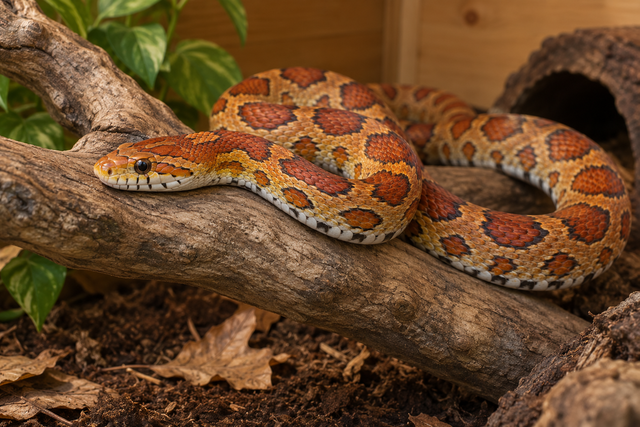
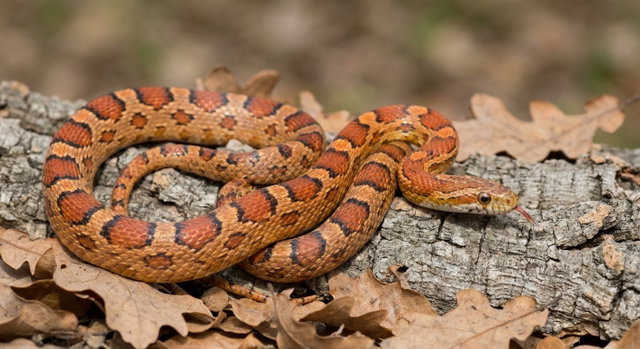
The primary corn snake genome study by Ullate-Agote and colleagues describes Lavender as gray dorsal blotches on a pink background, replacing the wild type’s red blotches and orange background. Its animals also had faded belly checkers and altered iris coloration. Those observations are more useful than a seller’s promise of a fluorescent purple snake.
The study colony showed variation in pink and dark pigment. During observations after hatching, the vivid early pink slowly faded and dark blotch outlines became gray. That does not support a universal claim that Lavender becomes steadily more purple with age. Ask for current photographs and, when available, images of the same animal over time.
Photographs can shift markedly with lighting and editing. Request a view in ordinary neutral light that includes the whole snake, rather than buying on a tightly cropped, strongly saturated image.
A morph name is not a complete genetic description
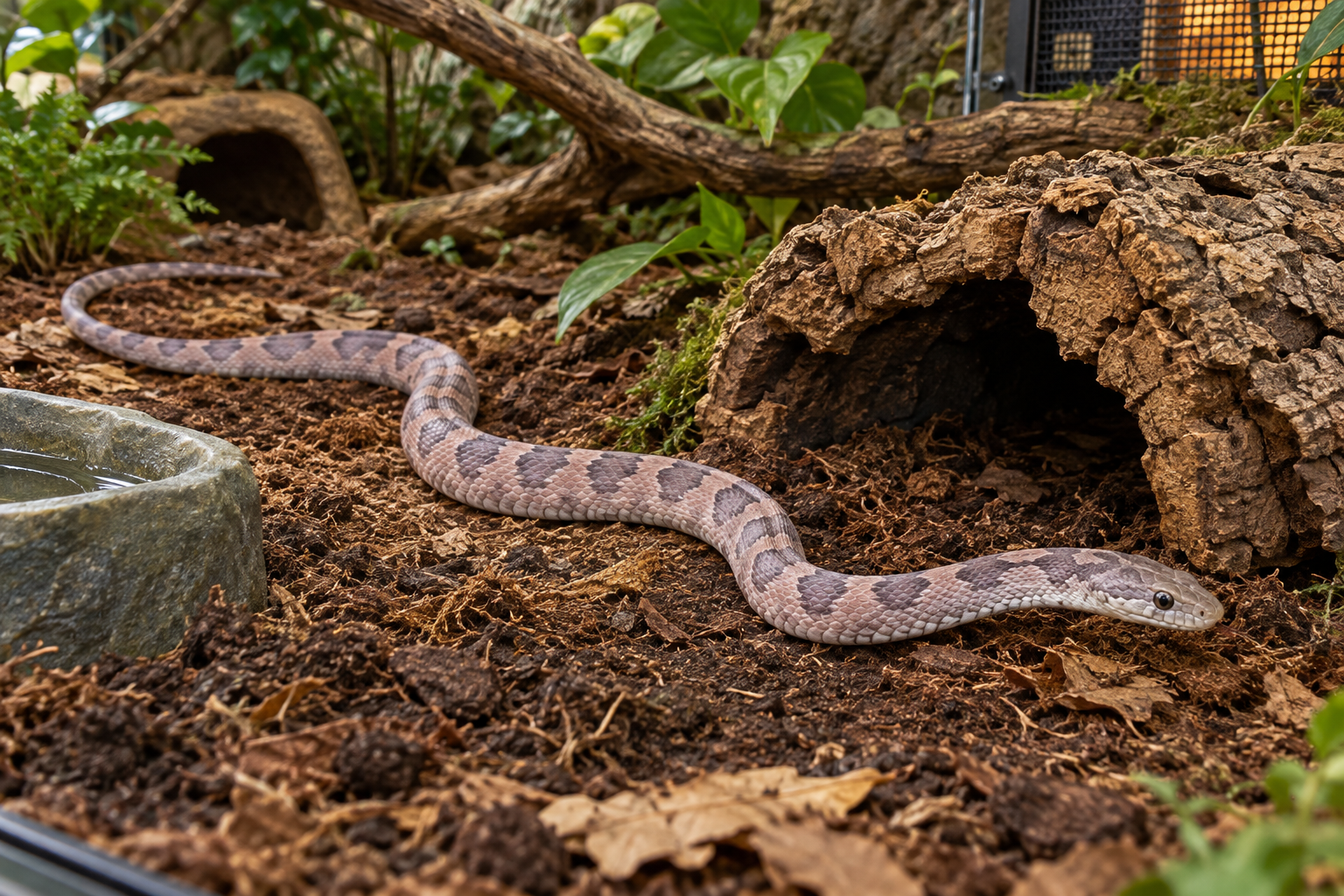
The primary study found recessive single-locus inheritance in its colony and identified a truncating variant in LYST, the lysosomal trafficking regulator, as the likely cause. It examined changes in the pigment-producing structures of several cell types. That is a specific piece of genetic evidence, rather than a claim that every pale corn snake can be identified by eye.
In a simple pairing of two confirmed carriers of the same recessive Lavender variant, ordinary Mendelian inheritance predicts a one-in-four chance of a visual Lavender for each offspring. That is a probability for each egg, not a guarantee that exactly one-quarter of a small clutch will be Lavender. The calculation also assumes the parents’ stated genotypes are correct.
A nonvisual carrier can look ordinary at this locus. A label such as possible het does not mean confirmed carrier. Ask what supports each label: documented parents, test results where applicable, breeding evidence or only an expectation. Record those categories separately.
A snake can carry other traits as well. The Snow corn snake guide covers a different combination. Do not infer a full combination name from gray or pale coloration alone. The corn snake morphs guide explains how color, pattern and carrier labels fit together. The wider corn snake hub helps place morph names within the same species.
What the LYST paper does and does not say about health
The study reported that its Lavender snakes fed, grew and bred normally in captivity, with no other apparent phenotype beyond color. It also found cellular changes outside the skin and said further investigation was warranted. The right reading is limited to those observations.
LYST-related disease in another species does not establish the same clinical disease in Lavender corn snakes. Conversely, a pigment study is not a lifetime health guarantee for every Lavender. Do not market the morph as either automatically sick or proven free of health risks on the strength of this paper.
Choose an individual with a clear history and arrange ordinary reptile veterinary care. The clinical meaning of a particular symptom belongs with a veterinarian who can examine the animal.
A secure enclosure with room to stretch and climb
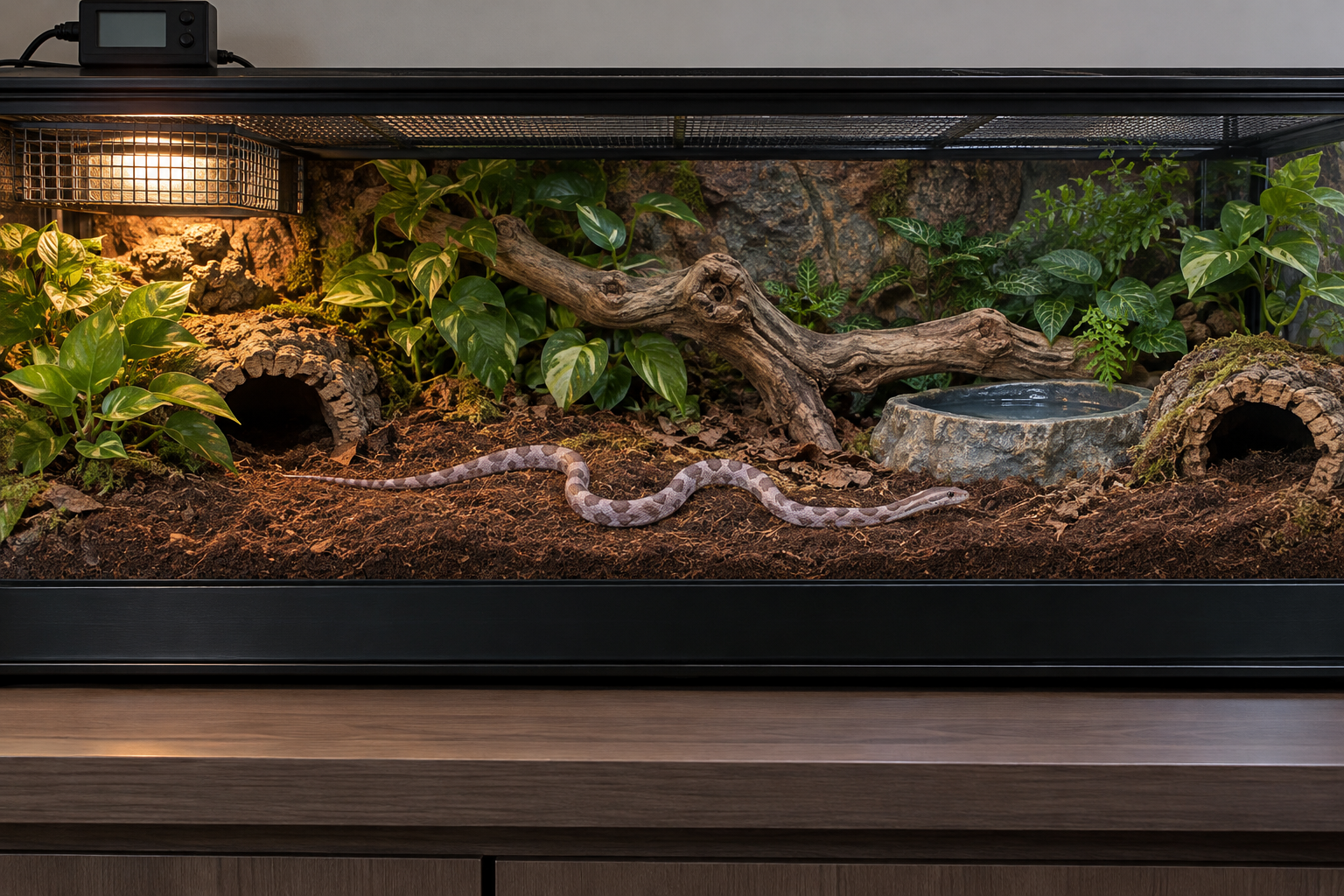
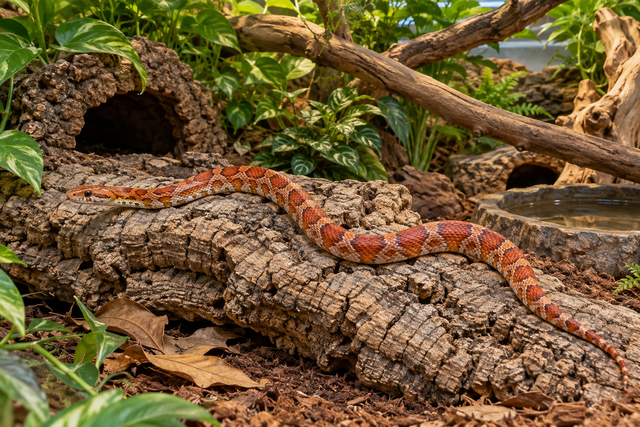
Lavender needs corn snake husbandry. The RSPCA corn snake guide calls for an enclosure at least as long as the snake, with width and height each at least one-third of its length, allowing full stretching. Provide secure ventilation, hides at both ends, burrowing substrate and climbing opportunities. Keep the snake individually. A larger enclosure needs cover and retreats, not an empty exposed floor.
Control all heat sources with thermostats, protect the snake from hot equipment and check actual temperatures at its level. RSPCA specifies a 28 to 30 C basking zone and a 20 to 24 C cool end. RSPCA recommends humidity around 40 to 50 percent, measured with a hygrometer. Use a humid retreat and ventilation together; a constantly wet floor is not a substitute for environmental control. Provide a day-night light cycle, shaded areas and suitable UVB planned from species guidance and veterinary advice.
Use the corn snake care guide for the broader setup. Test the enclosure before arrival, including locks, gaps around doors, stable branches and securely positioned sensors. A small snake’s enclosure needs just as much escape prevention as an adult’s.
If comparing this animal with a Banana ball python, keep the species differences explicit. The snakes differ in build, environmental requirements and the genetics behind their names. Neither is a husbandry substitute for the other.
Feeding, sheds and everyday observations
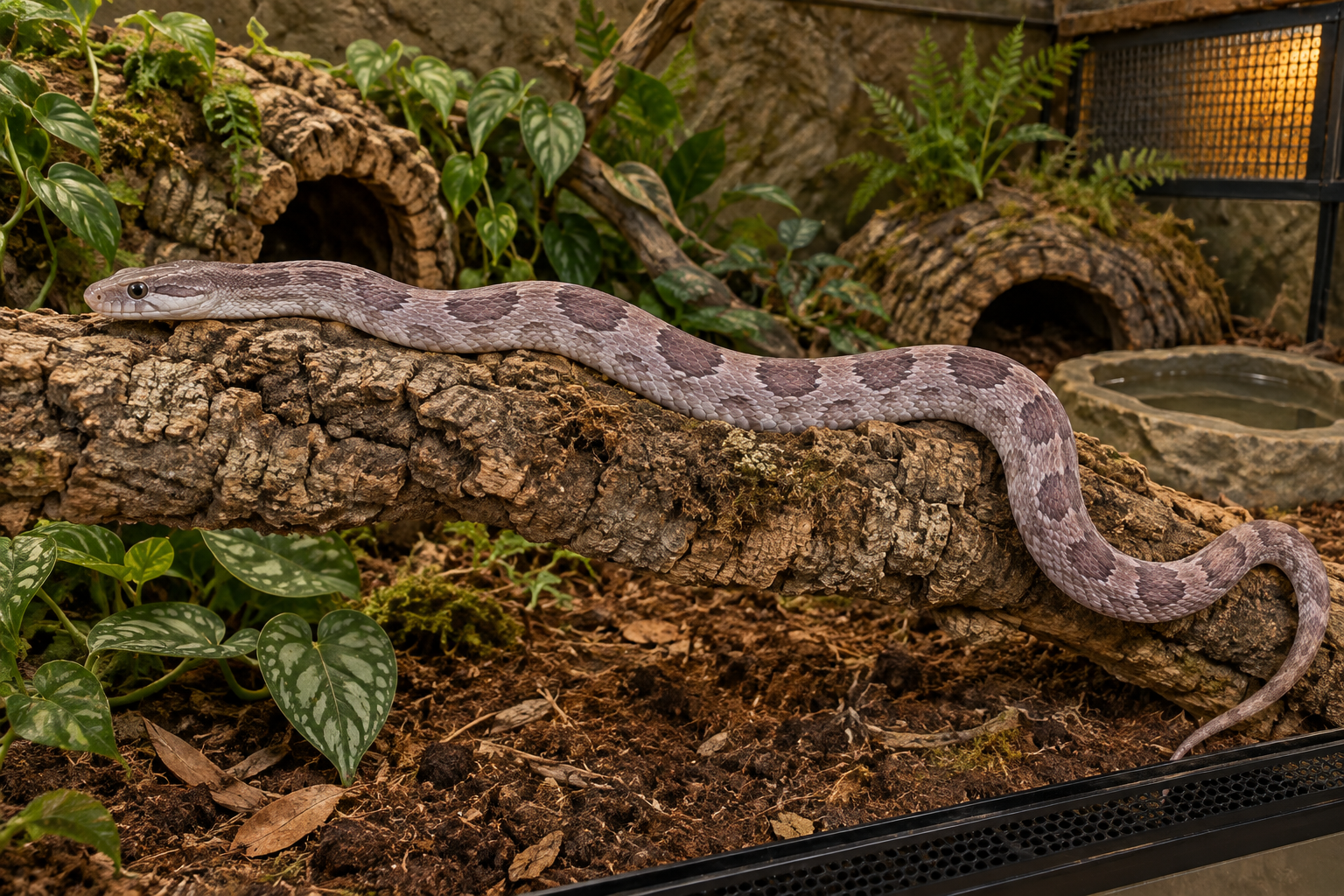
Ask for a recent feeding log before collection. It should identify the actual prey offered, preparation, dates and acceptance, not just say eats well. Feed suitable whole prey at a size and interval matched to the snake’s age and body condition. The Merck Veterinary Manual’s snake nutrition reference discusses frozen-thawed prey and avoiding handling after meals.
Record weight trends and shed events along with meals. Repeated refusals or regurgitation need context; they do not identify a cause by themselves. Do not force-feed, remove an eye cap or attempt a medical procedure from an online checklist. Contact a reptile veterinarian for abnormal signs and bring the log.
The Merck reptile examination guide discusses retained shed, parasites, body condition, wounds and respiratory signs. Open-mouth breathing can indicate severe respiratory compromise. A pale coat does not excuse a new skin lesion, swelling or an abnormal way of moving.
Handling and household hygiene
Let the snake settle after a move and support its whole body during calm, brief handling. Do not grab the tail, pull it out of a hide repeatedly or handle soon after a meal. The RSPCA care guide explains supported handling and keeping other pets separate. A snake that withdraws or assumes a defensive posture needs space rather than more insistence.
Reptiles and their feeder rodents can carry Salmonella even when they look clean and healthy. Follow CDC reptile guidance: wash hands after contact, keep equipment and prey away from human food areas, and consider the health risks for vulnerable household members. This matters before choosing the pet, not only when someone becomes ill.
Cost, availability and questions for the seller
There is no universal Lavender price. Age, sex, additional documented traits and the seller’s terms can change an asking price. Request a current written quote and compare the animal’s evidence and care history. Our corn snake cost guide separates buying the animal from setting up and maintaining its environment.
Budget for a secure adult enclosure, thermostats and monitoring equipment, appropriate lighting, food and veterinary care before considering a color premium. A rare-sounding combination name does not pay for its setup or establish its health.
Before buying, ask:
- Is this the exact animal in the current photographs?
- What are its hatch date, source and parent identities?
- Which traits are visual, confirmed carrier states or possible carrier states?
- What records support Lavender and each additional genetic claim?
- What prey is it eating now, and how often has it accepted meals recently?
- Has it had regurgitation, difficult sheds, mites, respiratory signs or treatment?
- How was sex assessed, if it is part of the sale?
- What transition support and return terms apply?
Directory coverage and marketplace searches do not prove stock exists today. A saved alert is useful when you can wait for an appropriate future listing. Once you choose the individual, the corn snake name generator can help with a name; preserve any existing identifier as well.
Breeding should follow the records
Pet ownership does not require breeding. If you have a responsible breeding purpose, plan for adult housing, reproductive welfare, veterinary support and placements before choosing a pairing. Keep parent identities and every genetic uncertainty with the clutch history. Do not treat the ability to calculate recessive odds as evidence that the animals should be bred.
There is no dedicated corn snake morph calculator linked here. A calculator for another species is not a valid substitute. Work from documented corn snake genetics and record the actual outcomes, including offspring that do not match your preferred color.
Frequently asked questions
Is a Lavender corn snake purple?
Usually the description is more subtle: gray to mauve blotches over a muted pink or grayish ground. Lighting and other traits change the appearance. Expect an individual animal rather than a fixed purple paint color.
Is Lavender recessive?
The primary study found recessive single-locus inheritance in its colony and identified a likely causal LYST variant. A carrier need not show the visual Lavender appearance.
Will it become more purple as it grows?
Do not rely on that promise. The study recorded fading early pink and gray outlines over time, with variation among its animals. Current photos are better evidence than an age-based marketing claim.
Does the LYST finding mean Lavender snakes have a human disease?
No such conclusion follows. The authors reported normal feeding, growth and breeding in their snakes while identifying cellular changes needing further study. Neither a disease diagnosis nor a lifetime health guarantee is justified.
Can I keep it with another corn snake?
Plan individual housing. RSPCA recommends keeping corn snakes on their own, which also makes feeding and health observations easier to attribute to the right animal.
Do this next on Creatures
Start with your animal. Start an animal profile, no account needed to start. See adding an animal to Creatures for the steps.
Keep the evidence. Add a care or health record. The sheet opens for visitors; a free account saves it. Read adding a record and retain the original documents beside your observations.
Wait for a suitable match. Set a Lavender corn snake listing alert for future matching listings. No account needed to start. An alert does not establish that an animal is available now. The guide to saved searches and the watchlist explains the workflow.
Check current listings. Browse Lavender corn snake marketplace results and verify the individual, records and sale terms with the seller.
Research people and organizations. Use the breeder directory as a starting point. A profile is not a health certification, endorsement or guarantee of current stock.
Represent your organization. If you run a breeding operation, start an organization profile. No account needed to start. Review creating an organization; starting a profile does not verify breeding claims.