Corn Snake Morphs: Amel, Anery, Snow and How to Read the Names
Author: Elliott Garber, DVM · Published
Corn snake morphs are inherited color or pattern variations and combinations of those traits. Amelanistic, Anerythristic and Snow describe different pigment outcomes; a pale snake is not automatically Snow, and a normal-looking snake can carry a recessive variant.
Start a corn snake profile with the seller’s exact morph claim, parent identifiers and dated photographs. Keep that evidence separate from what you can identify by eye.
| Amel | Black pigment absent in the studied form |
|---|---|
| Anery | Red pigment absent in the studied form |
| Snow | The familiar Amel and Anery combination |
| Het | Carrier claim requiring evidence |
| Photo limit | Hidden alleles and ancestry stay unknown |
The useful starting point: pigment and pattern are separate
Begin with the corn snake species guide, then ask what part of the animal the name describes. A pigment trait affects the colors available. A pattern term describes where the markings occur. A combined name can include both, while a locality or line name describes a different kind of history.
The core color names are easier to understand together:
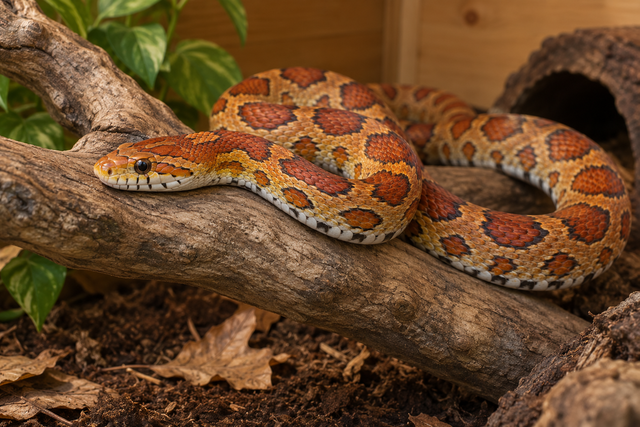
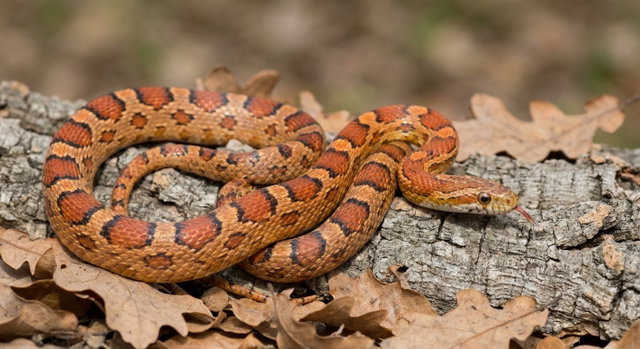
- Normal or wild type: the familiar orange to reddish saddle pattern with dark edging. Appearance alone does not rule out hidden recessive variants.
- Amelanistic, often shortened to Amel: lacks the usual black pigment while retaining orange pattern. In a molecular study of the Amel variant, the black saddle borders were replaced by white and the eyes were pink.
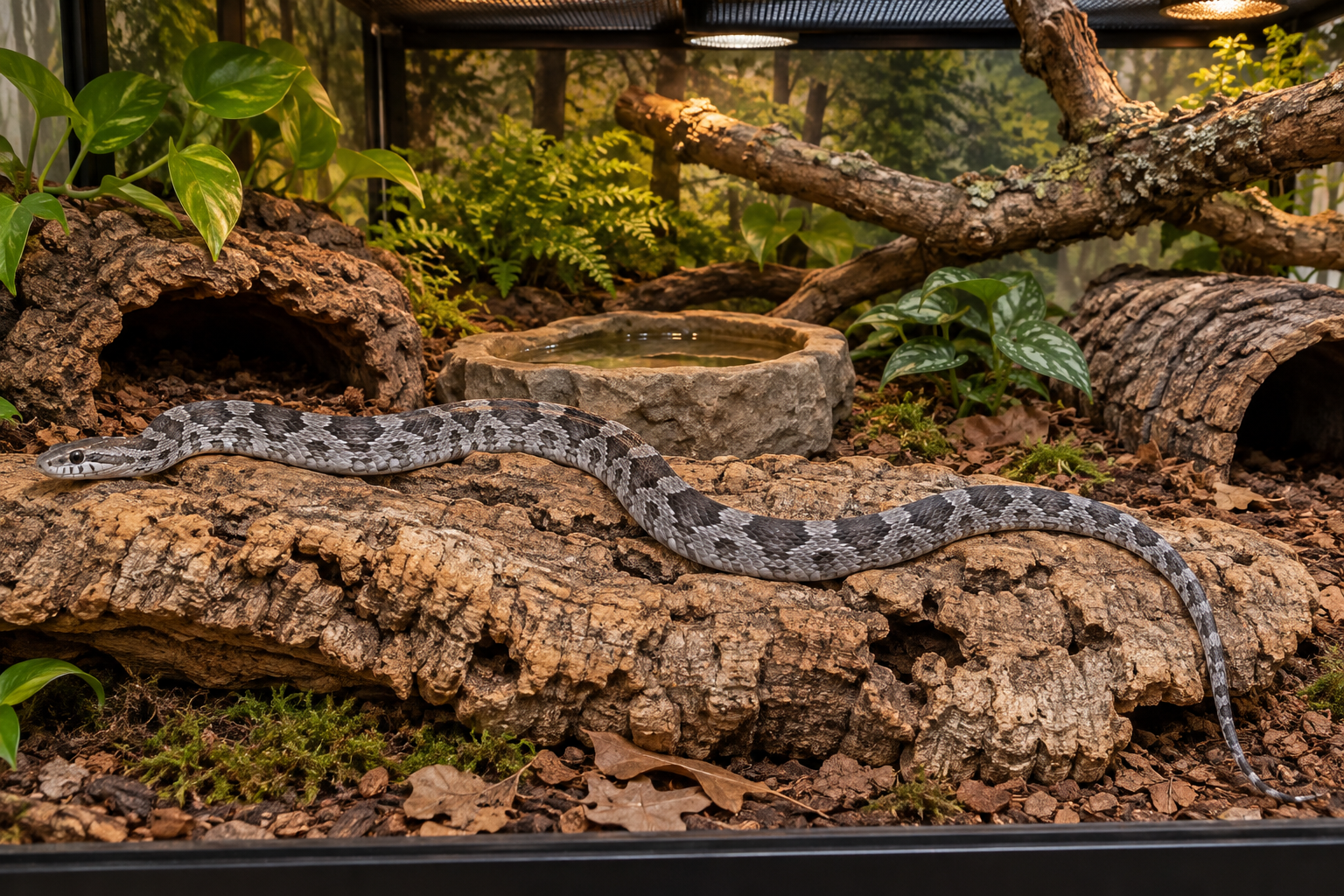
- Anerythristic, often shortened to Anery: lacks the usual red pigment in the studied form. Gray and dark markings are the useful visual starting point. The Anerythristic corn snake guide covers the label and look-alikes in more detail.
- Snow: combines the familiar Amel and Anery traits. It can retain a visible pale pattern rather than being a completely unmarked white snake. Read the Snow corn snake guide before assigning the name to a pale animal.
- Butter: a combination name rather than a general word for yellow. The Butter guide explains the Amel and Caramel claim and the records that should support it.
Bechtel and Bechtel’s published breeding data established recessive inheritance for the albinism and anerythrism they studied, and independent inheritance of those traits. Their work also reported evidence of distinct anerythrism forms. Do not treat that as proof that every later trade name or line has interchangeable genetics.
What Stripe, Motley and other labels add
A name such as Stripe or Motley is used for pattern, rather than simply for a lighter or darker shade. Ask the breeder to explain the pattern claim and supply whole-body and underside photographs. Do not assume a clean belly or a partial dorsal stripe, by itself, proves a named genotype.
Names such as Lavender, Caramel and Hypo are not synonyms for any snake that looks purple, yellow or pale in a photograph. Keep the exact claim, line and source. “Scaleless” is a structural description with care implications, not merely another paint color; ask a reptile veterinarian about the individual before accepting generic care assurances.
Understand “het” before paying for a hidden trait
At a recessive locus, a heterozygous carrier has one copy of the variant and another allele at that locus. It need not show the visual recessive form. The word “het” therefore refers to information that may not be visible in a sales photograph.
Ask three direct questions: Which trait? What establishes the carrier claim? Which animal and parent identifiers connect the paperwork to this snake? A possible-het claim remains a probability derived from a specified pairing, not a confirmed result for the individual.
The Amel molecular paper identified an insertion in OCA2 associated with the studied form. That does not mean every seller has tested its snakes, or that an unspecified “DNA tested” phrase establishes every morph in a combination. Read the actual report, including the tested variant and the animal identifier.
Keep a morph evidence record on Creatures
Write a visible description and a sourced claim separately: “gray ground with dark saddles; sold as Anery; breeder supplied these parents.” Add hatch information, feeding and shedding history, and copies of original documents. If the parentage is unknown, preserve that fact.
Create a dated record when a new document arrives rather than overwriting a tentative identification without explanation. Saving a photograph, pedigree or test report keeps it available; it does not authenticate the source or establish hidden genetics.
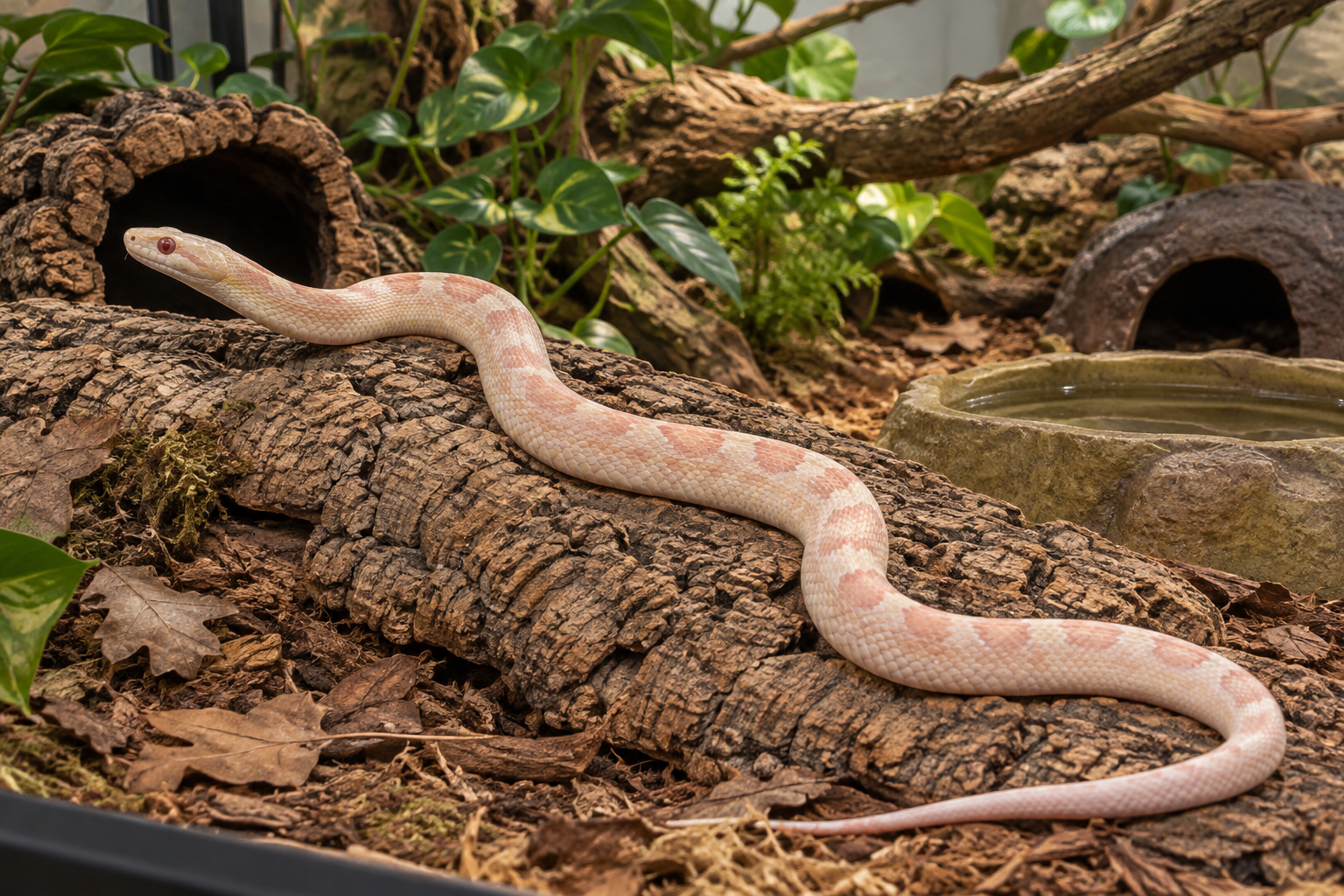
The enclosure matters more than the label
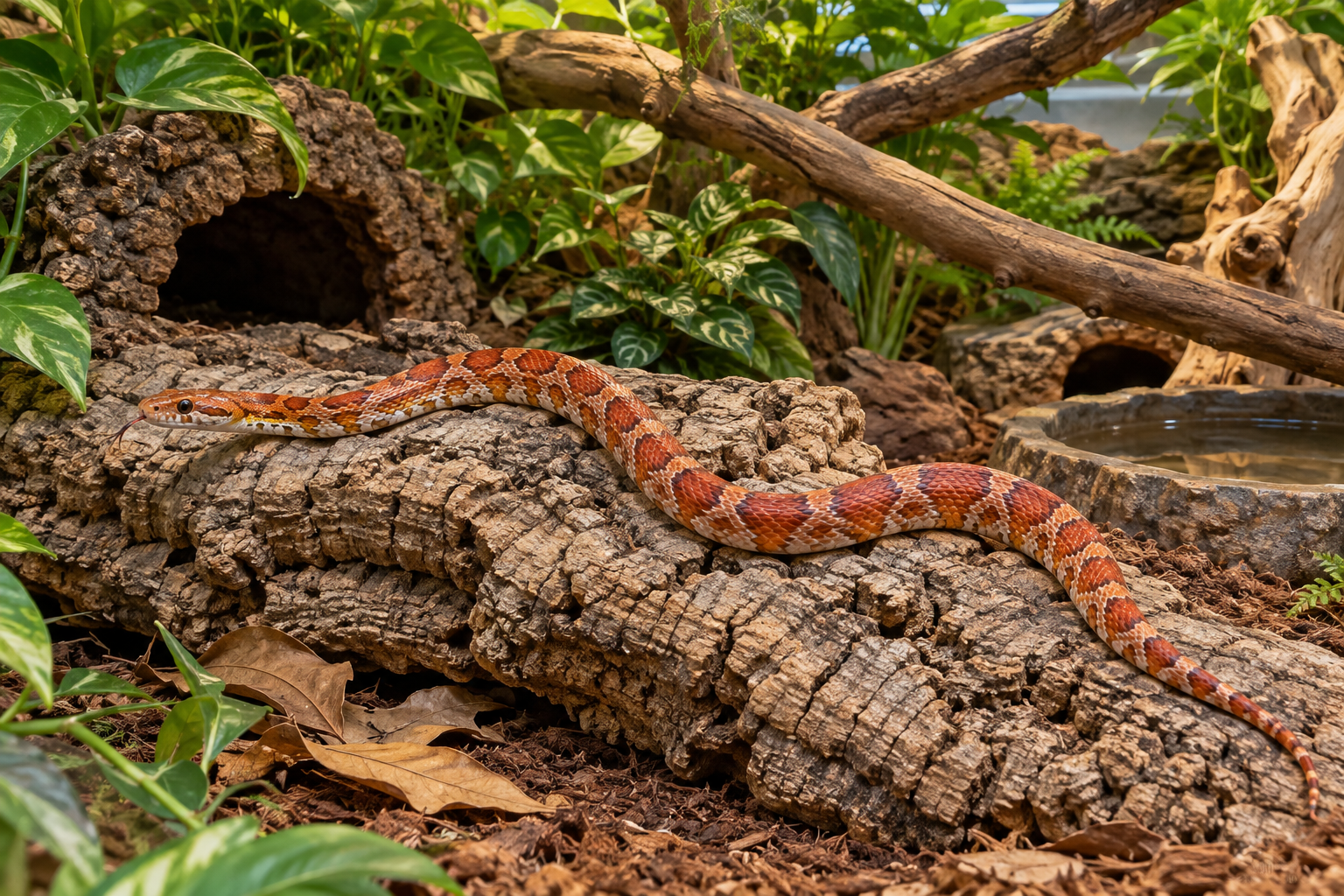
The RSPCA’s corn snake care guidance calls for secure housing, a temperature gradient, hiding places and water. Arrange cover and climbing opportunities so the snake can use its space without being exposed continuously.
Use the corn snake care guide for setup and feeding planning. A morph name is not a reason to omit heat control, shrink the enclosure or feed live prey for a photograph. The corn snake cost guide helps budget for housing and continuing care as well as the animal.
Common questions
Is an albino corn snake always white?
No. The studied Amel trait removes black pigment while leaving orange pattern. “Albino” does not mean all other pigments and pattern disappear.
Can two snakes with the same visible color have different hidden genetics?
Yes. A visual description is incomplete genetic information. A carrier claim needs its own evidence, and a combination name needs support for each component.
Is there a Creatures corn snake morph calculator?
No supported corn snake morph calculator is linked here. Use the animal’s profile and original records; another reptile’s calculator is not a corn snake model.
Do this next on Creatures
- Add your corn snake and keep its identity and photographs together. You can start without an account. See how to add an animal.
- Add a record for a dated observation, original document or veterinary result. It opens for visitors; a free account saves it. The record guide explains the flow.
- Set a listing alert if you are looking for an animal. An alert does not promise current stock; see saved searches.
- Browse the filtered marketplace and ask sellers for the evidence behind a named trait.
- Use the breeder directory to find people to question about their animals and records. A directory entry is not genetic verification.
- If you keep a breeding program, create an organization profile to describe it. This is a guest-capable starting flow.