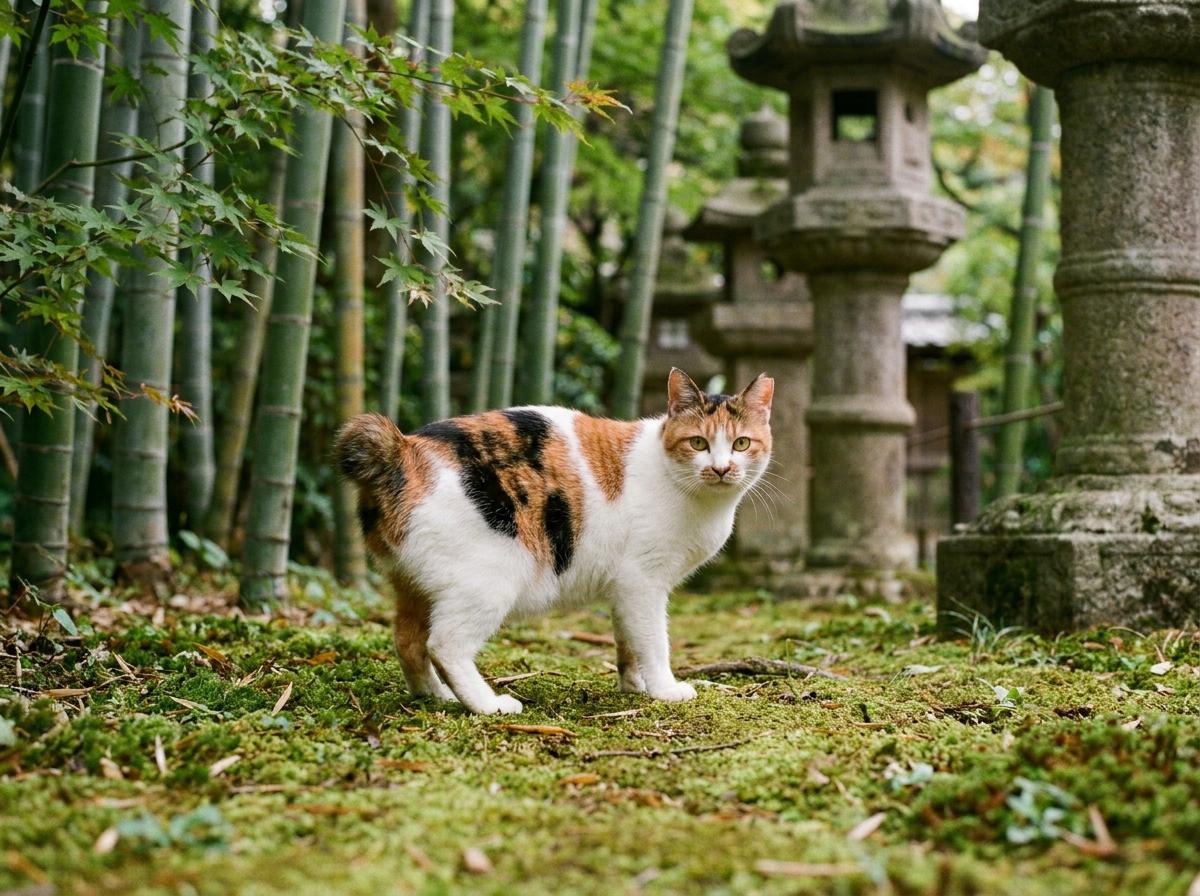
Japanese Bobtail
The Japanese Bobtail is a lean, active cat whose naturally short tail forms a visible pom-pom. The tail is an inherited feature, not a cosmetic crop, and it varies from one cat to the next. If you are waiting for one, save a Japanese Bobtail search to receive an email when a matching listing appears.

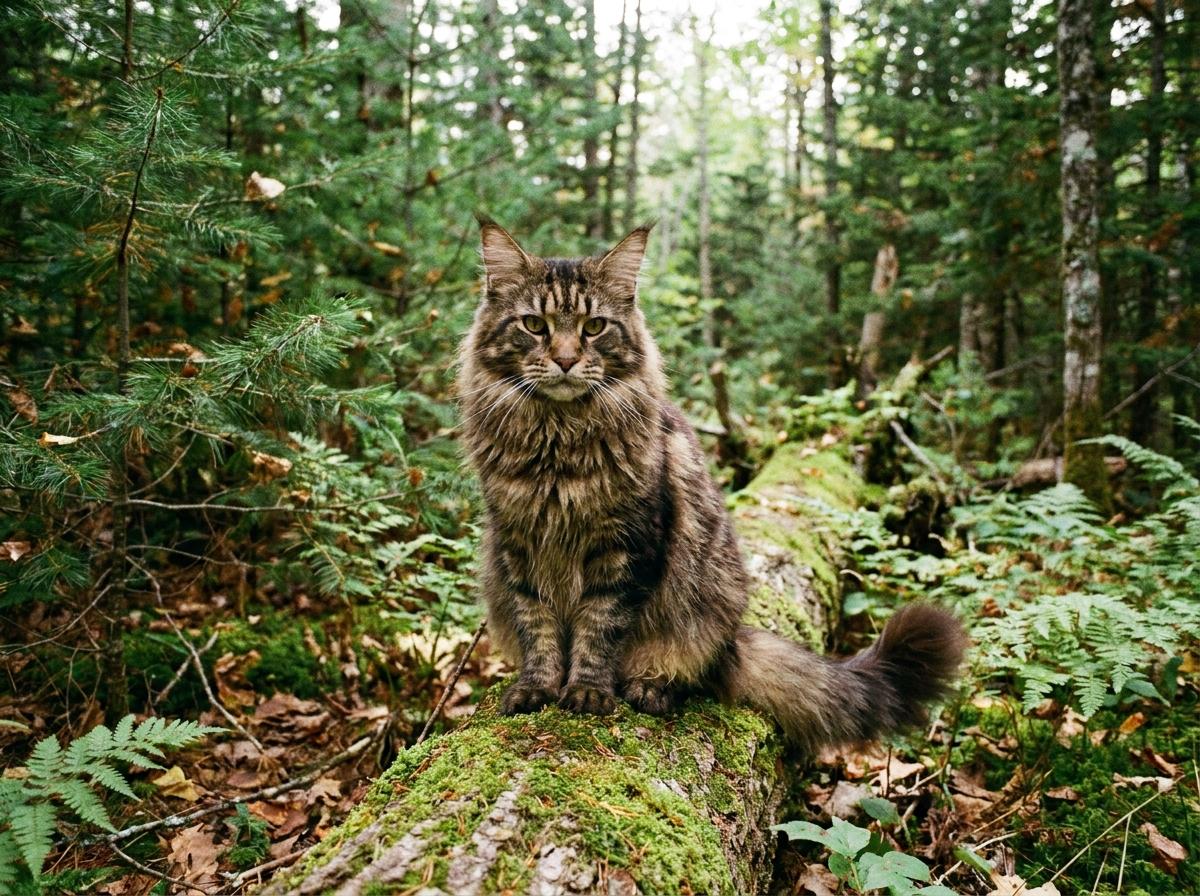
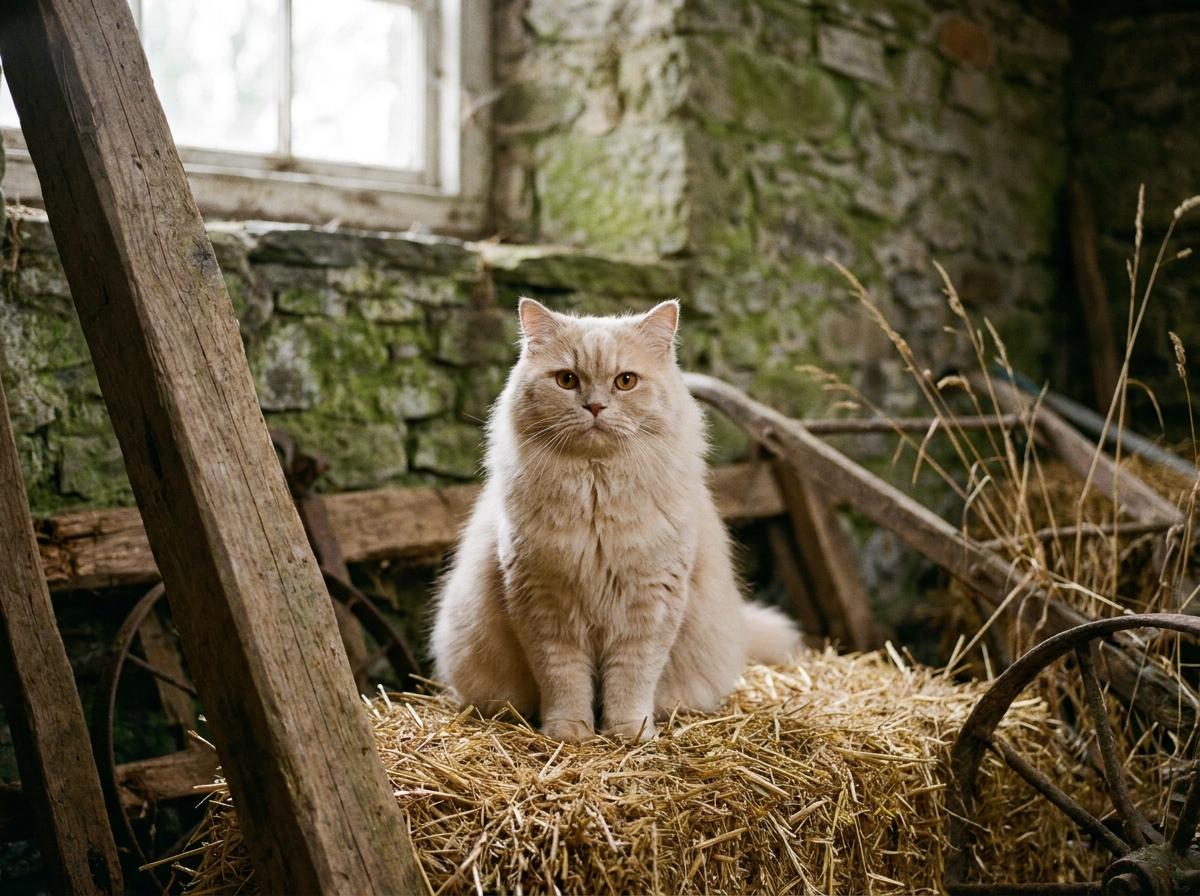
AI-generated illustration.
| Defining feature | Natural curved or kinked pom-pom tail |
|---|---|
| Coat | Shorthair and longhair |
| CFA championship | Shorthair 1976; longhair 1993 |
| Build | Lean and muscular with long legs |
| Pattern | Many colors; mi-ke is red, black and white |
| Handling | Never pull or straighten the tail |
Browse listings, public profiles, breeders, or add your animal.
Start with the natural tail, then look at the whole cat
The breed’s tail can contain curves, angles or kinks under its fur. The CFA standard allows individual variation and says its furthest bony extension should not exceed three inches. That is a show-standard description, not an invitation to manipulate a pet’s tail. Do not pull, stretch or try to straighten it to see whether it fits.
The rest of the Japanese Bobtail is just as characteristic: a medium, muscular but slender body, long legs, upright ears and a finely shaped face. Both longhaired and shorthaired varieties exist. The familiar red, black and white mi-ke pattern is only one possibility; a Japanese Bobtail need not be calico.

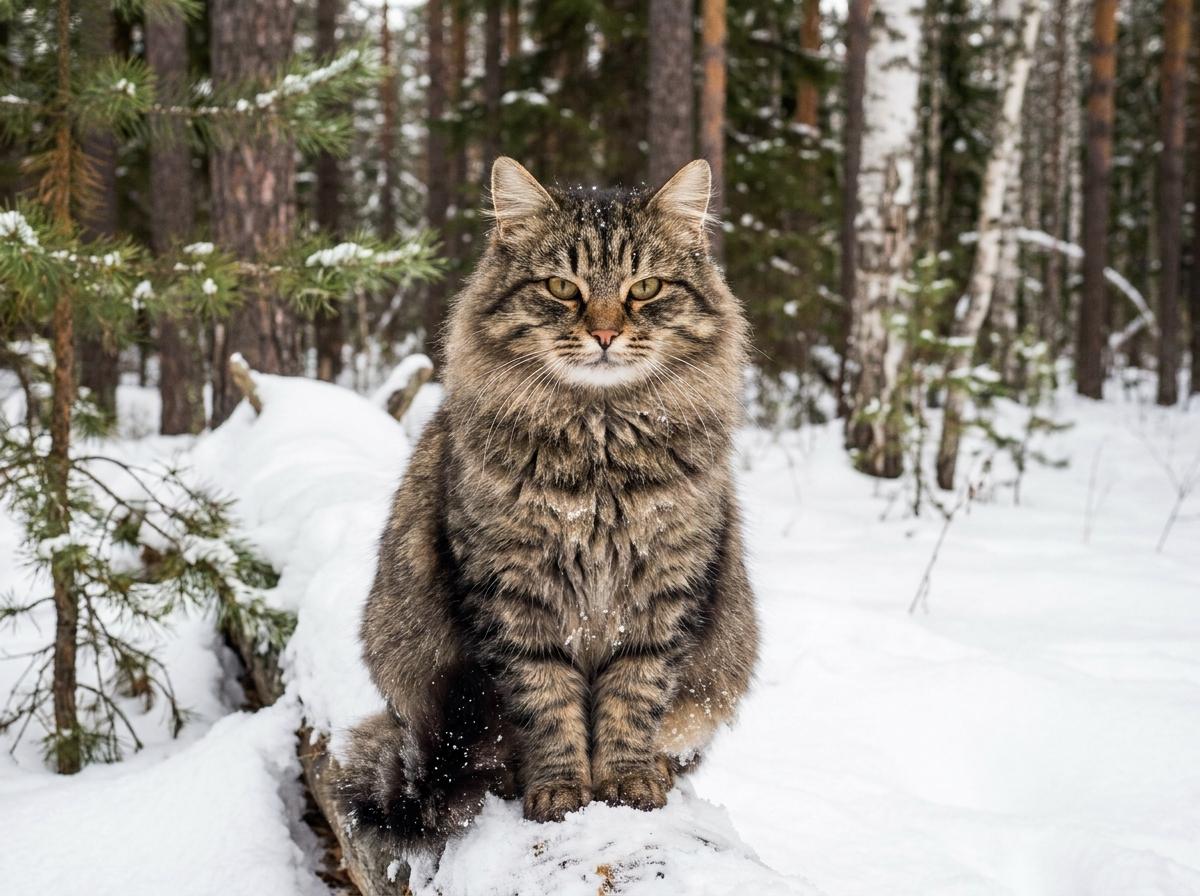
AI-generated illustration.
A short tail by itself does not prove breed identity. An ordinary domestic cat may have a naturally shortened tail or a history of injury. If a seller uses Japanese Bobtail as a pedigree claim, ask to see the documents. If a rescue uses it as a visual description, keep that distinction in the animal’s record rather than turning a guess into certainty.
History without turning folklore into proof
Japanese art and stories give the short-tailed cat a much older cultural history than its modern show registrations. The raised-paw lucky-cat figure is part of that association, but folklore cannot establish the ancestry of a kitten offered today.
CFA’s history dates the first US imports to 1968, shorthaired championship status to 1976 and longhaired championship status to 1993. TICA’s account gives different recognition milestones: shorthairs in June 1979 and longhairs in March 1991. TICA registers the longhair as a separate breed named Japanese Bobtail Longhair. The difference reflects separate organizations, not two conflicting birthdays for the breed.
Ask which registry and coat-length classification appear on the papers. Keep those details when using the free cat pedigree chart maker; do not silently convert an unfamiliar name into a different breed. For a cat adopted without papers, record the known background and describe the short tail without inventing registered ancestry.
CFA reports no known abnormalities associated with the Japanese Bobtail’s distinctive tail. That statement concerns this breed, not every cat born with a short tail. The Korean Bobtail guide explores why different short-tail histories should be checked separately. An injured tail, new pain or difficulty moving still needs a veterinarian.
An active companion, not a decorative lap ornament
Breed descriptions emphasize activity, curiosity and interaction. A Bobtail may enjoy contact and still prefer to leave your lap after a short rest. If the household wants a cat that can be carried around by children, assess that expectation before choosing the breed.
Ask the present keeper what the cat does when the house becomes quiet. Does it investigate every open cupboard? Which toys engage it? How does it ask for contact, and how does it decline? A useful answer describes a particular cat on an ordinary day.
The Siamese guide offers a useful comparison for a household seeking an interactive cat. Discuss the sound as well as the amount of that interaction: Japanese Bobtail accounts often describe softer chirps, but neither breed label predicts the voice or habits of an individual.
For a household with other pets, discuss the actual animals involved. A playful young dog that chases moving objects presents a different introduction problem from a calm dog that has lived with cats. Do not rely on the phrase good with dogs without asking which dogs, under what supervision and for how long.
Give curiosity somewhere useful to go
Choose stable climbing furniture and safe routes down, then leave enough floor space for play. Keep fragile ornaments away from landing areas. Make one place available where the cat can withdraw without being followed. Activity and rest need equal space in the plan.

AI-generated illustration.
Training can be a shared activity rather than a test of obedience. AAHA’s cat-training guidance describes rewarding behaviors and teaching a cat to go voluntarily to a particular place. A mat beside the table or an open carrier can become a useful destination. Begin with something the cat is already willing to do, keep the request simple and end while participation is still comfortable.
Make a short note of what worked. A visitor or pet sitter will find “likes the blue ball, leaves when picked up” more useful than “very intelligent.” The same observation can help you avoid repeatedly offering play or touch the cat dislikes.
Coat care and a sensible veterinary handover
Ask for a grooming demonstration suited to the coat length. A longhaired Bobtail needs the keeper to notice tangles, especially in areas that rub during movement. A short coat still benefits from regular handling that lets you notice changes in skin or body condition. The aim is a comfortable animal, not an elaborate grooming performance.
Have a veterinarian assess pain, a new change in movement, toileting difficulty or an injured tail. The breed name does not make a symptom normal, and a short tail is not a reason to dismiss discomfort. This guide does not diagnose spinal or tail conditions.
Before collection, obtain the vaccination and treatment history, details of any previous illness, and a clear account of the parents’ health if buying from a breeder. Ask what screening supports the breeder’s statements. Keep reports with dates and identities attached; a screenshot with no name may not tell you which animal was tested.
What a fair price comparison includes
A quote should tell you what is included and what remains your responsibility. Put the fee, travel, veterinary care already provided, registration terms and return arrangements on the same page. An apparently cheaper offer can become difficult to compare if several of those items remain vague.
Use the cat cost guide to compare the whole budget, including routine veterinary care and support when you travel.
A practical first week
The kitten vaccination guide can help you read the dates supplied at collection before your clinic sets the next appointment.
Set up a quiet starting space, retain the familiar feeding and litter routine during the transition, and let the cat explore at its own pace. Ask the former keeper what sounds, toys and routines already signal food or rest. A predictable handover is more useful than an immediate stream of visitors.
Use the cat hub on Creatures for broader comparisons. In the new cat’s profile, keep its identification, documents and ordinary observations together. If its exact birthday or breed status is unknown, preserve that uncertainty.
Japanese Bobtail questions
Are the tails docked?
The breed’s defining short tail occurs naturally. Ask a veterinarian about any individual with an injury or unclear medical history.
Is every Japanese Bobtail calico?
No. Calico is a familiar pattern, but the breed occurs in other colors and patterns and in two coat lengths.
Is it the same as a Manx?
No. Do not group all short-tailed cats under one breed name. Use the actual pedigree where known and an honest descriptive label where it is not.
Do this next on Creatures
Still looking? Get an alert when a Japanese Bobtail is listed, explore the wider cat breeder directory, or check current Japanese Bobtail listings. The wider directory is not a promise that this breed is represented. The Help Center explains saved searches and email alerts.
Already caring for one? Add a record when you have a dated document or useful observation. The form opens for visitors; a free account is needed to save. The Help Center explains adding an animal and adding a record.
Breeders and organizations can create an organization profile for their work. The organization and team guide explains the setup.