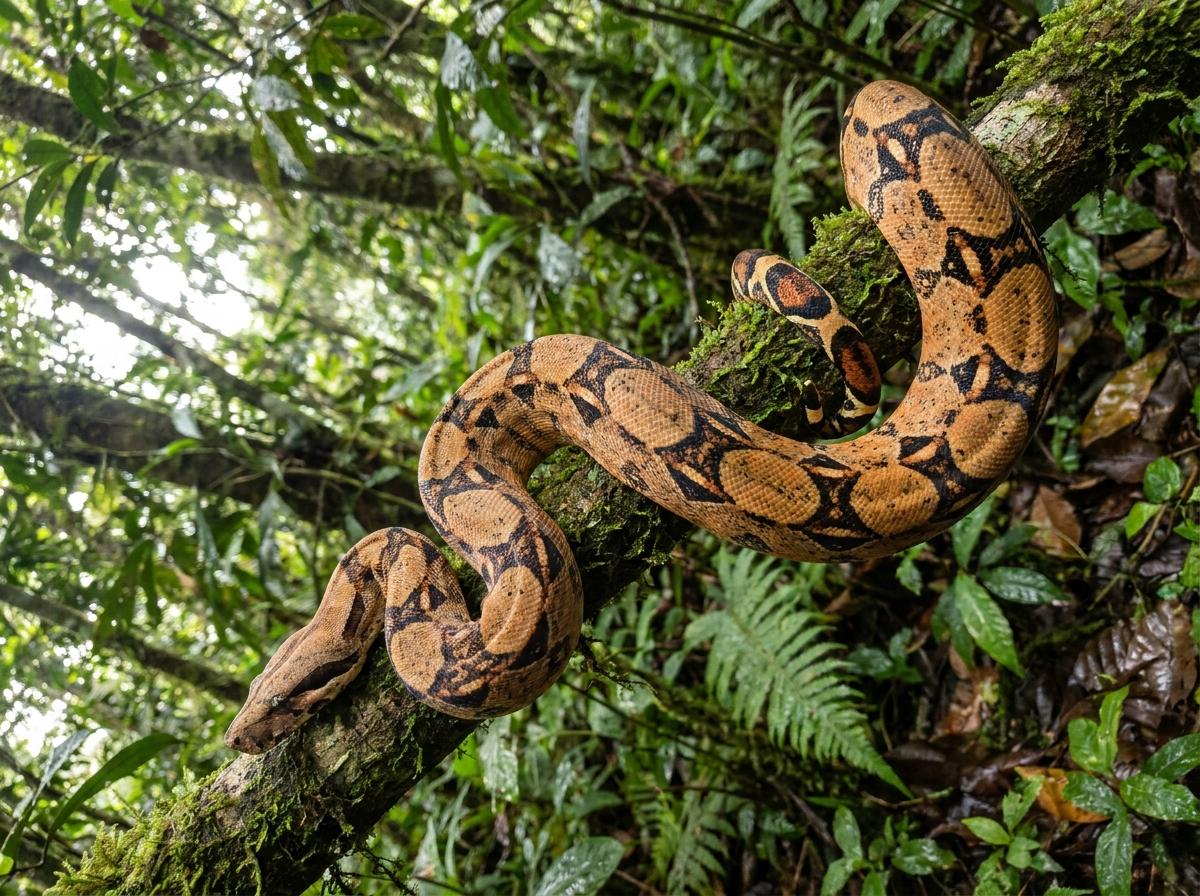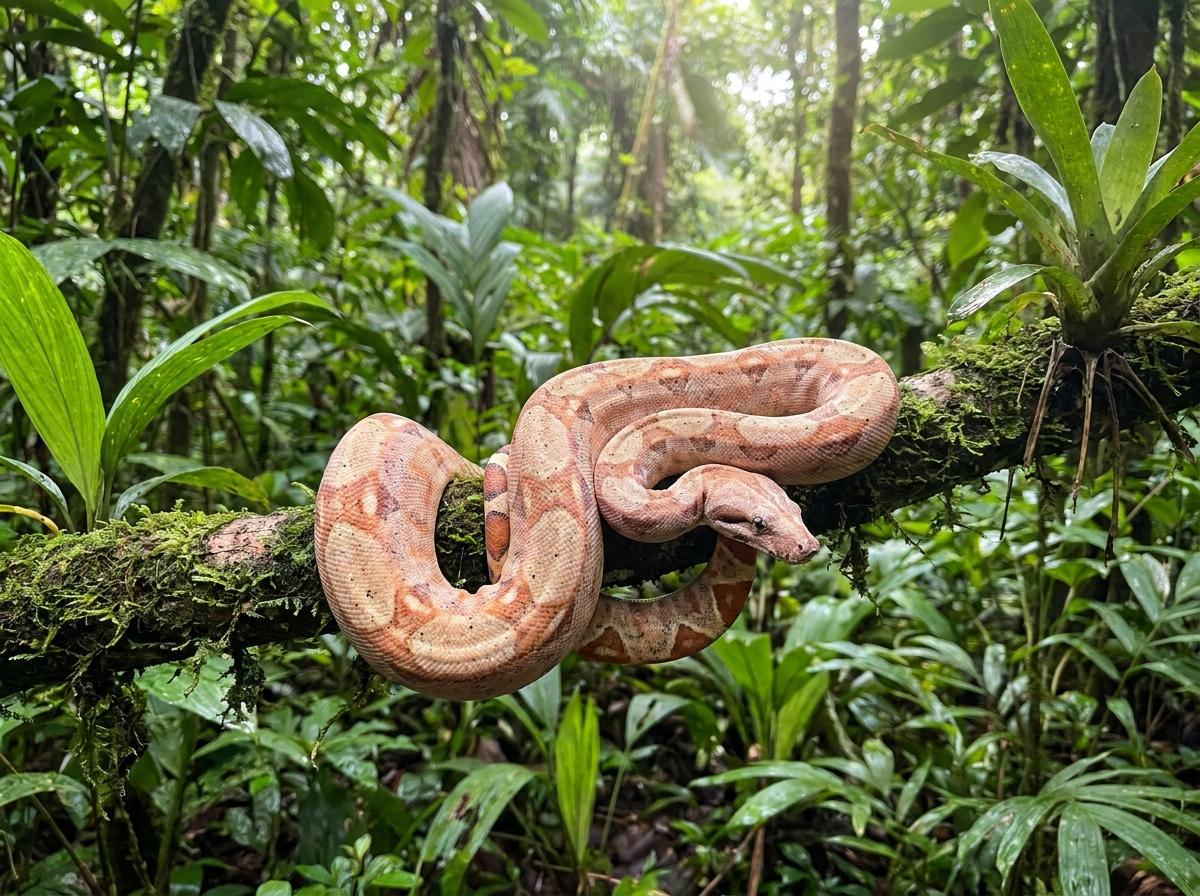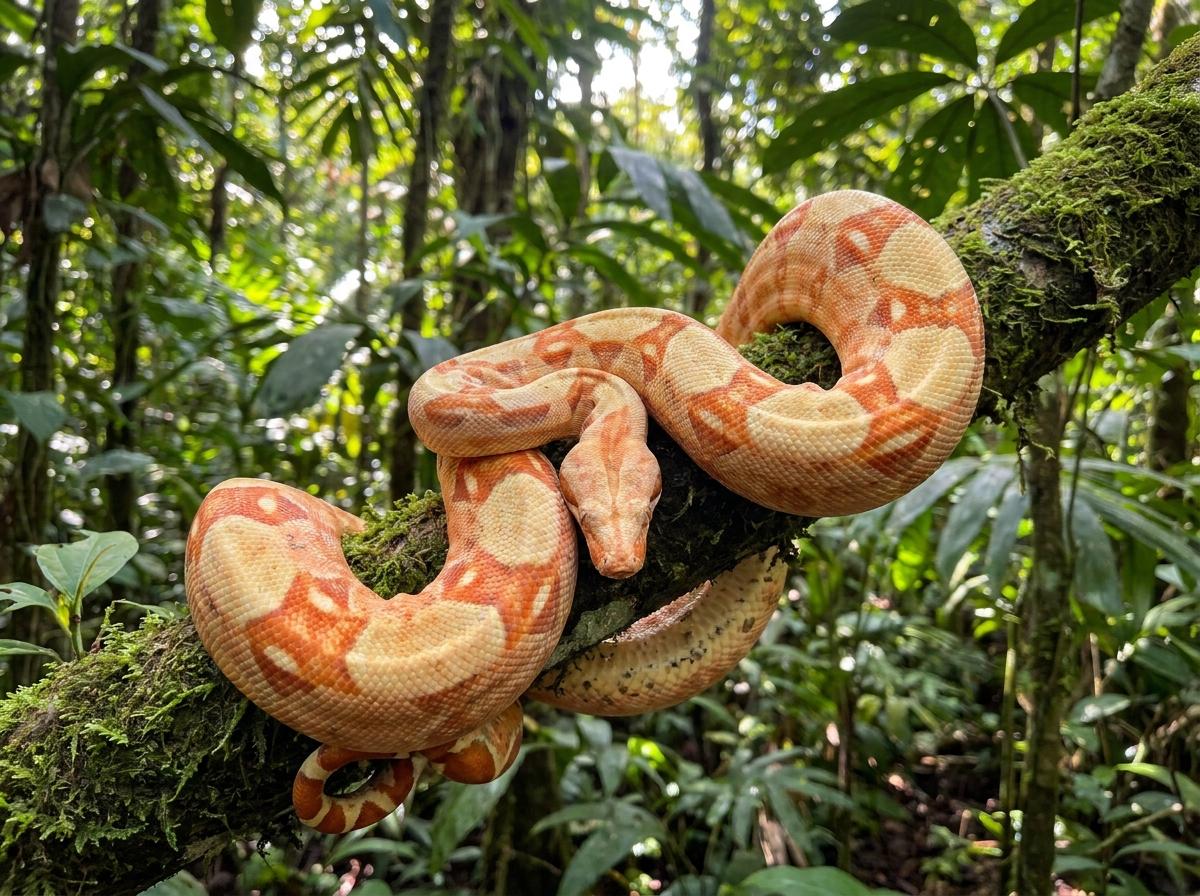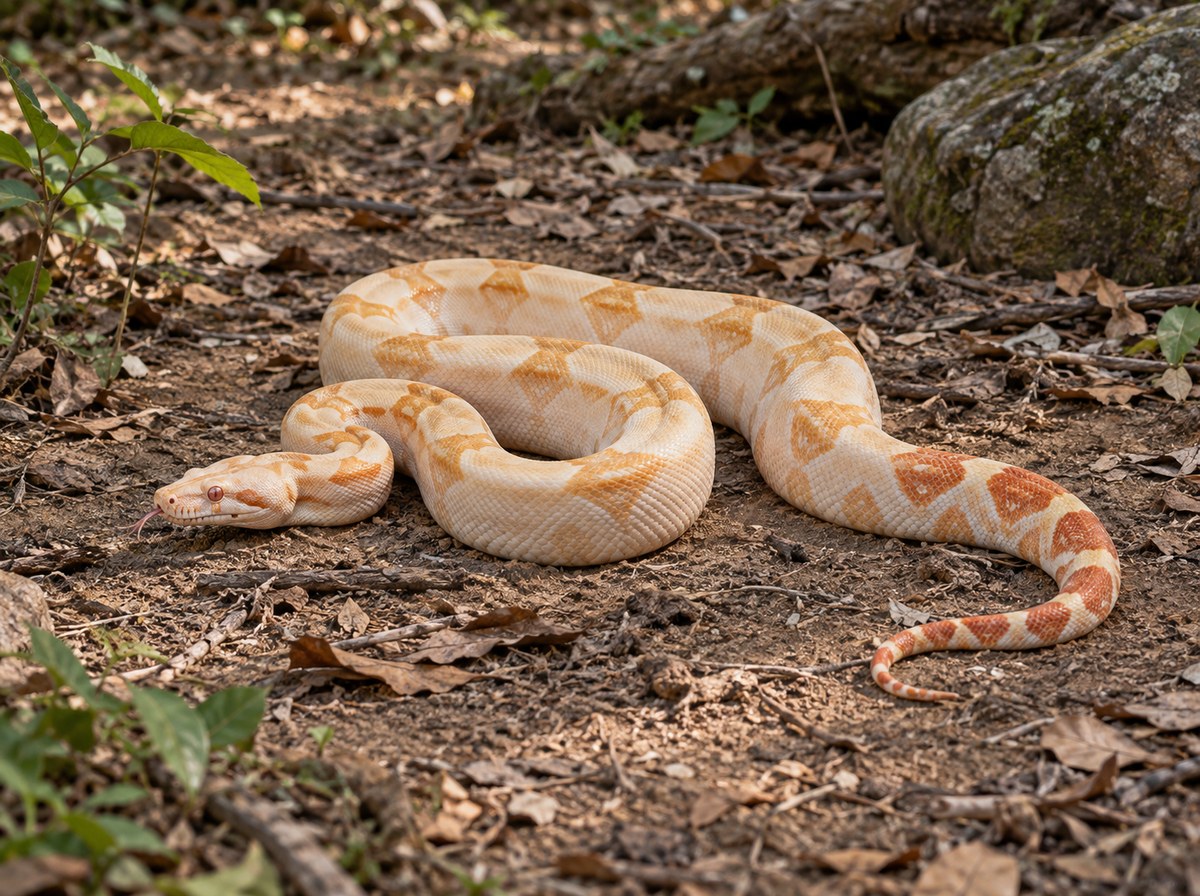



Moonglow
Morph
Author: Elliott Garber, DVM · Updated
The moonglow is not a species or a subspecies of boa. It is a designer color morph of the common boa constrictor, produced by stacking three separate pigment mutations in one animal: hypomelanism, anerythrism, and the Kahl strain of albinism. Combine those three and you get the pale, almost moonlit snake the name promises, a boa with the reds and most of the blacks bred out, wearing soft cream and lavender in place of the wild boa’s chocolate saddles. This page walks through what a moonglow actually is, how the genetics work (and where the hobby’s naming gets slippery), how to tell one from the very similar snow morph, what it costs and what it needs to live well, and the legal reality of keeping a boa in the United States. If you are weighing whether a moonglow belongs in your collection, start here.
| What it is | A color morph of the common boa constrictor, not a separate species |
|---|---|
| Species | Common boa, widely cataloged now as Boa imperator (long known as Boa constrictor imperator) |
| Genetics | Triple combo: hypo plus anerythristic plus Kahl albino |
| Look | Near-white as a neonate, warming to cream and pale yellow with age; faint, pinched bow-tie saddles |
| Adult length | Commonly about 5 to 7 feet for common boas, females larger; some exceed that |
| Lifespan | Roughly 20 to 30 years in captivity, with documented individuals past 40 |
| Temperament | Generally calm and handleable, no different by morph from any other well-raised common boa |
| Legal status | Not federally listed as injurious under the Lacey Act; state and local rules vary, so check yours |
Browse listings, public profiles, breeders, or add your animal.
What is a moonglow boa?
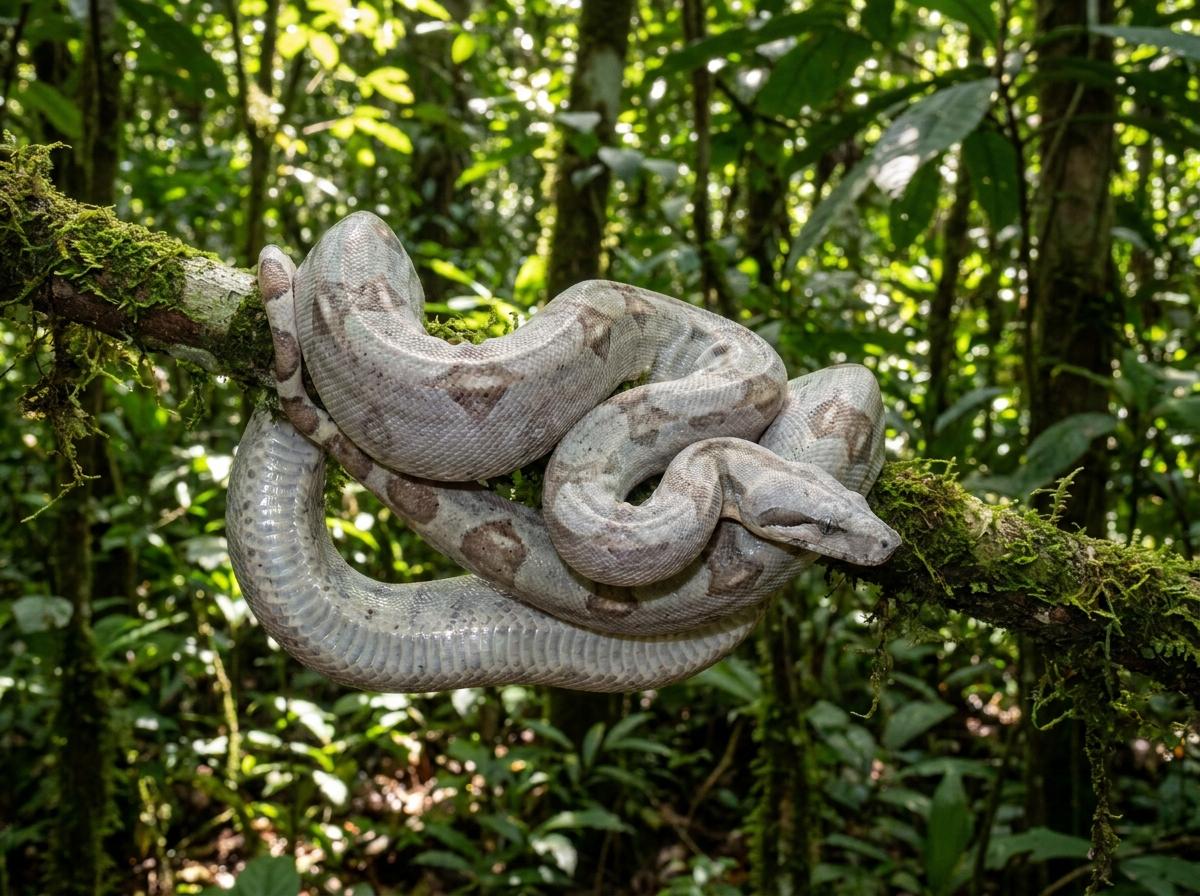
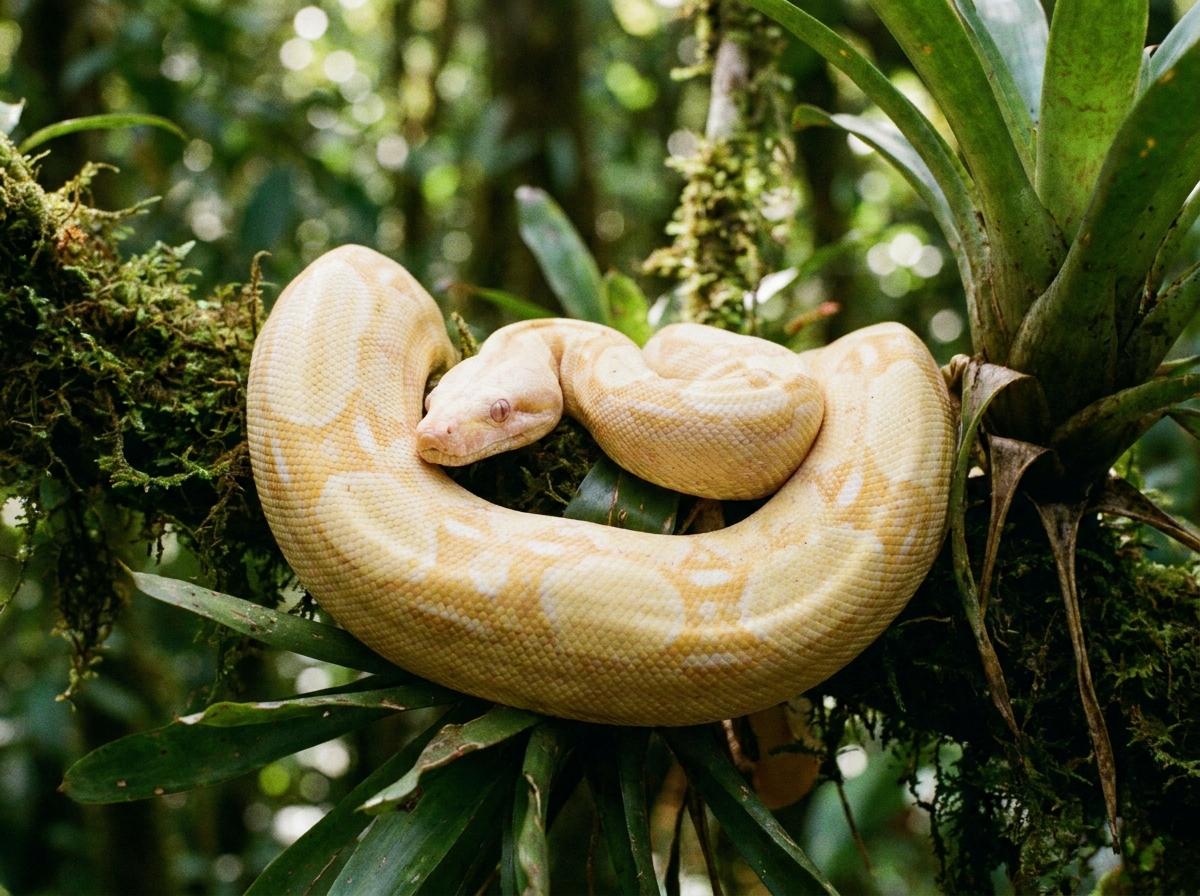
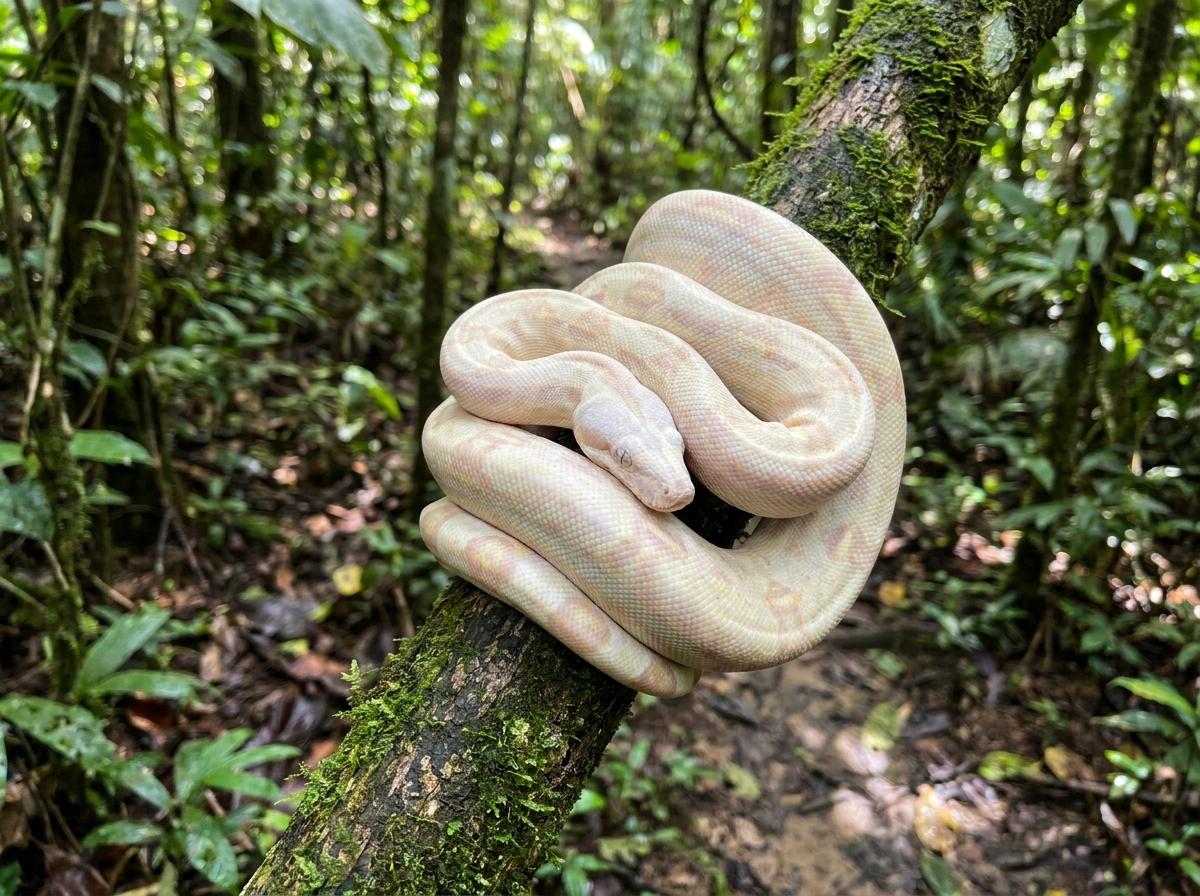
A moonglow is a common boa constrictor that carries three color mutations at once. Take a normal boa, remove its red pigment, strip out most of its black, and reduce and fade the pattern, and what remains is a snake that reads as white to pale cream with only ghostly markings. That combined effect is the moonglow. The name is descriptive rather than official, since there is no registry or governing body for boa morphs, only the naming conventions the breeding community has settled into.
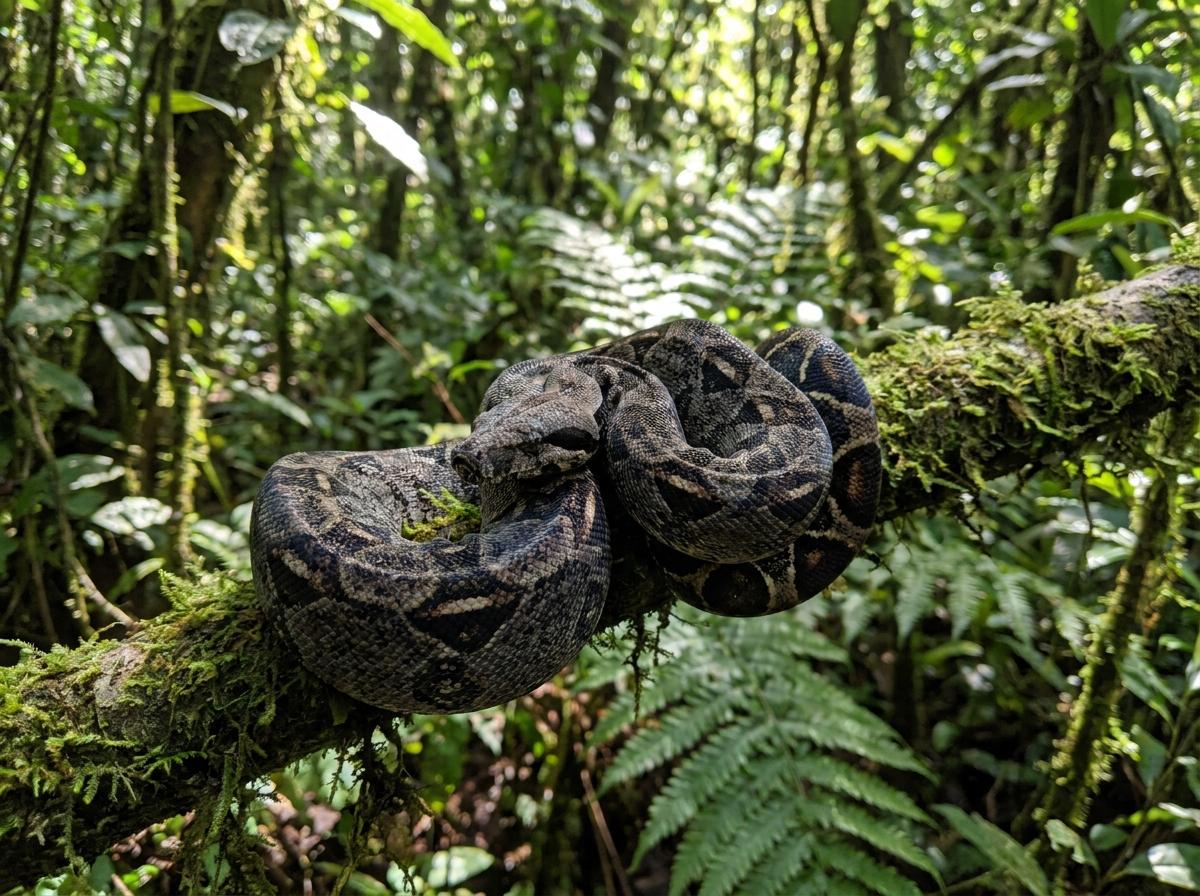
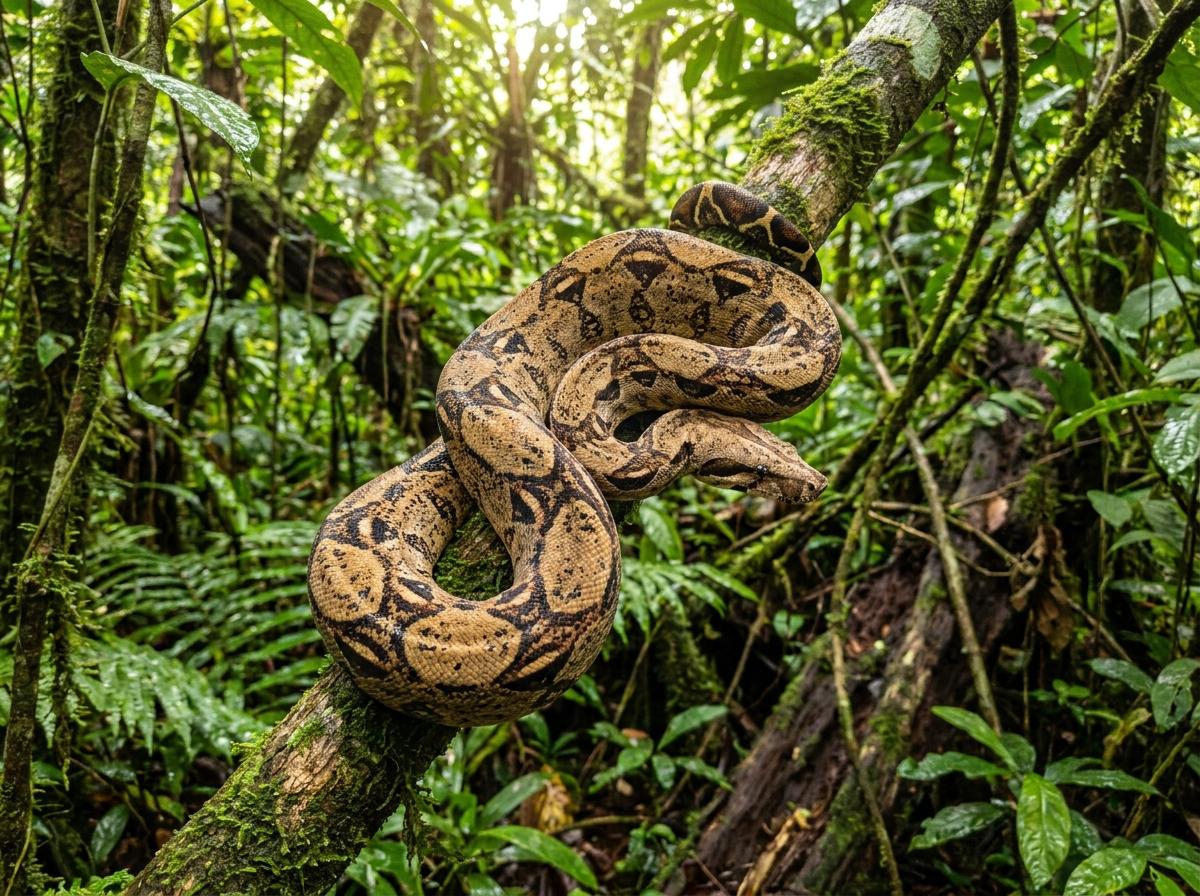
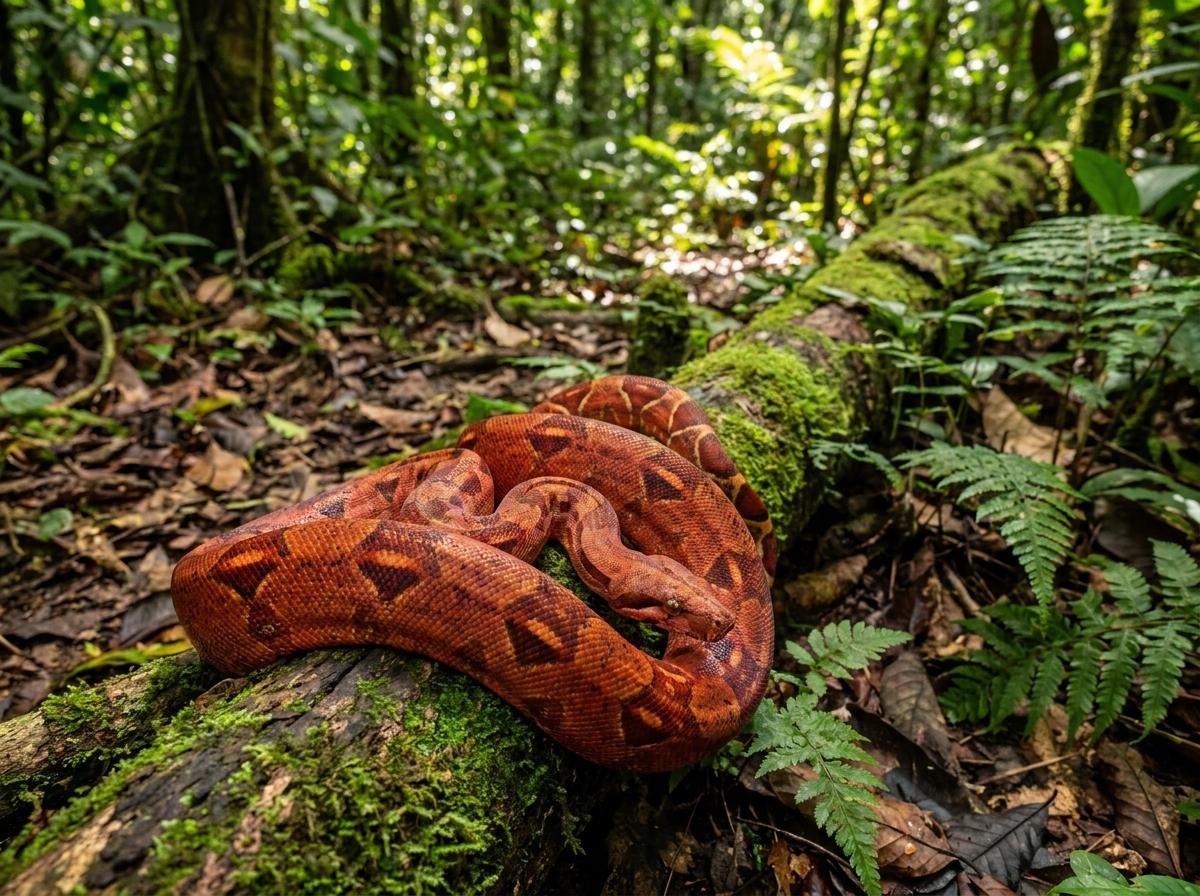
The underlying animal is the common boa, the widespread, medium-large boa native to Mexico, Central America, and parts of northern South America. Taxonomy here is worth a sentence because it changed. For decades this snake was treated as a subspecies, Boa constrictor imperator. Based on genetic work published from 2009 onward, many references now elevate it to a full species, Boa imperator, distinct from the South American Boa constrictor, though you will still see both names in use and acceptance is not universal (see the Boa imperator entry on Wikipedia for the current state of the split). For a keeper, the practical point is simpler: nearly all boa morphs sold in the pet trade, moonglow included, are common boas, and their care is the same regardless of which Latin name is on the label.
Moonglows first appeared in the late 1990s, part of a wave of boa breeders chasing the all-white look that ball python keepers were producing around the same time. It took combining three recessive-and-dominant traits in one clutch, which is why the morph was rare and pricey early on and why it still commands a premium compared with single-gene boas. If you are still comparing morphs and want the broader picture, the Creatures boa constrictor species page is a good hub to work outward from.
The genetics, told honestly
Three genes build a moonglow. Here is what each one does on its own, which is the only way the combination makes sense.
- Anerythristic (anery, type I). Anerythrism removes red and orange pigment. On its own it turns a boa gray, silver, and black. This is a simple recessive trait, so an animal needs two copies to show it. Our anery boa guide covers the gene on its own, including why Type 1 and Type 2 aneries are not interchangeable.
- Albino (Kahl strain). This is an amelanistic albinism that removes black pigment, leaving the reds, oranges, and yellows to show through against a white ground. It is also a simple recessive. Importantly, boas have more than one unrelated albino line, and the Kahl strain and the Sharp strain are not interchangeable; a moonglow specifically uses Kahl albino. Pair that albino with hypo but leave out the anery and you get the brighter, orange-toned sunglow boa, the moonglow’s closest relative.
- Hypomelanistic (hypo). Hypo reduces black pigment and fades the pattern without erasing it, giving a paler, softer-looking snake. Unlike the other two, hypo does not behave as a simple recessive. The reptile community generally describes it as incomplete dominant, meaning one copy already shows an effect and two copies (a “super hypo”) show a stronger one. You will often hear it called co-dominant in casual use, which most genetics-minded keepers consider the looser, less precise term.
Stack all three and the logic falls out: anery kills the red, albino kills the black, and hypo fades whatever pattern is left. The result is a snake with almost nothing dark to show, which is why moonglows look bleached compared with their single-gene parents.
Two honest caveats belong here. First, none of this comes from peer-reviewed genetics literature. Boa morph inheritance is documented by breeders and the hobby, tracked through generations of test breedings rather than published studies, so treat the specifics as well-established community knowledge rather than laboratory fact. Second, morph names are not standardized. Different breeders and regions draw the moonglow, snow, and snowglow lines in slightly different places, and because two separate albino strains exist, the same three-word gene description can point at different animals depending on which albino is involved. When you buy, ask the breeder to spell out the exact genes and albino strain rather than relying on the trade name alone.
Moonglow versus snow (and snowglow)
This is the comparison most buyers actually search for, because the two morphs look alike and the difference is one gene.
A snow boa is a double combo: anery plus Kahl albino. That pairing already produces a very pale snake, typically white with a soft yellow cast and some visible patterning. A moonglow is a snow with hypomelanism added on top, anery plus Kahl albino plus hypo. That third gene strips out more of the residual yellow and fades the pattern further, so a moonglow reads as whiter and cleaner, with markings that look faint, washed out, or nearly gone. Put simply, a moonglow is a hypo snow.
Naming gets muddier from there. Because boas carry two distinct albino strains, the hobby sometimes reserves “moonglow” for the Kahl-albino version and “snowglow” for a version built on the Sharp strain, and not everyone uses those labels consistently. The takeaway is not to memorize every convention but to recognize that the trade name alone does not fully define the animal. The gene list does. A seller who can name the three genes and the albino strain is giving you more reliable information than the morph name on its own.

What a moonglow looks like
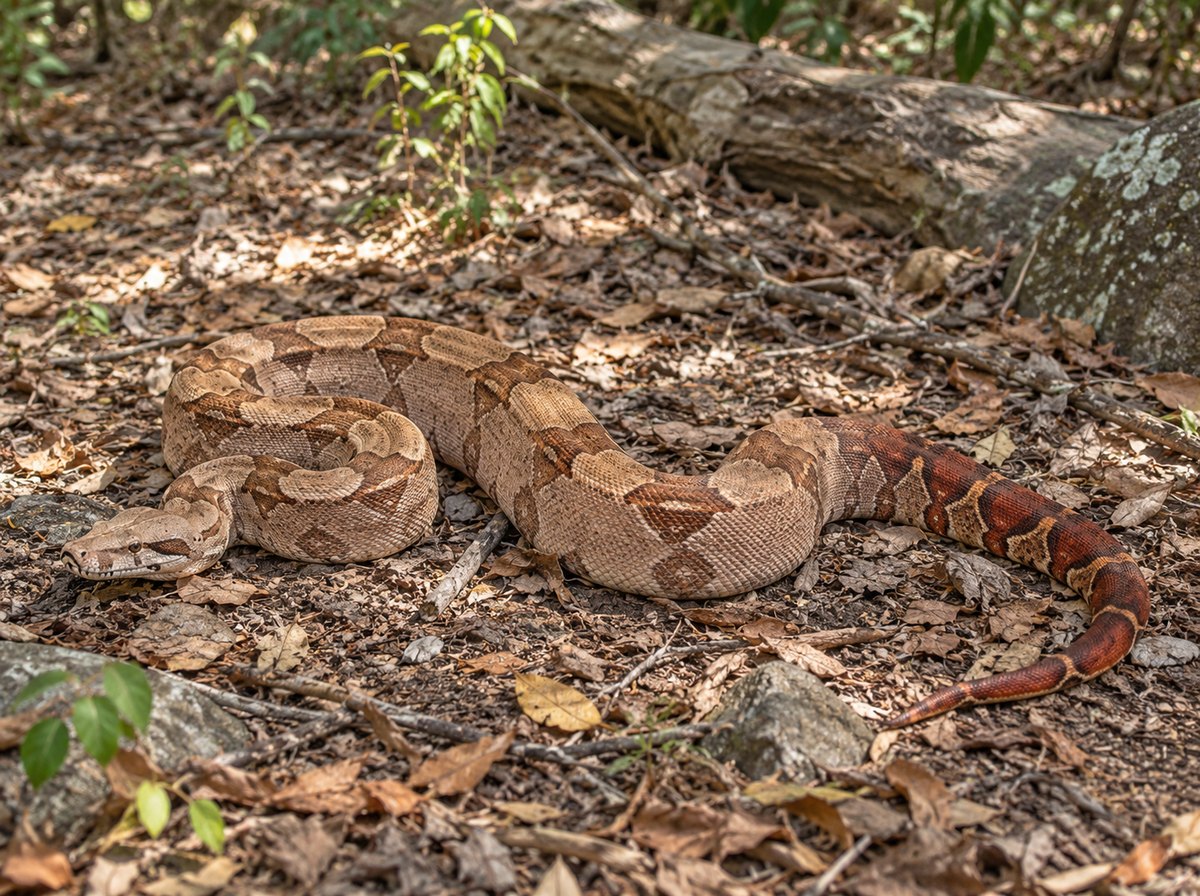
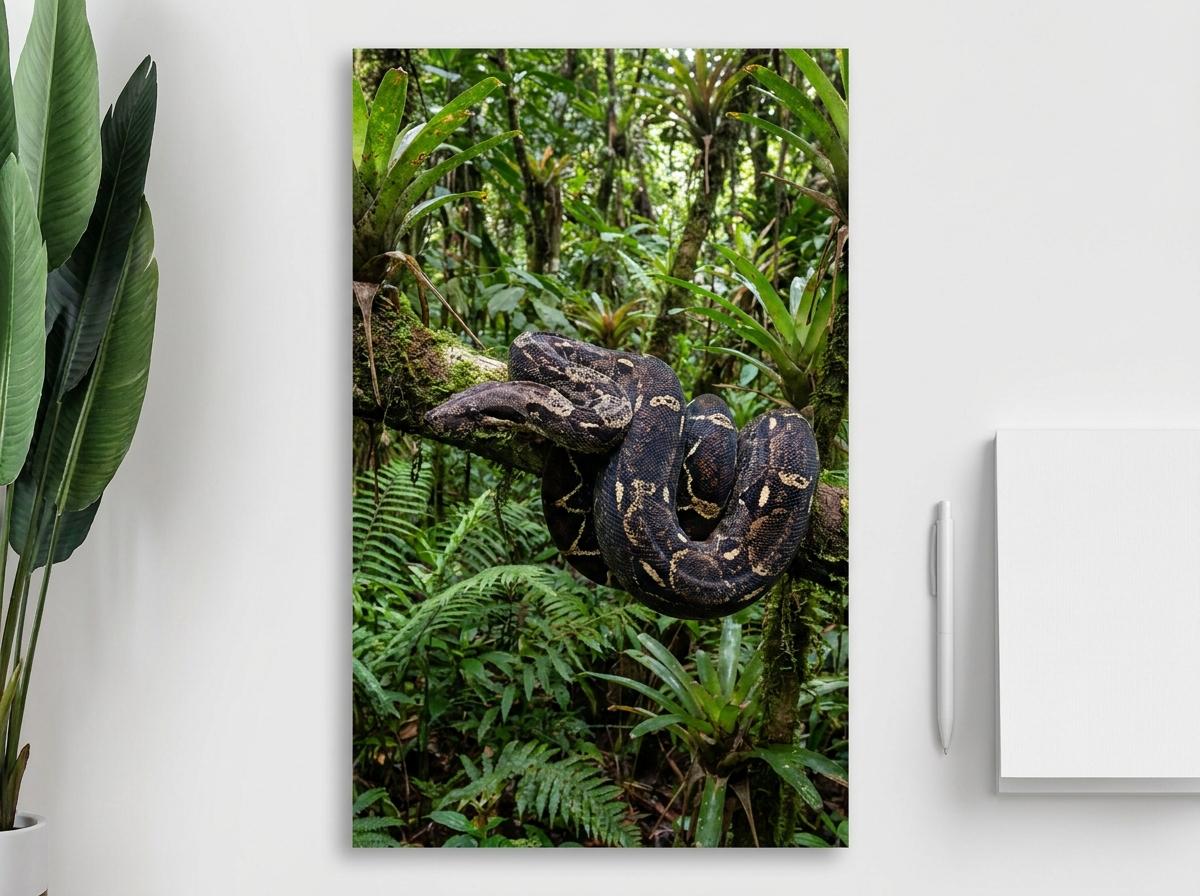
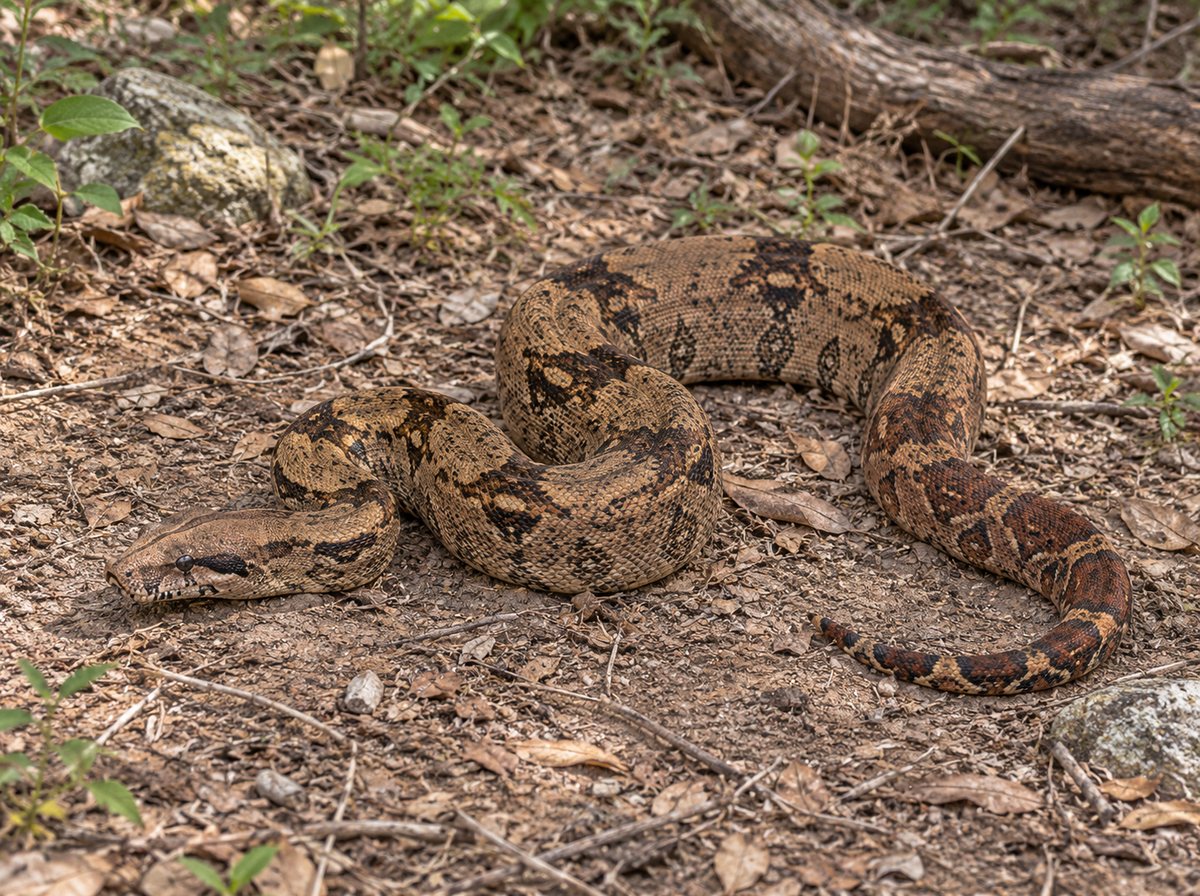
The signature is the near absence of contrast. A wild-type common boa wears dark chocolate saddles, bold tail markings, and crisp black borders. A moonglow keeps the skeleton of that pattern but drains the color out of it, so the saddles survive only as faint, pinched shapes, often described as bow-tie or hourglass forms, sitting on a pale cream to white body. The tail markings, which are strong and well ringed on a normal boa, are heavily reduced or nearly absent on a moonglow, and that faded tail is one of the details keepers use to separate it from close morphs.
Color is not fixed across the animal’s life. Moonglows tend to hatch nearly white and warm up as they mature, developing more cream and pale yellow tones with age. That ontogenetic shift is normal and expected, so a photo of a stark-white neonate and a photo of a warmer, creamier adult can both be honest pictures of the same morph at different ages. As with any snake, coloring looks dullest in the days right before a shed, when the skin clouds over and the pattern goes flat, and brightest just after the animal sloughs its old skin, so judge an animal’s true tone somewhere in the middle of its shed cycle rather than in the cloudy days just before it sheds.
None of these markers change the animal’s build. A moonglow has the same heavy body, muscular coils, and blunt head as any common boa. The morph is skin-deep pigment genetics, not a change to size or shape.
Size, weight, and lifespan
Common boas are medium-large snakes, not giants, which is much of their appeal: a big snake that stays reasonable. Adults commonly reach about 5 to 7 feet, with females noticeably larger and heavier-bodied than males, and some individuals grow beyond that range. Still, this is a snake measured in feet and years, so plan for an animal that will outgrow a starter enclosure and keep growing, slowly, for years after.
Reliable published weight figures specific to the moonglow morph do not exist, and adult mass varies widely with sex, feeding, and individual size. Rather than invent a precise number, call a healthy mature female what she is: a solid, muscular snake in the range of a few to several pounds. Do not use a scale reading from someone else’s boa as a target for yours; body condition, judged by feel and shape, matters more than hitting a weight.
Boas are long-lived, and that is the single most important number for a prospective owner to internalize. Captive common boas commonly live 20 to 30 years, and individuals past 40 are documented (reptile care references such as Reptiles Magazine put the typical captive span in that two-to-three-decade range). A moonglow bought as a hatchling can easily still be with you when your circumstances, home, and free time look nothing like they do today. That is a genuine multi-decade commitment, not a figure of speech.
Temperament
Common boas have a well-earned reputation as calm, tolerant, handleable snakes, and moonglows are no exception. Color genetics do not touch disposition, so the morph tells you about appearance and price, nothing about behavior. Individual animals differ, and any snake can be defensive when stressed, hungry, or in shed, but a well-started, regularly and gently handled boa is generally an easygoing animal. As with any constrictor of this size, sensible handling practice applies: support the body, do not handle around feeding, and for a larger boa have a second person present when appropriate.
Care and housing
A moonglow needs exactly what any common boa needs. The parameters below are drawn from established reptile care references and reflect broad consensus, but ranges vary by source and by animal, and anything medical belongs with a reptile veterinarian rather than a care sheet.
Enclosure. Boas are terrestrial and heavy-bodied, so floor space matters more than height. Hatchlings start in smaller enclosures and are moved up as they grow. Adults are generally kept in enclosures on the order of at least 6 feet by 2 feet of floor space for a typical common boa, larger for a big female, with secure latching because boas are strong and persistent escape artists. Provide at least two hides, one on the warm side and one on the cool side, plus a sturdy branch and a water bowl large enough to soak in.
Temperature. Offer a thermal gradient so the snake can choose. A basking or warm spot around the low 90s Fahrenheit, a warm side in the mid-80s, and a cooler side in the high 70s is a common target, with nothing dropping below roughly 75 at night. Use thermostats on all heating equipment and verify temperatures with actual thermometers at snake level rather than trusting a dial.
Humidity. A moderate range, often cited around 50 to 60 percent, suits common boas, raised temporarily toward 70 percent during a shed to help the animal slough cleanly. Persistent low humidity causes incomplete sheds; persistent high humidity with poor ventilation invites scale rot and respiratory trouble, so aim for the middle and keep airflow adequate.
Feeding. Boas eat appropriately sized rodents on a schedule that stretches out as they grow, from more frequent feedings for young snakes to every couple of weeks or longer for adults. Overfeeding a captive boa is a real and common welfare problem, producing an overweight snake, so feed for a healthy body condition rather than maximum size, and let a reptile veterinarian guide you if you are unsure. Prey size should be modest relative to the snake’s girth, not the largest thing it can swallow.

Records pay off with a 20-year-plus animal. Logging sheds, feedings, weights, and health notes over time is how you catch a problem early: a stalled shed cycle, a refused meal that drags on, a slow weight change. It also gives your veterinarian real history to work from. Creatures is built for exactly that kind of long-run record keeping, which we come back to at the end.
Is it legal to own a moonglow boa?
For most people in the United States, the honest answer is that the common boa constrictor is one of the more accessible large snakes to own legally, but you must check your own state, county, and city rules before buying, because they genuinely vary.
At the federal level, the common boa constrictor is not listed as injurious wildlife under the Lacey Act. This is a specific and verifiable point, not a general reassurance. When the U.S. Fish and Wildlife Service listed several large constrictors as injurious (the Burmese python and others in 2012, and the reticulated python and several anacondas in 2015), the boa constrictor was considered and then deliberately left off. The agency’s stated reasoning was that the species is already so widely kept and bred in the United States that import and interstate-transport bans would do little (the 2015 Federal Register listing documents which species are covered, and the boa is not among them). So the federal injurious-species restrictions that apply to some large pythons and anacondas do not apply to the common boa.
State and local law is where the real variation lives. Some states allow boas freely, some require a permit, and some cities and counties impose their own restrictions or size limits that are stricter than the state. A reptile-owner rule can also change over time. The reliable move is to verify the current rules for your specific location before you acquire the animal, using your state wildlife agency and any local ordinance, rather than assuming a boa is legal everywhere. Keepers often start from a state-by-state overview such as the USARK reptile ownership laws page and then confirm against the primary state and local sources. Treat any summary, including this one, as a prompt to check the law yourself, not as legal advice.
Cost and buying considerations
Moonglows cost more than plain common boas because it takes three genes to make one, which means more generations of breeding and fewer of them in any clutch. Prices move with the market, the specific animal, sex, age, and the breeder, and there is no single fixed figure worth quoting, so be wary of any source that states one precise price as if it were the going rate. Expect a moonglow to sit toward the higher end of common-boa morph pricing rather than at the bargain end, and expect a proven adult female to cost more than a single hatchling.
What matters more than chasing the lowest price is buying a healthy, honestly represented animal:
- Get the genetics in writing. Because morph names are not standardized and two albino strains exist, ask the seller to state the three genes and the albino strain, not just the word “moonglow.” A breeder who tracks and shares that information is the kind you want.
- Ask for history. Feeding records, shed history, hatch date, and the animal’s lineage tell you more about what you are buying than the photo does. A long-lived animal should come with a paper trail.
- Assess health in person or on clear video. Look for clean eyes and nostrils, a clean vent, good body condition and muscle tone, an alert and even temperament, and no signs of retained shed, mites, or respiratory noise. When in doubt, a reptile veterinarian can do a pre-purchase or new-pet check.
- Buy captive-bred. Moonglows are a captive-produced morph by definition, so this is easy, but insist on it and on a seller who is transparent about origin and husbandry.
You can browse moonglow and other boa listings on the Creatures marketplace and look for breeders in the Creatures directory. Because a specific morph like this does not appear in every listing pool at once, a saved listing alert (in the hub below) is often the most practical way to catch one when a good animal is posted. If you are working your way through the platform’s other detailed breed pages while you research, the Romanian Raven Shepherd Dog and African Owl pigeon pages are built in the same in-depth format as this one.
Frequently asked questions
Is a moonglow boa a separate species?
No. It is a color morph of the common boa constrictor (Boa imperator, long known as Boa constrictor imperator). The morph changes pigment and pattern, not the animal’s species, size, or care.
What genes make a moonglow?
Three: anerythristic (removes red), Kahl-strain albino (removes black), and hypomelanistic (fades the remaining pattern). Anery and albino are simple recessives; hypo is generally described as incomplete dominant. This is community-documented breeding knowledge rather than peer-reviewed science, and morph naming is not standardized, so confirm the exact genes with the breeder.
What is the difference between a moonglow and a snow boa?
A snow is anery plus Kahl albino. A moonglow is that same pair plus hypo, which fades more of the residual yellow and pattern. In short, a moonglow is a hypo snow, so it usually looks whiter and cleaner with fainter markings, especially a much-reduced tail pattern.
How big do moonglow boas get?
Like other common boas, adults commonly reach about 5 to 7 feet, with females larger, and some grow beyond that. The morph does not change size.
How long do moonglow boas live?
Common boas typically live 20 to 30 years in captivity, and some pass 40. A moonglow is a multi-decade commitment, which is worth taking seriously before you buy.
Are boa constrictors legal to own?
The common boa constrictor is not federally listed as injurious under the Lacey Act, unlike some large pythons and anacondas. State and local laws vary widely, though, so check your specific state, county, and city rules before acquiring one, and treat this as a prompt to verify the law, not as legal advice.
Do this next on Creatures
Whether you are researching moonglows, hunting for a well-bred one, or already keeping boas, Creatures is the records, marketplace, and directory layer to do it in one place.
Find one. Browse moonglow boas on the marketplace and search trusted breeders in the Creatures breeder directory. New to the marketplace? See saving searches and using your watchlist.
Get alerted. A specific morph is not always in stock, so set a free moonglow boa listing alert and we will tell you when one is posted. No account needed to start.
Add your boa. Already keeping a moonglow? Create a free animal profile in a few minutes. The walkthrough is in adding an animal to Creatures, and your animal’s profile page explains what each tab does.
Track sheds, feedings, and health. With a snake you may keep for 20 years or more, records matter. Log a feeding, shed, weight, or health record on Creatures. The record sheet opens for any visitor to look around, and you will need a free account to save what you enter. See adding a record and health and medical records for the how-to.
Breed or sell boas? List your operation on Creatures so buyers searching for specific morphs can reach you.