Budgie Colors and Mutations: Green, Blue, Lutino and Other Varieties
Author: Elliott Garber, DVM · Updated
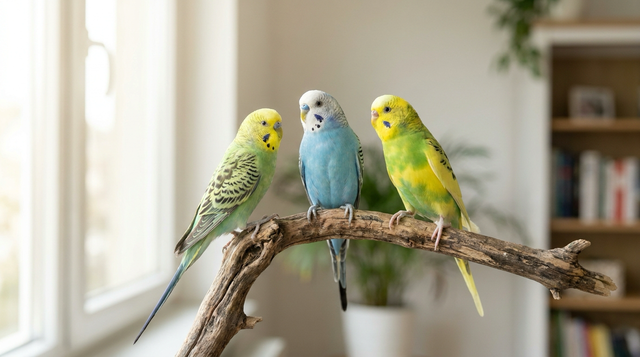
Budgie colors combine body color with feather markings: green and blue are starting points, while names such as opaline, spangle, pied, lutino and albino describe other visible traits or combinations. A budgie’s appearance can narrow a description, but it cannot reveal every inherited variant the bird carries.
Create a budgerigar profile to keep photos and the breeder’s description with the individual bird. Creatures uses the species name budgerigar and supports animal and ancestry records; there is no budgie color calculator or budgerigar option in the free chart maker.
| Species | Budgerigar, Melopsittacus undulatus |
|---|---|
| Green appearance | Yellow pigment with structural feather color |
| Blue mutation | Loss of yellow pigment in the studied blue variant |
| Color versus variety | Body shade and markings are separate observations |
| White or yellow birds | Eye color and markings help distinguish varieties |
| Record limit | A photo does not reveal every inherited variant |
Why green and blue are related
Budgie feathers combine pigment and structure. Yellow psittacofulvin pigment, together with structural feather color, contributes to the normal green appearance. In the primary study of budgerigar yellow pigmentation, researchers mapped the recessive blue trait to a change in MuPKS, an enzyme involved in making yellow pigment. Loss of that yellow component leaves a blue appearance in the relevant feathers.
That finding explains the studied blue mutation. It does not make every pale, gray, violet or partly yellow bird genetically identical, and it is not a catalogue of every mutation a breeder may name. Do not treat a camera’s blue-green shift as a DNA test.
The budgerigar species page is the parent catalogue entry. Different color varieties remain budgerigars, rather than separate species.
Common color and variety names
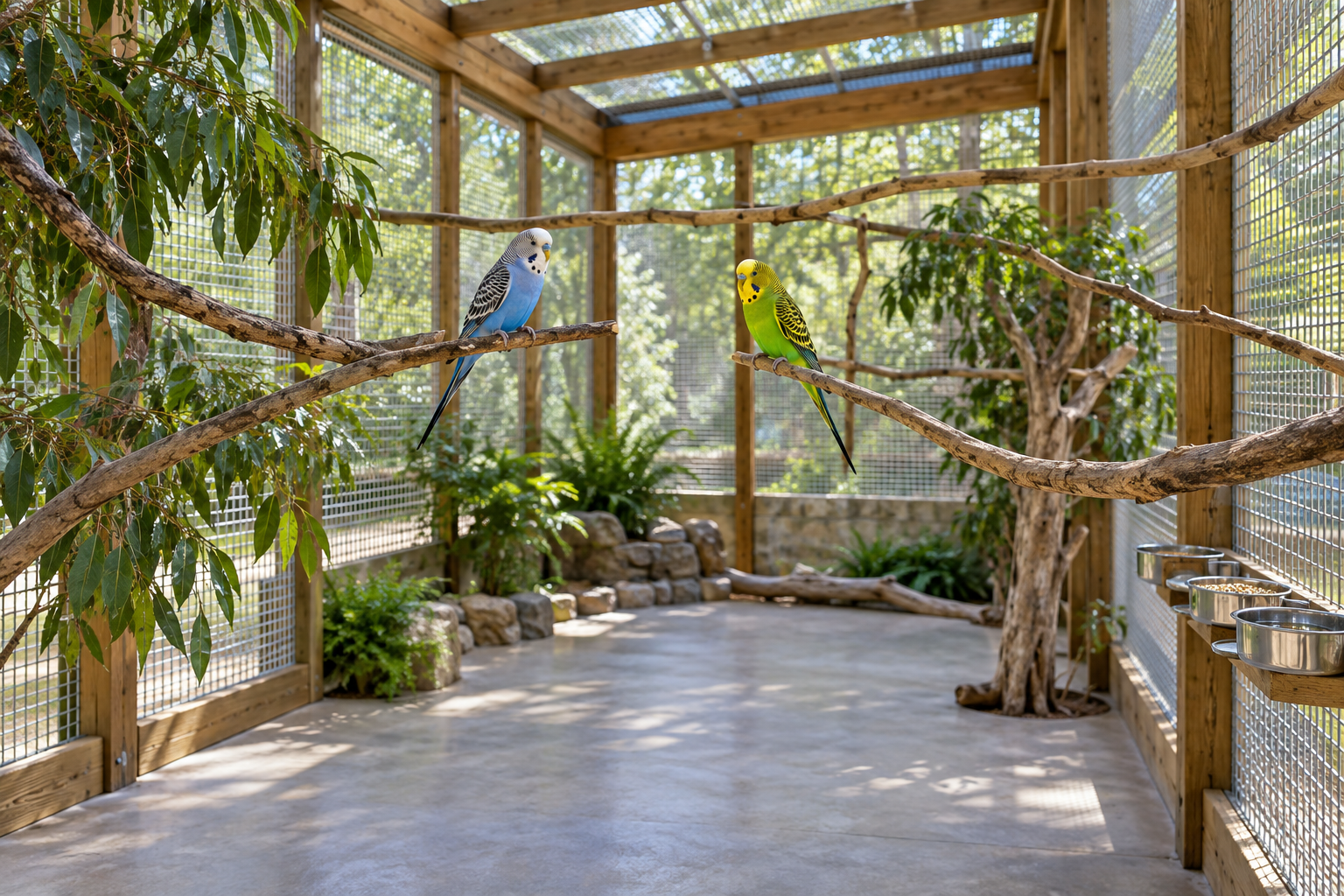
The World Budgerigar Organisation color standards distinguish body colors from markings. Use these descriptions to organize an observation:
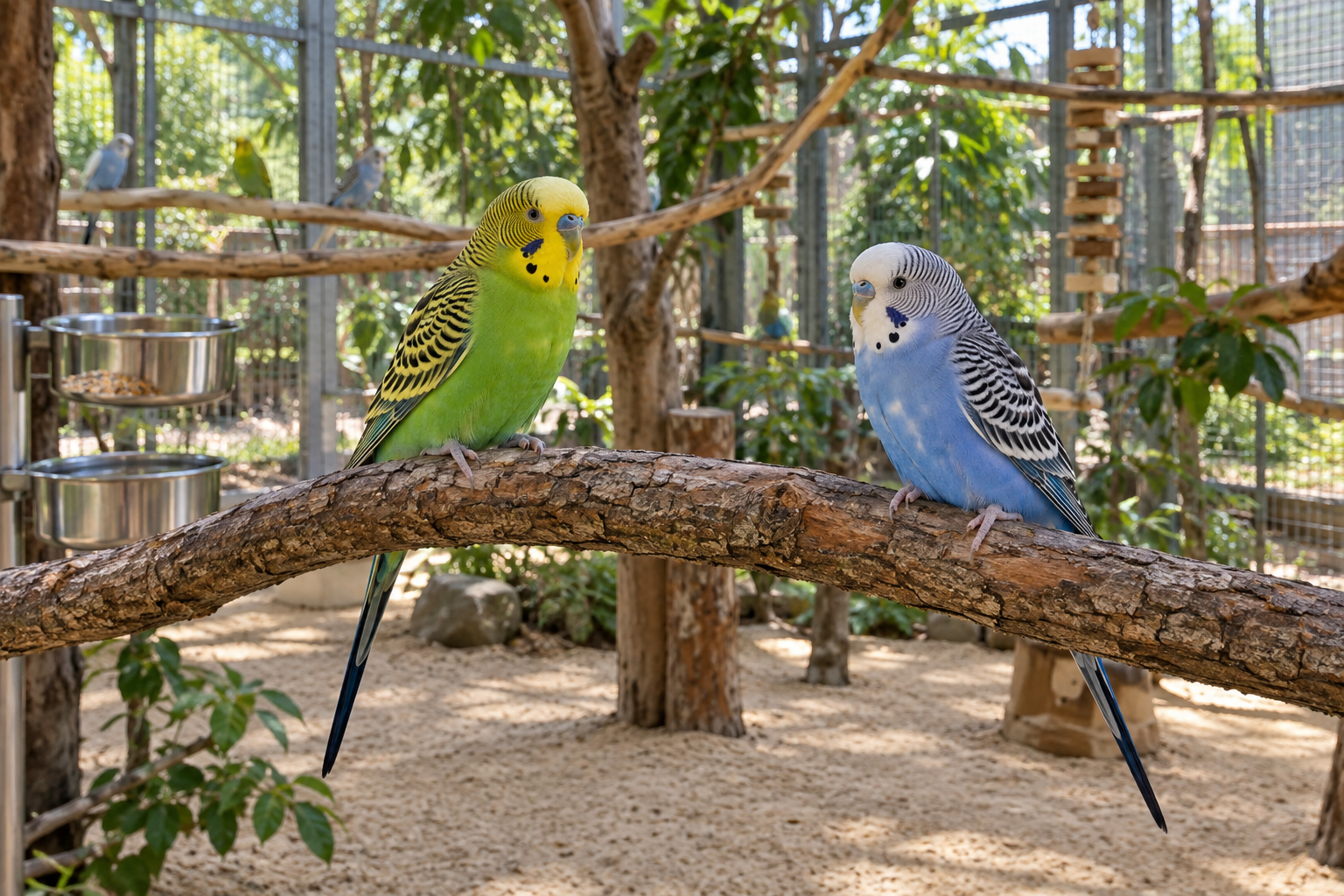
- Normal green series: green body with a yellow face and dark wing markings. Named shades include light green, dark green and olive.
- Normal blue series: blue body with a white face in the ordinary form. Skyblue, cobalt and mauve are distinct named shades.
- Opaline: altered head and back markings with body color contributing to the wing appearance.
- Spangle: a different distribution of dark edging on wing feathers.
- Pied: areas of clear plumage among colored or marked areas. Dominant and recessive pied are separate varieties, not interchangeable labels.
- Lutino: yellow plumage with red eyes and no ordinary dark markings.
- Albino: white plumage with red eyes and no ordinary dark markings.
- Yellowface or goldenface: additional face-color terms that may change how a blue-series bird looks.
These short descriptions are not a show classification. An experienced variety specialist should use the full relevant standard when a bird will be shown or sold under a precise variety name.
A white bird is not automatically albino
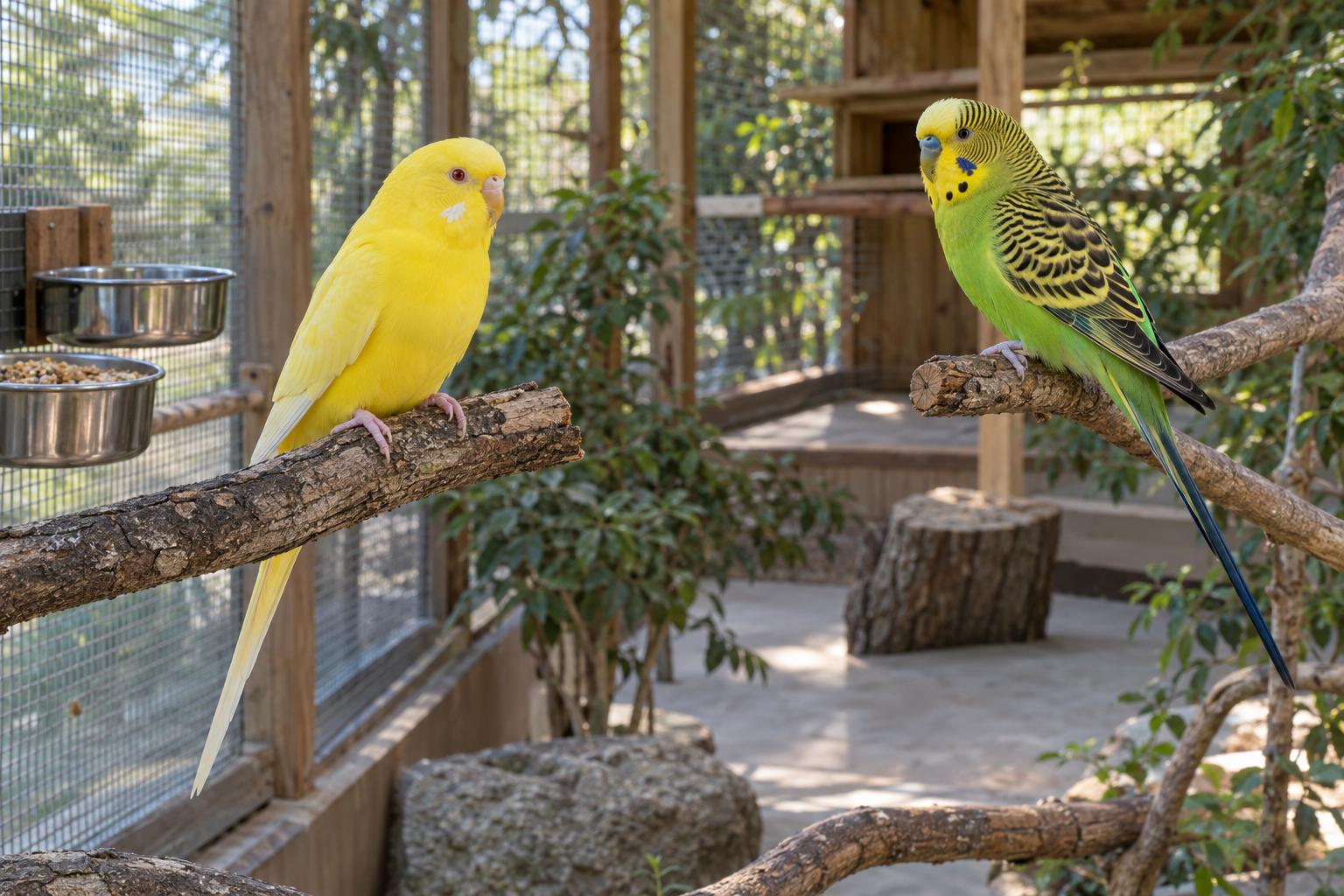
The WBO distinguishes albino from dark-eyed clear white and double-factor spangle blue. Likewise, a yellow bird is not automatically lutino. Look at the eyes, cheek patches, wing markings and tail as well as the body color. Do not invent an eye color when it is hidden by glare in a photograph.
For a useful identification request, take an unfiltered side view, a head view that shows the eye and cere, and a back view while the bird is perched naturally. Include its age if known and the breeder’s original description. Avoid handling or spreading the wings simply to satisfy a color question.
A label such as “split for” means a genetic claim about a carried variant, not something every bird displays. Preserve the evidence behind it, whether that is a relevant laboratory report or a documented breeding history, and identify which kind it is. Leave unsupported carrier status unknown.
Color is only one part of choosing a budgie
Plan the bird’s home and companionship before choosing a shade. Veterinary housing guidance emphasizes room to move, safe exercise and appropriate perches. Budgies also need compatible social company, fresh water and an uncrowded environment, as described in RSPCA bird housing guidance.
A color description is not a health certificate. If a bird’s feathers or behavior change unexpectedly, ask an avian veterinarian rather than assuming a new mutation. Use the practical guide to finding an avian vet before one is needed.
For the wider ownership budget, the pet bird cost guide covers planning beyond the purchase itself. It is general bird guidance, not a budgie variety standard. Color rarely drives the real cost of keeping budgies; our budgie cost guide covers cages, food and vet care.
Keep budgie color evidence on Creatures
Create the profile under budgerigar, attach dated photos and note who supplied the color description. Enter a ring identifier as written and record known parents with their supporting documents. If you only know one parent, leave the other unknown.
Save an actual laboratory result as a Test Result in the genetic category. Store an opinion about plumage as an observation instead. The animal profile tabs guide helps organize those details. Records need a free account to save; keeping a document does not validate its contents.
The pedigree chart explanation is useful for reading relationships, but Creatures’ free chart tool currently has no budgerigar species option. Use the in-app ancestry record without choosing a different species as a workaround.
Common questions
Are blue budgies a different species?
No. Blue is a color variety within the budgerigar species.
Can I know all the mutations from a photo?
No. Some inherited variants are not visibly expressed, and combinations can obscure useful markings. Keep a careful appearance description and the evidence behind genetic claims.
Does a yellow budgie have to be lutino?
No. Check eye color and markings against the relevant variety standard. Yellow plumage alone is not enough.
Do this next on Creatures
- Add your budgie to keep its identity and photos together. See adding an animal.
- Add a dated observation or original test report. The form opens for visitors; a free account saves it. Read adding a record and health and medical records.
- Set a listing alert if you are looking for a budgie. Availability depends on actual listings.
- Browse budgie listings and review the evidence behind an individual animal’s description.
- Browse the breeder directory to research a breeder and ask about their records.
- Create a breeder profile if you keep a breeding program and want to describe it on Creatures.