


Cockatiel
Nymphicus hollandicus
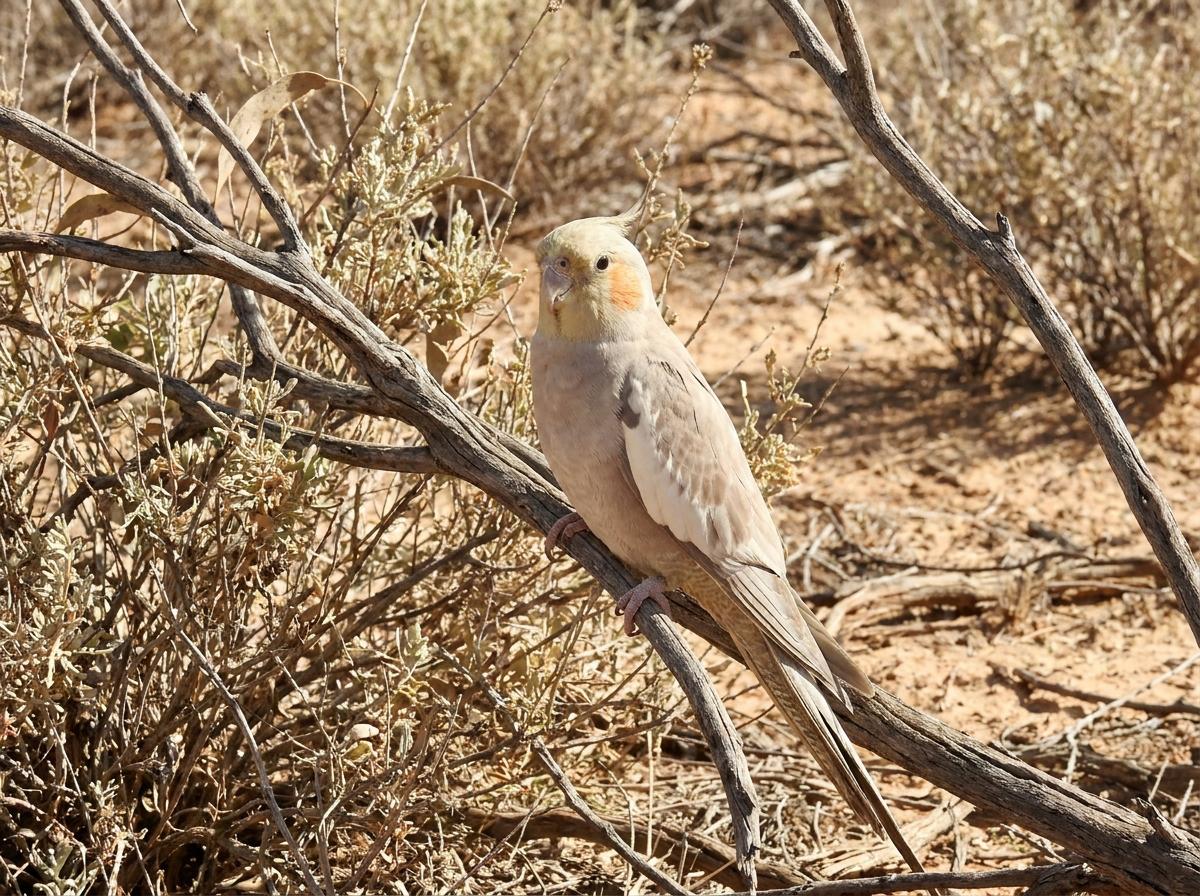
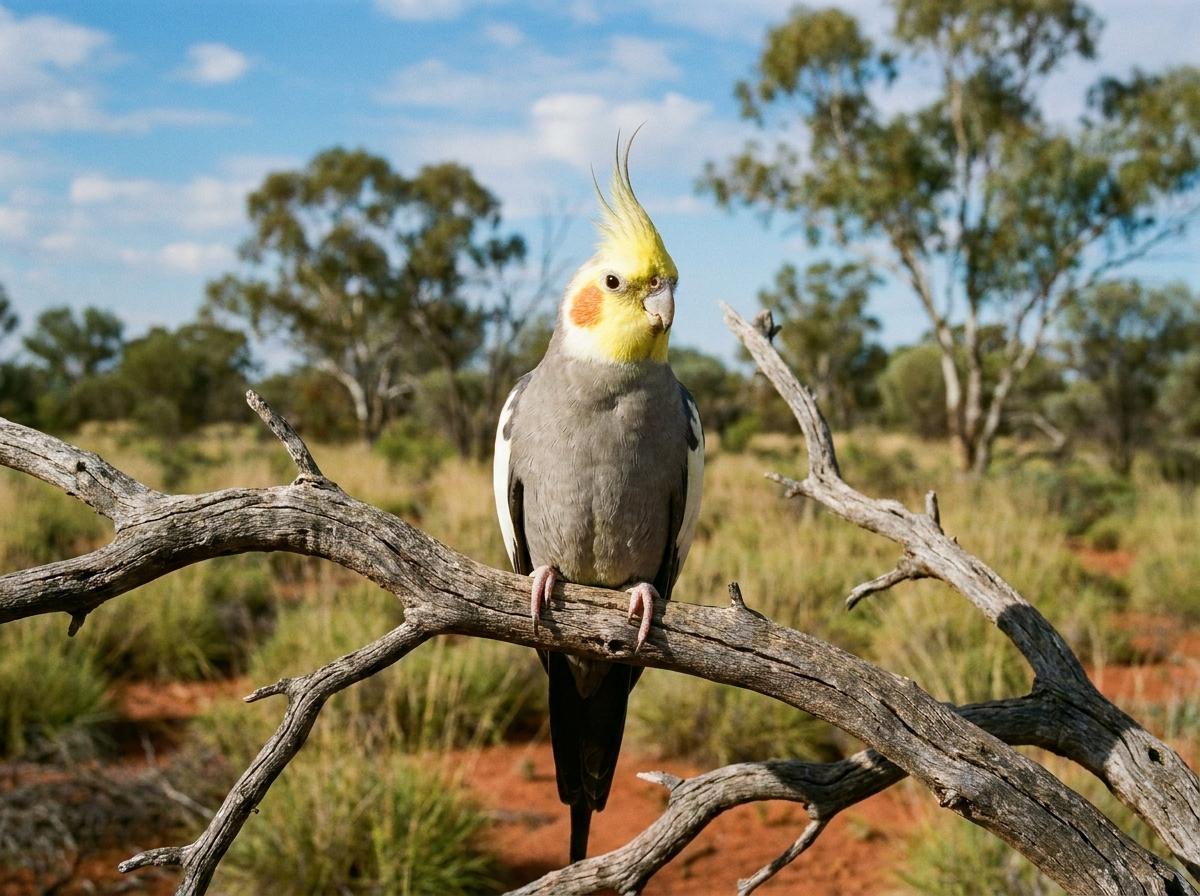
A small Australian cockatoo relative, the cockatiel (Nymphicus hollandicus) has a slim body, long pointed tail, expressive crest, and orange cheek patches. Wild birds are mostly gray; adult males usually show a brighter yellow face, while females and juveniles often retain barred tail feathers and subtler facial color. In aviculture, generations of breeding have produced lutino, pied, pearl, cinnamon, whiteface, and other mutations. Cockatiels are flock birds of open woodland and arid scrub, moving to follow food and water, and their whistles and contact calls are part of their normal social life.
Companion cockatiels reward daily interaction but are still parrots, not cage ornaments. A roomy cage, time out for flight or exercise, safe chewing material, and a diet built around pellets, greens, vegetables, and limited seed help prevent the obesity and vitamin deficiencies common in seed-only birds. They produce fine feather dust, so ventilation and routine cleaning matter for sensitive households. Hand-raised birds can be gentle, though breeding pairs may become defensive around nest boxes; managing light cycles and nesting triggers is useful for females prone to repeated egg laying.