

Author: Elliott Garber, DVM · Published
You’ve typed “cattle breeders near me” into a search bar, but the hard part isn’t finding a ranch name on a map. The hard part is figuring out which breeder keeps solid records, communicates clearly, stands behind the cattle, and won’t leave you chasing paperwork after money changes hands.
That matters because cattle breeding isn’t a niche corner of agriculture. In the U.S., the cattle herd peaked at 94.7 million head in 2019 and declined to 86.7 million head as of January 1, 2025, while cattle production still accounted for about 22% of the $515 billion in total cash receipts for U.S. agricultural commodities in 2024, according to the USDA ERS cattle sector overview. Big market, big breeder network, and a lot of variation in quality.
Most buyers also run into the same problem. Directories show names, not enough proof. If you already spend time comparing hauling and transport setups, the same practical mindset applies to livestock buying, whether you’re sourcing seedstock or a starter group. Local utility and transport decisions affect the buying process more than people think.
This guide gets straight to the programs worth knowing, then shows how to vet any breeder before you commit.
Table of Contents
- 1. Creatures
- Why Creatures stands out
- Where it fits best
- 2. 44 Farms (Angus)
- Best for buyers who want depth of offering
- 3. Gardiner Angus Ranch (Angus)
- Best for index driven Angus selection
- 4. Jorgensen Land & Cattle (Angus)
- Best for maternal minded commercial buyers
- 5. SITZ Angus (Angus)
- Best for remote buyers who still want to do homework
- 6. King Ranch (Santa Gertrudis & American Cruz)
- Best for southern adaptation and crossbreeding goals
- 7. V8 Ranch (Brahman)
- Best for Brahman influence and heat tolerance
- 7 Cattle Breeders: Ranch & Breed Comparison
- Your Next Steps From Search to Secure Transaction
1. Creatures

If you’re serious about buying cattle, a basic breeder directory isn’t enough anymore. You need records in one place, clean communication, a way to verify what you’re being shown, and a payment process that doesn’t feel improvised. Creatures isn’t a breeder or a ranch. It’s the records and marketplace layer you use alongside the breeders below, and that’s where it’s different.
Creatures is built around permanent animal profiles. A breeder can keep photos, videos, pedigree details, health records, test results, breeding history, and routine care information together and share that profile with one link. For buyers, that cuts out a lot of the usual back and forth where records are split across texts, screenshots, registry PDFs, and handwritten notes.
Why Creatures stands out
The strongest feature is that it connects discovery, documentation, and transaction flow instead of treating them as separate tasks. That matters because breeder search has already shifted toward structured digital systems. The Council on Dairy Cattle Breeding says it manages the National Cooperator Database, distributes U.S. genetic evaluations and genomic predictions, and stewards the world’s largest animal database with more than 80 years of recorded U.S. dairy animal performance data, as described by the Council on Dairy Cattle Breeding. Buyers now expect traceability. Platforms need to support that expectation.
Creatures also adds marketplace tools, reviews, secure payments, messaging, and transport coordination. That’s a practical combination. Plenty of sites help you find cattle breeders near me. Far fewer help you close the deal cleanly once you’ve found one.
Practical rule: If a breeder can’t organize records before the sale, expect more confusion after the sale.
A few things stand out in day to day use:
- Single record hub: Photos, pedigree, health records, breeding events, and test results stay attached to the animal instead of scattered across messages.
- Transaction support: Listings, auctions, reviews, secure payments, and transport tools reduce the loose ends that usually create problems.
- Useful ranch tools: Vaccination logs, reminders, registry support, calculators, and care guides are the kind of features people use once the cattle arrive.
- Fast setup: You can create an animal profile for free without a credit card and get started quickly.
Where it fits best
Creatures is strongest for breeders and buyers who want a repeatable system, not just a one time listing. It also addresses a real gap in breeder search. The American Angus Association breeder search says it does not share complete addresses or lists and returns basic member details such as city, state, phone number, and website when available. That’s useful for discovery, but it still leaves buyers to verify records manually.
The trade off is that Creatures appears U.S. focused, and buyers should confirm any transaction fees or verification levels before committing. Still, if your search starts with “cattle breeders near me” but your real goal is a documented, secure purchase, this is the most complete tool in the group.
2. 44 Farms (Angus)

44 Farms is the kind of program buyers look at when they want scale, consistency, and enough offering depth to sort cattle by a specific target instead of settling for what’s available. If your breeding plan is tightly focused on Angus and you want a large menu of bulls and females, 44 Farms belongs on the shortlist.
What I like here is the practical buying flexibility. The program combines scheduled sales with private treaty options, which helps buyers who don’t want their entire selection window tied to one auction date. That matters when your decision depends on breeding season timing, trucking, and where the cattle need to fit in your program.
Best for buyers who want depth of offering
A large Angus program gives you more chances to buy for a specific purpose. That might mean maternal balance, carcass orientation, or commercial replacement goals. It also makes side by side comparison easier because cattle are presented within one management system.
For buyers searching Black Angus breeder listings, 44 Farms is a good benchmark for what a polished seedstock operation should look like. You should expect organized sale information, clear communication, and enough data to narrow lots before you ever step on a truck.
A big offering helps only if the breeder sorts cattle in a way buyers can actually use.
Pros and cons are straightforward here:
- Strong fit for targeted selection: Large offerings make it easier to match a breeding objective instead of buying the least wrong option.
- Good for commercial buyers: Programs with established customer service and sale structure usually handle logistics better than small operations.
- Watch freight and demand: Texas is convenient for some buyers and expensive for others. Top lots also attract competitive interest.
One more practical note. If a breeder advertises volume, ask how they help you narrow the list. The best large programs don’t just show a catalog. They help you identify the right cattle fast.
You can also pair a program like this with a record platform such as Creatures so every animal you shortlist has documentation and communication history in one place. If you’re comparing cattle breeders near me against a larger regional seller, that level of organization matters.
3. Gardiner Angus Ranch (Angus)
Gardiner Angus Ranch has long been known as a data heavy Angus operation, and that’s exactly why many buyers keep coming back. If you prefer to buy with sale books, genomic information, and index driven selection in front of you, Gardiner Angus Ranch gives you that kind of environment.
This is a program for buyers who want to compare cattle on paper before they compare them in person. That doesn’t replace feet, structure, disposition, or breeder honesty. It does make your first cut more efficient.
Best for index driven Angus selection
Gardiner’s appeal is simple. The program puts selection tools in front of the buyer instead of making you ask for everything one item at a time. That works well for commercial cattlemen who already know the type of bull they need and don’t want a sales conversation to substitute for records.
Published sale materials and sale results also make this kind of breeder easier to assess over time. You can see whether the operation communicates clearly, presents cattle consistently, and supports buyers who can’t attend in person.
A few trade offs are worth keeping in mind:
- Excellent for pre sale homework: Buyers who use EPDs and selection indexes can sort much faster here than at a lightly documented farm.
- Less ideal for impulse buying: The strongest advantage comes when you prepare in advance and buy around scheduled events.
- Premium competition is real: Elite lots bring attention, and that changes the buying environment.
Individuals looking for cattle breeders nearby often assume the nearest seller is automatically the most practical option. That’s not always true. A breeder with strong documentation, predictable sale management, and shipping support can be a better fit than a local farm with thin records.
If the breeder publishes enough information for you to say no confidently, they’re usually easier to buy from when the answer is yes.
Gardiner fits buyers who want disciplined selection, not casual browsing.
4. Jorgensen Land & Cattle (Angus)
Jorgensen Land & Cattle stands out for buyers who care as much about building cows as selling calves. A lot of Angus marketing leans hard into headline traits. Jorgensen Land & Cattle tends to attract people who still want practical, ranch use cattle with a maternal and profitability lens.
That difference matters. Not every program is built for the same end user. Some are ideal if you’re chasing a narrow trait profile. Others are better if you need a more uniform, durable set of cattle to work across a commercial cow herd.
Best for maternal minded commercial buyers
Jorgensen’s multiple sales and branded groupings help buyers shop by purpose. That sounds simple, but it’s useful. Good merchandising reduces wasted time because buyers don’t have to sort through cattle that don’t fit their management style.
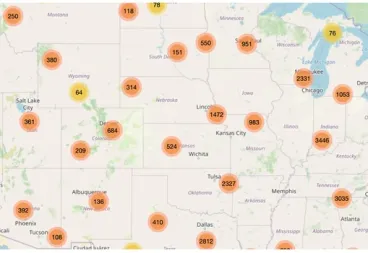
The strongest operations also understand that logistics are part of the sale, not an afterthought. One common weakness in breeder search is that directories often organize by state or name rather than true proximity or transport practicality. The Midwest Highlands breeder directory example shows how many breeder lists remain regional and not location first. That’s one reason buyers still struggle even after finding cattle breeders near me.
Jorgensen’s practical strengths:
- Program identity is clear: Buyers can usually tell what the cattle are meant to do.
- Useful for herd building: Uniformity and maternal emphasis often matter more than one standout lot.
- Location matters: South Dakota isn’t local for everyone, so freight can shift the math.
This is the kind of breeder where the right question isn’t “Are these impressive?” It’s “Will these cattle still make sense three breeding seasons from now?” That’s a better standard for most commercial operations.
5. SITZ Angus (Angus)
SITZ Angus works well for buyers who may never visit the ranch before sale day. That’s increasingly common. Remote buying isn’t a compromise if the breeder gives you enough tools to do real homework, and SITZ Angus leans into that reality.
The practical feature here is pre sale access. A useful online finder tool and online bidding make a difference because they let buyers narrow the field before they ever commit to travel or trucking.
Best for remote buyers who still want to do homework
The advantage of a remote friendly program isn’t convenience alone. It’s decision quality. Buyers can review bulls in advance, compare data, flag questions, and show up prepared instead of trying to process everything ringside.
That said, auction buying always has friction. Prices move with demand. The cattle you liked on paper may not fit your budget once the sale starts. Montana can also be a long haul, which means freight and scheduling need to be part of the plan before you bid.
A disciplined way to approach SITZ is to separate your process into three buckets:
- Must have traits: Identify the non negotiables before the sale starts.
- Record review: Save the lots whose data and presentation hold up under scrutiny.
- Shipping plan: Know whether the breeder offers enough help to get cattle home without confusion.
Remote access is useful only when records are clear enough to replace a lot of windshield time.
SITZ is a strong option for buyers who know how to buy from a distance and don’t confuse online bidding with reduced due diligence.
6. King Ranch (Santa Gertrudis & American Cruz)
King Ranch gives buyers something several national lists don’t. It offers a clear path outside the standard Angus only conversation. If your environment is hot, humid, or built around crossbreeding for adaptation, King Ranch deserves attention.
The search for “cattle breeders near me” is often really shorthand for “which cattle fit my country, labor, and weather.” Breed choice has to match that reality. A well marketed British breed operation can still be the wrong answer if your conditions demand heat tolerance and hybrid vigor.
Best for southern adaptation and crossbreeding goals
King Ranch’s strength is fit. Santa Gertrudis and American Cruz genetics appeal to buyers managing southern environments or building crossbreeding systems where adaptation is not optional. Appointment based viewing and online bidding also make the program more accessible than old school sale formats that expect every buyer to show up in person.
If you’re researching this category on Santa Gertrudis breeder pages, keep the evaluation practical. Ask what role the bulls are meant to play in your cow base. A breed switch or composite move should solve a production problem, not just satisfy curiosity.
What works well here:
- Good option for southern systems: Heat tolerance and crossbreeding utility are central, not secondary.
- Broader breed choice: Useful if Angus doesn’t fully match your conditions.
- More specialized fit: Buyers in colder northern range environments may prefer a different base breed.
This is one of the easier programs to recommend when climate adaptation sits near the top of the decision tree.
7. V8 Ranch (Brahman)

V8 Ranch is a go to name when buyers want Brahman influence with brand recognition behind it. For Gulf Coast and other hot weather programs, V8 Ranch can make more sense than trying to force a less adapted type into a hard environment.
One thing I like about this program is that it isn’t limited to one narrow buying path. Ongoing private treaty availability for females gives buyers another route besides waiting on a sale date.
Best for Brahman influence and heat tolerance
This is the strongest fit for buyers building F1 or composite programs, or for operations that already know they need Brahman adaptation in the mix. It can also appeal to breeders who value pedigree strength and marketability alongside commercial function.
If you’re screening Brahman breeders through Creatures, use V8 as a standard for asking better questions. Request current health work, registration details, reproductive status where relevant, and a clear explanation of how the cattle have been managed. The closer a breeder gets to that level of presentation, the easier the buying decision becomes.
A few realistic trade offs:
- Useful beyond one sale day: Private treaty access helps buyers who need flexibility.
- Strong resale and marketing value: Recognizable pedigrees can matter in some programs.
- Not universal in fit: Brahman influence is a strength in the right environment and a mismatch in others.
Buy for your climate and cow base first. Brand name comes second.
V8 Ranch is best for buyers who know why they want Brahman cattle and want a program with enough reputation to support that decision.
7 Cattle Breeders: Ranch & Breed Comparison
| Item | Complexity | Resources | Expected Outcomes | Ideal Use Cases | Key Advantages |
|---|---|---|---|---|---|
| Creatures | Low, quick account setup, web UI onboarding. | Low, internet, device, photos/records; optional fees. | High traceability and smoother transactions; improved discoverability. | Breeders, small/mid farms, rescues, buyers needing verified records. | Centralized permanent profiles, integrated marketplace, logistics & breeder tools. |
| 44 Farms (Angus) | Moderate, participation in large auctions and sales logistics. | High, capital for premium lots, transport and handling. | Access to carcass/feedlot‑oriented genetics and clear market benchmarks. | Commercial producers targeting feedlot/grid performance and volume buying. | Scale, transparent sale data, strong carcass/feedlot emphasis, buyback programs. |
| Gardiner Angus Ranch (Angus) | Moderate, uses genomic data and scheduled sale events. | High, investment in elite genetics; online or in‑person bidding. | Genomics‑backed, index‑driven performance with detailed benchmarking. | Buyers seeking genomic selection and index‑targeted purchases. | Genomic testing, detailed sale books, consistent national reputation. |
| Jorgensen Land & Cattle (Angus) | Moderate, cataloged sales, multimedia prep, periodic sale windows. | Moderate to high, purchase budget and shipping for nationwide buyers. | Predictable maternal‑focused genetics and herd‑building consistency. | Producers building cowherds and needing maternal fertility/function. | Emphasis on maternal traits, branded selections, robust sale data. |
| SITZ Angus (Angus) | Moderate, annual sale plus online tools simplify process. | Moderate, remote bidding lowers travel but requires purchase funds. | Functional, long‑lived cattle with accessible remote participation. | Nationwide buyers preferring pre‑sale research and online bidding. | Bull Finder tool, online bidding, long‑standing maternal/end‑product focus. |
| King Ranch (Santa Gertrudis & American Cruz) | Moderate, scheduled sales with appointment viewing and online bids. | Moderate to high, specialized genetics, potential travel for viewing. | Heat‑tolerant, composite genetics suited to southern/tropical systems. | Southern producers and crossbreeding programs needing heat adaptation. | Breed/composite diversity, heat tolerance, historic brand and remote access. |
| V8 Ranch (Brahman) | Low to moderate, private‑treaty plus periodic featured sales. | Moderate, elite pedigrees/specials; shipping for national/international buyers. | Year‑round access to Brahman genetics for heat‑stressed environments. | F1/composite programs and producers in hot climates. | Private‑treaty availability, semen specials, international reach and pedigree depth. |
Your Next Steps From Search to Secure Transaction
Finding cattle breeders near me is the easy part. Turning that search into a sound purchase takes discipline. You need to verify identity, review records, ask direct questions about health and registration status, understand breeding history where relevant, and get clear on transport before money moves.
The biggest mistake buyers make is treating breeder discovery as the finish line. It’s only the start. A breeder directory can tell you who exists. It usually can’t tell you whether the breeder keeps current records, whether the animal history is organized, or whether payment and delivery will be handled professionally.
That’s why a simple vetting framework works better than relying on brand reputation alone:
- Check documentation first: Ask for pedigree, registration status, vaccination records, test results, and any reproductive history before discussing final terms.
- Match cattle to your system: Buy for climate, forage, labor, and marketing endpoint. Don’t buy a name that doesn’t fit your ranch.
- Clarify logistics early: Confirm who arranges hauling, what timing looks like, and what happens if plans change.
- Keep communication in one place: Scattered texts and verbal promises create avoidable disputes.
- Use secure transactions: If the payment process feels informal, slow down.
Large seedstock programs make some parts easier because they tend to publish more information and run structured sales. Smaller local breeders can still be excellent, but they need to show the same seriousness in records and communication. If they can’t, proximity alone doesn’t make them the right choice.
Creatures is useful here because it closes the gap between breeder discovery and breeder verification. Instead of juggling screenshots, sale notes, and separate payment conversations, you can centralize animal profiles, review health and pedigree information, keep messages organized, and move toward a more secure transaction flow. That’s the difference between browsing and buying well.
A smart process removes a lot of risk. It also saves time. When you know what records to ask for, how to compare breeders, and where to keep everything organized, the search stops feeling scattered and starts feeling like a real herd decision.
If you want a cleaner way to find, vet, and buy from cattle breeders near me, start with Creatures. It gives you a permanent place to review animal records, organize communication, verify documentation, and handle transactions with more confidence than a basic directory ever can.