Fantail
Author: Elliott Garber, DVM · Published
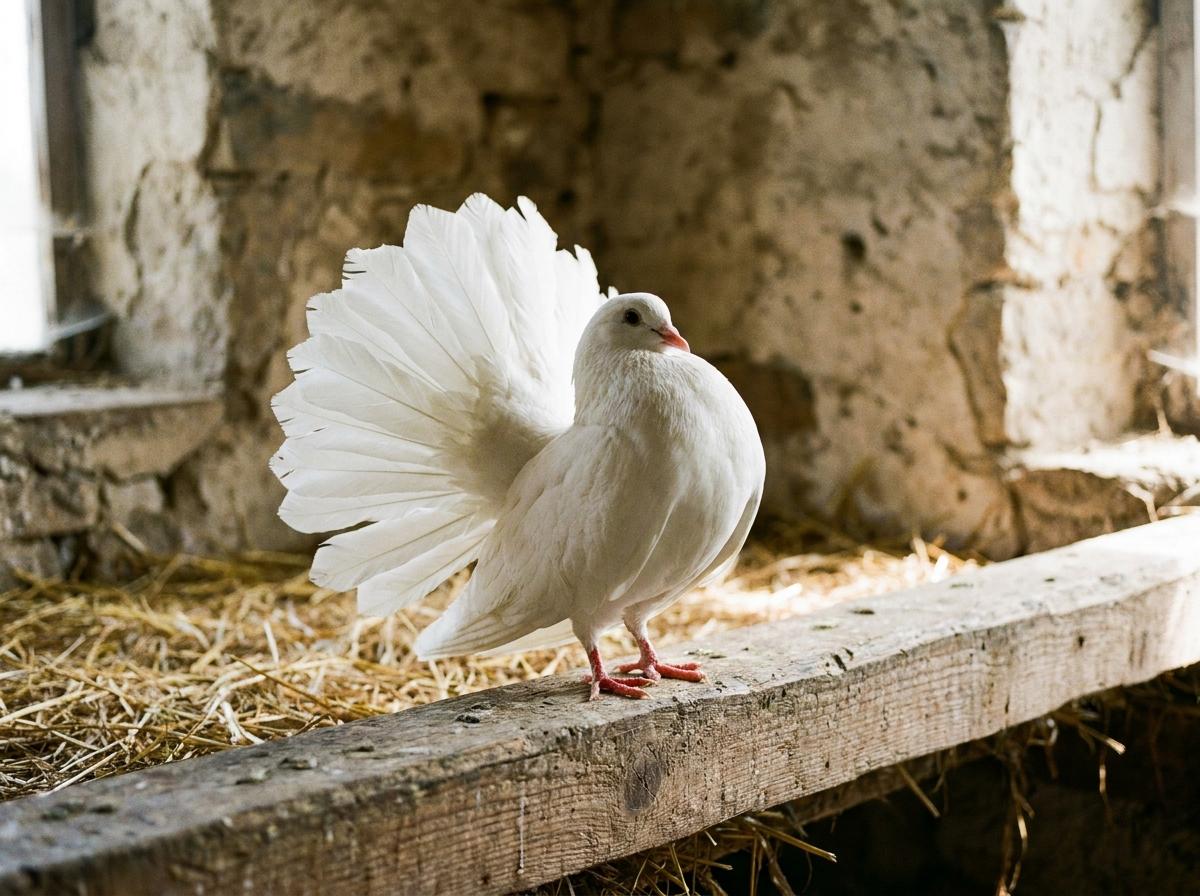
The Fantail is a show pigeon judged on shape and movement: a body round like a ball, a large upright tail fan of 30 or more feathers, a small plain head drawn back against the tail, and clean red feet it walks on its toes. In the United States the National Pigeon Association (NPA) publishes its standard simply as “Fantail,” and it is a different breed from the crested, muffed Indian Fantail. It is sometimes called the American Fantail or show fantail to keep the two apart. If you keep or breed Fantails, you can start a Fantail profile with the bird’s band number and parents, no account needed to start; a free account keeps it.

| US standard | NPA Book of Standards, Structure Pigeons group, “Fantail” |
|---|---|
| Judged on | 80 points of type while standing, 20 points of carriage in motion |
| Body and tail | Round body; circular, slightly concave tail about twice the body’s height when showing |
| Head and feet | Small, smooth head with no crest; clean, bright red feet, no foot feathering |
| Tail feathers | Thirty to forty, against twelve to fourteen in most pigeons (Darwin) |
| Not the same as | Indian Fantail (crested, muffed, level stance) or English Fantail (a separately named breed) |
| Main care need | Clean, dry, uncrowded loft that protects the tail |
Browse listings, public profiles, breeders, or add your animal.
Which fantail is this?
Three fantail names have their own pages on Creatures, and buyers often mix them up.
- Fantail (this page). The NPA’s standard, in the 2025 NPA Book of Standards, describes a round, compact bird with a smooth, ornament-free head and feet free of feathers. Its head sits back in a “pocket” at the base of the tail cushion.
- Indian Fantail. A separate NPA breed. Its standard calls for a small peak crest (a shell crest is acceptable), muffs that cover all the toes and a stance that gives a general impression of “levelness” rather than a head thrown back into the tail. The NPA also lists a Mini Indian Fantail.
- English Fantail. A separately named fantail breed that Creatures treats as its own breed, with its own page. It does not have a standard in the NPA book, and fanciers in different countries use fantail names differently, so treat the label as a starting point and ask which written standard a bird was bred to.
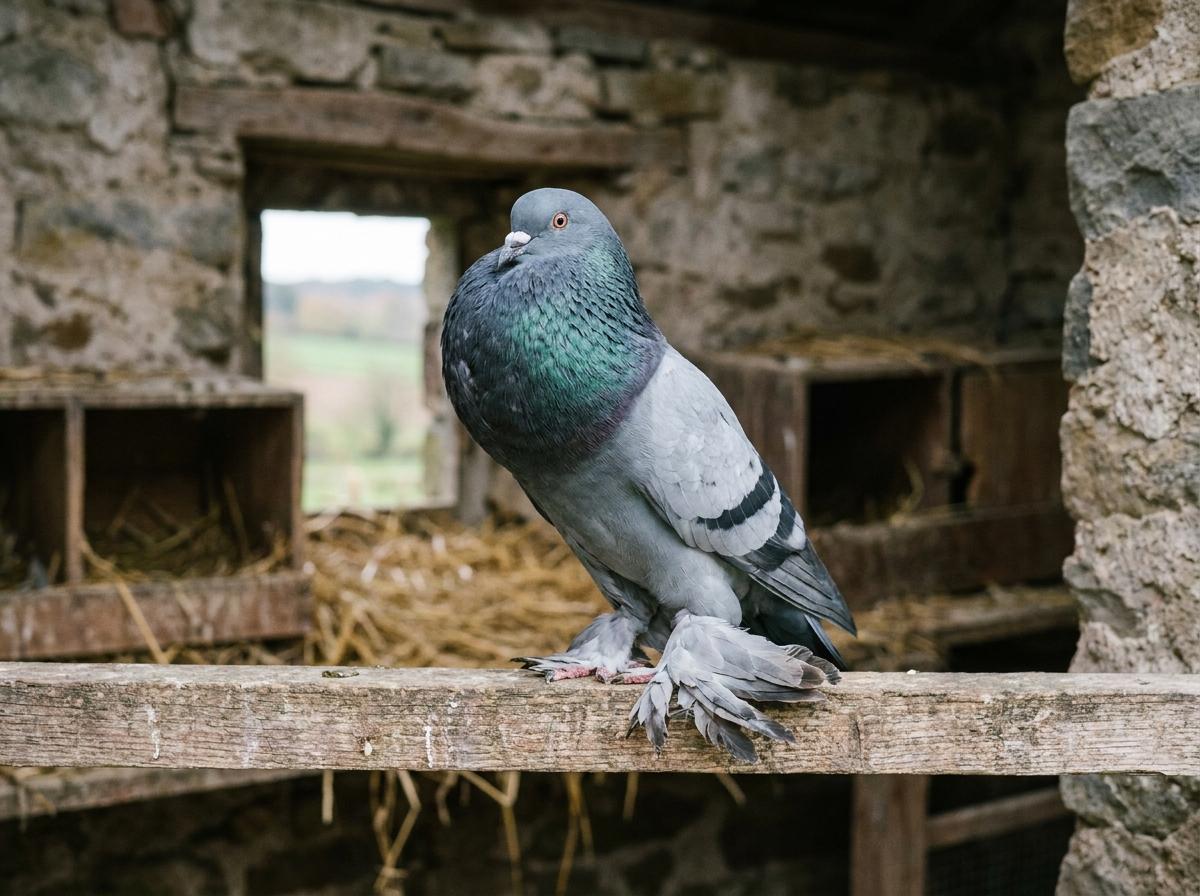
If a “fantail” has a crest or feathered feet, it is not a Fantail to the NPA standard, whatever the listing says. That is the quickest check you can make from a photograph.
What the NPA standard asks for

The NPA standard opens by calling the Fantail “primarily a bird of type and action.” Type is the bird’s structure and posture standing still, worth 80 of 100 points. Action is how it carries itself walking, worth the remaining 20. The standard stresses balance: the points for any single trait mean little unless the whole bird is in proportion. Key parts:
- Body. Round like a ball from any angle, with a short keel that gives a full, round underbelly. The back is slightly hollow in the center.
- Tail. Slightly concave, circular and closely filled with broad, evenly set, overlapping feathers, set high and straight on the bird. While the bird is showing, tail height to body height should approach 2 to 1.
- Head and neck. A small, smooth head, free of ornaments, on a thin, curved neck. The head should sit centered at the base of the cushion and should not show above the chest from straight in front.
- Legs and feet. Strong, moderately short legs set well apart. Feet are neat, bright red and free of feathers, with the weight on the front toes and the ball of the foot slightly off the floor.
- Plumage. Clean, hard and tight-fitting, with no loose feathers or “pants” over the lower legs. Body and flight feathers are short; tail and cushion feathers are long.
- Carriage in motion. The bird should walk forward on short trips with its head thrown back, its body round, its wings close and its tail upright, without much encouragement.
Two details matter to buyers. First, when two birds score equally, the standard prefers the smaller bird, so bigger is not better. Second, color and markings add only a few points, and none at all for whites, pieds and non-classified colors. A Fantail is bought for structure first.
The tail, and why it is unusual
Charles Darwin opened On the Origin of Species with domestic pigeons, and the Fantail was one of his examples. He wrote that the fantail has 30 or even 40 tail feathers instead of the 12 or 14 normal in the pigeon family, carried so erect that in good birds the head and tail touch (Project Gutenberg text of the first edition). He also recorded that the oil gland is “quite aborted” in the breed, which is worth knowing when you think about feather condition.
That tail is the breed’s whole point and its main vulnerability. A broken or soiled tail ruins a show bird for the season, and a bird whose tail feathers are damaged by a crowded loft or rough perches will not show its type. Most of good Fantail management is protecting that fan.
Colors and markings
The NPA standard groups Fantails into selfs (solid colors), patterned selfs, marked birds such as saddles, tailmarks and bodymarks, whites, pieds and non-classified colors. Marked and colored birds can earn a few points for color and marking quality. The pigeon colors guide explains base colors and wing patterns and what to write down for each bird.
Housing and care

Fantails are kept as show and loft birds rather than as flyers, so the loft is where they live and it has to be good:
- Room and no crowding. Tails get broken when birds are packed together or have to squeeze past each other. Fewer birds in more space is the rule.
- Wide, flat perches. Box perches or broad shelves let a bird stand without its tail rubbing a wall or wire.
- Dry, clean floors. A clean, smooth floor keeps tail tips and feet clean. Wet litter and droppings stain white tails and can lead to foot problems.
- Bathing water. Shallow bath pans offered regularly and removed before they foul help keep plumage in condition.
- Light, air and protection. Good daylight and ventilation without drafts, and mesh that keeps out predators and wild birds.
Watch for birds that cannot keep their balance, cannot reach food or water easily, or struggle to mate; extreme type is not worth a bird that cannot live normally. Ask a veterinarian who sees pigeons about any illness, and keep newly bought birds apart from your loft for a period before mixing. The where to buy pigeons guide covers leg bands, seller checks and bringing new birds home.
Breeding and record keeping

Fantail breeders work toward the balance the standard describes, so pairing decisions depend on knowing each bird’s strengths and its parents. Band numbers, pairings, nest outcomes and show placings are the records that make that possible.
On Creatures, each bird can have a profile with its band number, photos and parents. The free pedigree chart maker works for any species and prints a lineage chart to send with a bird you sell, no account needed. Results from shows not run on Creatures can be added by hand, as the help article on adding a show result from another show explains, and those placings then appear on the bird’s profile. If you name your birds as well as banding them, the pigeon name generator can help.
Buying Fantails: what to ask
When this guide was written, the Creatures Fantail page listed one breeder and no active listings. Good birds usually come from breeders and club members, and the questions matter more than the price:
- Is this a Fantail to the NPA standard, an Indian Fantail or another type? Does it have a crest or foot feathering?
- Can I see the bird standing and walking, not only in a posed photo? Twenty points of the standard are about movement.
- What are its band number and parents, and how have its relatives placed?
- Has it been kept in a loft that protects the tail, and is the tail complete now?
- How does it eat, drink and mate, and has it raised young?
Compare it with other structure breeds if you are still choosing. The Oriental Frill, Chinese Owl and English Pouter are all judged on shape, and the pigeon species hub lists every breed page. Poultry keepers drawn to ornamental shape may also enjoy the Sultan chicken, another breed kept mainly for its looks.
Frequently asked questions
How many tail feathers does a Fantail have?
Darwin recorded 30 or even 40, compared with 12 to 14 in most pigeons. Count varies between birds; the standard judges the fan’s shape and fill rather than a number.
Is an Indian Fantail the same as a Fantail?
No. The NPA publishes separate standards. The Indian Fantail has a crest, muffed feet and a level stance; the Fantail has a plain head, clean feet and a head drawn back into the tail.
Can Fantails fly?
They are kept as show birds, not as homing or flying pigeons, and the standard says nothing about flight. Keep them in a secure loft rather than letting them out to fly.
Do Fantails need special care?
Mostly space, dry floors, wide perches and bathing water to protect the tail and keep feathers in condition.
What makes a good show Fantail?
Balance. A round body, a full upright tail about twice the body’s height, a small head sitting in the pocket, clean red feet and easy, upright movement, with smaller birds preferred when all else is equal.
Do this next on Creatures
- Record your birds. Add a Fantail profile with its band number and parents, no account needed to start. Read adding an animal.
- Log placings and health notes. Add a record, such as a show result. The form opens for visitors; a free account saves it. See show results on your animal’s profile.
- Hear about Fantails for sale. Save a Fantail search and get an email when one is listed. No account needed to start. See saving searches and using your watchlist.
- Check current listings. See Fantail listings on the marketplace; there may be none today.
- Find a loft to contact. Browse breeder profiles. A profile is a lead to investigate, not a guarantee of stock or quality.
- Breed Fantails? Create a loft or farm profile so buyers can find you, no account needed to start. Read creating an organization and adding your team.