



Antwerp Smerle
Author: Elliott Garber, DVM · Published
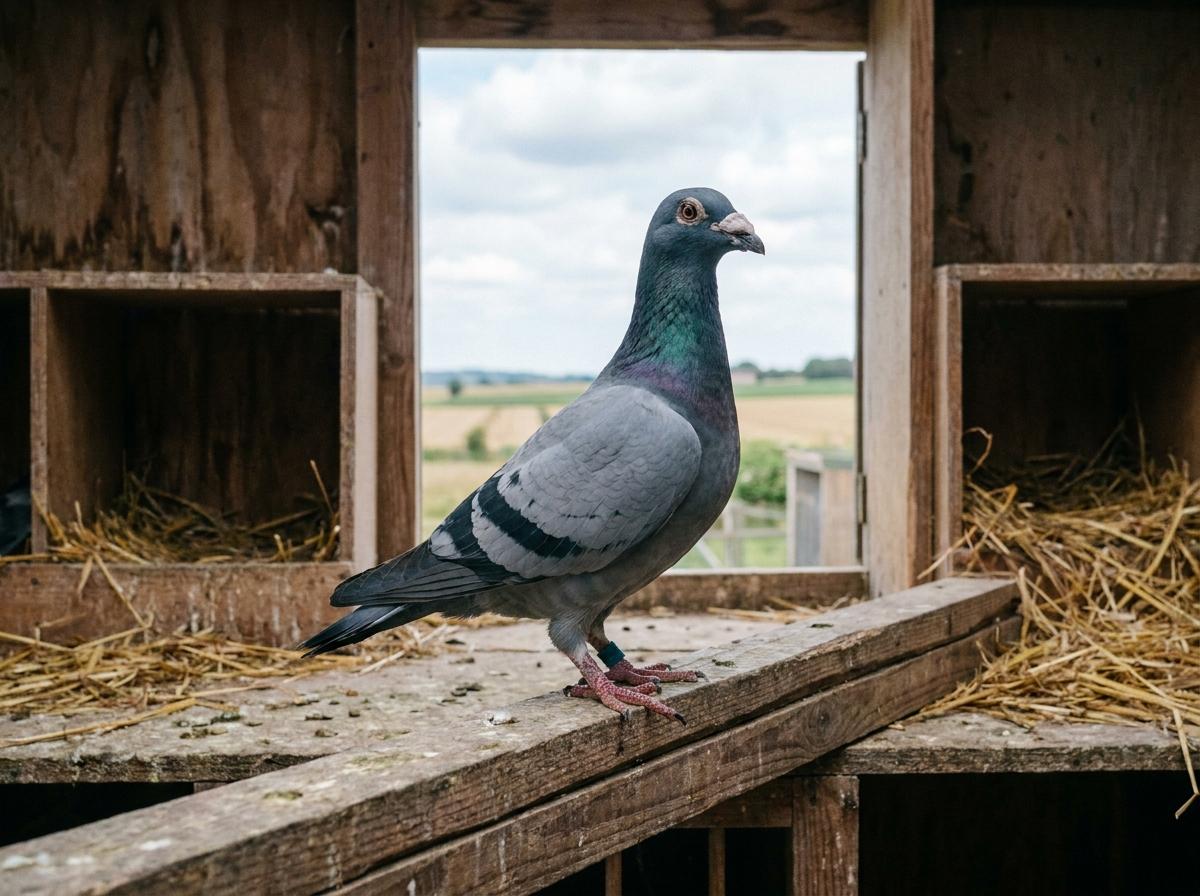
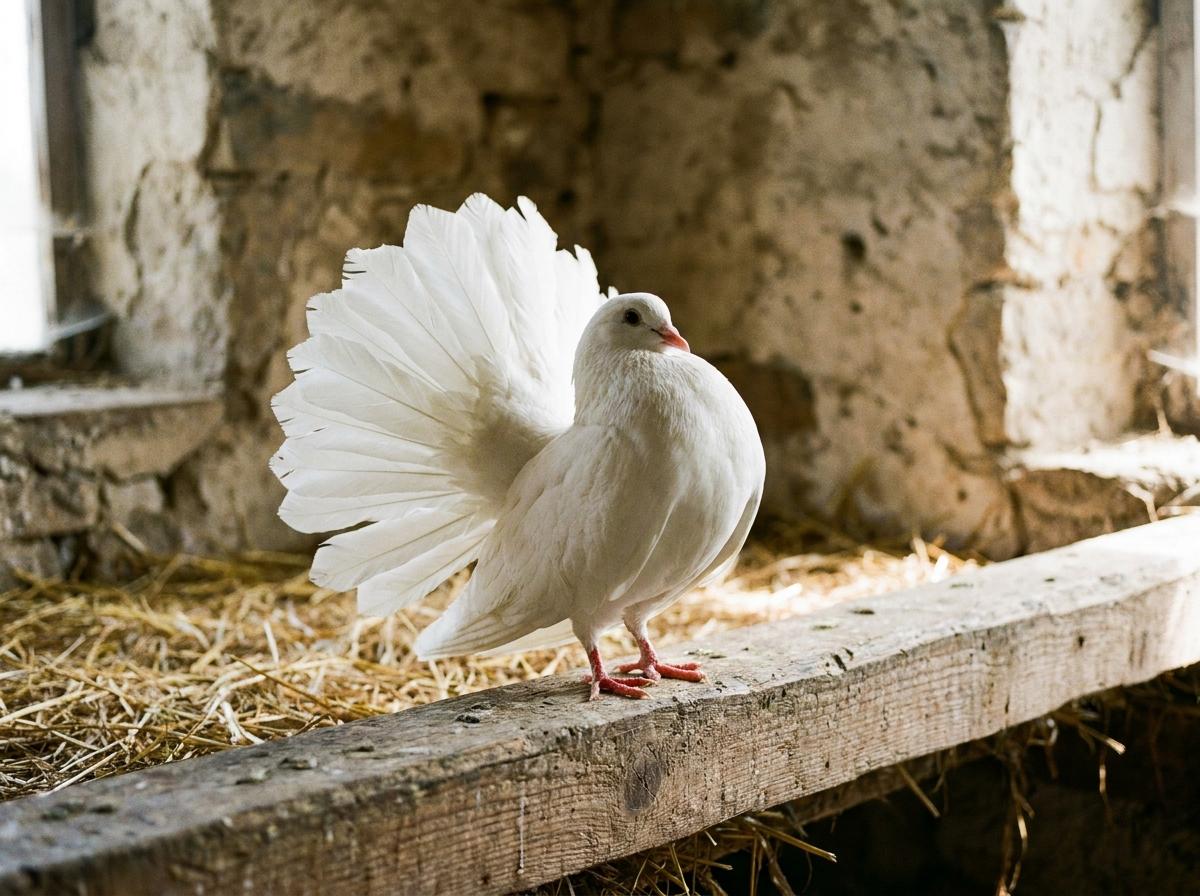
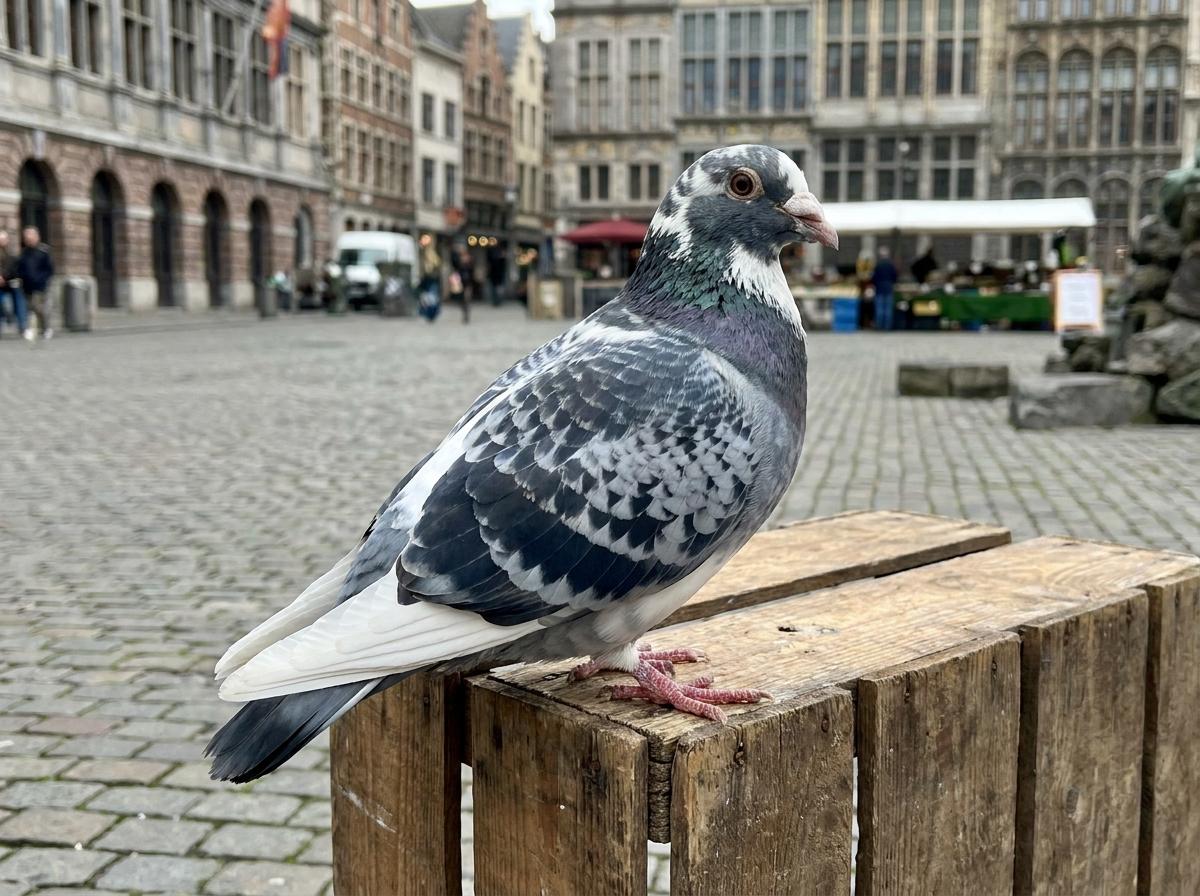
The Antwerp Smerle is a Belgian fancy pigeon from the region around Antwerp, kept today for the show pen rather than for flying. It belongs to the owl and frill family of pigeons, and its giveaway traits are a white body with only the wing shields colored, a broad powerful head, and a jabot, a standing tuft of feathers at the front of the neck. It is the largest of the owl breeds, not one of the smaller ones. Its ancestors were among the flying and racing Belgian pigeons that helped build the modern Racing Homer, but the bird you will meet at a show today has been selected for looks, not distance. This page covers what the breed is, where it came from, how to tell one apart from the many other owl-type pigeons, what it needs day to day, and the honest reality of finding one, with the record-keeping and marketplace tools you would actually use linked at the end.
| Also called | Antwerpse Smierel (Dutch), Antwerpener Smerle (German) |
|---|---|
| Origin | Belgium, the Antwerp region |
| Classification | Owl and frill group; European (EE) breed number 701; listed by the National Pigeon Association under Owls and Frills |
| Ancestry | Domestic rock pigeon (Columba livia); one of the breeds used to develop the Racing Homer |
| Diagnostic look | White body with only the wing shields colored, broad powerful head, jabot at the front of the neck, near-horizontal carriage |
| Colors | White bird; wing shields in blue, silver, black, red, or yellow, in barless, barred, checked, white-barred, and laced patterns |
| Size | The largest of the owl pigeons; the current standard sets weight at 575 to 650 g |
| Primary use today | Exhibition and hobby; historically a flying and racing ancestor |
| Availability | A rare heritage breed; about twenty breeders in Belgium as of 2017 |
Browse listings, public profiles, breeders, or add your animal.
What is an Antwerp Smerle?
An Antwerp Smerle is a domestic pigeon breed in the owl and frill family, named for the Belgian city of Antwerp. The word Smerle (also spelled Smierel or Smerel) is an old Flemish name that Belgian fanciers attached to several of their lighter, sprightly pigeons, and the Antwerp version is the one that became a standardized show breed. In European poultry and pigeon standards it carries the Entente Européenne breed number 701, and in the United States the National Pigeon Association lists it in the Owls and Frills group, alongside better-known relatives like the African Owl, the English Owl, the Turbit, and the Oriental Frill.
Family membership is the fastest way to understand the bird, but the Antwerp Smerle wears the owl and frill features in its own way. The trait it shares squarely with the group is the jabot, the standing frill of feathers at the front of the neck. Where it parts company with the small short-faced owls like the African Owl is size and head: this is the largest breed in the owl group, a broad, powerful, near-horizontal pigeon whose standard actually calls for a beak of almost medium length, not the stubby beak of the little owls. It is not a performance flyer but an ornamental breed, kept because the head, the jabot, and the crisp white body with colored wing shields are pleasing to look at and satisfying to breed toward a standard.
If you are weighing it against other pigeons, the broader Creatures pigeon species page is a good place to compare the owl and frill breeds against fantails, tumblers, homers, and the utility types before you commit to one.
Origin and history
The Antwerp Smerle comes out of Belgium’s rich pigeon culture, centered on Antwerp, which for more than a century has been one of the beating hearts of the pigeon world. Like every domestic pigeon, the breed traces back to the wild rock pigeon, Columba livia, the same ancestor behind the racing homer, the fantail, the pouter, and the feral birds on any city square. What separates the breeds is generations of human selection, and the Smerle sits at an interesting fork in that history.
Its ancestors were flying birds. Smerles were known in the Low Countries as early as the 1600s and served as short-distance message pigeons, and the breed sits at the origin of the famous Belgian racing pigeon alongside crosses like the French Cumulet and the English Turbit. The Smerle of Antwerp is also one of the Belgian breeds credited, in Wendell Levi’s standard reference The Pigeon, with contributing to the development of the Racing Homer, together with the French Cumulet, the English Carrier, the Dragoon, and the now-lost Horseman. The raw material of today’s ornamental Smerle was once part of the working, distance-flying stock that Belgium is famous for. Over time, Belgian fanciers pulled a portion of that line in a different direction, selecting for type and the full jabot rather than for racing performance.
The written record is more specific than you might expect for a fancy breed. At the end of the nineteenth and start of the twentieth century the Antwerp Smerle was the most popular ornamental pigeon in Belgium, with many tens of thousands of birds around. The national poultry federation called for a breed standard in 1896, and after years of negotiation among the clubs the first standard was published in 1903. The bird changed a great deal from the 1940s onward through outcrossing to English and German show homer breeds, which is where the modern large, powerful head and body come from, and the current standard dates from 2012. One telling measure of that change: the weight roughly doubled over a century, from 320 to 400 grams in 1903 to 575 to 650 grams today.
How to recognize an Antwerp Smerle
Owl and frill pigeons can look confusingly similar to a newcomer, so it helps to know what actually distinguishes the type and where the Antwerp Smerle sits within it.

- Broad, powerful head. Head shape is the single most breed-typical trait. The standard asks for a strong, broad head with an evenly curved line from the beak tip to the back of the skull, without a pinch or a dent, and a face that is at least medium in length. Judges weigh head and beak heavily.
- A beak of almost medium length. Do not expect the stubby beak of an African Owl here. The Antwerp Smerle standard calls for a strong, broadly-set beak of almost medium length, and lists a beak that is too short (or too long) among the serious faults. The beak line, carried through, runs through the middle of the eye. This is one of the clearest ways the breed differs from the small short-faced owls.
- The jabot. A well-developed jabot, a group of standing feathers, grows at the front of the neck. This is the trait the Antwerp Smerle shares squarely with the rest of the owl and frill group, and it is a defining, judged feature: absence of the jabot is a serious fault.
- Large size and near-horizontal carriage. This is the largest breed in the owl group, a broad, deep-breasted bird that carries itself almost horizontally rather than stiffly upright. The current standard sets weight at 575 to 650 grams. A carriage that slopes too much is a fault, so an upright, chesty stance is not the target.
Put those together (broad head, medium-length beak, standing neck jabot, a large near-horizontal frame) and you have the recipe for the Antwerp Smerle. What then tells it apart from the smaller owls like the African Owl or English Owl is exactly this combination of size, head proportion, and the white-with-colored-shields marking the breed requires, which the next section covers.
Colors and markings
The Antwerp Smerle’s marking is not one option among many, it is the breed. This is a shield owl: the whole bird, including seven to twelve of the outer flight feathers, is white, and only the wing shields carry color. The standard makes the point precise, faulting a bird that shows fewer than seven or more than twelve white outer flights. What varies is the color and pattern of those shields. The recognized shield colors are blue, silver, black, red, and yellow, worn in barless, barred, checked, white-barred, and laced patterns.
So expect that white body with a clean pair of colored wing shields on every correct bird. If you are buying toward a particular shield color or pattern, ask the breeder what standard they breed to and what the parents looked like, and check the flights and shield edges against the pattern you want.
Temperament and what they are like to keep
Fanciers who keep owl and frill breeds generally describe them as calm, quiet, and easy to be around, and the Antwerp Smerle fits that reputation. This is a settled ornamental pigeon rather than a high-strung flyer, and many keepers find owl types tame down nicely with regular gentle handling. It is fair, though, to label temperament as the pooled impression of keepers rather than a formally studied trait, because the published literature on this specific breed is thin. As with any pigeon, individual personality varies with how the bird was raised, how much human contact it gets, and how settled its loft is.
You will sometimes see breed write-ups claim that Antwerp Smerles are unusually intelligent or self-aware. Pigeons as a species are genuinely bright and have been the subject of a lot of cognition research, but there is no credible evidence that this one breed is smarter or more self-aware than any other pigeon, so treat those claims as marketing rather than fact.
Care and husbandry
An Antwerp Smerle needs the same fundamentals as any well-kept domestic pigeon. The one thing worth planning for is that the breed does not have a strong reputation as a self-sufficient breeder, which matters at rearing time.

Loft and housing
Owl breeds are small and their head and frill features are exactly what breeders spend years selecting for, so they deserve a clean, dry, draft-free loft with enough room to avoid crowding. Overcrowded, dirty, or rough housing risks damaged feathering and stressed birds, which shows up fast in a frilled show breed. Provide secure shelter from weather and predators, dry bedding, perches, and enough separation that dominant birds cannot bully quieter ones off food and water.
Feeding
Feed a good pigeon grain mix and keep clean water available at all times. Pigeons swallow seed whole and grind it in the gizzard, and grit is often offered to help, but veterinary guidance is that it should be given sparingly, since too much (especially hard insoluble grit) can cause impaction; soluble grit like oyster shell doubles as a calcium source for laying and growing birds. Breeding and molting are the demanding periods, when extra protein and minerals matter most. Nothing about the Smerle’s diet is exotic, it is the standard, sensible feeding any fancy pigeon keeper already knows.
Breeding and rearing
Pigeons pair off, and both the cock and the hen share the work. A clutch is almost always two eggs, incubation runs roughly 17 to 19 days, and for the first days after hatching both parents feed the squabs on crop milk, a rich secretion produced in the crop of each parent. That much is true of pigeons in general.
The breed-specific catch is narrower than the internet suggests, and worth stating precisely because the two Antwerp breeds get conflated. Belgian heritage-breed sources are frank that, given its current type, the Antwerp Smerle does not have the reputation of a strong breeding pigeon. That is the honest, sourced limit: a modest breeding reputation, not an inability to feed. The dramatic “cannot raise its own squabs, so keep Exhibition Homer feeders on hand” workaround belongs to the separate short-faced Show Antwerp, and the Antwerp specialist bulletin flatly calls the idea that a correct almost-medium-beaked Antwerp Smerle cannot feed its own young nonsense. So do not go in expecting to need foster pigeons. Choose from a line that raises its own young well and, as with any breed, judge the pair in front of you.
Health and records
Routine pigeon health management applies: a clean loft, parasite control, quarantine for any new bird before it joins the flock, and a relationship with a veterinarian who sees birds. Common pigeon problems (canker, coccidiosis, worms, respiratory infections, and external parasites) are worth learning to recognize, but any diagnosis and every medication and dose belongs with your vet, not with a web page. Do not treat on guesswork.
Where a records system earns its keep is in the pattern, not the single event. Keeping dated notes on each bird’s pairings, clutches, molt, show results, and any health treatment lets you make breeding and culling decisions on evidence instead of memory, which matters a lot in a small breed where every well-bred bird counts. You can add a health or breeding record to a bird’s profile on Creatures; the record sheet opens for any visitor to look around, and a free account saves what you enter. The help articles on adding a record and health and medical records walk through the fields, and reminders and upcoming care is handy for staying on top of molt, breeding, and show prep.
Breeding to a standard and showing
The Antwerp Smerle is, first and foremost, an exhibition breed, so most people who keep it are breeding toward a written standard and taking birds to shows. Practically, that means selecting for the traits judges reward: correct head shape, a good frill, balanced body type, clean feather quality, and reliable, healthy birds that raise young well. Because the breed is standardized through the European Entente Européenne (as breed 701) and recognized in the United States under the National Pigeon Association’s Owls and Frills group, the sensible starting point is to get the current standard your local or national club works to and breed to that, rather than to a photo on a random website.
Showing a frilled breed also puts a premium on condition. A bird with a torn frill, broken flights, or dirty feathering will not place, no matter how good its underlying type, which loops right back to clean housing and careful handling. If you run an established loft or a small breeding program with others, keeping your operation organized under a single profile helps buyers and fellow fanciers find you; the guide on creating an organization and adding your team covers setting that up.
Rarity and getting one honestly
The Antwerp Smerle is not a bird you will trip over. It was the most popular fancy pigeon in Belgium around 1900, with tens of thousands of birds, but it has fallen a long way since. Belgian heritage sources count only about twenty breeders in the country as of 2017, together keeping a few hundred breeding pairs, and treat it as a rare heritage breed. It is far less common than mainstream pigeons like homers, kings, or fantails. Domestic pigeons as a whole are not a threatened animal, but present is not the same as easy to buy. In practice you are looking at a small pool of dedicated breeders rather than a steady supply.
That has a few honest consequences for a buyer:
- Expect to search and wait. Good birds tend to move within the hobby, breeder to breeder, so the fastest route is usually to connect with owl and frill fanciers and pigeon clubs and let it be known you are looking, rather than expecting a listing to appear on demand.
- Buy on type and health, not novelty. Ask to see the parents, ask about the frill and beak in the line, and ask whether the pairs raise their own young reliably, since the breed’s breeding reputation is only modest.
- Mind the logistics of live birds. Moving pigeons between regions or countries can involve health paperwork and shipping arrangements, and rules vary by where you are, so confirm what your area requires before you commit to a distant bird.
Because supply is thin, a saved listing alert is often the most practical tool: instead of checking back constantly, you tell the marketplace what you want once and let it notify you when a matching bird appears. You can browse pigeons on the Creatures marketplace and look for breeders in the Creatures directory, and set an alert (below) for the specific breed.
The same profile and records tools that suit a Smerle loft work across the rest of your animals too, whether that is a stable of Dutch Harness Horses or a reptile room built around a boa morph like the IMG boa constrictor. One account keeps every animal’s records in the same place.
Frequently asked questions
Is the Antwerp Smerle a racing pigeon?
Not today. Its ancestors were part of Belgium’s flying and racing stock, and the Smerle is credited as one of the breeds behind the Racing Homer, but the modern Antwerp Smerle is bred for exhibition as an owl and frill pigeon, not for flying performance.
What makes it an owl pigeon?
The defining shared feature is the jabot, the frill of standing feathers at the front of the neck, which places it in the owl and frill group alongside the African Owl, English Owl, Turbit, and Oriental Frill. Unlike the small short-faced owls, though, the Antwerp Smerle is large and its standard calls for a beak of almost medium length, so it is an owl by group and jabot, not by a stubby beak.
How big is an Antwerp Smerle?
It is the largest breed in the owl group, a broad, powerful pigeon rather than a small one. The current (2012) breed standard sets its weight at 575 to 650 grams. Older figures you may see (around 320 to 400 grams) come from the breed’s 1903 standard, before decades of outcrossing roughly doubled its weight.
Are they hard to breed?
The Antwerp Smerle has only a modest reputation as a breeding pigeon, so choose from a line that raises its own young well and judge the pair in front of you. Do not confuse it with the separate short-faced Show Antwerp: the “keep Exhibition Homer feeders on hand because the birds cannot feed their own squabs” advice belongs to that breed, and the Antwerp specialist bulletin calls the cannot-feed idea nonsense for a correct almost-medium-beaked Smerle. Otherwise their needs are the same as any pigeon.
How long do Antwerp Smerles live?
There is no reliable breed-specific lifespan figure. As a general guide, avian-veterinary sources put the lifespan of commonly kept pigeons and doves in captivity at about 10 to 15 years, with the occasional bird reaching 20, but that is a species-level expectation rather than a promise for this breed.
Where can I buy one?
Through pigeon fanciers and clubs, especially those focused on owl and frill breeds, more than through general pet channels. Because good birds are scarce and tend to move within the hobby, connecting with breeders and setting a listing alert is usually more effective than waiting for one to turn up for sale.
Do this next on Creatures
Whether you are researching the breed, trying to track down genuine stock, or already keeping a loft of owls and frills, Creatures is the records, marketplace, and directory layer to do it in one place.
Find stock. Browse pigeons on the marketplace and search for trusted breeders in the Creatures directory. Compare the owl and frill breeds on the pigeon species page first if you are still deciding.
Get alerted. Good Antwerp Smerles are scarce, so set a free Antwerp Smerle listing alert and we will tell you when one is posted. No account needed to start.
Add your bird. Already keeping Antwerp Smerles? Create a free animal profile in a few minutes. The walkthrough is in adding an animal to Creatures.
Track breeding and health. Log pairings, clutches, molt, show results, and health on each bird’s profile. The record sheet opens for any visitor to look around, and a free account saves what you enter. See adding a record and reminders and upcoming care.
List your loft. Run a breeding program or club? Create an organization profile so fellow fanciers and buyers can find you, and read creating an organization and adding your team.