

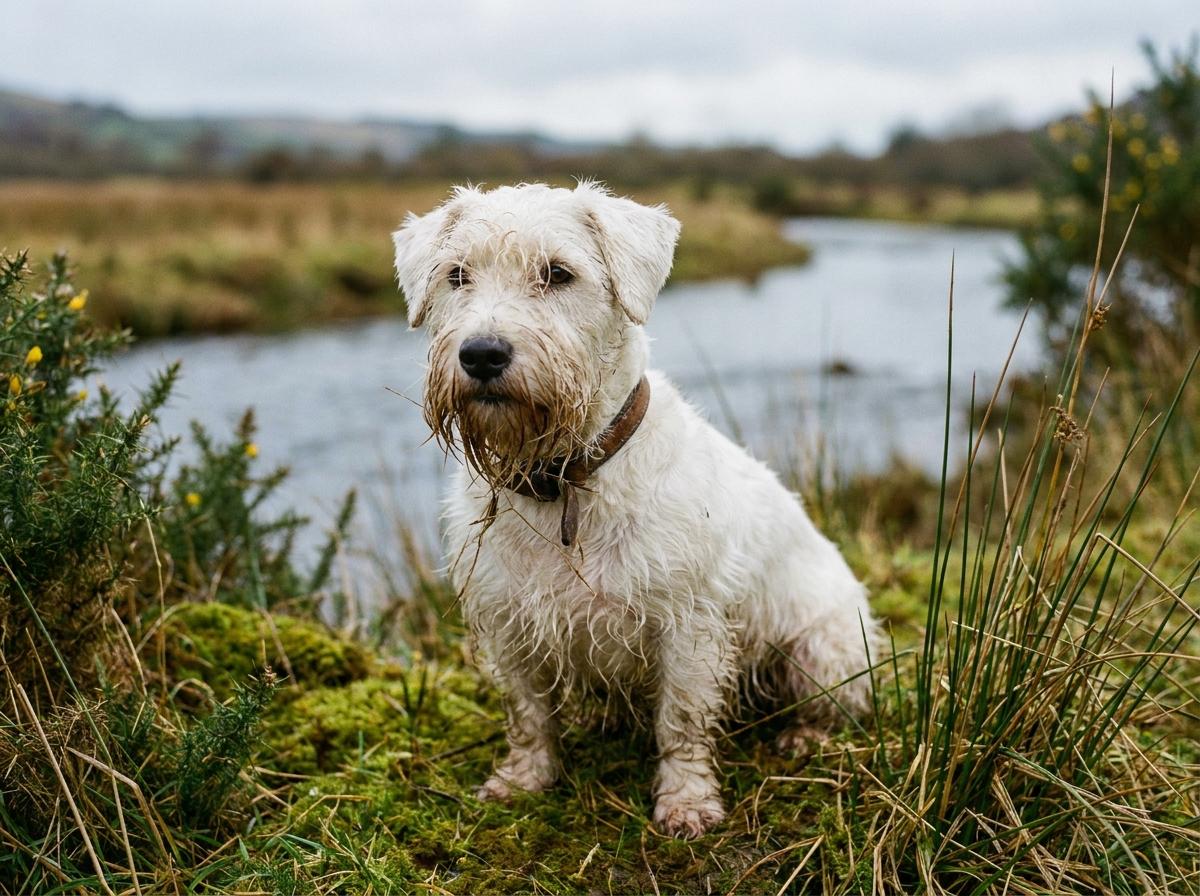
Sealyham Terrier
Sealyham terriers originated at the Sealyham estate in Pembrokeshire, Wales, where nineteenth-century breeders wanted a low, tough white terrier for work around fox, badger, and otter. The modern Sealyham is a small but heavy-boned dog with a long head, folded ears, a strong jaw, and a weatherproof white coat that may have lemon, tan, or badger markings on the head. Once common in show and film circles, it is now a numerically rare breed kept by dedicated terrier people.
A Sealyham is usually less frantic than some small terriers, but it still needs walks, training, and chances to investigate safely. The coat requires regular brushing and either hand stripping or clipping; the beard collects food and moisture if left unmanaged. Sensible breeding programs pay attention to eye health, hearing, bite, skin, and sound movement, while also trying to protect a limited gene pool. Families considering one should be ready for terrier confidence, possible digging, and a dog that responds best to patient handling rather than force.
Colors: Apricot, Bicolor, Black, Black and Tan, Black and White, Black Mask, Blue, Blue and Tan, Blue Merle, Blue Roan, Blue Tick, Brindle, Brown, Brown and Tan, Brown and White, Chocolate, Cream, Dapple, Domino, Fawn, Fawn and White, Gold, Gray, Harlequin, Irish Marked, Liver, Liver Mask, Mantle, Mask, Merle, Mottled, Parti-Color, Piebald, Red, Red and White, Red Merle, Red Roan, Red Tick, Reverse Brindle, Roan, Sable, Saddle, Silver, Speckled, Spotted, Tan, Ticked, Tricolor, Tuxedo, White, White and Badger, White and Black, White and Lemon, White and Tan, Yellow