

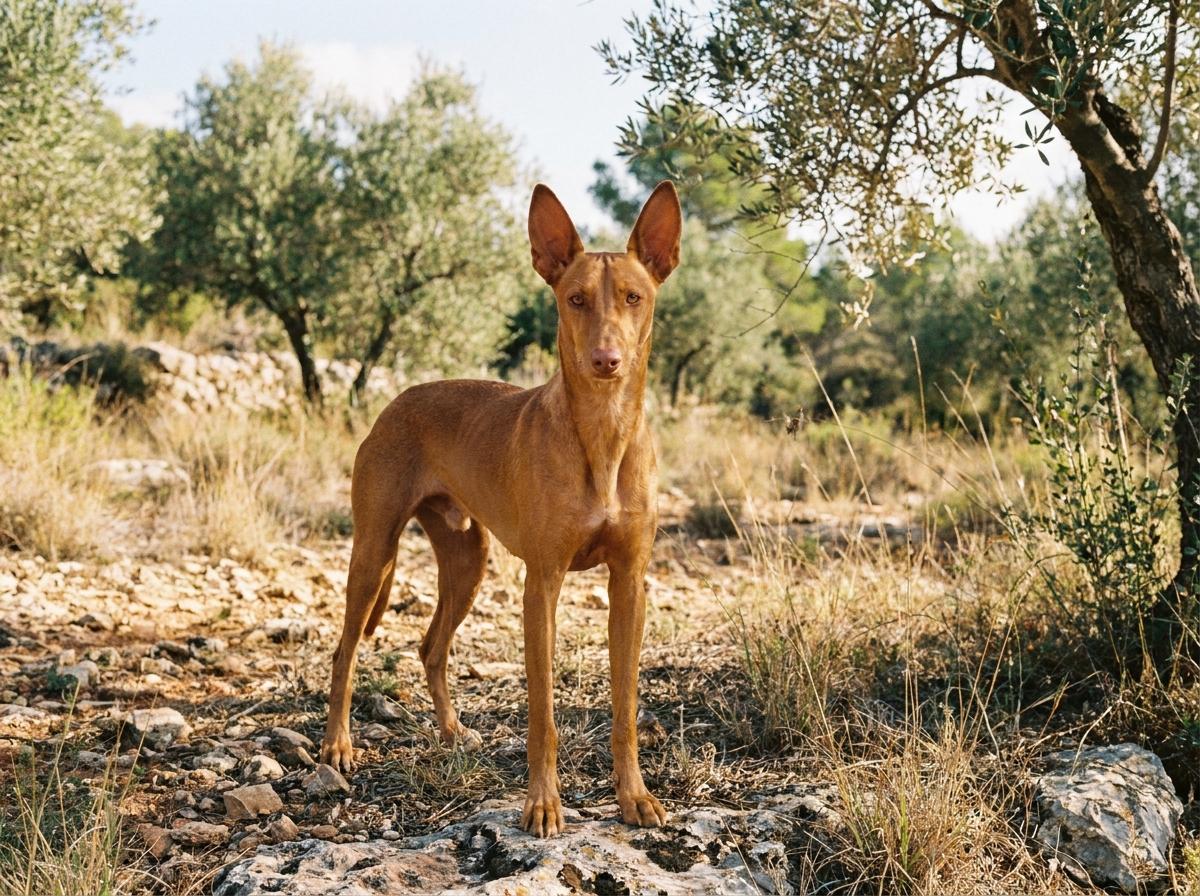
Podenco Valenciano
The Podenco Valenciano is a lean, primitive rabbit-hunting hound from the Valencian Community of eastern Spain, known locally as the Xarnego Valenciano or Gos Coniller. It is easy to mistake for a sighthound at a glance, with its erect triangular ears, conical head, and long legs, but it hunts with nose, ears, and eyes together rather than by sight alone. It is one of the least-known of the Iberian podencos, recognized as a native Spanish breed only in the last decade or so and now formally listed as vulnerable. This page covers what the breed actually is, where it came from, the traits that set it apart from the other podencos, how it lives day to day, and the honest reality of finding one.
Browse listings, public profiles, breeders, or add your animal.
What is a Podenco Valenciano?
The Podenco Valenciano is a Spanish warren hound from the Valencian Community, the coastal region around Valencia and Alicante in eastern Spain. In its home region it goes by two Valencian names more often than the Castilian one: Xarnego Valenciano and Gos Coniller, the latter translating roughly to “rabbit dog,” which tells you the whole point of the breed. According to the breed’s entry on Wikipedia, it was historically found not only in Valencia but across neighboring parts of Aragon, Andalusia, Catalonia, Murcia, and La Mancha as well, a working farm and hunting dog rather than a show or companion animal.
“Podenco” is a family of primitive Iberian hunting dogs rather than a single breed. Spain and its islands are home to several: the well-known Podenco Ibicenco (Ibizan Hound), the Podenco Canario, the Podenco Andaluz, and the larger Podenco Portugues over the border, among others. The Valenciano is the eastern mainland member of that family, and for a long time it was lumped in with generic “podenco” stock rather than treated as a breed in its own right. That changed only recently, which is part of why so little formal documentation exists compared with the goats, cattle, or poultry breeds that have been studied for a century.
If you are comparing Spanish and Mediterranean hunting types, the broader Creatures dogs species page is a useful place to line the podencos up against sighthounds and scent hounds and see where this breed sits.
Where the breed comes from
The podenco type is genuinely old. Dogs of this general build, upright ears, wedge head, athletic frame, appear in Mediterranean art and have worked the dry scrub of Iberia for a very long time. The Valenciano itself is best understood as the regional landrace that developed around Valencia to hunt rabbit in that specific terrain of dry brush, terraces, and rocky ground.
For most of its history it had no herdbook, no standard, and no official status. It was a poor person’s hunting dog, kept by rural and working families to put rabbit on the table, bred for function and passed along informally. Formal recognition is very recent, and the chronology is worth getting right because it is widely garbled:
- In 2009, enthusiasts founded the Club de Amigos del Xarnego Valenciano to organize breeders and push for recognition.
- In 2013, a favorable committee report backed recognition of the breed.
- In 2015, the Valencian government’s Order 6/2015 established the breed standard and studbook at the regional level.
- In 2016, Order AAA/1357/2016 added the breed to Spain’s national list of recognized breeds.
The breed is not recognized by the Federation Cynologique Internationale (FCI), the main international body, nor by the large English-speaking registries. Its official status is national, and the Real Sociedad Canina de Espana (RSCE), Spain’s national kennel club, currently lists the breed; the exact year of any RSCE recognition step is not something this page will assert without primary proof, since the dates in circulation do not hold up. A peer-reviewed genetic study published in the Italian Journal of Animal Science in 2017 used microsatellite DNA markers to characterize the Podenco Valenciano, part of the work that supported treating it as a distinct population rather than generic podenco stock. If you see a dog described as a “registered” Podenco Valenciano, that recognition runs through the Spanish system, not the FCI or the AKC.
The Podenco Valenciano appears on the RSCE’s current list of vulnerable Spanish breeds. (Skip the headcounts you may see quoted alongside that: the current RSCE materials do not agree on a single number, with its own list and its public statements framing the total differently, so the meaningful fact is the listing itself.) It is worth being precise about what the listing reflects, too. The RSCE’s point is that a great many of these dogs sit outside official records at all, which makes reliable population and genealogy estimates impossible. That is a registration and conservation problem rather than a documented census of decline, and it shapes almost everything about acquiring one, which we come back to below.
What a Podenco Valenciano looks like
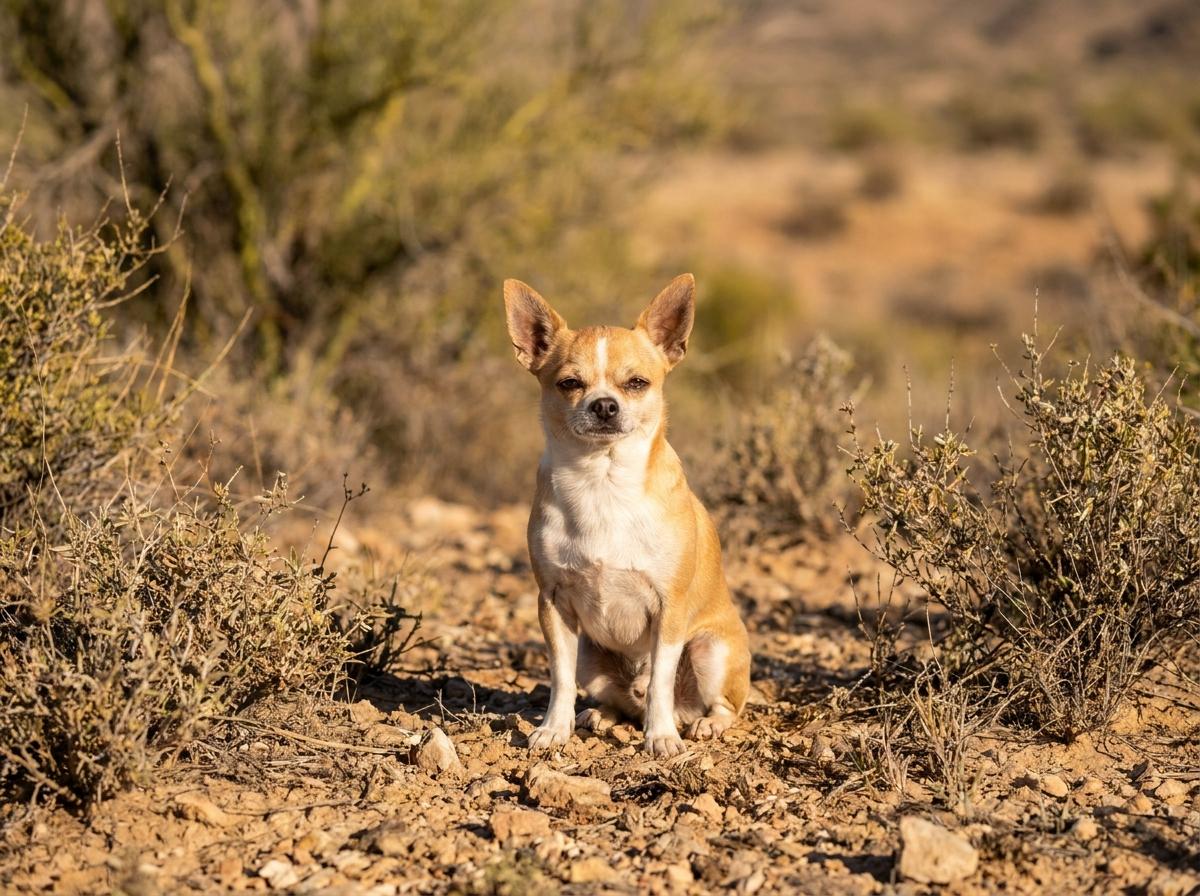
This is a medium-sized, athletic dog built for endurance in heat rather than raw speed. The frame is what the breed literature calls lupoid and sublongilinear, meaning wolf-like in outline and slightly longer than it is tall, balanced for agility and stamina over rough ground. A few features are diagnostic and worth knowing if you are trying to tell a Valenciano from the other podencos or from a lurcher-type mix.
- Conical, wedge-shaped head with a long muzzle. The skull is relatively narrow and tapers to a fine, pointed muzzle, giving the head a clean triangular look in profile.
- Large, erect, forward-facing triangular ears. The ears stand up and swivel toward whatever the dog is tracking. They are a working feature, not a cosmetic one, and the breed standard actually penalizes floppy or dropped ears in the show ring.
- Lean, muscular body on long legs. You should be able to see a defined tuck-up and an athletic, deer-like outline. This is not a heavy or cobby dog.
- Coat in one of three distinct textures. More on this below; it is the single most unusual thing about the breed.
Males stand about 55 to 61 cm at the withers and weigh around 20 kg, while females run a little smaller at about 50 to 57 cm and around 18 kg, per the figures compiled on Wikipedia. Colors are variable and include cinnamon, fawn, chocolate, black, and white, frequently broken up with white markings on the face, chest, feet, or tail. There is no single “correct” color the way there is in some breeds.

The three coats
Most breeds have one coat. The Podenco Valenciano recognizes three, and it is, by the breed’s own description, the only Mediterranean sighthound-type dog to carry a silky or wavy variety. None of the three has an undercoat.
- Smooth (pelo liso). Short, close-lying, straight and shiny hair, roughly 1.5 cm long, sometimes with slight feathering on the tail and legs. This is the most common and the lowest-maintenance.
- Wire (pelo duro). Coarse, rough, tousled hair over 2.5 cm long, often with a distinct beard and a slightly raised, weathered texture. This is the scruffy, rustic look many people picture with rough podencos.
- Silky (sedeno). Longer, fine, flexible hair from about 4 cm, straight or wavy, heaviest on the hindquarters, tail, and chest, and more pronounced in winter. This is the rare and distinctive variety.
All three are the same breed; the coat is a variety, not a sub-breed. Know which coat a given dog or litter carries, because grooming needs and appearance differ noticeably between the smooth and the silky.
Not a pure sighthound: how it actually hunts
Because it looks so much like a small sighthound, the Valenciano is often called one, and that label is a little misleading. A true sighthound, a galgo or a greyhound, hunts almost entirely by sight, coursing prey it can see. The podencos are primitive warren hounds, and they hunt by combining sight, scent, and hearing. The Valenciano uses all three: it will wind rabbit on the breeze, listen for movement in cover, and then use its eyes and speed on the chase. Multiple breed references make this point, and it matters for owners because it explains the behavior you will actually live with.
In its traditional job the dog worked rabbit and hare, usually at night, either singly or in small cooperative packs, flushing and pursuing game through dense Mediterranean scrub. That job selected for an intense prey drive, real independence, tireless stamina in heat, and a nose that stays switched on. A dog bred to make its own decisions chasing rabbit in the dark is not a naturally biddable, velcro companion, and understanding that is the difference between a happy home and a frustrated one.
Temperament
Practitioners and breed references describe the Podenco Valenciano as intelligent, energetic, sensitive, and strongly bonded to its own people, but independent and very much driven by the hunt. Treat the following as the consensus of keepers and breed writers rather than formally studied behavior, because there is little published behavioral research on such a rare breed.
The prey drive is the headline. This is a dog that was bred for generations to chase small fast-moving animals, and that instinct does not switch off because the dog lives in a house. Cats, rabbits, and other small pets are a genuine consideration, and reliable off-lead recall in an open area is hard-won and, for many individuals, never fully safe. Podencos are also known for being sensitive, sometimes shy or spooky with strangers and new situations, and they respond far better to patient, reward-based work than to heavy-handed correction. Many are quiet and gentle in the home once their exercise needs are met, affectionate with their family, and good with children they are raised around, but early, kind socialization matters a lot with a naturally wary dog.
If you are drawn to less common, regionally distinctive breeds in general, it is worth reading widely before you commit. We profile others in the same spirit, from the Iranian Sarabi guardian dog to fancy poultry and pigeon breeds like the Ice Pigeon, each shaped by a specific place and a specific job.
Care and living needs

None of this breed’s needs are exotic, but they are real, and a mismatch between the dog and the home is where problems start.
Exercise and stimulation
This is an athletic hunting hound with serious stamina, and it needs meaningful daily exercise plus mental work, not just a stroll around the block. Long walks, safe running in secure space, scent games, and training that engages the brain all help. An under-exercised, under-stimulated podenco will find its own entertainment, and you will not enjoy the results. A well-exercised one, by contrast, is often calm and undemanding indoors, content to sleep the day away in a soft bed.
Containment and recall
Given the prey drive and athleticism, secure fencing is not optional. These are agile jumpers and determined chasers, and a dog in full pursuit of a rabbit is not listening to you. Many experienced podenco owners keep them on a long line in open ground and only allow off-lead freedom in fully enclosed spaces. Plan your fencing and your walking routine around a dog that will bolt after movement, because assuming otherwise is how these dogs get lost.
Coat and grooming
Grooming depends on the coat. The smooth variety needs little more than an occasional brush. The wire and silky varieties need more regular brushing to prevent tangles and to manage the longer or coarser hair, especially the silky coat’s winter feathering. None of the three carries a heavy undercoat, so this is not a breed that blows a huge seasonal coat, but the longer varieties still benefit from routine attention.
Climate
The breed is genuinely well adapted to warm, dry climates; it was built for the Mediterranean. The flip side is that a lean, single-coated dog with very little body fat and no undercoat feels the cold. In cool or wet weather many podencos appreciate a coat on walks, warm indoor bedding, and shelter from damp. Do not assume a “Spanish” dog is automatically comfortable in a northern winter.
Health
There is no large, breed-specific veterinary literature on the Podenco Valenciano, which is common for rare landrace breeds. Read that absence honestly: it means less is documented, not that the breed is problem-free. In general, primitive podenco-type dogs are regarded as hardy and functionally bred, without the extremes behind many popular pedigrees’ well-known problems. Sensible, evidence-based care applies: keep vaccinations and parasite control current, watch dental and joint health as the dog ages, and be aware that a very lean, thin-skinned dog can be prone to nicks and cuts. Keep good records of weight, vaccinations, and any issues so patterns are easy to spot, and defer every medical decision and any medication to a veterinarian who can examine the dog.
Size, weight, and lifespan
Adult Podenco Valencianos are medium-sized: males about 55 to 61 cm tall and around 20 kg, females about 50 to 57 cm and around 18 kg. On lifespan, be cautious of confident numbers. There is no authoritative, breed-specific longevity study for the Podenco Valenciano, and figures you see quoted are extrapolated from podenco-type dogs generally. Primitive, athletically built hounds of this size are commonly long-lived, and a well-cared-for individual can be expected to live into its early or mid teens, but treat any exact “12 to 15 years” figure as a general expectation for the type rather than a documented breed guarantee.
Rarity and the podenco welfare reality
Two separate things make this breed hard to acquire well, and it is worth being clear-eyed about both.
The first is simple scarcity. The Podenco Valenciano is rare even in Spain and very rare elsewhere, with a small number of dedicated breeders, and it sits on the RSCE’s current list of vulnerable Spanish breeds. Part of what drives that listing is that many of these dogs are never entered in official records at all, which is precisely why nobody can give you a trustworthy population figure. Outside Spain there is essentially no established breeding population, so a genuine, papered Valenciano abroad is a specialist purchase, often involving import from Spain, not something you find at a local litter.
The second is the welfare context that surrounds Spanish hunting dogs, and it deserves honesty rather than a marketing gloss. Podencos and galgos (Spanish greyhounds) are widely used as disposable hunting tools, and animal-welfare organizations estimate that many tens of thousands of Spanish hunting dogs are abandoned, killed, or dumped each year at the end of the season, a problem covered by outlets including National Geographic. Spain’s 2023 Animal Welfare Law was widely reported to have excluded hunting dogs after lobbying from hunting groups, leaving galgos and podencos outside some of its protections. The practical upshot for a prospective owner is that a great many “podencos” available through rescue are podenco-type dogs and mixes of unknown pedigree, often wonderful companions, but not verifiable registered Podenco Valencianos. Both paths, a specialist Spanish breeder or a rescue adoption, are legitimate; just be honest with yourself about which one you are actually on, because they are very different commitments.
Acquisition and buying considerations
Whether you go the breeder route or the rescue route, buy or adopt on evidence rather than on a romantic idea of a rare Spanish hound.
- Decide breed versus type first. If you specifically want a documented Podenco Valenciano, expect to work with a Spanish breeder or the national club and to verify RSCE registration. If what you actually want is a podenco to love, a rescued podenco-type dog may suit you just as well and does real good; just do not call it a registered Valenciano unless it is one.
- Ask about the coat variety and the parents. Smooth, wire, and silky differ in look and grooming. Meet or see the parents where you can, and ask about temperament, socialization, and health.
- Match the dog to your setup honestly. Secure fencing, a plan for the prey drive, real daily exercise, and tolerance for an independent, sometimes shy dog are not negotiable. This is a poor fit for a home that wants an easy, off-lead, small-pet-safe companion with no fuss.
- Verify health basics and provenance. Vaccination and parasite records, microchip and export paperwork for an imported dog, and an honest account of the dog’s history matter more than looks. Rare breeds attract both dedicated custodians and opportunists, so confirm what you are actually getting.
- Be patient. With a vulnerable, scarce breed, the right dog from the right source is worth waiting for. A saved listing alert (below) is often the most practical way to catch one when it appears rather than settling.
You can browse current dog listings on the Creatures marketplace and look for breeders and rescues in the Creatures directory. Because genuine stock is so scarce, setting a listing alert is usually the smartest move.
Frequently asked questions
Is the Podenco Valenciano a sighthound?
Not strictly. It looks like one, with upright ears and a lean, coursing build, but it is a primitive warren hound that hunts using scent and hearing as well as sight. That combination is exactly what distinguishes the podencos from true sighthounds like the galgo.
How big does a Podenco Valenciano get?
It is a medium-sized dog. Males stand roughly 55 to 61 cm at the withers and weigh around 20 kg; females are a little smaller at about 50 to 57 cm and around 18 kg.
Are Podenco Valencianos good family dogs?
They can be affectionate, gentle housemates once their exercise needs are met, and many do well with children they are raised alongside. The caveats are a strong prey drive (a real issue with cats and small pets), an independent streak, and a tendency to be sensitive or shy, all of which reward patient, reward-based training and early socialization.
Can I let one off the lead?
Cautiously and only where it is genuinely safe. The breed’s prey drive and speed mean a dog in pursuit of a rabbit will ignore recall, so secure enclosed spaces and long lines in open ground are the norm for most owners. Reliable off-lead freedom in unfenced areas is hard to achieve and, for many individuals, never fully dependable.
Why is the breed so rare?
It was a working regional hunting dog with no formal status until the mid-2010s, when the Valencian standard and studbook (Order 6/2015) and then Spain’s national breed list (Order AAA/1357/2016) recognized it, and it still has a small breeding base. It appears on the RSCE’s current vulnerable-breed list, partly because so many of these dogs are never officially registered, and there is essentially no established breeding population outside Spain, so genuine registered dogs are a specialist acquisition.
Is a rescue podenco the same as a Podenco Valenciano?
Often not exactly. Many podencos in rescue are podenco-type dogs or mixes of unknown pedigree rather than documented Podenco Valencianos. They can make excellent companions, but if provable breed registration matters to you, that comes through a Spanish breeder and the RSCE, not through the general rescue pipeline.
Do this next on Creatures
Whether you are researching the breed, trying to find a genuine dog, or already living with a podenco, Creatures is the records, marketplace, and directory layer to do it in one place.
Find a dog. Browse Podenco Valencianos on the marketplace and search trusted breeders and rescues in the Creatures directory. New to searching? See saving searches and using your watchlist.
Get alerted. Genuine Podenco Valencianos are scarce, so set a free Podenco Valenciano listing alert and we will tell you when one is posted. No account needed to start.
Add your dog. Already have a podenco? Create a free animal profile in a few minutes. The walkthrough is in adding an animal to Creatures.
Track health and care. Add a health or care record to keep vaccinations, weight, and vet visits in one timeline. The record sheet opens for any visitor to look around, and you will need a free account to save it. See adding a record and health and medical records for the how-to.
List your kennel or rescue. Breed or rehome podencos? Create an organization profile so people searching for this rare breed can reach you, and read getting listed in the breeder directory.
Go wider. Compare the podencos against other hounds and hunting dogs on the Creatures dogs species page.
If you run a kennel or rescue, you can also list your operation in the Creatures directory so people searching for this hard-to-find breed can reach you.