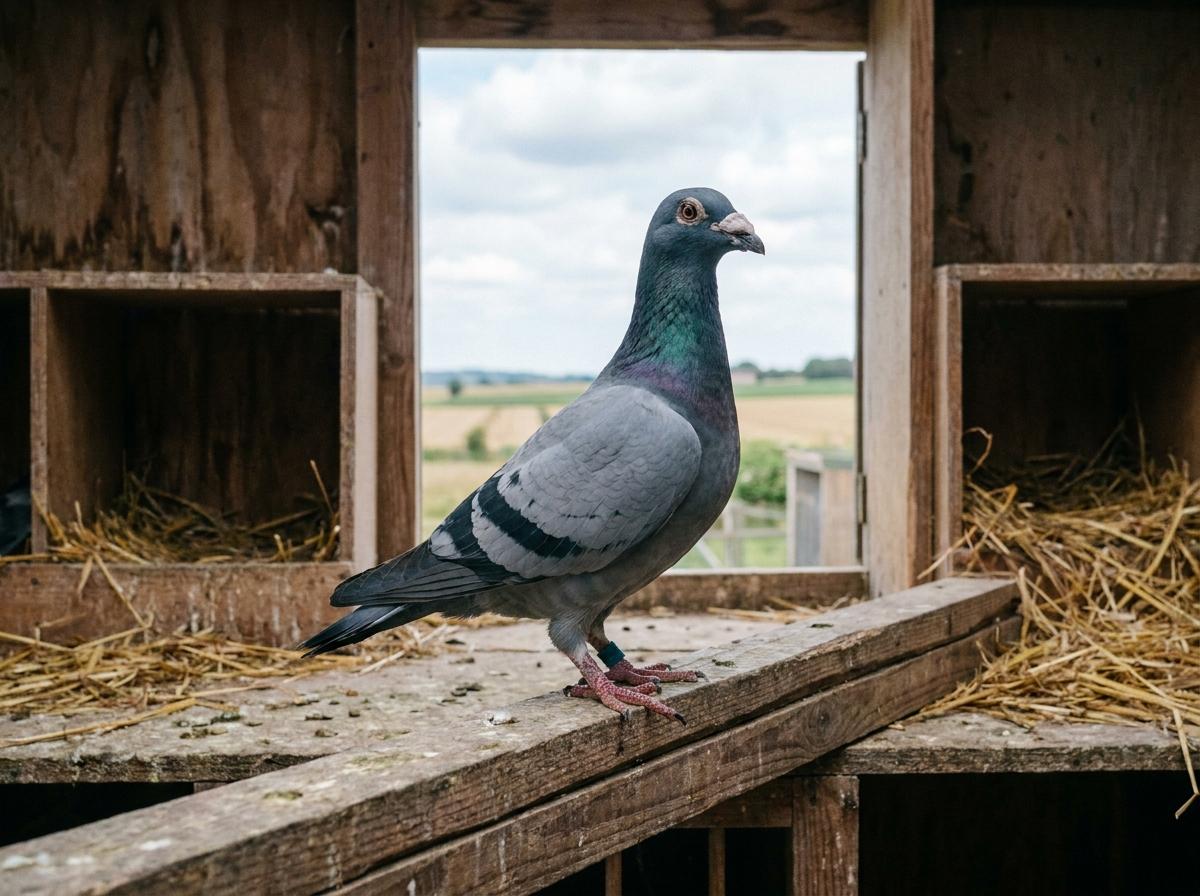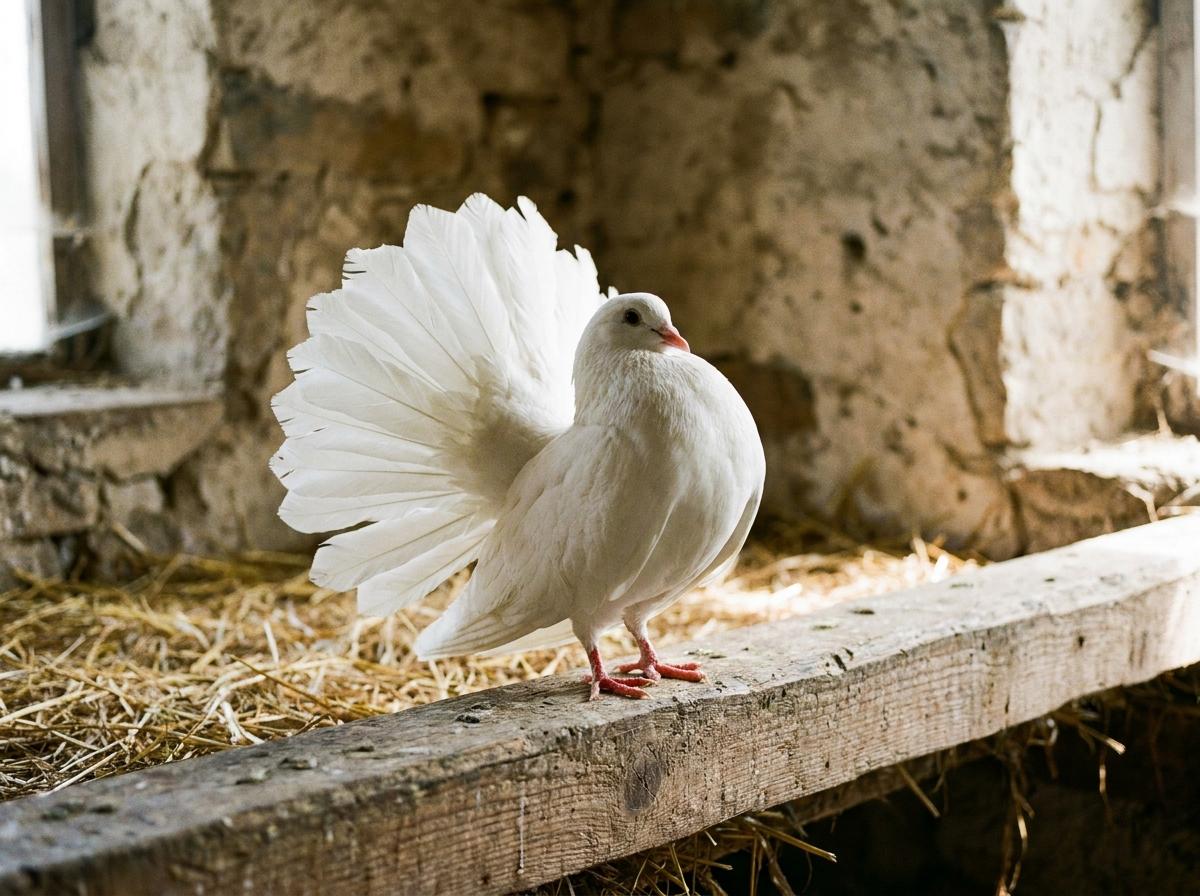



Ice Pigeon
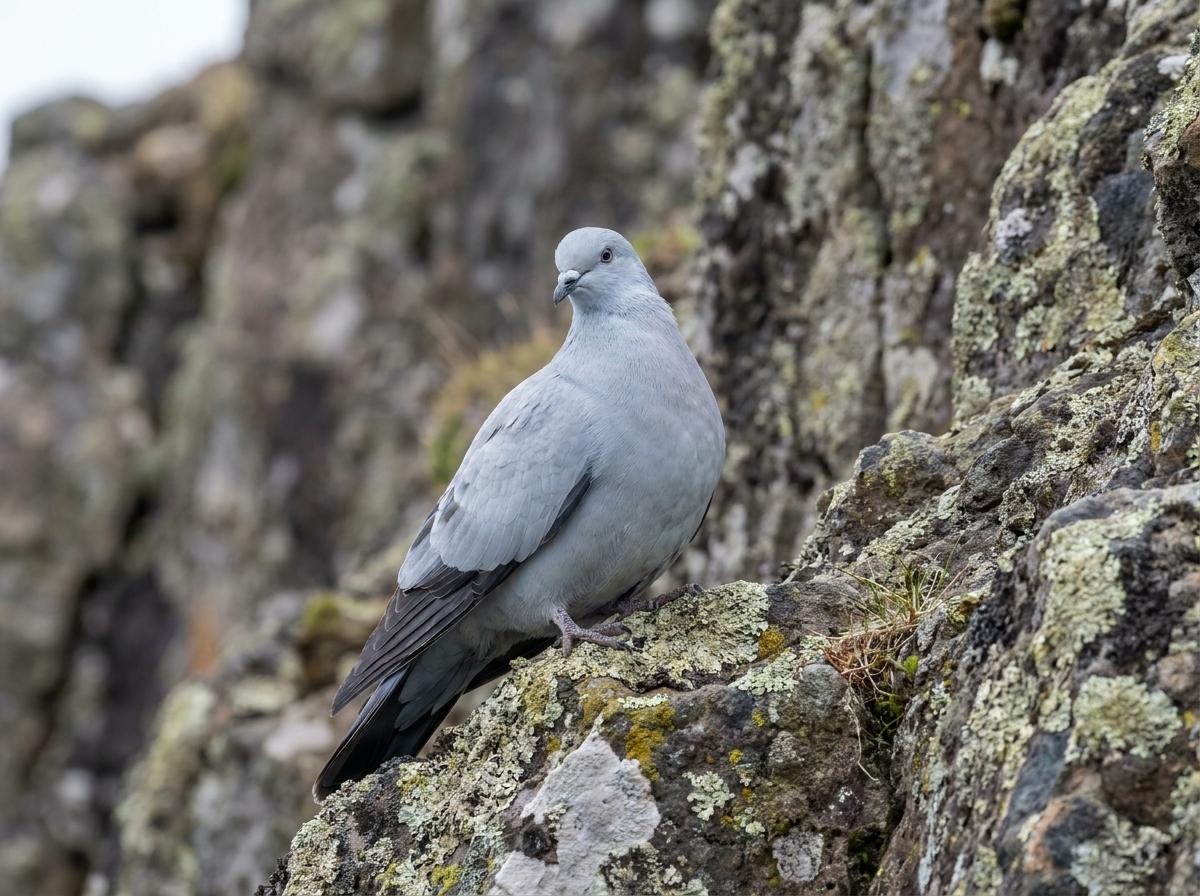
The Ice pigeon is a German exhibition breed of domestic pigeon bred for one thing above all: a very light blue so pale and soft it barely reads as a color at all. German fanciers call it the Eistaube, Polish keepers the Lazurek, and the written standard asks for a ground color “as bright and soft as possible like new fallen snow.” Breeders attribute that paleness to a lightening factor they call ice, and the standard adds that the feathers themselves carry a fine powder that softens and lightens the color.
In the United States the National Pigeon Association lists the breed in its Color group as “Ice Pigeon, Clean & Muffed.” That split into two leg types is half of the single most useful fact about the bird. The other half is in the written standard: an Ice pigeon is not one bird but a family of six color varieties, judged as different things, and knowing which one you are looking at changes everything about buying, breeding, and showing it.
This page covers what the standard actually asks for, which varieties exist, what is and is not known about the ice color, how the birds are kept, and what buying one involves. If you already keep them, the fastest way to keep the varieties straight is to give each bird its own profile and record its variety, wing pattern, and eye color, and you can place the breed alongside the rest of the family on the Creatures pigeon page.

| Also called | Eistaube (German), Lazurek (Polish, from lazur, azure) |
|---|---|
| Group | German color pigeons (Farbentauben); listed by the NPA under Color as “Ice Pigeon, Clean & Muffed” |
| Origin | South Germany (clean-legged birds) and Saxony, Silesia and Lusatia (feather-footed birds) |
| Ground color | Very light blue, “as bright and soft as possible like new fallen snow,” with a fine powder in the feathers that adds to the softness of the color |
| Varieties | Barless, white-barred, white-spangled, porcelain, black-barred, checkered (clean-legged form: Forellen) |
| Eye color | Orange to yellow-orange in the black-barred and checkered birds; dark in every other variety |
| Leg types | Clean-legged (bare) or muffed (feathered feet); standard band size 7 clean-legged, 11 muffed |
| Typical lifespan | 10 to 15 years for pigeons and doves in captivity, occasionally 20 (Association of Avian Veterinarians) |
Browse listings, public profiles, breeders, or add your animal.
Ice pigeon, snow pigeon, Damascene: which bird do you mean?
Three different birds turn up under similar searches, and telling them apart saves a lot of confusion.
The Ice pigeon is a domesticated fancy breed. Like every domestic pigeon it descends from the wild rock pigeon, and it has been shaped by German fanciers over centuries for color rather than for racing or meat.
The snow pigeon is a completely different animal. Columba leuconota is a wild species of the Himalaya and the mountains of central Asia, roosting and nesting on cliffs and ranging up to the snow line. It is not a breed, it is not kept in lofts, and nobody sells one. If a search for “snow pigeon” brought you here, that is the bird you probably wanted.
The Damascene is the breed most often mistaken for an Ice pigeon in photographs, because it is also a pale silvery bird with dark wing bars. It comes from the eastern Mediterranean rather than Germany, and it is a separate breed with its own standard. You can compare it on the Creatures Damascene page.
One more source of tangle: fanciers use “silver” loosely, and in pigeon language silver usually means a dilute blue, a different genetic route to a pale bird. The Ice pigeon’s paleness is not dilution, which is one reason the two do not breed alike.
Where the breed comes from
The Ice pigeon is genuinely old, and it counts among the oldest of the German color pigeons. Most accounts place its development in the belt that runs from eastern Germany into what is now western Poland, with the early work concentrated in Saxony, Silesia, and Lusatia (Lausitz), though the standard puts the clean-legged birds further south.
Beyond that, the record is thinner than most breed pages admit. The American standard used by the Southern California Color Pigeon Club, translated from the 1954 German standard by H. P. Macklin and updated against later German standards, puts the clean-legged birds in South Germany, the feather-footed birds in Saxony, Silesia, and Lusatia, and the checkered form (Forellen) in Silesia and South Germany. Polish sources tell it differently and place the smooth-legged birds in Silesia first. Nobody has a founding year. Treat the regional attributions as fancier tradition rather than documented history.
One popular claim is worth correcting. Several breed write-ups say Charles Darwin crossbred Ice pigeons in 1846. That does not fit his own timeline: Darwin did not take up pigeons until March 1855, when he set up an elaborate pigeon house at Down House and bought many different breeds for his own crosses, as the Christ’s College Darwin200 project records. The Ice pigeon is also absent from the pigeon chapters of The Variation of Animals and Plants under Domestication, where he catalogued the breeds he actually worked with. Darwin’s pigeon work is real and important. The 1846 Ice pigeon story is not supported.
How to recognize a good one

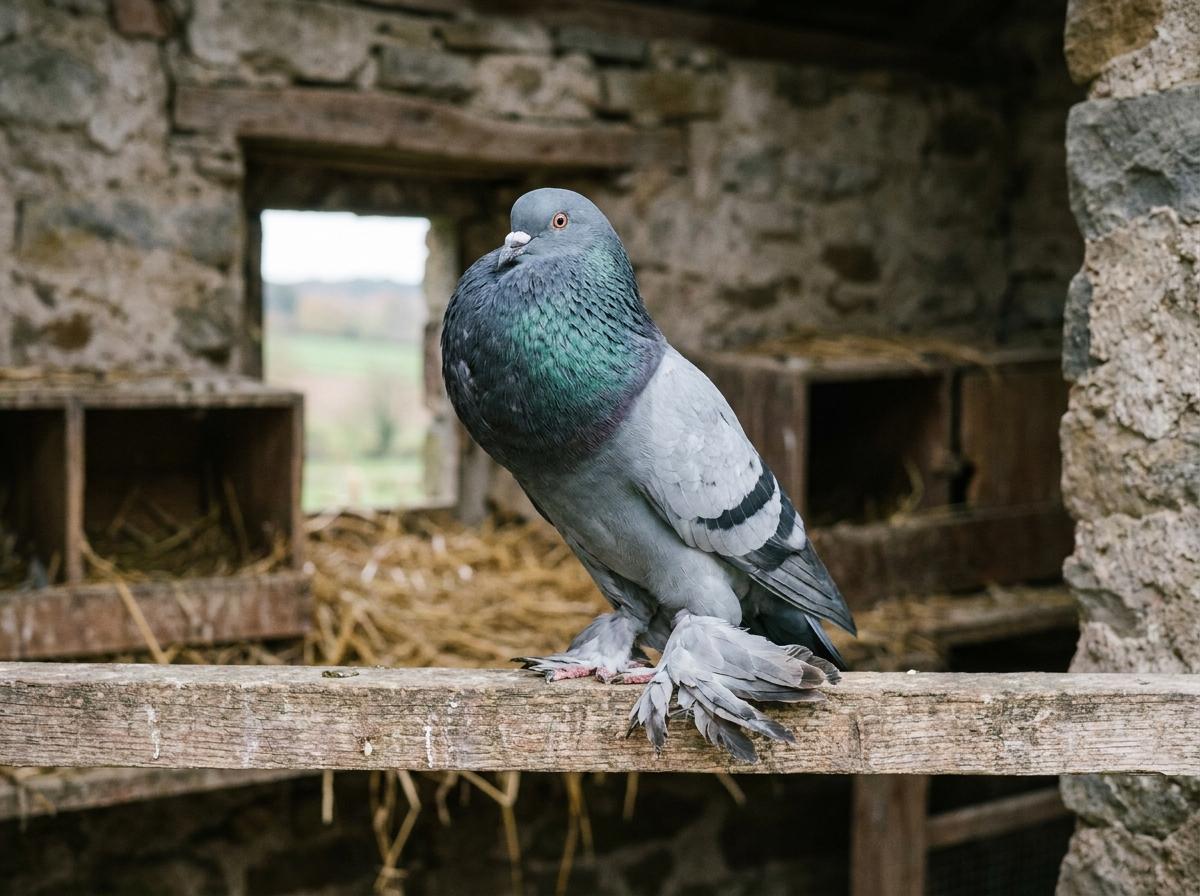
The standard describes a strong field-pigeon shape on a low station, always plain headed, with no crest or frill anywhere. The chest is broad, deep, and stretched forward. The neck is medium long. The back is broad between the shoulders and then slopes gently down and narrows toward the tail. The wings are long, rest on the tail without crossing, and cover the lower back and rump. The tail is long and well closed. Clean-legged birds look a little slimmer and carry tighter feather than muffed ones.
Everything else is detail, and the detail is where birds win or lose.
Color. Very light blue, as bright and soft as possible. No part of the body should carry any other color except the wing pattern itself. The flight feathers are very dark and the tail bar is black, which is what gives a good bird its contrast.
Powder down. Pigeons and doves produce powder down from specialized feathers on their sides, and the standard notes that the Ice pigeon’s feathers “contain some fine powder which adds to the softness of the color.” Its feather section repeats the point: muffed and clean-legged birds alike carry “a fine powder which adds to the lightness of color.” That is as far as the standard goes. It credits the powder with softening and lightening the color, and stops short of saying how much of the frosted look is powder and how much is the ice factor.
Eyes. Black-barred and checkered birds carry an orange to yellow-orange eye. Every other variety has a dark eye. Both are correct, so you cannot judge eye color until you know the variety. The eye cere should be narrow and dark gray, and on a clean-legged bird a reddish cere is a listed fault.
Beak. Medium to long, slender, and dark.
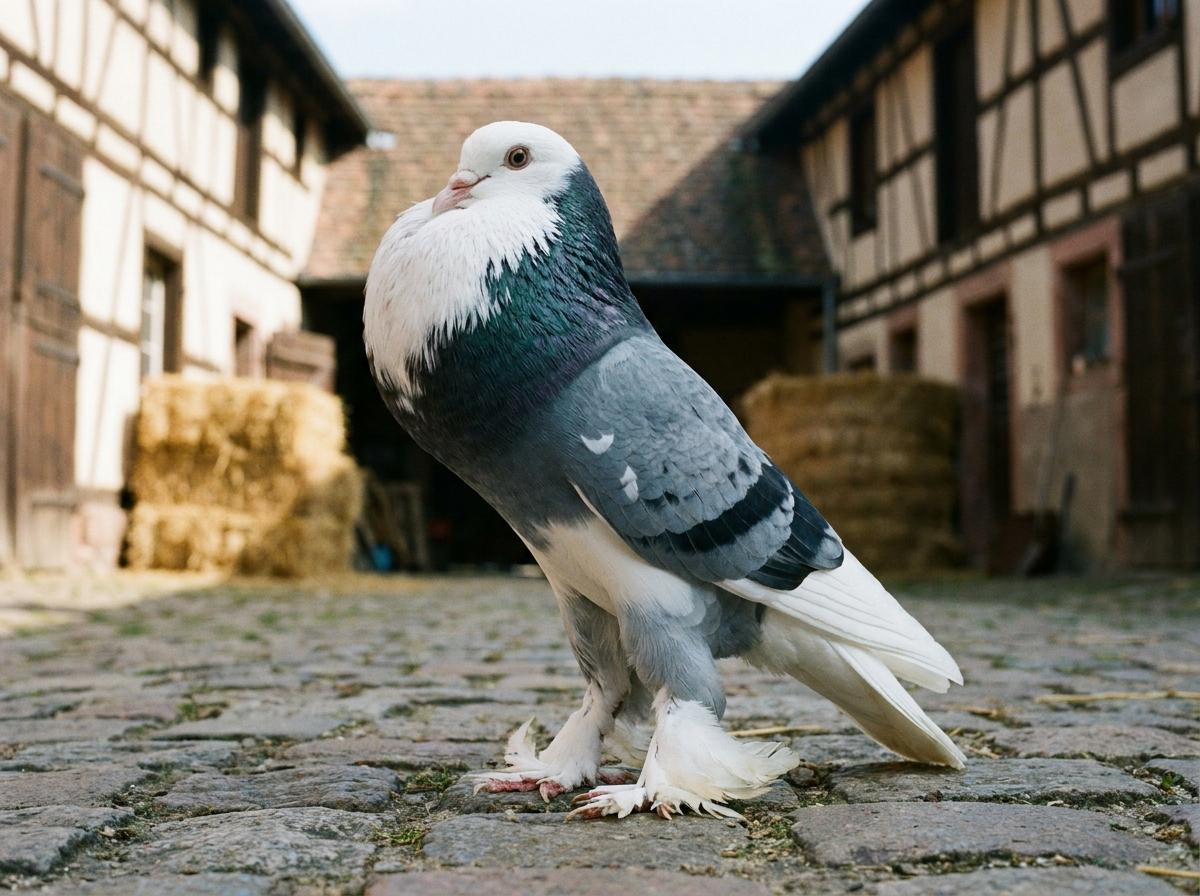
Legs and feet. Clean-legged birds have bare legs and feet. Muffed birds carry feathered feet that the standard wants “tight fitting and feather rich but not excessively long,” which is a more useful description than the sweeping show-bird muffs people imagine. Short or incomplete muffs are a fault. The standard sets band sizes to match: 7 for clean-legged birds, 11 for muffed.
Judges work through the bird in a set order: body shape, then basic color, then wing pattern, then eye color, then legs, feet, and muffs. The listed bad faults are worth memorizing before you buy, because they are what a seller’s photograph tends to hide. They are a weak body or high station, short or incomplete muffs, a reddish eye cere on a clean leg, any bronze or green gloss in the neck, a whitish back and rump that transitions into a noticeably darker blue tail, an under-tail wedge lacking good ice color, any wing pattern showing on a barless bird, and a barred bird showing three bars instead of two.
The six varieties

All six share the same pale ground color, the same dark flights, and the same black tail bar. They differ in what the wing shield does.
- Barless (hohlig): a clean, unmarked wing shield. Any hint of pattern is a fault.
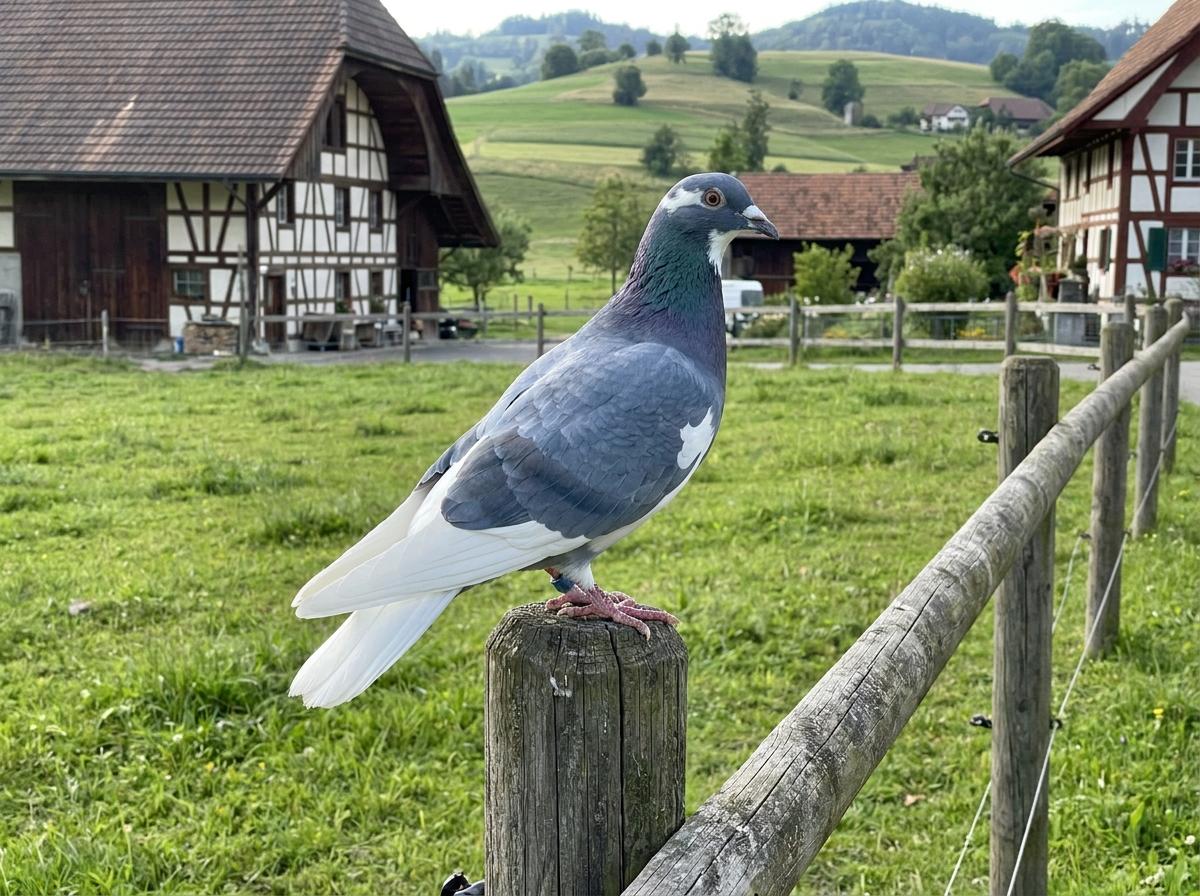
- White-barred (weissbindig): two pure white bars across the shield, each showing a thin blackish edge, even, long, and well separated.
- White-spangled (weissgeschuppt): evenly distributed triangular white marks across the shield instead of bars.
- Porcelain (porzellanfarbig): a spangle pattern with a very slight reddish-yellow transition between the white mark and its black edging, pearl-like spots on the flights, and large whitish spots required in the tail bar.
- Black-barred (schwarzbindig): two narrow, even, well separated black bars.
- Checkered (gehaemmert): large triangular black marks in parallel rows across the shield, in roughly a 5 to 3 ratio of black to light. The clean-legged version of this variety is the one called Forellen, from the German for trout.
Both leg types exist across the varieties, so “muffed white-barred” and “clean-legged checkered” are the level of precision a seller should be using. If a listing just says “Ice pigeon,” ask.
What is actually known about the ice color
This is where most breed pages overclaim, so here is the honest version.
Fancier genetics references list ice as a color modifier with the symbol Ic, described as autosomal and incompletely dominant. On that model one copy lightens a bird somewhat and two copies produce the full frosted effect. That is the working framework the hobby uses, and it is a reasonable one.
What it is not is a mapped gene. The molecular work on pigeon color has been productive: Domyan and colleagues identified the mutations behind three classical fancier traits in Current Biology in 2014, tying brown to Tyrp1, recessive red to Sox10, and dilute to Slc45a2. Vickrey and colleagues then showed in eLife in 2018 that the wing pattern series Ice pigeons are shown in sits inside a larger allelic series, barless through bar, checker, and T-check, driven by coding and regulatory variation in a single gene, NDP. Two things keep that from covering the whole breed. T-check is not an Ice pigeon variety, and the series sets where a pattern sits rather than what color it is, so the white-barred, white-spangled, and porcelain birds carry additional modifiers NDP does not account for.
So the patterns on an Ice pigeon’s wing are genetically well understood. The ground color that gives the breed its name is not. Nobody has published a molecular characterization of ice, and fancier reports still describe modifier effects and messy second-generation results rather than clean single-gene behavior. Any page that hands you genotype-based pairing instructions for ice is offering more precision than the evidence supports.
The practical consequence is the same either way. Expression varies, youngsters differ in intensity, and careless pairings drift back toward ordinary blue. Even, correctly colored lofts come from patient selection over several generations, and from writing things down. Recording each bird’s color intensity, wing pattern, and eye color next to its parents is how you learn what your own line actually does, and a simple set of health and breeding records is enough to start seeing which pairs throw the best color.
Keeping Ice pigeons
Ice pigeons are kept the way other fancy pigeons are kept. They are hardy and undemanding next to most exotic birds, but they need a proper loft, a sound diet, and routine care. None of what follows replaces advice from an avian veterinarian, and a sick bird should be seen by one.

Housing
The Association of Avian Veterinarians pigeon husbandry brochure is the most useful short reference a new keeper can read, and its guidance is specific.
Build long rather than tall so the birds can fly perch to perch. The AAV puts the minimum enclosure for a single dove at 3 feet wide by 2 feet tall by 2 feet deep, notes that pigeons need more, and adds that more birds means a bigger space. Offer at least three different perching options. Pigeons and doves prefer flat shelves to branch perches, but the AAV asks for a natural branch perch or two as well, so that no one part of the foot takes constant pressure. Wire is never an acceptable perching surface. For a breeding pair, a 12 by 12 by 12 inch nest box works.
Ventilation matters more than heat. Rafter openings help ammonia dissipate and keep droppings drying. Floors should be solid: concrete, or hardware cloth topped with pavers or marine-grade plywood, scraped clean at least weekly. Straw is discouraged anywhere except inside nest boxes, because it grows fungus. Pigeons are sensitive to environmental mold, so dry beats cozy every time.
Predator-proofing is not optional. The AAV recommends enclosing the whole structure, top, bottom, and sides, in half-inch hardware cloth with no gaps larger than half an inch, and says plainly that chicken wire will not keep predators out. Pay particular attention to raccoon-proof doors.
Two Ice-pigeon-specific notes. Muffed birds need the floor and nest areas kept clean and dry, or the foot feathering gets soiled and broken, which costs you both bird comfort and show points. And offer bathing water once or twice a week; regular bathing keeps the plumage and its powder in good order, which on this breed is the whole point.
Feeding
The base diet is a seed and grain mix sized for the bird, optionally supplemented with formulated pigeon pellets. The Merck Veterinary Manual notes that commercial pigeon pellets run about 2 mm in diameter and that most columbids will also take small parrot pellets. Clean fresh water should always be available.
Grit deserves a correction, because plenty of pigeon pages state it as an absolute. The AAV says there is genuine debate about whether gizzard grit is needed at all, that too much grit can cause impaction, and that insoluble grit in particular should be offered sparingly. Soluble grit is a different matter: the AAV calls it a good calcium source, especially for growing and laying birds, and lists oyster shell and vitamin and mineral supplements among the ways to balance the diet. Ask your avian vet what your loft actually needs rather than free-feeding grit on principle.
Health and quarantine
Quarantine every new bird for at least 40 days in a separate enclosure, with an examination and a fecal check before it joins the loft. That single habit prevents more disease than any medication.
The pathogens to know are trichomoniasis (canker), paramyxovirus, paratyphoid, pigeon herpesvirus, poxvirus, adenovirus, psittacosis, roundworms, and external parasites including feather and red mites. Vaccines exist in many countries for poxvirus, paratyphoid, and some paramyxovirus strains, and are usually recommended for flying and sporting pigeons rather than birds kept purely as pets. Ask your veterinarian which apply to your situation, and let a vet diagnose and dose rather than guessing from a forum.
Some pigeon diseases pass to people. Psittacosis is the notable one, and the fungi Histoplasma and Cryptococcus grow in accumulated droppings, which is one more reason floors get scraped weekly.
The powder down question, honestly
The trait that makes an Ice pigeon beautiful is also the one health issue worth thinking about before you commit.
Bird fancier’s lung is a recognized form of hypersensitivity pneumonitis caused by repeated inhalation of avian proteins from feather dust and droppings. In a series of 86 patients published in Medicine in 2008, Morell and colleagues found breathlessness in 98 percent and cough in 82 percent, with a mean delay of well over a year before diagnosis, and noted that the chronic form can progress to pulmonary fibrosis. The AAV describes allergic reaction to powder down as a growing health problem among owners of powder-down species and recommends wearing a mask when cleaning enclosures.
None of that means do not keep pigeons. It means wear a mask when you scrape, ventilate the loft properly, do not keep birds in a bedroom, and tell your doctor you keep pigeons if you develop a persistent cough or shortness of breath. If anyone in the household already has a dust or feather sensitivity, spend real time around a loft before buying birds.
Lifespan
The AAV puts the captive lifespan of commonly kept pigeon and dove species at 10 to 15 years, with individuals occasionally reaching 20. Treat that as a general domestic-pigeon expectation rather than a breed-specific promise. Diet, loft conditions, and protection from predators and disease move that number more than genetics does. Setting reminders for upcoming care around molt, parasite control, and show season is a small habit that adds up over a decade.
Showing and breeding
The Ice pigeon is an exhibition bird, judged against a written standard. If you intend to show, the practical path is narrow and boring and works: start with good stock in one variety rather than a mixed bag, learn exactly what your standard rewards, and pair toward it. Color consistency is the hard part for the genetic reasons above, so expect variation in your youngsters and select patiently.
Serious breeders keep pedigree and color records, and asking to see them tells you more about a loft than any photograph. If you breed and sell, listing your loft in the Creatures breeder directory is how buyers searching this breed find you rather than the other way around.
Buying an Ice pigeon
The breed is established and reasonably available, but it is not a pet-shop animal. Birds move through pigeon clubs, color-breed specialty clubs, and shows.
On price, here is the honest answer. There is no published price index for Ice pigeons. Prices are set bird by bird between fancier and buyer, and they depend on which variety you want, whether the bird is show quality or surplus young stock, how well it holds the ice color, and how far it has to travel. Anyone quoting you a confident national price range is guessing. The realistic way to learn current asking prices is to watch club shows, ask specialty club members directly, and follow live listings.
Shipping is a real cost, and there are rules. Under USPS Publication 52, section 526.4, adult birds may be mailed domestically only by Priority Mail Express, each bird must weigh more than 6 ounces and no more than 25 pounds, and the shipping container must be one pre-approved by the Postal Service. Shipments also have to comply with USDA, Fish and Wildlife, and state and local requirements. Budget for the container and the express postage, not just the bird.
What to check before you buy:
- Know the variety. Decide on clean-legged or muffed, and on the wing pattern, and buy stock that already matches so your breeding stays coherent.
- Judge color in natural light. Indoor lighting flatters a mediocre ground color. Look for the clean pale tone across the back and rump, and check that the under-tail wedge carries good ice color.
- Count the bars. Two, even, well separated, and appropriate to the variety. Three bars is a fault, and so is any pattern on a barless bird.
- Inspect the feet. On muffed birds the foot feathering should be full and unbroken, not sparse or soiled.
- Ask for records. Pedigree, color history, and health information tell you more than a single photo, and a serious breeder will have them.
- Confirm health basics and quarantine anyway. Bright eyes, clean nostrils and vent, good weight, smooth breathing, then 40 days apart from your existing birds.
You can browse current listings on the Creatures marketplace, and if nothing matching your variety is listed today, the hub below has a free listing alert. If you are still choosing a breed, the Archangel is another color breed worth a look, and the pigeon name generator is there for when you get the bird home.
Frequently asked questions
What is an Ice pigeon?
A German exhibition breed of domestic pigeon with a very pale, frosted blue-white body color. It comes in six color varieties and two leg types, clean-legged and muffed, and the NPA lists it in the Color group.
Are Ice pigeons and snow pigeons the same thing?
No. The snow pigeon, Columba leuconota, is a wild species of the Himalaya and central Asia. The Ice pigeon is a domesticated breed developed in Germany from the rock pigeon, Columba livia. They share a genus and nothing else that matters to a keeper: you cannot buy, breed, or show a snow pigeon.
Why is the Ice pigeon so pale?
Fanciers attribute the lightened plumage to an ice factor, whose genetics have not been characterized at the molecular level. The written standard adds that the feathers themselves carry a fine powder which adds to the softness and lightness of the color.
How much does an Ice pigeon cost?
There is no published price guide, and prices are negotiated bird by bird depending on variety, quality, and distance. Shipping adds a real cost, since adult birds go by Priority Mail Express in a pre-approved container. Watching live listings and asking club members is the only reliable way to learn current prices.
What is the difference between muffed and clean-legged Ice pigeons?
Muffed birds have feathered feet, which the standard wants feather-rich but not excessively long. Clean-legged birds have bare legs and feet and a slightly slimmer, tighter-feathered outline. Both are traditional and correct, and the standard gives them different band sizes, 11 for muffed birds and 7 for clean-legged ones.
Do Ice pigeons make good pets?
They can be. Like other fancy pigeons they are calm and manageable, but they are loft birds that need proper housing and routine care. The real caution is the powder down, which is linked to bird fancier’s lung in keepers, so wear a mask when cleaning and ventilate well.
Do this next on Creatures
Whether you are researching the breed, hunting a particular variety, or already keeping Ice pigeons, Creatures is the records, marketplace, and directory layer to do it in one place.
Add your pigeon. Already keeping Ice pigeons? Create a free animal profile and record each bird’s variety, wing pattern, and eye color. The walkthrough is in adding an animal to Creatures. No account needed to start.
Track color, molts, and health. Add a record for pairings, hatches, molts, quarantine dates, and vet visits. The record sheet opens for any visitor to look around, and a free account saves what you enter. See adding a record and health and medical records.
Find a specific variety. Browse Ice pigeons on the marketplace and search trusted keepers and breeders in the Creatures directory.
Get alerted. The exact variety you want may not be listed today, so set a free Ice pigeon listing alert and we will tell you when one is posted. See saving searches and using your watchlist. No account needed to start.
List your loft. Breed Ice pigeons? Add a breeder profile so buyers searching this breed can reach you, and see getting listed in the breeder directory.