

Kurdish Mastiff
The Kurdish Mastiff is a giant livestock guardian landrace from the mountains of Iraqi Kurdistan, where shepherds have relied on it for generations to hold off wolves and bears. Its most precise name is the Pshdar dog, after the Pshdar (Pişder) district of Sulaymaniyah Governorate, and you will also see Pejder, Pêjdar, or Assyrian Shepherd. It is not a kennel-club show breed but a working guardian shaped almost entirely by its environment and its job, and that fact drives everything else: size, temperament, the thin paper trail, and the difficulty of finding one.
The name itself causes real confusion, because “Kurdish dog” gets applied to more than one animal. Some people mean this dog, the Pshdar. Others mean the Kangal, a separate, standardized Turkish breed that sellers sometimes advertise as a “Kurdish Kangal.” This page sorts that out, then covers the real evidence on size and lifespan, what a giant guardian demands, and the hard truth about buying one abroad.
One practical note: genuine dogs surface very rarely outside Kurdistan, so a free Kurdish Mastiff listing alert is the realistic way to catch one.

Browse listings, public profiles, breeders, or add your animal.
What is a Kurdish Mastiff?
The Kurdish Mastiff is a landrace, and that is the key word for understanding it. A landrace is a population shaped over a long time by local conditions and local use rather than by a written standard and a show ring. In the high country of Iraqi Kurdistan, the use was guarding: the dogs that survived and reproduced were tough enough for mountain winters, big enough to face a wolf or a bear, and level-headed enough to live among sheep without harming them. The result is a huge, hardy, self-directed guardian.
Because it grew up as a working animal rather than a registered breed, it is not recognized by the American Kennel Club, the Fédération Cynologique Internationale, or the United Kennel Club, and searching the FCI breeds nomenclature for it returns nothing. That is normal for a regional guardian and not a knock against the dogs. It does mean there is no official standard, no pedigree system, and no registry to verify what a seller claims. See how a landrace sits alongside standardized working breeds on the Creatures dog species page.
Set expectations early: this is a predator-deterrent guardian bred to make its own decisions at two in the morning, not a family companion breed that happens to be large.
Kurdish Mastiff, Pshdar dog, Kangal: sorting out the names
The Pshdar dog is the animal most specifically meant by “Kurdish Mastiff.” It is the giant guardian landrace of Iraqi Kurdistan, and Pshdar, Pişder, Pejder, and Pêjdar all point to the same population. The dogs and their names cross the Iran border freely: Rudaw reported in 2020 on a Saqqez breeder buying dogs from Iraqi Kurdistan to raise and sell across Iran. “Assyrian Shepherd” is another label, tied to the claim that dogs of this type appear on ancient Mesopotamian reliefs.
The Kangal is a different, standardized breed. It is named for the Kangal district of Sivas Province in central Türkiye and has full registry backing: the FCI has recognized it since 1989 and publishes breed standard 331, and the United Kennel Club has registered the Kangal Dog since 1998. A registered Kangal comes with a pedigree and breeders you can evaluate; in North America the closely related, widely available registry breed is the Anatolian Shepherd.
“Kurdish Kangal” is a marketing and identity label, not a registry name. Guardian dogs of this family are kept across a region spanning modern Türkiye, Syria, Iraq, and Iran, and the same kind of dog can carry a Turkish, Kurdish, or Assyrian label depending on who is describing it. Whose heritage these dogs represent is a charged question in the region, and this page stays out of that argument. The practical point is simpler: an ad for a “Kurdish Kangal” usually describes a Kangal-type dog, not a Pshdar, and no registry anywhere recognizes “Kurdish Kangal” or “Kurdish Mastiff” as a breed. Ask what the dog actually is and what evidence backs the answer.
Size will not settle it either. The Pshdar field study’s mean weight sits at or above the top of the UKC Kangal standard’s typical male band (110 to 145 lb), but a field mean and a standard’s band are not comparable measurements, and individuals overlap completely. Treat “this one is bigger, so it is the real Kurdish dog” as the sales pitch it is.
Neighboring regions keep other thinly documented guardian landraces, such as the Sarabi dog of northwestern Iran; reading them together shows why none of these dogs come with paperwork.
Origin and history
The Kurdish Mastiff comes from the mountains of Iraqi Kurdistan; its usual name points to the Pshdar district near the Iranian border, and shepherds’ use of it as a flock guardian reaches back as far as living memory.
The breed is often described as ancient, with a lineage tied to Mesopotamia and the Assyrians, and claims of a five or six thousand year history circulate, the figure varying with the telling. An 1892 book titled Homo Et Canis records a large, mainly tawny Kurdish mastiff kept as a shepherd and watch dog, which puts the name and the type in Western print by the late nineteenth century. That record is worth reading carefully: it places the dog “in Kurdistan in northern Asia Minor, and that region of Asia,” a span that takes in Anatolia, so it does not separate the Pshdar from the Anatolian guardians of the same description. The very old numbers rest on tradition and the general antiquity of guardian dogs in the region, not on a documented breed record: plausible heritage, not a certified pedigree.
What is not in doubt: this is a landrace shaped by natural selection and minimal deliberate breeding, which is why it is so hardy, so independent, and more variable than a standardized breed. Creatures profiles other populations defined by their native ground rather than a breed program, from the Alpine Mastiff of the European mountains to livestock landraces like the Taihu pig of China.
What a Kurdish Mastiff looks like
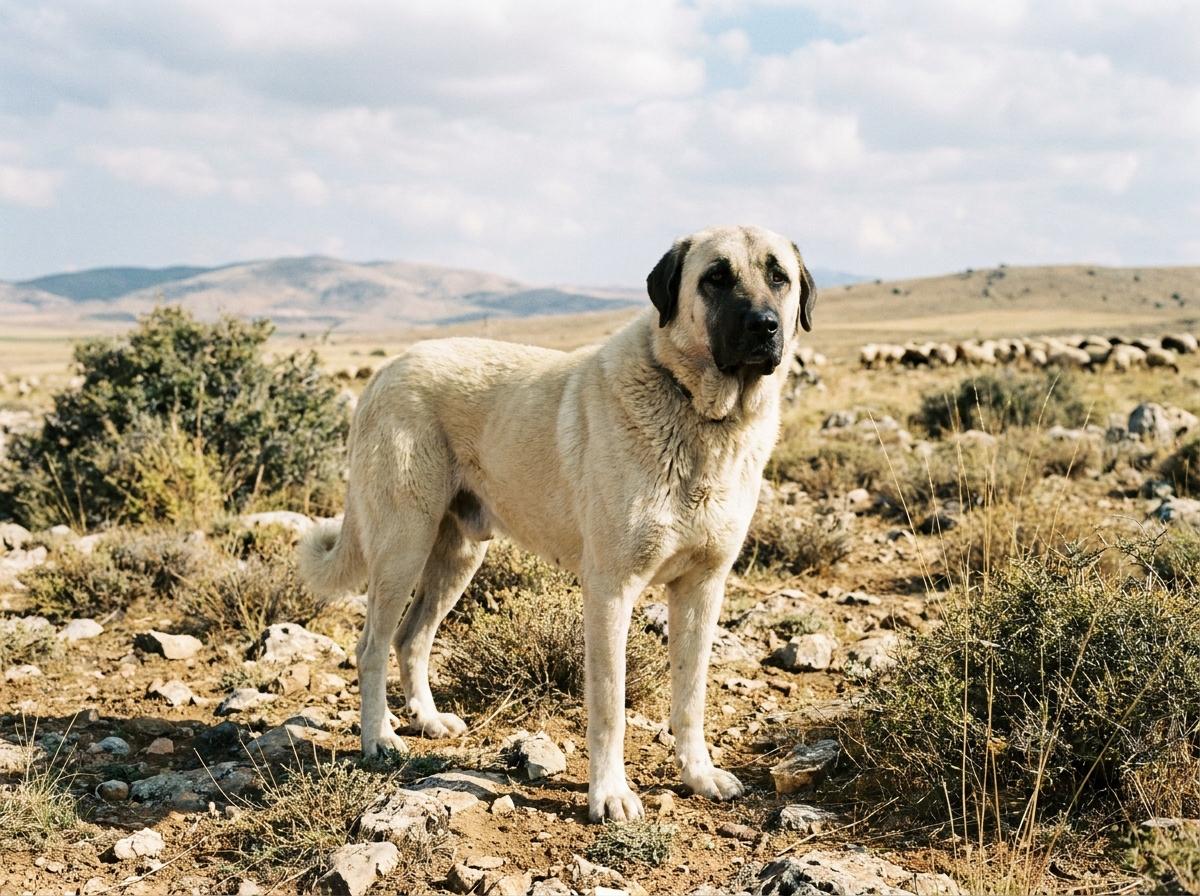
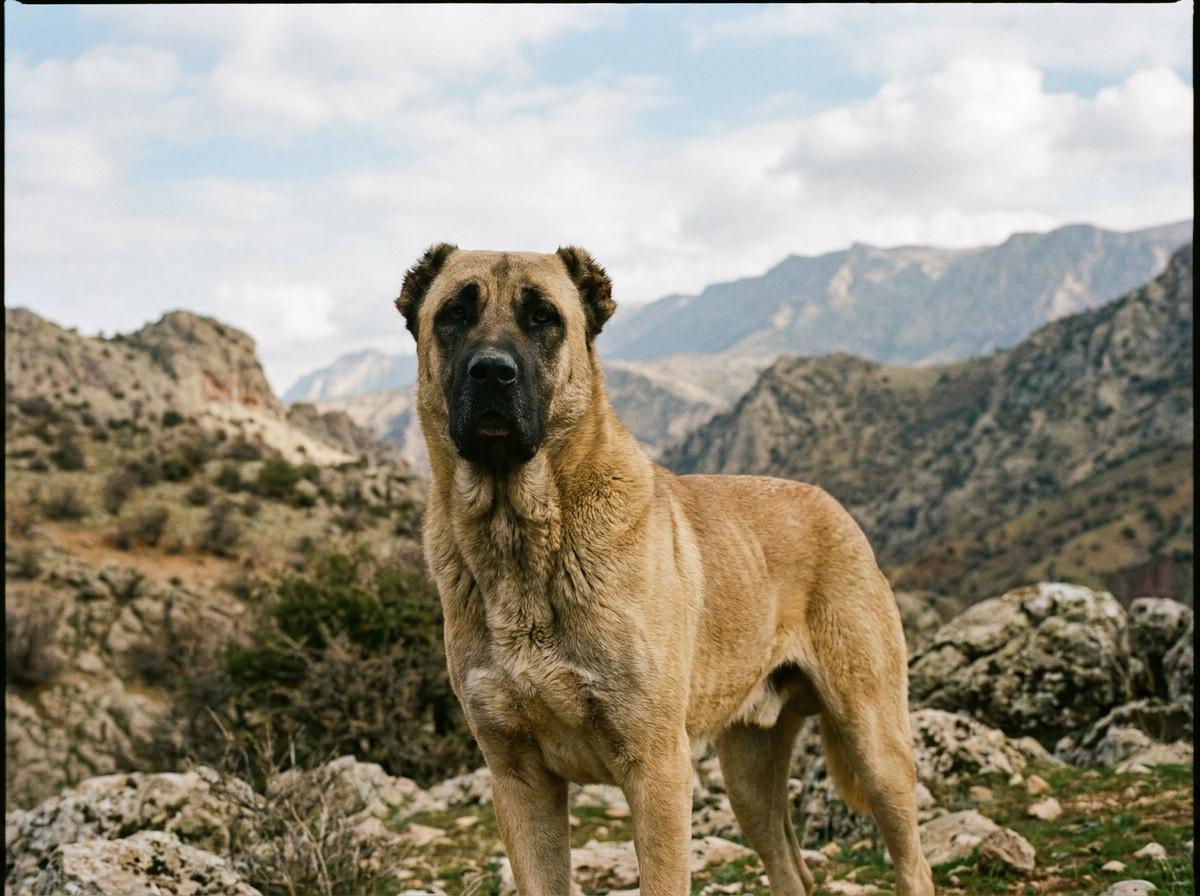
The Kurdish Mastiff reads as a heavy, mountain-built guardian at a glance.

- A massive, powerful frame. Deep-chested and ponderous, closer in impression to an English Mastiff than to a lean herding dog. The measured numbers are below.
- A large head and strong jaw, carried on a thick, muscular neck, with the heavy bone you would expect on a dog meant to physically confront predators.
- Loose skin and pronounced dewlaps, often described as an advantage in a fight because loose skin slides over the muscle beneath, so a bite is less likely to reach what is underneath.
- Soft, pendulous ears, though often cropped in the region. The natural ear hangs close to the head. Working dogs in the home range frequently have their ears cropped short, a tradition worth naming plainly. The AVMA opposes ear cropping done for cosmetic or nontherapeutic purposes, and the images on this page show the natural drop ear.
- A hardy short to medium coat in variable colors. Tawny or fawn is the classic color, singled out in that 1892 description. Wider color lists (white, red, grey, black) circulate online, but no source this page could verify documents them.
Temperament and working role
Everything sensible about Kurdish Mastiff temperament starts from its job. A livestock guardian’s role is to live full time with a flock, blend into its rhythms, and stand between the animals and anything that threatens them.
Keepers describe the breed as calm and settled when nothing is wrong, then instantly alert and unafraid when something is. Kurdistan-based reporting captures the working attitude bluntly, quoting a shepherd that the Pishdar “is not afraid of anything, not even a pack of wolves.” That fearlessness is the point of the dog, and it is inseparable from strong protective drive, deep suspicion of strangers, and independent decision-making.
One more reality deserves a clear-eyed mention. In parts of its home range these dogs are drawn into organized dog fighting, a regular fall and winter event in regional reporting, and demand from that world, plus heavy cross-border sale into Iran, drains a small population. That is an animal-welfare problem and an ethical line, not a feature of the breed. Anyone drawn to the Kurdish Mastiff should have nothing to do with that trade.
The serious cautions, spelled out
Guardian breeds attract admiring copy that skips the hard parts. Most of these apply to any livestock guardian dog (LGD); all apply to a giant, thinly documented one. The University of California Cooperative Extension’s fact sheet on selecting a guardian dog puppy is a good plain-language starting point, though it is written for the buying decision rather than for living with an adult dog.

- It decides for itself. Guardians were selected to act without instruction. Training buys reliability at the margins, not control at the center. Do not make this the breed you learn on.
- Maturity comes slowly. Extension guidance notes guardians may not be reliable until adulthood, around two years; until then you have an adolescent the size of an adult human, still testing judgment and fences.
- Roaming is the failure mode to design against. It is a leading reason working LGDs get replaced; the UC extension sheet reports that in Texas nearly half of purchased LGDs are lost within six years. That same sheet is clear that a well-trained dog respects fences and that dogs strongly bonded to their livestock are less likely to roam as adults, so bonding and real fencing are both part of the answer. A fence that merely marks your line will not hold one.
- They bark, mostly at night. Barking at things you cannot perceive is how a guardian works. On open range, fine. With neighbors in earshot, it is a dispute waiting to happen.
- Strangers and strange dogs are threats until proven otherwise. Plan managed introductions for every visitor, real supervision around children’s comings and goings, and assume unfamiliar dogs entering its territory may be met as predators. Off-leash parks are not for this breed.
- The liability is yours. A dog this size can injure someone badly regardless of intent. Some municipalities, landlords, and home insurers restrict large guardian breeds, and rules vary by place, so verify your local ordinances and your policy before you commit.
- A guardian cross is not a safer version. Ranching guidance is blunt: do not buy a guardian pup crossed with a non-guardian breed. The extension sheet states that as a flat rule and does not explain it; the working concern is mixed drives, and misrepresented crosses are exactly what tends to be sold under rare-breed names abroad.
None of this makes the Kurdish Mastiff a bad dog, just a serious one: the question is not whether you admire it but whether your property, experience, and neighbors can absorb it.
Living with a Kurdish Mastiff
Plan around the size, drive, and independence rather than fighting them, and defer medical decisions to a veterinarian who can examine your dog.
Space and containment
Strong, tall stock fencing is not optional, and it needs to be in place before the dog arrives, not after the first escape. This breed suits rural property, a small farm, or a working livestock setting, not an apartment or a small suburban yard.
Exercise and a job
A breeder quoted in regional reporting says these dogs need to run at least ten kilometers a day, which is why he keeps his at a farm rather than in a house. Treat that number as illustration rather than a measured requirement, but the point holds: this is a high-stamina animal that does poorly with nothing to do, and one with a genuine purpose is a calmer dog.
Socialization and handling
Because the breed is suspicious by design, structured socialization from puppyhood through adulthood does a great deal of the work. Extension guidance on working guardians puts the formative window early: livestock bonding beginning by eight weeks, human socialization well established before fourteen weeks. That same guidance puts at least as much weight on genetics, recommending pups from proven working parents, which is a hard thing to verify in a landrace with no pedigree system. The goal is protectiveness that is discerning rather than indiscriminate.
Feeding a giant
Overfeeding and pushing rapid growth in a giant-breed puppy is linked to developmental joint problems, so growth is something to manage, not maximize. Work with your veterinarian on a diet for the dog’s size and life stage, and keep clean water always available.
Grooming and records
The coat needs regular brushing and routine nail, ear, and tooth care. What a big guardian really benefits from is record keeping: weight, vaccinations, parasite prevention, and health events tracked in one place make patterns easier to spot and vet visits more productive. You can keep all of that on a free Creatures animal profile, with the how-to in adding a record and health and medical records.
Health realities of a giant guardian
There is no breed-specific health study for the Kurdish Mastiff, so the honest approach is to reason from what is established for giant, deep-chested dogs generally. Two concerns stand out.
Bloat, or gastric dilatation and volvulus (GDV). The stomach fills with gas and can twist, cutting off blood supply; it is rapidly life-threatening. Per the Merck Veterinary Manual, it occurs primarily in large, deep-chested breeds, and risk climbs with age, fast eating, single large meals, and an anxious temperament. Mortality stays serious even with treatment: Merck puts the overall rate at roughly 25 to 30 percent, and its own key points put mortality in treated animals at 20 to 45 percent. A distended belly, unproductive retching, and restlessness mean call the vet immediately. Many surgeons discuss preventive gastropexy for at-risk breeds; have that conversation with your own veterinarian.
Hip dysplasia. Dogs of this size are prone to hip dysplasia, which Merck describes as multifactorial: hereditary risk compounded by rapid growth, over-nutrition, and excessive exercise in a growing puppy. Another reason to grow a giant puppy slowly and watch gait as the dog ages.
Beyond those, expect routine preventive care, parasite control, and vaccinations per your veterinarian. Setting reminders for upcoming care so screenings do not slip is a small thing that pays off across a giant dog’s life.
Size, lifespan, and what the evidence actually shows
The evidence base for this breed is a small morphometric study, a companion genetic-diversity study from the same research team, one old book, and a body of regional reporting. Most pages quote numbers as if they were settled; here is the honest triage.

Actually measured. The study “Genetic Evaluation and Factors Affecting Body Weight and Dimensions of Pishdar Dog,” published in Biochemical and Cellular Archives in 2020, is the only systematic program that measured the dogs themselves. As reported, it puts mean adult weight at 73.50 kg (about 162 lb) across roughly 74 dogs, location-group means running from about 67 to 80 kg, and mean body length around 75 cm, with back length in older dogs exceeding 88 cm. The 67 and 80 are averages for different sampled locations, not the lightest and heaviest dogs. One caveat on provenance: the journal is not openly accessible, so apart from that mean weight the figures reach us through secondary summaries of the study rather than the study itself.
Reported but unverified. Heights up to about 90 cm at the shoulder and top weights of 80 kg appear in regional media with no standardized measurement behind them; hold them loosely. On lifespan, be more skeptical still: there is no breed-specific survival data at all. Regional reports of 10 to 13 years circulate, and they sit above the general giant-breed context, which the AKC puts at about 8 to 10 years. Plan for a giant dog’s shorter life rather than the optimistic number.
Does not exist. No breed standard, no studbook, no health survey, no screening scheme, no registry recognition anywhere. Every confident chart of Kurdish Mastiff traits online is an extrapolation from a handful of sources, this page’s included. The difference is that this page says so.
Rarity, buying reality, and importation
The Kurdish Mastiff is genuinely rare: population estimates attributed to that same morphometric study run to a few thousand dogs in its home range, bound up with the shepherding culture that produced it, with no export pipeline, no overseas breeder network, and no registry to search. Within Kurdistan good working dogs are expensive, with regional reporting putting top individuals above ten thousand US dollars, and the population is pressured by cross-border sale into Iran, theft, and the fighting trade. For a buyer abroad, that means a tiny pool of genuine dogs and a real risk of misidentified or crossbred animals sold under the name, the exact confusion the “Kurdish Kangal” label invites.
Importation is its own hurdle, and for the United States it is heavier than most people expect. Iraq is on the CDC’s high-risk list for dog rabies, so a dog vaccinated there falls under the CDC’s strictest regime. Its rules for foreign-vaccinated dogs from high-risk countries require a rabies vaccination and microchip certification endorsed by an official government veterinarian, a valid rabies titer from a CDC-approved laboratory, a reservation at a CDC-registered animal care facility, and an itinerary that brings the dog in by air at the airport where that facility sits. Without a valid titer, the reservation has to include a 28-day quarantine. The dog must also be at least six months old, microchipped, and covered by a CDC Dog Import Form receipt. Other destinations have their own regimes; expect a slow, paperwork-heavy process unforgiving of shortcuts.
Then there is suitability. Even if you find one, a giant, independent, predator-fighting guardian is the right dog for a narrow set of homes. If your interest is really in a capable mountain guardian rather than this specific landrace, registry breeds such as the Anatolian Shepherd fill the same role and are far easier to source responsibly.
If you are set on the Kurdish Mastiff, go in patient and skeptical: verify what is actually being offered, ask hard questions about origin and health, and be prepared to wait. Browse any current Kurdish Mastiff listings on the Creatures marketplace and search guardian-dog breeders in the Creatures directory while you look.
Frequently asked questions
Is the Kurdish Mastiff the same as the Pshdar dog?
Yes. Kurdish Mastiff, Pshdar dog, Pejder, and Assyrian Shepherd all name the same landrace guardian from Iraqi Kurdistan; Pshdar is the district it is most associated with.
What is the difference between a Kurdish Mastiff and a Kangal?
The Kangal is a standardized Turkish breed from Sivas Province, recognized by the FCI (standard 331) and the UKC. The Kurdish Mastiff, or Pshdar dog, is an unstandardized landrace from Iraqi Kurdistan with no registry recognition anywhere. “Kurdish Kangal” is a colloquial and marketing label; ads using it usually describe Kangal-type dogs.
How big does a Kurdish Mastiff get?
The one systematic study put average adult weight at 73.50 kg, about 162 lb, and body length around 75 cm; those are averages, not maximums. Reports of males near 90 cm are unverified.
Is a Kurdish Mastiff a good family pet?
For most families, no. It is a protective, independent livestock guardian needing space, secure fencing, extensive socialization, and an experienced owner; it is a poor fit for a typical urban household.
Is the Kurdish Mastiff a recognized breed?
No major kennel club recognizes it, and there is no official standard or studbook. It is a regional landrace, which describes how it developed and is not a defect.
Are Kurdish Mastiffs healthy?
No dedicated health study exists. Expect the usual giant-breed risks, most notably bloat (GDV), a life-threatening emergency, and hip dysplasia; manage growth carefully and defer medical decisions to your veterinarian.
Why are Kurdish Mastiffs so hard to find outside Kurdistan?
The population is small, a few thousand dogs, tied to local shepherding rather than an export market. Add strict import rules, top-dog prices above ten thousand dollars in regional reporting, and the risk of misidentified animals, and genuine stock is scarce abroad.
Do this next on Creatures
Researching the breed, keeping a giant guardian, or holding out for a genuine dog: Creatures is the records, marketplace, and directory layer for all of it.
Compare the breed. Start on the Creatures dog species page to see how a guardian landrace sits alongside standardized working breeds, including the widely available Anatolian Shepherd and fellow regional landrace the Sarabi dog.
Find a dog. Browse Kurdish Mastiff listings on the marketplace and search trusted breeders in the Creatures directory. New to it? See saving searches and using your watchlist.
Get alerted. Genuine dogs surface rarely, so set a free Kurdish Mastiff listing alert and we will tell you when one is posted. No account needed to start.
Add your dog. Already keeping one? Create a free animal profile in a few minutes. The walkthrough is in adding an animal to Creatures.
Track health and growth. Track weight, vaccinations, and health records on Creatures. The record sheet opens for any visitor; saving what you enter needs a free account. See adding a record and set reminders for upcoming care so screenings do not slip.
List your kennel. Breed or work guardian dogs? List your operation on Creatures so buyers searching for this hard-to-find breed can reach you, and read getting listed in the breeder directory.