
Alpine Mastiff
Author: Elliott Garber, DVM · Published
The Alpine Mastiff was a giant mountain dog of the western Alps and the working ancestor behind today’s Saint Bernard, and it likely helped shape the modern English Mastiff too. Be clear from the start: this is a historical animal, not a breed you can go out and buy. The Alpine Mastiff was never a standardized, registered breed, and its pure form died out in the 1800s as it was crossed into the dogs we now know by other names. If you found this page hoping to own one, the honest answer is that its blood lives on in a handful of giant breeds you can still keep, and we will point you to those at the end. What follows is what the Alpine Mastiff actually was, how big it really got (the internet numbers are wildly overstated), the guardian and rescue tradition it belonged to, and how it became the Saint Bernard.
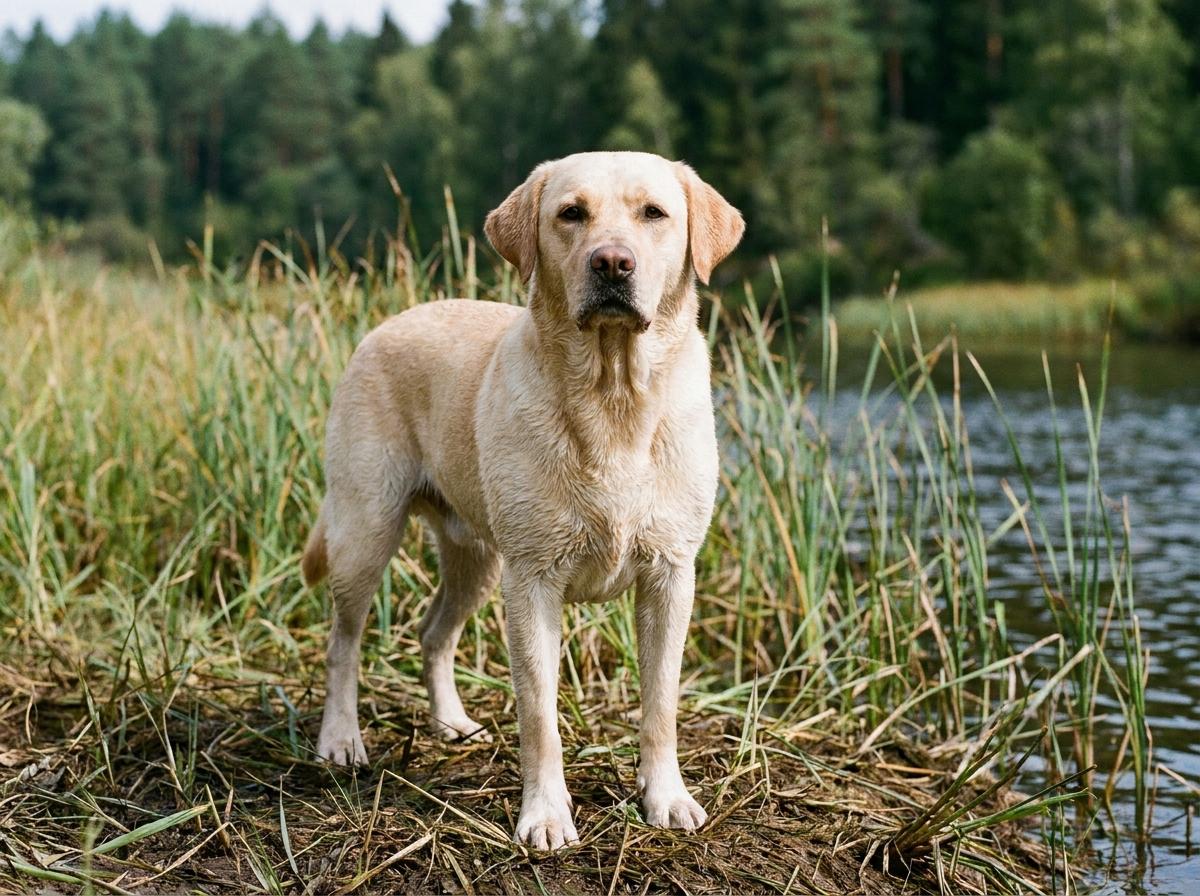
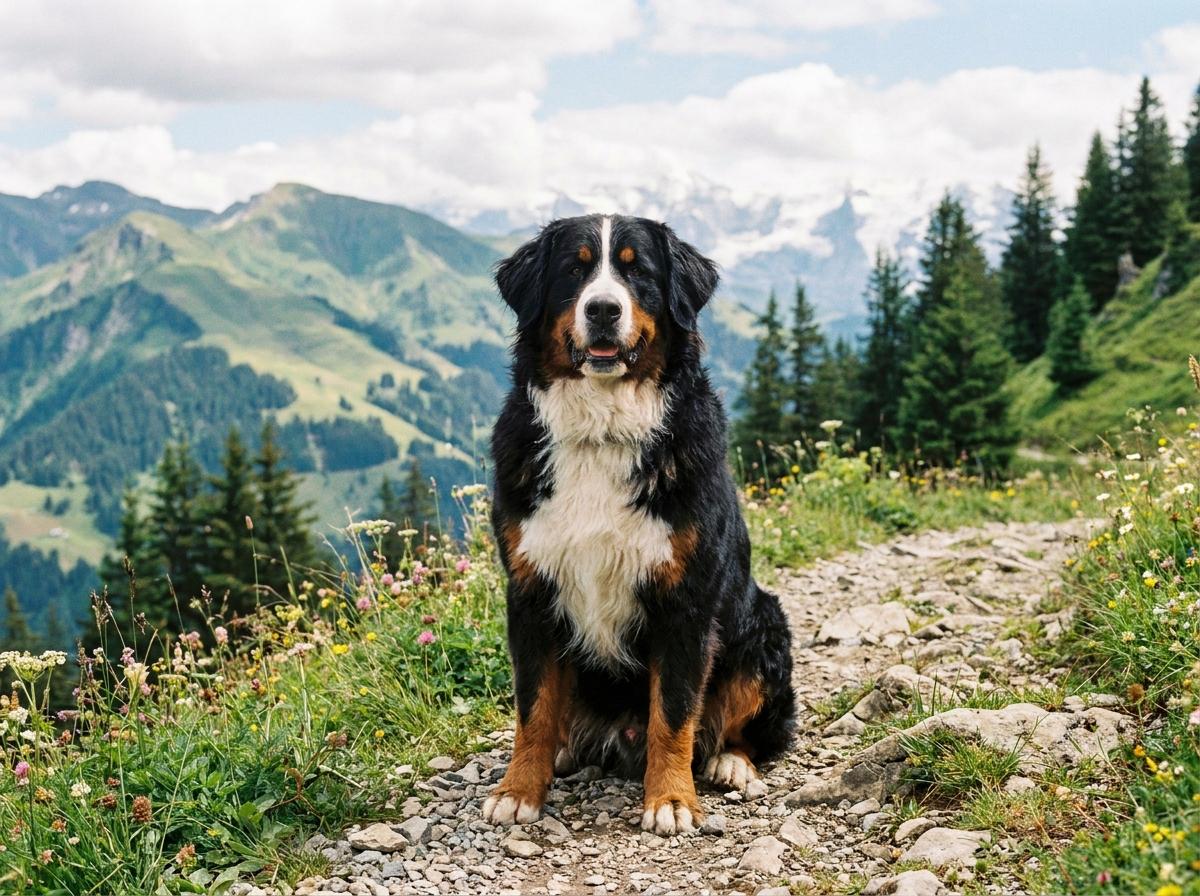
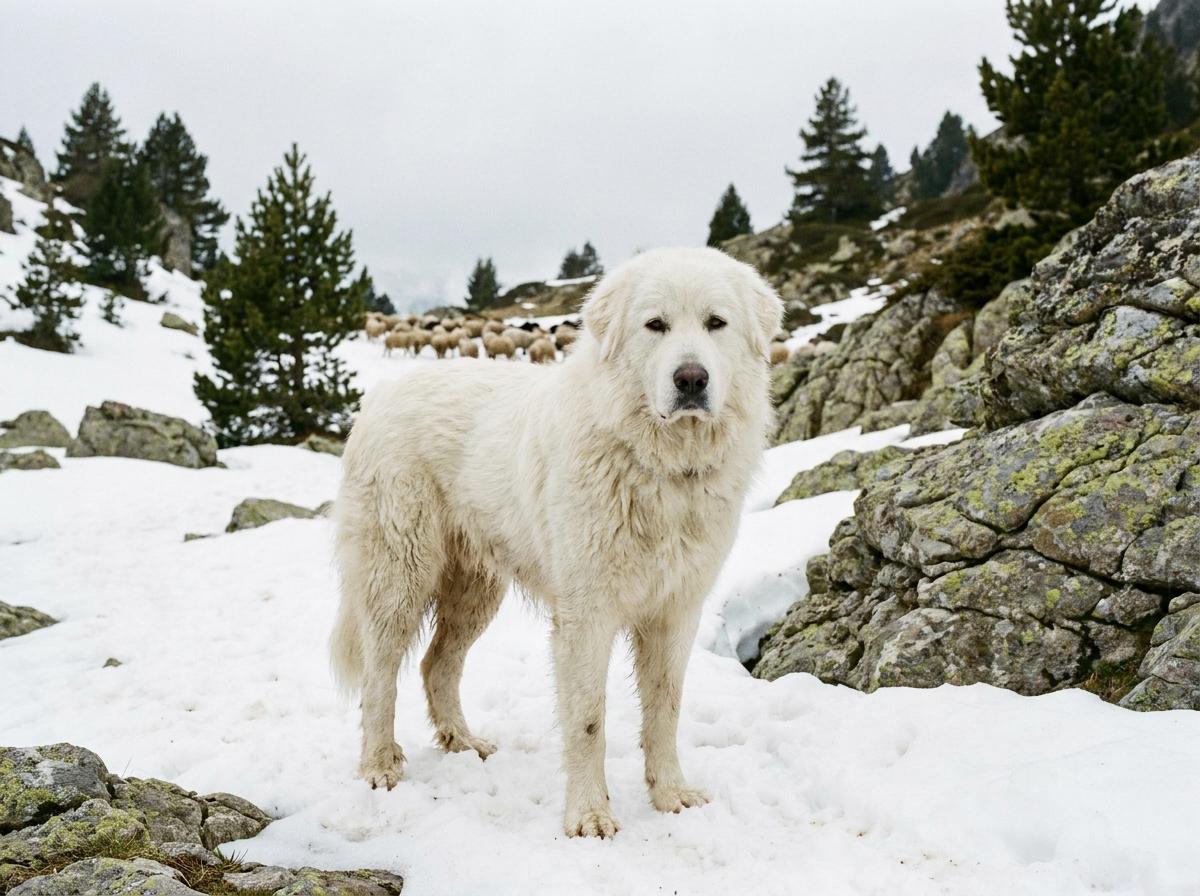
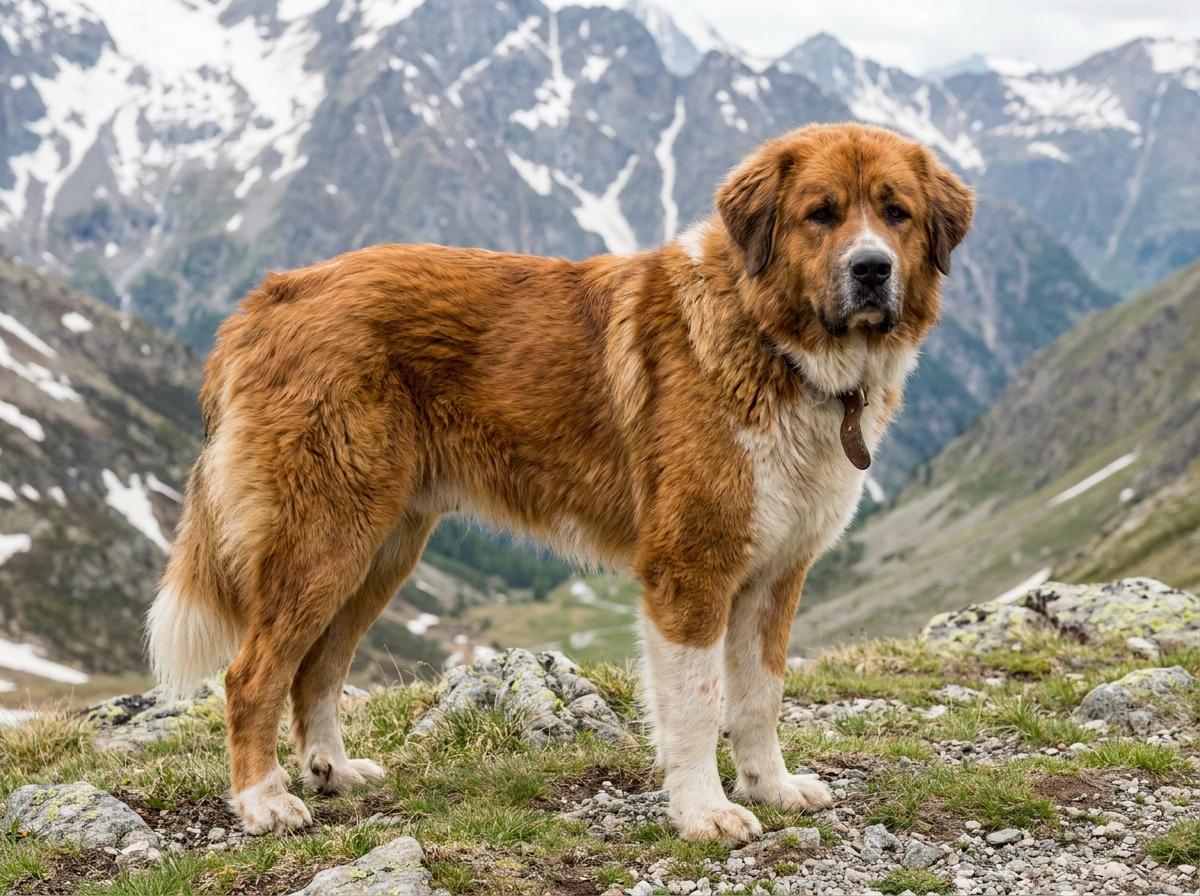
The Alpine Mastiff is extinct and was never standardized or photographed as a living breed. The three images on this page are AI-generated reconstructions based on the descriptions discussed here, not photographs and not a definitive breed standard.
| Also called | Alpine dog, and used interchangeably with “Saint Bernard” in the early 1800s |
|---|---|
| Status | Extinct as a distinct type; never a formally recognized breed |
| Type | Molosser, a flock guardian and mountain dog phenotype, not a standardized breed |
| Origin | Swiss and Italian Alps, including the Great St Bernard Pass region |
| Historic role | Livestock guardian, farm and monastery watchdog, later Alpine rescue |
| Size | A very large dog; no standardized measurements exist (see the size section) |
| Coat | Dense and weatherproof for cold; period accounts note brindle among the colors |
| Living descendants | The Saint Bernard directly; likely a major influence on the English Mastiff |
| Availability today | None as a breed; keepers turn to its descendant breeds instead |
Browse listings, public profiles, breeders, or add your animal.
What was the Alpine Mastiff?
Start with the single most misunderstood point about this dog: the Alpine Mastiff was never a bona fide breed. According to the Wikipedia summary of the historical record, it was “a type of molosser, or ‘flock-guardian phenotype’ with the same or similar ancestral origins as the Saint Bernard.” In plain terms, it was a regional landrace, a broad population of big, heavy-boned working dogs kept across the Swiss and Italian Alps rather than a closed pedigree with a written standard. That distinction matters, because a landrace varies from valley to valley and dog to dog. There was no kennel club, no breed standard, no stud book. When you read confident tables online listing the Alpine Mastiff’s exact height, weight, and lifespan, you are reading numbers invented long after the fact for animals nobody ever measured to a standard.
The name is another source of confusion. In the early nineteenth century, “Alpine mastiff” and “Saint Bernard” were often used to mean the same dogs. The names “were used interchangeably in the early 19th century, but are two different types of dogs,” as the historical record puts it. The dogs kept at the Great St Bernard Hospice were among those called Alpine Mastiffs, and over time that particular population was reworked into the modern Saint Bernard we recognize today. So the Alpine Mastiff is best understood as the older, broader working type that the Saint Bernard was refined out of, not as a separate pet breed that lived alongside it. If you are comparing giant mountain breeds in general, the Creatures dog species hub is a useful place to see where its descendants sit today.
Origins in the Alps
The dog’s roots run back to the mastiff-type war and guardian dogs of the ancient world. Breed historians generally trace the Alpine mountain dogs to Molossers that Roman armies brought over the passes and then crossed onto the large native dogs of the Alpine valleys in the first centuries of the common era. The American Kennel Club, writing about the Saint Bernard’s own history, describes exactly this: Molossers bred onto the “native giants of the Alpine valleys” roughly two thousand years ago. No paperwork survives from that era, so treat it as the widely accepted origin story rather than a documented pedigree, though the molosser ancestry is consistent across serious accounts.
By the medieval and early modern period, these big Alpine dogs were doing the ordinary work of mountain farms and monasteries: guarding livestock against wolves and bears, watching property, and pulling or hauling. The most famous chapter belongs to the Great St Bernard Hospice, a refuge founded to shelter travelers crossing the high, dangerous pass between what is now Switzerland and Italy. Sometime around the 1660s to 1670s the monks acquired large local dogs of this Alpine type as watchdogs and companions, and within a few decades the dogs had taken on the rescue role the Saint Bernard became legendary for. That rescue tradition grew directly out of the guardian dog the Alpine Mastiff already was.
How big was it, really?
This is where you have to be careful, because the Alpine Mastiff is a magnet for exaggeration. A quick search will hand you very specific claims, dogs “up to 39 inches tall” weighing “160 kilograms” or “350 pounds or more,” supposedly dwarfing the modern Saint Bernard and English Mastiff. Those figures are repeated confidently across low-quality pet pages, but they do not come from any authoritative historical source, and they collapse under a simple reality check.
Some historical scale context helps here, as long as it is handled carefully. The heaviest dog ever verified by Guinness World Records was an English Mastiff named Aicama Zorba of La-Susa, whose verified measurements were 319 pounds and 35 inches at the shoulder. A larger figure of 338 pounds is sometimes quoted for Zorba, but that was recorded while the dog was overfed, before he returned to an ideal weight, so the verified numbers are the ones worth citing. Guinness later stopped accepting weight-based records over animal welfare concerns. Those measurements are useful as a sense of how big a documented giant dog actually gets, and no more than that: one record-holding individual cannot establish a biological ceiling, least of all for an extinct type that was never standardized or systematically measured. What they do suggest is that pages claiming an entire Alpine Mastiff population routinely stood 39 inches and topped 350 pounds are quoting numbers no one ever verified.
What the reliable record does tell us is more modest and, honestly, more interesting. The Alpine Mastiff was clearly a giant for its time. One preserved anecdote captures it: in 1829 “a vast light brindle dog of the old Alpine mastiff breed, named L’Ami, was brought from the convent of Great St. Bernard area, and exhibited in London and Liverpool as the largest dog in England.” A dog worth touring as the largest in the country was plainly enormous, but that is a showman’s billing, not a measured breed average. The safest way to think about size is to look at the descendants. The modern Saint Bernard stands roughly 26 to 35 inches and weighs about 120 to 180 pounds, and the English Mastiff is generally considered the heaviest breed alive. The Alpine Mastiff sat at the headwaters of both, so a very large, heavy, deep-chested mountain dog is the accurate picture. A precise number is not.

The guardian and rescue tradition it belonged to
The Alpine Mastiff was a working guardian first, and everything about it followed from that job. A dog bred to live outdoors at altitude, to face wolves and bears, and to stay with vulnerable stock needs three things: size and strength to be a credible deterrent, a weatherproof coat to survive the cold, and a steady, non-reactive temperament so it can live among the animals it protects without harassing them. That is the classic livestock guardian package, shared across the great mountain breeds of Europe.
At the Great St Bernard Hospice, that guardian foundation turned into something more specialized. From the early 1700s the monks used their big Alpine dogs to help locate and dig out travelers buried by avalanches and lost in whiteouts on the pass. The dogs’ bulk let them break trail through deep snow, their cold tolerance let them work in conditions that would kill a lighter dog, and their instinct to stay near people made them natural at finding the missing. Over roughly two centuries the hospice dogs were credited with saving around two thousand lives. The most celebrated, a dog named Barry who worked in the first years of the 1800s, is variously credited with saving somewhere between forty and one hundred people, and his preserved body is still kept at the Natural History Museum in Bern. Barry is usually called a Saint Bernard today, but he belonged to that same Alpine Mastiff population before the modern breed had a settled name.
The Alpine Mastiff belongs alongside the other European mountain guardians rather than standing alone. The Great Pyrenees, for example, is a separate breed with its own roots in the Pyrenees between France and Spain, developed by shepherds to fend off wolves and bears with a calm temperament and a heavy coat. The Alpine Mastiff was not its ancestor, but the two are cousins in role and type, both answers to the same problem of guarding flocks in hard mountain country.
How the Alpine Mastiff became the Saint Bernard
The story of the Alpine Mastiff’s disappearance is really the story of the Saint Bernard’s creation, and it turns on a run of brutal winters. Severe winters from 1816 to 1818 drove up the number of avalanches on the pass and killed many of the hospice’s breeding dogs. The surviving population was small and closely related, and the monks looked for outside blood to keep the line going. In the following decades they crossed their dogs with Newfoundlands brought over from the Colony of Newfoundland, along with other large types.
That outcross had a famous side effect. The original hospice dogs were shorter-coated, which suited rescue work because snow and ice did not ball up in the fur. The Newfoundland cross introduced long-haired coats, and the monks quickly learned the long coat was a liability in the snow, so those dogs were often given away or placed with families lower down rather than kept for rescue. It corrects the common image of the Alpine dog as a shaggy long-haired giant. The working animal leaned shorter and denser in the coat, weatherproof without being a mop that iced over.
As these crossbred dogs spread and the type shifted, the older pure Alpine Mastiff faded. The name followed the dog. “Saint Bernard” was not in widespread use until the middle of the nineteenth century, and the breed only got a formal identity when the Swiss St Bernard Club was founded in Basel in 1884 and a written standard was approved a few years later. By the time the Saint Bernard existed as a recognized breed with a stud book, the Alpine Mastiff as a distinct thing had already dissolved into it. That is why it is listed as extinct and unrecognized at the same time. It did not die out so much as get renamed and reworked into its own descendant.
Its mark on the English Mastiff and other giants
The Alpine Mastiff’s influence did not stop at the Saint Bernard. It is also “believed to be the progenitor of the modern English Mastiff, as well as other breeds that derive from these types of dogs or that are closely related.” Accounts of the English Mastiff’s development describe significant input from Alpine Mastiff stock during the nineteenth century, the same period when Victorian breeders in Britain were consolidating scattered old mastiff types into the standardized breed we have now. The word “believed” is doing real work there, since early dog pedigrees are patchy, but the Alpine giant is a recurring name in the ancestry of today’s heaviest breeds.
Put together, the Alpine Mastiff occupies an unusual place in dog history. As a breed you can register and buy, it does not exist and never really did. As a genetic and cultural source, it sits behind the Saint Bernard, contributed to the English Mastiff, and belongs to the same broad molosser and mountain-guardian family as breeds like the Great Pyrenees. It is a reminder that many modern giant breeds were tidied up out of older, looser working populations within the last two hundred years.

Temperament, as far as we can tell
We should be honest about the limits here. There is no behavioral study of the Alpine Mastiff, because there was no standardized breed to study and the dogs are long gone. What we can say comes from the type it belonged to and the work it did. Livestock guardian and mountain rescue dogs are selected hard for a calm, confident, low-aggression temperament. A dog that panicked, bolted, or turned on the stock it guarded was useless, and a rescue dog had to work patiently around frightened, injured people. The reasonable inference: the Alpine Mastiff was steady, territorial in a watchful rather than explosive way, tolerant of the animals and people in its charge, and independent enough to make decisions alone in bad weather.
That profile lines up with what owners of the living descendants describe. Saint Bernards and other giant guardians are generally gentle, patient, and deeply attached to their families, while still being large enough that early training and socialization are not optional. If you are drawn to the Alpine Mastiff’s temperament, that steadiness is the trait to look for in its descendants, and it is exactly why those breeds ask for experienced, committed owners who can manage a very large, very strong animal well.
Can you own an Alpine Mastiff today?
No. The Alpine Mastiff is extinct as a distinct type, and because it was never a registered breed, there is no stud book, no breeder, and no restoration program producing genuine Alpine Mastiffs. Any listing or advertisement using the name “Alpine Mastiff” for a puppy for sale is applying a historical label to some other giant or crossbred dog. Treat that name on a sale ad as a red flag, not a rare find, and ask exactly what the animal’s actual parentage is.
What you can do is keep one of its living relatives, and this is where the Alpine Mastiff’s legacy becomes something you can actually own and record. The most direct descendant is the Saint Bernard, which carries the hospice line forward and is a recognized breed with active breeders. The English Mastiff, which the Alpine giant helped shape, is the heaviest breed alive and a good fit if the enormous mastiff build is what drew you in. And if it was the mountain-guardian role you connected with, the Great Pyrenees offers the same calm, protective, cold-hardy temperament in a breed you can find today. Any of these is a serious commitment: giant dogs eat a lot, need space and training, carry higher orthopedic and cardiac risks, and generally live shorter lives than small breeds, so talk to a veterinarian and to experienced owners before you take one on.
If you are researching the Alpine Mastiff as part of a broader interest in rare and historical animals, Creatures documents plenty of them. Two nearby examples from our species library are the Kurdish Horse, a regional horse type with a limited and localized population, and the Rainbow Land Crab, a striking species with a narrow natural range. Different animals entirely, but the same theme of populations that are far smaller or more localized than their fame suggests.
Frequently asked questions
Is the Alpine Mastiff a real breed?
Not in the modern sense. It was a historical type of molosser or mountain guardian dog, a regional landrace rather than a standardized, registered breed. It was never recognized by a kennel club and had no written standard, which is why exact “breed data” you see online is unreliable.
Is the Alpine Mastiff extinct?
Yes. The pure Alpine Mastiff type died out during the nineteenth century, mostly by being crossed into other dogs. The population kept at the Great St Bernard Hospice was reworked, with Newfoundland and other blood added, into the modern Saint Bernard, and the old name fell out of use.
How big was the Alpine Mastiff?
It was a giant dog, but there are no reliable standardized measurements, and the popular claims of 39 inches and 350 pounds are not supported by any authoritative source. For historical context only, the heaviest dog ever verified by Guinness, an English Mastiff named Zorba, had verified measurements of 319 pounds and 35 inches; that is a single individual rather than a limit on what any dog could be, but it does show how far a documented giant actually got. Judge the Alpine Mastiff’s size instead by its descendants: the Saint Bernard reaches roughly 120 to 180 pounds.
What breeds came from the Alpine Mastiff?
The Saint Bernard is its direct descendant, and the Alpine Mastiff is widely believed to be a progenitor of the modern English Mastiff. More broadly it belongs to the same molosser and mountain-guardian family as several other giant breeds.
Is the Alpine Mastiff the same as the Saint Bernard?
Not exactly, though the names were used interchangeably in the early 1800s. The Alpine Mastiff was the older, broader working type. The Saint Bernard is the standardized breed that was developed out of the hospice population of those dogs, with outside crosses added and a formal standard written later in the century.
Where can I get an Alpine Mastiff puppy?
You cannot. No genuine Alpine Mastiffs exist to breed. If you want the closest living equivalent, look at the Saint Bernard, the English Mastiff, or, for the guardian temperament, the Great Pyrenees, and buy from a trusted breeder.
Do this next on Creatures
The Alpine Mastiff itself is gone, but its guardian temperament and giant build live on in breeds you can actually keep. Whether you are studying the history or thinking about one of its descendants, Creatures is the records, marketplace, and directory layer to do it in one place.
Meet the living descendants. Compare the giants that carry the Alpine Mastiff’s blood on the Creatures dog hub, starting with the Saint Bernard and the guardian-type Great Pyrenees.
Find a giant of your own. Browse Saint Bernards on the marketplace and search trusted breeders and rescues in the Creatures breeder directory. New to it? Read getting listed in the breeder directory to see how listings work.
Get alerted when one is posted. These breeds are not always in stock nearby, so set a free Saint Bernard listing alert and we will tell you when a match appears. No account needed to start. See saving searches and using your watchlist for how alerts work.
Add your dog. Already own a Saint Bernard, mastiff, or mountain guardian? Create a free animal profile in a few minutes. The walkthrough is in adding an animal to Creatures.
Keep health and care records. Giant breeds need close tracking of weight, joints, and heart health, so start a health and care record. The record sheet opens for any visitor to look around, and a free account saves what you enter. See adding a record and health and medical records for the full how-to.
Breed or rescue these giants? List your kennel or rescue on Creatures so people searching for Saint Bernards and mastiffs can find you, and read creating an organization and adding your team if you run it with others.