

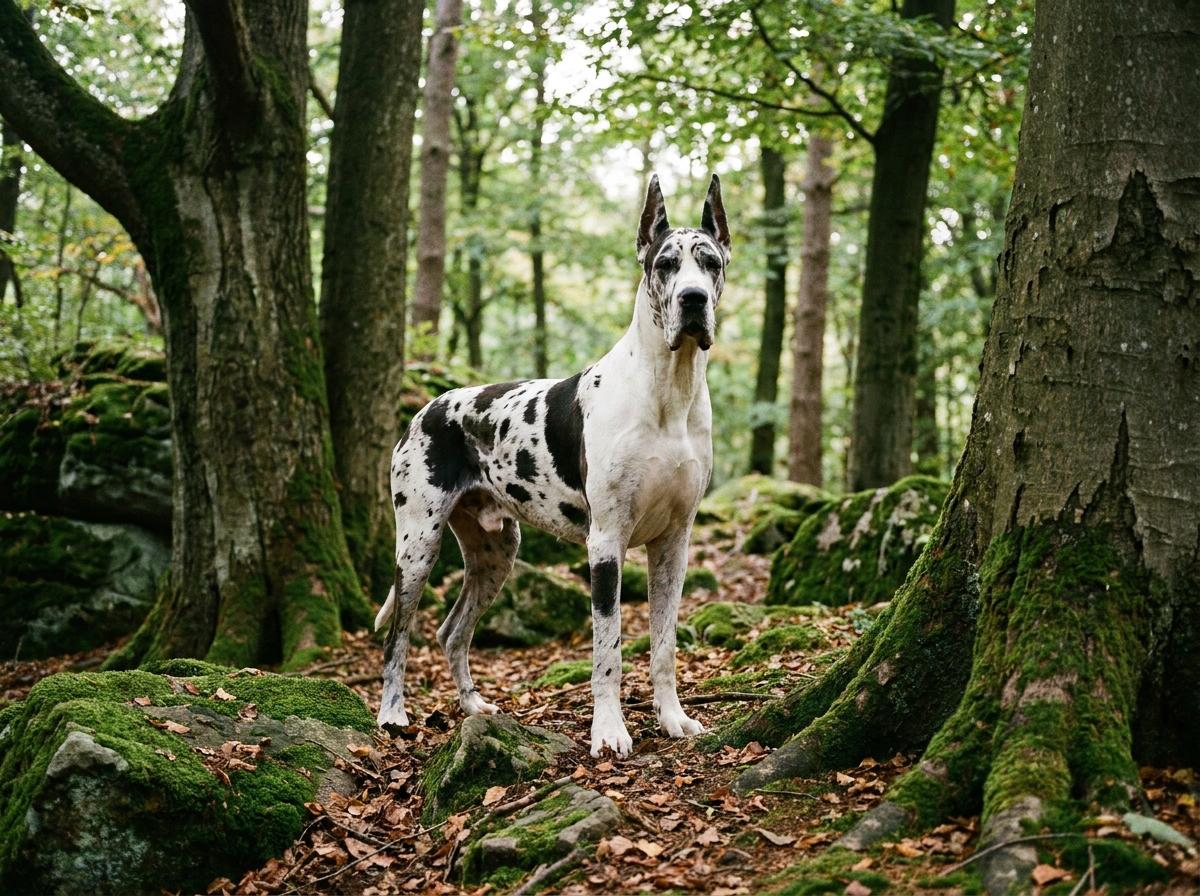
Great Dane
The Great Dane is a giant German breed, also called the Deutsche Dogge or German mastiff, developed from powerful boar-hunting dogs that were later refined into a large estate guardian and companion. Despite the English name, its modern breed identity is German rather than Danish. Great Danes combine great height with a short smooth coat, long head, and deep chest. Recognized colors vary by registry but commonly include fawn with a black mask, brindle, blue, black, harlequin, mantle, and in some systems merle. Good examples should still move cleanly and have a stable, manageable temperament.
Living with a Great Dane is mostly about planning for a giant dog before one arrives. Puppies grow fast and need controlled exercise, sensible nutrition, and early manners so that an adult can be handled safely in public and at the veterinary clinic. Deep-chested Danes are at risk for gastric dilatation-volvulus, and breeders pay close attention to heart screening, hips, eyes, thyroid status, and lifespan. Short coats are simple to groom, but bedding, vehicles, fencing, and household space all need to fit a dog that may weigh as much as an adult person.
Colors: Apricot, Bicolor, Black, Black and Tan, Black and White, Black Mask, Blue, Blue and Tan, Blue Merle, Blue Roan, Blue Tick, Brindle, Brown, Brown and Tan, Brown and White, Chocolate, Cream, Dapple, Domino, Fawn, Fawn and White, Fawn Black Mask, Gold, Gray, Harlequin, Irish Marked, Liver, Liver Mask, Mantle, Mask, Merle, Mottled, Parti-Color, Piebald, Red, Red and White, Red Merle, Red Roan, Red Tick, Reverse Brindle, Roan, Sable, Saddle, Silver, Speckled, Spotted, Tan, Ticked, Tricolor, Tuxedo, White, White and Black, Yellow