


Doberman Pinscher
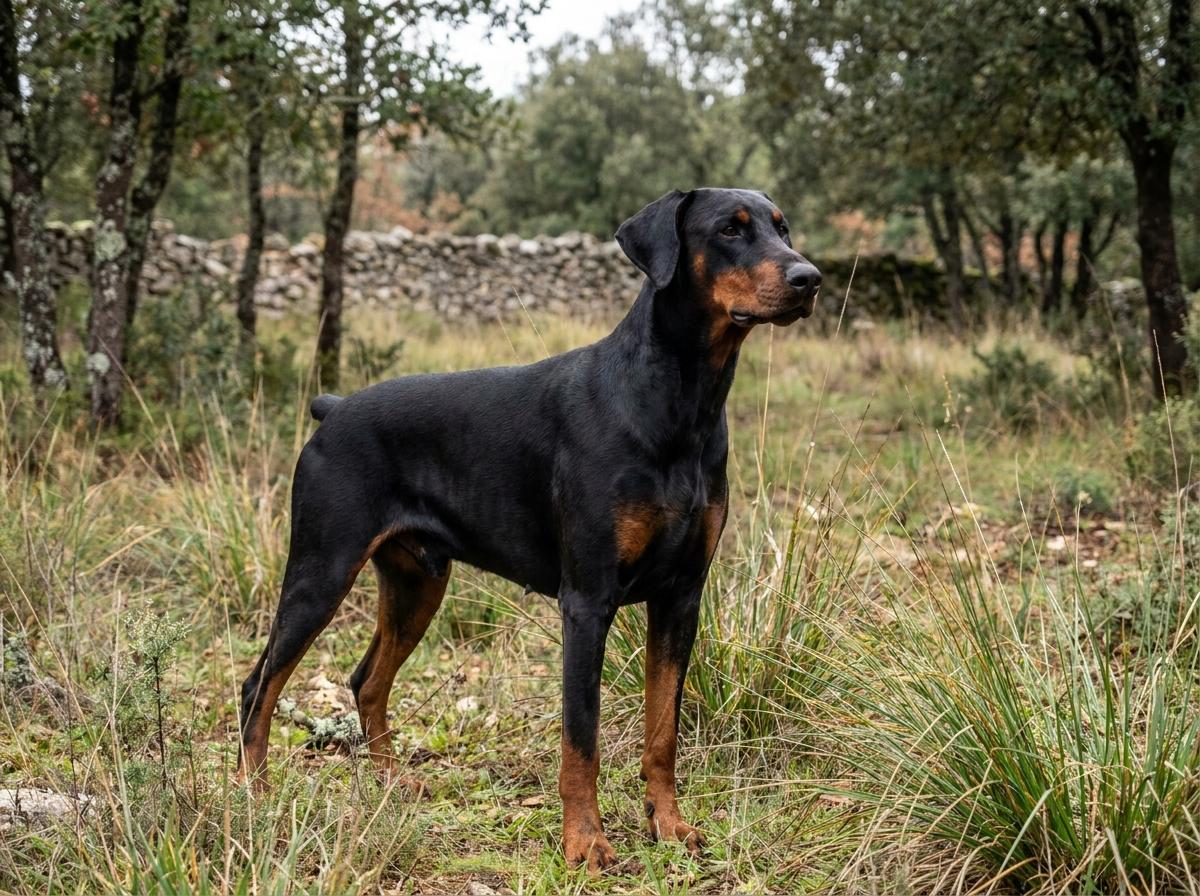
The Doberman Pinscher is the North American name for the Dobermann, a medium-large working dog developed in Germany in the late nineteenth century by Karl Friedrich Louis Dobermann. Bred for personal protection and dependable obedience, it has a square muscular outline, a long wedge-shaped head, and a short coat with sharply defined rust markings. Black and rust and red and rust are the most familiar colors, with blue and fawn recognized in some registries; ear cropping and tail docking depend on country, registry, and owner choice.
Modern Dobermans are used in protection sports, obedience, search work, service roles, and active companion homes. They learn quickly and notice weak handling, so calm structure and early social exposure matter from puppyhood. The short coat offers little insulation, making indoor family life and sensible weather protection important. Health conversations with breeders should include dilated cardiomyopathy, von Willebrand disease, hip and thyroid screening, and longevity in the line. A good match is usually a person prepared for daily training, not only the look of a guard dog.
Colors: Apricot, Bicolor, Black, Black and Rust, Black and Tan, Black and White, Black Mask, Blue, Blue and Rust, Blue and Tan, Blue Merle, Blue Roan, Blue Tick, Brindle, Brown, Brown and Tan, Brown and White, Chocolate, Cream, Dapple, Domino, Fawn, Fawn and White, Gold, Gray, Harlequin, Irish Marked, Isabella and Rust, Liver, Liver Mask, Mantle, Mask, Merle, Mottled, Parti-Color, Piebald, Red, Red and Rust, Red and White, Red Merle, Red Roan, Red Tick, Reverse Brindle, Roan, Sable, Saddle, Silver, Speckled, Spotted, Tan, Ticked, Tricolor, Tuxedo, White, White and Rust, Yellow