

Belgian Mastiff
Author: Elliott Garber, DVM · Published
The Belgian Mastiff, or Matin Belge, is a modern Belgian reconstruction of an older draft-dog population that became extinct in the early 1960s. Belgium’s national canine organization recognizes the project nationally as a breed in reconstruction, but there is no official FCI standard. That status distinction matters when assessing pedigrees, breeders, and claims of rarity. Start with the Creatures breeder directory, then verify every Belgian Mastiff claim against the issuing Belgian records rather than the name alone.

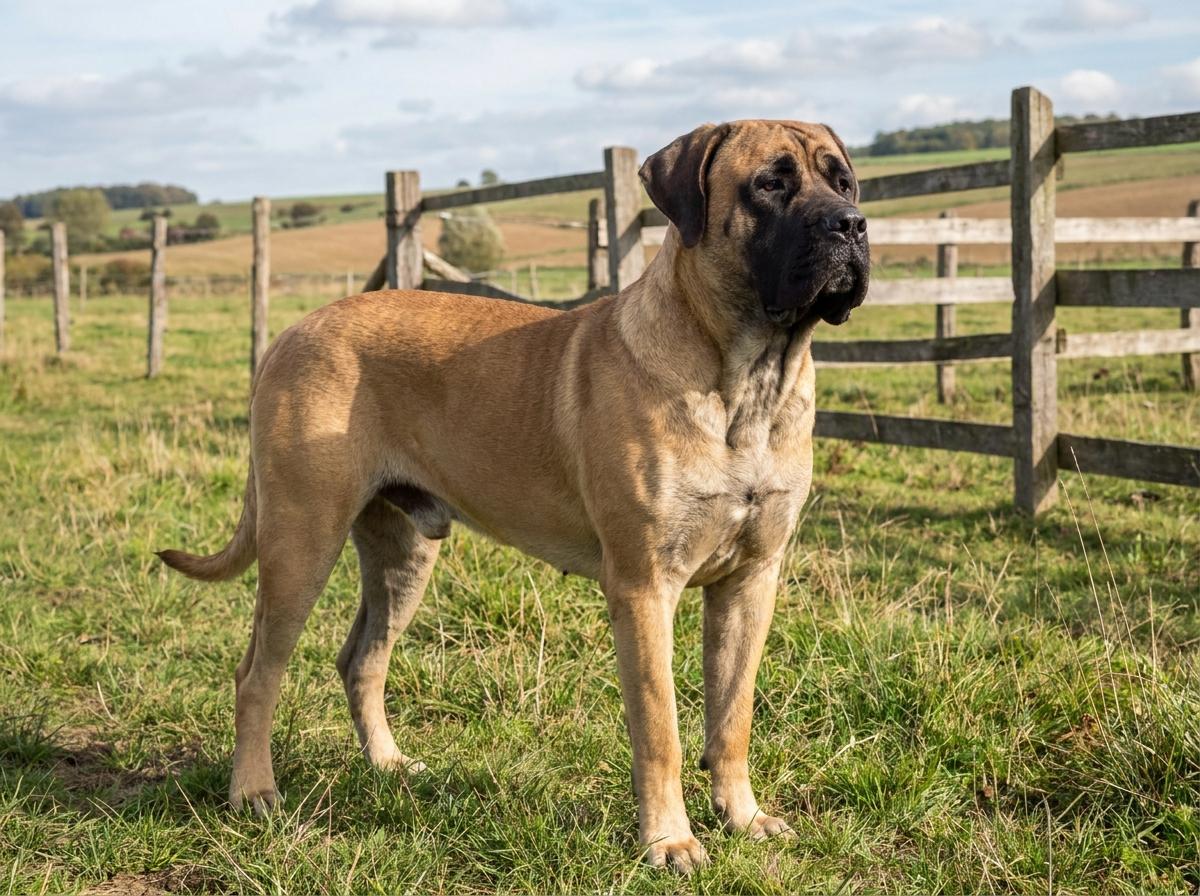
AI-generated breed representation, not a photograph of a registered dog. The fawn coat and black mask illustrate preferred traits in the current Belgian standard, not the only accepted color.
| Names | Belgian Mastiff, Matin Belge; historically associated with the Belgian Draft Dog |
|---|---|
| Country | Belgium |
| Current status | Nationally recognized in Belgium as a breed in reconstruction |
| FCI status | No official FCI standard |
| Historical work | Draft work, including pulling small carts |
| Standard size | Males 70-76 cm and 50-60 kg; females 64-70 cm and 40-50 kg |
| Preferred coat | Short, dense, weather-resistant shaded fawn with a black mask |
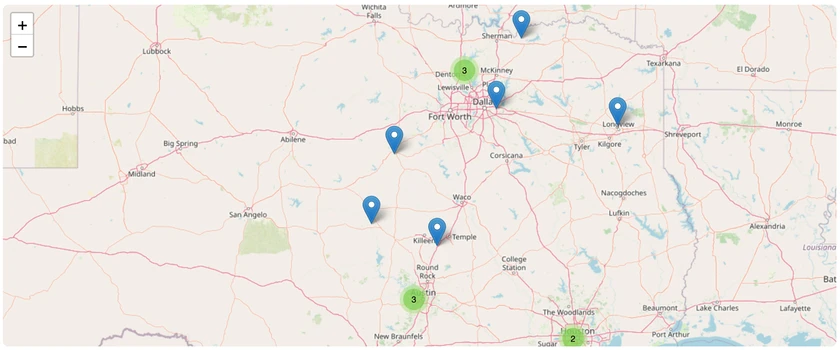
Browse listings, public profiles, breeders, or add your animal.
What is the Belgian Mastiff today?
The present Belgian Mastiff is a reconstruction: a current breeding population developed toward the type of the former Belgian draft dog. The Societe Royale Saint-Hubert’s official Matin Belge page says breeder Alfons Bertels began a planned reconstruction program in 2000. A male named Bacon was born in 2002 and presented publicly late in 2003. An association was created in 2006, and the Belgian breed standard was approved in 2010.
The same official page gives the status as a Belgian breed recognized in reconstruction. It also says recognition is currently national and that no official FCI standard exists. A seller should not turn that into “fully FCI recognized,” “internationally recognized,” or “unchanged ancient bloodline.” Those are separate claims requiring separate evidence.
The project seeks the old working type, but “reconstruction” does not mean scientists revived the extinct population or recovered an uninterrupted pedigree. Today’s dogs can be evaluated against the modern Belgian program and its records. They should not be represented as direct, continuously registered survivors from the cart dogs of 1900.
From draft dog to extinct population
Belgian Mastiffs historically pulled carts. The official Belgian history records an organized draft-dog culture by the end of the 19th century, followed by decline as mechanization displaced the work from the 1930s onward. It states that the historical breed was completely extinct by the beginning of the 1960s.
That history explains the desired structure. A useful draft dog needed strength, stable movement, sound feet, and enough substance for work without useless bulk. It does not justify recreating harmful loads today. Modern exercise should suit the individual dog’s age, conditioning, orthopedic health, weather, and veterinary advice.

AI-generated historical reconstruction, not a photograph or a documented event. The empty balanced cart, walking pace, padded chest harnesses, and handler beside the dogs keep the scene illustrative rather than instructional.
Historical sources also place the dogs in military draft service. This page does not use that history as spectacle or evidence of modern suitability. A dog pulling a wartime load says nothing useful about safe pet exercise, temperament around families, or a reconstruction dog’s health today.
Appearance under the Belgian standard
The current Belgian standard describes a large mastiff-type dog that is robust but not heavy, with strong bone and muscle. The body should be slightly longer than tall. The broad, developed head has a fairly short muzzle, but the muzzle should not become flat or extremely shortened. Medium drop ears are set fairly high and lie along the cheeks. Dark brown eyes are preferred.
The neck is powerful and short without a heavy dewlap. The chest is broad and developed. A natural tail reaches approximately to the hock, hangs at rest, and may rise with action; the standard prefers that it not rise above horizontal. These are useful identity checks because cropped ears, a docked tail, extreme facial folds, or a very short square body would not match the stated reconstruction goal.

AI-generated breed representation, not a photograph of a registered dog. This close view illustrates the broad but proportionate head, natural drop ears, and dark mask without claiming exact conformation.
The coat is short, dense, and weather-resistant, with undercoat. Shaded fawn with a mask is preferred, but the Belgian standard allows colors other than white. It tolerates only limited white and regards large pied or tricolor patterns as less desirable. Coat color alone cannot authenticate a dog; many unrelated mastiff crosses can be fawn with a black mask.
The standard gives males a height of 70-76 cm at the withers and a weight of 50-60 kg. Females are listed at 64-70 cm and 40-50 kg. Those ranges describe the breeding standard, not an instruction to push a young dog toward a target weight. Body condition, growth rate, and joint comfort matter more than making a scale match a table.
Temperament, training, and daily care
The Belgian standard calls for a confident, balanced, social, approachable, and docile dog. Those words are goals for selection and assessment, not a promise attached to the breed label. Genetics, early experience, pain, handling, environment, and individual history all influence behavior.
A dog of this size needs reward-based training before its strength becomes difficult to manage. Prioritize calm lead walking, recall, cooperative veterinary handling, settling behind a barrier, and comfortable muzzle training. Introduce people, animals, surfaces, traffic, and routine care gradually without forcing contact. A qualified trainer or veterinary behavior professional can help if fear, guarding, reactivity, or handling conflict appears.
Plan secure fencing, controlled introductions, traction on slippery floors, an appropriately sized vehicle setup, and household rules everyone follows. Discuss growth, body condition, exercise, and any gait change with a veterinarian. No reliable breed-wide disease rate is established by the source used here, so ask about the actual parents’ orthopedic, cardiac, eye, and other health evaluations rather than accepting “rare breeds are healthier.”
Local rules may classify, restrict, or insure large mastiff-type dogs differently. Check housing, insurer, transport, import, and municipal requirements before reserving a dog. A breeder’s reassurance is not a substitute for the applicable authority’s written rule.
Finding and verifying a Belgian Mastiff
The reconstruction is not authenticated by appearance, an English breed name, or a social-media caption. Before paying a deposit, ask for:
- The dog’s registered name, number, microchip, and issuing organization.
- A pedigree or reconstruction-program record that can be checked with its issuer.
- Written health results for both parents, including the test method and date.
- The breeder’s explanation of how the litter fits the current Belgian program.
- A contract, return plan, living-condition evidence, and a chance to meet the mother where appropriate.
- Written import, transport, and local legal requirements for the buyer’s address.
Verify records independently. A document that says “FCI Belgian Mastiff standard” conflicts with the Belgian national source’s statement that no official FCI standard exists. Ask the issuer to explain the document before treating it as proof.
Do not confuse this reconstruction with every Belgian dog or mastiff. The Belgian Laekenois is a rough-coated Belgian Shepherd variety with a different standard, history, scale, and working type. A Bullmastiff, Belgian Malinois, mastiff mix, or short-tailed village dog does not become a Belgian Mastiff through resemblance.
Frequently asked questions
Is the Belgian Mastiff extinct?
The historical Belgian draft-dog population became extinct in the early 1960s. The name now also refers to a modern Belgian breeding reconstruction begun in 2000. Those two statements are compatible when the populations are distinguished.
Is the Belgian Mastiff recognized by the FCI?
No official FCI standard exists, according to Belgium’s national canine organization. It describes the Matin Belge as nationally recognized in Belgium as a breed in reconstruction.
How big is a Belgian Mastiff?
The Belgian standard lists males at 70-76 cm and 50-60 kg, and females at 64-70 cm and 40-50 kg. Individuals should be kept at a healthy body condition rather than forced toward a number.
What color is a Belgian Mastiff?
Shaded fawn with a black mask is preferred. Other colors except white are allowed under the Belgian standard, with only limited white tolerated. Color cannot prove identity.
Is a Belgian Mastiff the same as a Belgian Malinois?
No. The Belgian Malinois is a Belgian Shepherd variety. The Belgian Mastiff is a much larger mastiff-type reconstruction based on the historical Belgian draft dog.
Can Belgian Mastiffs still pull carts?
Historical draft work explains the type but does not make weight pulling appropriate for every modern dog. Any canine sport or harness activity needs suitable equipment, conditioning, veterinary input, local compliance, and a load that protects welfare.
Do this next on Creatures
Use Creatures to preserve verifiable identity and records while treating marketplace availability as something to check, not assume.
Check possible sources. Use the Creatures breeder directory, then verify reconstruction-program and registry claims with the named Belgian issuer.
Watch new listings. Save a Belgian Mastiff search, with no account needed to begin. An alert does not guarantee availability or authenticate a listing. Read saving searches and using your watchlist.
Browse carefully. Open the Belgian Mastiff marketplace filter and ask for issuer-verifiable identity before paying.
Profile a verified dog. Start a Belgian Mastiff profile, no account needed to begin. Follow adding an animal to Creatures.
Preserve the documents. Open the record sheet as a visitor; a free account is required to save. See adding a record and health and medical records.
Represent a project or club. Start a dog organization profile, no account needed to begin. Read creating an organization and adding your team.