California Gray
Author: Elliott Garber, DVM · Published
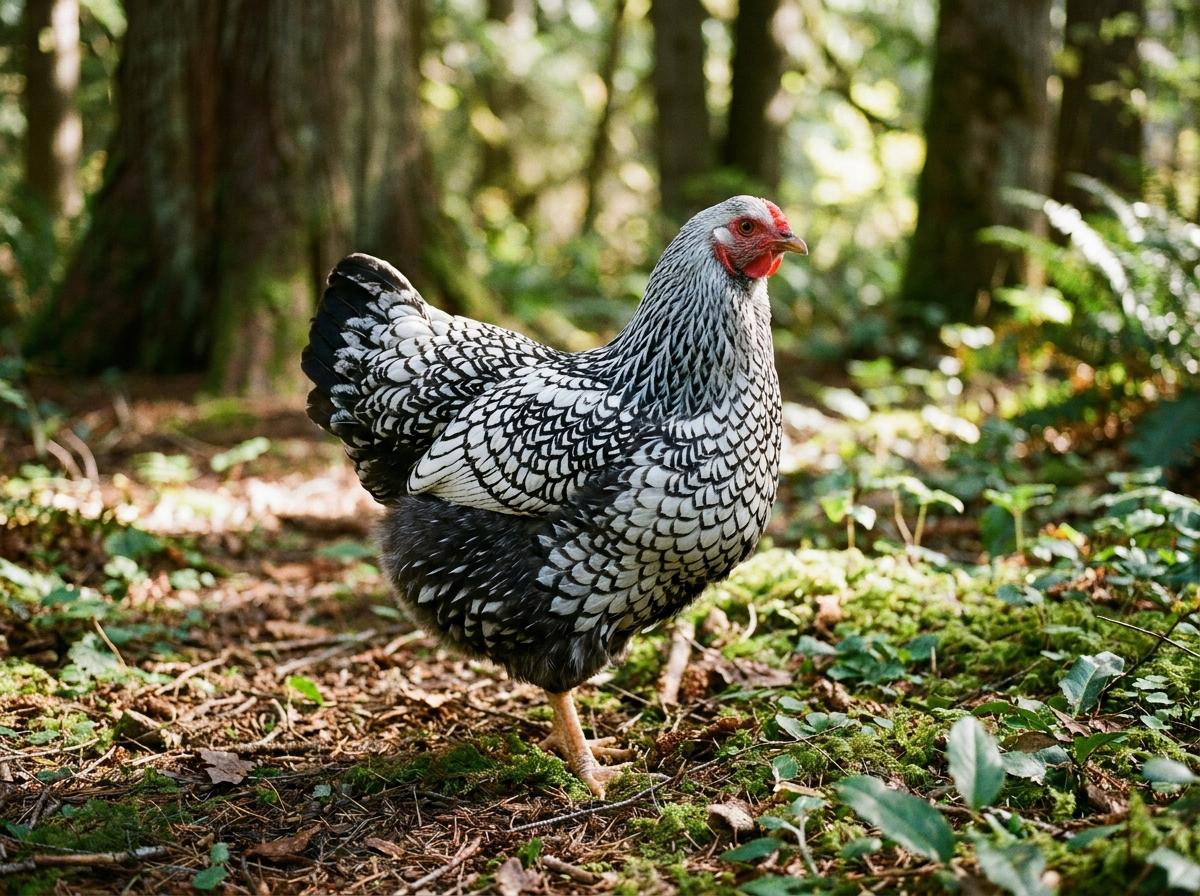
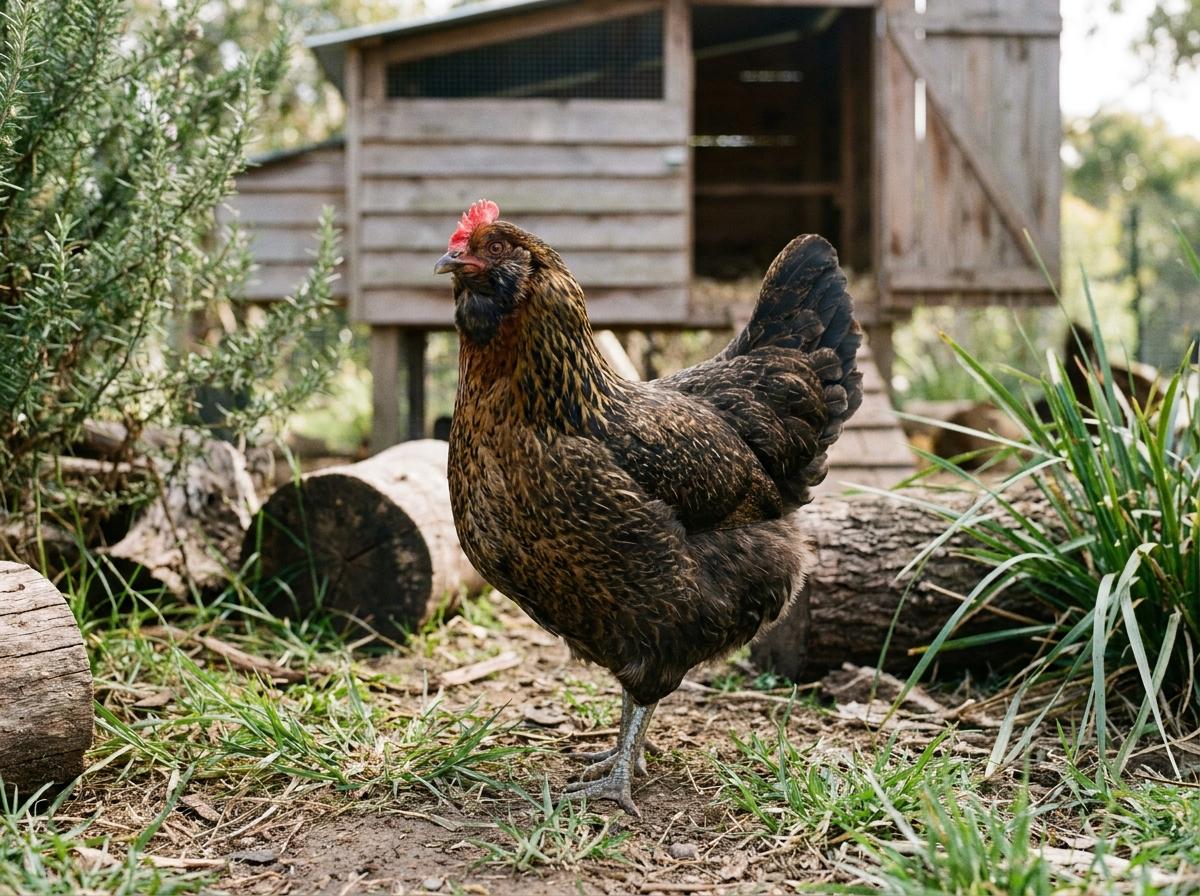
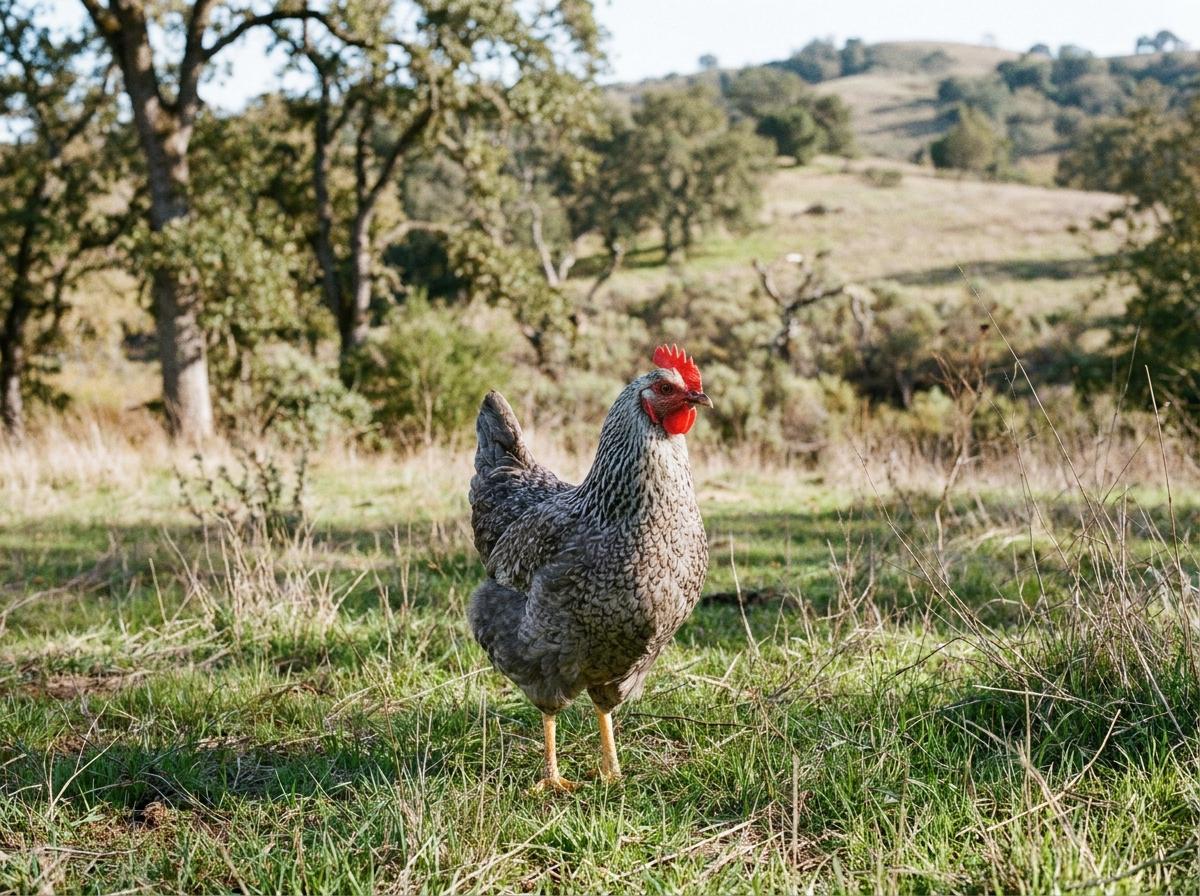
California Gray, also written California Grey, is a barred chicken developed as a white-egg layer. The important distinction is that California Gray is not simply another spelling of California White. Gray birds have barred plumage; the related White is a different breeding product, usually predominantly white with occasional dark markings.
The chicken guide helps place it among other laying chickens. For a buyer, the most useful information is the breeder’s actual line, how chicks are sexed and what the flock produces under ordinary management.
| Also written | California Grey |
|---|---|
| Appearance | Barred plumage |
| Breeding background | White Leghorn and Barred Plymouth Rock |
| Egg shell | White |
| Important distinction | California Gray and California White are different |

AI-generated illustration of the barred California Gray appearance, not a photograph of hatchery stock.
Browse listings, public profiles, breeders, or add your animal.
The Rock and Leghorn connection
Current primary hatchery descriptions identify California Gray as a line developed from White Leghorn and Barred Plymouth Rock stock. Hoover’s Hatchery describes its California Grey birds as relatively light, active white-egg layers. That is useful information about the line it maintains, not a promise that every bird advertised under the name is genetically identical.
The Leghorn and Plymouth Rock pages explain the two familiar names in that background. Shared ancestry does not make California Gray merely a color variety of either parent breed. Nor does any newly made Rock and Leghorn cross automatically become a documented California Gray line.
Ask how long the breeder has maintained the line, whether the parents are California Grays and what identification accompanies the chicks. If the seller uses “hybrid,” “breed” or “strain,” ask what they mean in practical terms rather than assuming those labels answer the pedigree question.
California Gray versus California White
Ideal Poultry describes its California White as the offspring of a California Gray male and White Leghorn female. That specific parent combination explains why the two names are related but should not be swapped on an order form.
A California White comparison is useful when someone wants a white-egg flock but has not settled on a line. Confirm which product is being quoted and request parent or adult flock photographs. An image of barred chicks alone is a weak basis for identifying the eventual breeding stock.

AI-generated illustration of head and feather detail. Barring alone cannot prove a bird’s breeding history.
Do not transfer sexing claims between the two names. If chicks are sold as pullets, ask which method was used, what confidence the seller attaches to it and what happens if a cockerel appears. University of Kentucky guidance on barred chicks explains why down markings offer approximate sexing cues; that alone is not proof of a reliably autosexing line. A visual rule from another cross should not be applied merely because the chick looks similar.
White eggs without a production guarantee
California Gray is associated with white eggs. The number a household receives depends on the actual line and on age, season, health and management. A hatchery’s advertised peak should not become a guaranteed output for a different breeder’s flock.
Ask for recent records that identify the hens’ age and the period covered. “Good layers” is more useful when it comes with a flock size and a record of the eggs collected. If you need eggs through a particular season, discuss that season specifically instead of comparing headline annual totals.

AI-generated illustration of white shells. These are not recorded eggs from an identified flock.
Raising an active laying flock
Prepare secure housing and a run that give active birds room to forage and scratch while protecting them from predators. Inspect the whole boundary, including overhead access and doors, rather than assuming a calm bird during collection will stay beside an open coop.
For chicks, arrange brooding equipment before arrival and follow a complete starter and grower feeding plan. University of Minnesota Extension’s chick and pullet guide distinguishes the needs of growing birds from those of laying hens. A white-egg label is not a reason to put young chicks straight onto layer feed.
Before adding birds to an existing flock, establish a separation plan and ask for health and vaccination records. Keep purchase records with hatch dates and the seller’s exact line name. Those details are more helpful later than reconstructing identity from plumage after several generations of backyard crossing.
Price and purchase checks
Compare like with like: unsexed chicks, sexed pullets near laying age and mature hens are different purchases. Get a dated quote that specifies quantity, age, sexing terms, collection or delivery and any minimum order. Include brooding equipment and the possibility of keeping or responsibly placing males when considering hatching eggs or unsexed chicks.
There is no dependable universal California Gray price. A cheap chick can be the wrong purchase if the line, sex or transport arrangement does not meet your needs.
Frequently asked questions
Are California Gray and California Grey different?
The spelling varies. Confirm the actual line with the breeder, but the spelling difference alone does not establish a different bird.
Are they the same as California White?
No. The named breeding products are related, but their parentage and usual plumage differ.
Does a barred hen always lay brown eggs?
No. California Gray illustrates why plumage pattern is not an egg-shell color chart.
Do this next on Creatures
Compare the chicken breed guide with your flock goals, then use the line, sexing and laying-record questions above when evaluating a breeder.