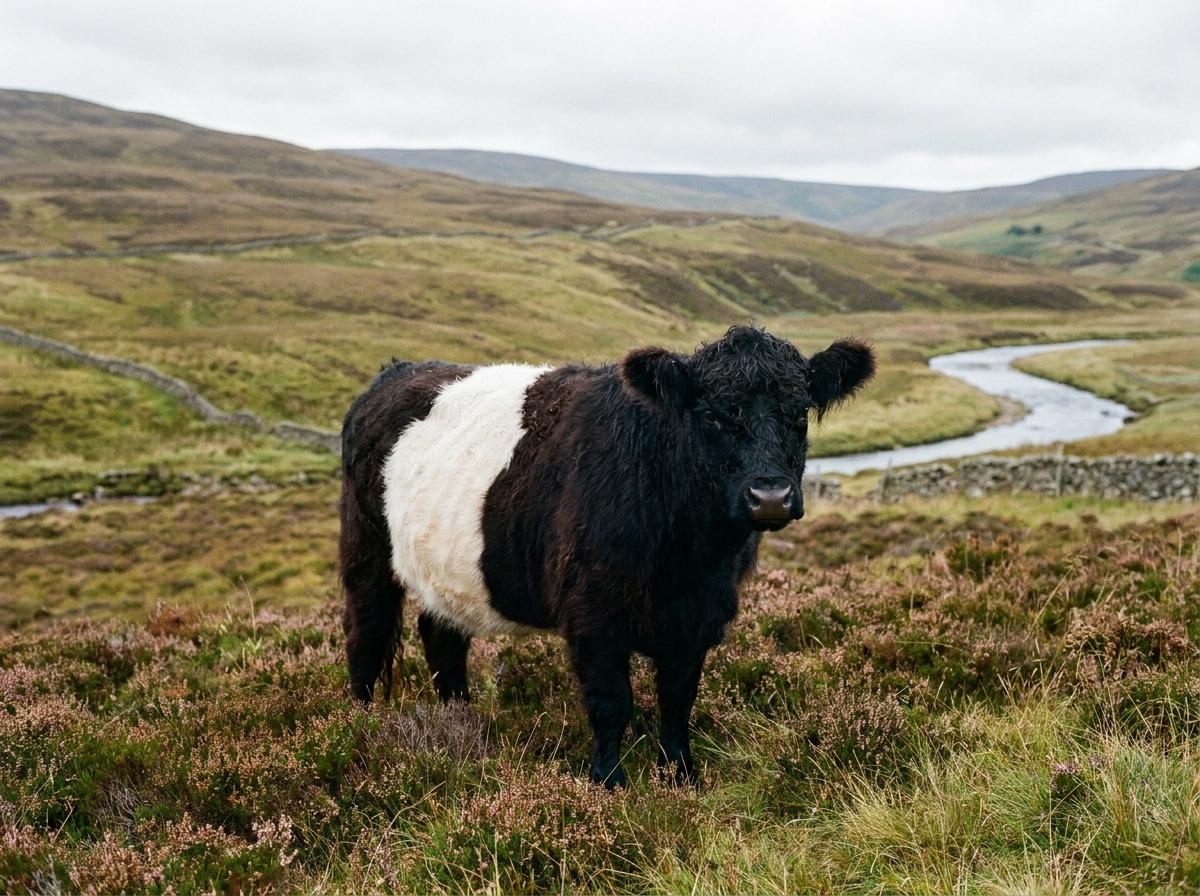
Belted Galloway
Author: Elliott Garber, DVM · Published
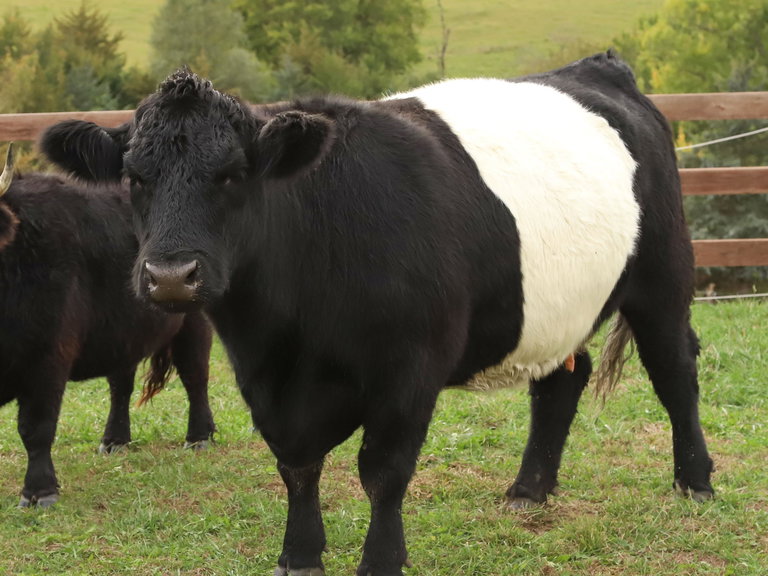
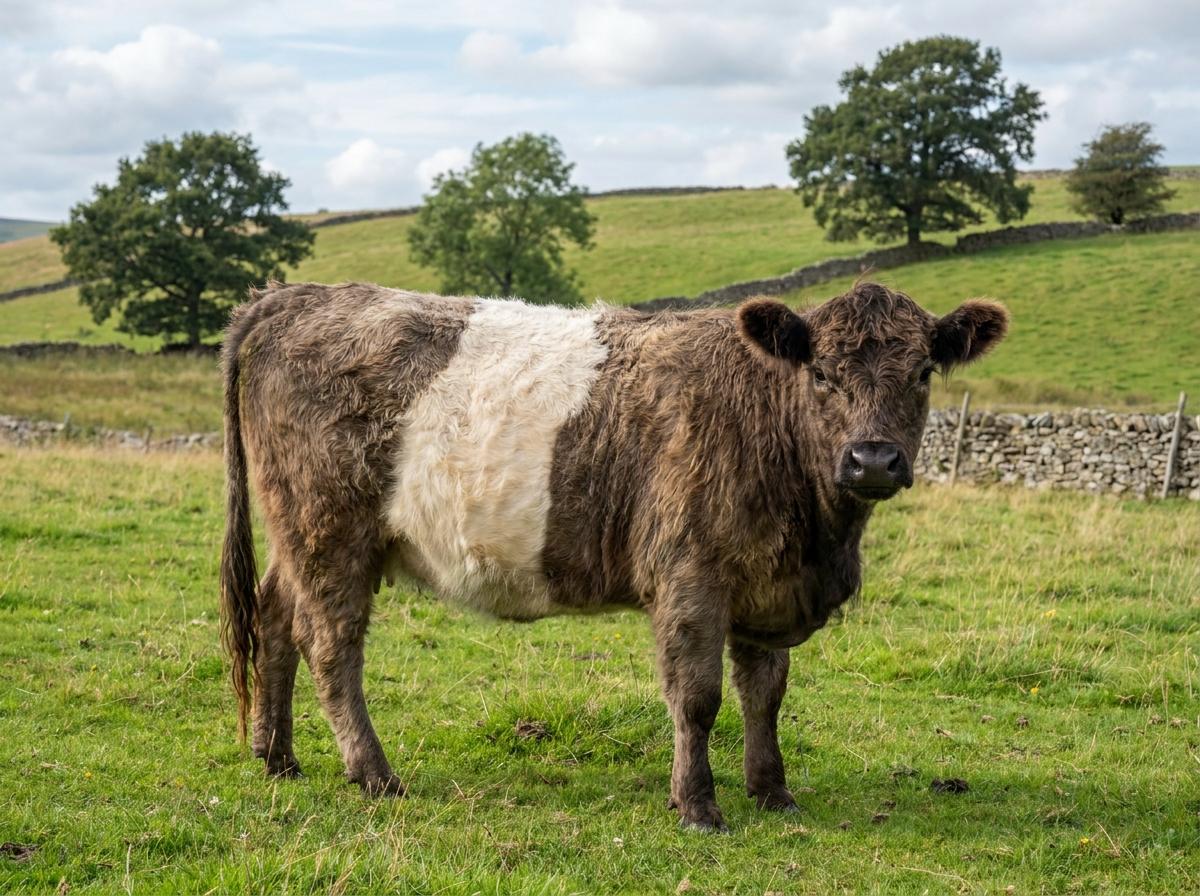
The Belted Galloway is a naturally polled beef breed from the Galloway district of southwest Scotland, recognized by one complete white belt around a black, red or dun body. Breeders call them Belties. Under the striking pattern is a moderate-sized, double-coated grass cattle type: mature cows in a US breeder survey averaged about 1,200 lb and mature bulls about 1,850 lb, and a calf arrives roughly 284 days after service.
That belt is also where most buying mistakes start. A belted calf with horns, scurs or a white face is not a registrable Belted Galloway, and a black cow with a white middle may be a Dutch Belted dairy cow instead. Supply is thin and scattered, so the most useful first step is often to set a free Belted Galloway listing alert, then work through the registry, genetic-test and herd-record checks below before you travel to see cattle.

| Origin | Former Galloway district, southwest Scotland |
|---|---|
| Use | Grass-based beef, small herds, conservation grazing |
| Colors | Black (often with a brownish tinge), red or dun, with one complete white belt |
| Horns | Naturally polled; horns or scurs bar registration |
| Mature weight | Cows about 1,000 to 1,400 lb, bulls about 1,600 to 2,000 lb (US society guide) |
| Gestation | About 284 days in the US society’s gestation table |
| Registries | Belted Galloway Society (US); Belted Galloway Cattle Society (UK) |
| Conservation status | Watch, on The Livestock Conservancy’s priority list |
Browse listings, public profiles, breeders, or add your animal.
Where the Belted Galloway comes from
Galloway cattle were in southwest Scotland long before anyone kept belted herd books. The UK Belted Galloway Cattle Society’s history places the old Galloway in the former counties of Kirkcudbright and Wigtown and notes that early Galloways came in black, brindle, red, dun, white and eventually white-middled, or belted, forms. Nobody can document exactly where the belt came from. The most common theory, which both the UK society and the US society repeat, is a cross with Dutch Belted (Lakenvelder) cattle during the 17th and 18th centuries, when trade between Scotland and the Low Countries was busy. It is a theory, not a recorded fact.
The breed got its own society in 1921, when four foundation herds (Boreland, Lullenden, Mark and Mochrum) joined thirteen other Scottish herds and nine English herds to form the Dun and Belted Cattle Breeders’ Association, according to the UK society. In North America, the US Belted Galloway Society records the first documented import in 1939, when twelve bred heifers and a bull went to East Kortright, New York, and the American Belted Galloway Breeders Association was founded on July 1, 1951. Its own Breeder’s Manual estimates that probably fewer than 100 Belties were imported into the US between the 1920s and 1989, when UK cattle exports stopped because of BSE. That small founding base is one reason pedigree and genetic-test records matter so much in this breed.
The breed is still uncommon in the US. The Livestock Conservancy’s Conservation Priority List carries Belted Galloway in its Watch category, among cattle breeds imported after 1900. For a wider view of beef and heritage breeds, start from the Creatures cattle hub.
The belt, the colors and the polled head
Three things define the look, and a registry checks all three.

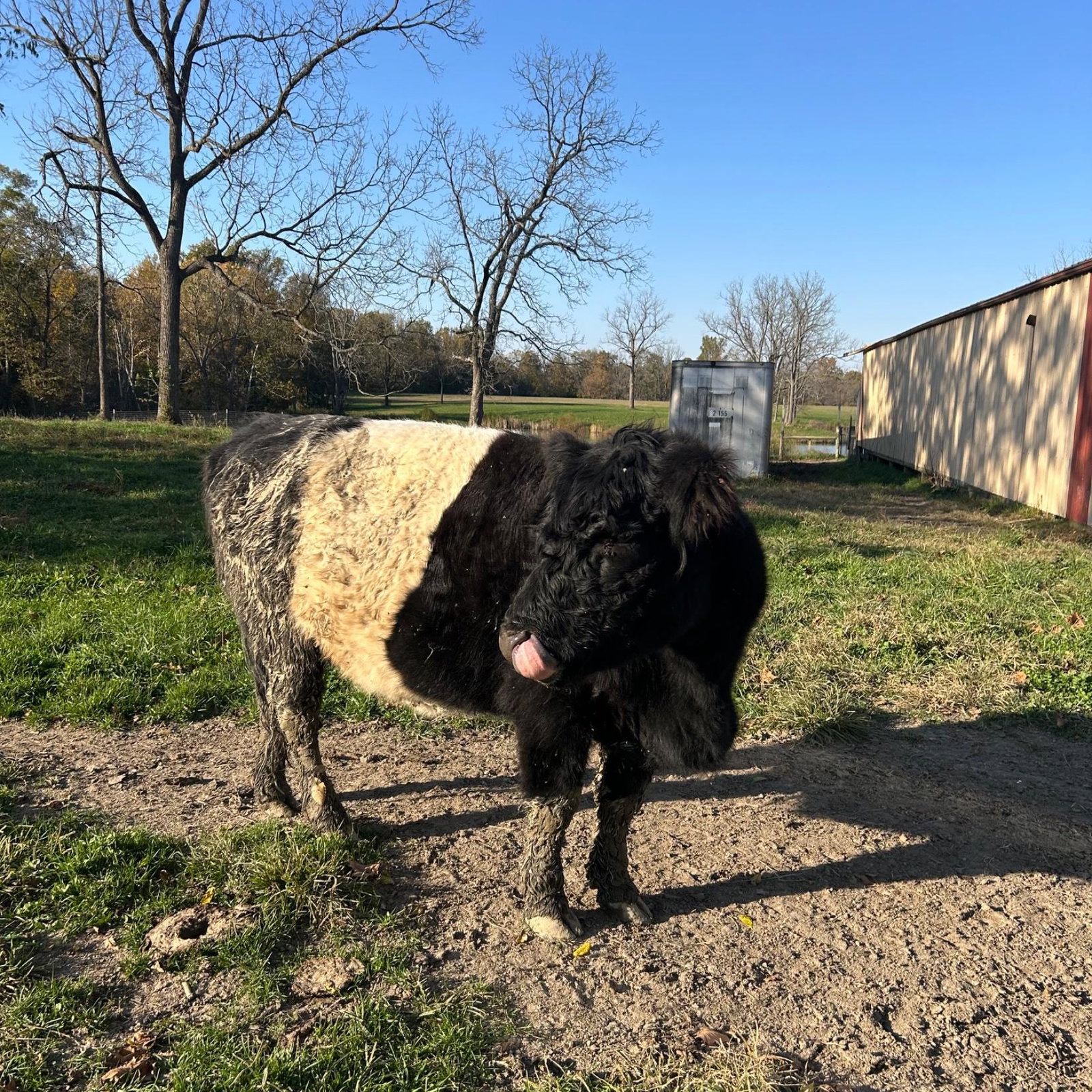
The belt. The US society’s selection guide in its Breeder’s Manual asks for a complete belt that encircles the midsection between the front and hind legs, and it says the shape of the belt should not count in judging. The UK society’s breed characteristics are stricter on placement: a complete belt all the way round, preferably no further forward than the shoulder and no further back than the hind leg, and no black spots on the belt.
No other white. This is where rules get specific, and where the two societies differ. Under the US herd book rules, bulls may carry absolutely no white hair outside the belt, and no animal may have genetically produced white on the head or tail. The US selection guide says a female with white above the hooves that does not extend above the dewclaws can still go into the Herd Book. The UK society admits such a female to its appendix registration instead, and requires every bull to be inspected by a society panel member before registration. If a seller describes “a little white on a foot,” ask which society, which section and what the certificate says.
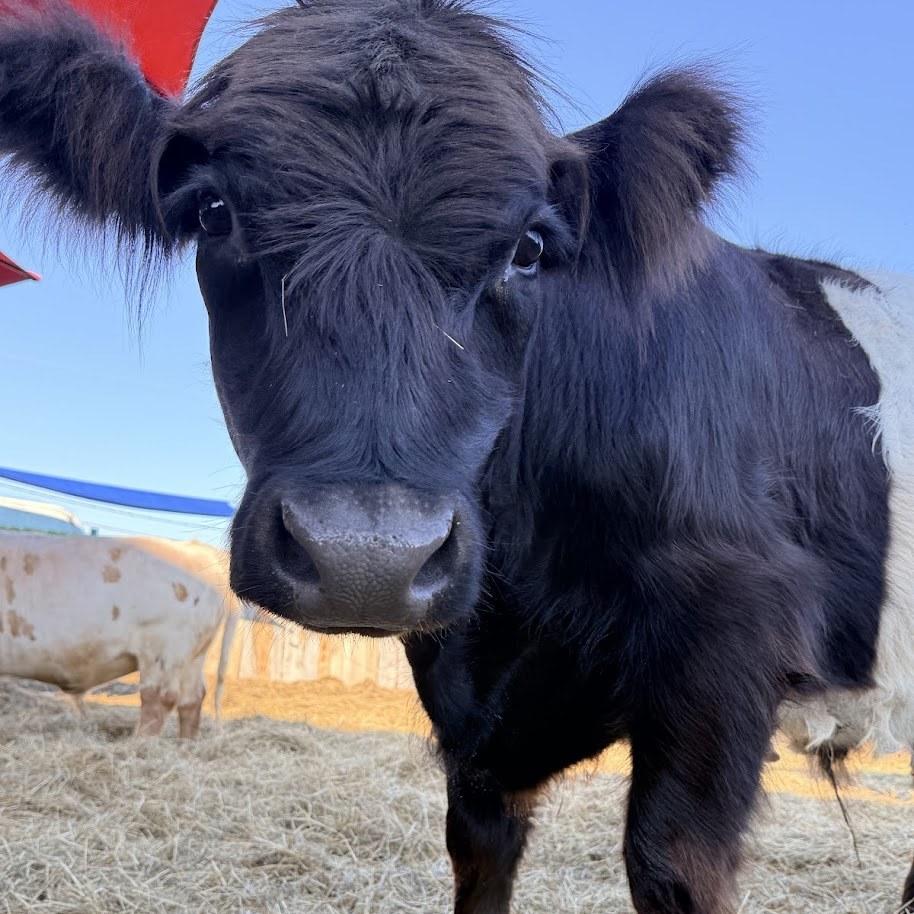
Polled, with no scurs. Galloways are naturally hornless. The US rules require the animal, its sire and its dam to be naturally polled, free of horns or scurs (loose horny growths at the horn site). If horns or scurs appear after registration, the owner must surrender the certificate and the animal is deleted from the herd book. A dehorned or disbudded “Beltie” is therefore a red flag, not a cosmetic detail.
Black is the color most people picture, and the US guide notes that black coats commonly show a brownish tinge, which is acceptable. Red and dun Belties are registered too. The belt itself is a dominant trait, but it is not perfectly reliable: the society’s own history notes that solid black calves still turn up in belted herds and belted calves in Black Galloway herds. A solid calf from belted parents is not proof of a crossbred, and a belted calf is not proof of purity. The certificate and the parentage are.
Belted Galloway, Galloway, White Galloway or Dutch Belted?
These cattle get mixed up in ads, so keep the names exact.
- Galloway cattle are the solid-colored parent type, also polled and shaggy. See the Galloway cattle breed guide for that breed’s traits and registry.
- White Galloway cattle are mostly white with colored points (ears, muzzle, feet), not a belt. In the UK, the Belted Galloway Cattle Society has registered White Galloways in its own herd book section since 1981. Compare the White Galloway page.
- Riggit Galloway cattle carry a white stripe along the back rather than around the middle. See the Riggit Galloway page.
- Dutch Belted (Lakenvelder) cattle are a horned, belted dairy breed; the US society’s history calls the horns the only essential difference from the cattle it believes were crossed into the Galloway. The Dutch Belted cattle guide covers how to tell them apart.
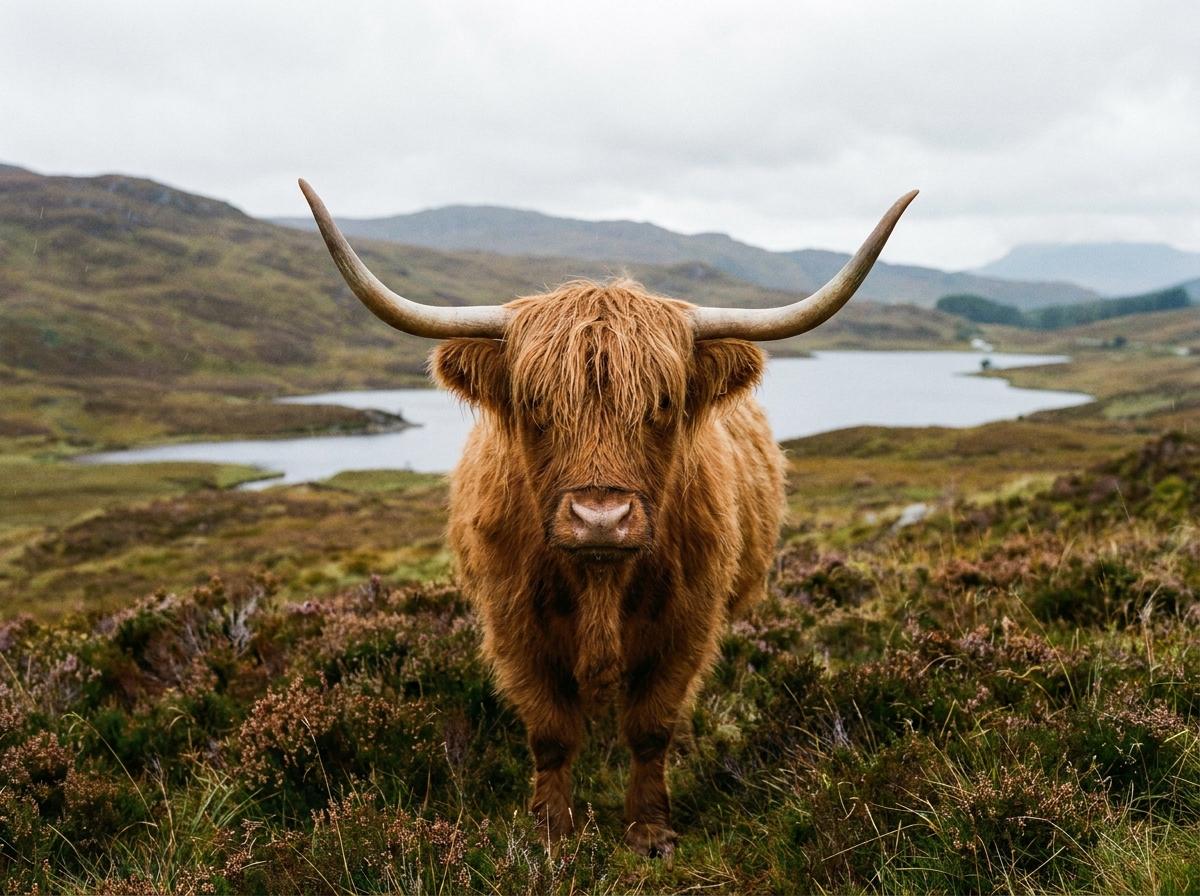
- Highland cattle share the shaggy coat but are horned and come from the Scottish Highlands, not Galloway. The Highland cattle guide covers them.
A crossbred animal with a belt and no horns may look the part. If it matters to you, ask for the sire’s and dam’s registration numbers and check them, rather than reading ancestry from color.
How big Belted Galloways get
The US society has not published a formal measured standard. Its Breeder’s Manual reports breeder surveys from 1995 and 1997 covering about 1,200 animals, mostly in northern herds, weighed on scales or estimated by heart girth:
- Mature bulls: 1,600 to 2,200 lb, average 1,850 lb
- Mature cows: 820 to 1,750 lb, average 1,200 lb
- Cows aged 3 to 4: 700 to 1,600 lb, average 1,150 lb
- Heifers aged 1: 600 to 900 lb, average 700 lb
The same survey put average hip height at about 54.6 inches for mature bulls and 49.6 inches for mature cows. Birth weights averaged 74 lb for bull calves and 65 lb for heifer calves, and calves were weaned at about 185 days on average. The society’s selection guide gives rounder working ranges (mature cows 1,000 to 1,400 lb, mature bulls 1,600 to 2,000 lb) and says size should be moderate, with both excessive and diminished size treated as objectionable. Treat every figure here as a benchmark from surveyed herds, not a promise for one animal, because feed, climate and genetics move all of them.
If you want a working weight for your own animal without a scale, the cattle weight calculator estimates weight from a heart girth tape measurement, and the guide to taping cattle safely shows where to place the tape. Recording weights over time, as the calf growth chart guide explains, tells you more than any single number.
Registration in the US and the UK
United States. The Belted Galloway Society keeps a Herd Book for registered cattle and an Appendix for recorded females and steers. The society is firm about the words: Appendix females are “recorded,” never “registered.” Its Registration vs Recordation note explains that registered animals now get red-bordered certificates and Appendix animals green-bordered ones, which gives buyers a quick visual check. Percentage females (for example, from a registered Belted Galloway bull on a polled, solid-colored beef-type cow with no extraneous white) are recorded by blood fraction.
Some herd book rules matter when you buy breeding stock. Per the US rules, calves are not eligible if they were sired by a bull under 9 months old at service, born to a heifer under 18 months old at calving, or born less than 283 days after the dam’s previous calf (embryo calves excepted). When a bred or exposed female is sold, the transfer has to carry the service details and the bull owner’s signature, with “pasture” allowed when the exact date is unknown. A seller who kept breeding dates can fill that in. One who did not may struggle.
Registration now runs through the society’s online herd system. Its registration page and 2026 fee sheet list DNA and hypotrichosis testing as required for bulls, and testing is also required for embryo calves and donor cows. Fees change, so check the current sheet rather than relying on an old figure.
United Kingdom. The Belted Galloway Cattle Society registers pedigree Belties and White Galloways. Only members can register cattle as pedigree, and every bull is inspected by a society panel member before registration.
Whatever the country, ask to see the actual certificate, check that the tattoo or identification on the animal matches it, and confirm who pays for the transfer. The guide to checking cattle pedigree papers walks through the general checks, and the free cattle pedigree chart maker lets you lay out a candidate’s ancestry before you commit, which makes shared ancestors easy to spot.
Genetic tests to ask about
Two recessive conditions come up in Beltie herds, and each society handles one of them.
Hypotrichosis (US focus). The US society describes hypotrichosis as a recessive, non-lethal condition that causes partial or complete hair loss, often first seen at the inner legs and the belt within days of birth. Its hypotrichosis information sheet explains the inheritance: a calf is affected only when both parents carry the gene, so two carriers have a one in four chance of an affected calf each time. Testing is mandatory for bulls being registered, donor cows and embryo calves, and any Belted Galloway can be tested. Do not confuse “hypo” testing with trich (trichomoniasis) testing, which is a different test for a different problem.
Alpha mannosidosis (UK focus). Alpha mannosidosis (AM) is far more serious: affected calves usually die before or at birth, and survivors are born with severe deformities. The UK society began testing all bulls at inspection or registration at the end of 2022, and newly registered bulls must be AM clear. In its 2024 progress update, the society reported 1,046 animals tested to the end of 2024, with 23 percent carriers. It cautions that the true breed figure is likely lower, because herds that suspected a problem tested more animals. Among young bulls born since 2020, 19 percent were carriers.
For a buyer, the practical rule is the same for both conditions: a clear bull cannot sire an affected calf, even on carrier cows. Ask for test results on any bull and on any imported or UK-line genetics. If you plan to keep bull calves from your cows, testing the cows too saves you from raising bulls that cannot be registered. Discuss any calf born with hair loss or deformities with your veterinarian. Keep each result as a Test Result record on the animal’s profile so it travels with the animal when it is sold.
Breeding, gestation and calving
The US Breeder’s Manual says heifers are generally bred at 14 to 18 months of age, and that many breeders breed by weight instead, at 700 to 800 lb. Its selection guide puts it another way: a heifer should reach two-thirds of her expected mature weight before breeding. Remember the registration rule above, too. A calf from a heifer under 18 months old at calving is not eligible for the US herd book.
The society’s Galloway gestation table runs 284 days from service to due date (a January 1 service is due October 12), and individual cows can calve several days either side. Enter your service date in the free cattle gestation calculator to get a due date and a calving window, and see the cow gestation chart guide for a full calving date chart. Spotting heat reliably comes first, and the cow heat cycle guide covers the 21-day cycle and the signs to watch for.
The selection guide asks for cows that calve easily without help and mother their calves well, and the society expects a sound cow to keep producing a calf a year well into her teens. The UK society goes further and says its cows often live into their twenties. Treat both as breed-society claims, and judge each cow by her own record. Know the signs of trouble before your first season with the calving guide, and have a veterinarian lined up.
Winter: the coat helps, the plan still matters
The Beltie’s reputation for hardiness rests on its coat. The US society describes a double coat (a short, soft undercoat under long, shaggy outer hair) that keeps the animal warm in place of the thick layer of back fat many breeds need. Its selection guide says this means relatively lower winter feed needs, and it treats hard, wiry hair with no undercoat as a fault.

A thick coat insulates only when it is dry and the animal has the feed to stay in condition. Wet, matted hair loses much of its value. Plan for stored forage, a windbreak or shelter from driving wind and rain, dry ground to lie on, and water that stays open in freezing weather. The coat does not replace any of those. How many cattle your land carries depends on your forage and rainfall, not the breed name, and the cattle stocking rate guide shows how to work it out.
Summer heat needs shade and water
The same coat is a liability in hot, humid weather, particularly on black cattle. Penn State Extension’s guidance on heat stress in beef cattle reports that dark-hided cattle ran about 2 degrees F higher core body temperature than lighter-colored herdmates. It also notes that temperatures in the mid 90s F can raise water needs to about 2.5 times what cattle drink at 70 degrees F, and it advises working cattle first thing in the morning during extreme heat.

In practice, that means shade for every animal at once (trees or a structure), plenty of clean water with enough flow at the trough, and no sorting, hauling or handling in the heat of the day. In southern climates, watch closely for panting and crowding at water, and ask a seller in a hot region how their cattle cope. Your veterinarian is the right call for any animal that is struggling.
Beef, grazing and temperament
Belties are a slow-maturing grass breed rather than a fast feedlot breed. The US society reports carcass dressing percentages well over 60 percent of live weight and lean beef, and it gives a candid comparison: on the same grain ration, Belted Galloway steers showed top daily gains of about 2.5 lb, against 4.5 to 5 lb for commercial steers, while eating significantly less. Plan a longer finishing period, and judge any “grass-finished” claim against the animal’s age, weights and pasture.
That forage efficiency is why Belties are popular for conservation grazing. The UK society’s conservation grazing case studies describe herds kept on rough hill grazing and wet conservation land, including one herd’s frank note that its Belties grew more slowly than its solid Galloways on a hard hill. Treat a single farm’s experience as an example, not a breed fact.
The US selection guide asks for calm, quiet cattle that do not panic when approached or show aggression toward people, and it notes that a protective cow can be dangerous in confined handling. A docile breed reputation does not make a bull safe. Watch the cattle being handled before you buy, and make sure your fencing and handling facilities are built for a full-grown beef bull.
What Belted Galloways cost
There is no reliable public price series for Belted Galloways in the US, and a single advertised price says little about the market. The clearest dated public evidence comes from UK pedigree sales. At the Belted Galloway Cattle Society’s Castle Douglas show and sale on October 24, 2025, the society reported these averages:
- 15 bulls: average £7,070
- 5 in-calf heifers: average £6,321
- 17 bulling heifers: average £3,551
- 23 maiden heifers: average £2,556
The top bull at that sale made 18,000 guineas and a heifer set a female record at 16,000 guineas, so averages hide a wide spread. These are UK pedigree show-and-sale prices in pounds. They do not translate directly to US dollars, and they say nothing about steers, recorded crossbreds or freezer beef.
For US budgeting, compare like with like: sex, age, registration status, breeding status and test results. Add registration transfer, membership if you will register calves, testing, transport, quarantine and a full year of feed. The cow cost guide breaks down purchase and ownership costs, the mini cow cost guide covers small-frame breeds if you are weighing those, and the free livestock value calculator gives a market estimate where enough sales data exists.
A buying checklist for Belted Galloways
Take this list with you, and ask for documents rather than verbal answers:
- Identity: Herd Book registration or Appendix recordation? Red or green-bordered certificate (US)? Does the animal’s tattoo or ID match the certificate?
- Markings: One complete belt, no extraneous white on a bull, nothing on the head or tail. Ask how any foot white is handled on the papers.
- Polled status: No horns, no scurs, no sign of dehorning, and polled parents.
- Genetic tests: Hypotrichosis and DNA parentage for US bulls; AM status for UK-line bulls and any bull you plan to use.
- Breeding records: Service dates or pasture exposure dates, preg-check results, calving history, birth and weaning weights of past calves.
- Soundness: Feet, legs, udder and teats on cows; scrotal size and a breeding soundness exam on bulls, discussed with your veterinarian.
- Disposition: Watch the animal walk, load and stand in a chute.
- Health: The herd’s vaccination and health records, and any herd-of-origin testing your state or buyer requires.
Frequently asked questions
How long is a Belted Galloway pregnant?
The US society’s gestation table runs 284 days from service to due date. Individual cows can calve several days earlier or later.
How big is a Belted Galloway?
In the US society’s breeder survey, mature cows averaged about 1,200 lb and 49.6 inches at the hip, and mature bulls about 1,850 lb and 54.6 inches. They are moderate-sized beef cattle, not miniatures.
Are there miniature Belted Galloways?
The US society’s selection guide calls both excessive and diminished size objectionable, and it does not describe a separate miniature type. If a seller offers a “mini Beltie,” ask exactly what it is, what it weighs at maturity and which herd book, if any, records it.
Do Belted Galloways have horns?
No. They are naturally polled. Horns or scurs disqualify an animal from US registration, and a horned “belted” animal is either crossbred or a different breed, such as Dutch Belted.
Are Belted Galloway steers worth raising for beef?
Many small farms raise them for grass-fed beef. Expect slower growth than commercial feeder steers, lean carcasses and a longer time to finish. The US society reports top grain-fed gains of about 2.5 lb per day.
Are Belted Galloways good for beginners?
Their calm temperament, the breed’s emphasis on unassisted calving and their forage efficiency suit many small farms, but they still need good fencing, safe handling facilities, a winter feed plan, summer shade and a veterinarian. A bull is never a beginner animal.
Do this next on Creatures
Belted Galloways are uncommon, so the most useful next step depends on where you are. Most readers here are still looking for cattle, so start with the alert and directory, then set up records once animals are home.
Get alerted. Set a free Belted Galloway listing alert and Creatures emails you when a matching animal is listed. No account needed to start. See saving searches and using your watchlist.
Browse what is listed now. Check Belted Galloway cattle on the marketplace. Listings are few, so pair this with the alert.
Research breeders. Search the Creatures breeder directory for cattle farms near you. Many entries are compiled from public sources, so confirm a farm still keeps Belties and ask for its records before you visit.
Add your cattle. Already have Belties? Create a free Belted Galloway profile with its registration number, color and parents. No account needed to start. The walkthrough is in adding an animal to Creatures.
Keep breeding and test records. Add a record for a service date, a hypotrichosis or AM result, or a weight. The record sheet opens for any visitor to look around, and a free account saves what you enter. See adding a record and recording a breeding.
List your herd. Breed Belties? Create your farm’s profile so buyers can find you. No account needed to start. Read getting listed in the breeder directory and creating an organization and adding your team.