


How Much Are Maine Coon Cats? 2026 Prices, Yearly Costs and What to Ask a Breeder
Author: Elliott Garber, DVM · Updated
A pet Maine Coon kitten from a registered, health testing cattery generally costs between about $1,200 and $3,000 in the United States in 2026. Kittens sold with show potential or breeding rights usually start near $3,000 and can pass $5,000. Shelter and breed rescue adoptions cost a small fraction of either, and a retired breeding adult rehomed by a cattery sits in between. No cat registry publishes price data, so treat those as the bands you will actually see advertised, not official averages.
The kitten is also the smaller number. Maine Coons are one of the largest pedigreed cat breeds, wear a heavy all weather coat, and carry three documented heritable conditions worth pricing in. Most owners spend more on the cat than on buying it within about two years. Before you trust any figure here, check it against what Maine Coons are actually listed at right now, because live asking prices move faster than any guide.
| Pet kitten, registered cattery | About $1,200 to $3,000, US asking prices in 2026 |
|---|---|
| Show or breeding rights kitten | Commonly $3,000 to $5,000 and up |
| Shelter or breed rescue | An adoption fee, usually a few hundred dollars at most |
| First year, on top of purchase | Commonly another $1,000 to $2,500 with setup |
| A settled year after that | Roughly $800 to $1,500 for food, litter, routine vet care and insurance |
| Adult size | Females about 12 to 15 lb, males about 18 to 22 lb (TICA) |
| Life expectancy | TICA says 12.5 years and up; UK veterinary life tables put the breed at 9.71 years |
| Screening to ask about | MYBPC3 heart DNA test, cardiac echo, hip radiographs, SMA DNA test |
How much is a Maine Coon kitten?
Price tracks what the kitten is bred and sold for, not how big it looks in the photo.
Pet kitten from a registered cattery, about $1,200 to $3,000. This is what almost everyone reading this page is buying. At that price a kitten should leave at twelve to sixteen weeks, already vaccinated, dewormed, microchipped, spayed or neutered, with a written contract and its own registration paperwork. Check the dates against a standard kitten vaccination schedule so you know which boosters are still due. Both major North American registries, The Cat Fanciers’ Association and The International Cat Association, have recognized the breed for decades.
Show potential or breeding rights, commonly $3,000 to $5,000 and up. A show kitten matches the standard closely enough to compete. Breeding rights cost more again, because the breeder is handing over future litters from lines they spent years building. Most buyers need neither, and paying for them does not buy a better pet.
Color premiums, treated carefully. Two exceptions matter before you pay extra for a color. The CFA breed standard disqualifies chocolate, lavender and Himalayan pointed colors in this breed as evidence of hybridization, so a “chocolate Maine Coon” or a blue eyed “colorpoint Maine Coon” at a premium is sold on a claim the standard rejects. Polydactyl kittens are the opposite case: extra toes are a real part of the breed’s history, and TICA shows them as the Maine Coon Polydactyl with a maximum of seven toes on any one foot, while CFA lists an incorrect number of toes as a show disqualification. A polydactyl kitten is not defective, it is registered and shown differently, so check that you and the breeder mean the same thing by “registered”.
“European lines” is marketing, not a category. Neither registry recognizes a separate European Maine Coon. There is one breed, plus TICA’s polydactyl variety. Catteries do import from Europe and price those kittens higher for a particular head and ear look. That is a fair thing to want, but it is not a different breed and no registry backs the premium.
A price far below the band is a warning, not a bargain. The Federal Trade Commission’s advice on pet scams names the pattern: purebred animals advertised for a few hundred dollars when they normally cost thousands, with pressure to pay fast.

What you are actually paying for
Ask a breeder to itemize a $2,500 kitten and the answer is mostly testing and time.
Screening happens before a litter exists. North Carolina State University prices the Maine Coon MYBPC3 heart test at $35 per cat, or $25 per kitten for a litter, and that is the cheap part. A screening echocardiogram by a veterinary cardiologist runs into the hundreds and is repeated through the breeding years. Hip radiographs sent to the Orthopedic Foundation for Animals need the cat to be at least 24 months old, so a breeder is paying to screen a cat they have already fed for two years.
Then twelve to sixteen weeks of raising the kitten, and the daily handling that produces a large confident cat instead of a large frightened one.
Demand does the rest. CFA named the Maine Coon its most popular pedigreed breed for 2026, the second year running, ahead of the Ragdoll and the Persian. Top of that list plus small litters equals waiting lists, and waiting lists hold prices up.
Adoption, rescue and retired adults
Shelter and breed rescue fees are modest, usually a few hundred dollars at most, and normally include spay or neuter, vaccinations and a microchip you would otherwise buy separately. The catch is supply: purebred Maine Coons are uncommon in general shelters and move fast, so a standing alert beats repeat searching.
Retired breeding cats are the underrated route. Catteries rehome adults when their breeding careers end, already altered, fully screened and used to people. You get documented heart and hip results for a fraction of kitten money.
How to tell a real breeder from a scam
Maine Coons are among the most impersonated breeds online, for the obvious reason that they are the most wanted, and expensive enough to be worth faking. The FTC’s guidance gives four free checks.
- Search the seller’s name plus “scam” or “complaint” before you send anything.
- Reverse image search the photos. Stolen and recycled images are the commonest tell.
- Insist on a live video call or a visit. The FTC says of legitimate breeders and rescues: “They’ll encourage an in-person or video meeting.” A seller who will not video chat or talk on the phone is the one to walk away from.
- Refuse gift cards, wire transfers, cryptocurrency and cash transfer apps. Nobody legitimate requires them and they are near impossible to reverse. Use a credit card.
Then read the paperwork, which is where a real cattery separates itself fastest.
- Registration for the kitten, not just the cattery. “CFA registered cattery” describes the breeder. You want the kitten’s own paperwork, naming its sire and dam.
- Results in the parents’ names, from a named laboratory. A heart DNA result should name the cat, the lab and the MYBPC3 result. An echocardiogram report should carry a date and the cardiologist’s name. Hip results should trace to an OFA record. A certificate may name a breed health screening program; what matters on it is still the cat’s name, the scan date and the cardiologist who signed it. “Fully health tested” in an advert is a phrase, not a document.
- A written contract covering the health guarantee and its window, what happens if a hereditary condition appears, spay or neuter terms, and a return clause. Breeders worth buying from want the cat back rather than surrendered, and say so in writing.
That habit travels. Whether you are pricing a Maine Coon, a Belgian Hare or a Rex rat, the seller who keeps real records is the one who still answers the phone six months later.
If a cattery invites you to apply for a future litter, review how program applications and waitlists differ from an offer, reservation, or payment.
A rare-breed label warrants documentary checks before a premium price; the Sokoke guide shows why a patterned coat alone cannot prove registered ancestry.

What a Maine Coon costs every year
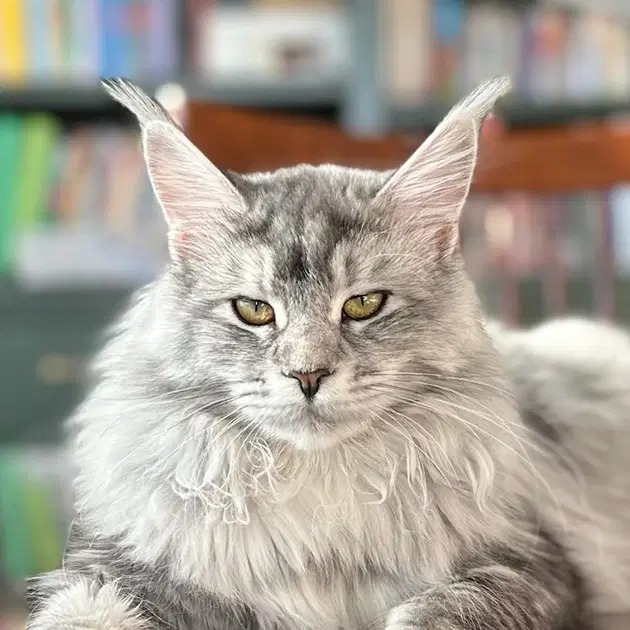
Size is why this breed costs more to run. TICA puts adult females at roughly 12 to 15 pounds and adult males around 18 to 22 pounds, and CFA notes it is not unusual for a mature male to reach or exceed 20 pounds. Every recurring cost scales with that.
Food. A cat carrying twice the mass of an ordinary house cat eats accordingly. Feed to body condition, not to the number on the bag: the 2024 UK veterinary life tables for cats found that being unneutered, being purebred and carrying a non ideal body weight were each linked to a shorter life.
Litter. More waste, and a genuinely large box or two. Modest monthly, relentless for a decade.
Grooming. The coat is uneven by design, short over the shoulders and long through the belly and britches, with a ruff that thickens as the cat matures. A steel comb a few times a week prevents mats. Professional grooming is worth budgeting for if an old cat gets stiff and stops maintaining its own back end.
The Siberian guide provides another longhaired-breed comparison for buyers working out the coat-care commitment they can sustain.
For another long-coated cat, the Nebelung guide covers coat care and the questions to ask a breeder before budgeting.
Routine veterinary care. An annual exam, core vaccinations, parasite prevention, then bloodwork and dental care from middle age. This varies more by zip code than by breed, so phone two local clinics and ask what a wellness visit costs. That beats any national average.
Insurance. Price it while the cat is young, because anything diagnosed first becomes a pre existing exclusion. The North American Pet Health Insurance Association’s 2026 industry report puts the average US accident and illness premium for cats at $435 a year in 2025, about $36 a month. That covers all cats, and a large breed with a known cardiac predisposition tends to quote above it.
Added up, a quiet year usually lands around $800 to $1,500, with the first year higher once setup is included. The number that breaks budgets is none of these.

The health costs to plan for, not hope to avoid
None of this argues against the breed. It argues for buying from someone who screens, and for keeping money aside. Every diagnosis and treatment decision belongs with your veterinarian.
Hypertrophic cardiomyopathy. HCM is the most common heart disease of cats, and Cornell lists the Maine Coon first among predisposed breeds. Cornell’s list also includes the British Shorthair, a breed where screening depends on heart scans alone. The 2020 ACVIM consensus statement puts prevalence at roughly 15 percent of cats generally and up to 29 percent in older cats. Published Maine Coon specific figures range too widely to be worth quoting, which is itself the reason to ask about the parents rather than about the breed. Affected cats often look well until they are not, and the serious complications are heart failure and clots that lodge in the hind limbs.
Here is the part most price guides get wrong. The A31P mutation in the MYBPC3 gene is real and testable, but it is not the whole story. In a Danish study of young Maine Coons, 50 percent of cats with two copies had HCM while only 2.3 percent with one copy did, and 10 of the 21 affected cats carried no copies at all. The authors concluded that breeders should avoid producing homozygous cats and that genotyping cannot stand alone. ACVIM agrees clinically: regular echocardiographic screening should be considered even in Maine Coons that test negative. So the question is not “are they tested” but “what are the parents’ DNA results, and when was each parent last scanned by a cardiologist”. Living with a diagnosed cat means cardiology visits and daily medication.
Hip dysplasia. A study of the OFA registry found hip dysplasia in 24.9 percent of Maine Coons evaluated, slightly more in males, and bilateral in 56 percent of affected cats. That describes cats whose owners chose to submit radiographs rather than the breed as a whole, so read it as a signal to screen, not a population rate. Most affected cats manage with weight control, pain relief and easier routes to high places. Severe cases can mean surgery.
Spinal muscular atrophy. SMA is an autosomal recessive condition traced to a deletion affecting the LIX1 gene in Fyfe and colleagues’ 2006 work. Affected kittens show an unsteady, swaying hind end from around twelve weeks, and the paper reports they survive well into adulthood. A DNA test on both parents prevents affected kittens entirely.
How long they actually live. TICA gives 12.5 years and up. The 2024 UK life tables, built from 7,936 confirmed deaths across more than a million cats, put Maine Coon life expectancy at birth at 9.71 years against 11.74 for cats overall. The breed figure rests on 69 recorded deaths and carries a wide confidence interval, 8.4 to 11.0 years, so read it as a direction rather than a precise number. Both are true and measure different things: life expectancy at birth includes the cats that die young, while a breed club figure describes the ones that make it. Plan financially for the longer number and emotionally for the shorter one.
First year setup
Everything a cat needs, in the large size. A very large litter box or two, because standard boxes are too short for an adult male. A tall, heavily built cat tree, because flimsy towers do not survive a 20 pound cat landing on them. A carrier rated well above cat size, the item people buy twice. A steel comb, wide heavy bowls, a big bed and sturdy scratching posts. Setup plus the first year of veterinary care commonly adds $1,000 to $2,500 on top of the kitten, then those costs disappear.
Is a Maine Coon worth it?
The kitten is a one time cost between about $1,200 and $5,000. Everything after is a decade or more of a large, sociable, talkative cat who follows you between rooms, plus a real chance of a cardiac or orthopedic diagnosis late in its life. Budget for the bad year up front and it is an expense. Skip that step and it is a crisis.
Still deciding on the breed rather than the budget? The Maine Coon breed page covers temperament, size and care, and the wider cat species guide puts it next to the alternatives.
If you are still comparing longhaired companions, the Balinese guide helps turn that comparison into questions about coat care, company and the individual cat.
Frequently asked questions
How much is a Maine Coon kitten in 2026?
About $1,200 to $3,000 for a pet kitten from a registered, health testing US cattery, and $3,000 to $5,000 or more with show potential or breeding rights. These are advertised ranges, not official averages: no registry publishes price data.
What is the cheapest way to get a Maine Coon?
A shelter or breed rescue adoption, or a retired breeding adult rehomed by a cattery, already altered and screened.
Do this next on Creatures
Creatures is the marketplace, breeder directory and records layer for the whole process, from pricing a kitten to tracking its heart scans fifteen years later.
Check the real asking prices. Browse current Maine Coon listings on the marketplace to see what sellers are asking this month, then find trusted catteries and rescues in the Creatures breeder directory.
Get told when one is posted. Well bred kittens and rescue adults both go quickly, so set a free Maine Coon listing alert and we will email you the moment one appears. No account needed to start. New to alerts? See saving searches and using your watchlist.
Found one you like? Read making an offer on a listing before you contact a seller, so you know how the process works and what to ask for.
Add your Maine Coon. Already have one, or bringing a kitten home? Create a free animal profile in a few minutes. No account needed to start, and the walkthrough is in adding an animal to Creatures.
Keep the heart and hip records. This is a breed where dated screening results matter for a lifetime, and for rehoming later. Add a health or care record. The record sheet opens for any visitor to look around, and a free account saves what you enter. See adding a record and health and medical records, and use reminders and upcoming care so the annual echocardiogram does not quietly slip.
Run a cattery? Create a free cattery profile so buyers searching the most popular pedigreed breed in the country can find you, with your screening results visible up front. No account needed to start.