GFP
Morph
Author: Elliott Garber, DVM · Published
A GFP axolotl is still an axolotl, Ambystoma mexicanum. It carries genetic instructions for a fluorescent reporter protein that becomes conspicuous under suitable excitation light. GFP is not a separate species, a health upgrade, or the animal’s ordinary pigment color. Start with the Creatures axolotl hub, and use the breeder directory to ask for parentage, health, age, and husbandry records rather than buying on glow alone.

| Species | Axolotl, Ambystoma mexicanum |
|---|---|
| GFP means | Green fluorescent protein used as a genetic reporter |
| Normal light | The animal’s pigment background remains visible; it need not look neon green |
| Excitation | Appropriate blue-range illumination and viewing conditions reveal green fluorescence |
| Not promised | Better health, stronger regeneration, disease resistance, rarity, or one pigment morph |
| Care priority | Stable cool water, gentle flow, safe housing, appropriate diet, and daily observation |
| Buying proof | Normal-light view, lineage explanation, current water data, health history, and legal transfer |
Browse listings, public profiles, breeders, or add your animal.
What GFP actually is
GFP stands for green fluorescent protein. Scientists use fluorescent proteins as reporters because their signal can mark cells and tissues. The landmark 2006 paper “A germline GFP transgenic axolotl and its use to track cell fate” described an axolotl line that expressed GFP across tissues and passed the transgene through the germline. Researchers used the signal to follow cells during development and regeneration.
That origin explains the word transgenic. DNA encoding the reporter was introduced into a line, and the resulting signal could be inherited. It is not green dye injected into each pet. The University of Kentucky Ambystoma Genetic Stock Center supplies axolotls for research and education and lists transgenic stocks among its collection.
The broader review of transgenic laboratory axolotls shows why “GFP axolotl” is not one simple color category. Researchers have made ubiquitous reporters and lines where regulatory elements direct fluorescence to particular tissues. A seller should explain the ancestry and phenotype of the animals they actually produce rather than borrowing a laboratory label loosely.
Fluorescence is not ordinary color
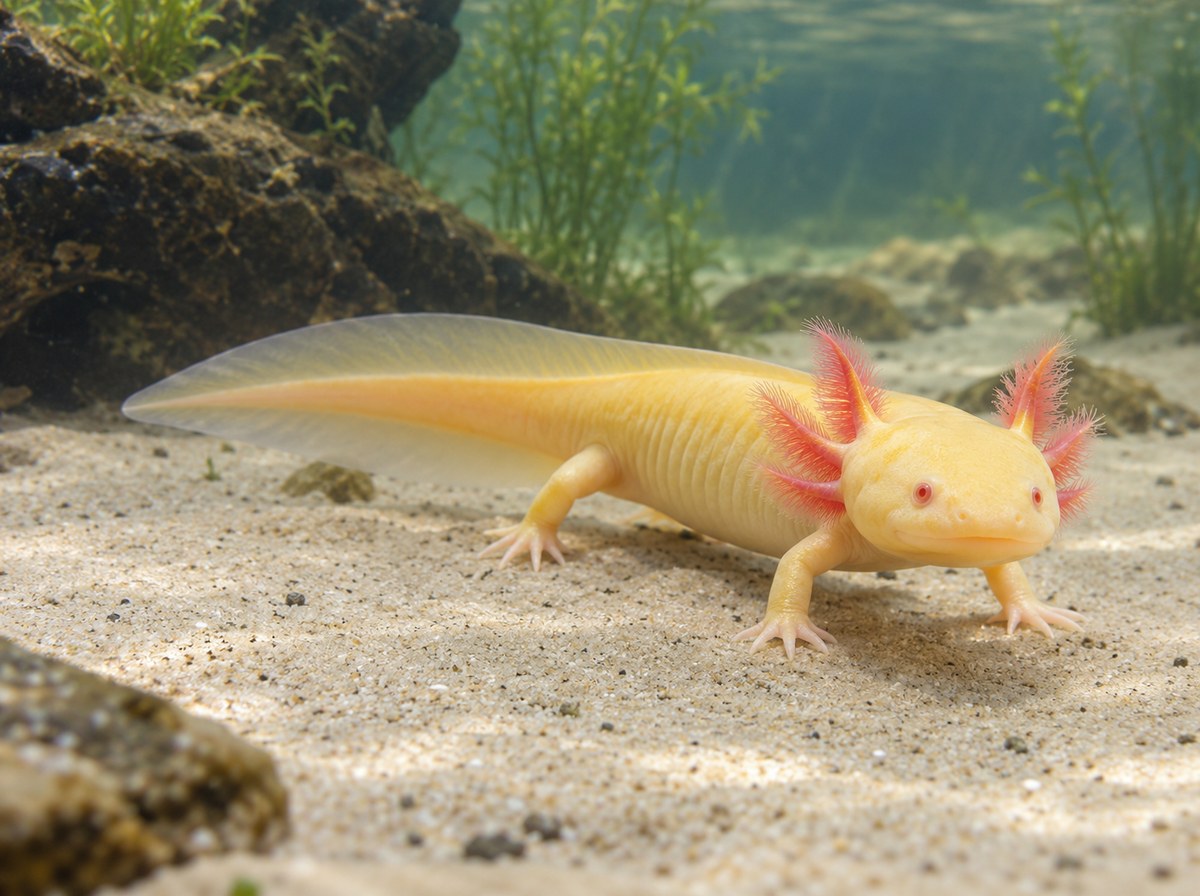
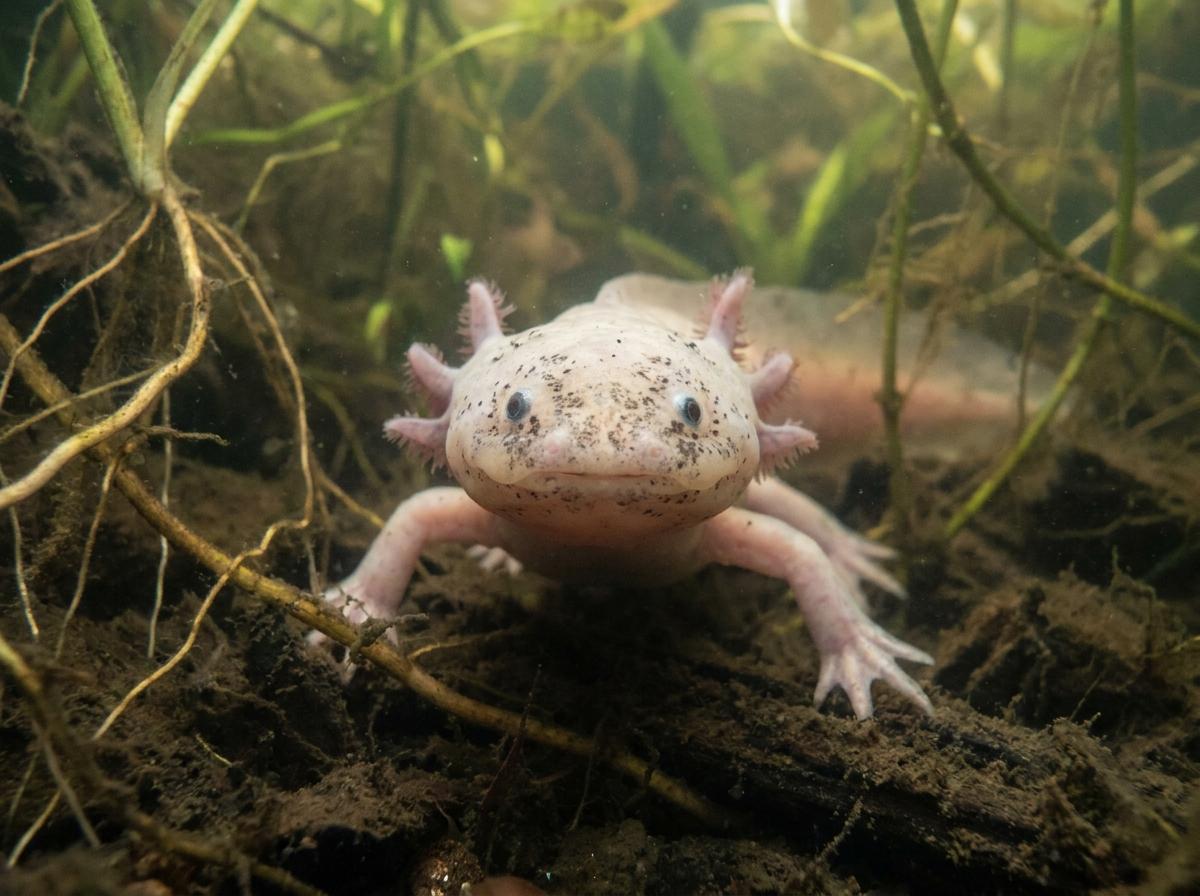
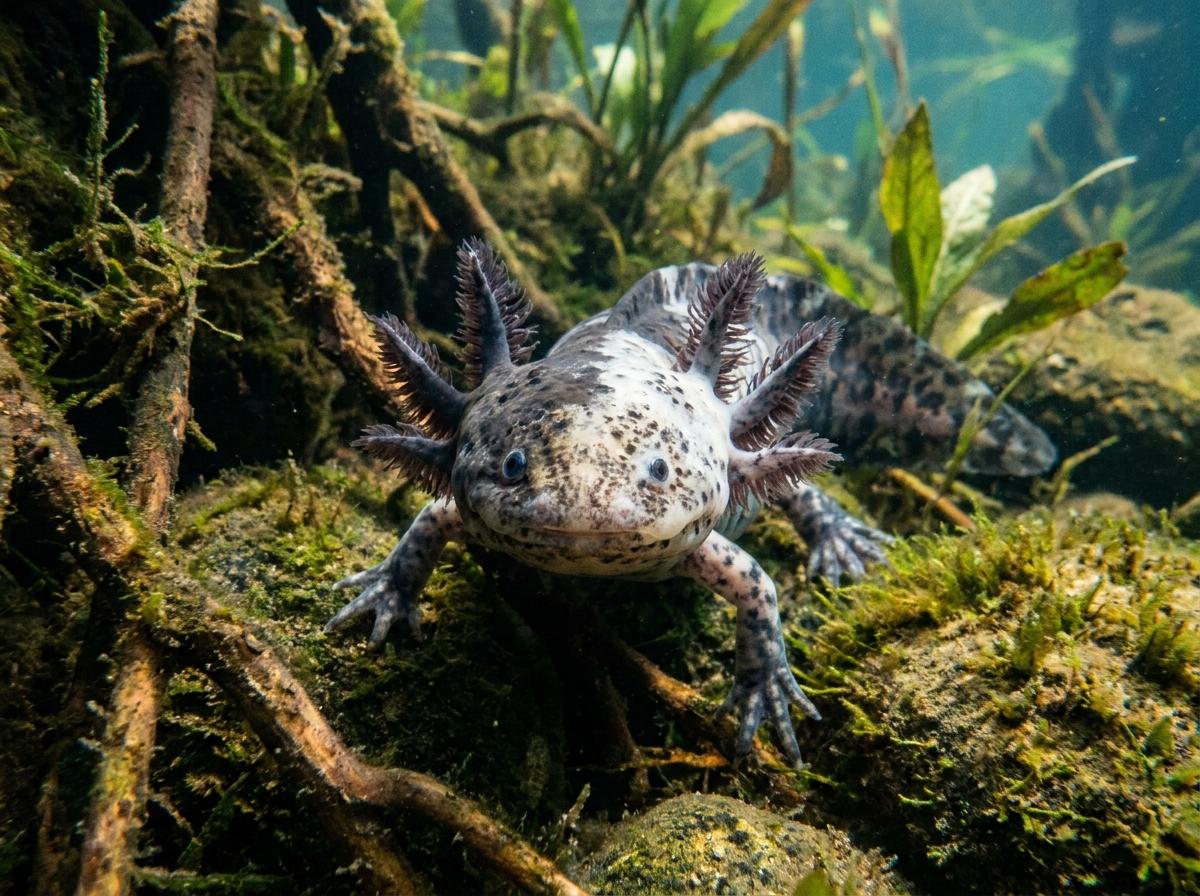
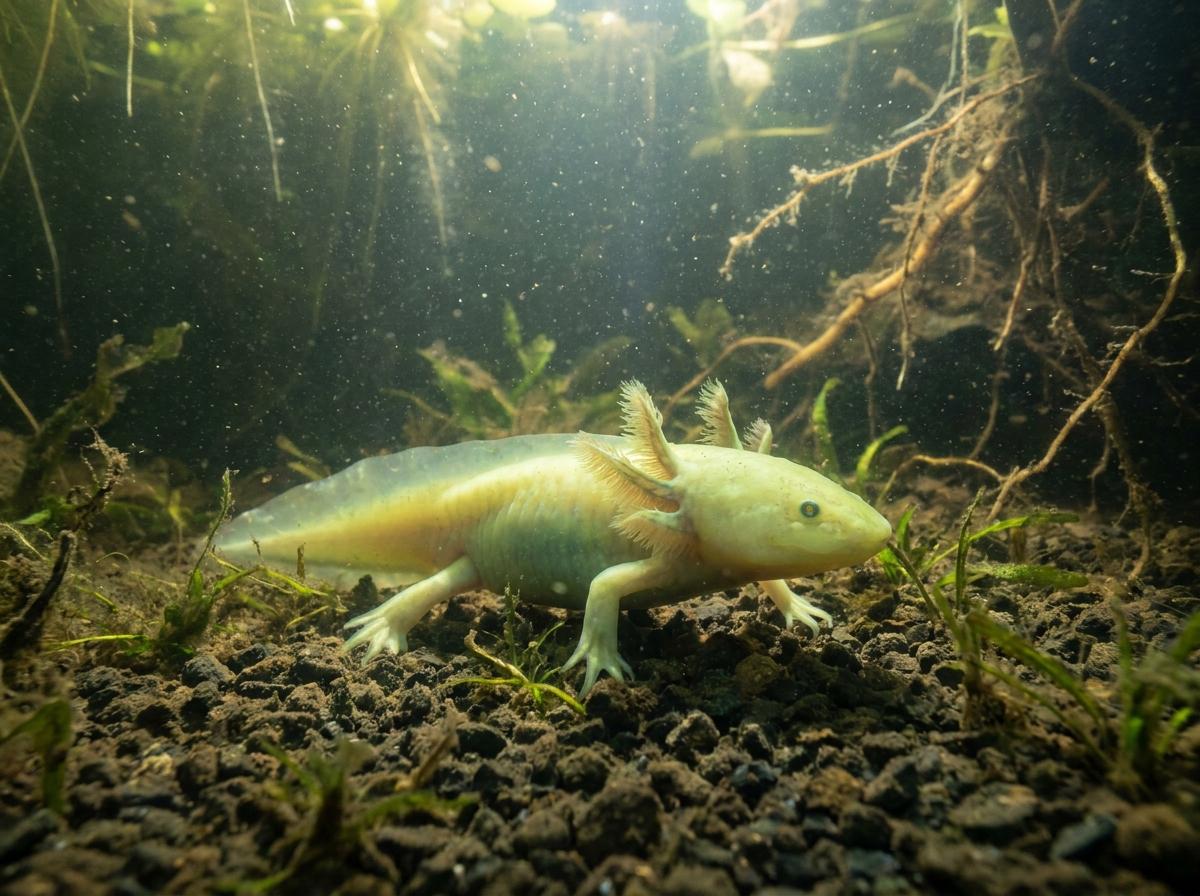
Under neutral room or aquarium light, a GFP-positive axolotl can look like its pigment background. A leucistic animal may look pale pink-white with dark eyes, as in the first image. Other pigment backgrounds can look different. The GFP marker and the pigment phenotype are separate pieces of information.

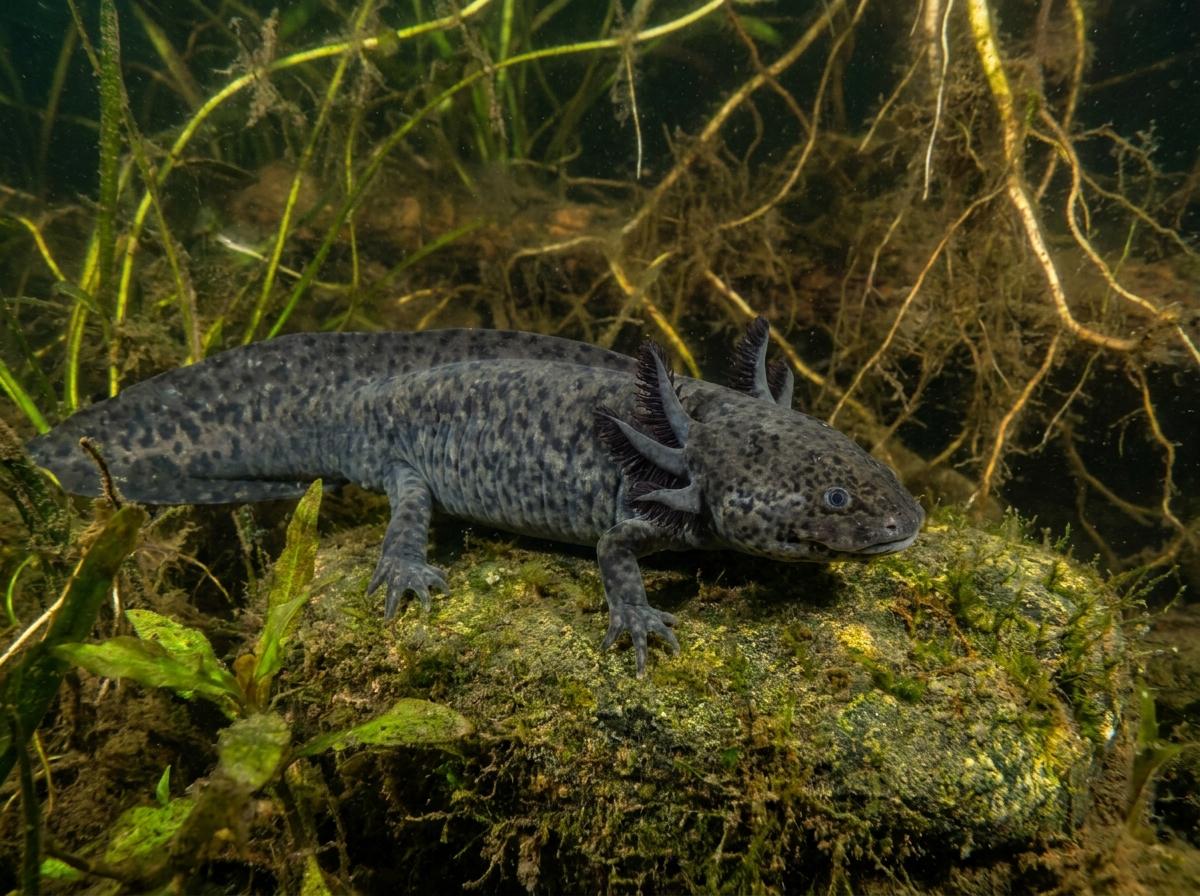
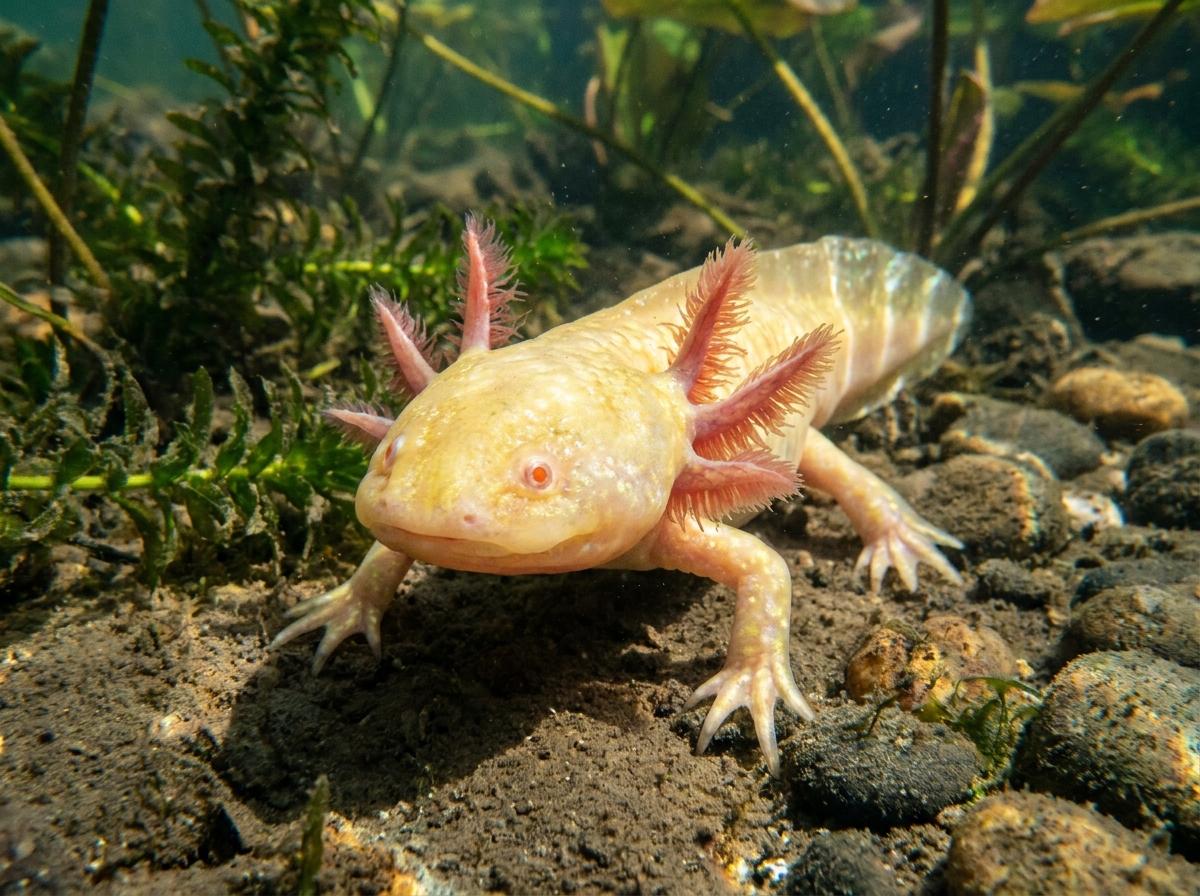
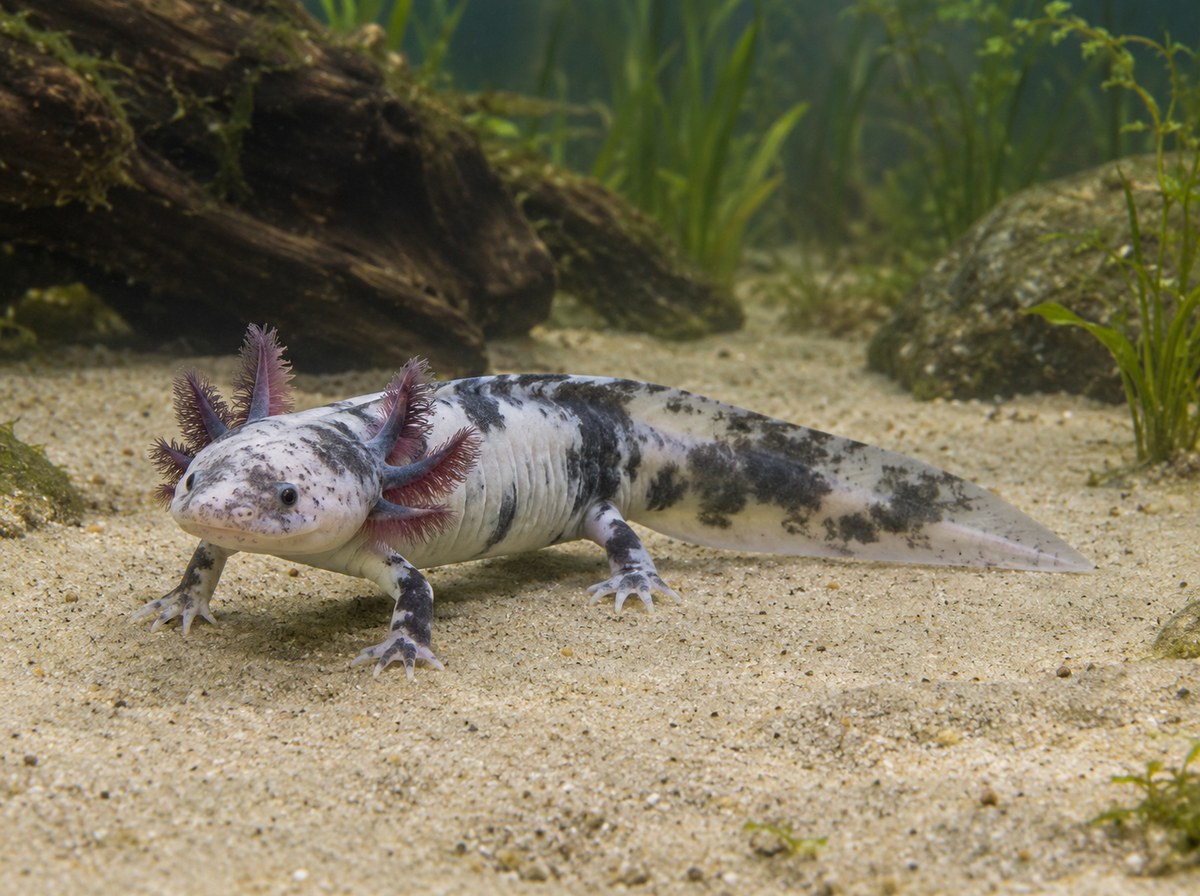
The second image is a scientific visualization of controlled excitation, not a normal aquarium scene. It shows a moderate green signal while the gills retain pink-red detail. Actual brightness in a photo depends on the construct, tissues, pigment, developmental stage, excitation wavelength and intensity, camera exposure, filters, and ambient light.
Do not keep a bright blue or ultraviolet light on an axolotl for decoration. Axolotls need a predictable light-dark cycle and access to shade. A fluorescence check should be brief, purposeful, and as low-stress as possible, with guidance from an experienced veterinarian or laboratory protocol when the information matters. The marker gives no reason to compromise welfare for a dramatic photograph.
What GFP does not tell you
The presence or strength of fluorescence is not a veterinary exam. It does not prove that the animal is healthy, genetically diverse, well nourished, or free of infection. It does not mean that the animal regenerates better than a non-GFP axolotl. The original research value was visibility for cell tracking, not a benefit awarded to the animal.
Likewise, a faint signal is not automatically illness and an intense image is not automatically authenticity. Camera settings can radically change a picture. Evaluate health in ordinary viewing conditions through appetite, posture, gill appearance, skin, body condition, movement, waste, water measurements, and changes from that individual’s baseline.
Tank setup and water quality
The University of Kentucky AGSC 2024 husbandry guide says axolotl well-being is critically tied to water quality. It emphasizes monitoring pH, ammonia, chlorine or chloramine where relevant, and the nitrogen-cycle indicators ammonia, nitrite, and nitrate. A mature biological filter and a test routine matter more than whether an animal fluoresces.
The same guide maintains its research colony at 15 to 17 C and uses a 12-hour light and 12-hour dark cycle. Those are documented institutional conditions, not permission to chase one number while ignoring the complete system. Measure the actual water, plan for seasonal room heat, use gentle flow, and consult an aquatic veterinarian for an animal showing stress.

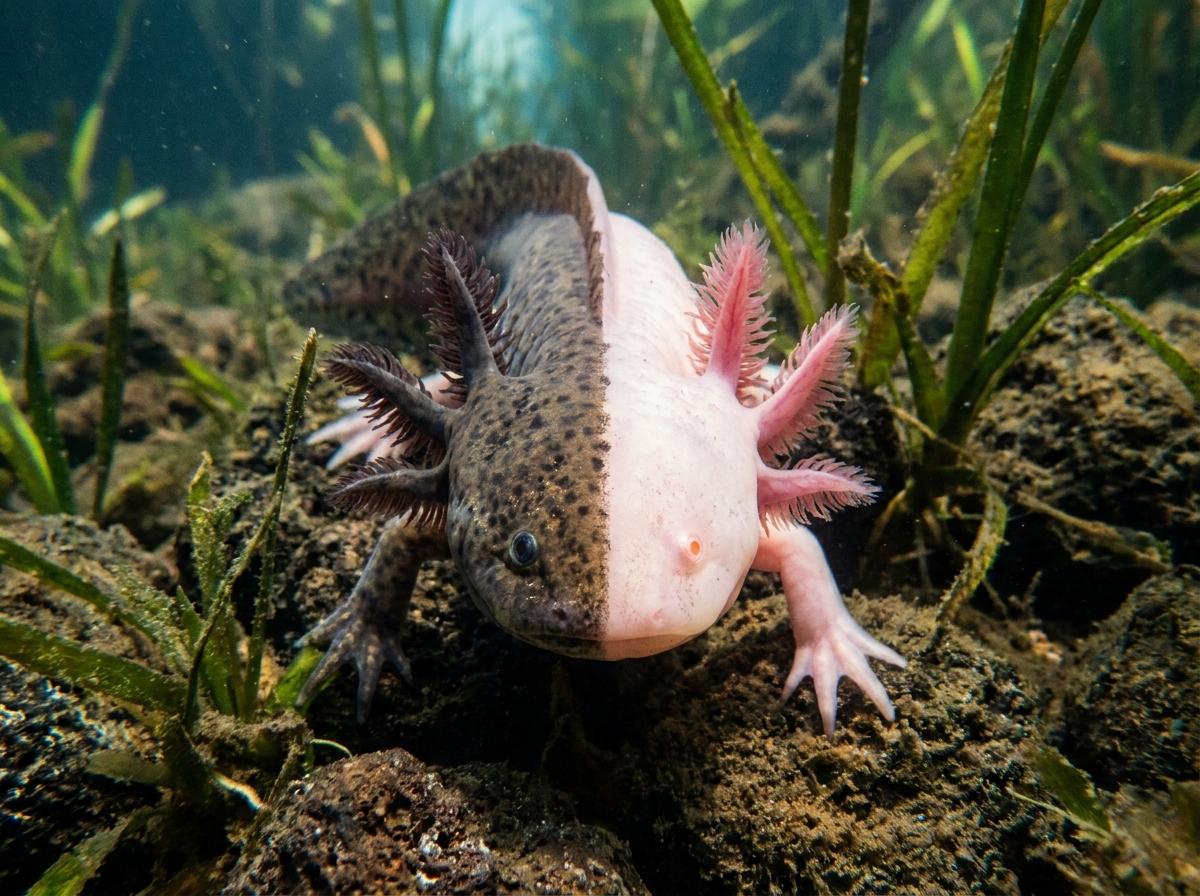
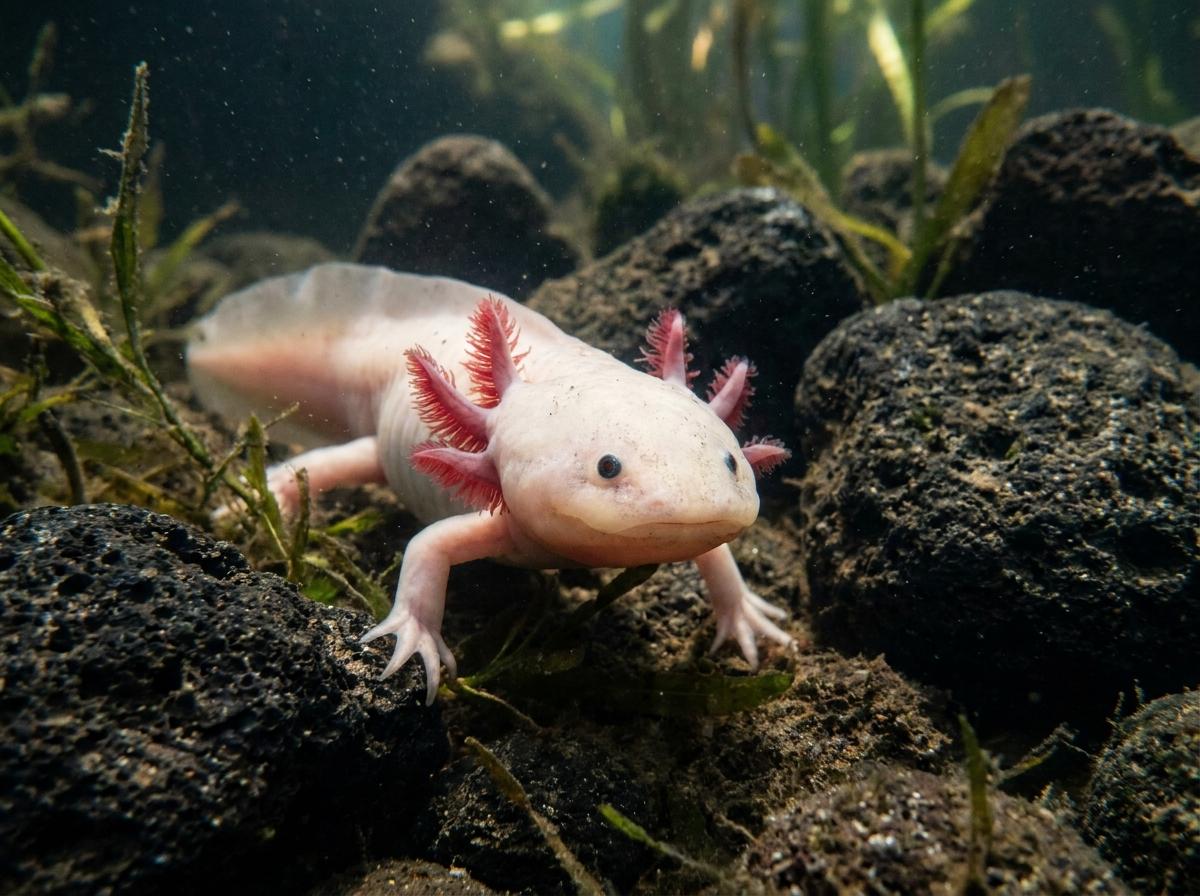
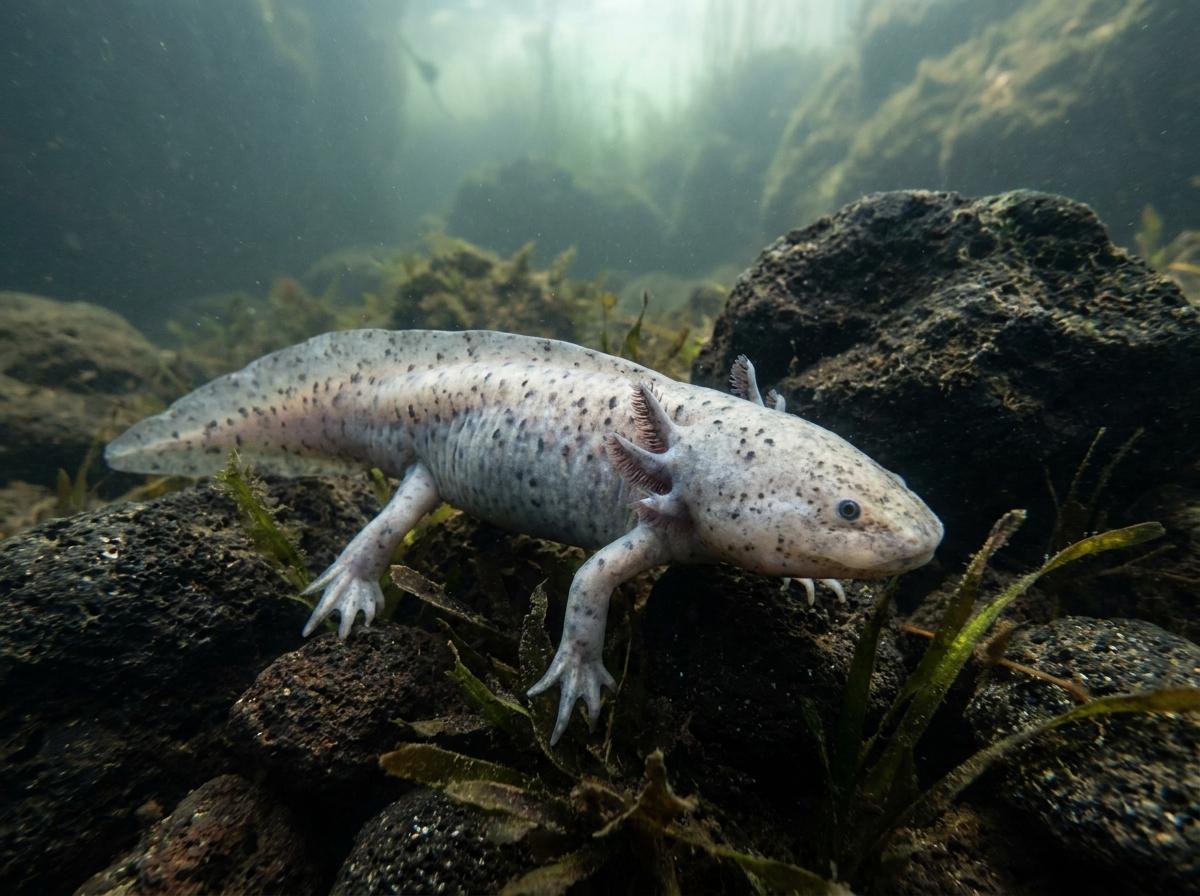
This example provides a large smooth hide, dim conditions, open floor, fine sand, oversized slate, a secured plant, and gentle filtration. The guide discourages substrate because axolotls can ingest small rocks and gravel while feeding. A bare floor or carefully selected fine sand avoids mouth-sized gravel. Any decoration must be smooth, stable, cleanable, and too large to swallow.
Feed a complete, appropriately sized axolotl diet on a schedule matched to age and body condition. Remove waste and uneaten food promptly. Do not add fish as decoration or feeders without veterinary justification, as they can injure gills or introduce pathogens.
Buying and transfer checks
Ask the seller:
- What does GFP mean in this line, and which parent or parents were positive?
- How was the signal checked, with what illumination, at what age, and without prolonged exposure?
- What pigment background does the animal show in neutral light?
- What are today’s temperature, pH, ammonia, nitrite, and nitrate readings?
- What are the animal’s hatch date, diet, feeding response, growth record, and health history?
- Are possession, sale, and transport lawful at both ends of the transfer?
Request an unedited normal-light view as well as any fluorescence image. Confirm that the animal is eating and that the seller can describe a safe transition. Cycle the destination system before transfer, and avoid changing temperature, water chemistry, diet, and lighting all at once.
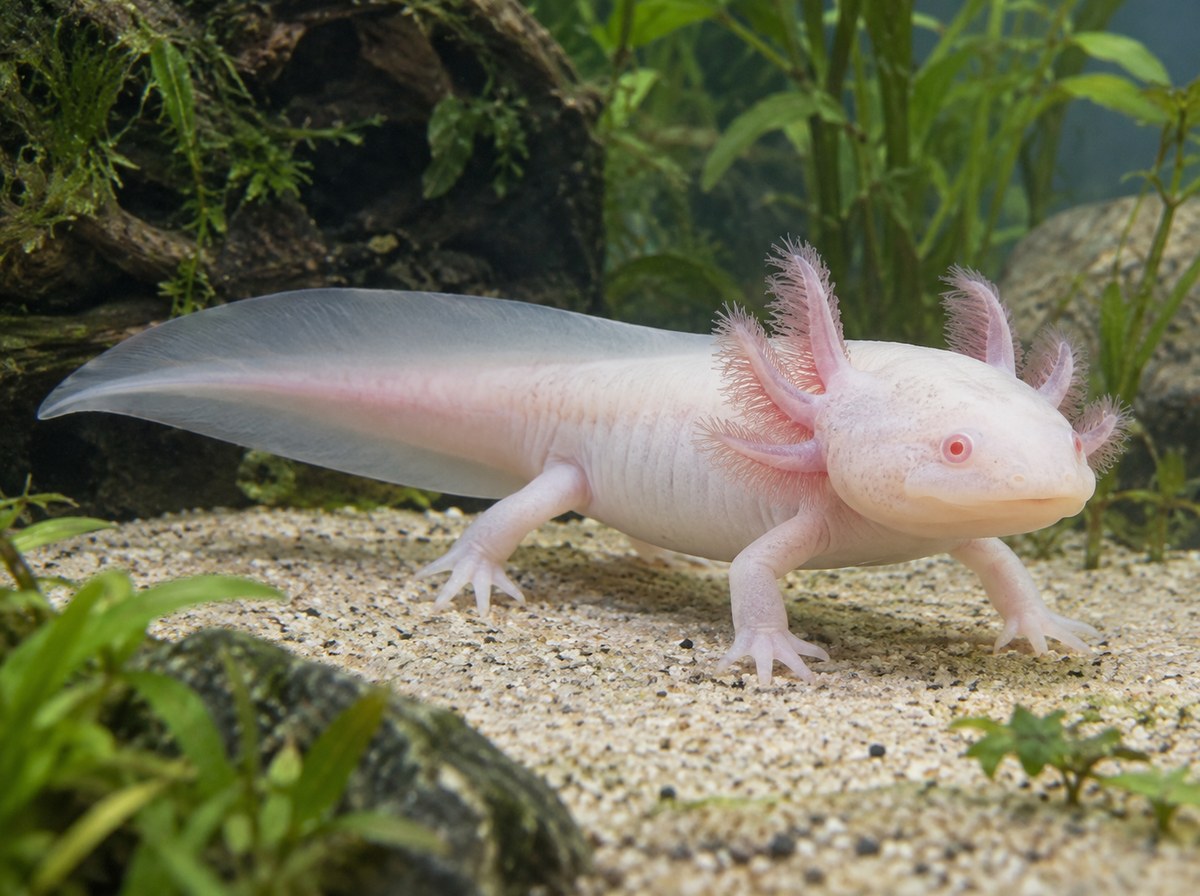
For another appearance-led axolotl topic with a different evidentiary risk, see the piebald axolotl hub. Piebald describes a pigment pattern question; GFP describes a fluorescent reporter. Neither substitutes for an individual health record.
Frequently asked questions
Is a GFP axolotl a separate species?
No. It is an axolotl, Ambystoma mexicanum, carrying a fluorescent reporter construct.
Does a GFP axolotl glow all the time?
No. Fluorescence becomes conspicuous under suitable excitation and viewing conditions. Ordinary-light appearance comes largely from the animal’s pigment background.
Are GFP axolotls healthier?
GFP is not a health benefit. Health depends on the individual, genetics beyond the reporter, water quality, nutrition, infection control, injury prevention, and veterinary care.
Is GFP a pigment morph?
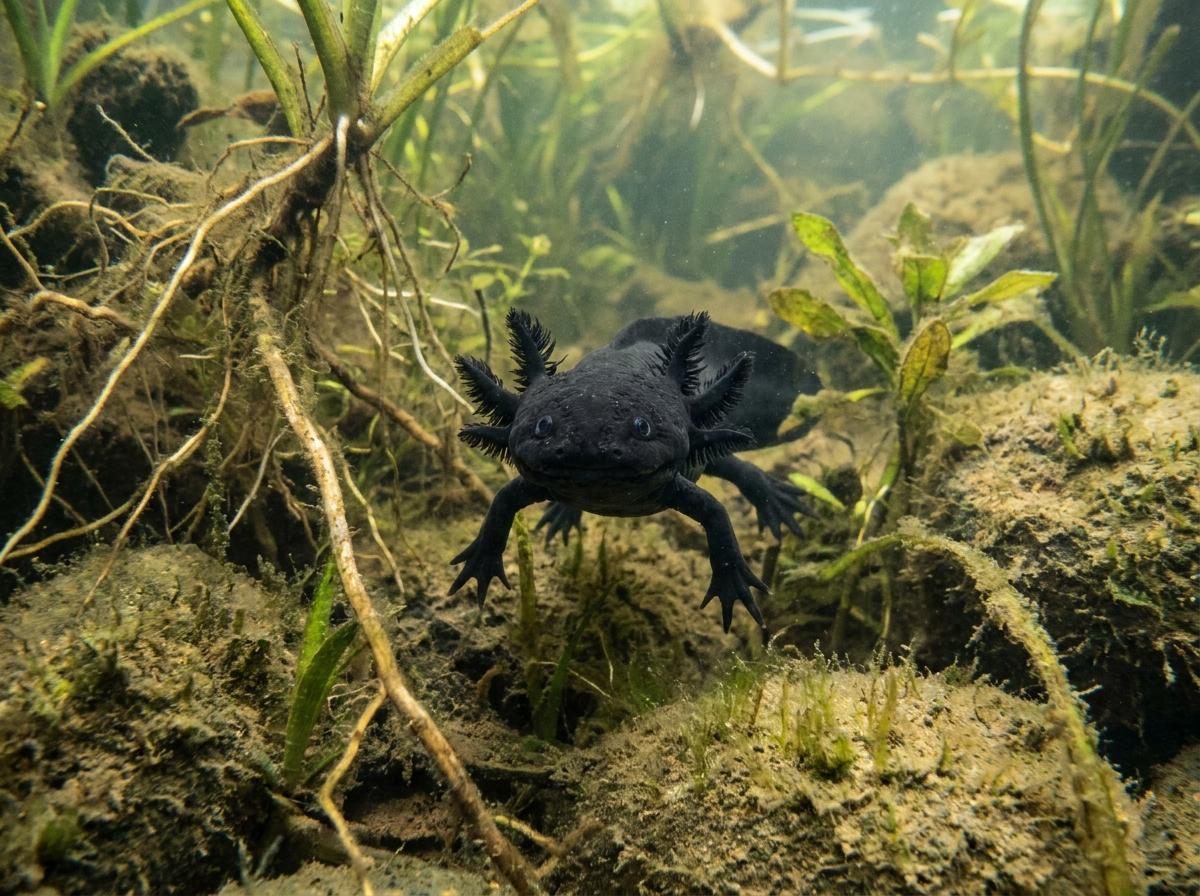
Not by itself. A GFP-positive animal can also have a leucistic, melanoid, albino, wild-type, or other pigment background. Ask the seller to document both pieces separately.
Can GFP be inherited?
The original research line demonstrated germline transmission. The outcome of a particular hobby pairing depends on the parents and line, so request accurate parentage and offspring records instead of relying on a generic ratio.
Do this next on Creatures
Use Creatures to record fluorescence as one trait while keeping care and health evidence central.
Find an animal. Browse the GFP axolotl marketplace filter or save an alert. See saving searches and using your watchlist.
Research a source. Use the breeder directory, then ask for normal-light evidence, GFP lineage, water data, diet, and health history.
Track the individual. Create a GFP axolotl profile, with no account needed to begin. Follow adding an animal to Creatures.
Record care and health. Open the record sheet. Visitors can explore it, and a free account saves entries. Read adding a record and health and medical records.
Represent a breeding or education program. Create an axolotl organization profile, with no account needed to start.