Broad Breasted White
Author: Elliott Garber, DVM · Published
The Broad Breasted White is a fast-growing domestic meat turkey selected for a broad breast and white plumage. It suits a planned seasonal grow-out better than a self-replacing backyard breeding flock. Before ordering poults, decide who will process them, what size bird your household can use, and how you will protect their mobility as they grow. You can record your turkeys’ measured weights on Creatures; the sheet opens for visitors, and a free account saves the record.
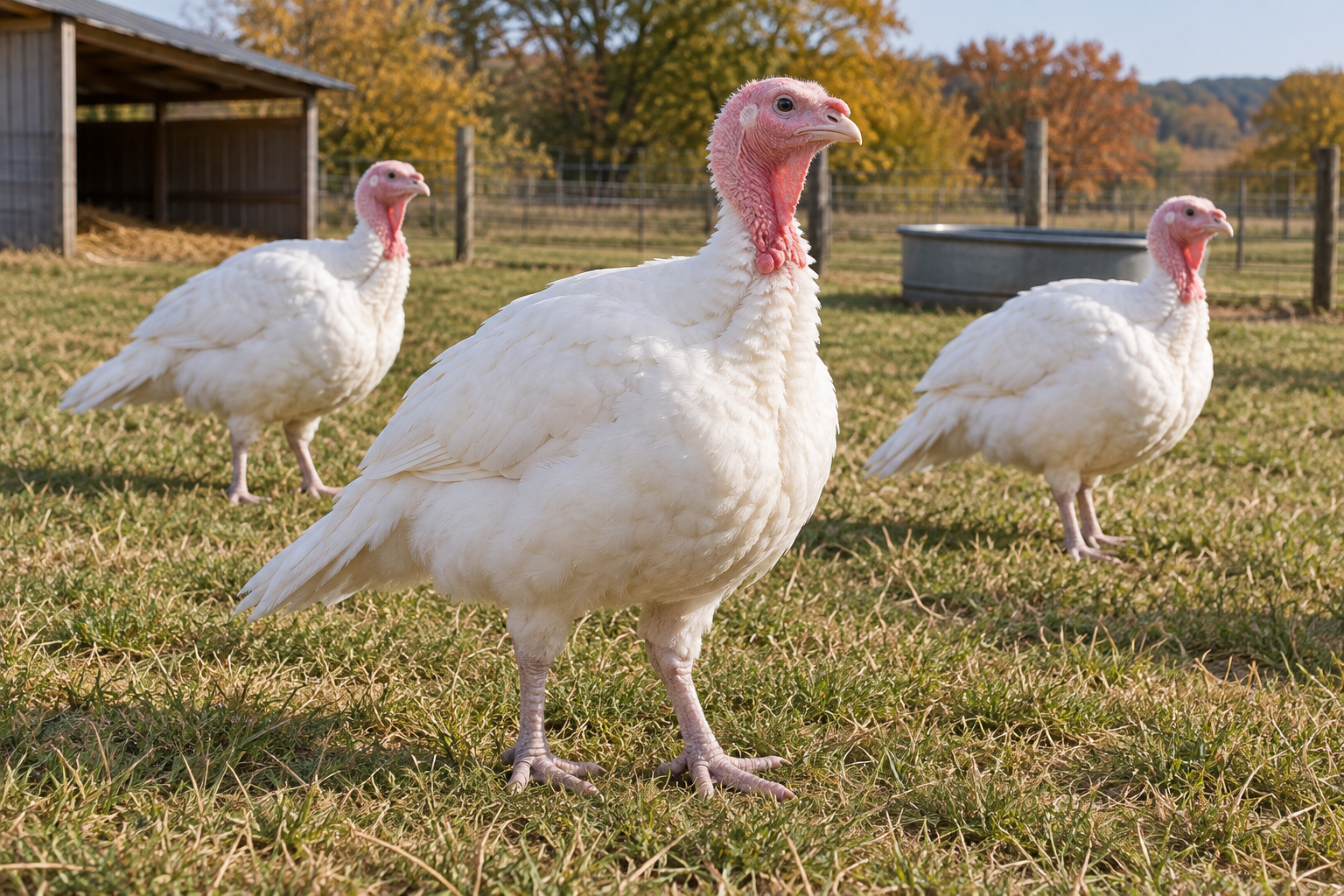
| Type | Commercial domestic turkey variety, also called Large White |
|---|---|
| Main purpose | Meat, especially breast meat |
| Appearance | White feathers and a broad, deep body |
| Growth | Fast; sex, strain, feed and management affect finished size |
| Breeding | Commercial reproduction relies on artificial insemination |
| Management focus | Dry footing, accessible feed and water, ventilation and sound movement |
| Buying priority | A known source, a suitable delivery date and a processing plan |
Browse listings, public profiles, breeders, or add your animal.
What the name means
Broad Breasted White describes a commercial type selected for meat production. It does not identify one universal strain with one guaranteed growth curve. Poultry Extension’s variety guide also uses the name Large White and distinguishes these production birds from heritage varieties.
White feathering avoids the conspicuous dark pinfeathers that can remain after processing Bronze turkeys. Feather color alone does not identify this turkey: White Holland, Beltsville Small White and Midget White turkeys are different choices. A white poult photograph cannot establish the strain or its eventual size. Ask what the supplier actually breeds or distributes.
Use the turkey species hub to compare turkey types before treating every white turkey as interchangeable. A smaller heritage-type bird may fit a natural-mating flock or a smaller table better; a production bird may fit a scheduled meat project. Neither label replaces good care.
Plan Thanksgiving from the processing date
Work backward from a confirmed processing appointment, then match the poult delivery and supplier’s current growth guidance to it. Allow for your actual facilities and experience. Ordering birds first and looking for a processor later can leave you with growing turkeys and no suitable appointment.
Penn State’s small-flock guide gives commercial-bird examples of hens reaching about 18 to 20 pounds live weight at 14 weeks, and toms about 24 to 36 pounds at 17 weeks. Its heritage-versus-production comparison gives roughly 26 to 28 weeks for heritage varieties to reach market weight. These are planning examples for different turkey types, not identical finished weights or a guaranteed schedule for your birds.
Count backward from the processing appointment using the current supplier’s chart for the actual strain and sex. Feed, space and other conditions affect growth. Ask whether each quoted weight is live or processed; the commercial weights above are live weights, which are different from the weight of a prepared carcass.
Before committing, check these practical details:
- Does the processor accept turkeys, and what sizes can its equipment handle?
- Is the delivery date realistic for that appointment and the sex of the birds ordered?
- Do your transport crates, catching plan, freezer and oven fit the expected bird?
- Who checks feed, water, bedding and bird behavior every day, including holidays?
- What is the plan if a bird is injured or cannot comfortably reach the feeder?
These questions also belong in a budget. Include feed, bedding, brooding equipment, secure shelter, transport, veterinary access and processing, rather than comparing only the price of a poult. There is no useful nationwide purchase price to promise here. Obtain a dated quote with shipping, order minimums and sexing terms stated.
Housing that still works as birds get heavier
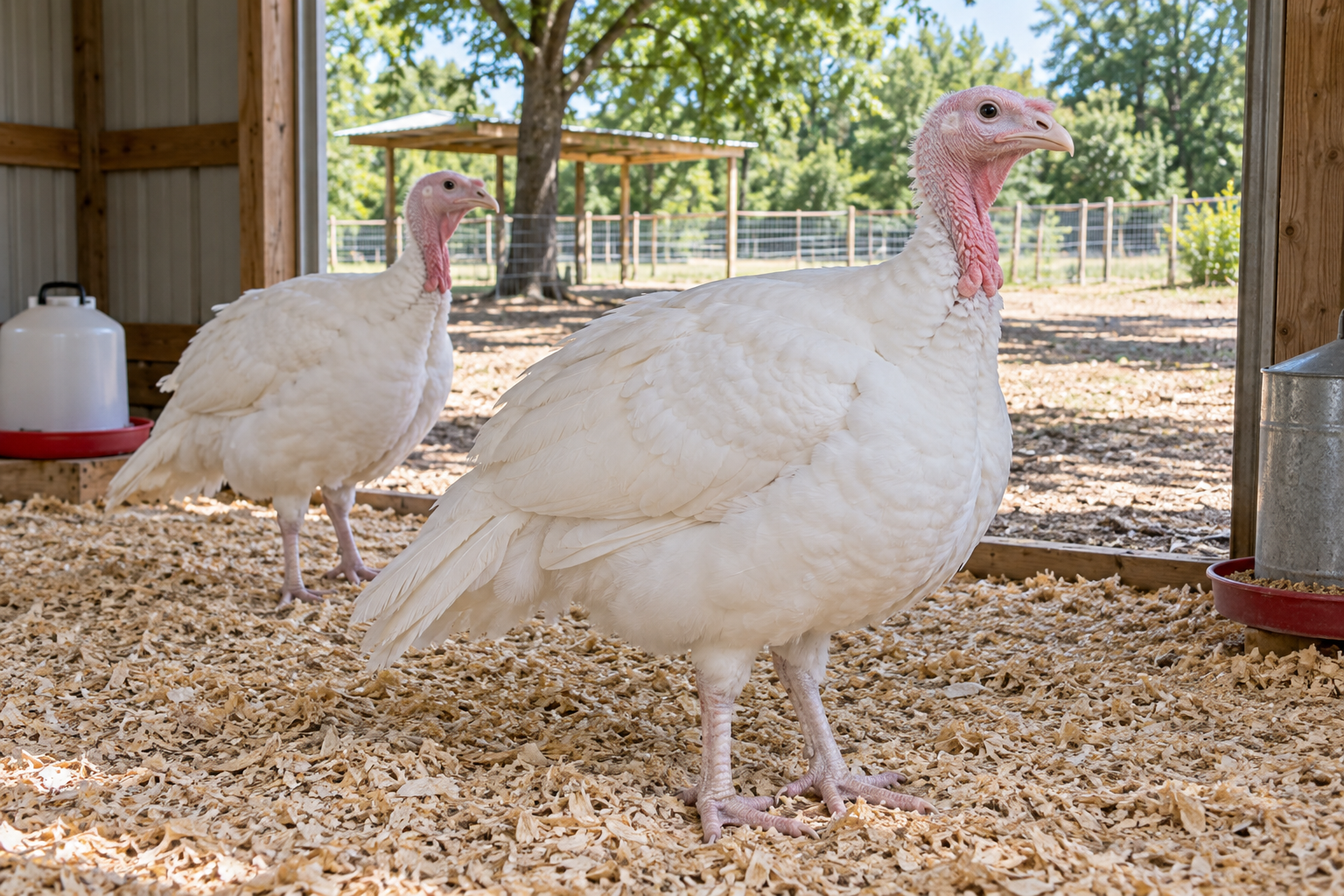
The grow-out setup must remain usable as bodies become heavier. Provide dry absorbent litter, ventilation, shade, protection from predators and enough room to reach feed and water without being crowded out. Replace wet bedding around drinkers promptly. Avoid slippery flooring and equipment that birds must scramble over. Penn State’s small-flock guide specifically warns that slick brooder surfaces can injure poults’ legs and emphasizes dry litter and increasing ventilation as turkeys grow.
Inspect the route from resting places to feeders and drinkers at bird level. A container that was convenient for a small poult may be awkward for a large bird; a narrow entrance can become a bottleneck. Do not build the system around high jumps. Choose low, easy access and a secure resting area with good footing.
Outdoor access can offer room to explore, but grass does not supply predator protection, weather shelter or a complete ration. Move or manage outdoor areas before they become bare, muddy congregation points. If you also keep laying chickens such as ISA Browns, plan separate turkey accommodation rather than assuming one mixed poultry pen meets both species’ needs.
Brooding and feeding
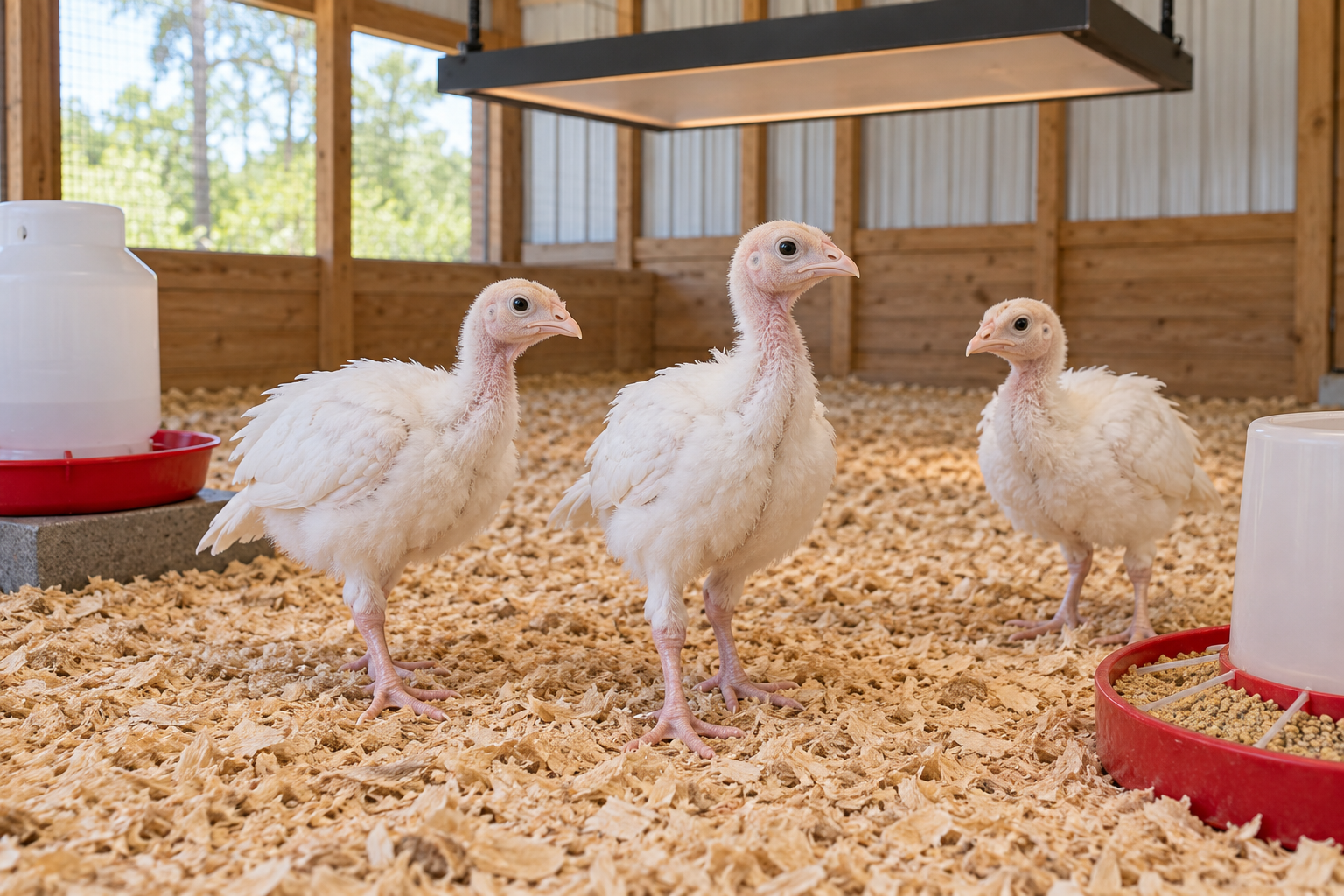
Have the brooder ready before poults arrive. Warmth must be controllable, with room to move away from the heat, and feed and water must be easy to find. Watch the birds’ distribution and behavior as well as your instruments. Crowding together, avoiding the warm area or failing to eat calls for investigation. Keep heat equipment securely installed and away from combustible bedding.
Use a complete feed formulated for the turkey’s stage of growth. A chicken layer ration, scratch grain or pasture alone is not a substitute. Ask the supplier and your poultry adviser for a feeding program suited to the particular strain; do not improvise a restrictive diet to hold birds at a convenient size. Penn State’s small-flock production guide covers brooding, changing feed requirements and the need for continual access to feed and clean water.
Daily observations are more useful than a photograph taken once a week. Note appetite, drinking, activity, footing and any bird falling behind. If you weigh birds, use suitable equipment and calm handling, and record the date and whether the value is an actual scale measurement. A growth chart is a comparison aid, not a diagnosis or a reason to force a bird toward a target.
Mobility, illness and long-term welfare
Fast growth creates a reason to watch movement closely. Penn State’s production-turkey comparison identifies joint and leg problems as a particular management concern in broad-breasted birds. Check that every turkey can stand, walk and reach food and water comfortably. Persistent lameness, labored breathing, inability to rise or a marked change in eating warrants prompt veterinary advice. Do not assume a bird is merely lazy because it is heavy.
Merck Veterinary Manual also describes hemorrhagic vasculopathy, including aortic rupture and sudden death syndrome, as noninfectious cardiovascular disease of rapidly growing male turkeys. Birds can die without obvious warning signs. Arrange veterinary advice and a diagnostic-laboratory examination after unexpected deaths rather than assuming that a heavy bird died of a heart problem; diagnosis depends on history and necropsy findings while excluding infectious causes. Do not improvise feed restriction, drug treatment or mineral dosing from a suspected diagnosis.
There is no responsible breed-wide pet lifespan guarantee to offer. A bird living beyond the planned grow-out still needs care matched to its body condition and mobility. If you want turkeys mainly as long-term companions, discuss that goal with a poultry veterinarian and compare other turkey types before buying. A seasonal production label is not permission to overlook discomfort.
Keep turkeys separate from chickens. Penn State’s flock-management guidance flags disease risks, including histomoniasis or blackhead, when turkeys share chickens’ ground or environment. A divider in one dirty run does not create a fresh site. Ask a local extension specialist or poultry veterinarian about the history of your ground, local disease risks, vaccination planning and biosecurity before birds arrive.
Can you breed Broad Breasted Whites at home?
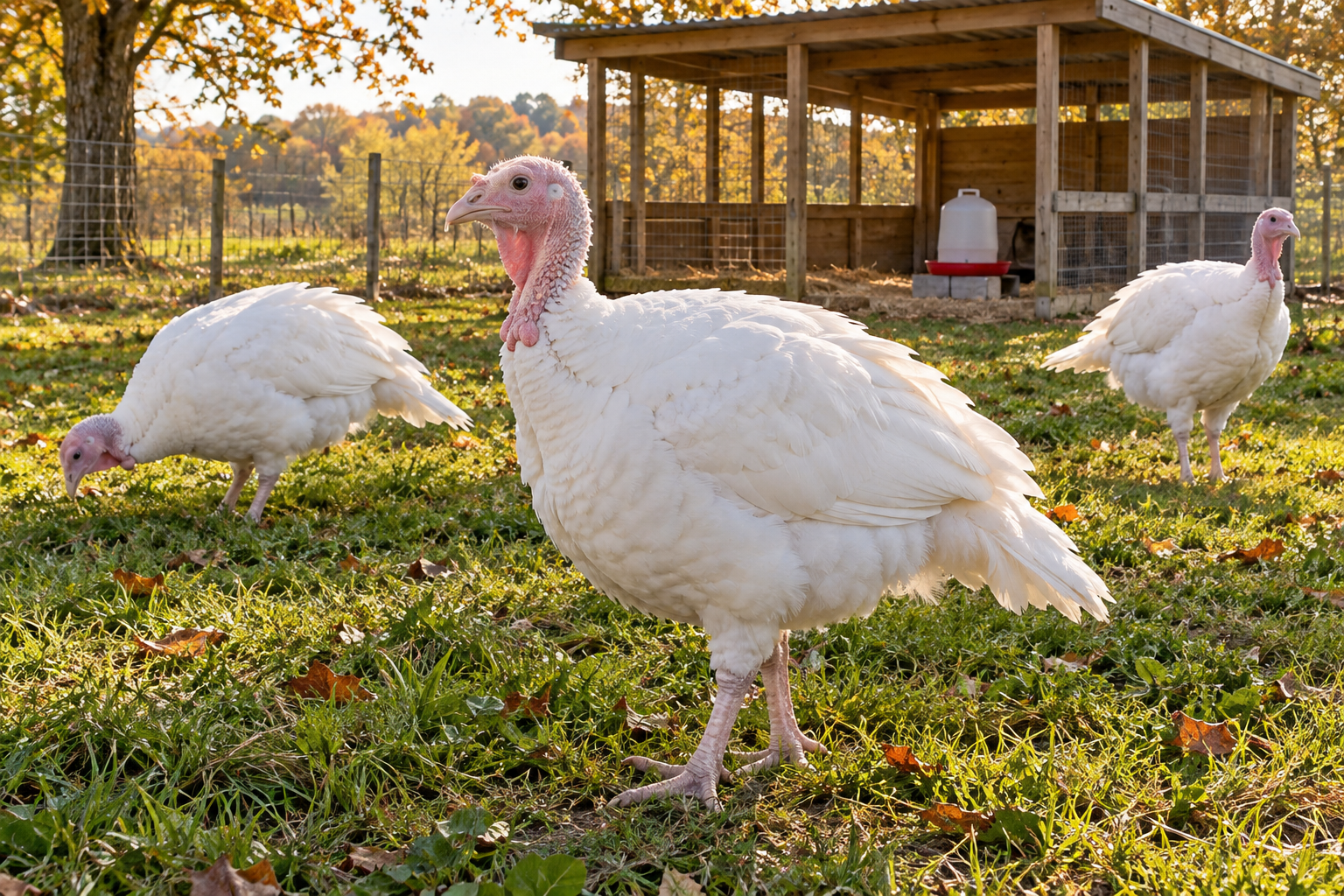
Penn State notes that broad-breasted production turkeys cannot mate naturally; breeding relies on artificial insemination. Do not buy a hen and tom expecting a self-replacing natural-mating flock. The same comparison notes that artificial insemination may be impractical for small operations. This guide does not give an insemination procedure. Breeding management requires trained help and attention to the birds’ welfare.
Laying eggs and producing fertile eggs are separate questions. Even a hen that lays does not establish that a proposed mating is suitable or fertile. For a self-replacing flock, investigate a natural-mating turkey variety and the breeder’s own fertility and hatch records.
For a seasonal group, individual identities can still help you follow weight, illness or a treatment directed by your veterinarian. The turkey name generator can supply names if you use individual profiles. Names and records organize observations; they do not certify health or breeding suitability.
Questions to ask before buying
Ask for the exact commercial type or strain, hatch date, sexing basis, vaccination history and source documentation. Penn State recommends sourcing poults from hatcheries participating in the National Poultry Improvement Plan (NPIP). Ask for the source’s current participation documentation and which diseases and tests it covers. Do not treat a program label as a guarantee against every disease. Ask about current growth guidance, feed recommendations, delivery arrangements and the procedure for reporting an arrival problem.
The live poultry breeder buying guide offers a wider checklist for evaluating a source. It covers several poultry species; use turkey-specific questions about grow-out, size and processing here. Current listings and directory profiles are leads to investigate, not proof that suitable birds are in stock.
Frequently asked questions
Is a Broad Breasted White the same as a Midget White?
No. White feathers do not make them the same turkey. Broad Breasted Whites are commercial meat birds. Read the Midget White profile and confirm the actual stock with its breeder if you want a smaller turkey.
Can they live with chickens?
Plan separate housing and ground, with local veterinary or extension advice on disease prevention. Turkeys can be seriously affected by diseases associated with chicken environments. Shared poultry ownership does not mean shared housing is safe.
How big will my turkey get?
Sex, strain, age, feed and conditions all matter. Obtain the current strain guidance and measure your birds rather than treating an internet maximum as your expected outcome. Clarify whether any quoted weight is live or processed.
Are they a good choice for Thanksgiving?
They can suit a planned seasonal meat project. The useful starting point is a processing appointment and realistic facilities, followed by a compatible poult date. Do not buy late and expect a calendar to overcome the growing period.
Can I keep one as a pet?
Plan companionship and lifelong care before purchase, and discuss the production type’s size and mobility concerns with a poultry veterinarian. There is no guarantee of an easy long-term pet simply because a young bird is friendly.
Do this next on Creatures
- Keep your birds’ details together. Start a turkey profile. No account is needed to start; a free account keeps it. See adding an animal.
- Keep observations. Add a weight or health note. Opens for visitors; a free account saves it. Read adding a record.
- Wait for a suitable listing. Save a Broad Breasted White search for future matching listings. This does not establish that stock is available. See saved searches and your watchlist.
- Check current offers. Browse the filtered turkey marketplace, then ask the source the questions above.
- Research sources. Browse breeder and farm profiles. A directory profile is information to investigate, not a stock or endorsement guarantee.
- Describe your operation. Start an organization profile. No account is needed to start. Read creating an organization and adding your team for the workflow.