Saxon Fairy Swallow
Author: Elliott Garber, DVM · Published
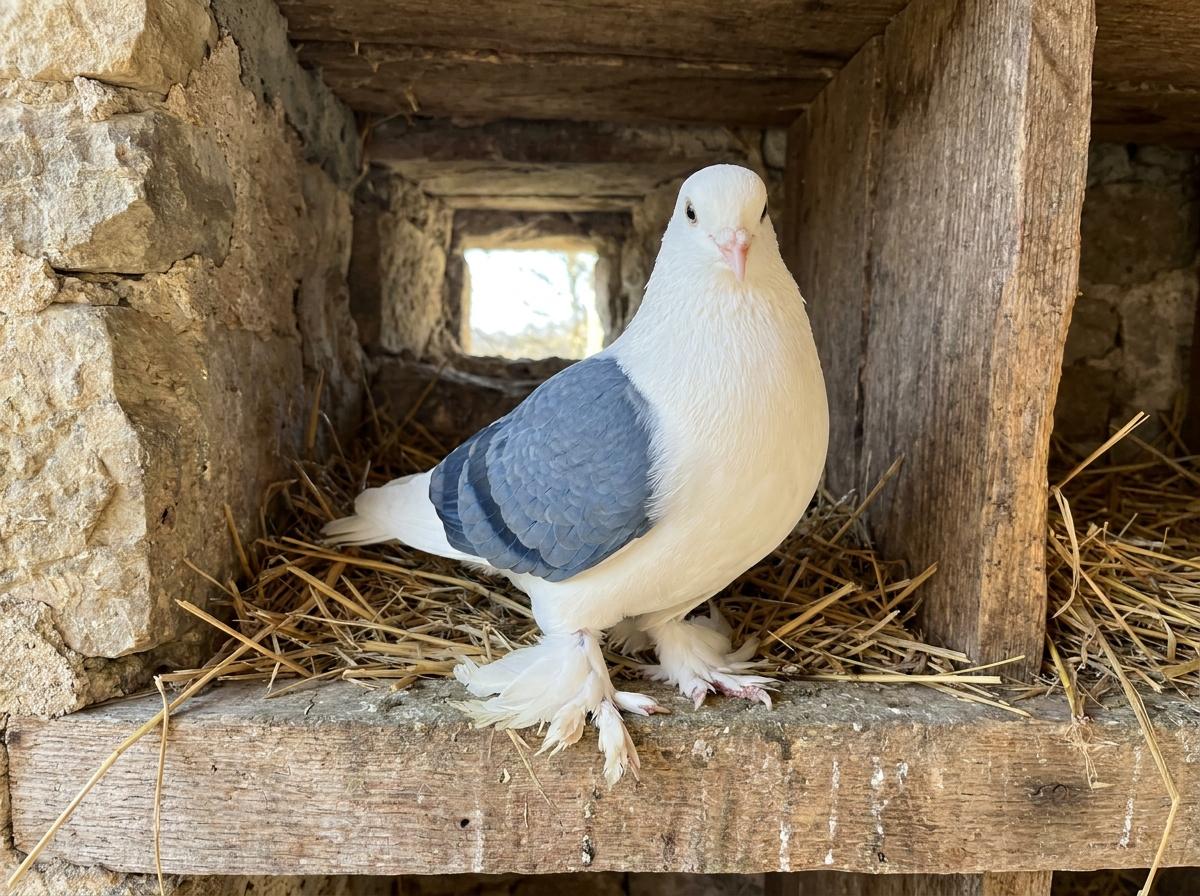
The Saxon Fairy Swallow is a fancy pigeon known for its colored wings, feathered feet and small colored forehead spot. For this page, Fairy Swallow means the crested wing pigeon form in the United Swallow Club standard. It is not a wild swallow, and its name should not erase the distinctions between the related Saxon and Bohemian forms.
The pigeon hub gives the broader context. If you are choosing a bird from photographs, start with three areas: the head marking, the wing pattern and the foot feathers. A dramatic crest by itself does not settle the name.
| Reference | United Swallow Club, crested wing pigeon form |
|---|---|
| Head | Forehead spot and shell crest |
| Body | White ground with colored wings and muffs |
| Main comparison | Fullhead Saxon Swallow and Bohemian Tiger Swallow |
| Care focus | Dry surfaces and close attention to foot feathers |

AI-generated illustration of the black Fairy Swallow form, not a photograph or a show-standard certification.
Browse listings, public profiles, breeders, or add your animal.
Similar names and useful distinctions
The United Swallow Club’s illustrated standard places Fairy Swallow beside the related Fullhead, Silesian and Bohemian forms. It labels Fairy Swallow as a crested wing pigeon and Fullhead as Saxon Swallow. That gives a clearer reference than treating every online use of “fairy swallow” as a synonym.
- Saxon Fairy Swallow: Forehead spot, shell crest and colored wing areas.
- Saxon Swallow: Fullhead cap rather than a small forehead spot.
- Bohemian Tiger Swallow: Tiger pattern with alternating colored and white wing and muff feathers.
Creatures also lists Bohemian Fairy Swallow separately. Confirm that bird’s Czech breed name and applicable standard rather than borrowing the Tiger description for it.
The spot should stay clear of the eye. The Bohemian Tiger pattern concerns individual feather alternation, not simply a mottled-looking wing. For an exhibition purchase, ask the breeder to identify the exact name and variety used by the receiving club. The comparison here follows the United Swallow Club rather than claiming all countries use identical terminology.

AI-generated illustration. A head detail helps explain the name; it does not replace a pedigree or an exhibition assessment.
What the foot feathers change in everyday care
The large feathered feet are usually called muffs. They make the condition of the floor and resting surfaces especially relevant. Before bringing a bird home, look at where it will walk, land and rest. Plan dry, clean surfaces and enough space to turn without catching or repeatedly scraping those feathers. Avoid damp litter and sharp projections.
This is a practical implication of the plumage, not a claim that all birds with muffs have a particular disease. Check the feet beneath the feathers as part of ordinary handling, and ask a veterinarian about swelling, injury, persistent lameness or damaged growing feathers. Do not pull feathers to tidy the outline or make a bird resemble a different named variety.
A secure loft also needs room for normal movement, sheltered resting places and compatible pigeon company. The University of Minnesota’s poultry biosecurity guidance is a useful starting point for managing introductions and equipment. Arrange the health plan before the first bird arrives, not at the point when you need to combine unfamiliar birds.

AI-generated illustration of muffs on a clean surface. This close crop is not a complete housing example.
Feeding and choosing healthy birds
Ask to see the bird eating its established ration. Record the feed and the daily routine when it changes homes so that a move does not also become an unexplained diet experiment. The Merck Veterinary Manual describes formulated pellets among the feeding options for seed-eating pigeons; an avian veterinarian can help assess the whole ration.
For a youngster, confirm that it is independently feeding. For breeding birds, ask for the breeding record as well as attractive photographs. Keep ring identification, hatch year, parentage if known and any previous health information together. That makes later comparisons about fertility or feather quality more useful than recollections based on color.
What should a Saxon Fairy Swallow cost?
Request a current quote for the exact bird and country. Transport, age, documentation, color variety and an individual breeder’s assessment of show potential can make superficially similar offers difficult to compare. This guide does not turn scattered advertisements into an average market price.
Ask whether a pair is sex-confirmed and bonded, whether there are known exhibition faults and whether the photographs show the current feather condition. A damaged feather is a different issue from an unidentified parent or a recurring mobility problem. Let the seller explain each separately.
If the purpose is showing, obtain the current club standard before buying. If the purpose is keeping pigeons for pleasure, prioritize sound movement, independent feeding and a suitable living arrangement over the last detail of a spot marking.
Frequently asked questions
Is a Saxon Fairy Swallow a type of swallow?
It is a domestic pigeon. “Swallow” is part of the fancy-pigeon name.
Is it the same as a Saxon Swallow?
Not in the standard used here. The Fairy form has a forehead spot; the Fullhead Saxon Swallow has a cap. Confirm the local name before entering a show or buying breeding stock.
Are all black-and-white patterned swallows Bohemian?
No. The Bohemian Tiger description is more specific than the presence of two colors. Ask for photographs of the wing pattern and the relevant standard.
Do this next on Creatures
Use the pigeon guide to compare related breeds and plan the questions that matter for your own birds.