
Goose
Anser anser domesticus
Author: Elliott Garber, DVM · Published
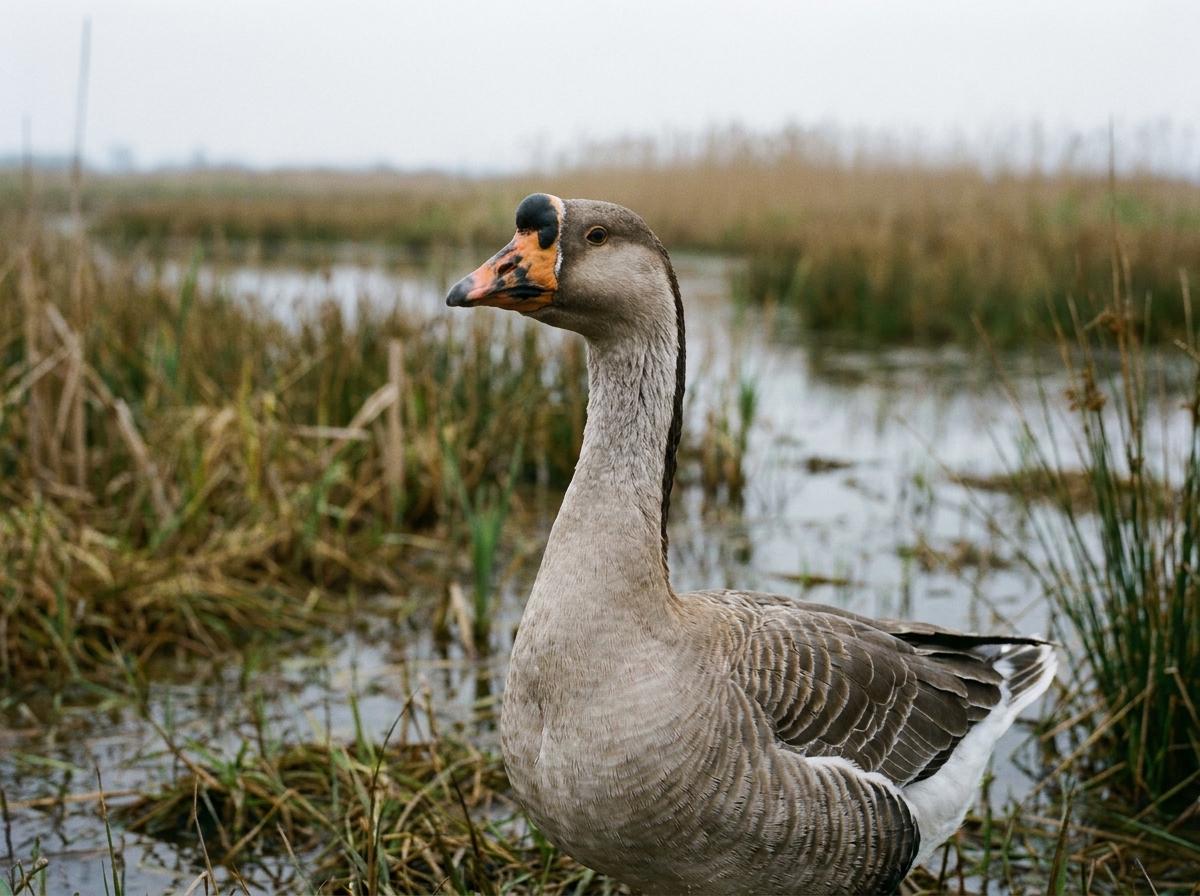
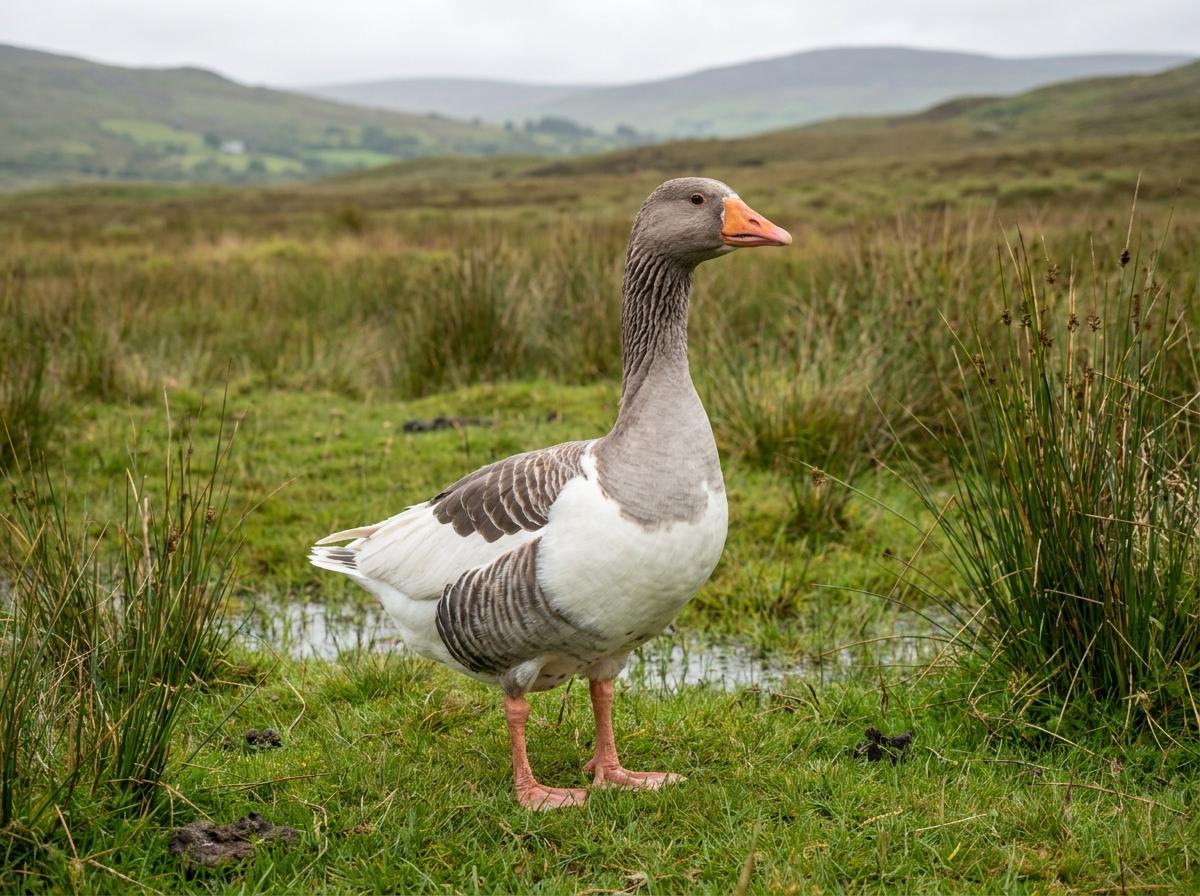
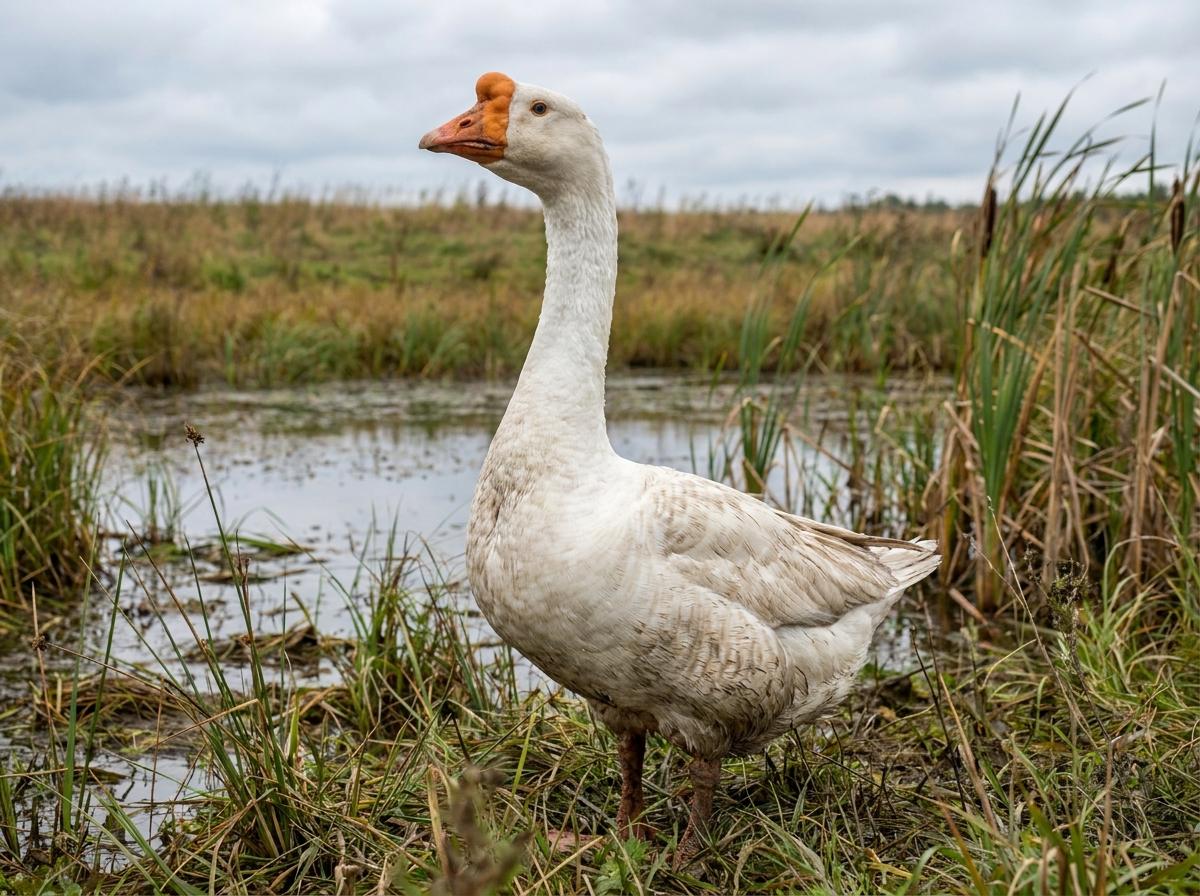
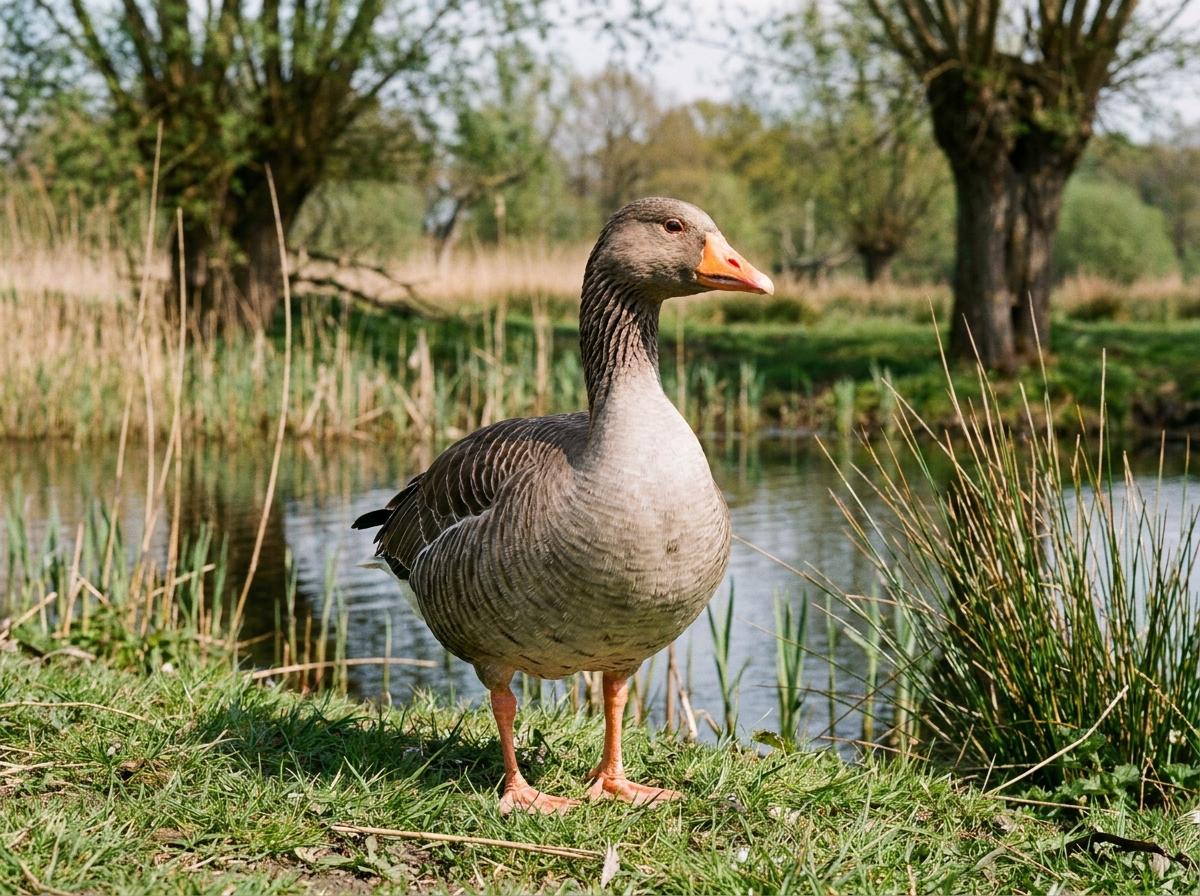
Geese are big, long-lived grazing waterfowl, and every domestic breed descends from the greylag goose of Europe, the swan goose of eastern Asia, or a mix of the two. The American Poultry Association recognizes 12 goose breeds and sorts them by weight into heavy, medium and light classes, from Chinese geese of about 10 to 12 pounds to Toulouse ganders of 20 pounds or more, and life spans of 15 to 20 years are common. Goose listings are scarce on the Creatures marketplace, so the quickest way to start is to search goose breeders and farms in the Creatures directory or set a free goose listing alert and let the right birds come to you.
Choosing a goose starts with the breed, so the heavy, medium and light breeds come first here, followed by the rare and regional ones; after them come cost, lifespan, housing and water, feed, health, temperament, breeding, buying and records. The free goose name generator and the pedigree chart maker, which covers geese, appear where they help, and each breed named below links to its own Creatures page.

| Species | Domestic goose, descended from the greylag (Anser anser) and the swan goose (Anser cygnoides) |
|---|---|
| Main types | Heavy, medium and light breeds (12 breeds recognized by the American Poultry Association) |
| Adult size | About 6 to 12 lb for small light breeds such as the Shetland; 20 lb or more for heavy Toulouse, Embden and African ganders, and some Dewlap Toulouse top 30 lb |
| Lifespan | 15 to 20 years is common; the oldest goose on record lived 49 years and 8 months |
| Diet | Grass first, plus waterfowl feed when grazing is short, insoluble grit and clean water |
| Social needs | Flock birds: keep at least two, and three or more is better |
| Eggs and hatching | Seasonal layers; most breeds lay 30 to 50 eggs a year (Chinese up to about 100), and eggs hatch in about 30 days |
| Price (2026) | About $30 for a day-old gosling of a common breed at a major US hatchery; $150 or more for rare exhibition lines |
| Conservation | 11 goose breeds are on The Livestock Conservancy’s 2026 Conservation Priority List |
Browse listings, public profiles, breeders, or add your animal.
Goose breeds and types
There are far more goose breeds than most keepers ever meet. When the UN Food and Agriculture Organization surveyed the world’s domestic geese for its goose production manual, it identified 96 breeds or genetic groups and said there were probably more, and China alone has more than 20 breeds descended from the swan goose. The A to Z list lower on this page holds well over a hundred goose breed names, each with its own Creatures page. For choosing a bird in North America, though, three things matter more than the full list: which wild ancestor a breed comes from, its weight class, and how rare it is.
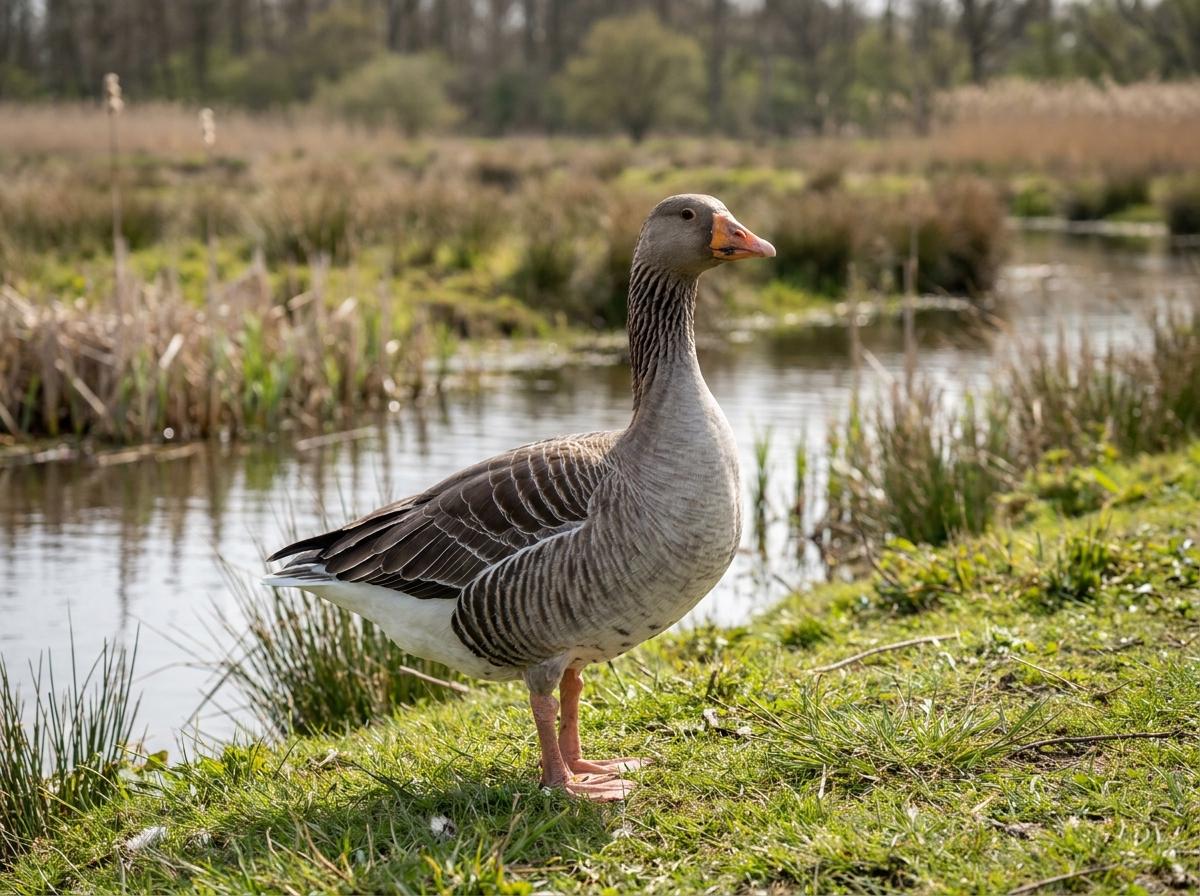
Two ancestors. Most breeds kept in North America and Europe, including the Embden, Toulouse, Pilgrim, American Buff, Pomeranian, Sebastopol and Tufted Roman, descend from the greylag, while the Chinese and other Asian breeds come from the swan goose, as the National Research Council’s survey of small livestock explains. The two lines cross freely, and they have been mixing for a long time: a 2020 genome study of wild and domestic geese found considerable Chinese ancestry in many modern European breeds, and showed that the African goose, long assumed to be pure swan goose, is actually a cross of European and Chinese geese. The knob at the base of the bill on Chinese and African geese is the visible sign of that swan-goose blood.
Weight classes. The American Poultry Association’s list of accepted breeds and varieties puts the African, Embden and Toulouse in the heavy class; the American Buff, Pilgrim, Saddleback Pomeranian, Sebastopol and Steinbacher in the medium class; and the Chinese, Tufted Roman, Egyptian and Canada in the light class. The class matters for more than shows. Extension poultry specialists note that a heavy-breed gander mates with only two or three geese while a light-breed gander can cover as many as six, and that upbringing plays a major role in temperament whatever the breed. British standards class some breeds differently (the British Waterfowl Association lists the American Buff with its heavy geese and the Pilgrim, Sebastopol and Steinbacher with its light ones), so ask which standard a seller means.
Rarity. Eleven goose breeds are on The Livestock Conservancy’s 2026 Conservation Priority List. The Pomeranian, Roman, Shetland and Steinbacher are listed as critical, which for poultry means fewer than 500 birds in the United States; the Cotton Patch, Pilgrim and Sebastopol are threatened; and the American Buff, African, Chinese and the Dewlap type of Toulouse are on watch. Buying, breeding and recording these birds is how small flocks keep them going.
| Heavy (APA) | African, Embden, Toulouse |
|---|---|
| Medium (APA) | American Buff, Pilgrim, Saddleback Pomeranian, Sebastopol, Steinbacher |
| Light (APA) | Chinese, Tufted Roman, plus the wild Egyptian and Canada |
| Heritage, no APA standard | Cotton Patch, Shetland |
| Autosexing (sexed by color) | Pilgrim, Cotton Patch, Shetland, West of England |
| Critical on the 2026 CPL | Pomeranian, Roman, Shetland, Steinbacher |
Heavy geese: Toulouse, Embden and African
Heavy geese are the big roasting birds and the gentle giants of the barnyard. The British Waterfowl Association notes that ganders of these breeds weigh well over 10 kg (22 pounds) and that they need to be able to mate on water to prevent injury, so plan a pool if you want to breed them.
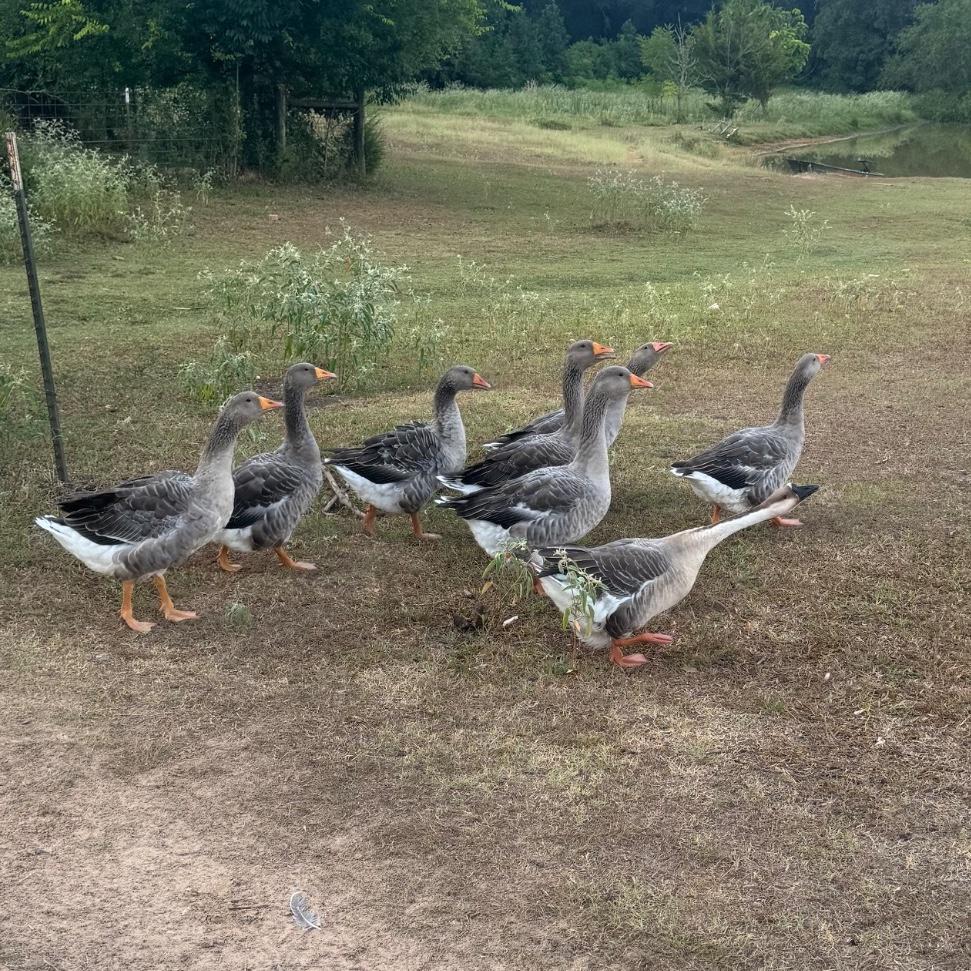
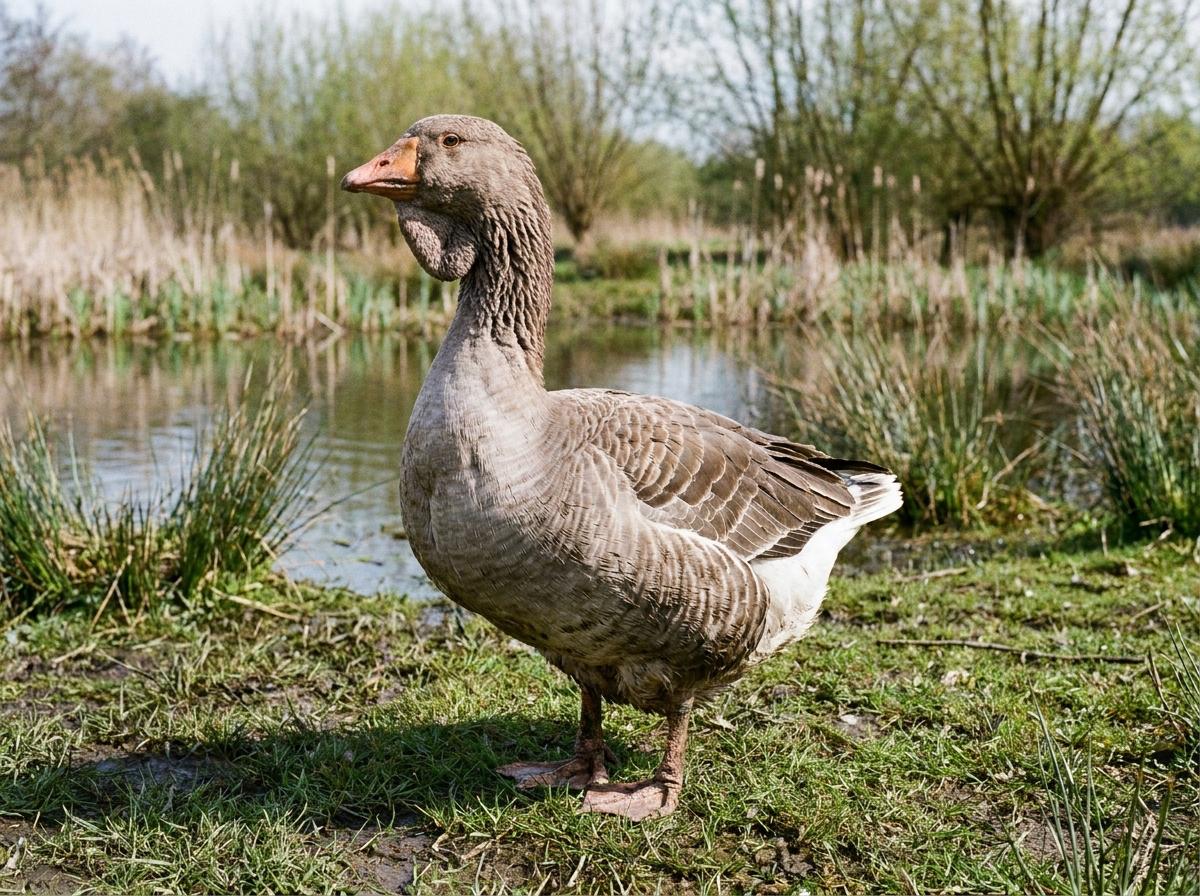
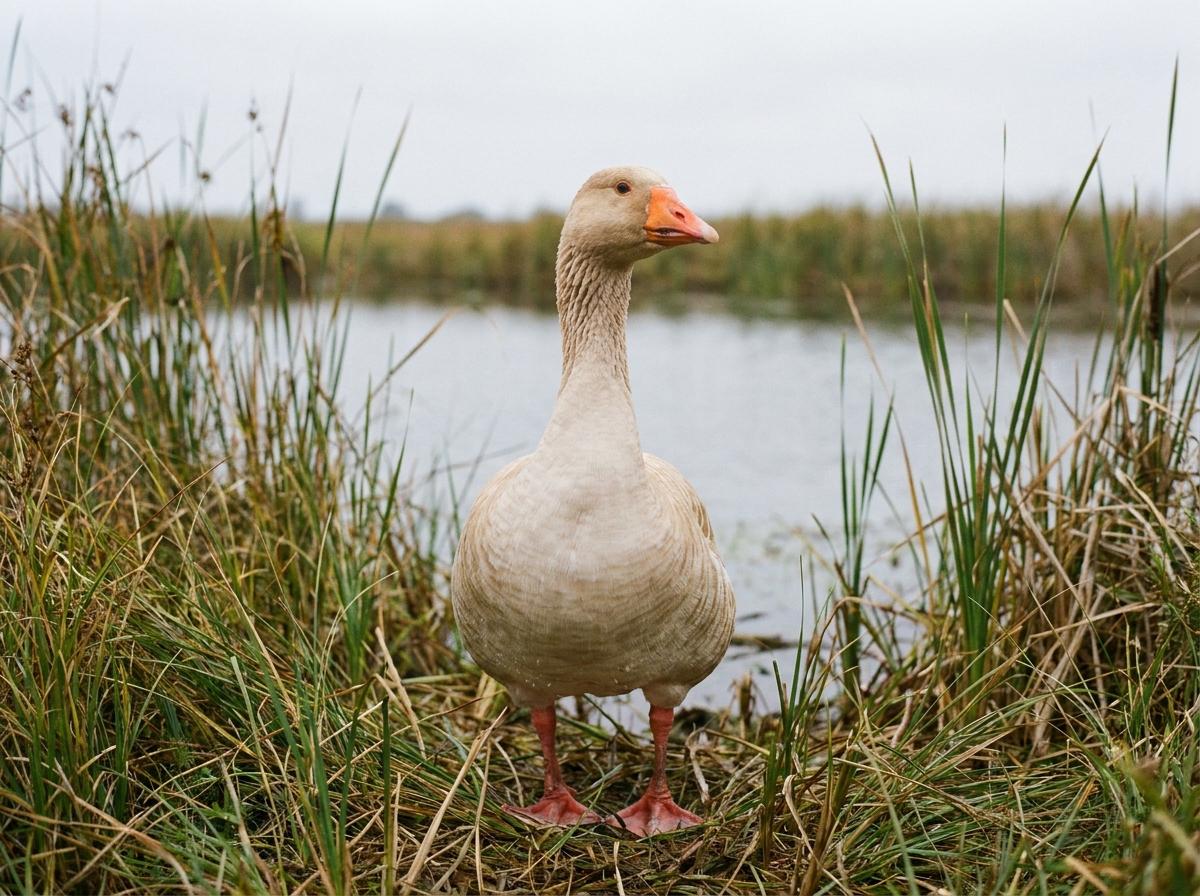
The Toulouse is the classic gray farm goose, named for the city in southwestern France and descended from the greylag. The Livestock Conservancy separates two types. The Production Toulouse, at 18 to 20 pounds and 25 to 40 eggs a year, is the gray goose most farms and homesteads actually keep, and it is not a conservation priority. The Dewlap Toulouse is a massive exhibition and fattening type with a heavy fold of skin hanging under the bill: ganders reach 20 to 26 pounds and some top 30, and the Conservancy’s Toulouse profile calls it probably the most challenging domestic goose to raise, because it does not breed reliably until two or three years old and its fertility is often low. Both types are docile homebodies. The APA recognizes gray and buff varieties.
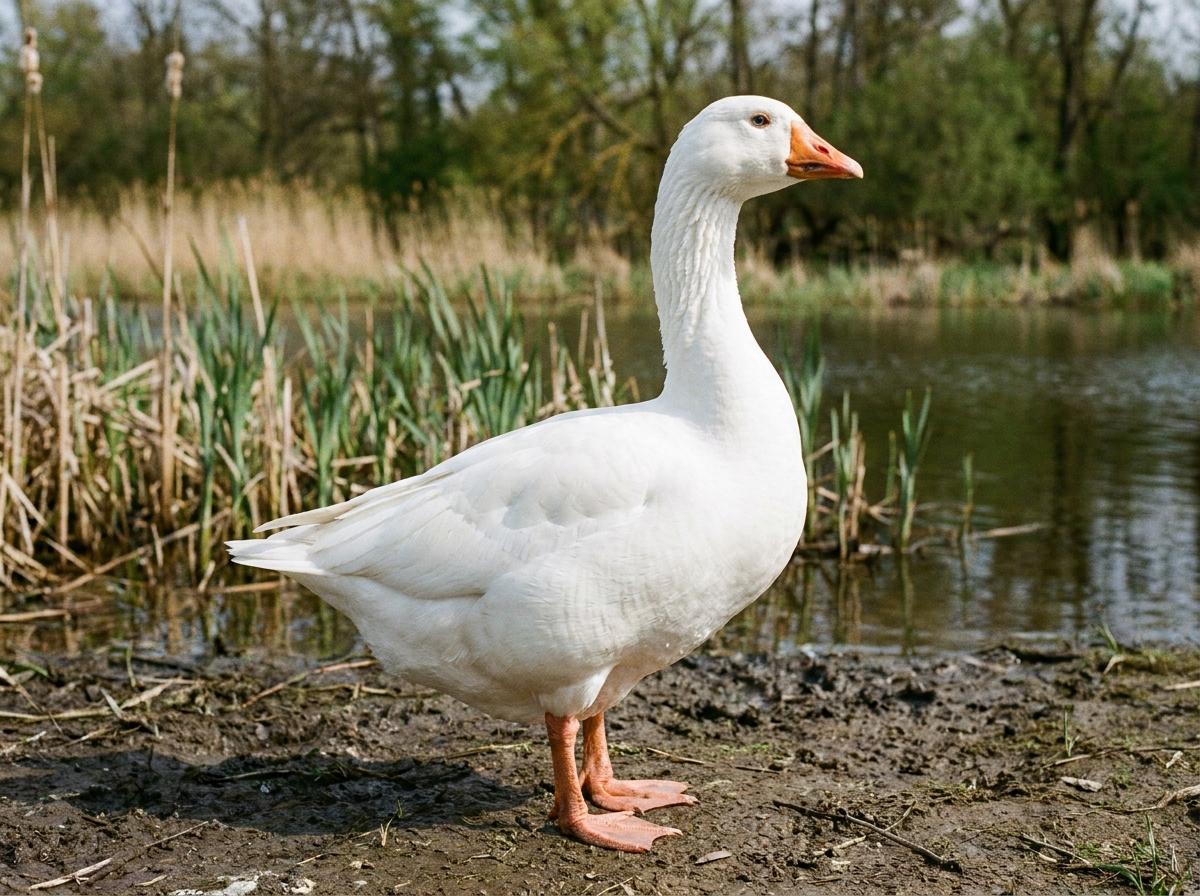
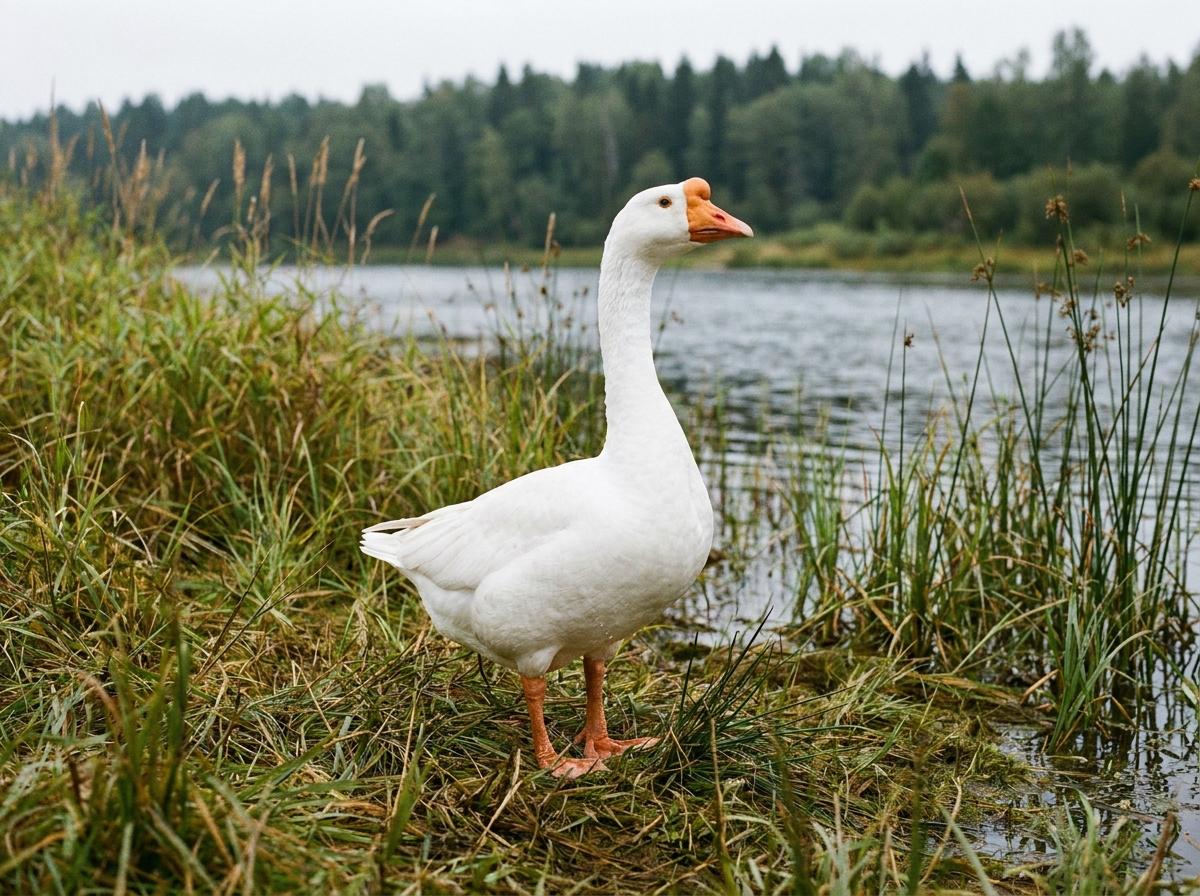
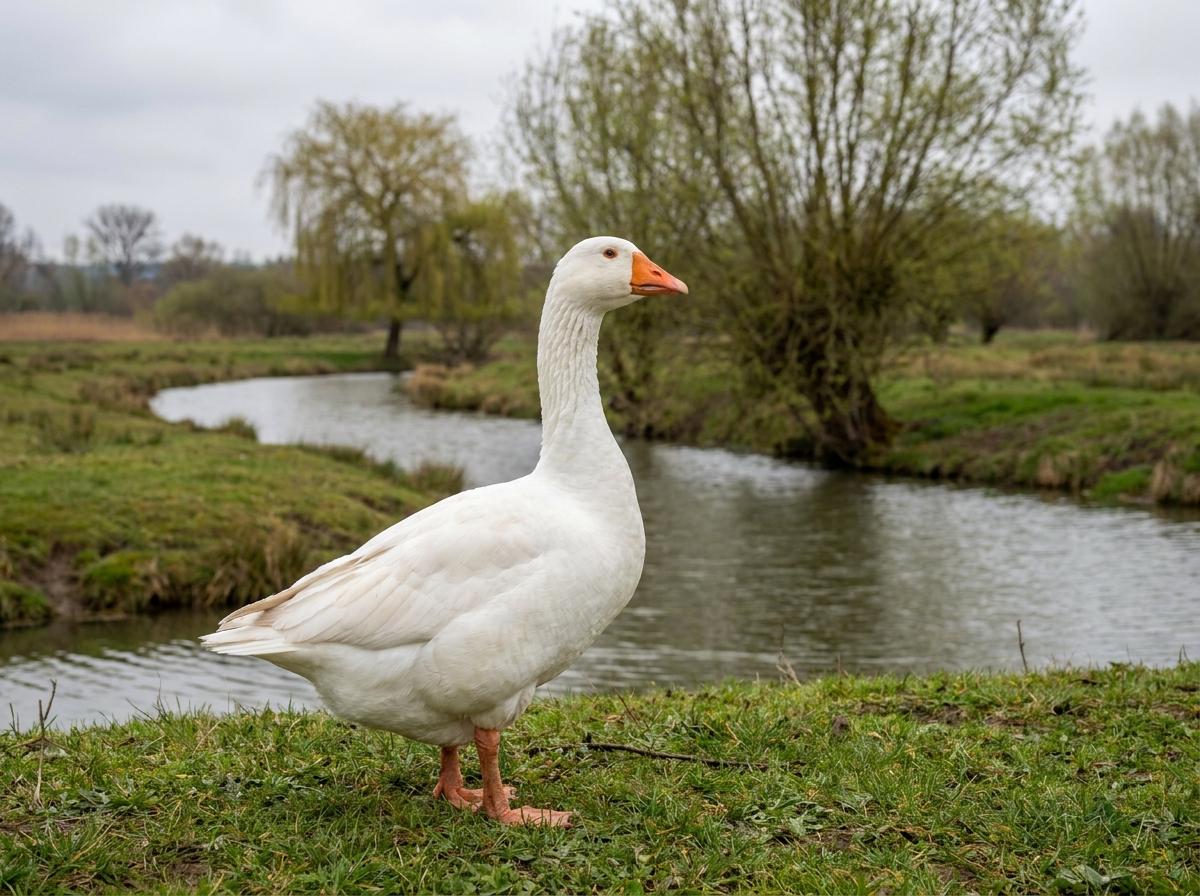
The Embden is the large white goose, popular in Europe and North America for generations. FAO’s manual gives ganders up to about 22 pounds (10 kg) and geese up to about 20, with around 40 eggs a year, and extension specialists call it the most popular heavy breed and the fastest growing of the domestic geese. Purebred Embdens have blue eyes, and most strains can be sexed as goslings because the males’ gray down is lighter than the females’. The catch is temperament: some Embdens bully gentler breeds, so watch them in a mixed flock. Commercial hybrids that look like Embdens, often from an Embden gander crossed with a Toulouse goose, lack the blue eyes.
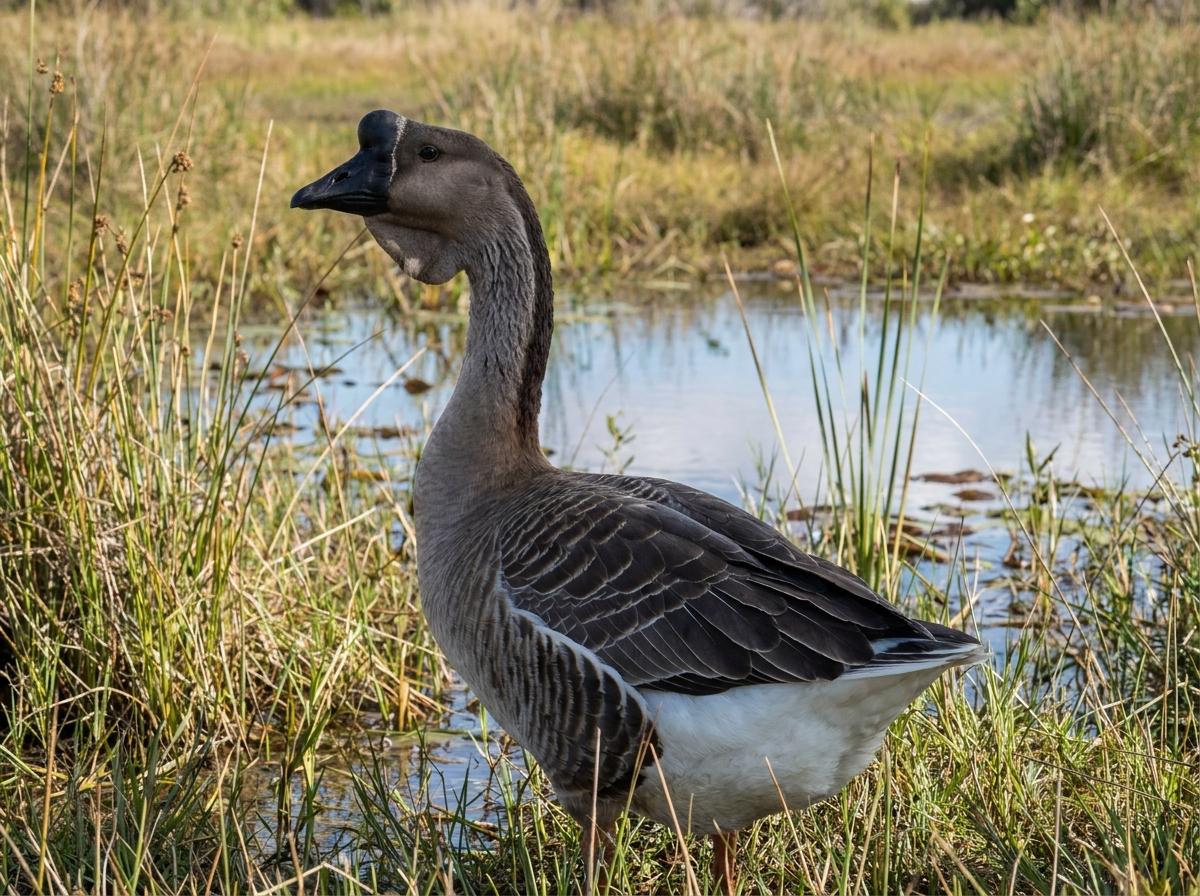
The African is the heavy goose with the knob and a crescent-shaped dewlap, and its name does not reflect where it came from. The Livestock Conservancy reports mature ganders of 22 pounds and geese of 18, 20 to 40 extra-large eggs a year that hatch in 30 to 32 days, and young ganders reaching 16 to 18 pounds by 15 to 18 weeks. Africans are intelligent, inquisitive and a good choice for a beginner, but they are loud, and their knobs need shelter in freezing weather to avoid frostbite.
Medium geese: Sebastopol, Pilgrim, American Buff, Pomeranian and Steinbacher
Medium geese are the all-round homestead birds: big enough for the table, small enough to handle, and generally calmer than the heavy breeds. This is also where several of the most distinctive breeds in North America sit, from the curly Sebastopol to the color-sexed Pilgrim.

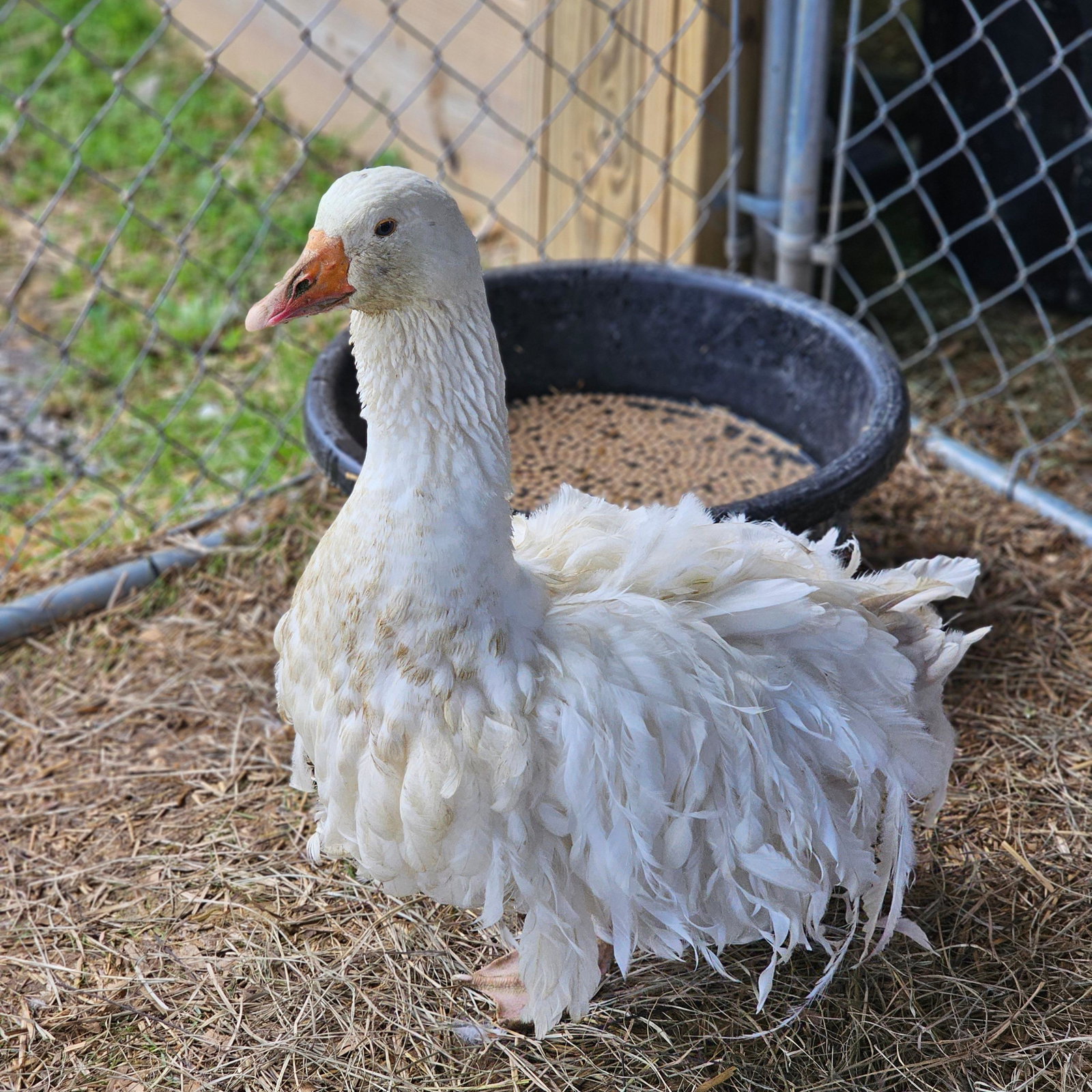
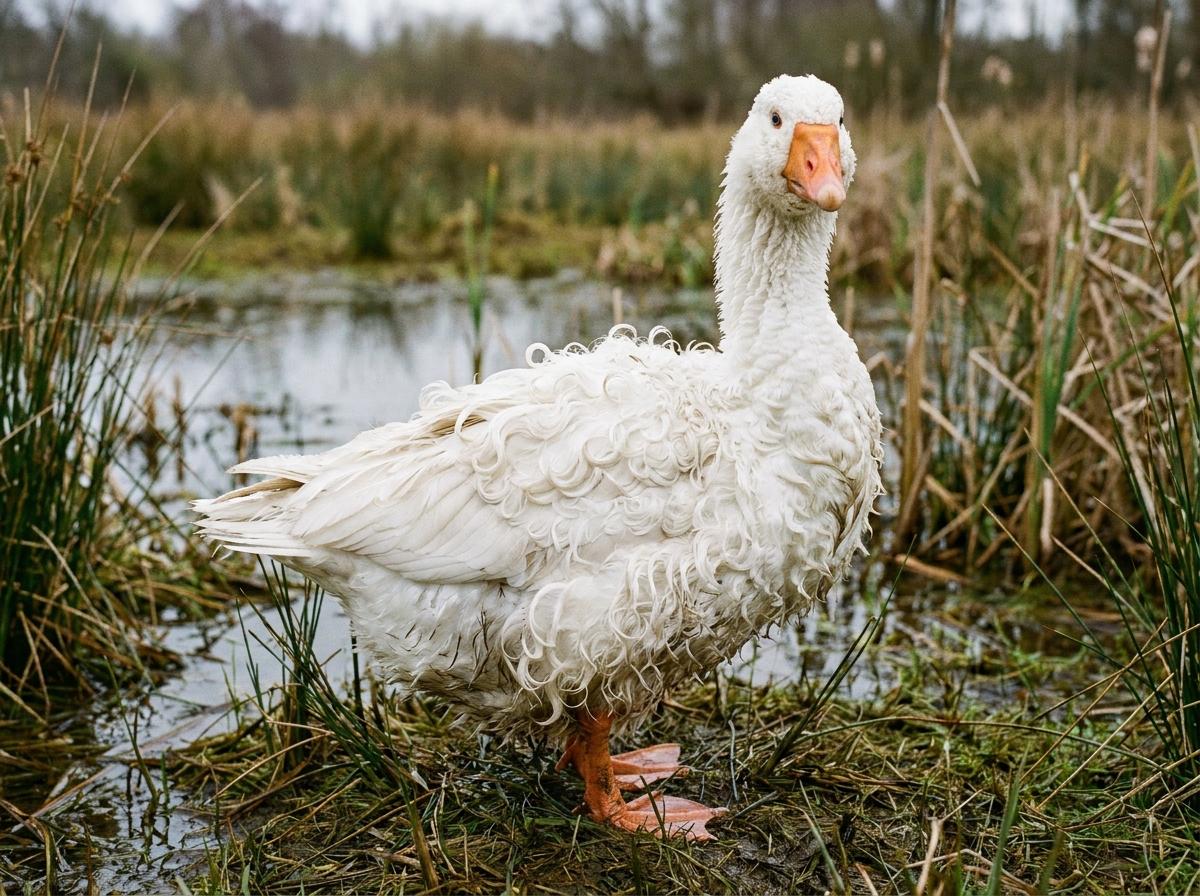
The Sebastopol is the goose people stop to look at. Long, soft, spiraled feathers drape from its back, wings and tail, and the breast and underbody feathers are curled too (Creatures also has a separate page for the Curly Breasted Sebastopol). According to The Livestock Conservancy, ganders weigh about 14 pounds and geese 12, they lay 25 to 35 eggs a year, and they are quiet, gentle and good mothers. The curls cause problems. Sebastopols cannot fly, and their loose feathers keep them less warm and shed water less well, so they need more shelter than other breeds in cold, wet, windy weather, and clean water for swimming keeps their plumage in shape. The APA recognizes the white variety.
The Pilgrim is an American breed and one of the easiest geese to sex. It is autosexing: day-old males are silvery yellow with light bills and females olive gray with darker bills, and the adults stay distinct, with mostly white ganders and soft gray geese. The Conservancy’s Pilgrim profile gives mature weights of 13 to 14 pounds and 35 to 45 eggs a year, describes a quiet, docile, personable bird that suits beginners, and dates the name to 1935; the APA admitted the breed in 1939.
The American Buff, recognized by the APA in 1947, is the largest of the medium breeds at about 18 pounds for a gander and 16 for a goose, a soft apricot fawn with creamy edging to its feathers. It lays only 10 to 25 eggs a year, but it is one of the broodiest geese, a calm, curious and attentive parent that the Conservancy’s American Buff profile calls well suited to the average home flock. Its Welsh look-alike, the Brecon Buff, has pinkish rather than orange bill and feet.
The Pomeranian was developed from the greylag by northern German farmers in the 1500s. In North America the APA recognizes only the Saddleback Pomeranian, in gray and buff: a white goose with a colored head and a colored, heart-shaped saddle over the back. According to the Conservancy’s Pomeranian profile, ganders weigh 17 pounds or more, and the breed’s chatty, noisy greeting makes it a good watch goose, though some ganders are quick to turn aggressive.
The Steinbacher began as a fighting goose in the German state of Thuringia, probably from Chinese and local German geese, and the 2020 genome study confirmed its mixed ancestry. It reached the United States in 2004, and the APA accepted the blue variety in 2011, with ganders of 13 to 15 pounds. Its orange bill, edged in black with a black tip, gives it a made-up look. Despite the history, the Conservancy’s Steinbacher profile says most are calm with people, though ganders should be separated in the breeding season.
Light geese: Chinese, Roman, Cotton Patch and Shetland
Light geese are the active foragers, weeders and alarm raisers. They need less space and feed than the heavy breeds but still need good grazing, and the British Waterfowl Association warns that some of them fly a little, so plan your fencing around them.
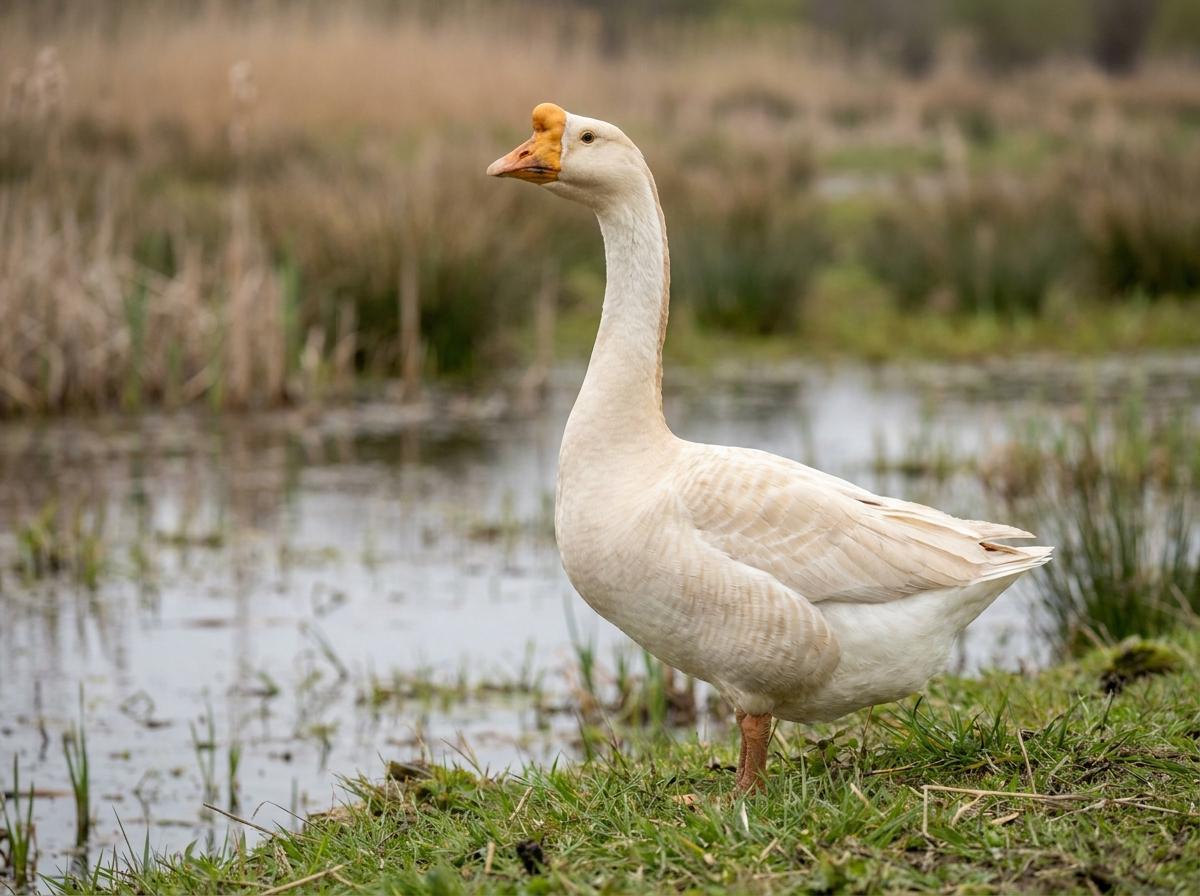
The Chinese is the swan goose’s domestic descendant: slim and upright, with a long arched neck and a high knob on the bill, in brown or white. The Livestock Conservancy calls it the best layer of all goose breeds, at 40 to 100 eggs a year, with ganders around 12 pounds and geese around 10. Chinese geese are the classic weeder geese, and they are alert and vocal, so they raise the alarm when something is wrong. Their knobs can freeze below about 20 to 25°F, so give them shelter in a hard frost.
The Roman goose, from Italy, is a small, plump white bird of 10 to 12 pounds. In North America the name usually means the Tufted Roman, with a little crest of upright feathers on the crown, which is the form the APA recognizes. Romans are calm, grow quickly, raise their own goslings and lay 25 to 35 eggs a year, and they are loud enough to make good watch geese. The North American population descends from a small group of birds, so breeders have to guard against inbreeding defects such as crooked toes and kinked necks.
Two light heritage breeds have no APA standard but are worth knowing. The Cotton Patch is a landrace from the southeastern United States that weeded cotton and corn fields until the 1950s. It is autosexing, weighs 8 to 12 pounds, tolerates heat well and flies strongly enough to clear a 5 to 6 foot fence without a running start, according to the Conservancy’s Cotton Patch profile. The Shetland is a small, self-sufficient forager from Scotland’s Shetland Islands, also autosexing and able to fly, first exported to the United States in 1997. Shetland ganders rarely bond with more than one goose, so the Conservancy advises keeping equal numbers of each sex.
The APA’s light class also includes two birds that are wild species rather than domestic breeds: the Egyptian, a small ornamental of only 4 to 5 pounds, and the Canada goose, whose legal status is explained below.
European, Russian and Asian breeds
Many breeds on Creatures come from regional flocks in Europe and Asia and are rarely seen in North America. In Britain, the Brecon Buff was bred from buff farmyard geese in the Brecon Beacons of Wales, with its standard first published in 1934, and the autosexing West of England was standardized only in 1999, although similar farmyard birds are old. The British Waterfowl Association’s Brecon Buff and West of England pages count both among only four standardized British native breeds. The Czech goose, or Česká husa, is a small, lively white goose from Bohemia, with ganders of about 11 to 12 pounds, according to the association’s Czech goose profile. In France, the gray Landes goose, which FAO describes as a descendant of the gray Toulouse, has been selected for foie gras.
Russia has its own old breeds. The Kholmogory, one of the country’s oldest and most popular, was developed in the 19th century near the northern town of Kholmogory by crossing Chinese and Arzamas geese, and was selected for cold tolerance and meat. The Tula was developed by traditional folk selection for goose fighting, a pastime popular in the Tula region from the 17th and 18th centuries, according to a 2025 review of Russia’s native livestock breeds.
In China, the Huoyan of Liaoning province shows how far selection can push egg production: FAO reports selected Huoyan lines laying 90 to 210 eggs per laying period, against the 30 to 50 a year most breeds manage. Some names on Creatures come from national survey records rather than living breed standards, and the Philippine Domestic Goose page explains what such an official record does and does not prove. Creatures also has pages for regional breeds such as the Norwegian White, Danish Landrace, Faroese, Czech Crested and Lionhead geese.
Wild goose species are not breeds
If you searched for goose species, the answer is different from the breed list. All domestic geese come from just two wild species, the greylag and the swan goose, domesticated in ancient times in Europe and China respectively. The Canada goose (Branta canadensis), the snow goose and the other wild geese are separate species. In the United States, native wild geese are protected under the Migratory Bird Treaty Act of 1918, and removing a live wild goose or its eggs from the wild to keep is illegal, as extension specialists point out.
Captive-bred, properly marked Canada geese can be kept in the United States only under a narrow federal exception, 50 CFR 21.48. You may acquire them only from someone holding a federal waterfowl sale and disposal permit, you must keep the transfer form for as long as you have the birds or their offspring, and you need that permit yourself to sell or give any away. State rules can add more, so talk to your state wildlife agency before you buy.
What geese cost
Goslings cost little. In October 2026, one major US waterfowl hatchery listed day-old goslings of common breeds such as the Embden, Toulouse, African and White Chinese at $29.75 each in orders of up to 15 birds, or $47.50 for a sexed female. Breeds such as the American Buff, Brown Chinese and Tufted Roman cost $42 unsexed, the Pilgrim and Buff Toulouse $50, and exhibition lines such as the Sebastopol and Large Dewlap Toulouse $150 unsexed and $250 for a female. Adult birds from breeders usually cost more than goslings, and proven breeding pairs and rare breeds the most, but prices vary so much by breed, sex, age and show quality that no single figure means much.
The bigger cost is keeping them, and that depends on your grass. By five or six weeks old, goslings can get much of their diet from good pasture, as Missouri extension’s gosling guide explains; some producers have cut complete feed by 48 percent by keeping growing geese on pasture rather than in confinement, according to extension specialists at the University of Kentucky. A goose on good grass costs little to feed in the growing season. Budget instead for waterfowl feed whenever grass is short (all winter in cold climates), grit, bedding, a predator-proof night shelter and fencing, a bathing tub or pool you will clean often, and a reserve for an avian vet. Those setup costs are the real price of a goose, and they are the same whether the bird cost $30 or $250.
How long geese live
Among domesticated birds, only the ostrich outlives the goose, according to Guinness World Records, which puts the domestic goose’s normal life span at about 25 years. A National Research Council survey gives a more conservative figure: geese outlive other types of poultry, with life spans of 15 to 20 years common and females laying for 10 years or more. The oldest goose on record, a gander named George from Lancashire, England, died in 1976 at 49 years and 8 months. For the wild ancestor, the AnAge longevity database gives a maximum of 31 years for a greylag in captivity.
Productive life is shorter than natural life. Laying is best in a goose’s second year and stays good until about her fifth, according to the same NRC survey, and FAO’s manual notes that commercial breeder flocks are rarely kept for more than four or five years of lay, although some geese go on breeding far longer. A backyard goose kept to old age is the case where the long numbers apply. Many of the problems Texas A&M’s avian veterinarians list for pet geese, from predator attacks to foot sores on hard ground, come down to management, which is what the care sections below cover. Plan for a commitment of 15 to 20 years or more, and for who will look after the flock if your plans change.
Housing, water and fencing
A goose needs more room than a chicken and less building. Missouri extension allows about one acre of pasture for every 20 to 40 geese, depending on their size and the quality of the grass, and recommends rotating pasture. For the night house, the Merck Veterinary Manual’s backyard poultry guidance gives ducks and geese about 3 to 6 square feet each indoors and 15 to 18 square feet each in an outdoor run, while the RSPCA asks for more for a goose: at least one square meter, about 11 square feet, of floor per bird, a doorway geese can walk through without crouching, dry bedding such as straw or shavings, and good ventilation. Texas A&M’s veterinary college notes that three geese will typically be happy in a 20 by 40 foot pen, with more grass to roam by day. They cope well with cold, but they need shade in summer and a shelter they can be shut into at night.

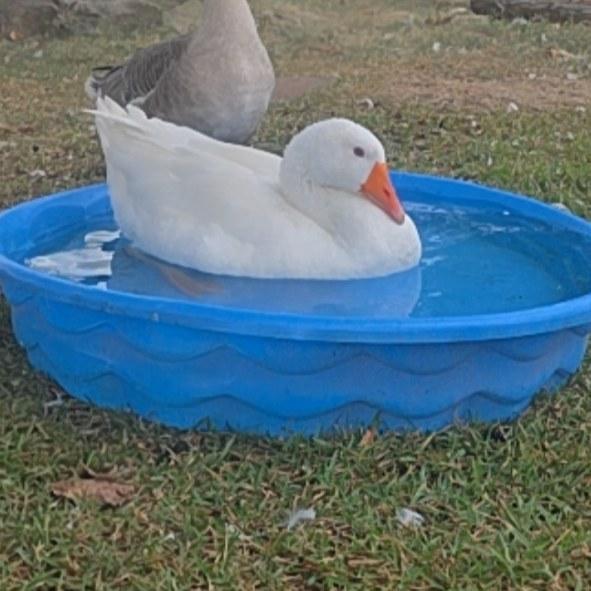
Water. This is where geese differ most from chickens. A natural pond is not required, but open bathing water is: the RSPCA says to give geese a paddling pool or trough deep enough for them to wash their head and body but shallow enough to climb out of easily, cleaned and refilled at least once a day, with a separate supply of fresh drinking water because bathing water gets dirty fast. Texas A&M’s avian vet calls a pool or pond a must and warns that geese kept without a water source or on hard ground tend to develop foot problems that can become life threatening. (Missouri extension’s guide calls swimming water unnecessary, but it is a brooding and rearing guide aimed largely at goslings grown for market, not at geese you keep for years.) Heavy breeds also need water to mate on safely, while goslings should get only very shallow water until their feathers are waterproof. In winter, keep the water open by removing ice, never with chemicals.
Fencing. Fences have two jobs, keeping geese in and predators out. Most domestic geese seldom fly, and Missouri extension’s guide calls 18 inches to 2 feet of fence adequate for pastured goslings, but light breeds such as the Cotton Patch and Shetland fly well and need higher fencing, a clipped wing or a covered run. Merck advises burying run fencing at least 12 inches so foxes and raccoons cannot dig under it, and covering the top of an enclosure keeps out both climbing predators and wild birds. Protecting Your Flock From Predators is written for chickens, and its fencing and housing advice applies to geese too. Before you buy, do what Texas A&M’s vets advise and confirm that your city rules and any homeowners’ association allow geese at all.
Feeding geese
Feed geese grass first. They are grazers, and Texas A&M’s veterinarians note that up to 70 percent of a pet goose’s diet can be grass, with insects and a commercial waterfowl feed making up the rest. On good pasture, goslings can live almost entirely on grass from five or six weeks old, though Missouri extension recommends some supplemental feed until they are fully feathered, and adults need feed whenever the grass stops growing. They eat almost any grass or clover but scarcely touch alfalfa, sweet clover or lespedeza, and anything sprayed on the pasture must be safe for poultry.
Offer insoluble grit at all times. A goose has no teeth, and the NRC survey explains that the sand and small gravel they swallow help the gizzard grind seeds and fibrous grass. A waterfowl feed matched to the bird’s age covers the gaps: starter for goslings, a grower ration as they feather, and a breeder ration for laying geese in spring if you hatch eggs. Gosling feed has its own rules, covered under breeding below.
Weeding is an old job for geese, and extension specialists describe weeder geese in cotton, strawberries, orchards and nursery stock, with the Chinese the usual choice. Research on weeder geese in Alaska, summarized by extension, found they reduced the need for herbicides but did not eliminate it, and that managing and protecting the flock took real time and money, so treat weeding as a bonus rather than the reason to buy geese.
Health basics
Find a vet who is comfortable treating geese before you need one, as Texas A&M’s avian vets advise; How to Find an Avian Vet covers where to look. The common problems a Texas A&M avian veterinarian lists for pet geese are intestinal parasites, leg deformities in young geese fed a poor diet, injuries from dogs, coyotes and other predators, egg binding in older females, and pressure sores on the feet of geese kept on hard ground, which can lead to bone infections. Grass, clean bedding and bathing water help prevent several of those, and a fecal check with your vet tells you whether worms need treating.
Learn what a healthy goose looks like. The RSPCA describes healthy geese as bright-eyed, alert and interested, and lists a hunched posture, erect feathers, a head tucked under the wing, reluctance to move or hiding in corners as signs of poor health that call for a vet. Let your vet choose any medicine, and ask how long to wait before eating eggs or meat from a treated goose.
Bird flu is the biosecurity issue that matters most for geese, because they love the same ponds wild waterfowl use. USDA’s guide to protecting your flock from avian influenza calls wild birds a primary source of the highly pathogenic virus, which they carry in their droppings. It advises covered enclosures and netting to keep poultry and wild birds apart, feed stored where wild birds and rodents cannot reach it, and keeping species separate, and it lists trouble breathing, lack of appetite, nasal discharge, fewer eggs and sudden death as signs to report to your veterinarian or a state or federal animal health official. Merck adds that ponds and water holes near the coop attract wild waterfowl. If you also keep ducks or chickens, the same precautions protect them, and newly bought geese should stay apart from your flock for as long as your vet recommends.
Temperament, flock life and noise
Geese are flock birds, so do not keep one alone. How many is enough? Two or three, say Texas A&M’s vets; at least three that get on well together, says the RSPCA, which also warns that mixing birds of very different body sizes can lead to bullying. In the wild a pair’s bond carries over from year to year; FAO’s manual notes that domestic geese form a weaker version of it in small groups of one gander and four to six geese, and that it disappears in flocks of more than about 20.
They are intelligent birds with long memories. The NRC survey notes that a goose does not quickly forget people, animals or situations that frightened it, and most geese become irritated when anyone approaches their nest or goslings and will attack people and large dogs. Hand-raised geese handled daily are often more docile, but breeding-season aggression is common, and Texas A&M warns that a goose attack can cause serious injuries, including broken bones, so never leave children with geese unsupervised, least of all in the breeding season.
That alertness is why geese have been kept as guards since Roman times. Extension specialists name the Tufted Roman, Saddleback Pomeranian and Chinese as the best guard breeds and note that guard geese work best as a flock with only one gander, so ganders do not spend their attention fighting each other. The flip side is noise. They call at anything new, from wildlife and the neighbor’s dog to anyone coming through the door, and The Livestock Conservancy warns that loud breeds such as the African and Roman are a poor choice if you have close neighbors.
Breeding, eggs and goslings
Geese are seasonal breeders. Most lay in spring, and FAO’s manual puts most breeds at 30 to 50 eggs a year even under good management, with the Chinese a notable exception at up to about 100. A small breeding group is one gander with two or three geese for heavy breeds and up to six for light ones; Shetlands and Dewlap Toulouse do best in pairs or with one or two geese per gander. Laying is best from a goose’s second year, and the gander guards the nest while the goose sits.

Goose eggs take about 30 days to hatch, with the NRC survey giving a range of 27 to 31 days and the African taking 30 to 32. Broody breeds such as the American Buff and Sebastopol hatch and raise their own goslings well, while heavy Toulouse often break their eggs, so breeders often use an incubator or a broody surrogate instead. Artificial incubation is not the same as hatching chicken eggs: FAO notes that goose eggs have requirements other poultry eggs do not, and its hatchery guidance cools the eggs every day and candles them at seven days to remove infertile eggs. In most breeds ganders and geese look alike, so FAO recommends sexing goslings by examination at hatching; autosexing breeds such as the Pilgrim, and most Embden strains through their down color, make it easier.
Goslings need warmth, dry footing and the right feed. Missouri extension’s brooding guide starts them at about 90°F at the edge of the brooder and lowers the heat 5 to 10 degrees a week until 70°F, after which heat is usually not needed by five or six weeks. It allows about 1.5 square feet of floor per gosling on absorbent litter and warns against slick surfaces, which damage young legs. Feed matters more than most new keepers expect, and chick starter is the usual trap. Missouri extension warns that some coccidiosis drugs added to it can lame or kill goslings, so pick a feed approved for geese; goslings also need more niacin than chicks, and the Merck Veterinary Manual says a shortage hits them much harder, bowing the legs and enlarging the hock joints. A waterfowl starter is formulated for these needs; if you can only get chick starter, ask your vet or feed supplier about adding niacin. Give goslings water they can drink from but not climb into, keep them out of rain and wet grass for the first few weeks, and let them graze from the first week when the weather is mild.
Where to buy geese
Good geese come with a history, so buy where you can see it.
- Breeders and farms. A farm visit shows you the parent birds, how they are kept and how they behave. Search goose breeders and farms in the Creatures directory by breed or state; most of those listings are compiled from public sources, so put your questions to the farm itself.
- Breed clubs, registries and shows. Waterfowl breeders show at poultry shows, and breed clubs know who keeps the rare breeds. The Creatures registry directory lists breed associations and clubs by species.
- Hatcheries. Mail-order hatcheries ship day-old goslings in spring, sexed or unsexed. They are the cheapest route to common breeds, but you get goslings with no adult temperament to judge.
- Online listings. Sellers on the Creatures marketplace pass verification before they list, but goose listings are rare, so let a saved search watch for new ones.
- Rescues. Some farm-animal rescues and sanctuaries rehome geese, often adult birds whose temperament you can see before you commit.
The questions are the same for every seller. How was each bird sexed, and how old is it? What breed and line are the parents, and is there any pedigree or flock record? Has the flock had health problems, and does the seller take part in the National Poultry Improvement Plan or test for disease? Was the bird hand-raised? For any Canada goose, ask for the federal transfer form, and walk away without it. Before the drive home, check the entry rules for poultry in any state you will cross into: the National Poultry Improvement Plan keeps a contact list for state importation requirements, and Livestock Health Certificates explains what a certificate of veterinary inspection is and when you need one.
Records to keep
A goose can live for decades, so records are what let you, a buyer or a vet answer questions years later. Start with permanent identification: a numbered leg band or other permanent ID for every breeding bird, with its sex and how that was determined, hatch date, breed and where it came from. After that, log each of these as it happens:
- which gander ran with which geese each season;
- each goose’s egg count, the eggs set, candling results and the hatch rate;
- every gosling’s hatch date, parents and ID;
- weights, fecal checks and each treatment, with the date eggs or meat are safe to eat again;
- each purchase, sale and move, with any disease-test or NPIP paperwork;
- show results for exhibition birds.
Livestock Record Keeping shows what to record with filled-in examples. A free Creatures profile for each goose keeps its ID, photos, pedigree and all of those records together, reminds you when recurring care is due, and goes with the bird, history included, when you transfer it to a buyer. For a larger flock, you do not need a profile for every bird: group records let you log feedings, treatments and counts for the whole flock, the way Chicken Flock Counts shows for a laying flock. The help center covers each step: adding a record, health and medical records and tracking animals without individual profiles. Showing or selling exhibition birds? The free pedigree chart maker prints a three-generation pedigree. Still naming a new gosling? Try the goose name generator.
Frequently asked questions
How many breeds of geese are there?
Twelve, if you go by the American Poultry Association, whose standard splits them into heavy, medium and light classes running from the Toulouse and Embden down to the Chinese and Tufted Roman. Worldwide there are many more: FAO identified 96 breeds or genetic groups in 2002 and said there were probably more, and Creatures lists well over a hundred breed names, many of them regional European and Asian breeds.
What are the main types of geese?
Domestic geese come from two wild species: the greylag, ancestor of most European and North American breeds, and the swan goose, ancestor of the Chinese and other Asian breeds. Among breeds, the APA sorts geese by weight into heavy (African, Embden, Toulouse), medium (American Buff, Pilgrim, Saddleback Pomeranian, Sebastopol, Steinbacher) and light (Chinese, Tufted Roman) classes.
What is the largest goose breed?
The heavy class is the place to look, and sources rank its members differently. The Livestock Conservancy puts Dewlap Toulouse ganders at 20 to 26 pounds with some over 30, FAO gives Embden ganders up to about 22 pounds, and an extension guide calls the African the largest domestic goose. All three are big birds that need room, shelter and water to mate on.
How long do geese live?
Life spans of 15 to 20 years are common, and Guinness World Records puts the normal life span of a domestic goose at about 25 years. The oldest goose on record, a gander named George, lived to 49 years and 8 months. Breeding life is shorter: laying is best from the second to about the fifth year.
How much does a goose cost?
In 2026 one major US hatchery sold day-old goslings of common breeds such as the Embden and Toulouse for about $30 each in small orders, with sexed females nearer $48 and rare exhibition lines such as the Sebastopol at $150 or more. Adult and breeding birds usually cost more. The larger cost is the shelter, fencing, water and winter feed they need.
Do geese need a pond?
No, but they need a clean tub or paddling pool deep enough to wash their head and body, plus separate drinking water; Texas A&M’s avian vet calls a pool or pond a must. Heavy breeds need water to mate on safely, and goslings should get only shallow water until their feathers are waterproof.
Can you keep just one goose?
You should not. Geese are flock birds, and Texas A&M’s vets suggest getting two or three, while the RSPCA recommends at least three that get on well together.
Are geese good guard animals?
Geese are alert, territorial and loud, so they make good alarm raisers, and the Tufted Roman, Saddleback Pomeranian and Chinese are the usual choices. Extension specialists say they work best as a flock with only one gander. They can be aggressive in the breeding season, so supervise children around them.
How long do goose eggs take to hatch?
About 30 days, with a range of 27 to 31 days, and the African takes 30 to 32. Most breeds lay 30 to 50 eggs a year in spring; the Chinese can lay up to about 100.
Can you keep a Canada goose as a pet?
Not a wild one: in the United States, Canada geese are protected under the Migratory Bird Treaty Act, so removing one or its eggs from the wild to keep is illegal. In the United States, captive-bred, properly marked Canada geese can be kept under 50 CFR 21.48 if you buy them from a holder of a federal waterfowl sale and disposal permit and keep the transfer form, and your state may add its own rules.
Do this next on Creatures
Whether you are choosing your first geese, bringing goslings home or breeding a rare flock, these are the useful next steps, in the order most readers need them.
Get told when the right geese are listed. Goose listings are scarce, so set a free goose listing alert and Creatures emails you when matching geese are posted, no account needed to start. Here is how saved searches work.
Find breeders by breed and state. Search the Creatures breeder directory, or go straight to goose breeders and farms, and ask each one how their birds were sexed and what records come with them.
See what is for sale now. Browse geese on the Creatures marketplace, where sellers pass verification before they list. There were no goose listings when this guide was written, so keep your alert running.
Brought goslings home? Create a free profile for each goose with its band number, hatch date, breed, sex and photos, no account needed to start. The walkthrough is in adding an animal to Creatures.
Keep the flock’s records in one place. Pairings, egg sets, hatches, weights and treatments: add a record. The record sheet opens for any visitor to look around, and a free account saves what you enter. See reminders and upcoming care to schedule what comes next.
Breed or sell geese? Farms, hatcheries and breeders can create a free farm or breeder profile so people looking for geese can find you, no account needed to start. See getting listed in the breeder directory and adding your team.
Use the free tools. Find a name in the goose name generator, print a pedigree with the pedigree chart maker, name your place with the farm name generator, or browse all the free Creatures tools.