



Rottweiler
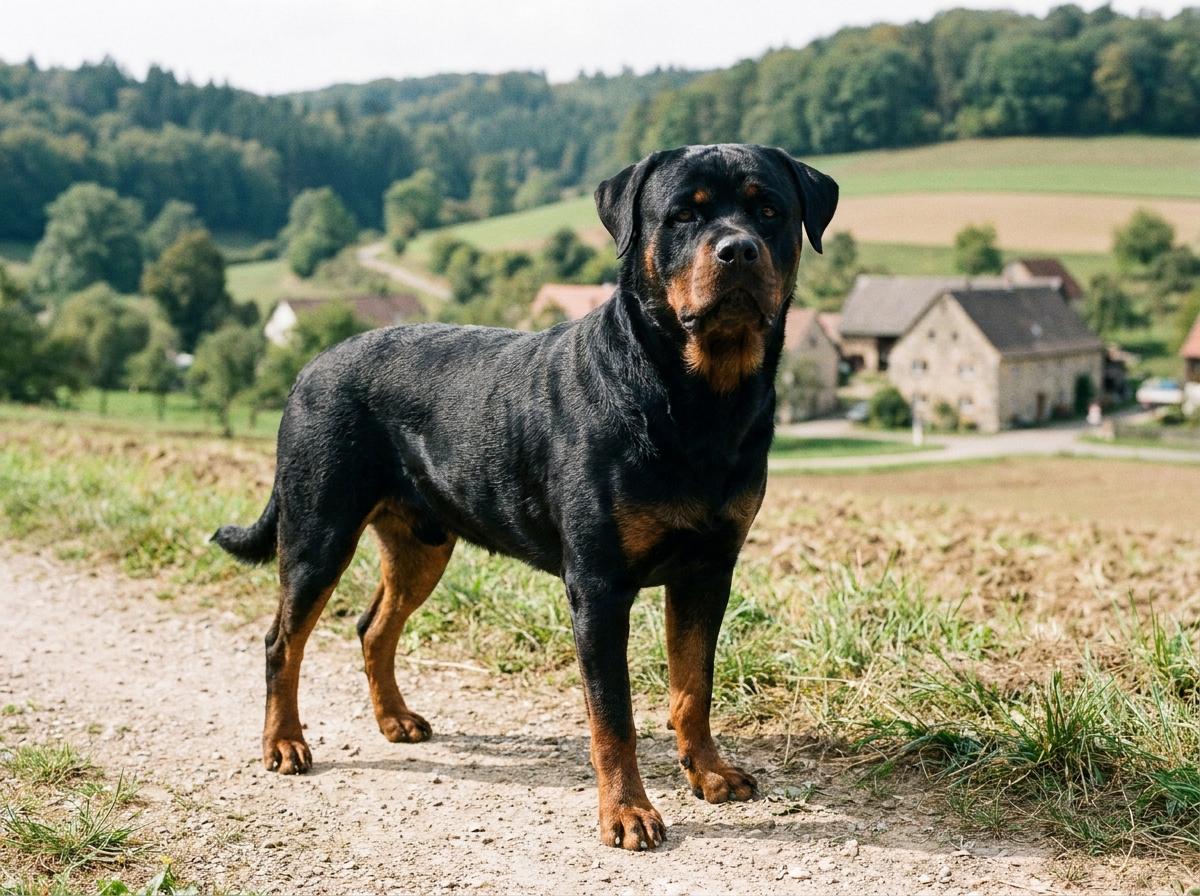
The Rottweiler is a powerful working dog whose modern type developed around Rottweil in southwestern Germany, with roots in drover and butcher dogs that moved cattle, pulled carts, and guarded property. It is a medium-to-large molosser with a compact, muscular body, broad head, and a short black coat marked in rust, tan, or mahogany in standard lines. Rottweilers have served in stock work, carting, police and military roles, protection sports, search and rescue, and family guardianship.
Successful Rottweiler homes put equal weight on temperament, training, and management. Puppies need early exposure to ordinary people, animals, surfaces, and handling, followed by consistent obedience that does not rely on intimidation. These dogs are strong and athletic, so daily exercise and weight control help protect joints. Responsible breeding programs commonly screen hips, elbows, eyes, heart health, and inherited conditions such as juvenile laryngeal paralysis and polyneuropathy. Some housing and insurance rules restrict the breed, making local research important before purchase or adoption.
Colors: Apricot, Bicolor, Black, Black and Mahogany, Black and Rust, Black and Tan, Black and White, Black Mask, Blue, Blue and Tan, Blue Merle, Blue Roan, Blue Tick, Brindle, Brown, Brown and Tan, Brown and White, Chocolate, Cream, Dapple, Domino, Fawn, Fawn and White, Gold, Gray, Harlequin, Irish Marked, Liver, Liver Mask, Mantle, Mask, Merle, Mottled, Parti-Color, Piebald, Red, Red and Mahogany, Red and White, Red Merle, Red Roan, Red Tick, Reverse Brindle, Roan, Sable, Saddle, Silver, Speckled, Spotted, Tan, Ticked, Tricolor, Tuxedo, White, Yellow