


Pug
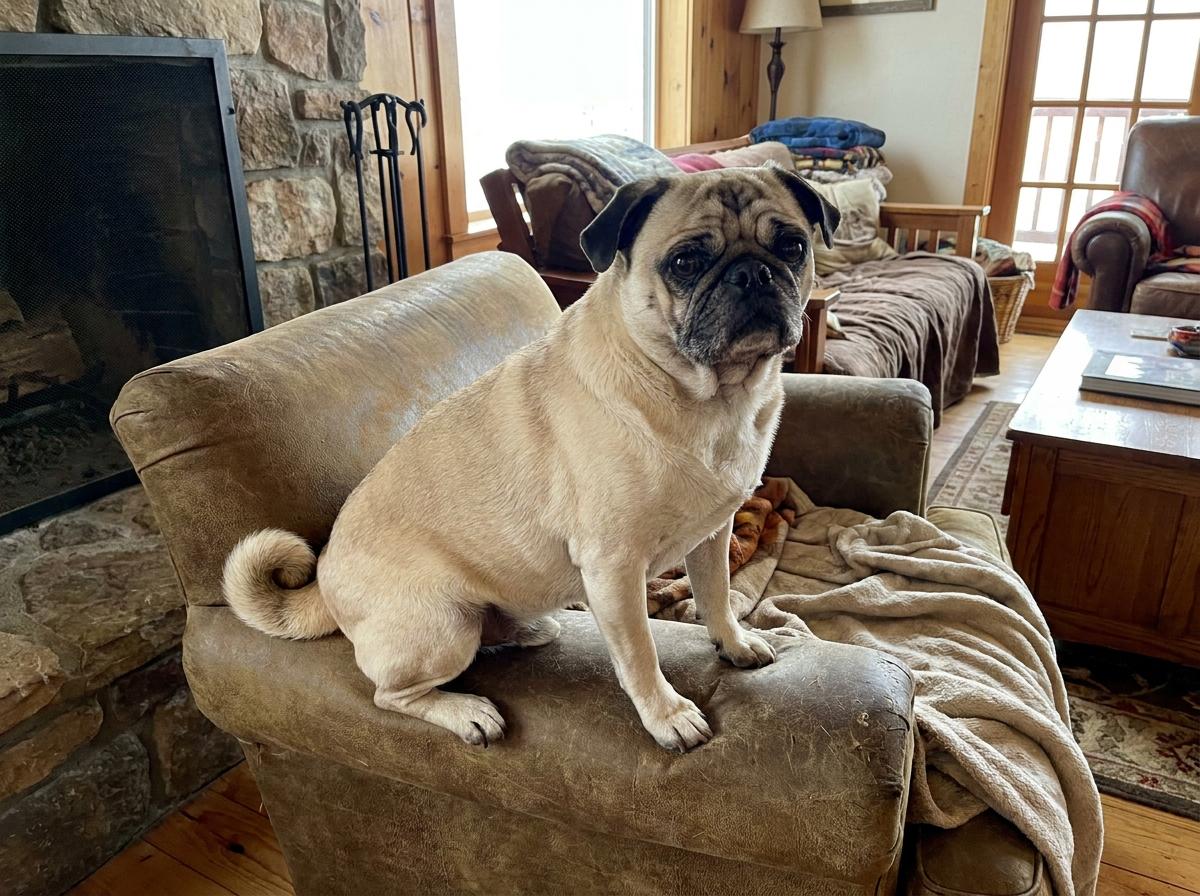
Among the oldest companion dog types, the Pug traces to China and later became firmly associated with European court households. It is a small, square, heavily muscled toy dog with a broad head, large dark eyes, a tightly curled tail, and a short coat. The classic fawn Pug has a black mask and dark ears; solid black is also widely recognized, while other advertised colors may not be accepted in all registries. The breed's expression and compact build are central to its identity, but extreme exaggeration can create serious welfare concerns.
Pugs are typically kept as indoor companions and need modest daily exercise, careful weight control, and protection from heat. Their flat faces can make breathing, cooling, and anesthesia more complicated, so buyers and adopters should look for dogs with open nostrils, clear movement, and responsible veterinary records rather than only a very short muzzle or heavy wrinkles. Skin folds, eyes, teeth, nails, and ears need routine attention. Ethical Pug breeding now places increasing emphasis on soundness, freer breathing, and avoiding dogs that cannot exercise comfortably.
Colors: Apricot, Apricot Fawn, Bicolor, Black, Black and Tan, Black and White, Black Mask, Blue, Blue and Tan, Blue Merle, Blue Roan, Blue Tick, Brindle, Brown, Brown and Tan, Brown and White, Chocolate, Cream, Dapple, Domino, Fawn, Fawn and White, Gold, Gray, Harlequin, Irish Marked, Liver, Liver Mask, Mantle, Mask, Merle, Mottled, Parti-Color, Piebald, Red, Red and White, Red Merle, Red Roan, Red Tick, Reverse Brindle, Roan, Sable, Saddle, Silver, Silver Fawn, Speckled, Spotted, Tan, Ticked, Tricolor, Tuxedo, White, Yellow