

Newfoundland
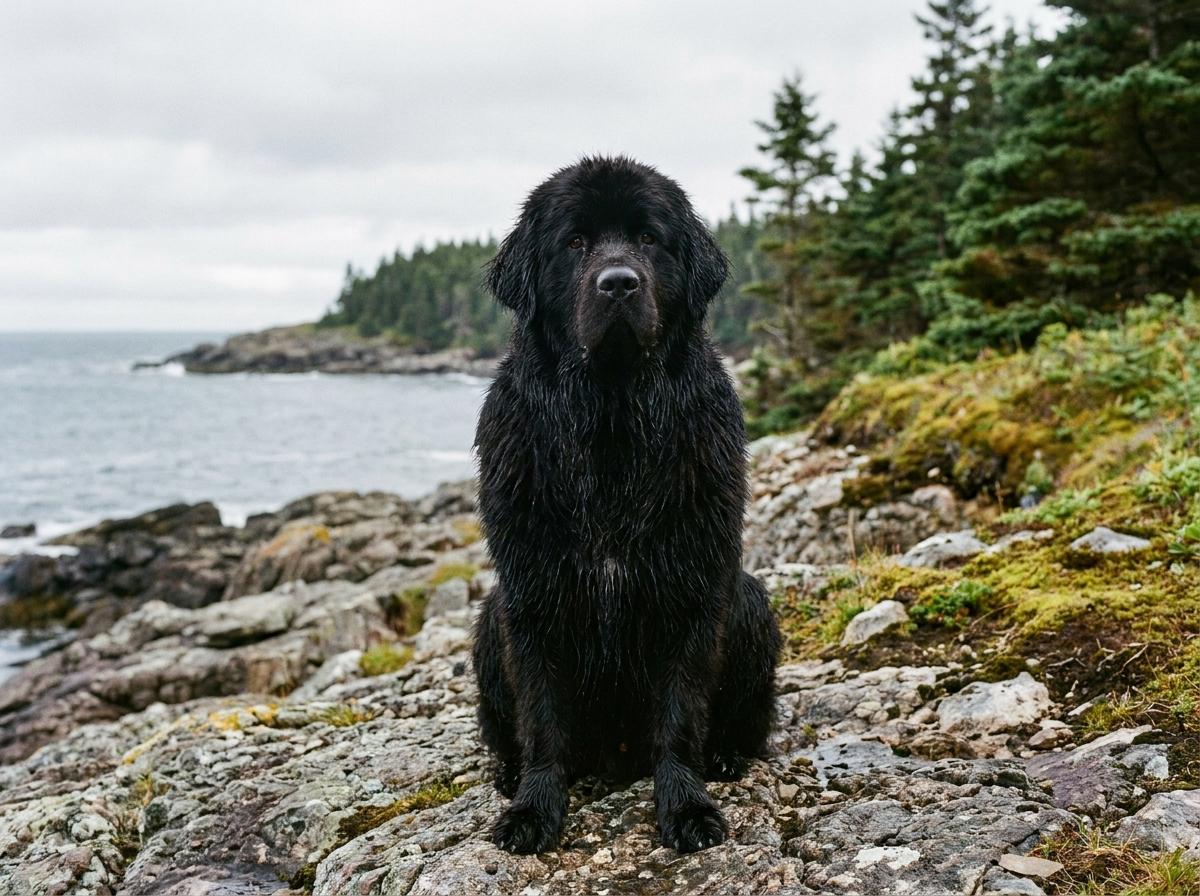
The Newfoundland is a giant working dog from the Canadian island of Newfoundland, where powerful, water-capable dogs helped fishermen, hauled loads, and became famous for rescue work. It has a massive frame, broad head, deep chest, heavy bone, and a thick weather-resistant coat. Black is the classic color, with brown, gray, and white-and-black Landseer-pattern dogs recognized in some registries. The breed’s webbed feet, swimming ability, and steady disposition are central to its identity, not ornamental extras.
Living with a Newfoundland requires planning for size, water, coat, and drool as much as affection. Puppies need controlled growth, careful exercise, and social experiences that teach polite behavior before their strength arrives. Adults usually prefer being close to family and may enjoy carting, water work, therapy visits, or low-impact training. Grooming is substantial during seasonal shedding, and owners should watch hips, elbows, heart health, skin, and heat tolerance. A sound Newfoundland should be calm and dependable, but it still needs boundaries, space, and people prepared for a very large dog.
Colors: Apricot, Bicolor, Black, Black and Tan, Black and White, Black Mask, Blue, Blue and Tan, Blue Merle, Blue Roan, Blue Tick, Brindle, Brown, Brown and Tan, Brown and White, Chocolate, Cream, Dapple, Domino, Fawn, Fawn and White, Gold, Gray, Harlequin, Irish Marked, Liver, Liver Mask, Mantle, Mask, Merle, Mottled, Parti-Color, Piebald, Red, Red and White, Red Merle, Red Roan, Red Tick, Reverse Brindle, Roan, Sable, Saddle, Silver, Speckled, Spotted, Tan, Ticked, Tricolor, Tuxedo, White, White and Black, Yellow