

Dogo Cubano
Author: Elliott Garber, DVM · Published
The Dogo Cubano, also recorded as the Cuban Mastiff, Cuban Dogge, or Cuban Bloodhound, is an extinct molosser-type dog developed in colonial Cuba. It is not a breed you can buy, adopt, or register today, and this page is a history rather than a care guide. The Dogo Cubano matters because of what it was made to do: it was bred as a catch and tracking dog for hunting down enslaved people who escaped, and it was later hired out to European armies for the same purpose in Jamaica and Haiti. When slavery ended in Cuba, the specialized work that had sustained the type disappeared, the dogs were absorbed into the general population by crossbreeding, and the Dogo Cubano faded out by the early twentieth century. Below is what the historical record actually supports about its origins, appearance, use, and disappearance, with the popular myths flagged where they show up.
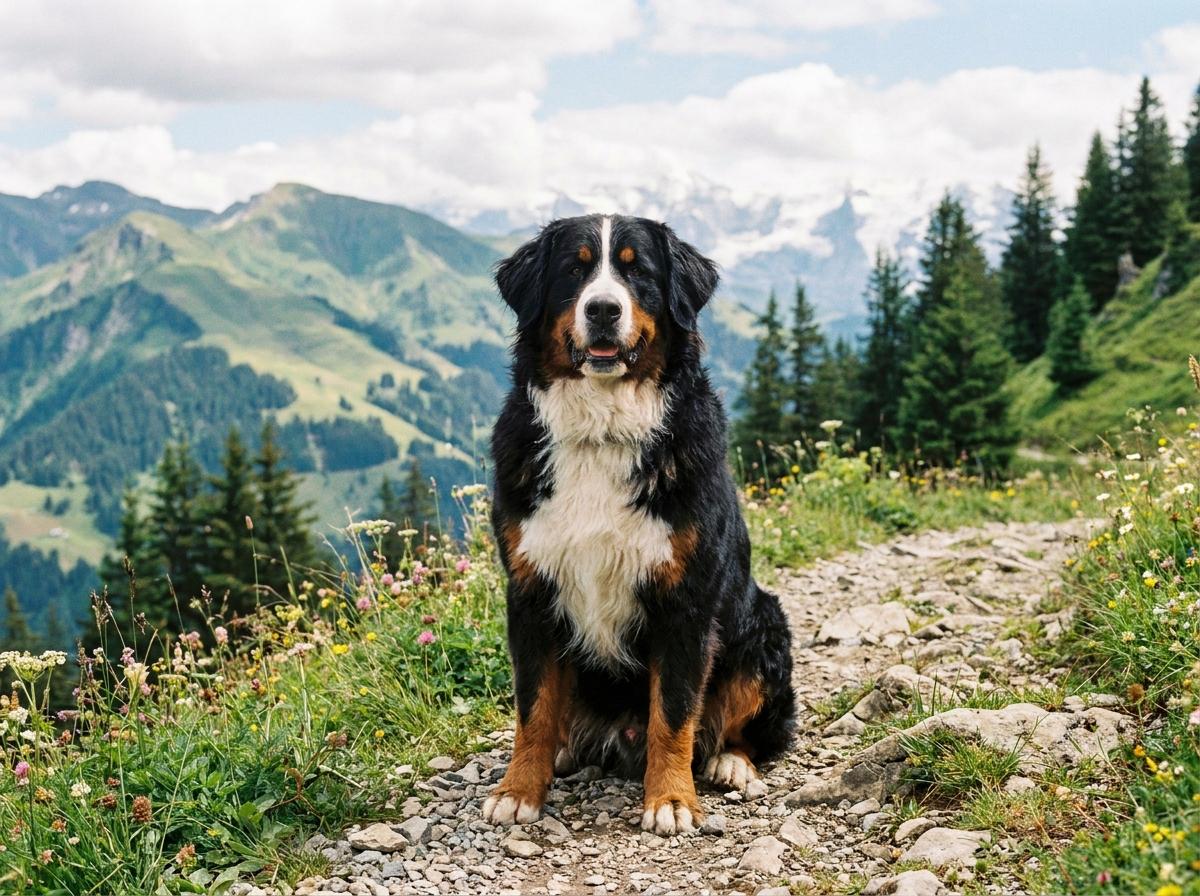
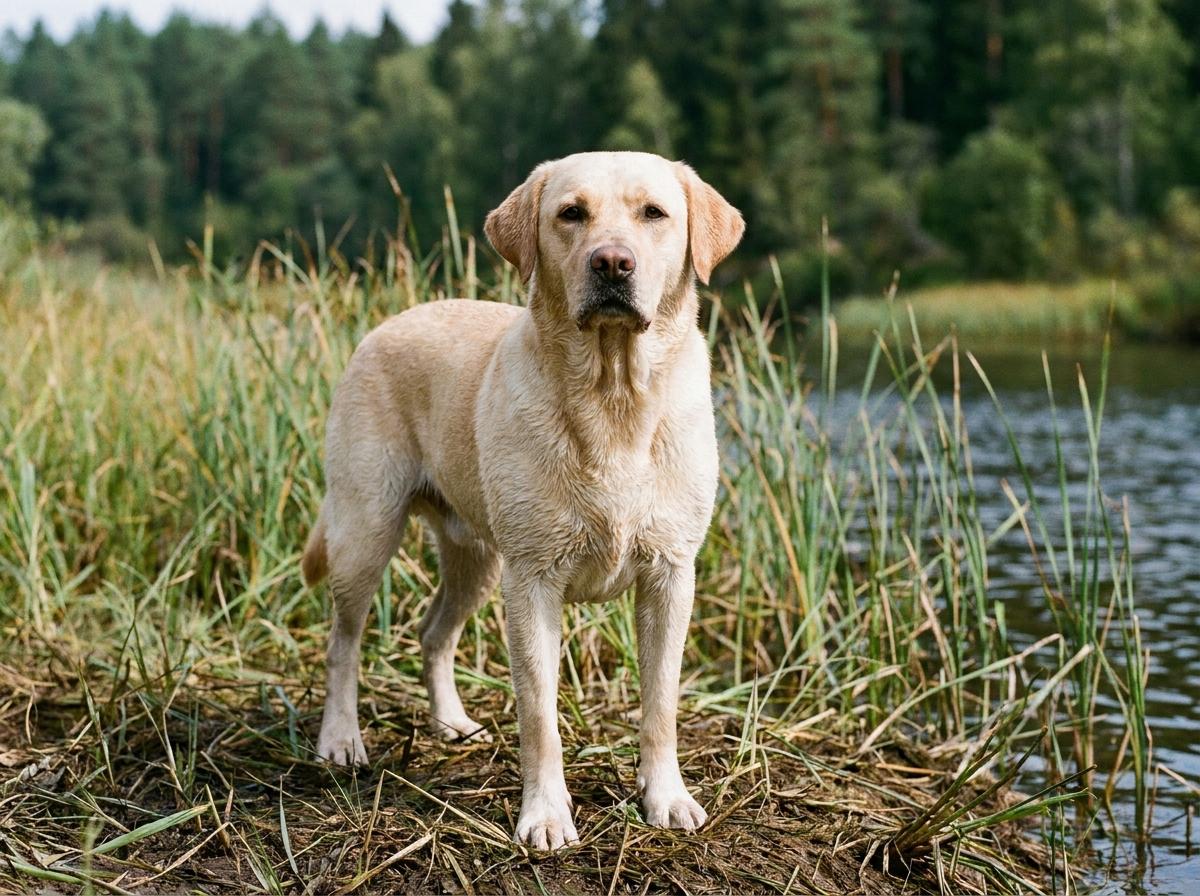
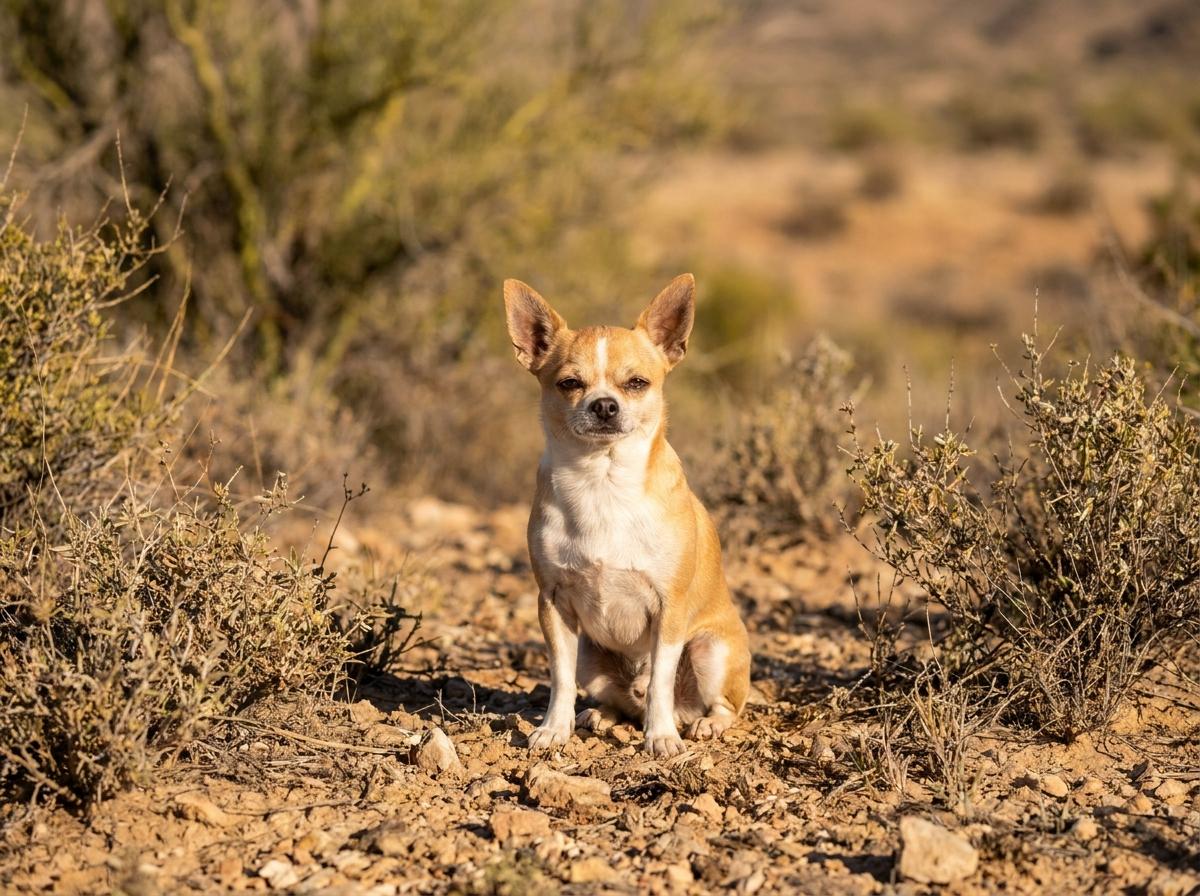
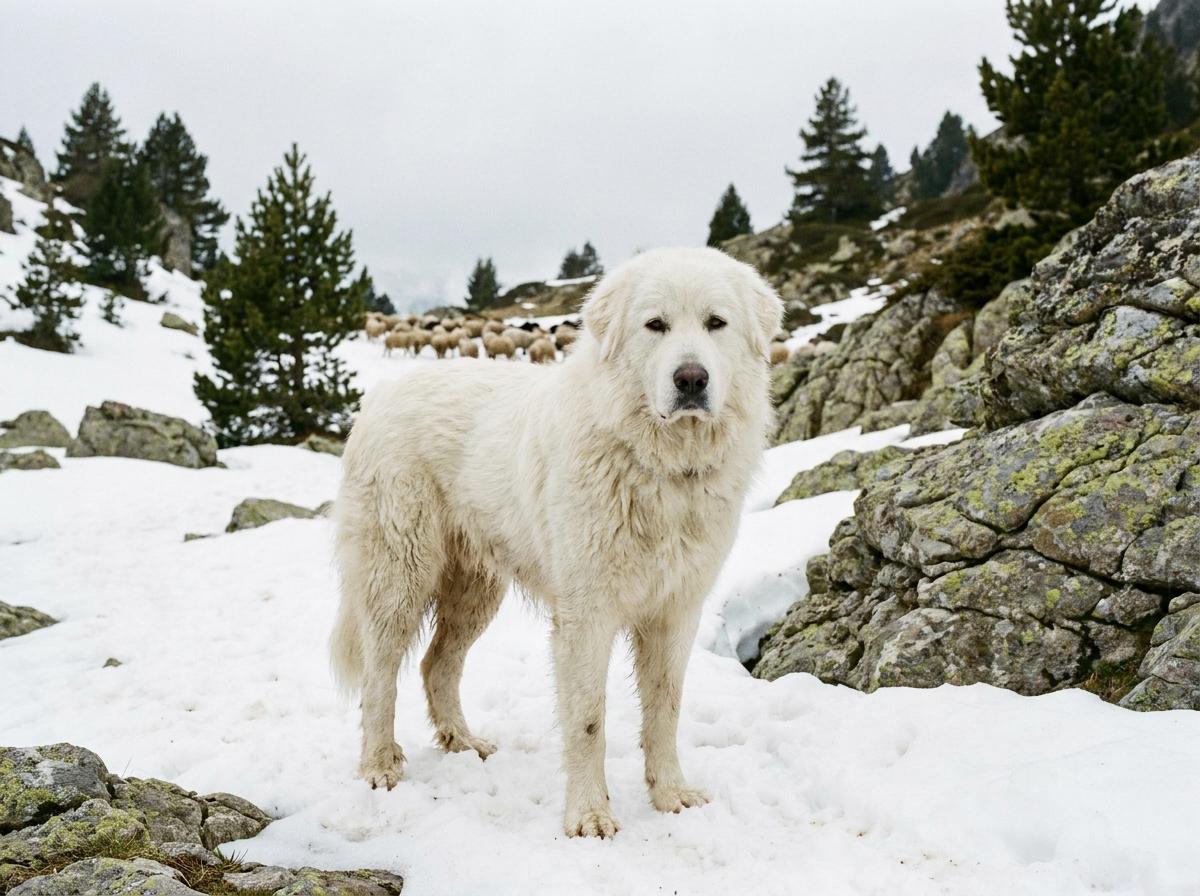
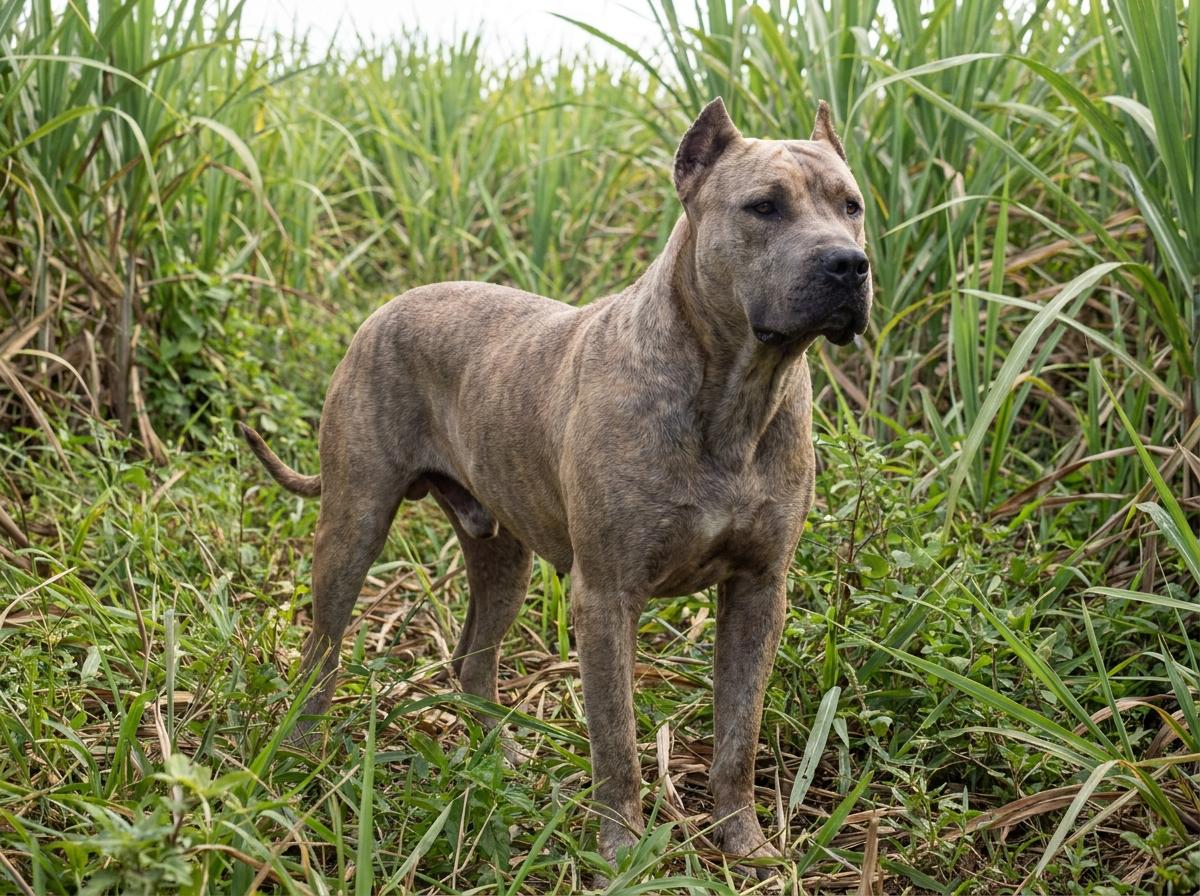
The Dogo Cubano is extinct and was never photographed as a living breed. The three images on this page are AI-generated reconstructions based on period descriptions of a light-made, athletic catch dog, not photographs and not a definitive standard.
| Also called | Cuban Mastiff, Cuban Dogge, Cuban Dog, Cuban Bloodhound, perro de presa |
|---|---|
| Status | Extinct since the early 1900s; no living population or registry |
| Origin | Colonial Cuba, built from imported bulldog, mastiff, and cattle-dog stock |
| Type | Molosser catch dog of the bull-and-mastiff group |
| Size | Described as between a bulldog and a mastiff; period accounts put it at about two feet at the shoulder |
| Weight | No reliable measured figure survives; viral 250 to 300 lb claims are unsourced |
| Coat | Short and hard; described in 1840 as a “rusty wolf-colour” with black face, lips, and legs |
| Muzzle | Short, broad, abruptly truncated; broad flat skull; deeply pendulous lips |
| Original use | Tracking and holding escaped enslaved people; later hired to armies for the same |
| Why it ended | Loss of its specialized role after abolition, then absorption by crossbreeding |
Browse listings, public profiles, breeders, or add your animal.
What was the Dogo Cubano?
The Dogo Cubano was a Cuban-developed working dog of the molosser or mastiff family, closer to a heavy catch dog than to any modern companion breed. Nineteenth-century naturalists placed it “between a bulldog and a mastiff in size,” and it belonged to the broad bull-and-mastiff group of gripping dogs that European breeders had long used for bull-baiting and dog fighting. Cuba did not invent that kind of dog. What Cuba produced was a regional variety, refined on the island for a specific and brutal job, that became well enough known abroad to be bought, shipped, and written about by name.
Two things make the Dogo Cubano unusual among extinct breeds. First, it left a clearer paper trail than most vanished dogs because its work put it into military dispatches, abolitionist writing, and natural-history reference books of the period. Second, that same record is uncomfortable to read, because the animal was engineered as an instrument of slavery. An honest breed page has to sit with both facts. If you want to compare it with the living relatives it grew out of, the broader Creatures dog species page is a good starting point.
The peer-reviewed history here is Tyler Parry and Charlton Yingling’s 2020 study “Slave Hounds and Abolition in the Americas,” published in the journal Past and Present, which traces how Cuba became a center for breeding and training these dogs and how they were exported around the Caribbean. Where this article states dates and events, that scholarship and period sources are doing the work, not breed-hobby websites.
Where the Dogo Cubano came from
Dogs of the bulldog and mastiff type arrived in the Caribbean with Spanish colonization, and Cuba became known for developing them into a distinct working strain. The Dogo Cubano was not descended from a single ancestor. Reference accounts describe it as built up from several imported types, bulldogs, mastiffs, and cattle or herding dogs, combined into a heavy, hard-mouthed dog suited to gripping and holding. Some sources also point to old Spanish gripping breeds of the Alano type among its foundation, which fits the general history of Spanish colonial dogs, though the exact cross is not documented with the precision a modern registry would demand.
What the record is clear about is the purpose behind the breeding. By the eighteenth century, Cuba was a recognized source for large, aggressive tracking dogs, and buyers came to the island specifically to acquire them. This was selective breeding aimed at a job, not at a look or a temperament anyone would want in a home.

What the Dogo Cubano looked like
Because the breed died out before dog photography and formal standards were common, the best physical descriptions come from nineteenth-century naturalists rather than from a herdbook. The most cited is the account carried in William Jardine and Charles Hamilton Smith’s 1840 volume on dogs, part of the Naturalist’s Library series, which describes the coat as a “rusty wolf-colour” with a black face, black lips, and black legs. Contemporary writers, including the Jamaica historian Robert Dallas in 1803, also stressed that the dog’s skin and whole structure were noticeably harder and tougher than those of ordinary dogs.
From those accounts, these are the recurring diagnostic features, with the caveat that the period writers do not agree on every detail:
- A short, broad muzzle, usually described as abruptly truncated. The face was blunt rather than tapering, the classic gripping-dog front end. Martin’s 1845 account qualifies this: he calls the muzzle shorter and the jaws thicker than a hound’s, yet “not so truncate as in the bulldog.”
- A broad, flat skull with deeply pendulous lips. This is the bullmastiff-type head that made the dog instantly readable as a molosser.
- A short, hard coat in rusty brown. Period sources emphasize the rusty or fawn base with black points on the face and legs. Later popular write-ups list beige, white, and grey variants, but the earliest descriptions center on that rusty-brown-with-black-mask pattern.
- Medium, partly pendulous ears and a short, upturned tail. Jardine and Hamilton Smith describe ears that were partly drooping and a rather short, cylindrical tail turned up toward the tip. This is the detail the sources fight over: the 1840 St. Augustine Herald account instead describes ears carried erect and usually cropped, with a longer, greyhound-like tail. Working dogs were often cropped in the field, which may explain the split.
- A compact, powerful frame built for strength and agility. Martin describes remarkably powerful limbs and a compact contour “indicating both activity and strength,” and the 1840 newspaper account likens the head, breast, and shoulders to a light-made mastiff while giving the loins and hindquarters to a greyhound, only thicker set. The period record describes an athletic catch dog, not the ponderous, big-boned giant later write-ups imagine.
On size, the honest answer is that no reliable measured weight survives. The credible period framing is “between a bulldog and a mastiff,” and the two period accounts that actually give a figure agree on the height. A St. Augustine Herald description from February 1840 puts the dogs at 24 inches high and about 36 inches long, and W. C. L. Martin’s 1845 History of the Dog independently gives the height at the shoulder as about two feet. That is a mid-sized, compact dog, not a giant. You will see viral claims that the Dogo Cubano weighed 250 to 300 pounds and was “one of the heaviest dogs in history.” Those numbers trace to modern content-farm pages, not to any historical measurement, and they are almost certainly invented. A compact, agile dog standing about two feet at the shoulder would not have approached 300 pounds. Treat the giant-weight claims as folklore.

The work it was bred for
This is the part of the story that a truthful page cannot soften. The Dogo Cubano was developed and refined to hunt human beings.
In Cuba’s slave economy, enslaved people who escaped into the countryside were called cimarrones, and armed patrols used trained dogs to track, corner, and hold them. The Cuban dogs were prized for tenacity and for working scent trails through dense, rough terrain. Dallas, who wrote to defend the practice, claimed the trained dogs would bail a fugitive rather than kill, barking until the person stopped and then crouching over the captive until a handler arrived. That claim should be read for what it is, a defense offered by the people deploying the dogs. Parry and Yingling are blunter, and the wider record is with them: these were fighting dogs of mastiff and bulldog stock, bred to attack and maim rather than merely to trail. That is what made the type valuable and what turned Cuba into an export source.
The export record is well documented. During the Second Maroon War in Jamaica (1795 to 1796), the British colonial governor, Alexander Lindsay, the 6th Earl of Balcarres, sent agents to Havana and brought in roughly 100 Cuban dogs along with about 40 Spanish handlers, known as chasseurs, to use against the free Trelawny Town Maroons. The arrival of the dogs was a psychological weapon as much as a physical one, and it contributed to pushing the Maroons toward surrender.
A few years later, the dogs were used again in the war that became the Haitian Revolution. During the French Saint-Domingue expedition (1801 to 1803), French commanders, notably Donatien de Rochambeau, imported hundreds of Cuban dogs and used them in counterinsurgency and in public atrocities against prisoners. Historians of the period, including work in the Journal of Genocide Research and in French military history, treat this as one of the documented war crimes of that campaign. Enslaved and free Black defenders ultimately defeated the expedition at the Battle of Vertieres in November 1803, and Haiti declared independence at the start of 1804.
Cuban and Cuban-type dogs were also used by slave patrols in the American South for the same tracking role, which is why “Cuban bloodhound” turns up in nineteenth-century abolitionist writing in the United States. None of this is incidental to the breed. It is the reason the Dogo Cubano existed as a distinct type at all.
Temperament, honestly
Popular breed sites sometimes describe the Dogo Cubano as “loyal but demanding” or hint that it could have been a family guardian. That framing does not fit the historical animal. Contemporary accounts describe ferocity, tenacity, and a readiness to seize large, resisting quarry, traits deliberately selected because they served a hunting-and-holding job. The dog was a working tool in a system of forced labor, not a companion, and it was never developed or kept as a pet in the way modern breeds are.
Because the breed is extinct and was never evaluated as a household dog, there is no meaningful, evidence-based temperament profile to give a would-be owner. Anyone drawn to the look, a heavy rusty molosser with a blunt face, is really describing living breeds like the mastiff or the bulldog, which can be assessed and kept responsibly today. The Dogo Cubano itself belongs to history.
Why the Dogo Cubano went extinct
The breed’s disappearance follows directly from its purpose. The Dogo Cubano was a single-purpose working dog, and when that job collapsed, the type had no other role to sustain it.
Slavery in Cuba was abolished by Spanish royal decree in 1886, one of the last abolitions in the Western Hemisphere. Once the slave-hunting economy that had funded and defined these dogs was gone, there was no longer a reason to keep breeding a specialized man-catcher. The remaining dogs were not preserved as a heritage breed. They were simply bred into the general dog population, their distinctive characteristics diluted through generations of crossing, until the Dogo Cubano no longer existed as an identifiable type. By the early twentieth century it was gone.
That is a common pattern for working breeds tied to a narrow job: when the job ends, the breed usually ends with it unless enthusiasts deliberately keep it going for its own sake. In this case, given what the job was, no revival movement formed, and the type was allowed to vanish.
Is anything descended from the Dogo Cubano today?
There is no direct, documented living descendant breed that carries the Dogo Cubano forward as a recognized line. Because the remaining dogs were absorbed by crossbreeding rather than maintained, whatever genes survived are scattered across the general Caribbean dog population rather than concentrated in a successor breed. Claims that a specific modern breed “is” the Dogo Cubano should be read skeptically, because the paper trail for that kind of unbroken descent does not exist.
What you can trace is the broader family the Dogo Cubano came from. It was one regional expression of the bull-and-mastiff gripping dog, and the living breeds in that family are the ones to look at if you are interested in the type. On Creatures, that includes the mastiff, a direct representative of the mastiff side of its ancestry, and the bulldog, which stands in for the bulldog stock in its foundation. Those are the animals a modern keeper can actually research, meet, and own.
If your interest is extinct and heritage breeds more broadly, Creatures also documents rare living breeds in other species, such as the Jamnapari goat of the Indian subcontinent and the Antwerp Smerle pigeon, both of which are uncommon but, unlike the Dogo Cubano, still exist and can be kept and recorded.
Can you own a Dogo Cubano?
No. The Dogo Cubano is extinct, so there are no puppies, no breeders, no rescues, and no registry for it anywhere. Any listing, website, or seller claiming to offer a “Dogo Cubano” puppy is using the name loosely for some other mastiff-type or catch-dog cross, and you should treat the name as marketing rather than as a verified pedigree. There is no living stock to buy.
If the extinct breed is what drew you here but you would genuinely like a large molosser, the practical path is to research the living mastiff-type breeds, meet adult dogs of the breed you are considering, and work with responsible breeders or rescues who can show you health testing and temperament. You can browse dogs on the Creatures marketplace and search for breeders and rescues in the Creatures directory. Just go in understanding that you are choosing a modern breed with its own real, documented traits, not resurrecting a lost one.
Frequently asked questions
Is the Dogo Cubano really extinct?
Yes. It died out as an identifiable breed by the early twentieth century. After slavery was abolished in Cuba in 1886, the dogs lost their specialized role and were absorbed into the general dog population through crossbreeding. There is no living population and no registry.
What was the Dogo Cubano bred for?
It was bred to track, catch, and hold escaped enslaved people in colonial Cuba, and it was later exported to European armies in Jamaica and Haiti for the same purpose. This was its defining role, not a side note.
How big was the Dogo Cubano?
Period sources describe it as between a bulldog and a mastiff, standing about two feet at the shoulder, with a compact, powerfully built frame made for both strength and agility. No reliable measured weight survives. Claims that it weighed 250 to 300 pounds come from modern websites, not historical records, and are almost certainly invented.
What did the Dogo Cubano look like?
A short-coated molosser with a broad flat skull, a short and abruptly blunt muzzle, deeply pendulous lips, medium partly drooping ears, and a rusty-brown coat. An 1840 naturalist account describes it as a “rusty wolf-colour” with a black face, lips, and legs.
Is any modern breed the same as the Dogo Cubano?
No modern breed is a documented direct continuation of it. The Dogo Cubano was part of the broad bull-and-mastiff family, so the closest living relatives are general mastiff-type and bulldog-type breeds, but none of them is the Dogo Cubano revived.
Can I buy a Dogo Cubano puppy?
No. Because the breed is extinct, any “Dogo Cubano” being sold is a misused name for another type or cross. If you want a large molosser, look to living, documented breeds instead.
Do this next on Creatures
The Dogo Cubano itself is history, but if it sent you down the molosser or heritage-breed path, Creatures is the records, marketplace, and directory layer for the living dogs that carry its lineage.
Explore the living relatives. The Dogo Cubano grew out of the bull-and-mastiff family, so read up on the modern mastiff and bulldog, or compare breeds from the dog species page.
Add a dog you keep. If you own a mastiff-type dog, or want to keep a memorial profile for a family dog, create a free animal profile in a few minutes. The walkthrough is in adding an animal to Creatures, and the profile tabs guide explains what each part of the page does.
Keep records and history. Start a record for a living dog’s health, pedigree, or life events. The record sheet opens for any visitor to look around, and you will need a free account to save what you enter. See adding a record and health and medical records for the full how-to.
Find a modern molosser. Browse dogs on the marketplace and search trusted breeders and rescues in the Creatures directory.
Get alerted. Looking for a specific mastiff-type dog? Set a free listing alert and Creatures will tell you when a matching dog is posted. No account needed to start.
If you run a kennel or rescue, you can also list your operation in the Creatures directory so people searching for these breeds can reach you.