Crested Gecko Morphs: Color, Pattern and What the Names Mean
Author: Elliott Garber, DVM · Updated
Crested gecko morphs describe combinations of base color, pattern and named breeding traits. A gecko can fit several appearance terms at once, and its color can change between darker “fired up” and paler states without becoming a different animal.
Start a crested gecko profile with dated photographs and the original breeder description. That gives you somewhere to keep observed appearance separate from claimed ancestry and inheritance.
| Read separately | Base color, pattern and named trait |
|---|---|
| Changing appearance | Record fired state and lighting |
| Overlapping labels | One animal can show several patterns |
| Lilly White warning | Non-surviving super forms are breeder reports |
| Evidence to keep | Parent identifiers and original documents |
Start with color, then describe the pattern
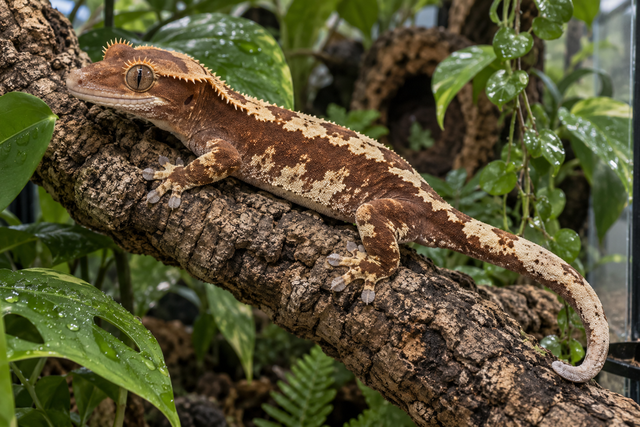
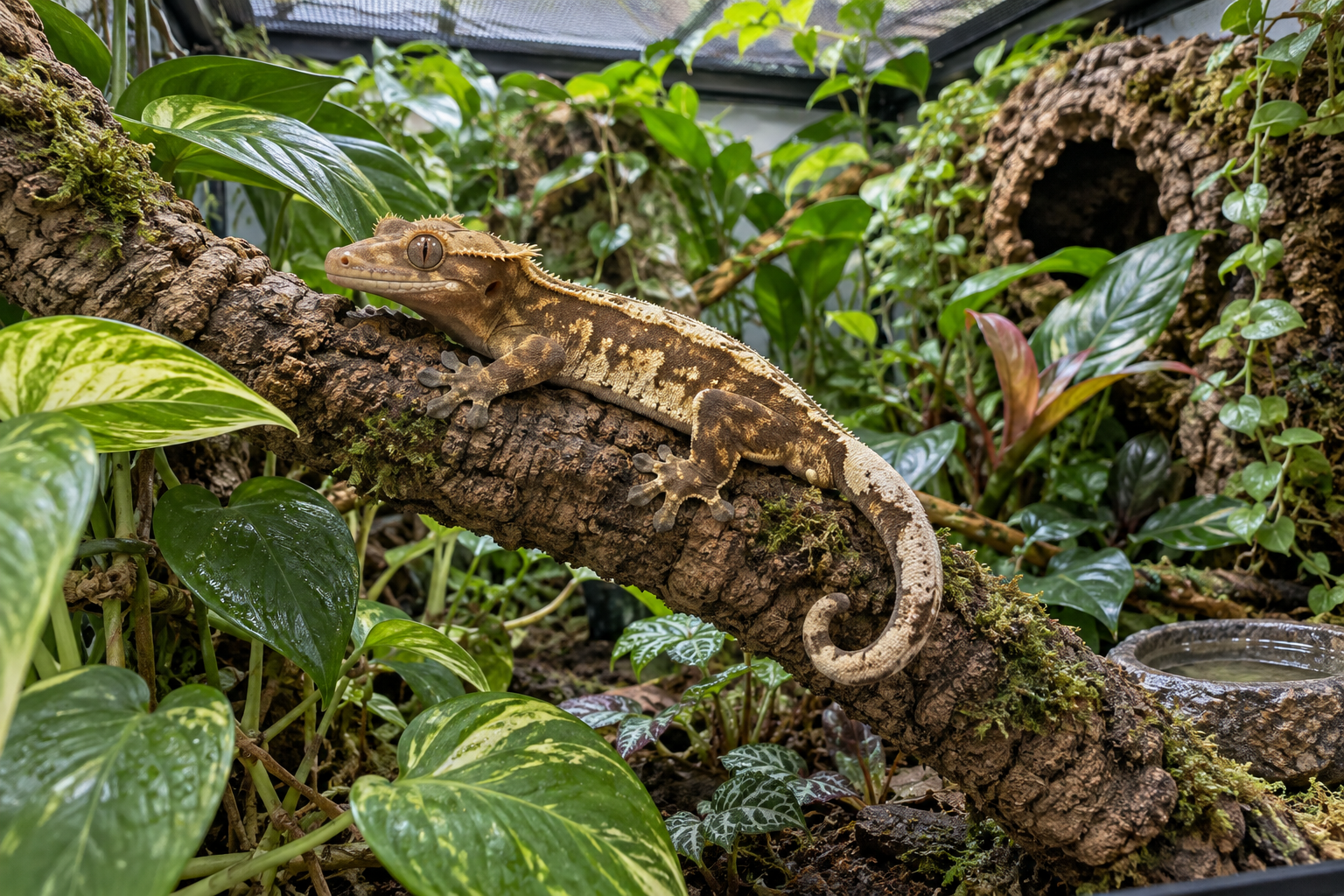
The crested gecko species guide covers the animal behind the morph label. For identification, write a plain description first: brown base, cream back, cream on the legs, scattered dark spots. It lets another person understand what you actually saw even if they use a different name.
In hobby descriptions, these terms usually point to visible features:
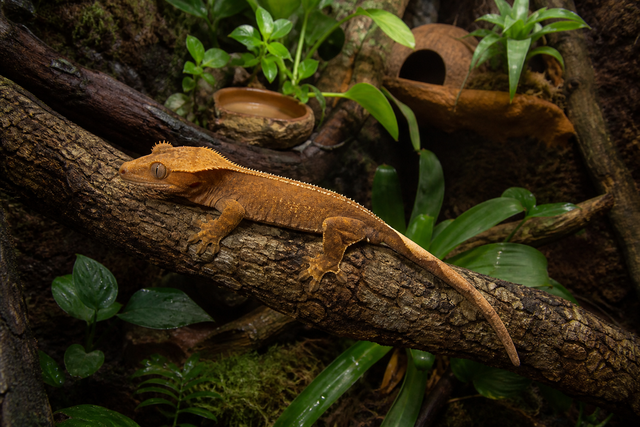
- Patternless: little obvious contrasting body pattern. Check the animal in more than one color state before treating a faint pattern as absent.
- Bicolor: a contrasting dorsal area against the sides, often within a similar color family.
- Flame: contrasting color concentrated along the back, with relatively limited pattern on the legs and flanks.
- Harlequin: contrasting pattern extending onto the limbs and sides as well as the back. “Extreme” adds a seller’s judgment about coverage; ask for actual photographs.
- Tiger or brindle: bands or irregular striping extending down the sides.
- Pinstripe: the pale raised scales along the dorsal crests. Ask whether the description is full, partial or interrupted.
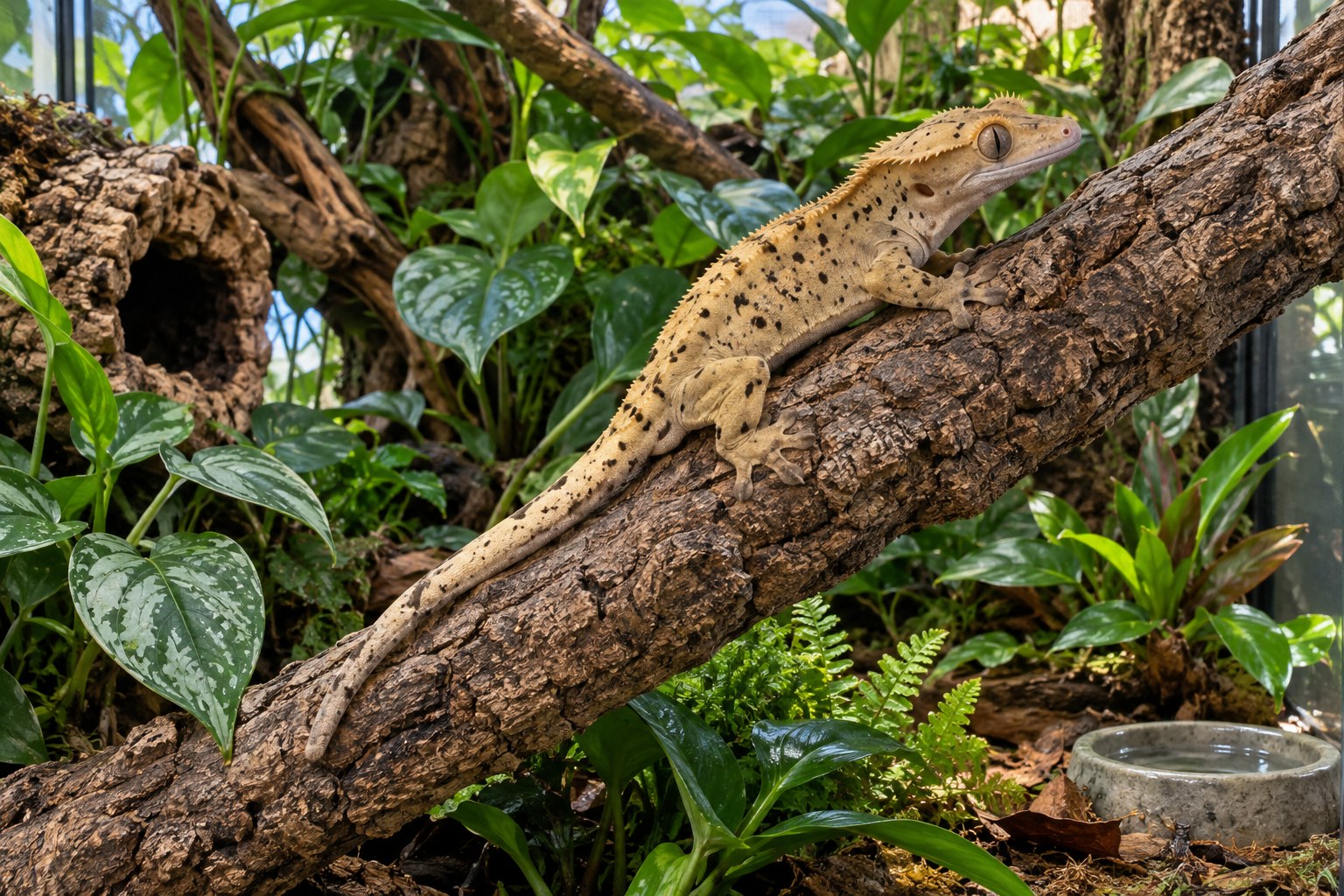
- Dalmatian: discrete dark spots. A seller’s “Super Dalmatian” label needs its own explanation rather than an assumed genetic meaning. The dalmatian crested gecko guide explains what is and is not known about spotting.
These are practical vocabulary, not a laboratory identification key. A pinstriped harlequin can also have spots. Do not force all its features into a single exclusive category or calculate inheritance from the name alone.
Why the same gecko can look different
The RSPCA describes darkening as firing up. Camera exposure and warm room lights can add another layer of difference. A brown animal can photograph much redder under a warm bulb, while bright exposure can erase fine cream pattern.
Ask for neutral-light pictures of the same individual, including dorsal and side views, with its color state recorded. Do not deliberately disturb or overheat it to obtain a more marketable photograph. Keep the original image alongside any crop, and avoid color filters when comparing animals.
Lilly White: keep the evidence qualification attached
Lilly White is a named breeding trait, not a synonym for every cream-colored crested gecko. White pattern alone cannot confirm it, especially when ancestry is missing. Ask for the breeder’s parent identifiers and the source of the Lilly White claim.
Breeder project accounts, including Corch Geckos’ published project description, report all-white “super” offspring that did not survive after Lilly White-to-Lilly White pairings. That is a breeder-reported welfare concern, not a peer-reviewed demonstration of the causal gene, mechanism or an exact mortality rate. An all-white photograph cannot establish the proposed two-copy genotype.
Do not use the attractive appearance of a hypothetical super form as a reason to attempt that pairing. A person considering breeding should discuss the recorded background and welfare implications with a reptile veterinarian before pairing animals. Keep “reported non-survival in breeder accounts” attached to the claim rather than converting it into certainty about every pale gecko.
Other named projects, including Axanthic and Cappuccino, also need traceable evidence and a clear explanation of the breeder’s inheritance model. This guide does not assign molecular genes or precise offspring odds to them. Ask whether “het” is established, inferred from parents, or merely possible.
Preserve the identification on Creatures
A useful record reads: “cream dorsal and flank pattern, dark brown base in this photograph; sold as Lilly White; seller supplied the following parent identifiers.” If you later obtain stronger evidence, add it with its date and source instead of erasing the original uncertainty.
Keep the acquisition document, comparable photographs and any laboratory report with the animal’s profile. A recorded pedigree preserves entered ancestry; it does not certify it. A saved claim is still a claim until its supporting evidence establishes more.
Choose for care and health as well as appearance
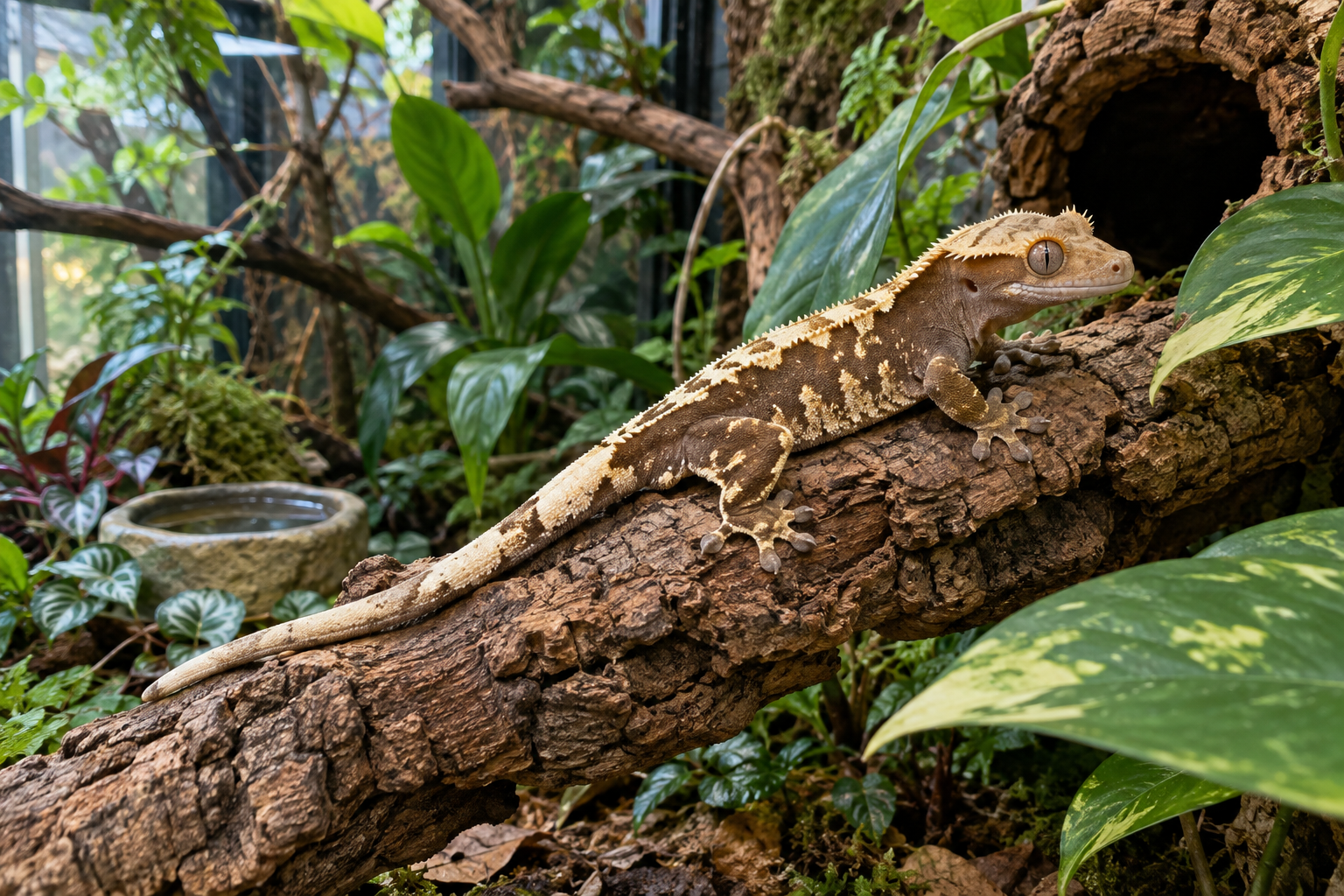
Crested geckos need secure, ventilated, tall housing with usable branches and shelter. The RSPCA guidance describes their climbing lifestyle and need for a temperature gradient. A striking morph does not excuse an empty display box or a setup that leaves the animal unable to move away from heat.
Ask the keeper for feeding, shedding and health records, and plan for veterinary care rather than spending the entire budget on a name. The crested gecko cost guide separates buying the animal from setting up and maintaining its home. The lifespan guide helps put that commitment in context.
Common questions
Can a gecko have several morph labels?
Yes. A description can combine base color, a dorsal pattern, pinstriping and spotting. Ask what every part describes and which parts are supported as inherited traits.
Does firing up prove the animal is stressed?
Color state alone does not diagnose health or stress. Record the circumstances and seek veterinary advice about concerning behavior, feeding or physical changes rather than diagnosing from color.
Is there a Creatures crested gecko morph calculator?
No supported crested gecko morph calculator is linked here. Profiles and records keep your observations and original evidence together; they do not generate a genetic identification from photographs.
Do this next on Creatures
- Add your crested gecko and keep its identity and photographs together. You can start without an account. See how to add an animal.
- Add a record for a dated observation, original document or veterinary result. It opens for visitors; a free account saves it. The record guide explains the flow.
- Set a listing alert if you are looking for an animal. An alert does not promise current stock; see saved searches.
- Browse the filtered marketplace and ask sellers for the evidence behind a named trait.
- Use the breeder directory to find people to question about their animals and records. A directory entry is not genetic verification.
- If you keep a breeding program, create an organization profile to describe it. This is a guest-capable starting flow.