Dalmatian
Morph
Author: Elliott Garber, DVM · Published
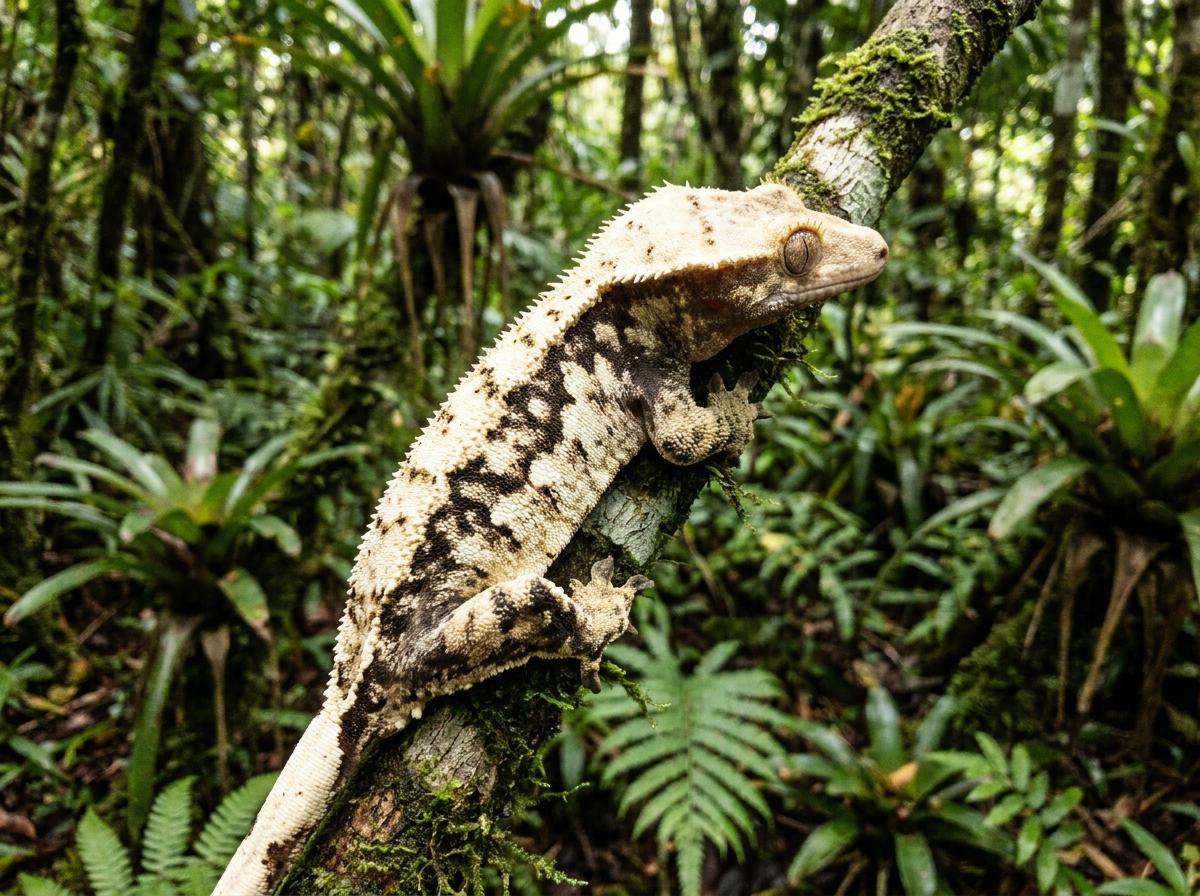
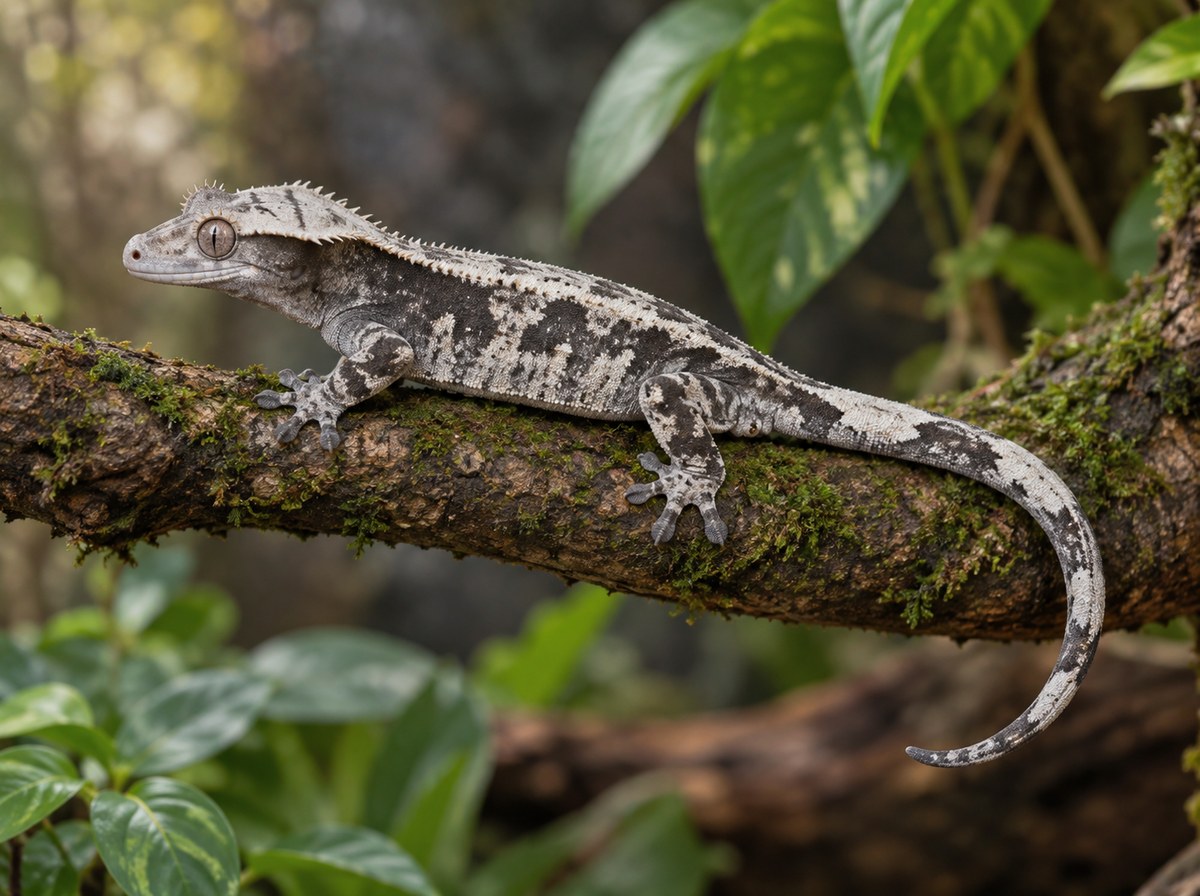
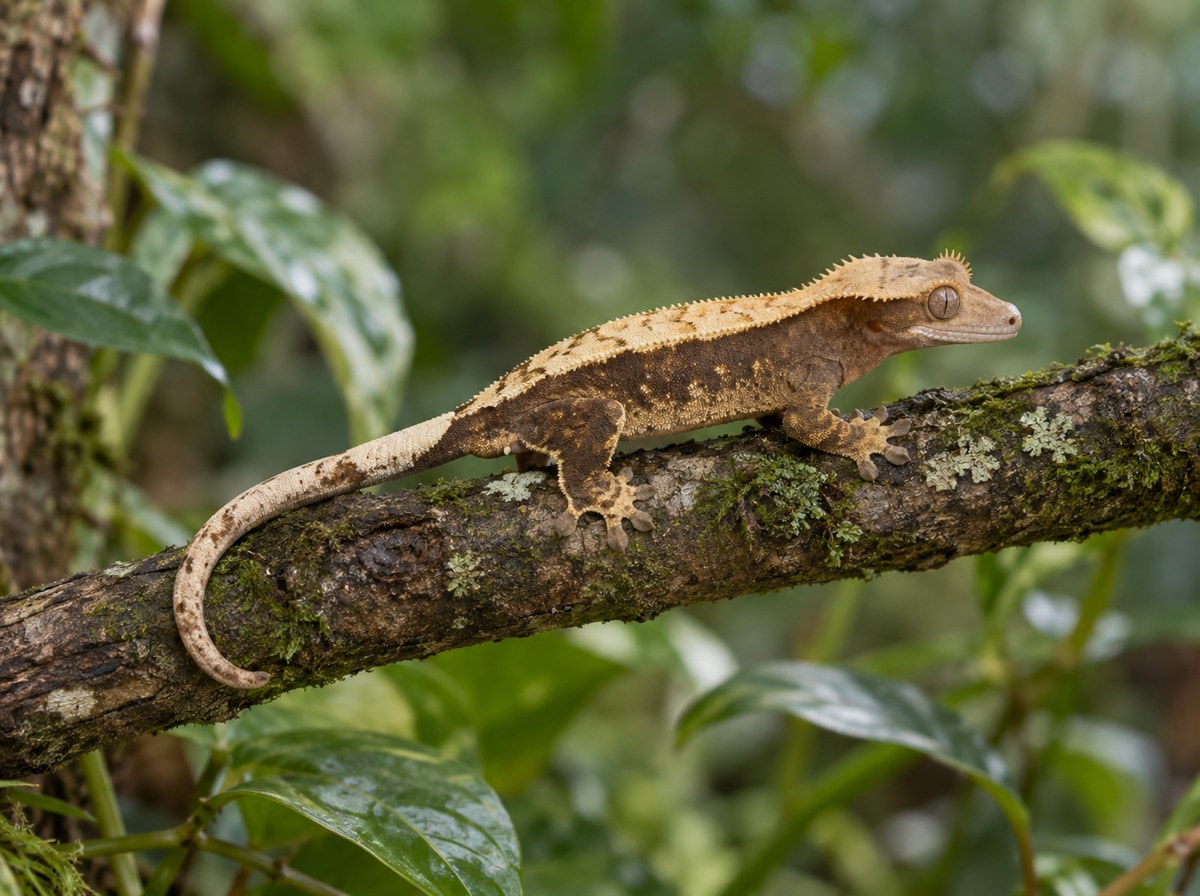
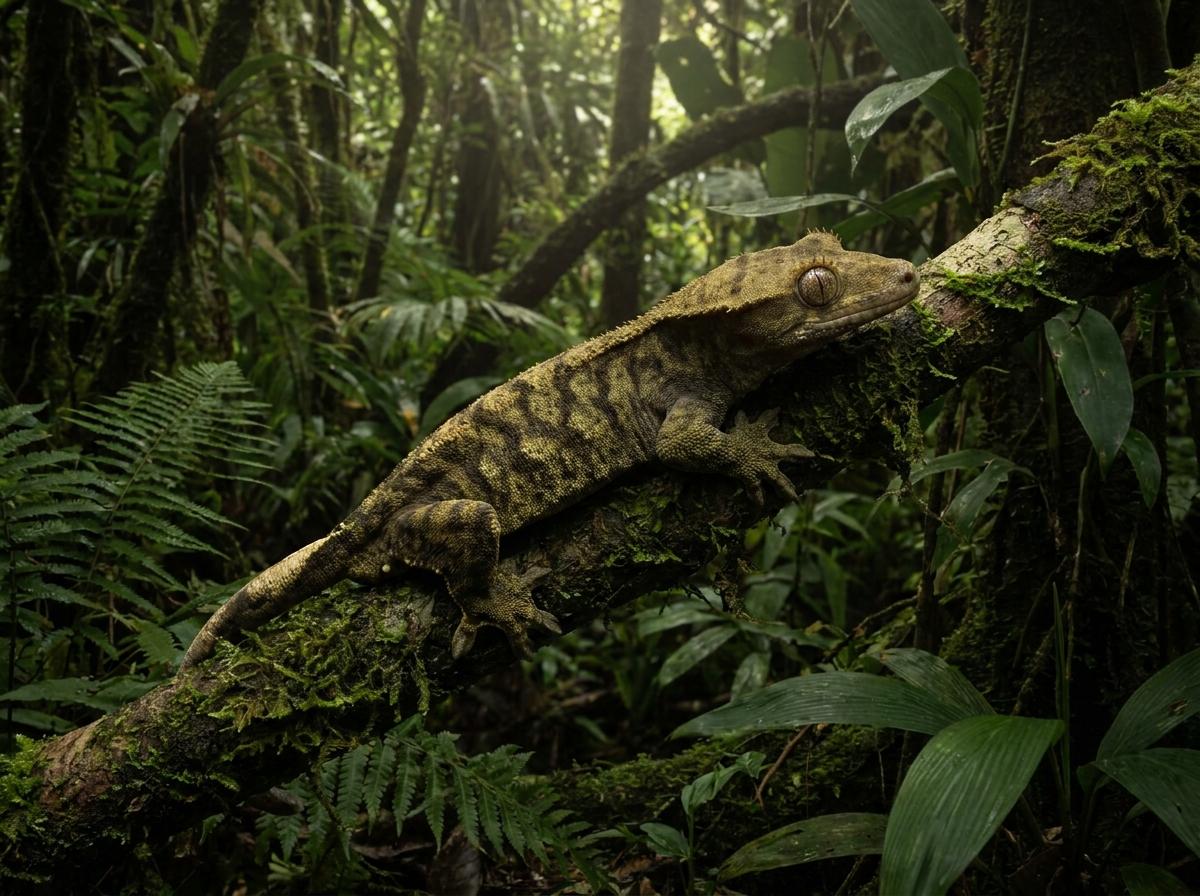
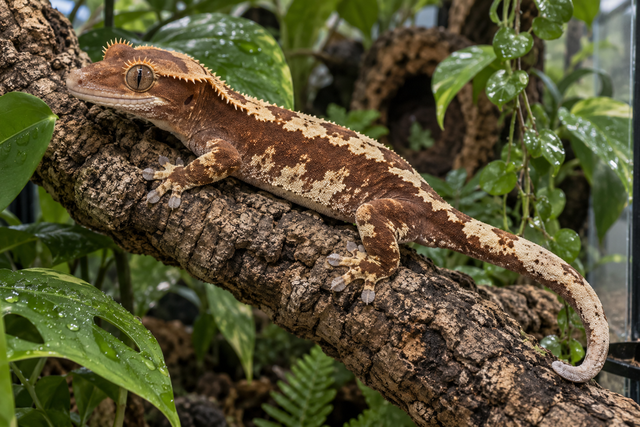
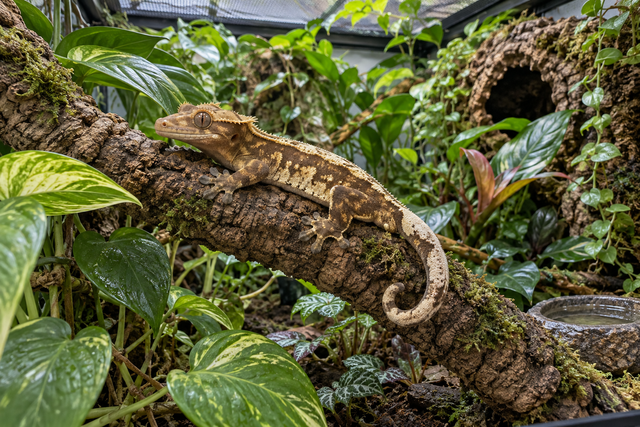
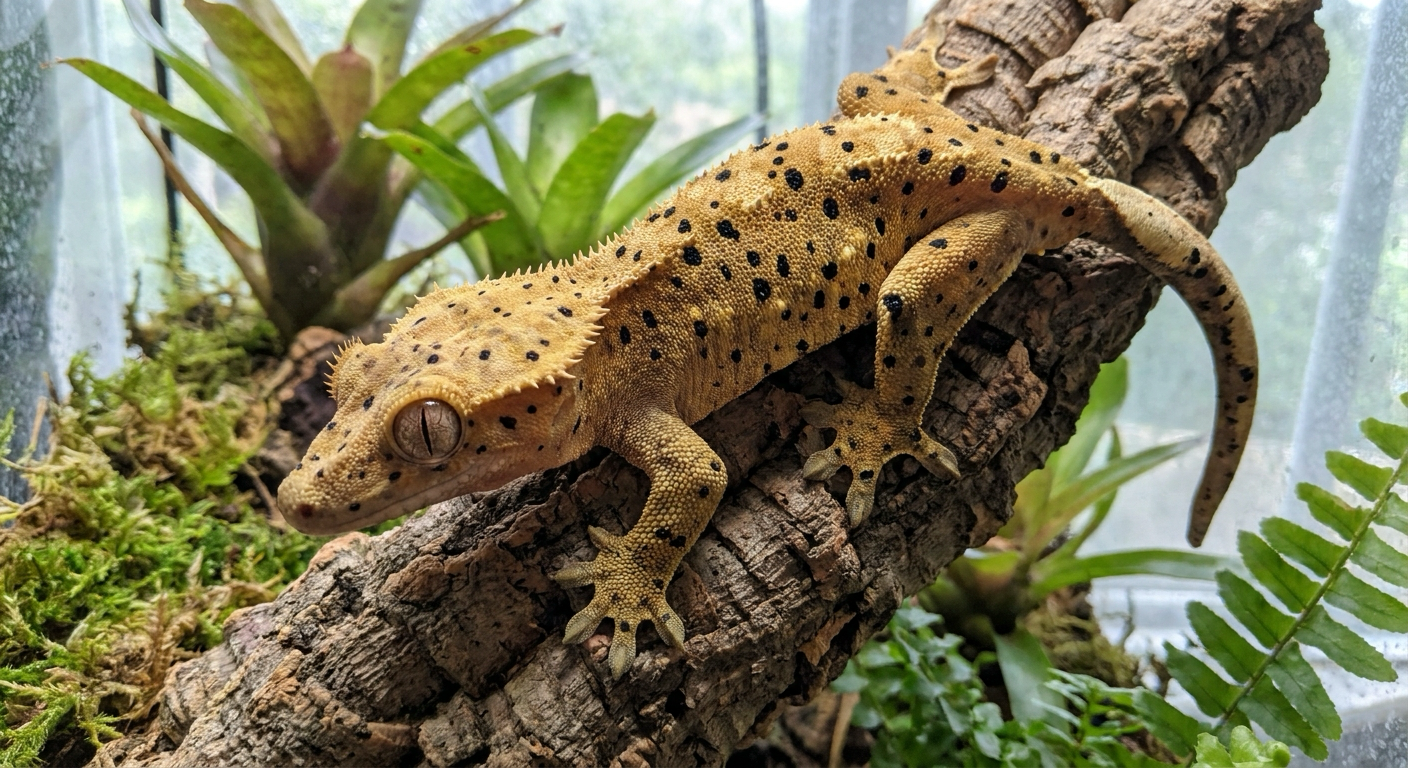
A dalmatian crested gecko is a Correlophus ciliatus with spots: scattered, distinct dots over the body, legs, head or tail, laid on top of whatever base color and pattern the gecko already has. It is a description of how the gecko looks, not a proven gene. No published study has worked out how spotting is inherited, so there are no reliable odds for a pairing, and Creatures has no crested gecko calculator to give you any. What you can do is document it: the free pedigree chart maker prints a three-generation chart from a breeder’s records, and dated photos on the gecko’s profile show how its spots develop.
| Species | Correlophus ciliatus, the crested gecko, from New Caledonia |
|---|---|
| Type | Appearance term for a spotted gecko; not a separate breed |
| Look | Distinct spots, usually dark, on any base color or pattern |
| Inheritance | Not established by any published study |
| “Super dalmatian” | Seller label for heavy spotting; no agreed spot count |
| Adult size | Around 8 in (20 cm) including the tail |
| Lifespan | 15 to 20 years in captivity (RSPCA, University of Montreal) |
| Care | Standard crested gecko care; spots change nothing |
Browse listings, public profiles, breeders, or add your animal.
What makes a crested gecko a dalmatian
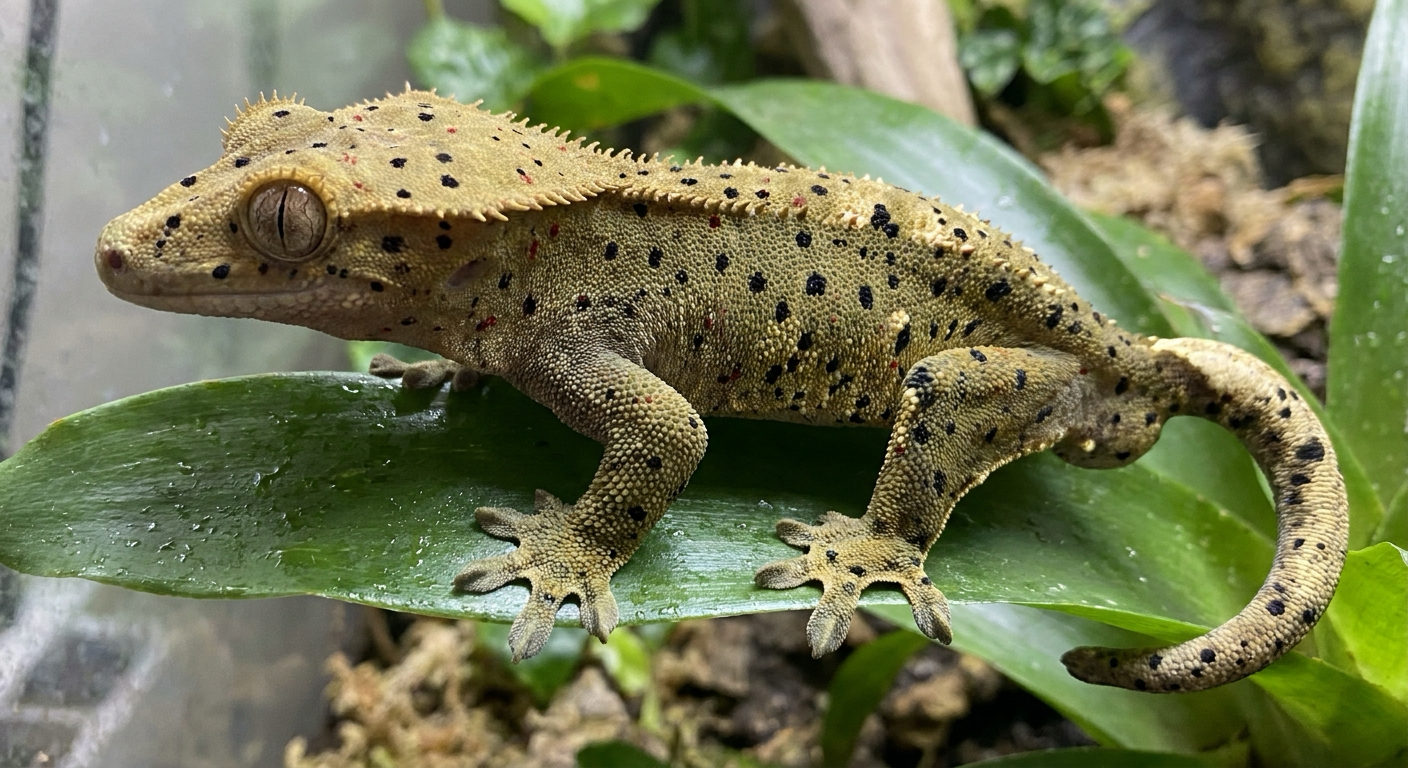
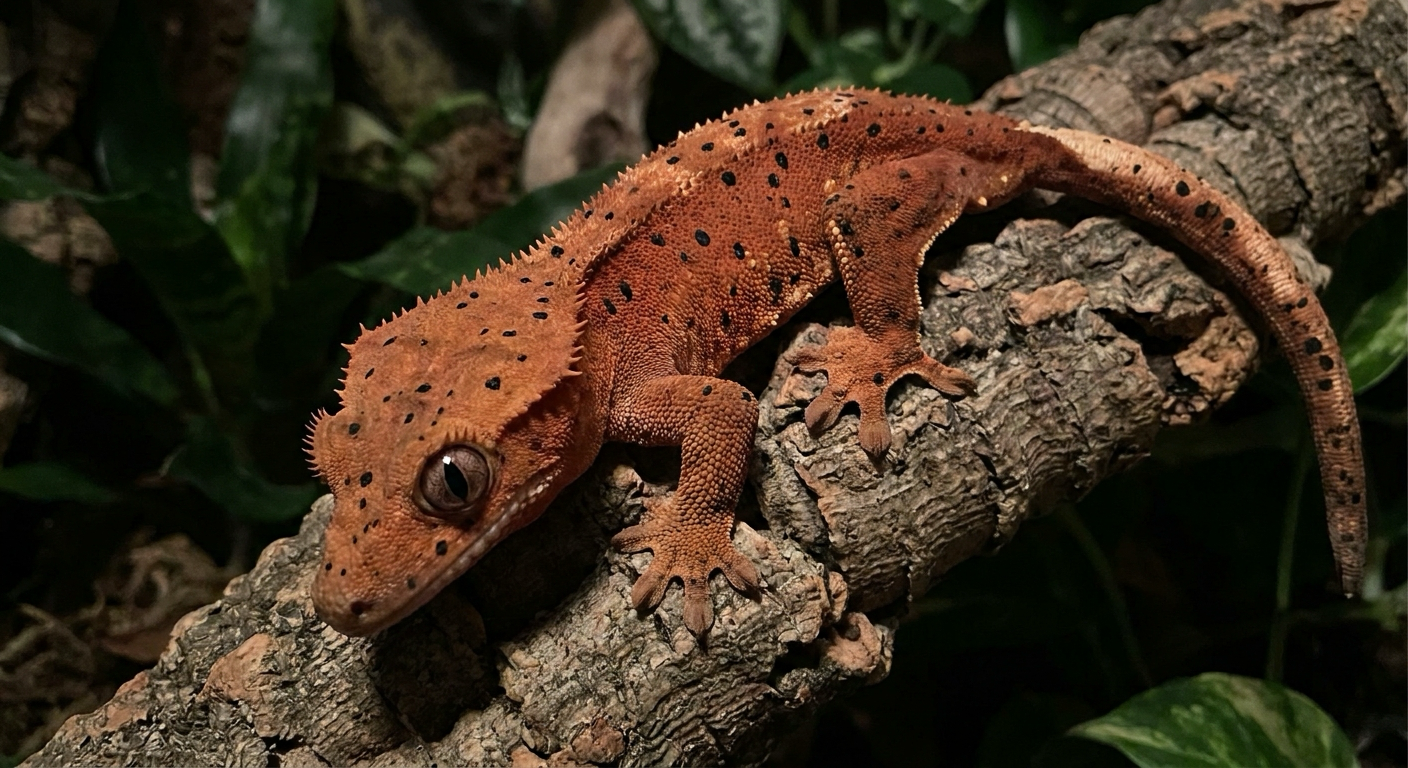
Every crested gecko has the eyelash crests that give the species its name, a fringe of small spines running from above each eye down the neck and wide, sticky toe pads. A dalmatian adds spots. They are usually black or dark brown, and some keepers describe red or other colored spots as well. They sit on top of the base color and any other pattern, so a flame, a harlequin or a pinstripe can also be a dalmatian. The live crested gecko morphs guide defines dalmatian simply as discrete dark spots and makes the same point: one gecko can carry several appearance terms at once.
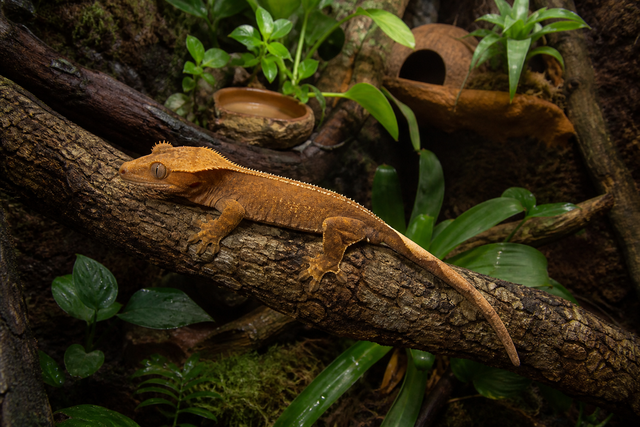
Crested geckos also change shade. Keepers call the darker, more saturated state “fired up” and the paler one “fired down”, and the same gecko can look quite different from morning to evening. That shift changes how strongly spots stand out, which makes a single photo weak evidence for how heavily spotted a gecko is.
Super dalmatian, ink spots and other labels
Sellers use “super dalmatian” for a heavily spotted gecko. There is no agreed threshold, so one seller’s super dalmatian can be another’s ordinary dalmatian. The morphs guide puts it plainly: a super dalmatian label needs its own explanation rather than an assumed genetic meaning. The same applies to names for spot size or color, such as large “ink spots” or red spots. They describe what you see. They do not tell you what the offspring will look like.
Do not confuse “super” here with a super form in ball python genetics, where it means two copies of an incompletely dominant gene. The in-batch axanthic ball python guide shows how a proven recessive gene behaves; nothing comparable has been shown for dalmatian spotting.
Genetics: what is known and what is not
We found no published, peer-reviewed study of how dalmatian spotting is inherited in crested geckos. Breeders select for heavy spotting by pairing spotted animals, but no published data show how predictably it passes on, and a selected tendency is not the same as a defined gene with predictable odds. Without a study, any “50 percent dalmatian” or “het dalmatian” claim is a guess dressed up as a number. The crested gecko morphs guide takes the same line and does not assign genes or odds to most crested gecko traits.
Two practical consequences follow:
- Buy the gecko you can see. A juvenile’s spotting may change as it grows, so if heavy spotting matters to you, ask for dated photos of the same animal over time, and photos of both parents as adults.
- Keep your own evidence. A profile with dated photographs in the same light, the hatch date and the parents’ identities is more useful than any label. If you breed, a run of records across several clutches is what will eventually show whether spotting passes on predictably in your animals.
A clearly labeled comparison: Lilly White
Lilly White (listed on Creatures as Lily White) is the crested gecko trait most often described as a defined gene. Breeders describe it as incompletely dominant, meaning one copy shows, and many avoid pairing two Lilly Whites because breeder accounts report that the double-dose form does not survive. That is a breeder-reported model, not a published genetic study, and it is a different trait from dalmatian. A Lilly White can also be spotted. Keep the two claims separate on paper.
Housing a dalmatian crested gecko
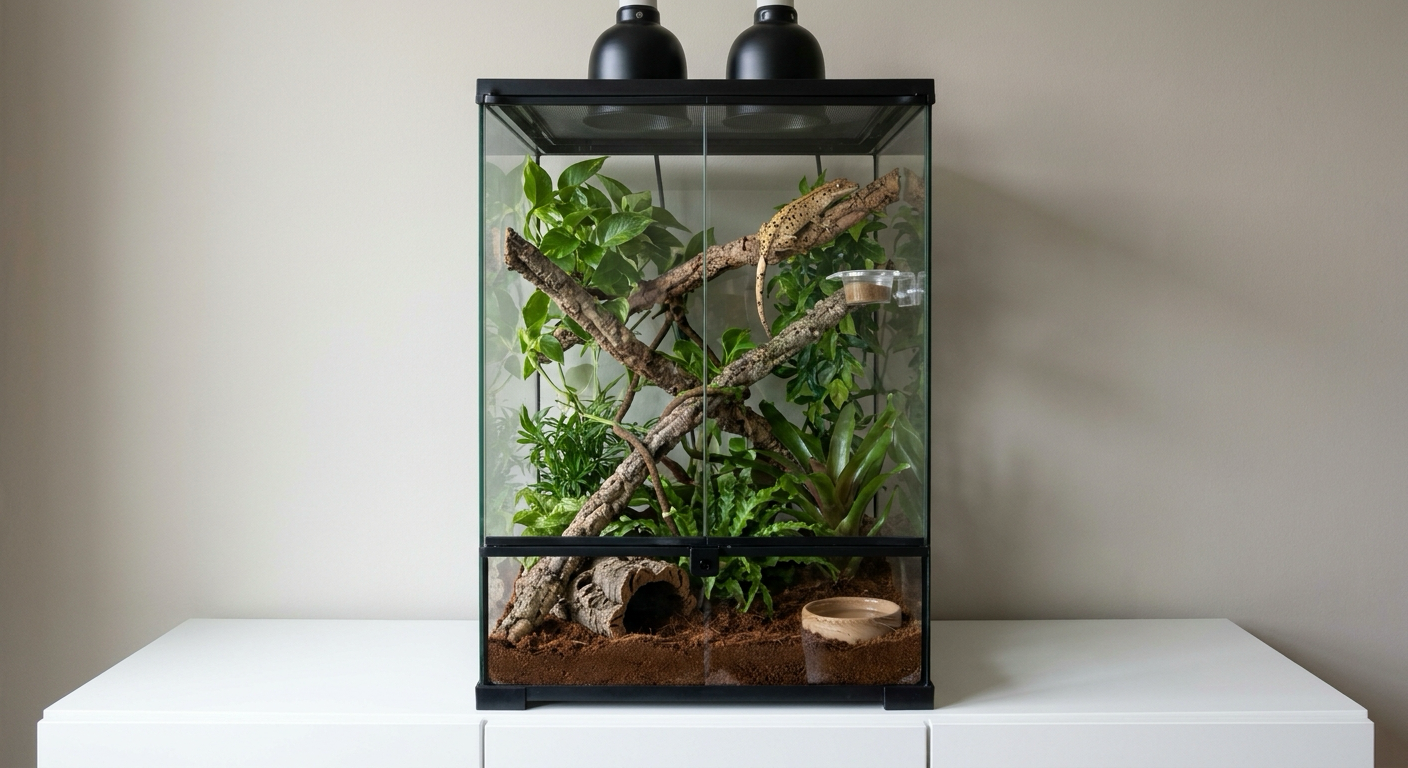
Spots change nothing about care. Crested geckos are tree-dwelling and nocturnal, so the enclosure is tall and full of cover. The RSPCA’s crested gecko guidance and the University of Montreal veterinary teaching hospital’s crested gecko page (in French) give the essentials:
- Size. RSPCA’s minimum for one adult is 45 cm wide, 60 cm tall and 45 cm deep; Montreal says at least 20 gallons, in a tall enclosure. Bigger is better for climbing.
- Temperature. RSPCA: a basking zone of 26 to 28 C, a cool area of 20 to 24 C, and nights that can fall to 18 to 20 C. Montreal gives 26 to 28 C by day. Every heat source needs a thermostat, and the gecko must not be able to touch a hot lamp or its guard.
- Humidity. The two sources differ. RSPCA gives 40 to 50 percent normally, raised to around 80 percent by spraying. Montreal says never below 50 percent, averaging 60 to 80 percent with two or three daily peaks after misting. Both want it to rise and fall rather than stay wet, and both want a hygrometer to measure it.
- Light. RSPCA recommends a 5 to 7 percent UVB lamp giving a UV index of about 0.7 in the basking zone and zero in the shade; Montreal recommends a low-output UVB lamp made for nocturnal reptiles, replaced every six months.
- Cover and floor. Branches and broad plants at several heights, hides such as cork tubes or half coconut shells, and a moisture-holding floor such as coconut fiber or soil with moss or leaf litter. Montreal suggests paper towels for young geckos, which are more likely to swallow loose bedding.
- Company. RSPCA advises keeping them singly; males must never live together permanently.
Feeding
RSPCA describes a varied diet of mashed fruit and live insects with supplements, with commercial crested gecko diet used as part of the menu rather than the only food, and says to avoid citrus and banana. Montreal describes crickets as the main food with commercial diets as a supplement, adults eating three to four times a week and juveniles daily, in the evening. Those are different emphases from two reputable sources; ask your reptile vet which suits your gecko, and how to dust insects.
Handling, tails and health
A crested gecko can drop its tail when grabbed or stressed, and RSPCA is clear that it cannot regrow it. Never hold one by the tail. RSPCA suggests letting the gecko walk onto your hand, keeping sessions to around ten minutes and not handling a new arrival for its first week. A tailless adult can live well, and the crested gecko lifespan guide covers what affects how long they live.
RSPCA lists the signs of a healthy gecko as clear, bright eyes, smooth skin without blisters and no kinks in the tail or spine. Abnormal droppings, weight loss, or swellings and a misshapen leg, mouth or spine (possible metabolic bone disease) need a reptile vet urgently. Merck’s owner guidance recommends an initial exam soon after you get a reptile and an annual check, and notes that reptiles need no vaccinations. How to find a reptile vet helps you line one up first.
Reptiles can carry Salmonella without showing it. The CDC recommends handwashing after handling the gecko, its food or its enclosure, and suggests another pet for homes with children under 5, adults 65 and older or people with weakened immune systems.
Buying a dalmatian crested gecko
Spotting, sex, age, line and the other traits a gecko carries all move the price, and nobody publishes a price index for crested gecko morphs. The crested gecko cost guide gives dated October 2026 prices for pet geckos, setups and vet visits. If you are comparing a gecko with other first reptiles, the in-batch leopard gecko cost guide builds the same kind of budget for a ground-dwelling gecko with very different housing.
Before you pay extra for spots, ask:
- Is this the exact gecko, and when were the photos taken? Are there photos fired up and fired down?
- What are its hatch date and weight, and is it sexed? (Montreal notes males show hemipenal bulges from about 5 to 9 months.)
- What do both parents look like as adults?
- What does “super dalmatian” mean to this seller, in plain words?
- What does it eat, and is it eating on its own?
- Is the tail intact, and if not, how and when was it lost?
When it is home, the crested gecko name generator has name ideas, and the crested gecko species page gathers the morph pages and care guides in one place.
Frequently asked questions
Is dalmatian a genetic morph in crested geckos?
It is an appearance term. No published study has defined the genetics of dalmatian spotting, so there are no reliable pairing odds.
Do crested gecko spots increase with age?
Some keepers report that spotting becomes more obvious as geckos mature, but it is not guaranteed for a given animal. Dated photos of the same gecko are the only way to know.
What is a super dalmatian crested gecko?
A seller’s label for heavy spotting. There is no agreed spot count, so ask what the seller means.
Is there a crested gecko morph calculator?
Not on Creatures, and with spotting not genetically defined, any calculator would be guessing. Use the profile and pedigree chart to keep the evidence instead.
Do dalmatian crested geckos need special care?
No. They need the same tall, humid, well-planted enclosure, diet and handling as any crested gecko.
Do this next on Creatures
Get alerted when one is listed. Creatures has no dalmatian crested gecko listings or listed breeders yet, so an alert is the way to hear about the first. Set a dalmatian crested gecko listing alert. No account needed to start. See saving searches and using your watchlist.
Add your gecko. Create a free dalmatian crested gecko profile with its hatch date, parents and photos. No account needed to start. The steps are in adding an animal to Creatures.
Track weight, sheds and photos. Add a record for each weigh-in, shed or vet visit, with photos attached. The sheet opens for visitors; a free account saves it. See adding a record and tracking weight and growth.
Check the marketplace. Dalmatian crested geckos on the marketplace will show any listings as they appear.
Look up breeders. The breeder directory filters by species and state; no dalmatian breeders are listed yet.
Breed spotted geckos? The first breeder profiles stand out. Create a free breeder profile. No account needed to start. Read getting listed in the breeder directory.