



Cellophane
Variety
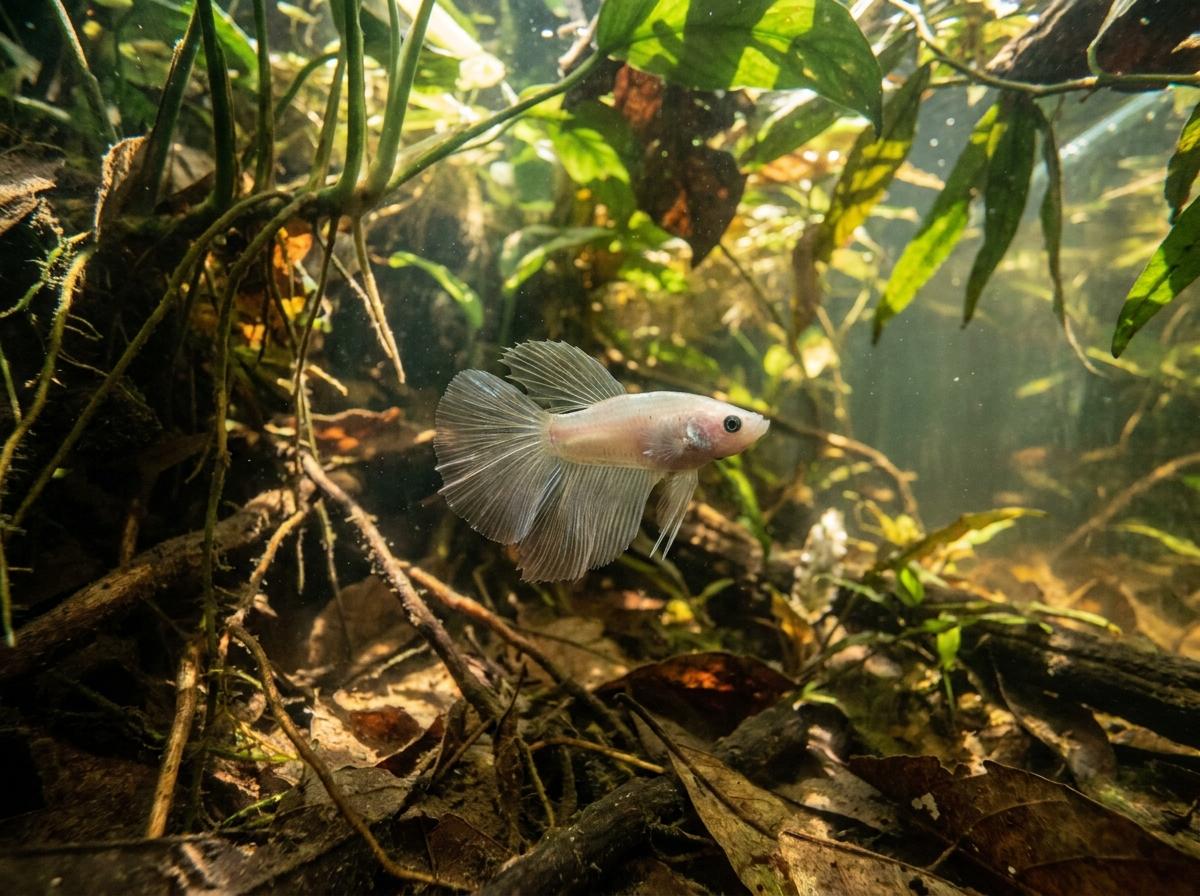
A cellophane betta is a domestic Betta splendens whose scales carry almost no visible pigment, so the body looks pale, glassy, and slightly see-through. The name comes from the fins, which can read as clear as plastic wrap, and from the flesh tones and faint blush of blood vessels showing through the sides. It is not a separate species or a wild fish, just a color type of the same Siamese fighting fish sold everywhere, and once you see that the transparency is a pigment story rather than a care story, most of the mystery clears up. A cellophane needs the exact same husbandry as any other betta: a heated, filtered tank, clean warm water, and a single male kept on his own. Below is what the color actually is, how to tell it apart from white and albino fish, whether it will stay clear, and how to keep one well.
| What it is | A color type of Betta splendens (Siamese fighting fish), not a distinct species or breed line |
|---|---|
| Defining trait | Near total lack of expressed pigment, giving a pale, translucent, flesh-toned body and clear fins |
| Eyes | Normal dark eyes, which separates a cellophane from a true albino |
| Show name | Judged as “clear” under International Betta Congress color standards; cellophane is the hobby term |
| Adult size | Roughly 6 to 7 cm (about 2.5 to 3 in) in total length, tail included |
| Temperament | Territorial; males must be housed alone |
| Tank minimum | 5 gallons, heated and gently filtered (bowls are not adequate) |
| Water temperature | About 76 to 81°F (24 to 27°C), stable and heated |
| Lifespan | Commonly 2 to 4 years in good care, sometimes longer |
Browse listings, public profiles, breeders, or add your animal.
What is a cellophane betta?
Start with the fish, then the color. Betta splendens is a small labyrinth fish native to central Thailand and the surrounding region of mainland Southeast Asia, where it lives in shallow, slow, heavily vegetated water such as marshes, floodplains, and rice paddies (University of Florida IFAS extension). People have kept and selectively bred these fish for a very long time, first for fighting and later for the fins and colors that make them popular aquarium animals. A genomic study of the species (Kwon and colleagues, Science Advances, 2022) traces domestication in Thailand’s central plain back at least a thousand years, making the betta one of the earliest domesticated fishes. The wild species has not fared as well as the pet: it is listed as Vulnerable on the IUCN Red List (2011 assessment), with habitat loss across central Thailand the main pressure.
Every betta color you have seen, from a jet black to a metallic blue to a solid red, is the product of that long selective breeding acting on the same underlying pigment system. Cellophane is one outcome of that system: an animal whose pigment cells are present but not laying down color, so the natural pink and cream of the flesh shows through instead. That is why a cellophane can look faintly pink around the gills and belly and almost colorless along the fins. You are looking at tissue and the play of light, not at a painted scale.
Because it is defined by an absence rather than a hue, “cellophane” is best thought of as a color designation within Betta splendens, not a fin type or a bloodline of its own. In show circles the same look is judged as a single color the International Betta Congress simply calls “clear,” so under those standards any iridescence, red veining, or dark specks count as faults against it. A cellophane can be a halfmoon, a plakat, a crowntail, or any other fin form, because color and finnage are inherited separately. If you want the full picture of the species and its many varieties, the Creatures betta fish species page is the place to compare types side by side.
The transparency, explained
Betta color comes from stacked layers of pigment cells, called chromatophores, sitting in the skin. Hobbyist and breeder references generally describe four working layers: an iridescent layer near the surface made of light-reflecting cells (iridocytes, sometimes called iridophores or guanophores), then a black layer of melanophores, a red layer of erythrophores, and a yellow layer of xanthophores underneath. Each cell type holds a different pigment, and the color you see on any betta is the sum of which layers are switched on and how they overlap.
A cellophane is what you get when those pigment layers are effectively silent. The cells are there, but little to no pigment is being expressed, so the scales stay clear to whitish and the underlying flesh tone dominates. Under aquarium lighting a cellophane can pick up faint blue or green glints, because even a thin scattering of iridescent cells will refract light through the water. That shimmer is not true body color. It is the same optical trick that makes a soap bubble flash, laid over a nearly colorless fish.

Cellophane versus white, albino, and clear
These terms get used loosely, so it helps to separate them.
- Cellophane. Pigment cells present but largely unexpressed. The body reads as translucent and flesh-toned, the fins look clear, and the eyes are normal and dark. That dark eye is the quick tell.
- Opaque or solid white. A white betta carries a dense, light-scattering iridescent (opaque) layer that makes it look flatly white, more like paper than glass. It is not translucent in the way a cellophane is.
- Albino. True albinism is the genetic absence of melanin, and the giveaway is the eyes, which appear pink or red because there is no dark pigment in them. Genuine, stable albino bettas are famously rare and difficult to keep. A pale fish with ordinary dark eyes is a cellophane, not an albino.
- Clear or “see-through.” This is usually just a describer for cellophane-type fish and does not mean the animal is literally transparent like glass. You may see a faint blush of internal color, but a betta is not a see-through fish in the way some catfish or glass tetras are.
If a seller lists a fish as “clear” or “translucent,” check the eyes and the body in person or in a clear photo. The eye color and whether the whitishness looks glassy (cellophane) or chalky (opaque white) will tell you which you are actually buying.
Do cellophane bettas change color?
Often, yes, and it is the most important thing to understand before you fall for a particular fish. Many cellophanes do not stay clear: a large share carry, or are close cousins of, what breeders call the marble gene.
Marble is widely described in the betta hobby as a jumping gene, or transposon, meaning a stretch of DNA that can move around within the genome and switch pigment on or off in patches over the animal’s life. Its history in ornamental bettas is generally traced to breeding work in the 1970s and 1980s. Whether or not every clear fish carries it, the practical point holds: a fish that is cellophane as a juvenile can develop color as it matures, ranging from a pale pink to a deeper red, orange, or blue, or can turn marbled and patchy, and a marble betta may keep shifting throughout its life. This jumping-gene account is hobby and breeder knowledge rather than settled published science, so treat the mechanism as the working explanation keepers use, not a proven fact.
Some cellophanes do hold their look, with fish from certain bloodlines keeping their pale, translucent appearance rather than coloring up. But unless you know the lineage, treat a young cellophane as a fish that might change. A guaranteed permanent look is a question for the breeder about the specific line, not a promise the color type can make on its own. Either way, the color shift is cosmetic and does not signal illness. A betta that pales or blotches suddenly alongside clamped fins, lethargy, or loss of appetite is a different matter: that one is about health, not marbling.
What a cellophane betta looks like
Set the transparency aside and a cellophane is a normal betta in body and behavior, so its identifying features are about the lack of color rather than any special anatomy.
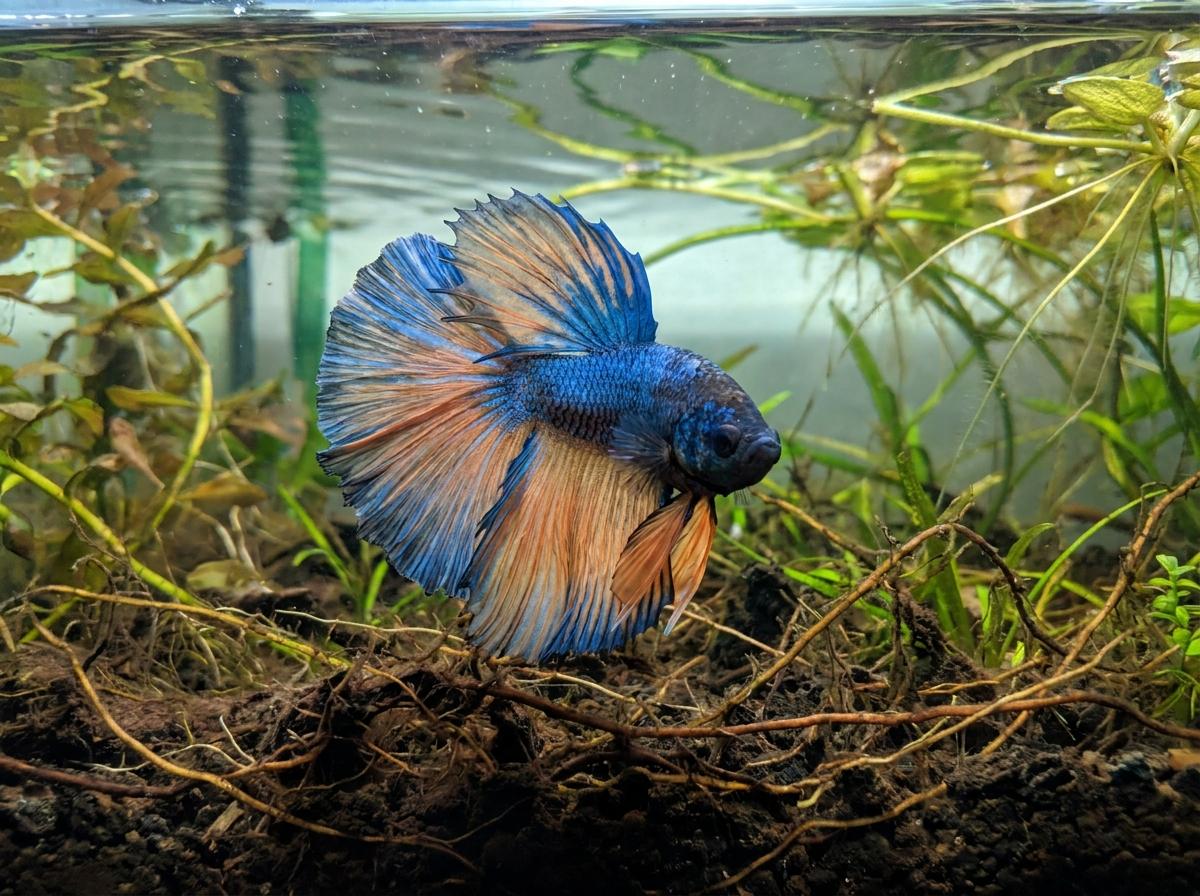
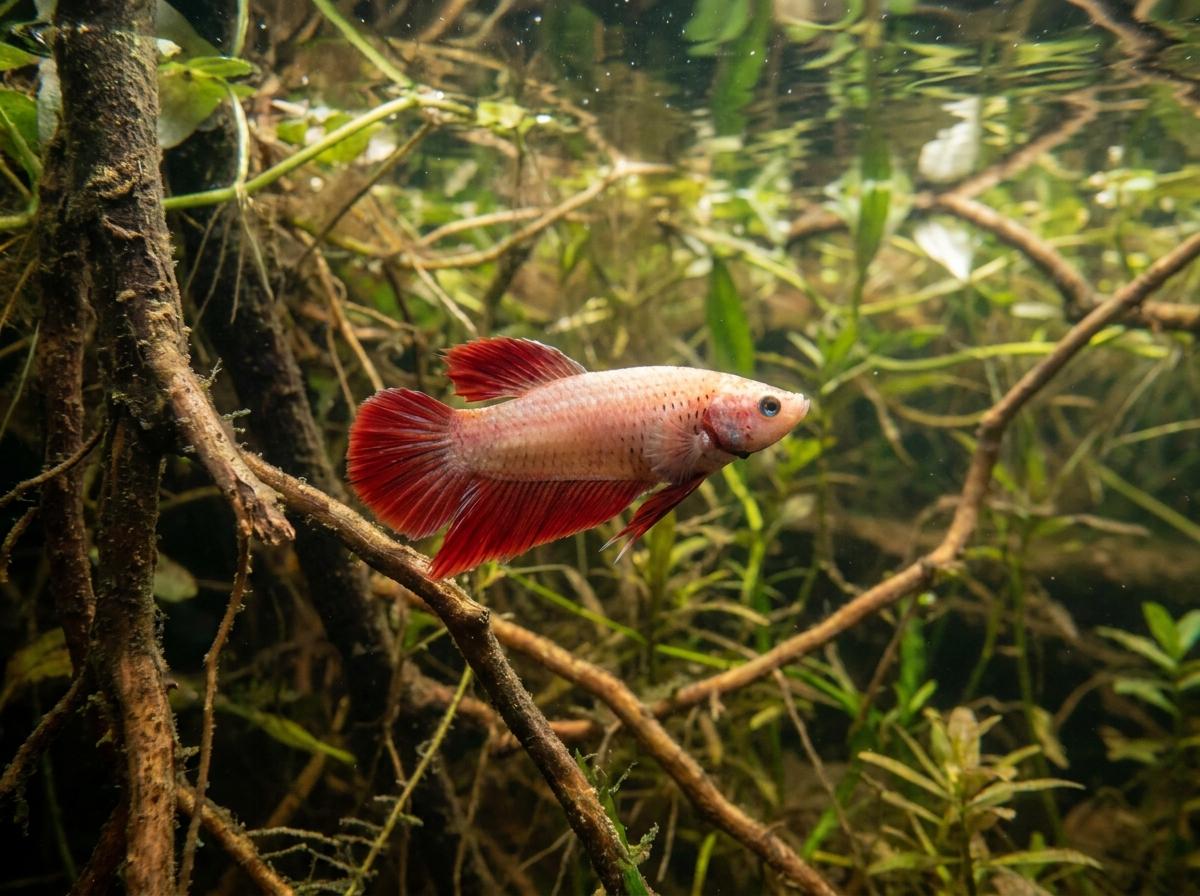
- Translucent, flesh-toned body. The overall impression is pale and slightly see-through, with cream and soft pink dominating and a faint blush where blood vessels sit near the surface.
- Clear or nearly clear fins. In a male the long fins show their rays and membrane structure plainly because there is little pigment to hide them. The “cellophane” name really comes from this glassy fin look.
- Normal dark eyes. As above, this is the fast way to rule out albino.
- Standard betta size and fins. Adults reach roughly 6 to 7 cm (about 2.5 to 3 in) in total length, tail included. The fin shape (halfmoon, plakat, crowntail, veiltail, and so on) is independent of the cellophane coloring, so the same clear body can come in any of them.
- A faint iridescent sheen under light. Optional and lighting dependent, more of a shimmer than a color.
Males show the dramatic long fins most people picture, while females are smaller with shorter fins and a small white ovipositor visible near the belly. The cellophane look appears in both sexes.
Caring for a cellophane betta
Here is the reassuring part. A cellophane needs nothing special because of its color. The care below is standard, sourced betta husbandry, and it is the same whether your fish is clear, blue, or red. For a genuinely unwell fish, water quality and temperature are the first things to check, and any medical decision or medication belongs with an aquatic veterinarian rather than a guess from a forum.

Tank and filtration
Bettas should not live in bowls. Veterinary guidance from the University of Illinois College of Veterinary Medicine is direct on this: a betta should ideally be in a 5-gallon glass or plastic tank or larger, because a bowl is too small for normal swimming and hiding and lets toxins build up. A larger volume is also more forgiving, since water chemistry stays more stable in more water. Add a gentle, low-flow filter. Filtration keeps ammonia and waste in check, and the low flow matters for a betta because a strong current tears at those long, delicate fins.
Water and temperature
Bettas are tropical fish and need a heater. The University of Illinois College of Veterinary Medicine puts the target range at about 76 to 81°F (24 to 27°C), so use a thermometer rather than trusting the room. Cold water suppresses a betta’s immune system and invites disease. Keep pH close to neutral, in the range of about 6 to 8. Always treat tap water with a dechlorinator before it goes in the tank, since the chlorine and chloramine in municipal water are harmful to fish (again per the University of Illinois guidance). Ammonia and nitrite should read zero, and nitrate should stay low, so regular partial water changes are part of the routine, not an occasional chore. Logging your parameters and change schedule makes patterns easy to spot, and you can keep those water and care records on your betta’s profile.
Feeding
Bettas are carnivores. A quality betta pellet as the staple, with occasional high-protein treats such as thawed bloodworms or brine shrimp, covers their needs. Feed small amounts, roughly what the fish finishes in a few minutes, and avoid overfeeding, which fouls the water and contributes to bloat. Because a cellophane’s belly is translucent, you can sometimes see food and internal organs through the body wall more clearly than on a dark fish, which is a curiosity rather than a health signal on its own.
Tankmates and temperament
Male bettas are highly territorial, and two males housed together will typically fight until one or both are badly hurt or killed. A male cellophane needs to live alone, the same as any other male betta. This is not a defect of the color type, it is the biology of the species. Some keepers add peaceful, non-fin-nipping tankmates in a larger community setup, but that is an advanced decision with real risk. A single betta in its own well-kept tank is the simplest way to keep the animal healthy.
Health
Most betta health problems trace back to husbandry: cold or dirty water, too small a tank, or a strong current stressing the fish and shredding fins. Watch for clamped fins, lethargy, loss of appetite, bloating, or fin damage, and treat the water and temperature first, since that is the most common root cause. Fin rot and fungal or bacterial infections do occur, and for anything beyond a water correction you should consult a veterinarian who treats fish rather than dosing blindly. A cellophane’s transparency can make early signs, such as a reddened patch or a change in the fins, easier to notice, which is a small advantage if you are paying attention.
Breeding and genetics
Cellophane fish sit at the center of a lot of betta breeding projects precisely because they are, in effect, a blank canvas. A clear or white fish carrying the marble gene is the starting point many breeders use to develop marbles, koi patterns, and other shifting looks, since the unexpressed pigment gives the jumping gene somewhere to work. If you cross cellophanes without understanding the lines behind them, you can get a wide and unpredictable spread of colors in the fry, some staying clear, some coloring up, some marbling.
Breeding bettas well is a real undertaking. It means conditioning a compatible pair, managing the male’s bubble nest and aggression, separating the sexes at the right times, and raising a large spawn of tiny fry with the right foods and frequent water changes. It is rewarding but not casual, and the color outcomes are genetics, not luck. If you are pursuing a specific look, keep careful pairing and lineage records so you can reproduce a result rather than chase it. Recording parents, spawn dates, and outcomes on each fish’s profile is exactly the kind of thing the Creatures records tools are built for.
Cost and availability
Cellophane is a recognized and reasonably available betta color rather than an exotic rarity, so you will see it turn up in general betta stock and in dedicated breeders’ lines. As a plain cellophane, it tends to sit in the ordinary price range for a pet-quality betta, while show-standard fish, specific fin forms, and known marble or Cambodian lines from named breeders command more. Prices vary too much by region, seller, quality, and fin type to quote a single reliable figure here, so treat any exact number you see with caution and judge the individual fish instead.
Where a cellophane is worth extra care is in knowing what you are buying, because the color can change. A young clear fish from an unknown source may not stay clear. If a permanent cellophane look matters to you, buy from someone who can tell you about the parents and the line, and be honest with yourself that a marble-carrying fish is a moving target by design. You can browse current betta listings on the Creatures marketplace and look for sellers and breeders in the Creatures directory, and because a specific color and fin combination can be hard to catch at the right moment, a saved listing alert is often the practical way to find one.
Buying considerations
- Check the eyes. Dark eyes on a pale fish mean cellophane. Pink or red eyes mean you are looking at a true albino, which is a much harder and rarer fish to keep, not a cellophane.
- Assume the color may change. Ask the seller whether the fish comes from a marble line or a line known to hold its color. A young cellophane can color up or marble as it matures, and that is normal, not a fault.
- Judge health, not just looks. Alert behavior, smooth unclamped fins, a good appetite, and clean skin matter far more than the exact shade. Translucency can make a reddened patch or early fin damage easier to spot, so use that to your advantage.
- Confirm the fin type and sex. Cellophane coloring comes on every fin form and in both sexes, so be clear on whether you are getting the halfmoon, plakat, or crowntail you want, and a male or a female.
- Plan the tank before the fish. A heated, filtered 5-gallon tank, cycled and dechlorinated, should be ready before the betta comes home. The fish is the easy part.
Frequently asked questions
Are cellophane bettas rare?
Not especially. Cellophane is a well-known color type that shows up in general betta stock and in breeders’ lines, often as a base for marble and koi projects. Truly rare are things like stable, healthy albino bettas, which are a different matter entirely.
Is a cellophane betta the same as an albino betta?
No. A cellophane has normal dark eyes and simply is not expressing pigment in its scales. An albino lacks melanin and has pink or red eyes. The eye color is the quickest way to tell them apart.
Will my cellophane betta stay clear?
Maybe not. Many cellophanes carry or are related to the marble gene and can develop pink, red, orange, or blue tones or turn marbled as they age. Some lines tend to hold their pale look better than others. If a permanent look matters, ask the breeder about the specific bloodline.
Do cellophane bettas need special care?
No. They need the same care as any betta: a heated, filtered tank of at least 5 gallons, water around 76 to 81 F, a dechlorinator, regular partial water changes, a carnivore diet, and life alone for a male. The color changes nothing about husbandry.
Can I keep two cellophane males together?
No. Male bettas of any color are territorial and will fight, often to the death. Each male needs his own tank.
Why does my cellophane look pink?
Because you are seeing the fish’s flesh and blood vessels through nearly colorless scales. That soft pink is tissue showing through, not a pigment the fish is producing.
Do this next on Creatures
Whether you are choosing a cellophane, settling one into a new tank, or breeding for the clear look, Creatures is the records, marketplace, and directory layer to do it in one place. It also connects to sister breed pages worth a look, from the Oriental Frill pigeon to the Large White Yorkshire pig, and across the betta varieties themselves.
Compare the varieties. See how the cellophane color sits alongside other types on the betta fish species page, and the fin forms it comes in such as the halfmoon, plakat, and crowntail.
Add your betta. Already have a cellophane at home? Create a free animal profile in a few minutes. The walkthrough is in adding an animal to Creatures, and you can start without an account.
Track water and health. Log water changes, feeding, and health notes as you go. The record sheet opens for any visitor to look around, and a free account saves what you enter. See adding a record and health and medical records for the how-to, and the profile tabs guide for finding it all later.
Find a fish. Browse bettas on the marketplace and search trusted sellers and breeders in the Creatures directory.
Get alerted. A specific color and fin combination can be hard to catch, so set a free cellophane betta listing alert and we will tell you when one is posted. No account needed to start. New to it? See saving searches and using your watchlist.
Breed or sell? If you raise bettas, create a breeder profile so buyers looking for a specific line can find you.