


Guinea Fowl
Numida meleagris
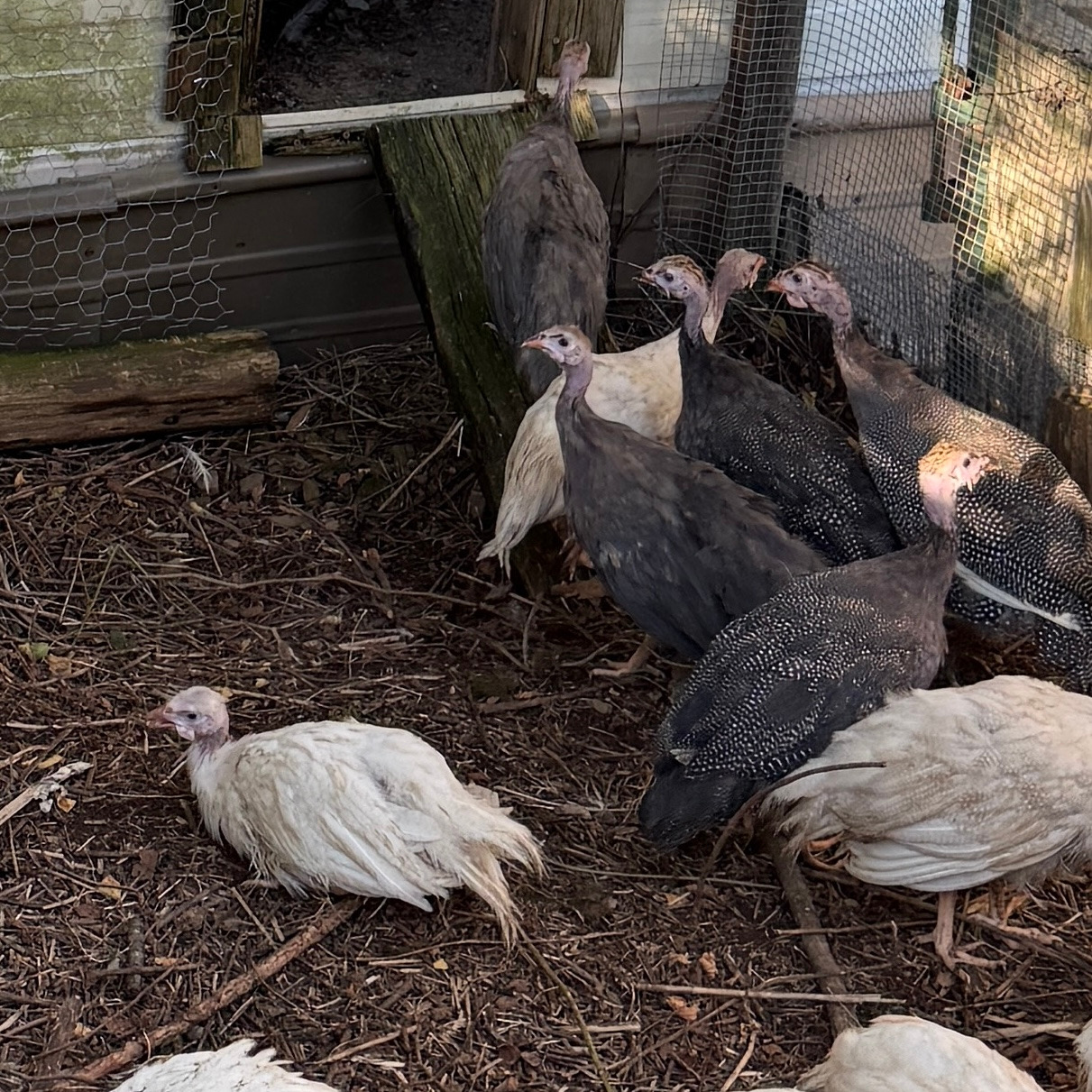
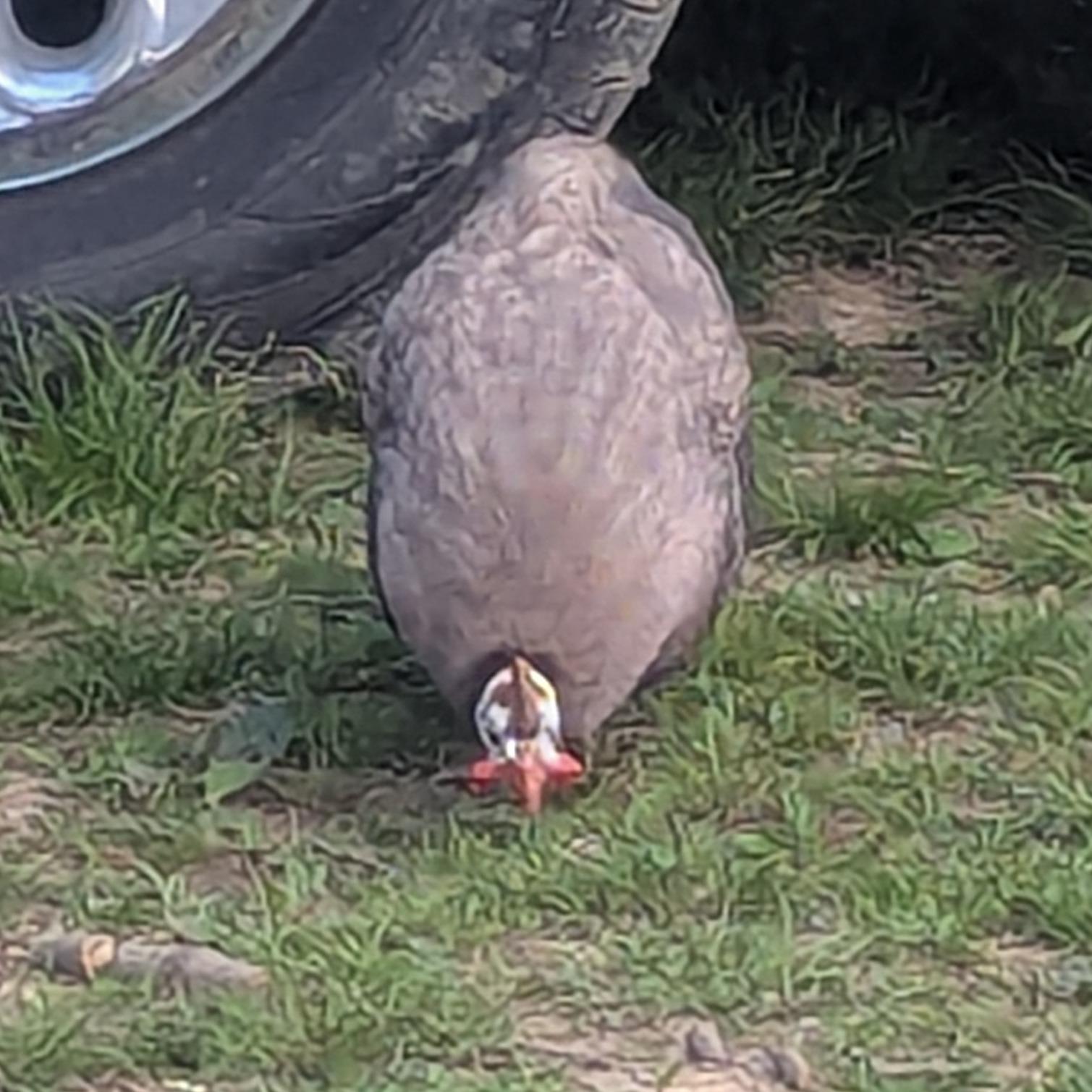
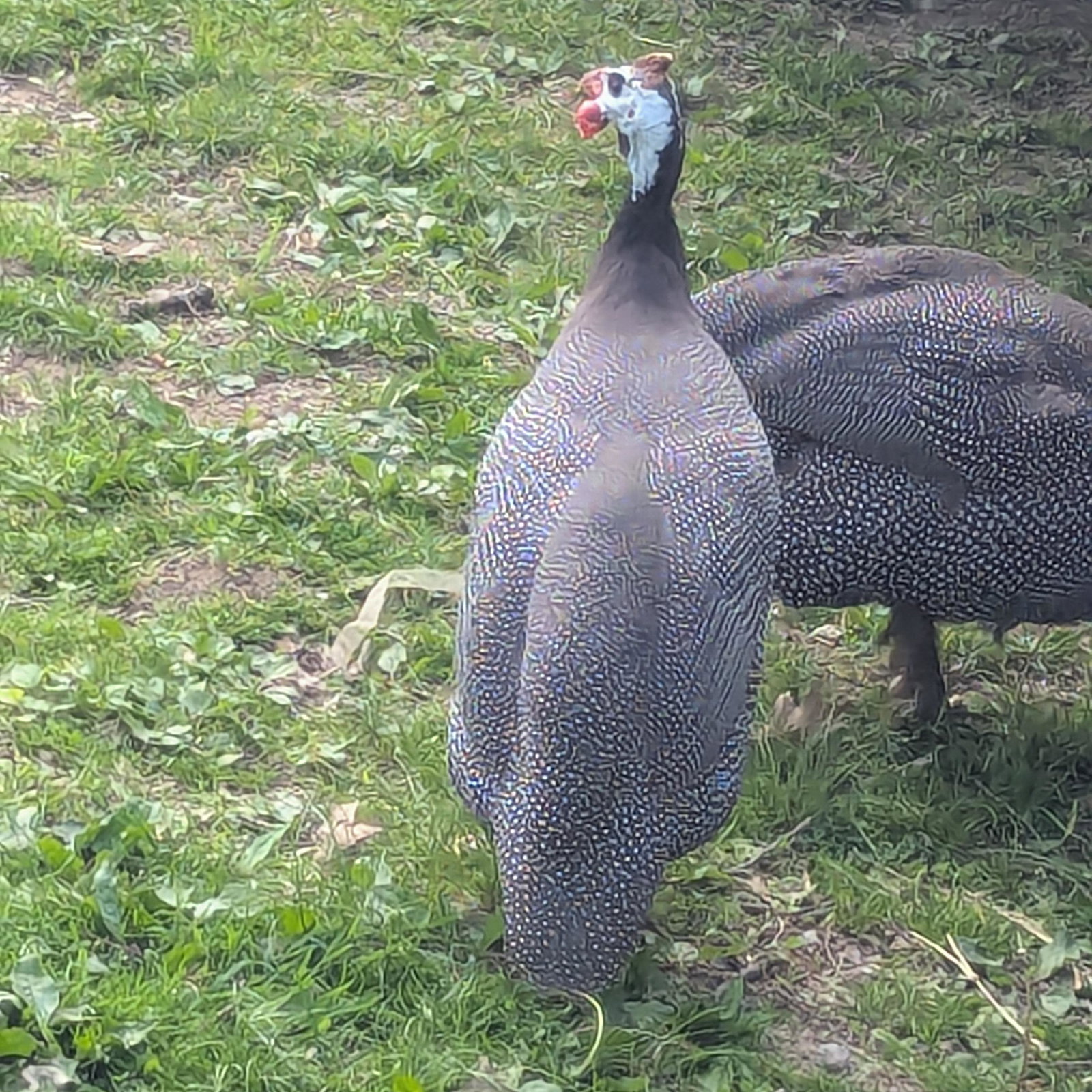
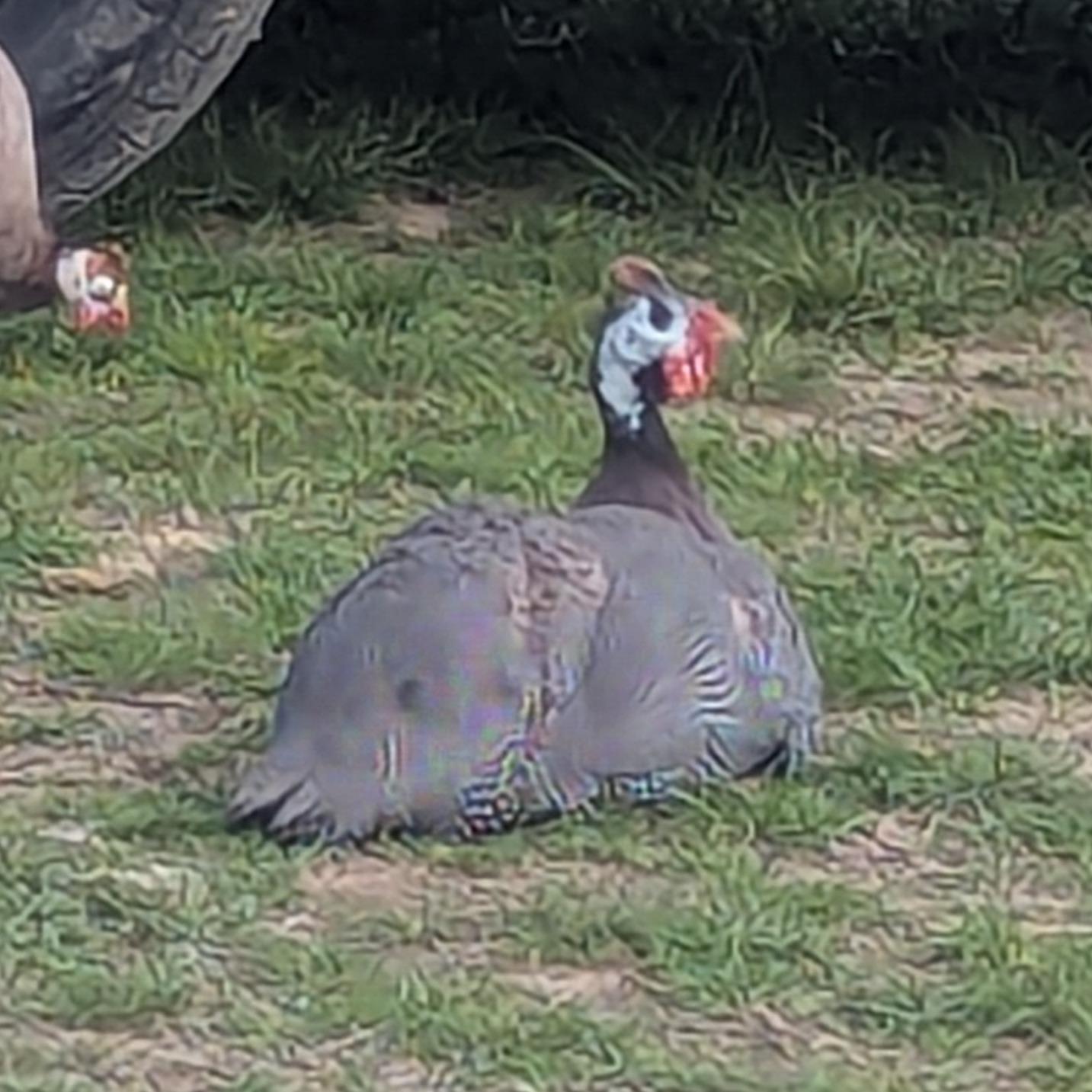
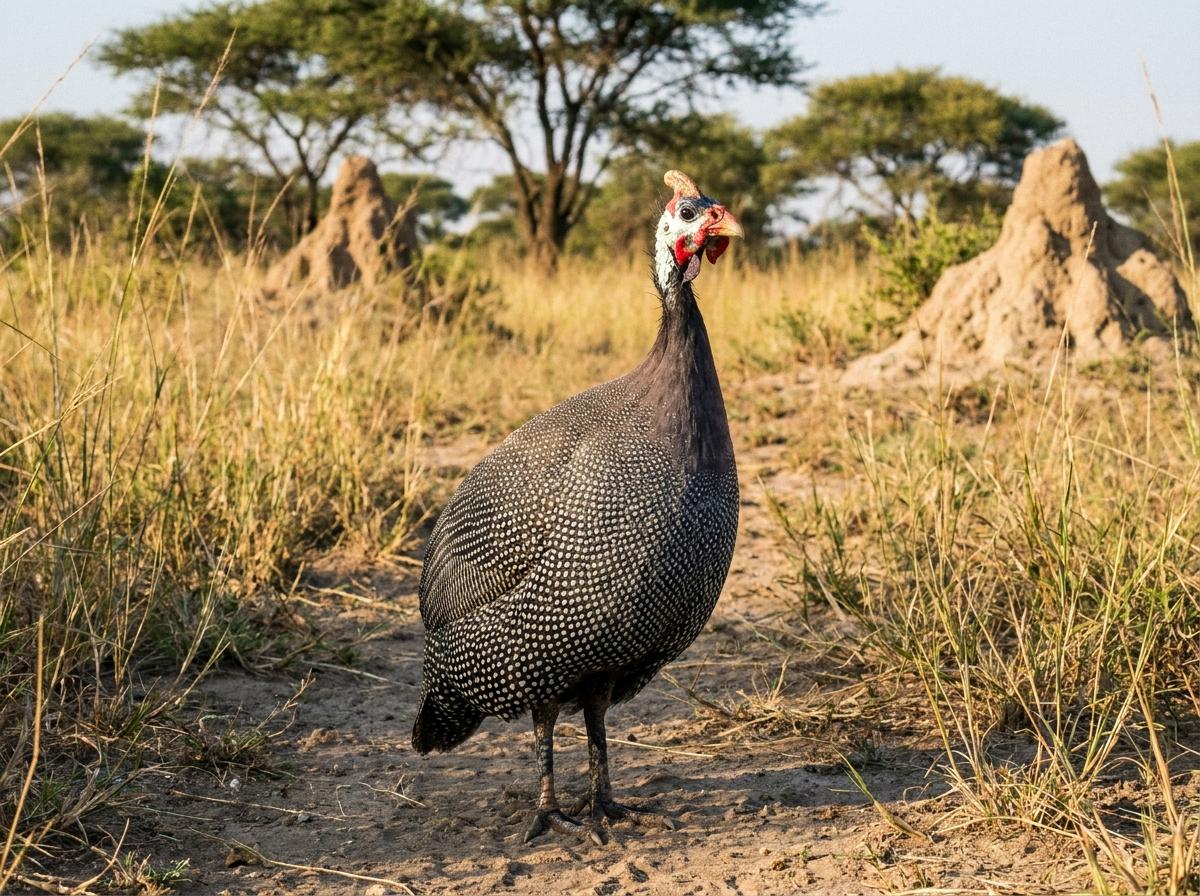
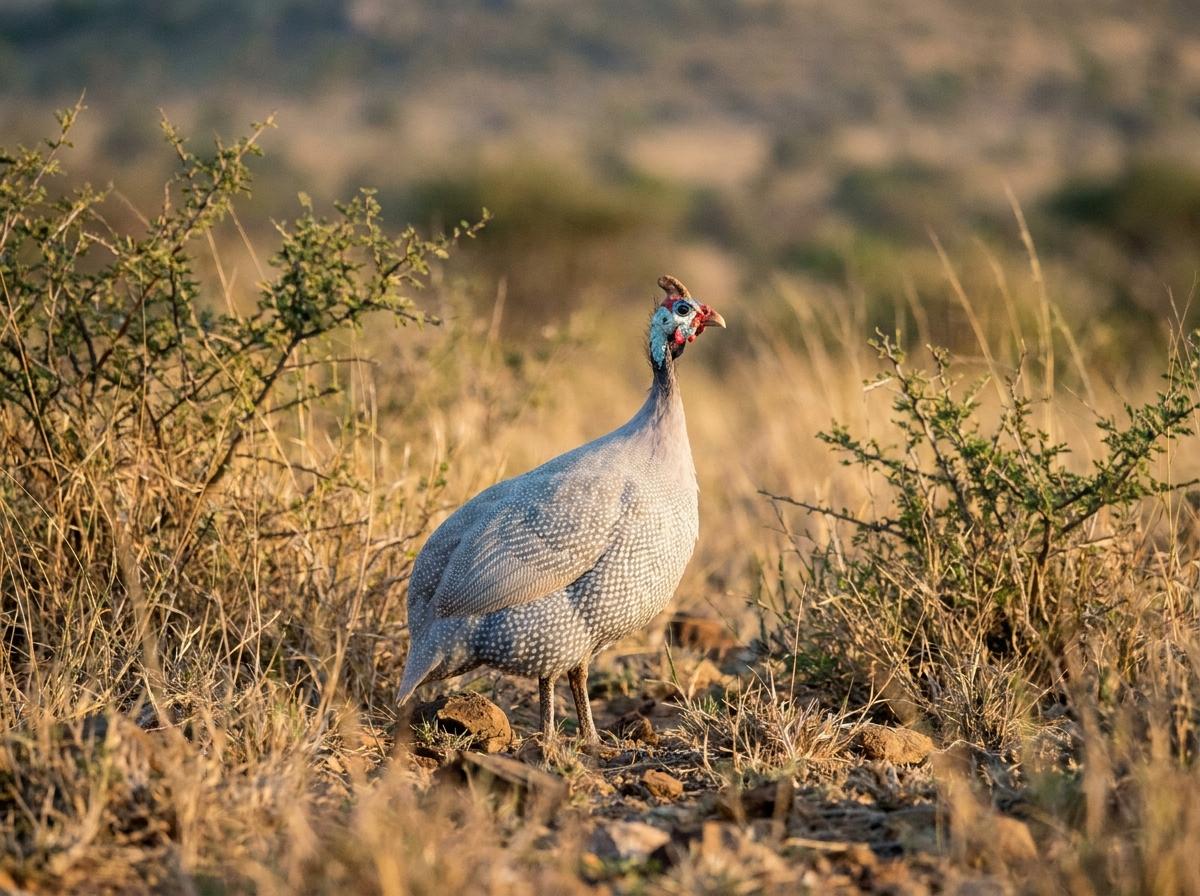
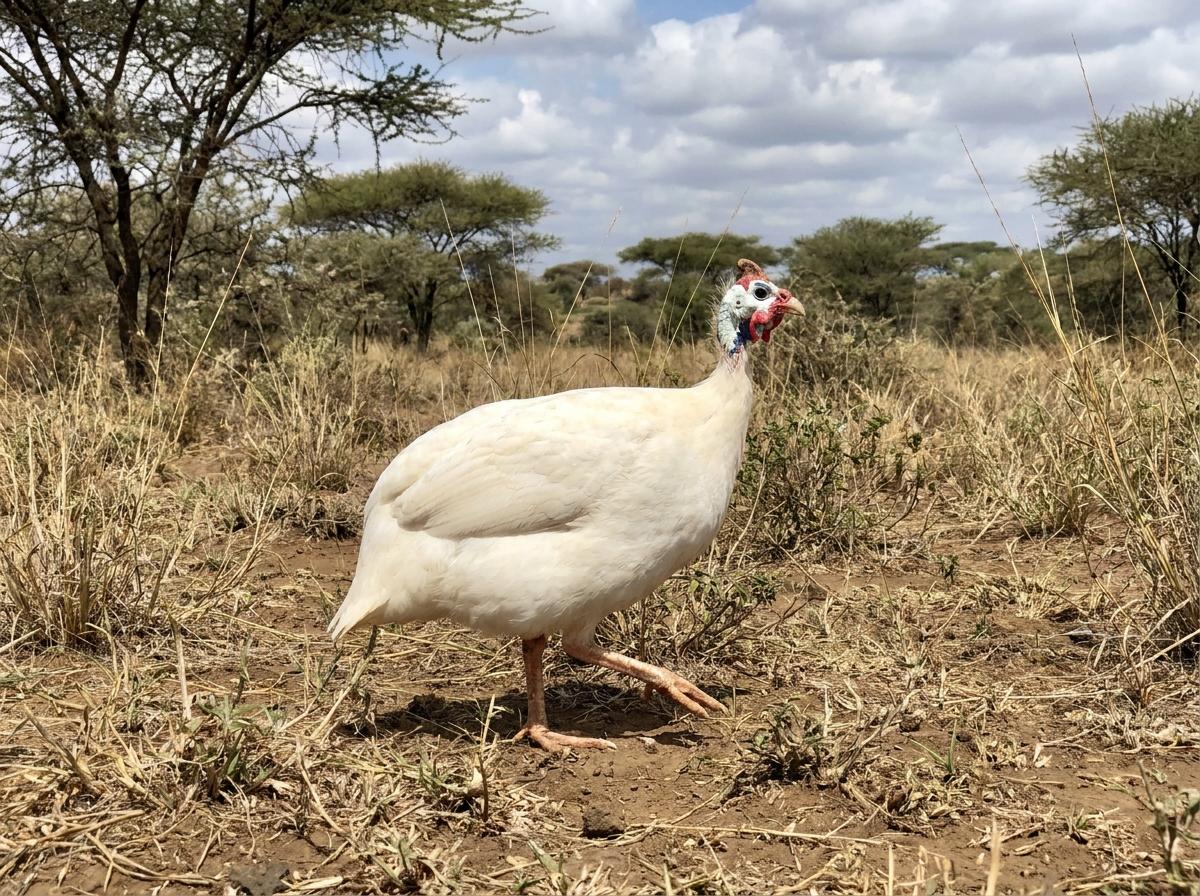
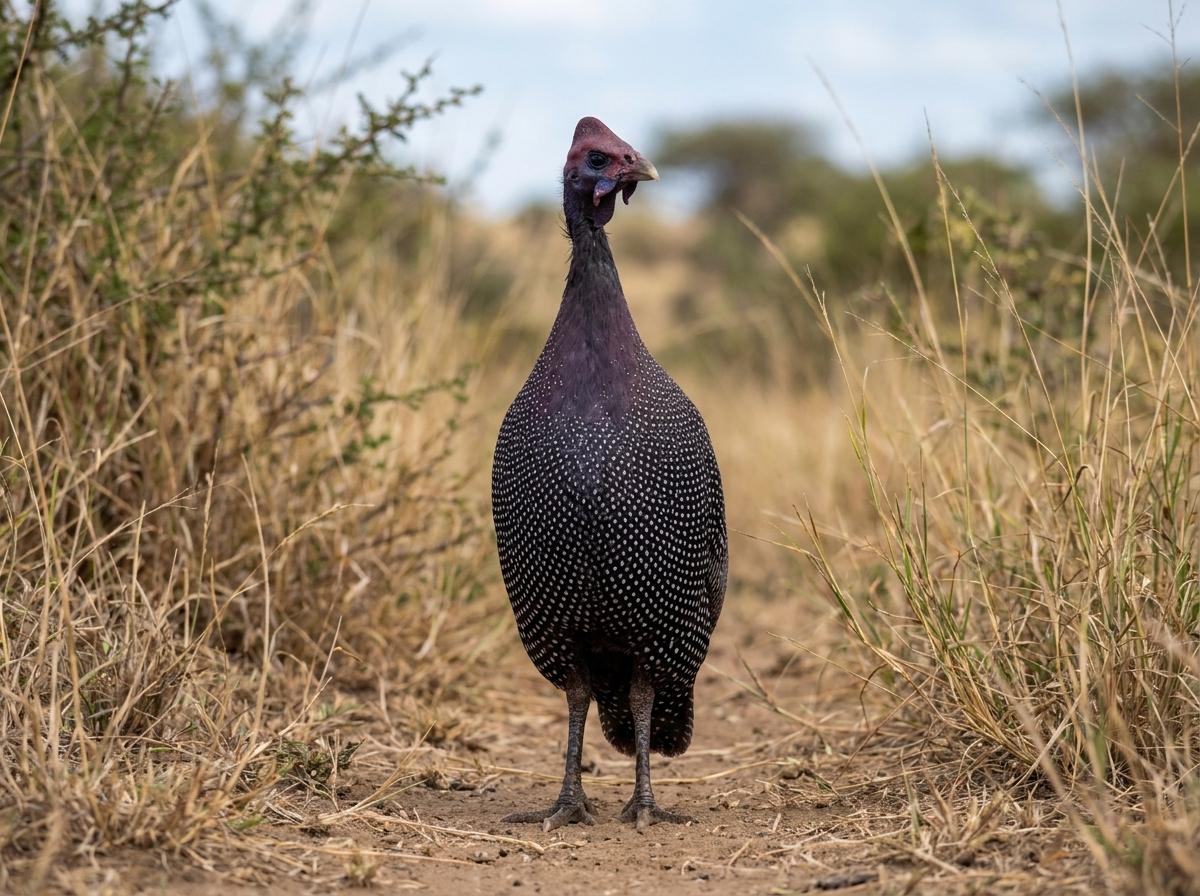
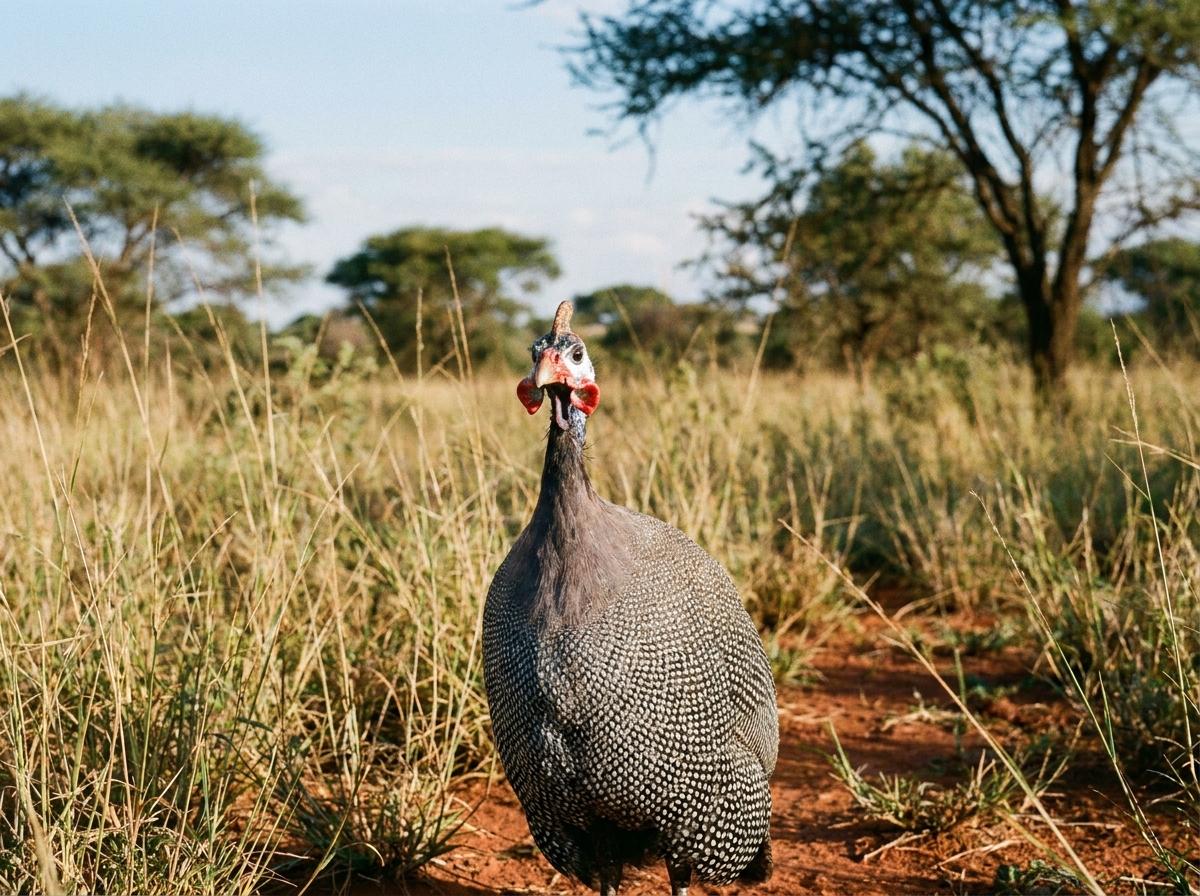
The guinea fowl most familiar on farms is the helmeted guineafowl, Numida meleagris, a ground-foraging bird from sub-Saharan Africa that has been domesticated in many regions. It is recognized by a rounded, speckled body, bare blue and white head, red wattles, and the bony casque or helmet on top of the skull. Domestic flocks are commonly pearl gray, white, lavender, pied, or other color varieties. Guinea fowl move as tight, nervous groups, run fast, fly well enough to roost in trees or rafters, and announce disturbances with very loud calls.
People keep guinea fowl for lean meat, thick-shelled seasonal eggs, tick and insect patrol, and as alert birds around farmyards. They are not quiet poultry, and many do best on acreage or in rural settings where neighbors will not mind the noise. Keets need a warm, dry brooder and careful protection from chilling; adults need secure night housing because they may choose unsafe roosts if not trained early. Free-ranging birds cover ground widely, so new flocks are usually confined until they learn where home is. They can live with chickens when space is generous, but feeding, bullying, and breeding-season aggression need watching.