




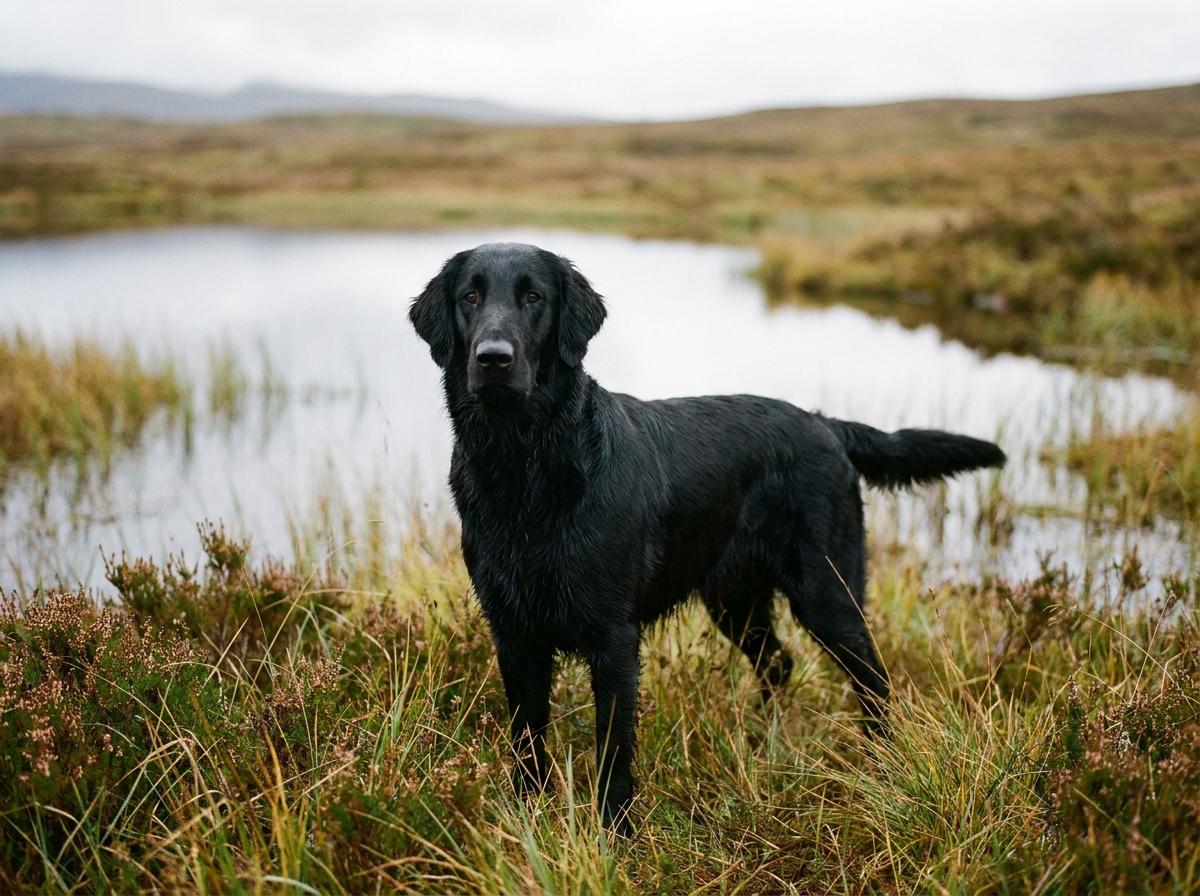
Flat-Coated Retriever
The flat-coated retriever is a British gundog developed in the nineteenth century to find and retrieve shot game on land and from water. It is longer-legged and racier than many modern retrievers, with a clean head, feathered tail, and a straight, glossy coat traditionally black or liver. Early wavy-coated retrievers, setters, water dogs, and other working strains contributed to the type, leaving a dog prized for enthusiasm, carrying ability, and a cheerful working style.
Flat-coats usually need more than polite neighborhood walks. They thrive on retrieving drills, swimming, hiking, field work, or active dog sports, and many keep a puppyish attitude well into adulthood. Training should channel their sociability without allowing jumping, mouthiness, or overexcitement to become habits. The coat is moderate but benefits from brushing, ear care, and trimming of feet or feathering when used in the field. Cancer, including histiocytic sarcoma, is a serious concern in the breed, so health history and longevity in relatives matter when choosing a breeder. Rescue adopters should also be ready for a busy, people-oriented retriever.