

American Staffordshire Terrier
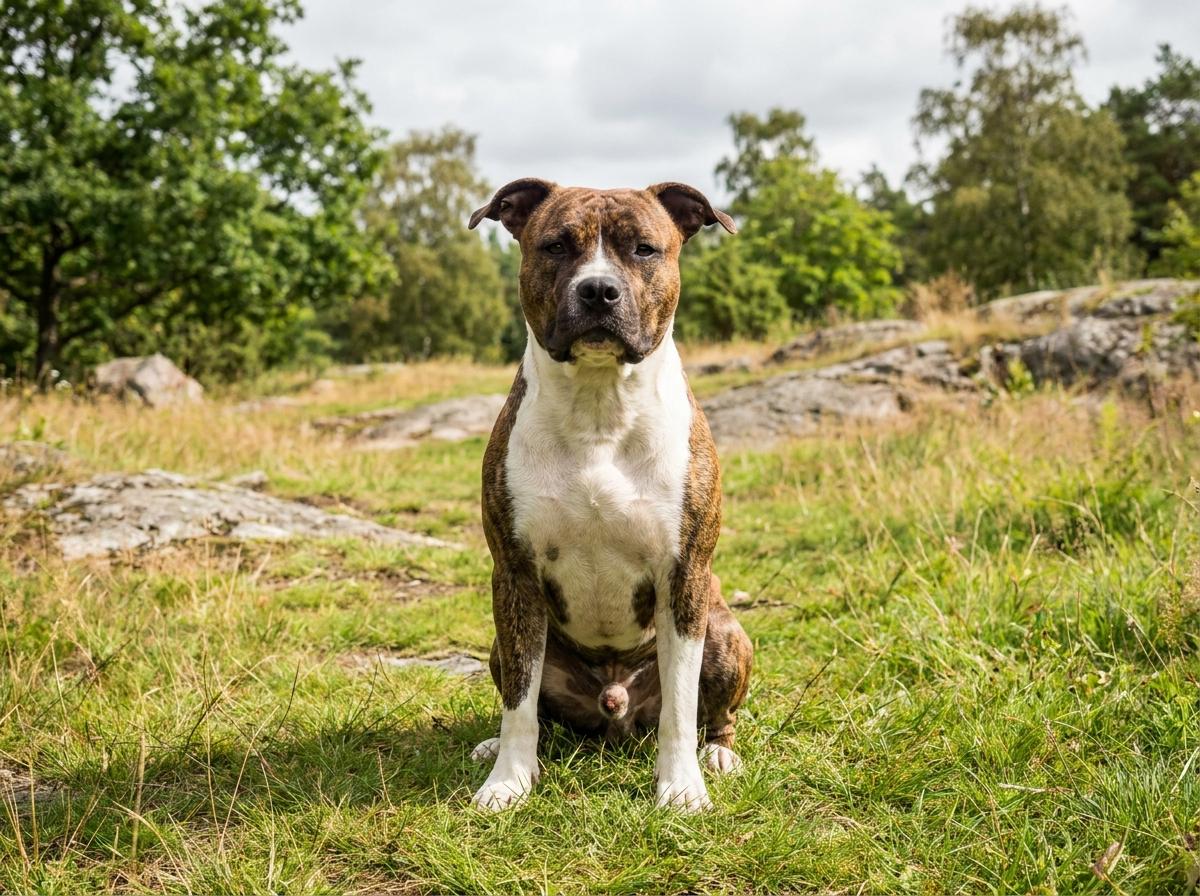
The American Staffordshire Terrier is the American Kennel Club breed developed from bull-and-terrier dogs that also contributed to the American Pit Bull Terrier. It was accepted by the AKC in 1936, first as the Staffordshire Terrier and later under its current name to distinguish it from the smaller Staffordshire Bull Terrier. The breed is muscular, medium-sized, and close-coated, with a broad head, pronounced cheeks, and a confident stance. In modern show and companion lines, selection emphasizes breed type, sound movement, and stable temperament rather than the old fighting functions behind the wider family.
AmStaffs can be warm, playful household dogs, but they are powerful terriers and should not be raised casually. Good leash skills, impulse-control training, and early exposure to friendly dogs and varied people make daily life easier. Some adults are selective with other dogs, so dog parks and off-leash mixing require judgment. The short coat is low maintenance, while weight control and joint-friendly exercise help protect a stocky frame. Breeders and buyers should discuss hip and elbow evaluation, cardiac exams, thyroid disease, skin allergies, and cerebellar ataxia testing. Local breed restrictions may apply even to well-managed, registered dogs.
Colors: Apricot, Bicolor, Black, Black and Tan, Black and White, Black Mask, Blue, Blue and Tan, Blue and White, Blue Merle, Blue Roan, Blue Tick, Brindle, Brindle and White, Brown, Brown and Tan, Brown and White, Chocolate, Cream, Dapple, Domino, Fawn, Fawn and White, Gold, Gray, Harlequin, Irish Marked, Liver, Liver Mask, Mantle, Mask, Merle, Mottled, Parti-Color, Piebald, Red, Red and White, Red Merle, Red Roan, Red Tick, Reverse Brindle, Roan, Sable, Saddle, Silver, Speckled, Spotted, Tan, Ticked, Tricolor, Tuxedo, White, Yellow